
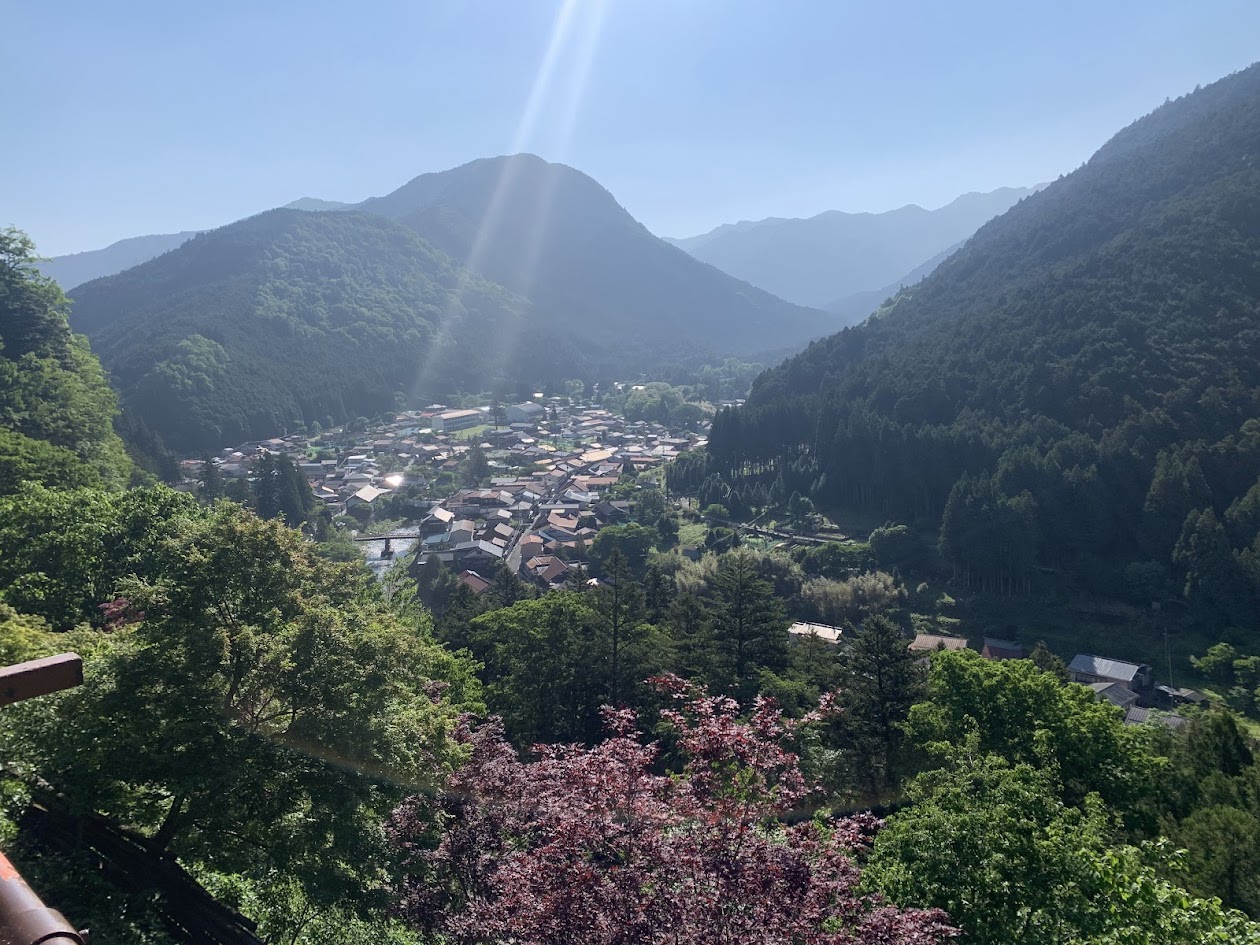

The streetscape of Dorogawa

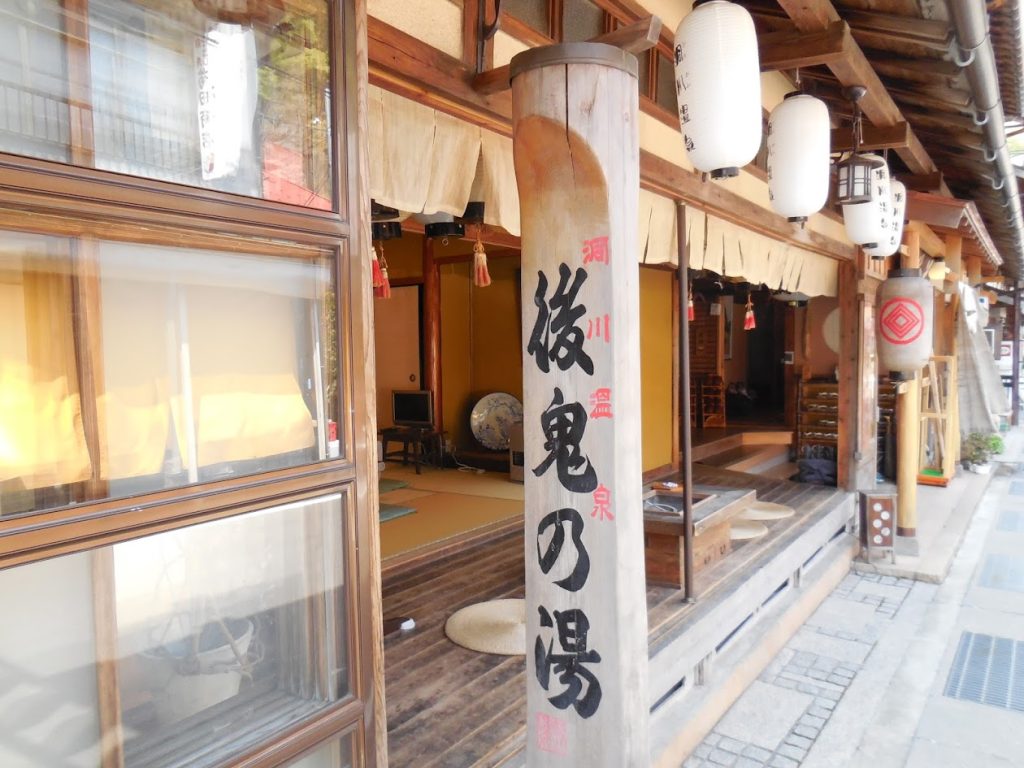
Dorogawa Onsen
Still observing a ban on women, it serves as the gateway to Mount Sanjo-ga-take, a sacred site for Shugendo mountain asceticism.
Situated in a mountain village over 800 meters above sea level, the area features traditional inns, shops selling “Daranisuke” (an age-old stomach medicine), and tofu shops using the famous “Gorogoro Water.”
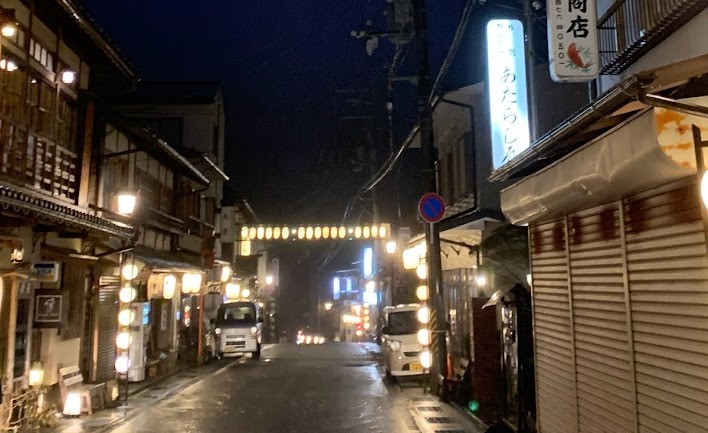
This is the Dorogawa Onsen town, lined with traditional inns.
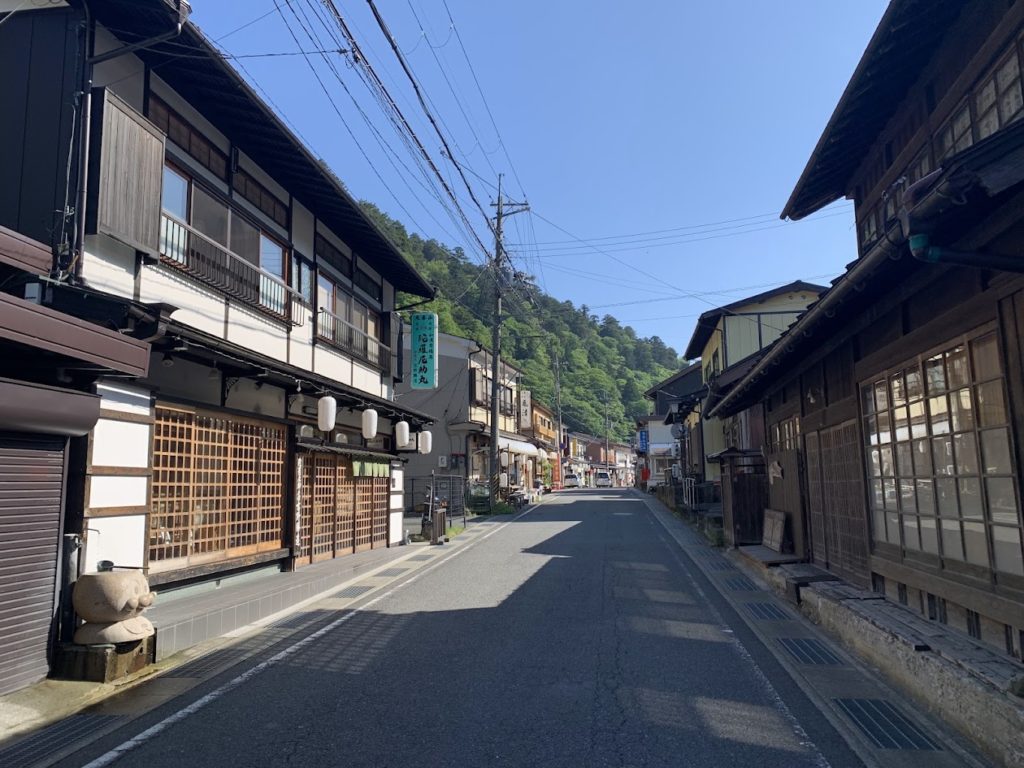
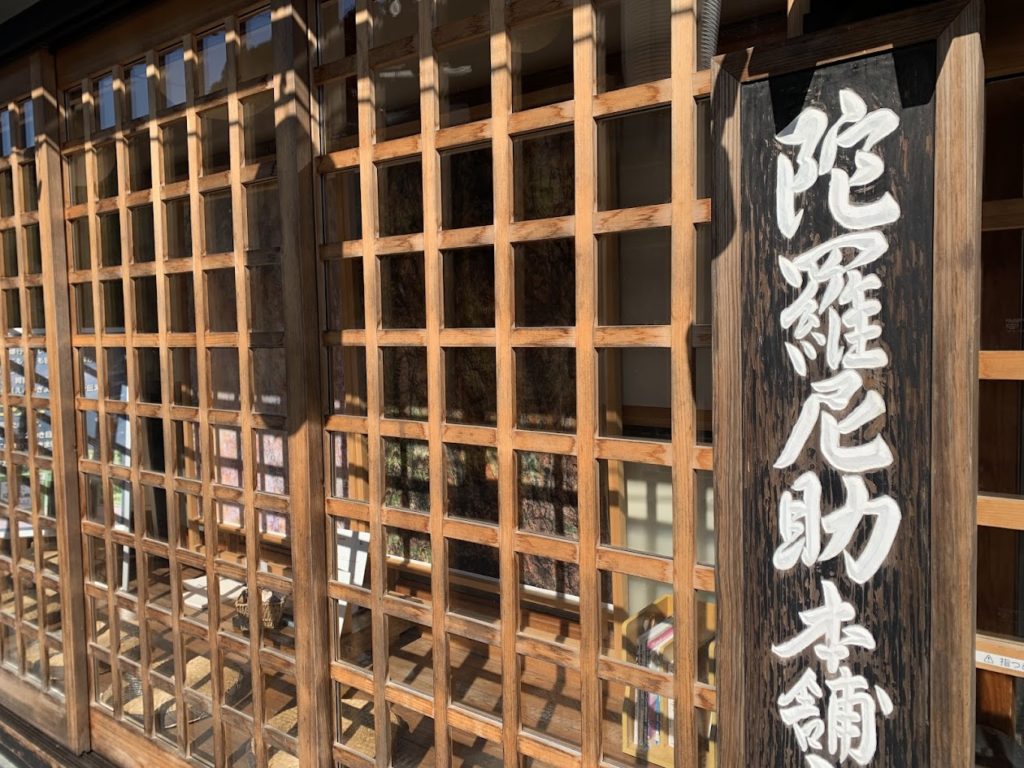
Daranisuke
Pronounced “Daranisuke,” this is a stomach medicine said to have been taught and passed down by En no Gyoja, the founder of mountain ascetic practices, around 1,300 years ago.
It is made by peeling and boiling the bark of the Obaku tree (Amur cork tree), then adding several medicinal ingredients.
Mountain ascetics (yamabushi) carried this medicine during their rigorous training. Thanks to these yamabushi, the medicine spread across the country.
The proverb “Good medicine tastes bitter” perfectly describes Daranisuke.
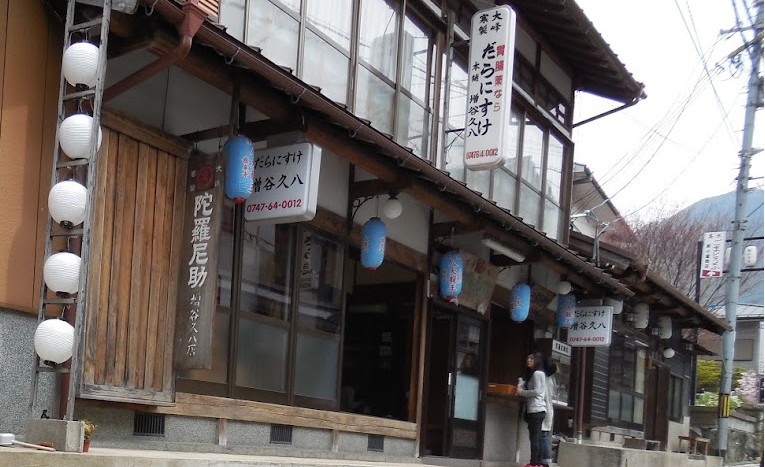
The onsen town is lined with many shops selling “Daranisuke.”
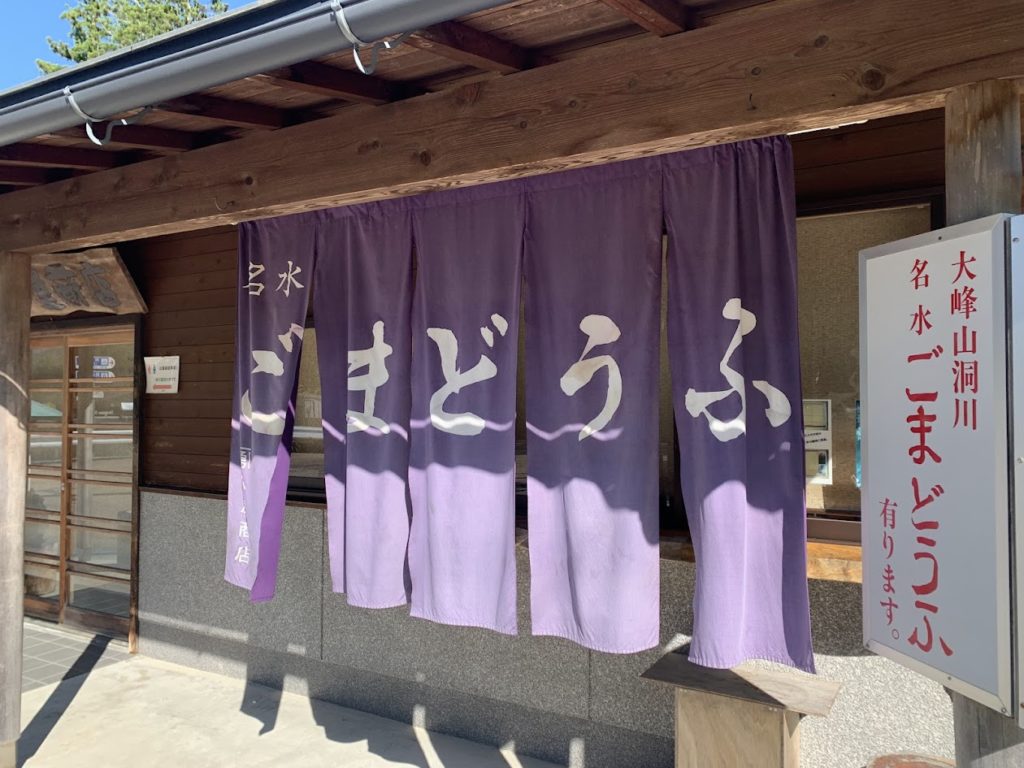
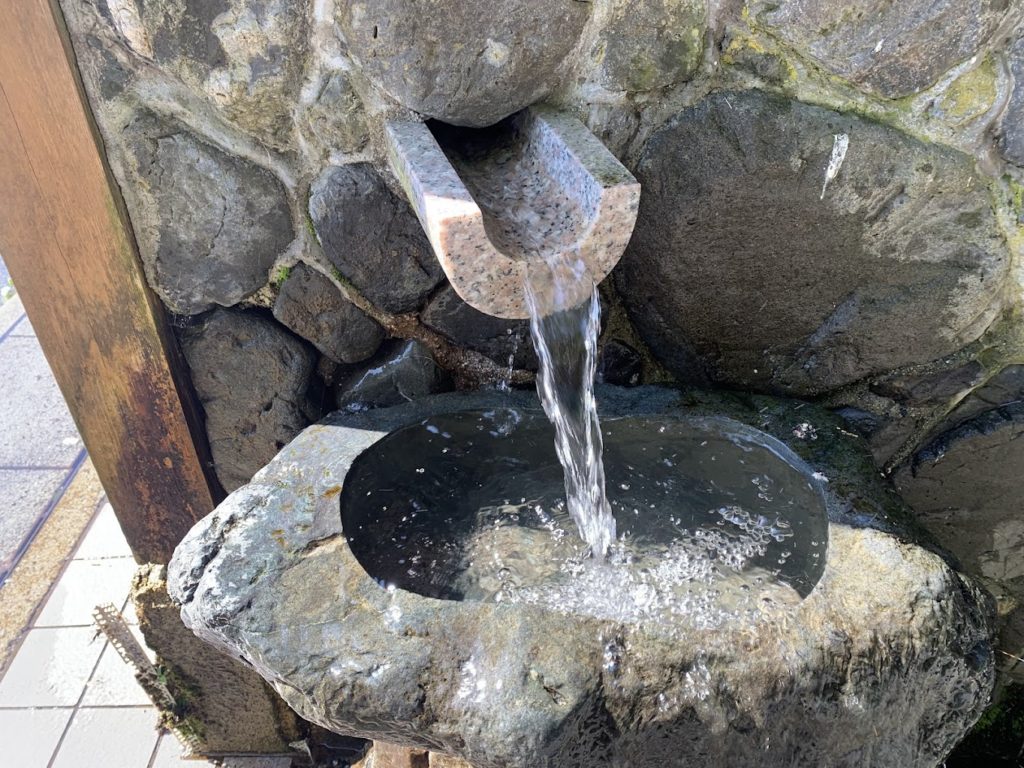
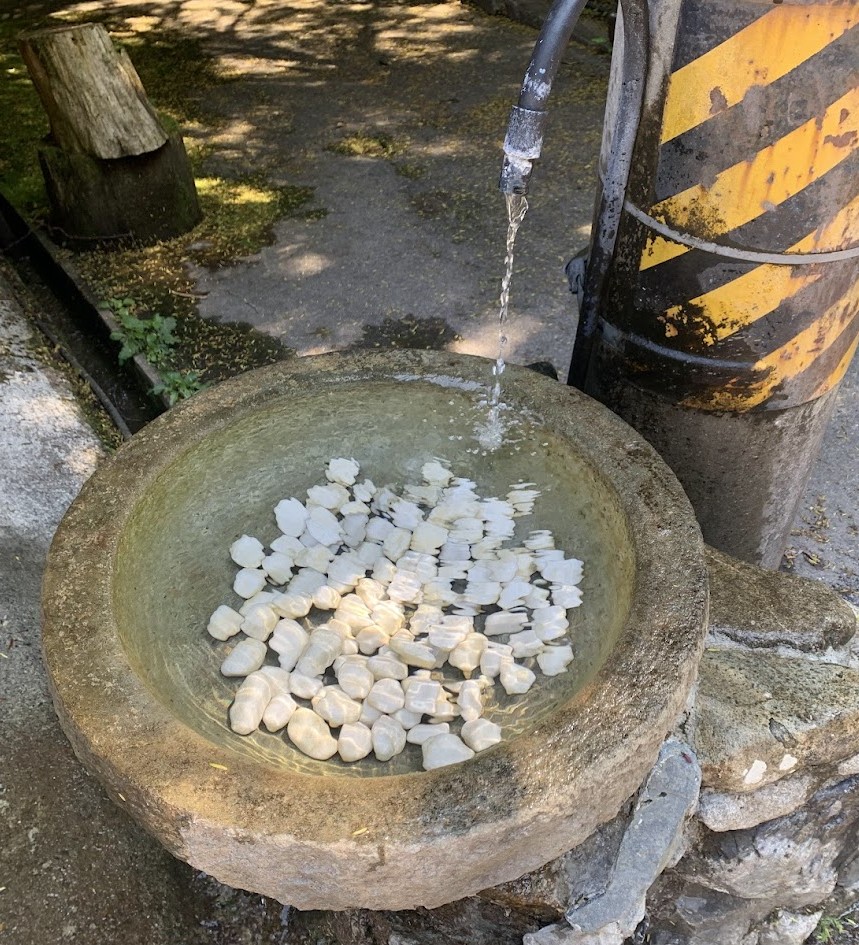
Dorogawa is home to a famous spring water called “Gorogoro Water.”
The terrain in this area is made of limestone, allowing rainwater to seep into the soil. As it passes through the limestone layers, the water becomes clear and rich in minerals, eventually emerging from between the rocks.
The name “Gorogoro Water” comes from the rumbling sound (“gorogoro”) it makes as it flows out.
The “Meisui Tofu” (tofu made with this spring water) is highly praised for its delicious taste.

The Gorogoro Water spring outlet is located near the entrance to the “Godaimatsu Limestone Cave,” a short distance upstream from the Dorogawa Onsen town.
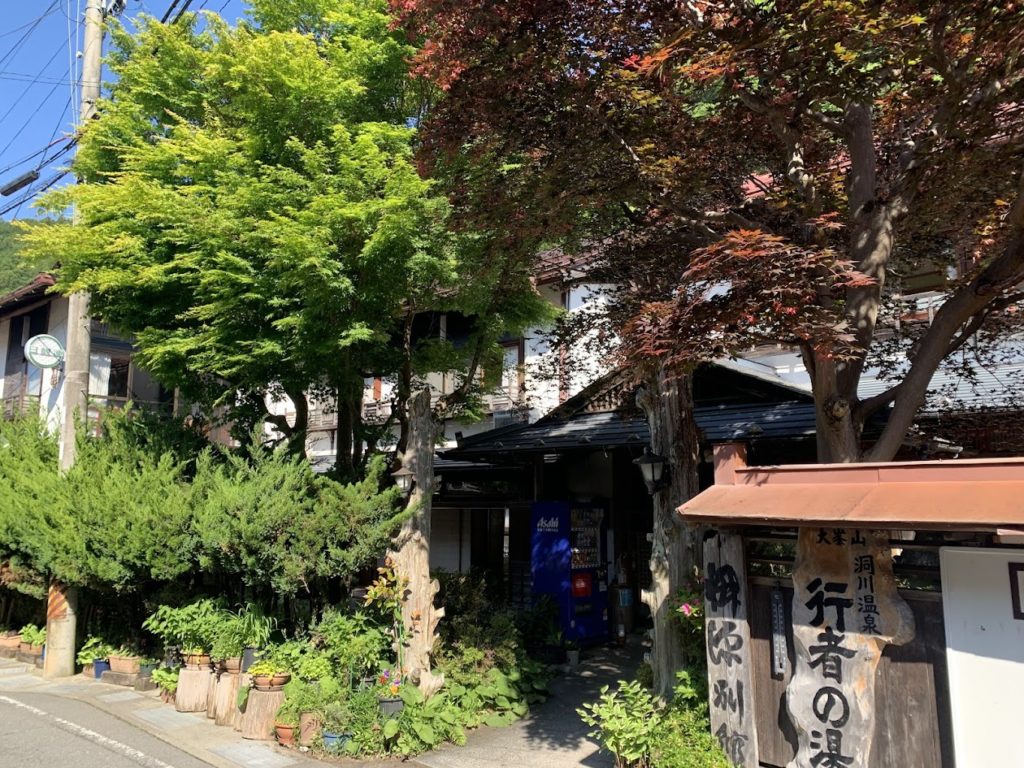
Since ancient times, practitioners of Shugendo heading for Mount Omine’s “Sanjo-ga-take” have stayed here, departing early in the morning to begin their ascent.

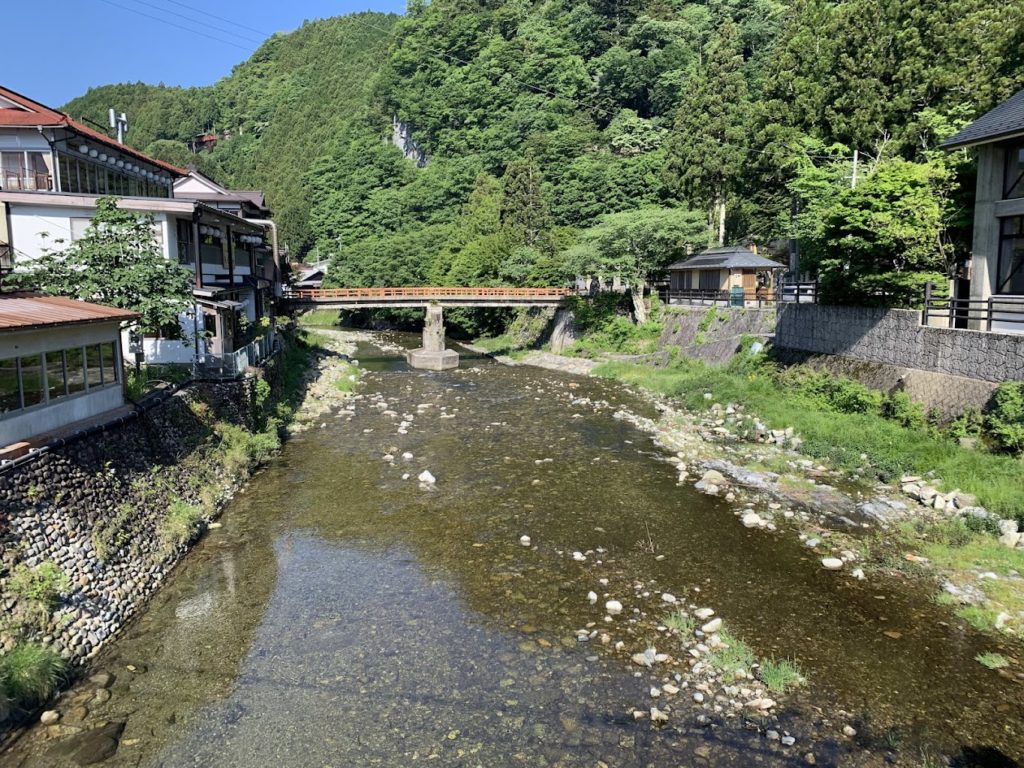
Behind the street lined with inns in Dorogawa Onsen, a clear river flows.
The water comes from Mount Omine.
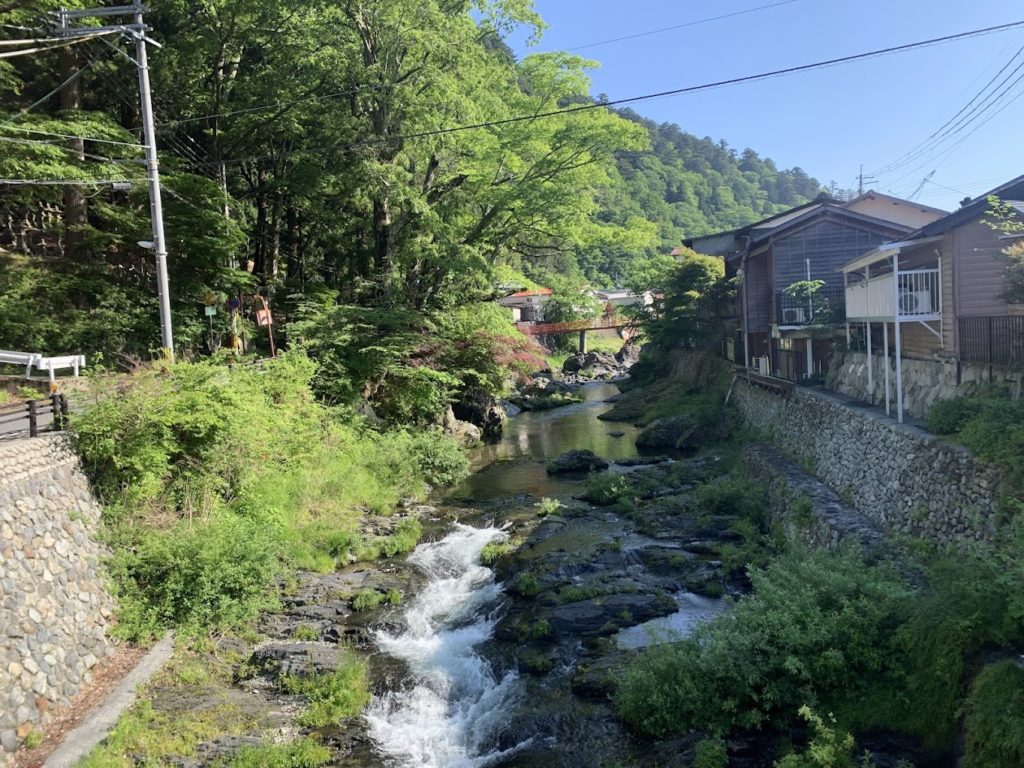
This photo taken in early summer.
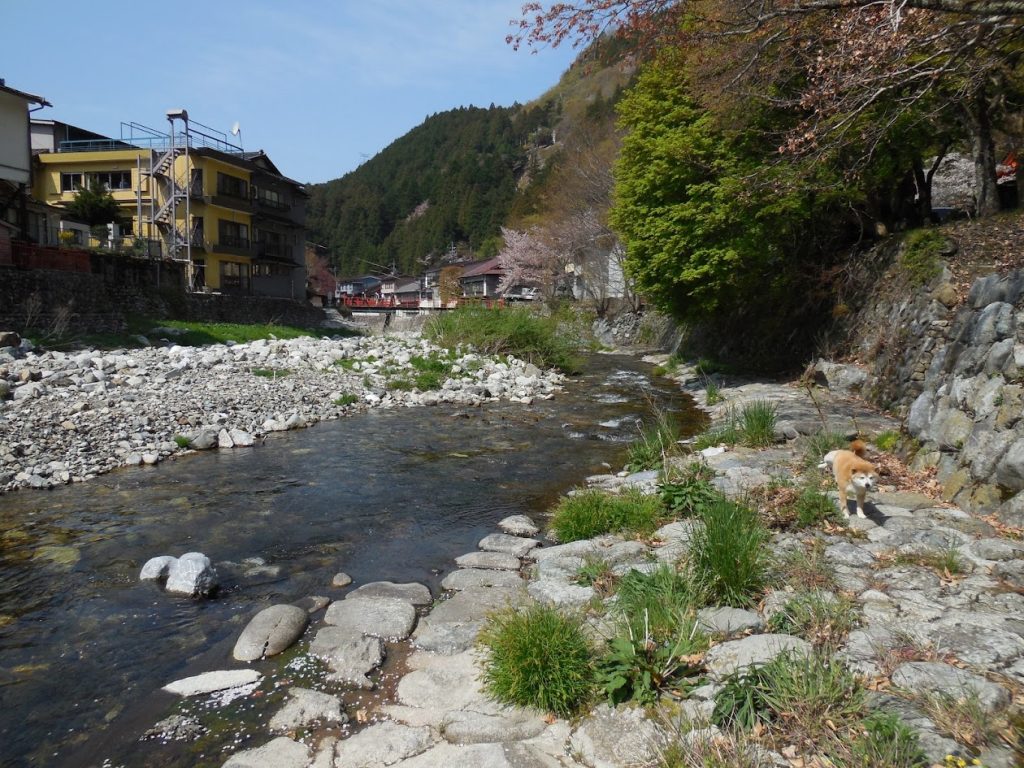
My beloved dog is happily running on the stones by the riverside.
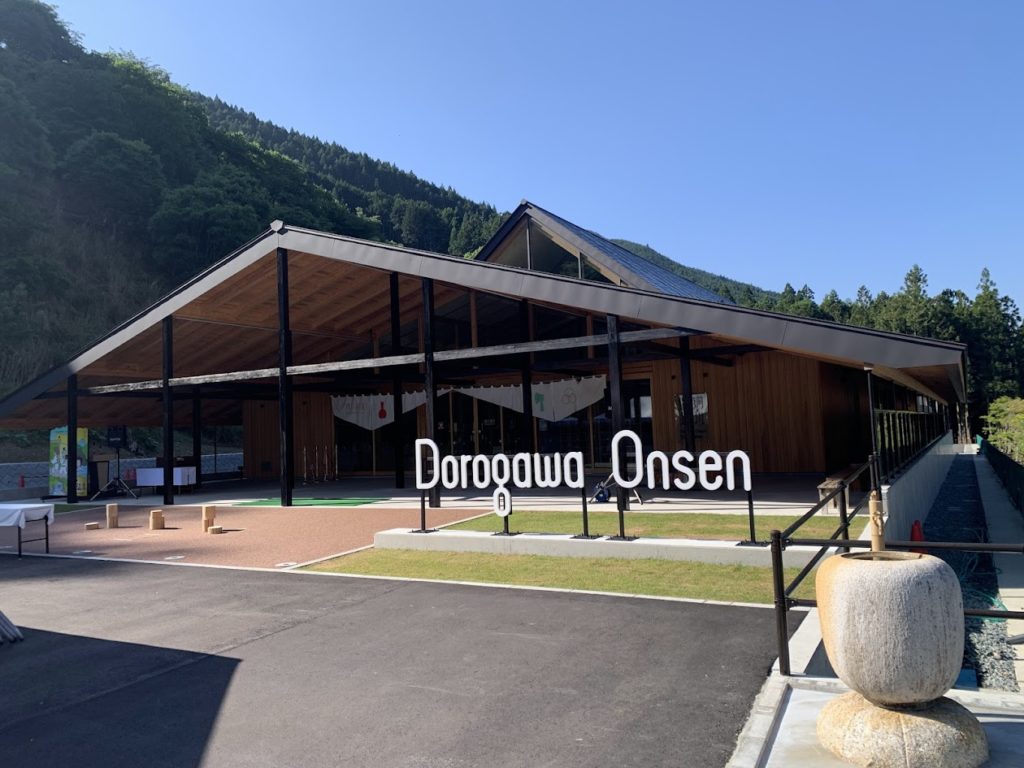
At the entrance to Dorogawa Onsen town is the public bathhouse called “Dorogawa Onsen.”
Day visitors are encouraged to enjoy a soak before heading home.

Dorogawa Onsen “Goki no Yu” (Bath of the Later Demon)
Here is the origin story of Goki (the Later Demon):
En no Gyoja, the founder of Shugendo asceticism, lived about 1,300 years ago. He established the Omine Okugake-michi, a rigorous pilgrimage route registered as a UNESCO World Cultural Heritage site. This route stretches from Yoshino Mountain to Kumano Hongu Taisha, crossing the steep peaks of the Yoshino mountains.
During his training, two demons accompanied En no Gyoja: Zenki (the Earlier Demon), who walked ahead, and Goki (the Later Demon), who followed behind. These two demons were a married couple.
Originally, they lived on Mount Ikoma between Osaka and Nara and caused harm to people. However, En no Gyoja admonished them, and they repented, becoming his attendants on the ascetic journey.
As En no Gyoja’s training was about to conclude, he commanded the couple to care for future Shugendo practitioners. Their descendants have continued this role through generations.
Dorogawa Onsen serves as the gateway to the ascetic training on Mount Sanjo-ga-take of Mount Omine. Even today, villagers who care for Shugendo practitioners consider themselves descendants of these demons.
Zenki’s village lies further along the Omine Okugake-michi toward Kumano Hongu in Shimokitayama, Yoshino District. However, currently, only one house remains in Zenki Village.
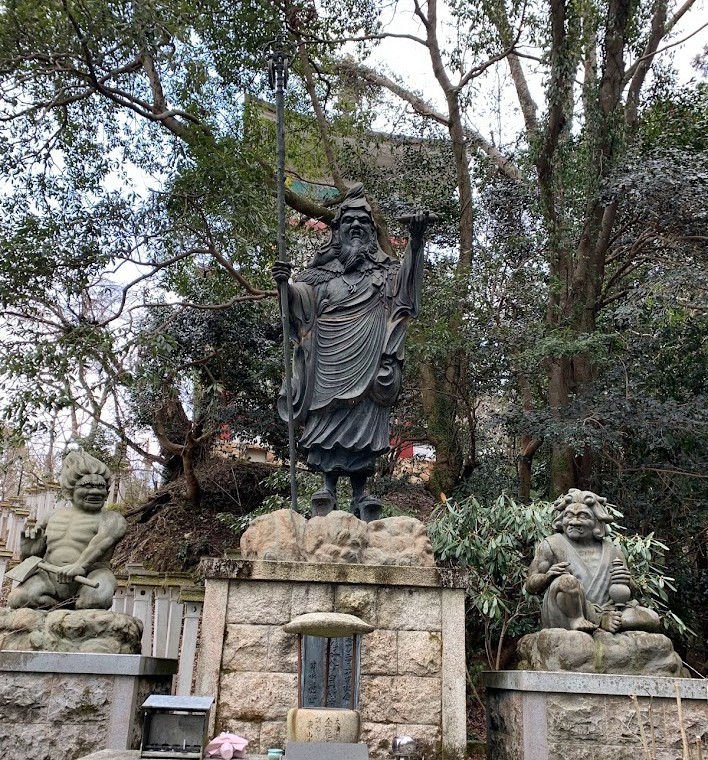
This is a statue of En no Gyoja located in Nakasenbon, Yoshino Mountain.
On either side of En no Gyoja stand Zenki (the Earlier Demon) and Goki (the Later Demon).
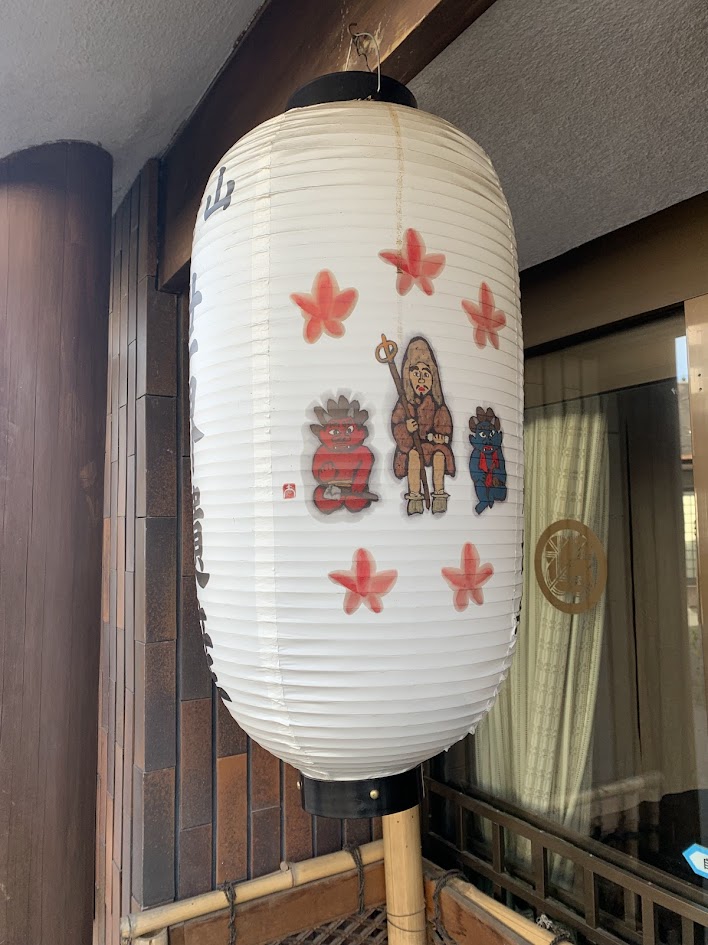
The lanterns nearby are inscribed with “Yoshino Mountain World Heritage” and depict En no Gyoja alongside the demon couple. These lanterns are commonly displayed at the entrances of inns and other establishments in Yoshino Mountain.
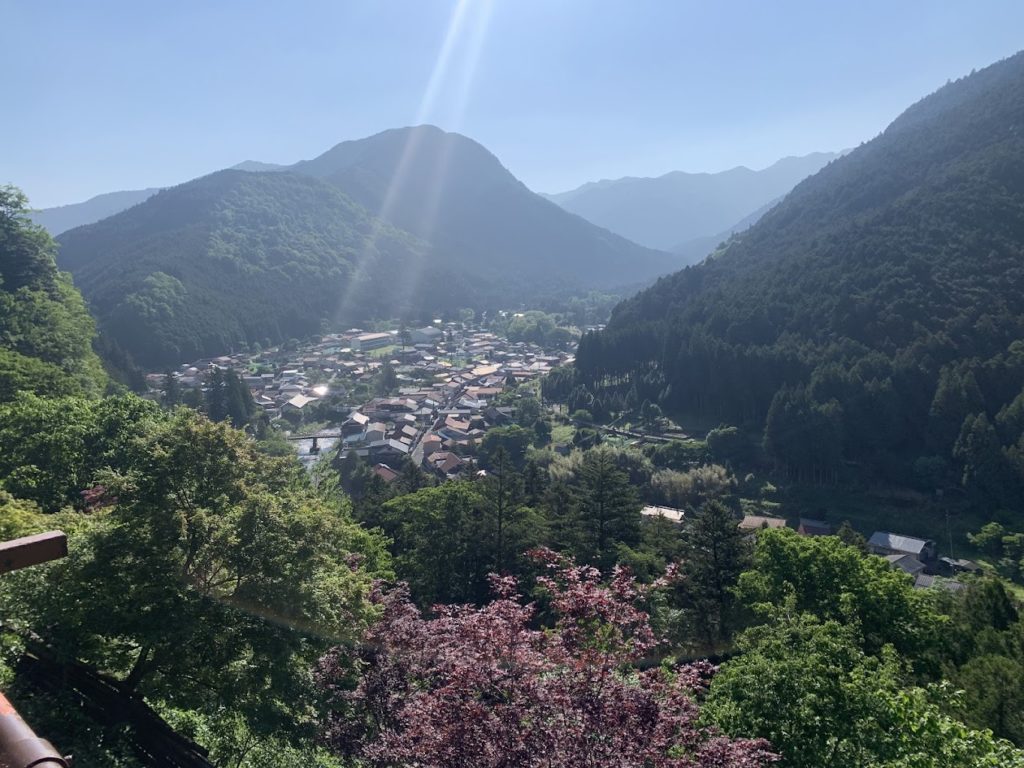
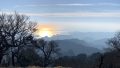
The ridge line connecting the distant mountains is the “Omine Okugake-michi” pilgrimage route.
Mount Sanjo-ga-take is located a bit further to the right and is not visible in this photo.
The river flowing through Dorogawa.
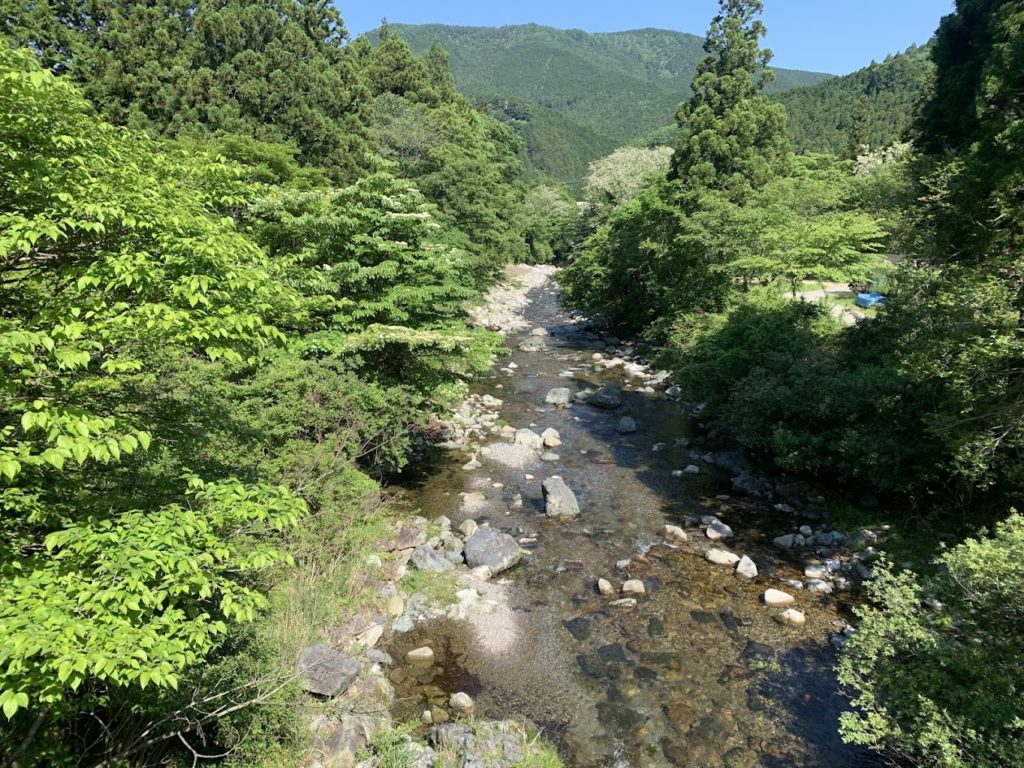
This is a river flowing down from Mount Omine.
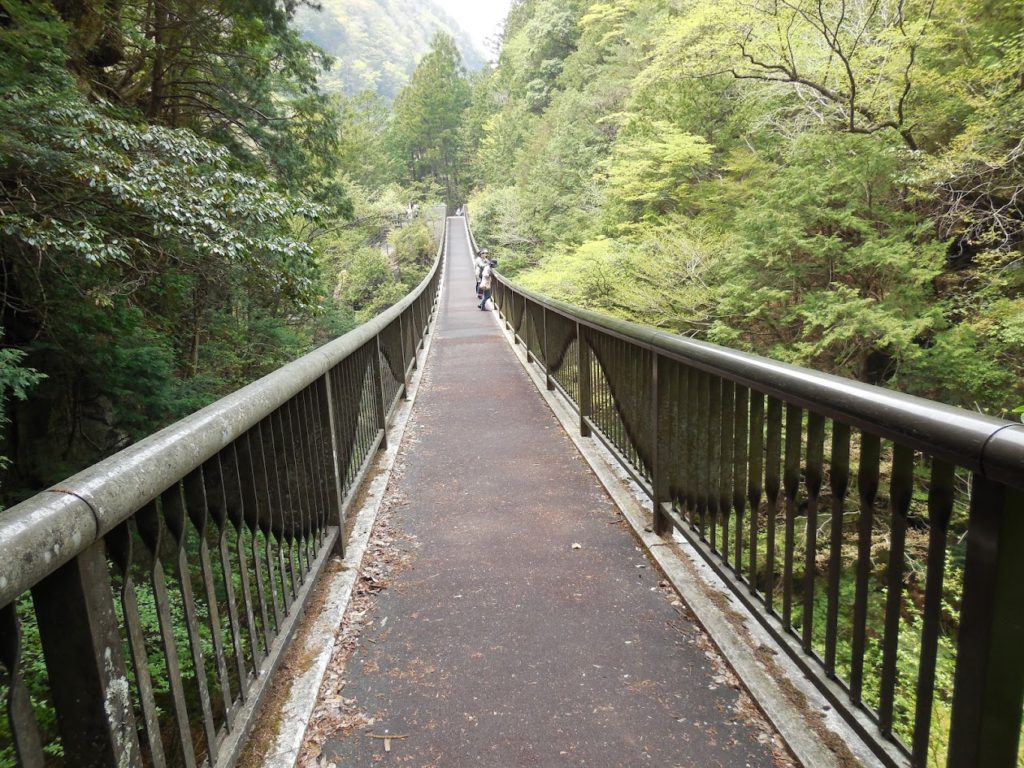
About 1 kilometer upstream from the Dorogawa Onsen town is the Dorogawa Eco-Museum Center.
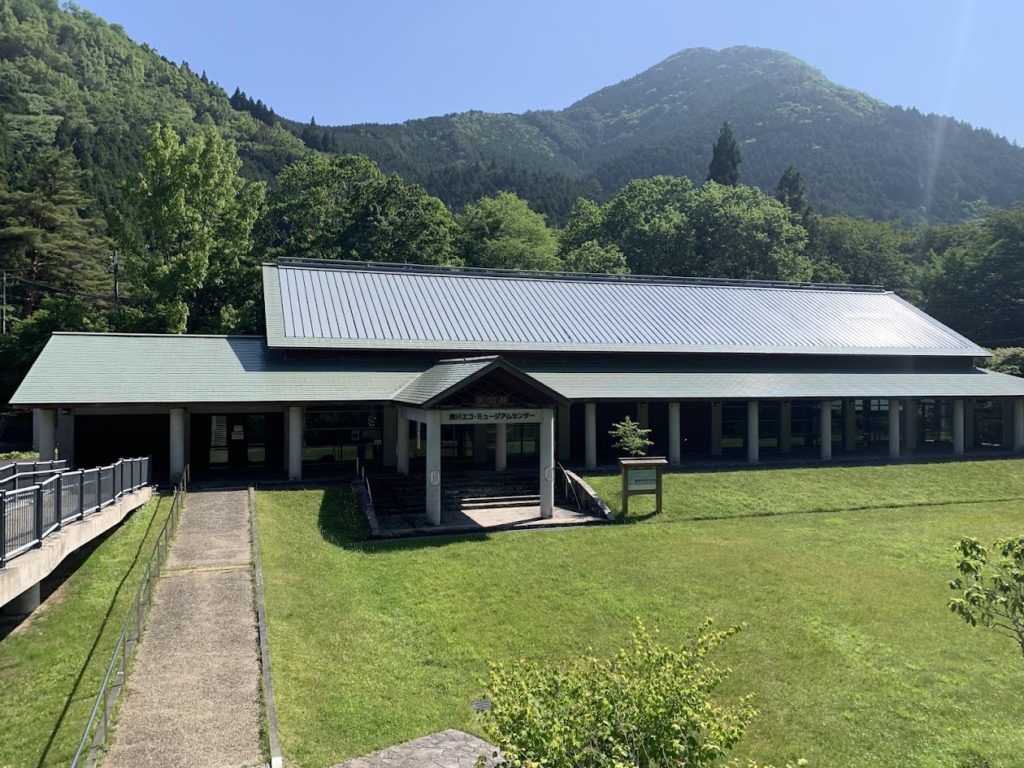
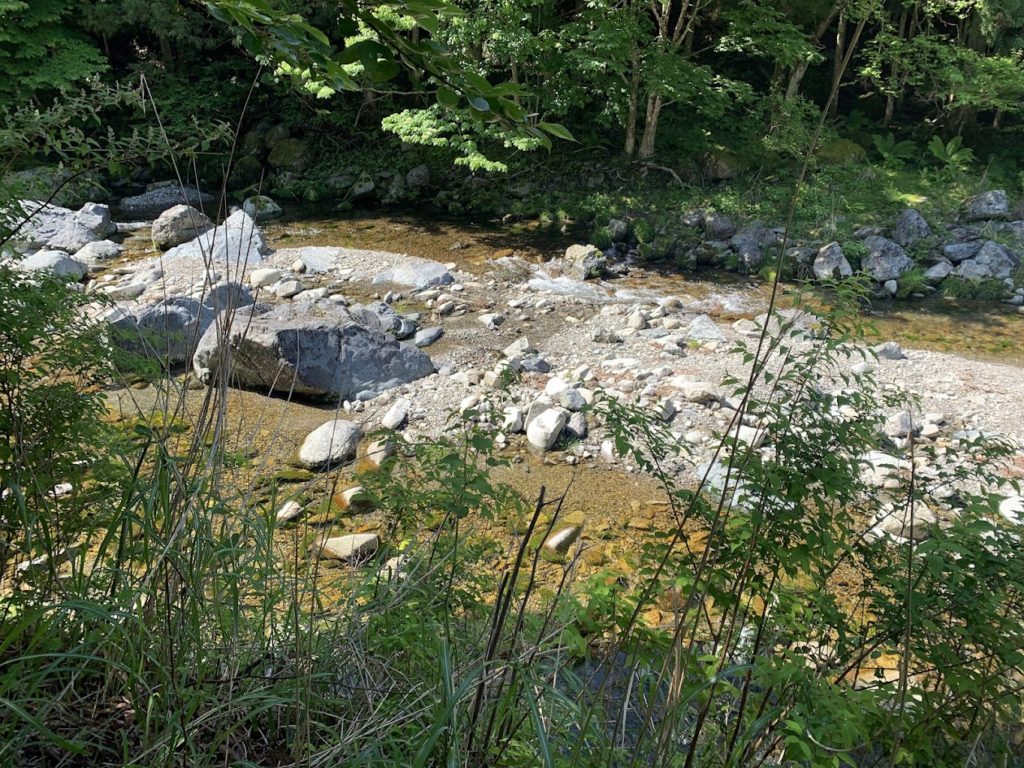
From the Dorogawa Eco-Museum Center, we walked along the riverside promenade upstream.
The riverbed stones are white limestone.
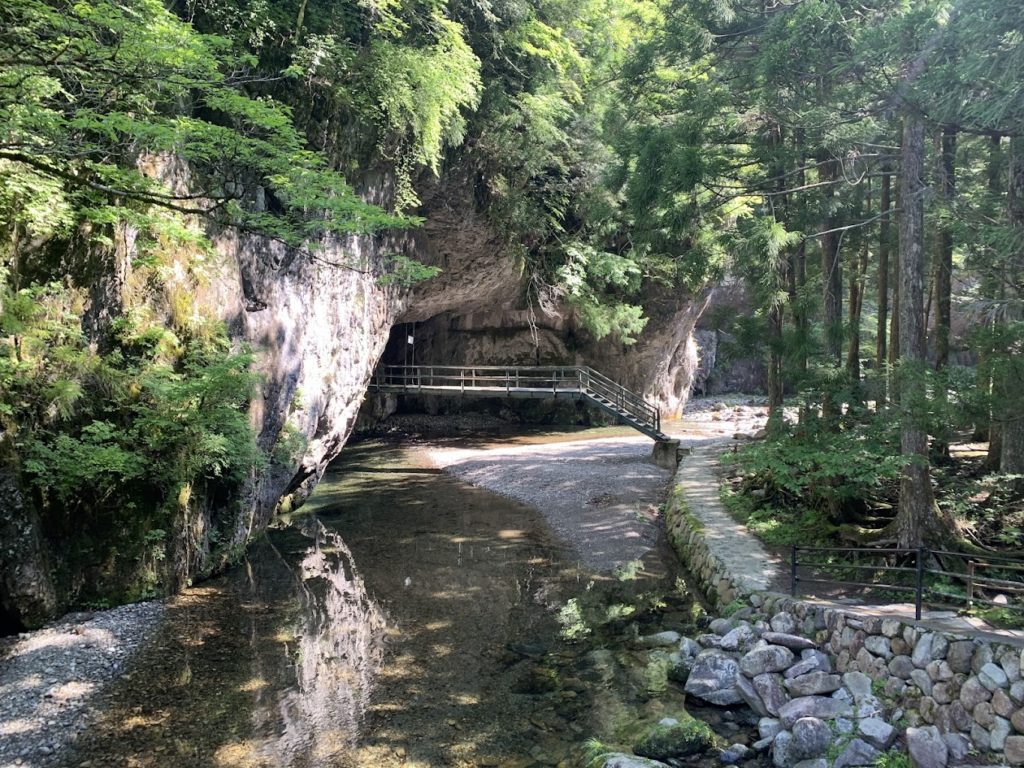
The “Toro Cave” comes into view.
It is said that 1,300 years ago, En no Gyoja, the founder of Shugendo, established this as the “first training site” of Shugendo when he built Omine Sanji Temple at the summit of Mount Sanjo-ga-take.
The name “Toro,” meaning “mantis,” was given because the way the ascetics entered the cave resembled the movement of a mantis walking.
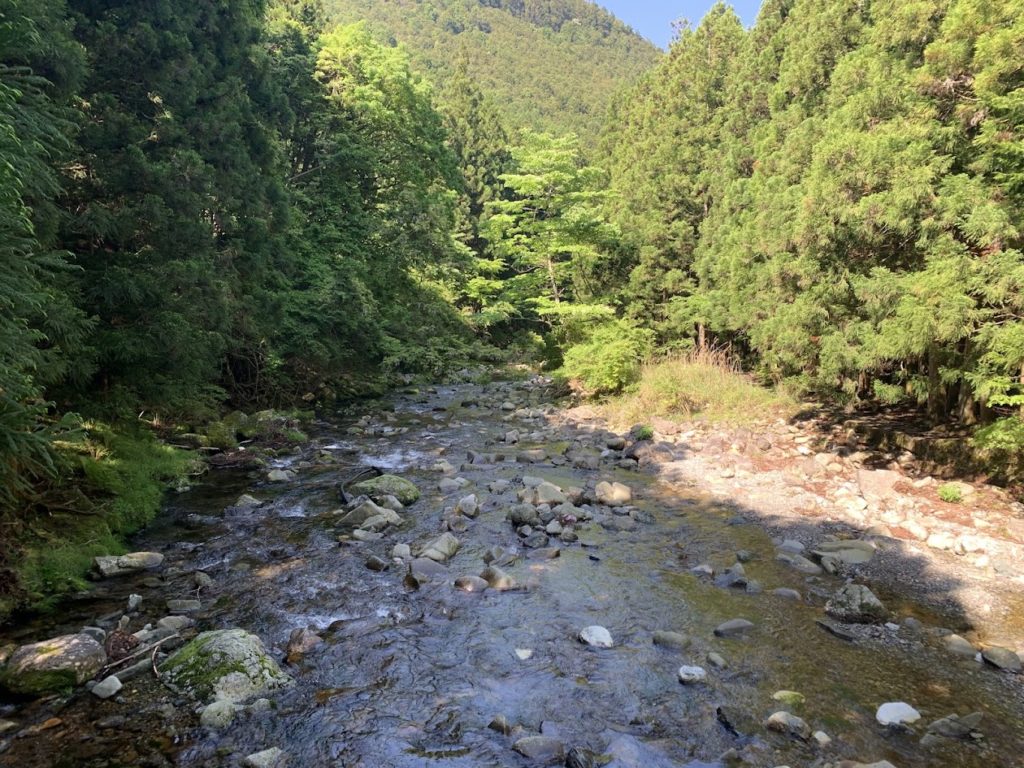
Looking downstream from here, you can see the river’s water flowing quietly between the beautiful mountains.
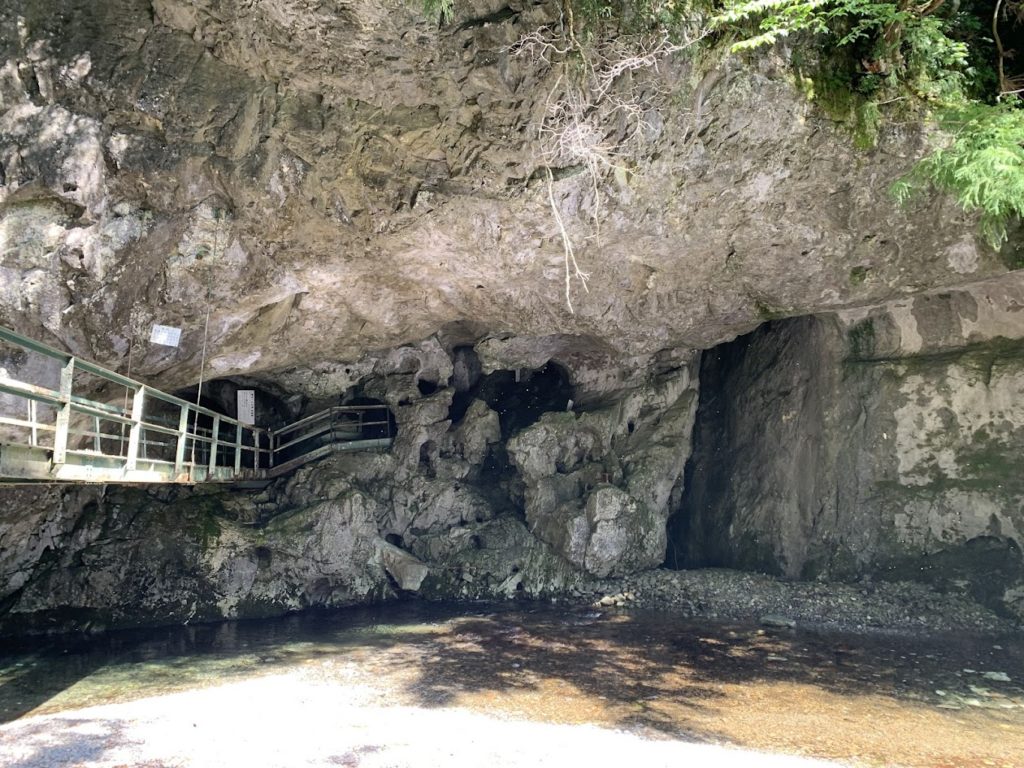
This is Toro Cave.
It is a limestone stalactite cave.
Shugendo practitioners entered this cave with candles and used it as a place for ascetic training.
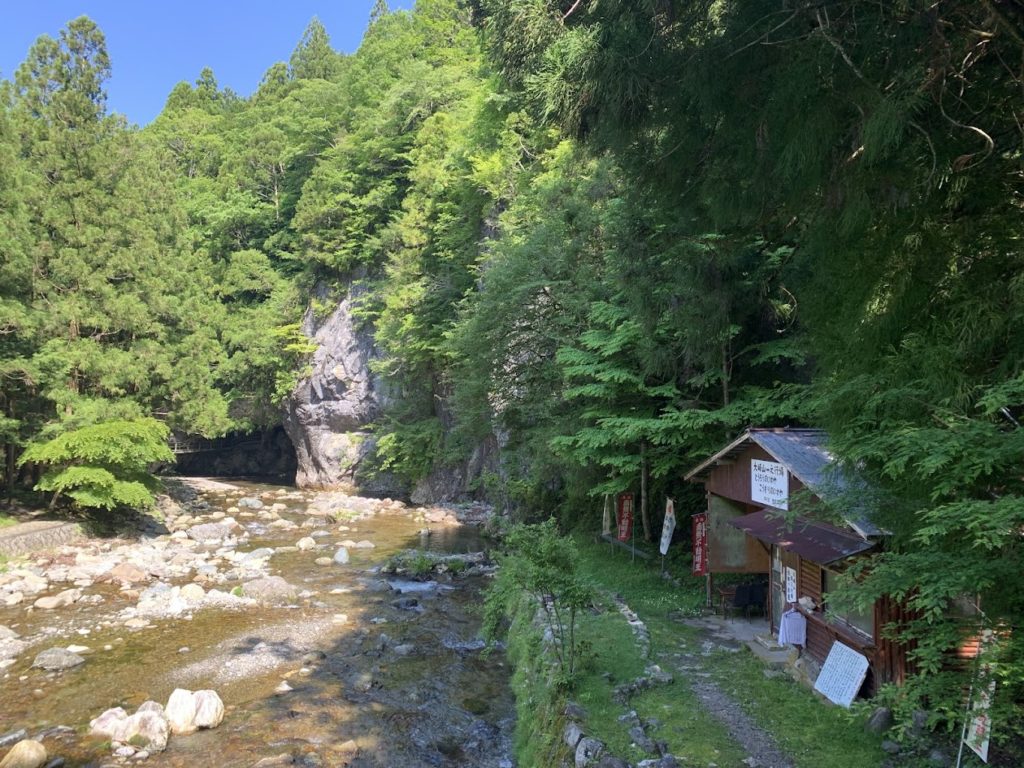
You pay the fee here to enter.
Since it was early in the morning, the doors were still closed.
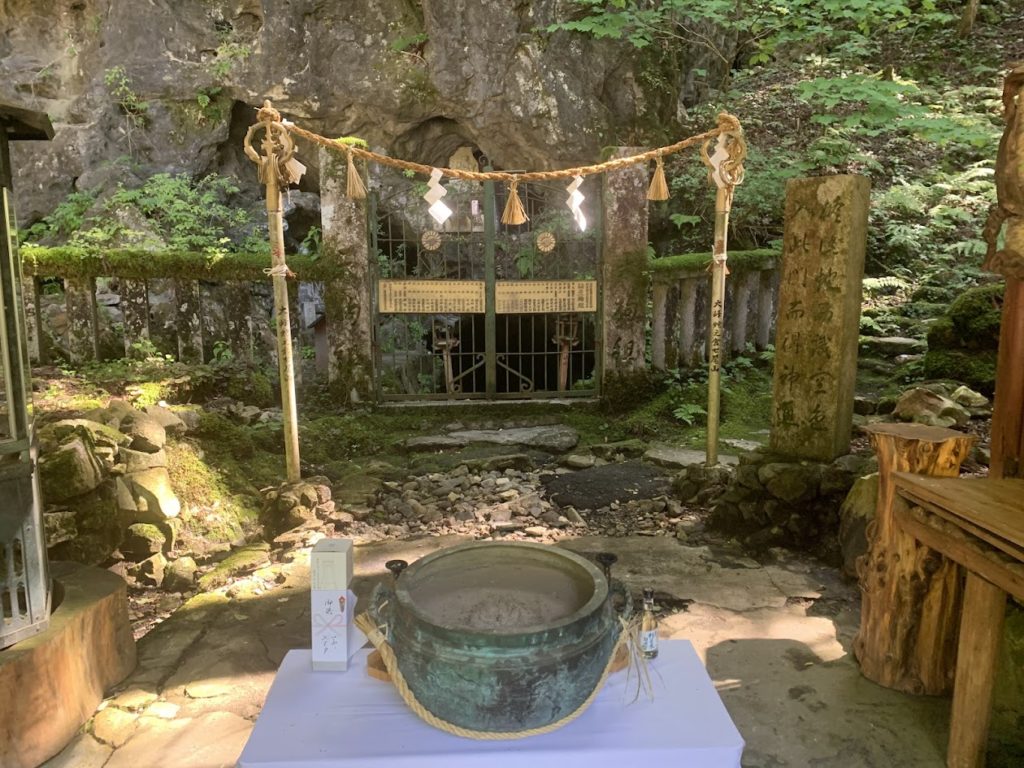
Bathed in the morning light, the shide (paper streamers) shone brilliantly.
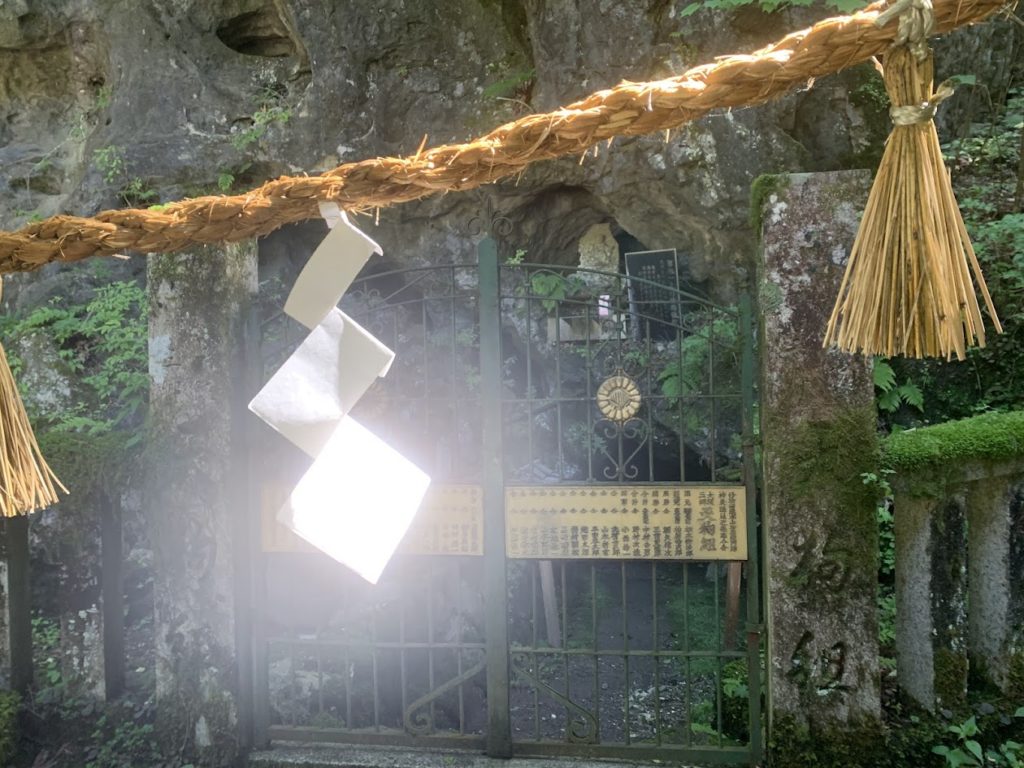
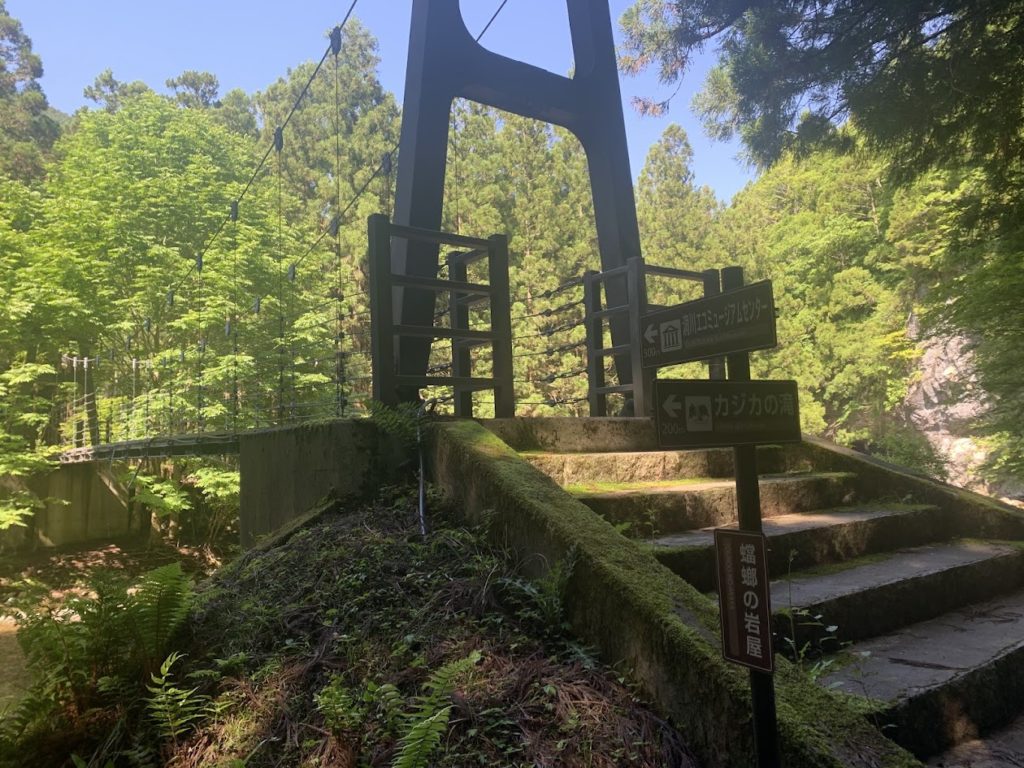
From the Eco-Museum, we crossed a suspension bridge to reach this “Toro no Iwaya” (Toro Cave).
From here, we will continue upstream to “Kajika Falls.”
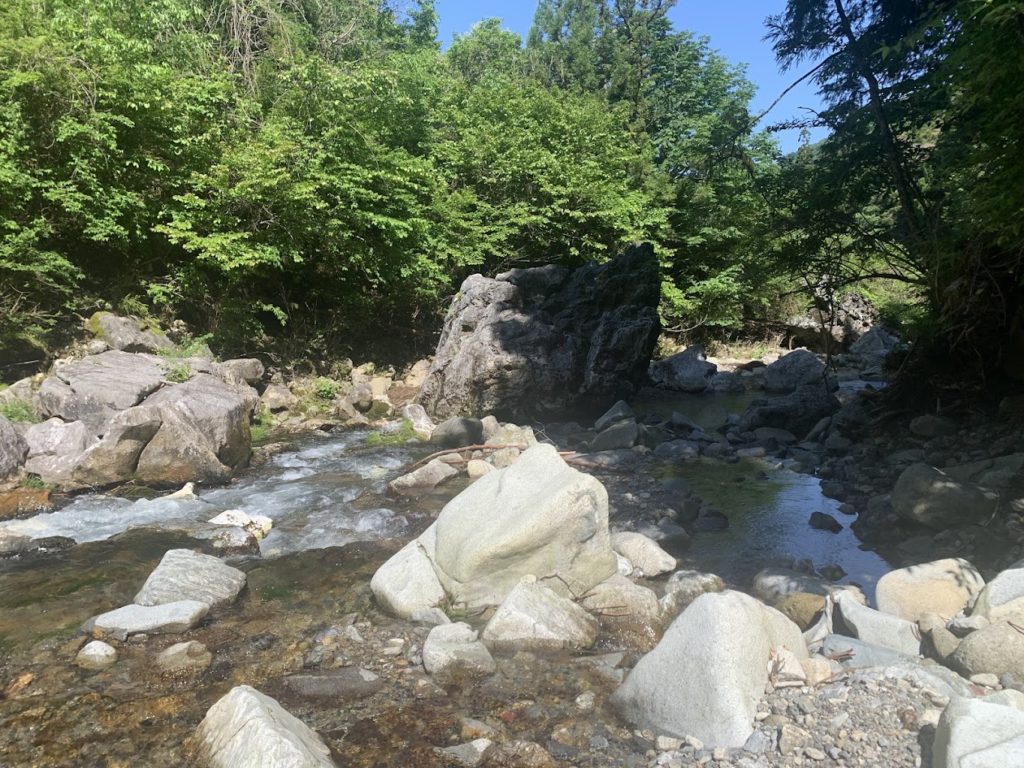
The riverbed is scattered with numerous white limestone rocks, and further ahead, you can see large boulders.
During extremely rare heavy rains that occur perhaps once in hundreds of years, the river swells to overflowing, and the raging waters submerge the stones.
At such times, the stones gain buoyancy and are pushed by the torrent, creating a phenomenon described as “stones walking along the river.”
The massive boulder visible in the distance is thought to have been carried here from upstream during such a heavy rain event.
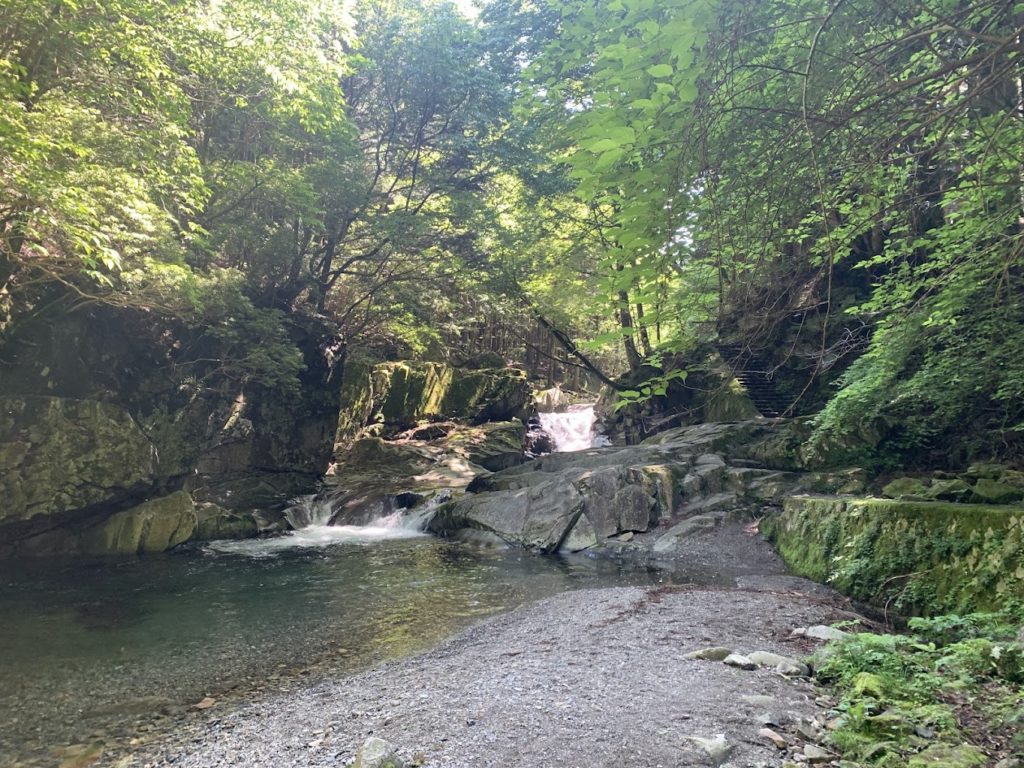
We have arrived at Kajika Falls.
Kajika refers to a type of frog that lives in clear streams.
The waterfall doesn’t have a great drop; rather, the water flows down in an orderly, gentle cascade.
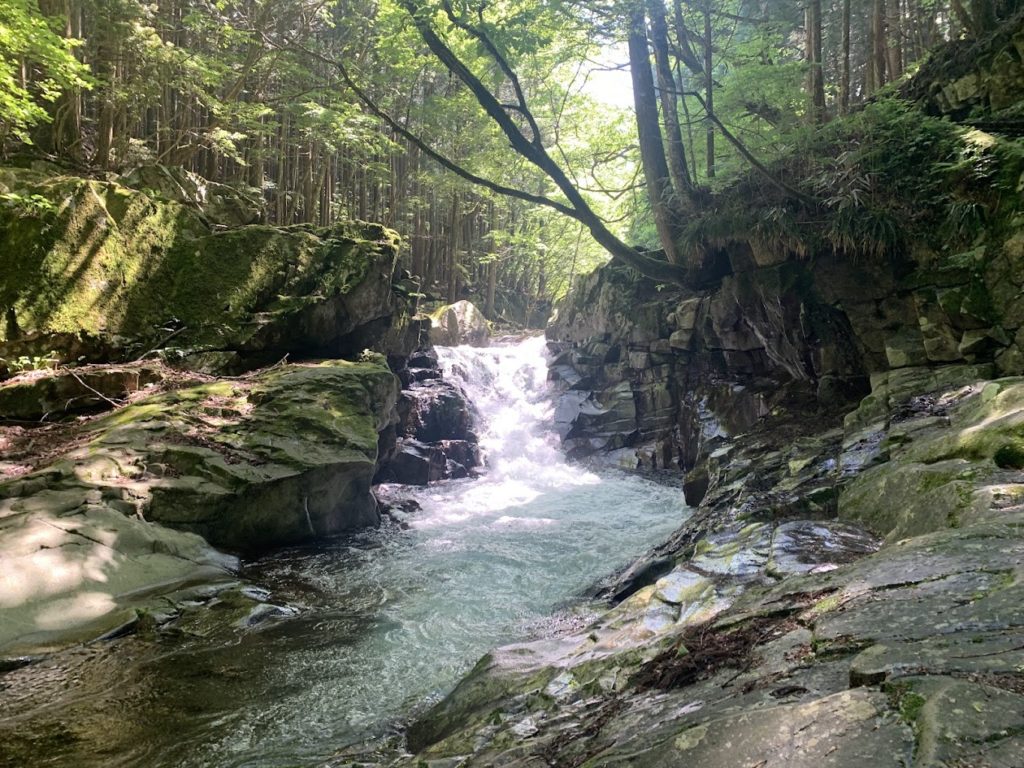
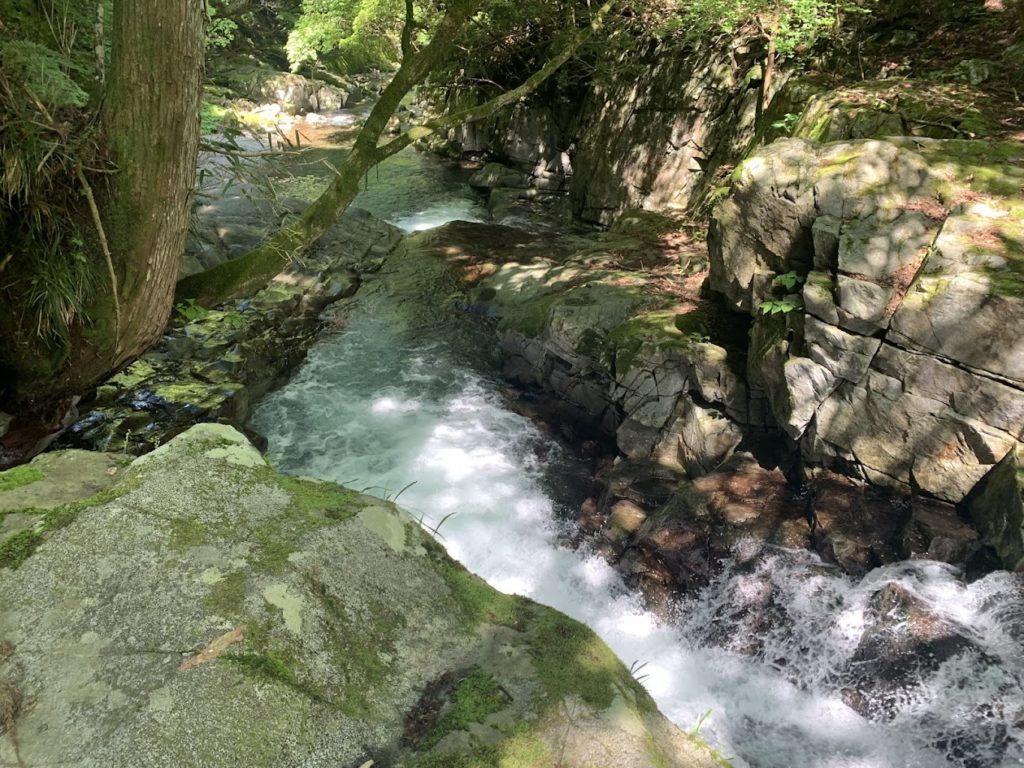

Upstream of Kajika Falls, the beautiful river continues.
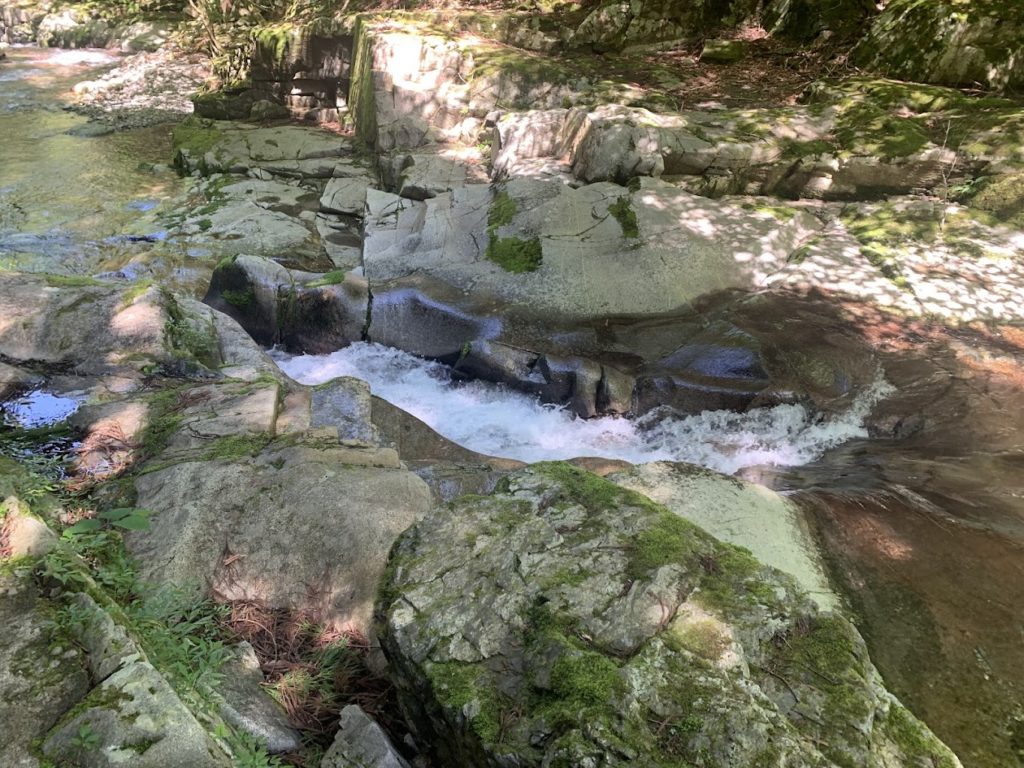
All the river water flows through a very narrow hollow.
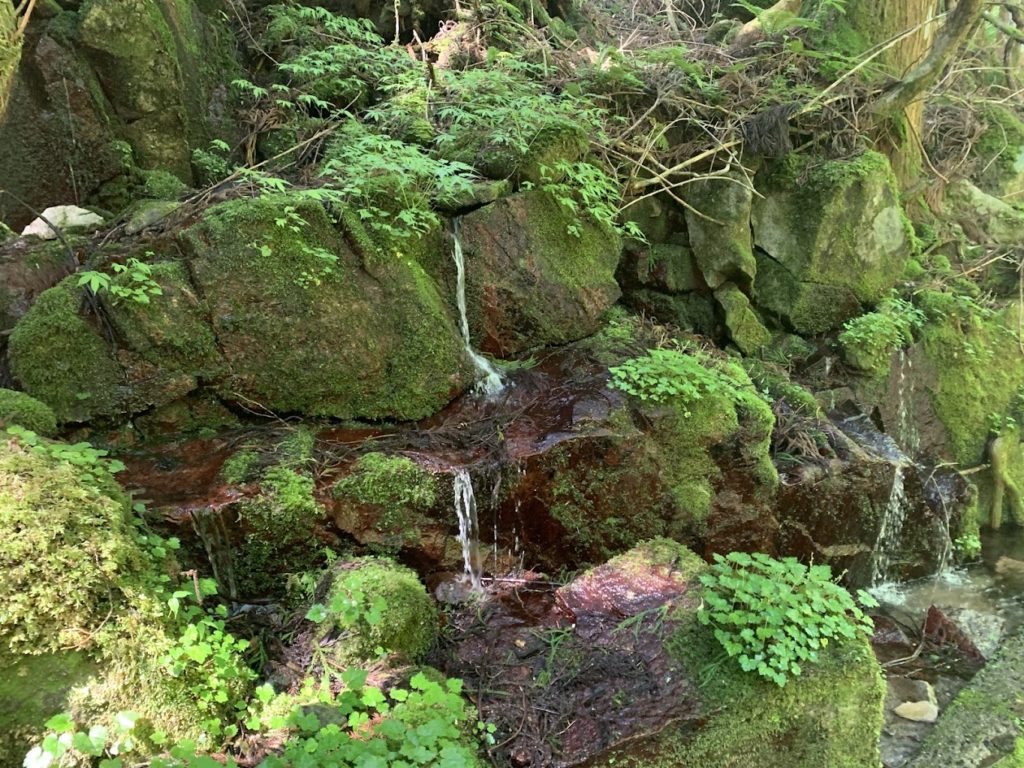
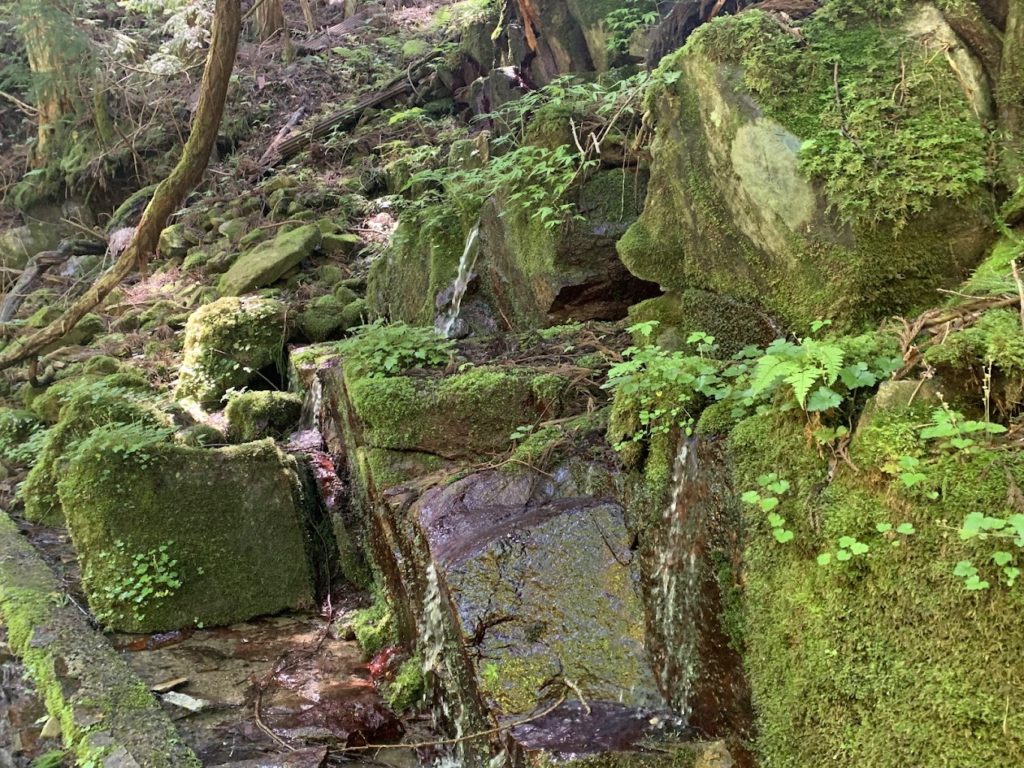
Countless streams of water flow out from the rocks along the riverbank.
Rainwater that fell on the mountains seeps through the limestone layers and emerges here.

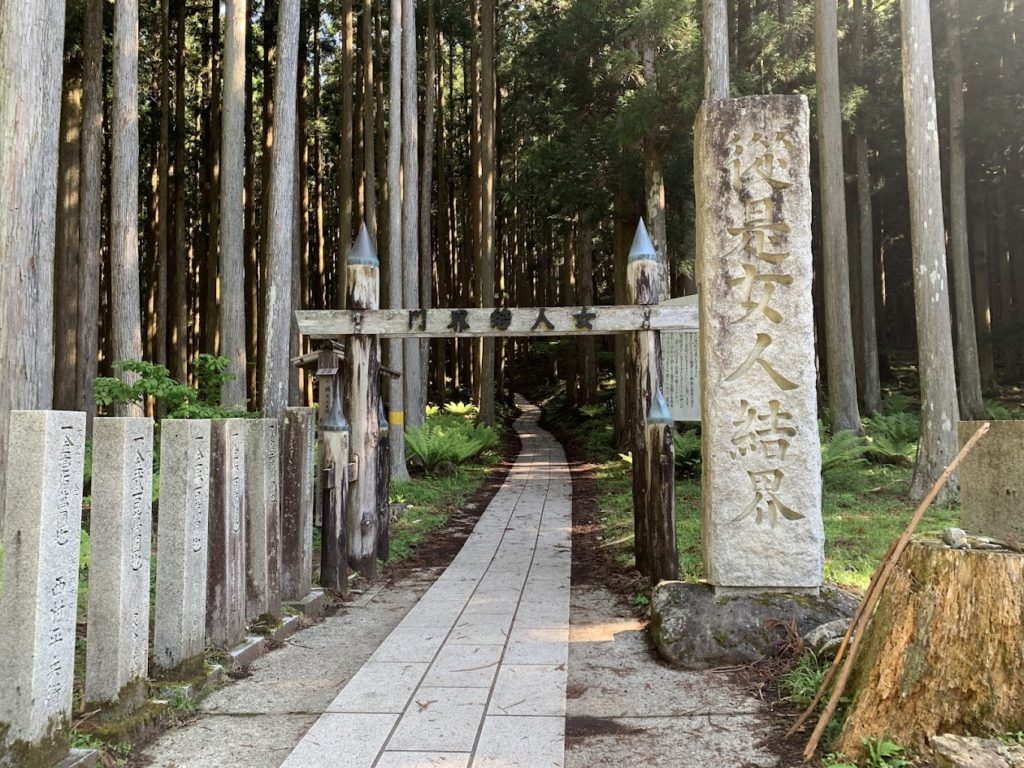
Continuing to follow the road along the river by car, you will reach the “Nyonin Kekkai Mon” (Women’s Exclusion Gate).
This is the entrance to Mount Sanjo-ga-take on Mount Omine.
The women’s exclusion boundary at Sanjo-ga-take has been in place continuously for about 1,300 years.
Goyomatsu Stalactite Cave
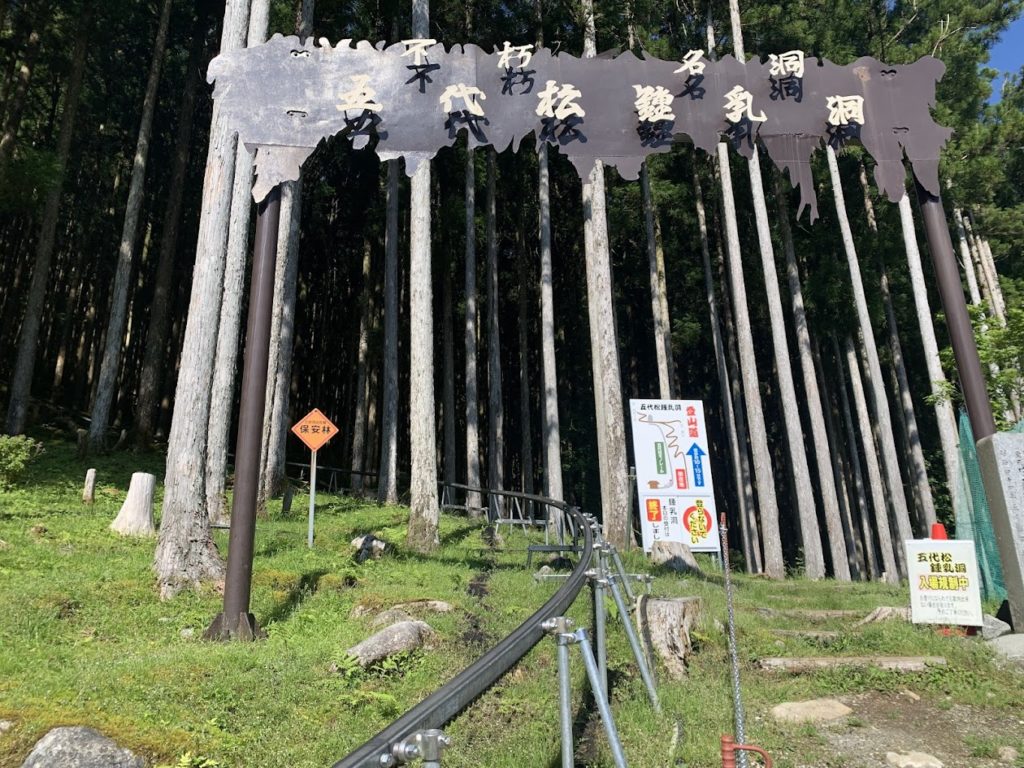
Near where the road rises from Kajika Falls, you’ll find the Goyomatsu Stalactite Cave.
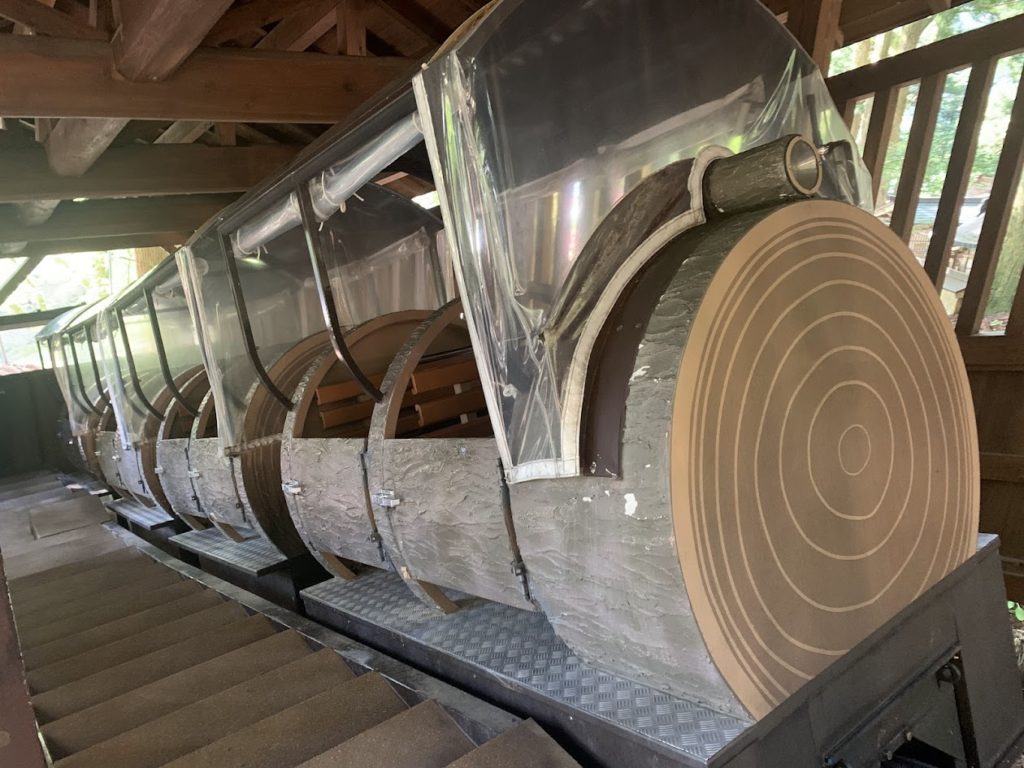
From the roadside reception to the cave, the steep mountain path is served by a small trolley train that many visitors use.
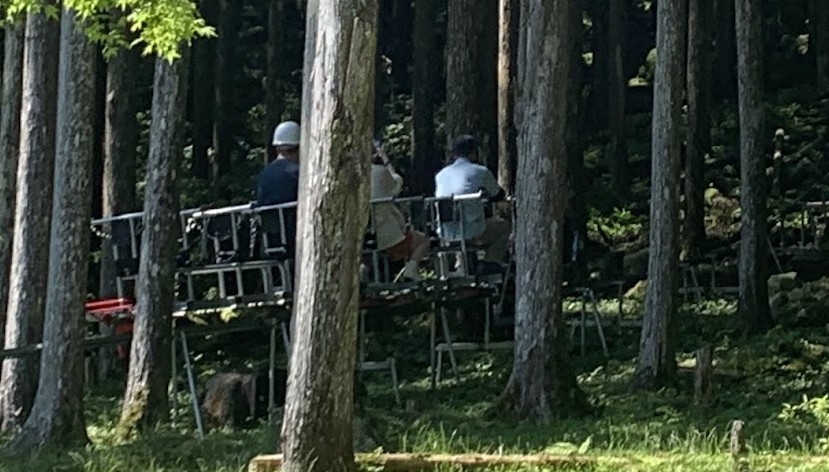
This is the trolley train to the stalactite cave.
Since helmets are required inside the cave, passengers wear helmets even while riding the trolley.
When descending, passengers sit facing the mountain slope in the same posture as when ascending and slide down backward.
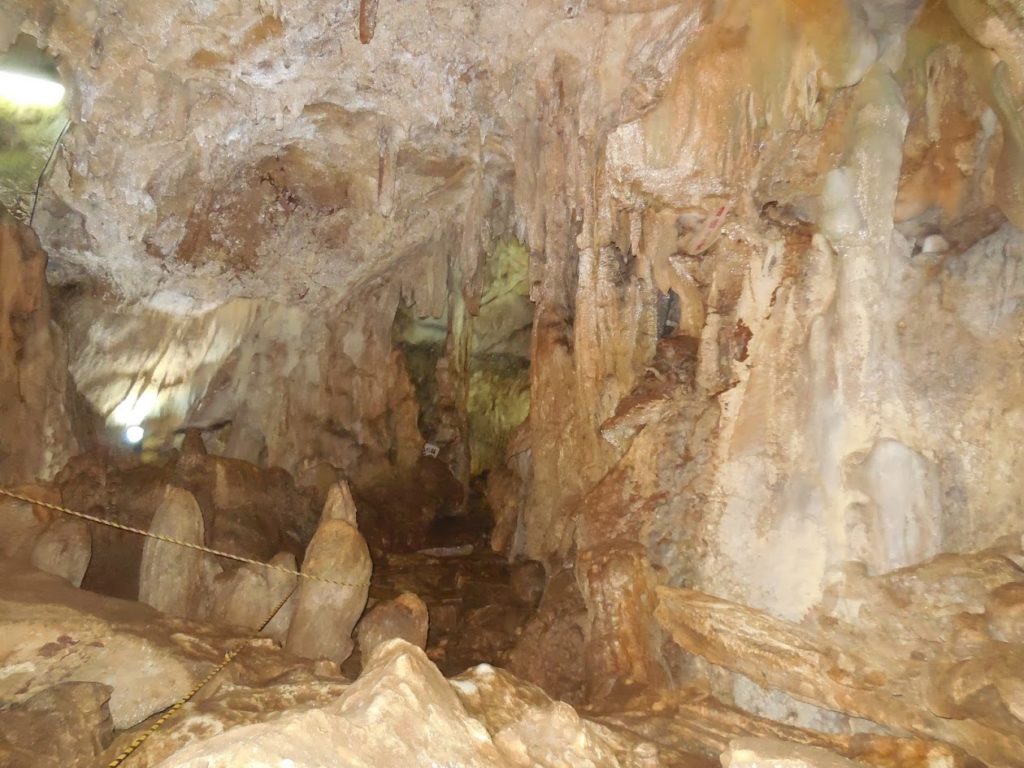
Inside the stalactite cave, many stalactites can be seen.
When a stalactite grows to meet the stalagmite and forms a column, it is called a stalagnate or pillar. The largest pillar, called the “Great Golden Pillar,” reaches up to 8 meters in height.
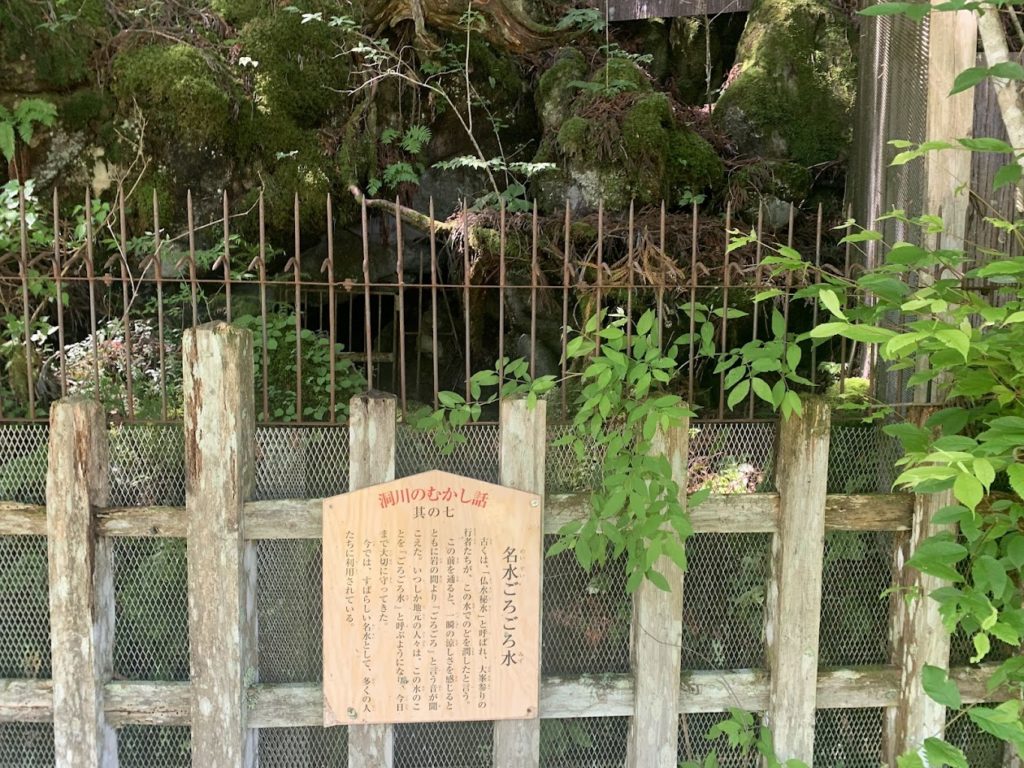
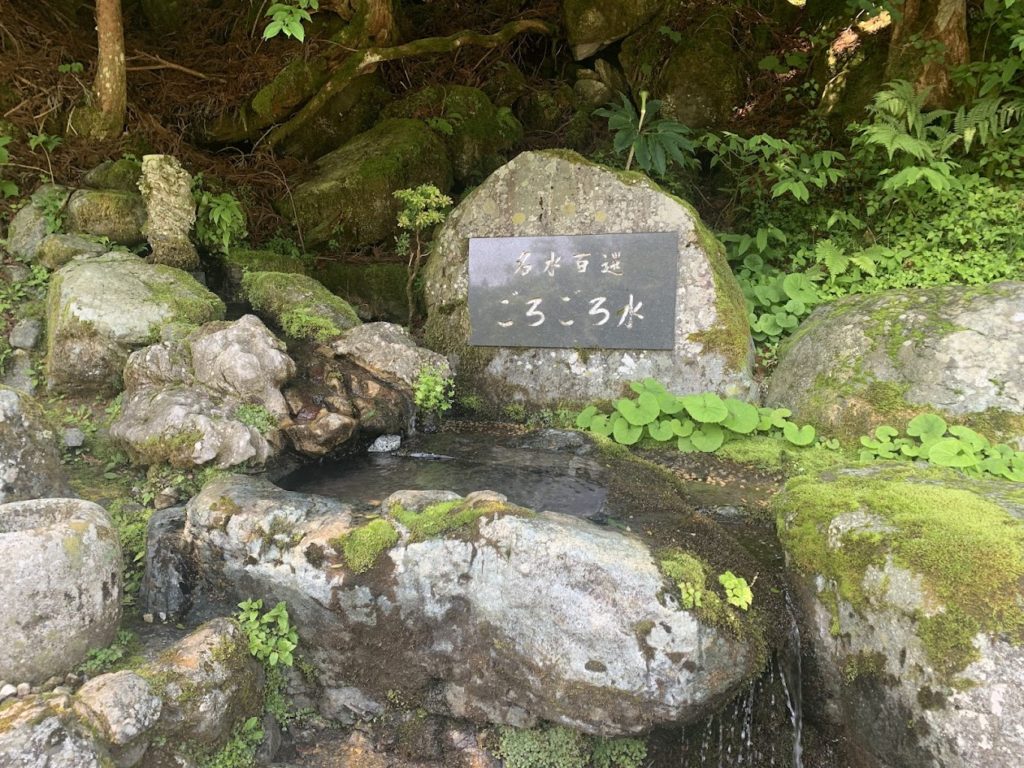
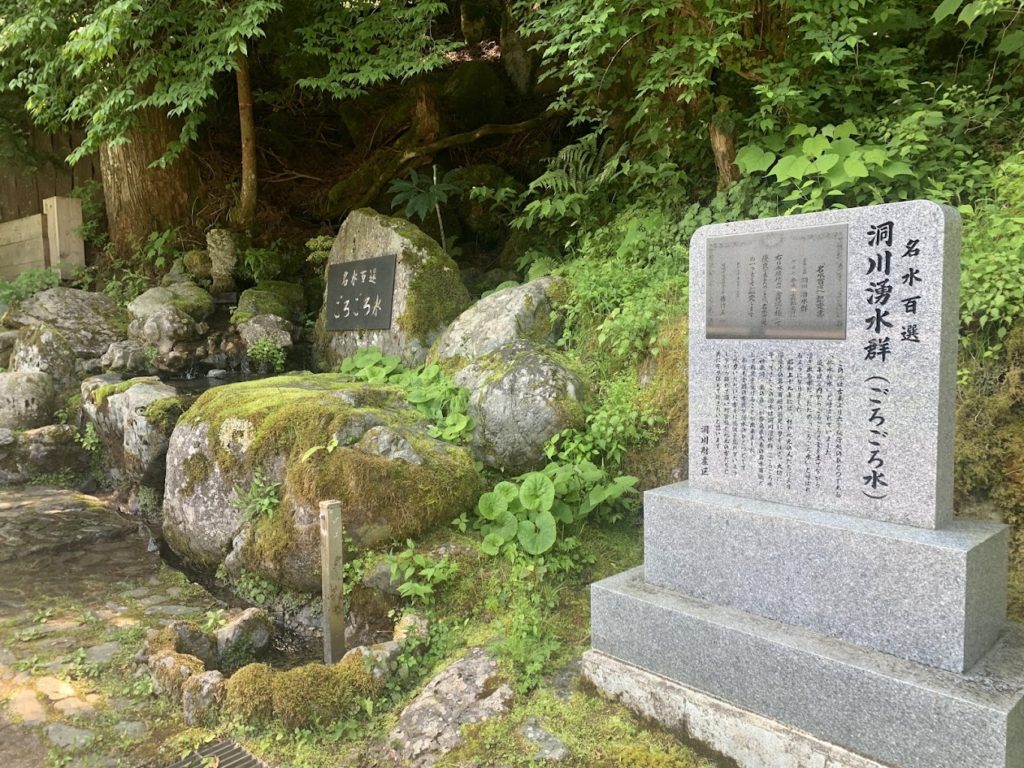
Near the trolley boarding area is the spring outlet of Gorogoro Water.
The information board reads:
In ancient times, it was called “Bussui Hisui” (Buddha’s Secret Water). Practitioners on the Omine pilgrimage quenched their thirst with this water.
Passing by here, one can feel a moment of coolness and hear the “gorogoro” rumbling sound coming from between the rocks. Over time, locals began calling this water “Gorogoro Water” and have cherished it ever since.
Today, it is celebrated as excellent spring water and is used by many people.

Bussui Hisui (Buddha’s Secret Water) Gyosha-son
Enshrined beside the spring outlet of Gorogoro Water.
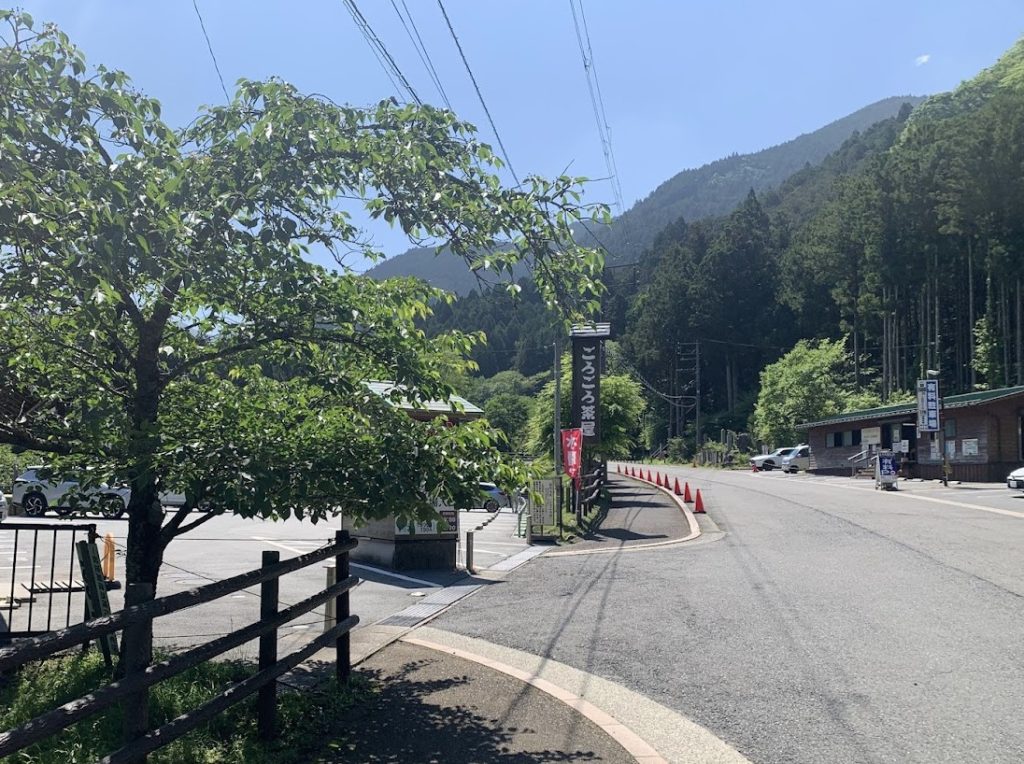
On the right side of the road is the trolley boarding area for Goyomatsu Stalactite Cave.
Behind it is the spring outlet of Gorogoro Water.
On the left side of the road is a paid parking lot, where each parking space has a faucet so visitors can fill containers with Gorogoro Water.
Menfudo Stalactite Cave
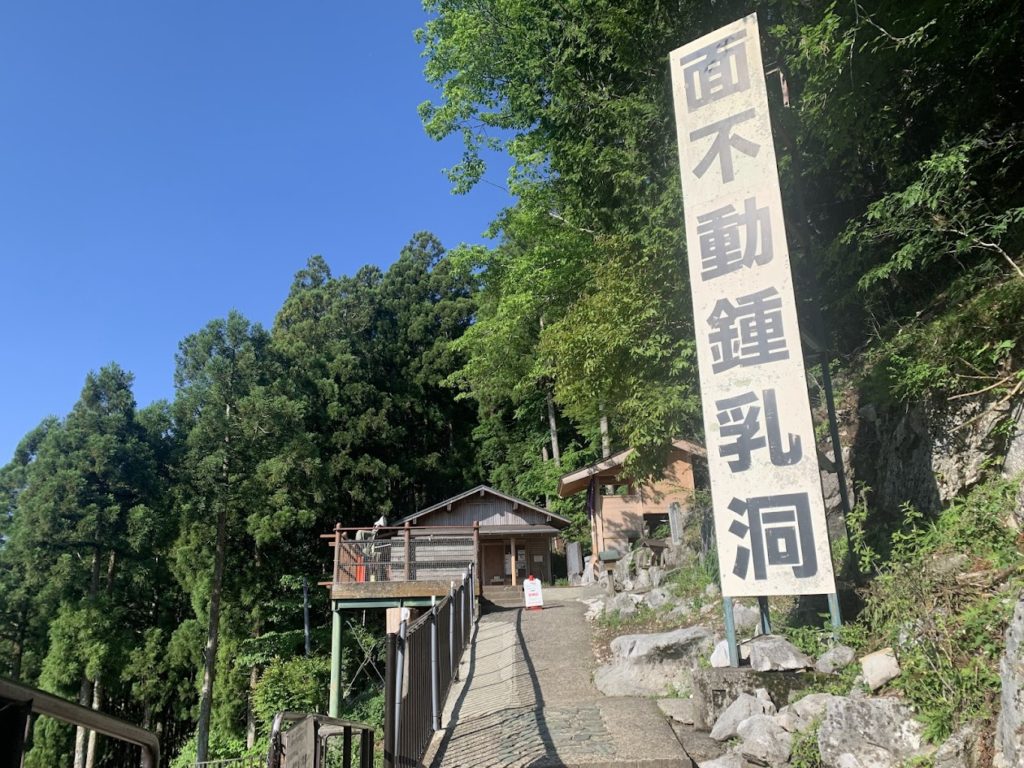
There are two stalactite caves in Dorogawa.
Menfudo Stalactite Cave is located at the entrance of the Dorogawa area. From the parking lot by the river, it’s about a 10-minute walk uphill, or you can take the trolley.
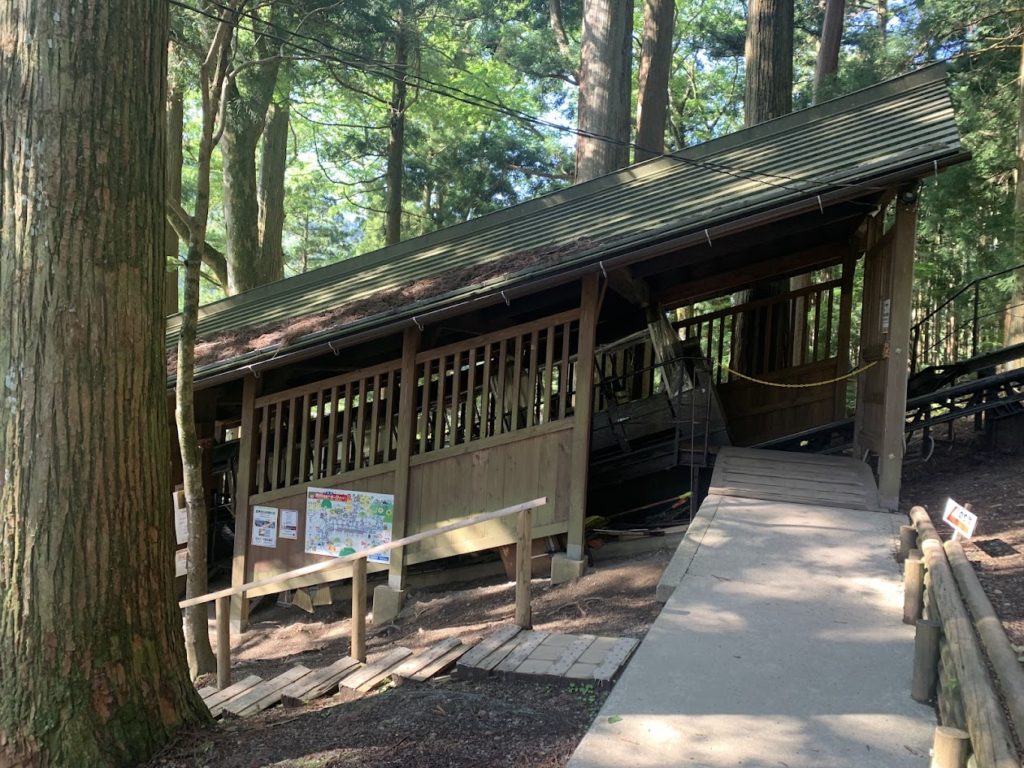
This is the trolley train.
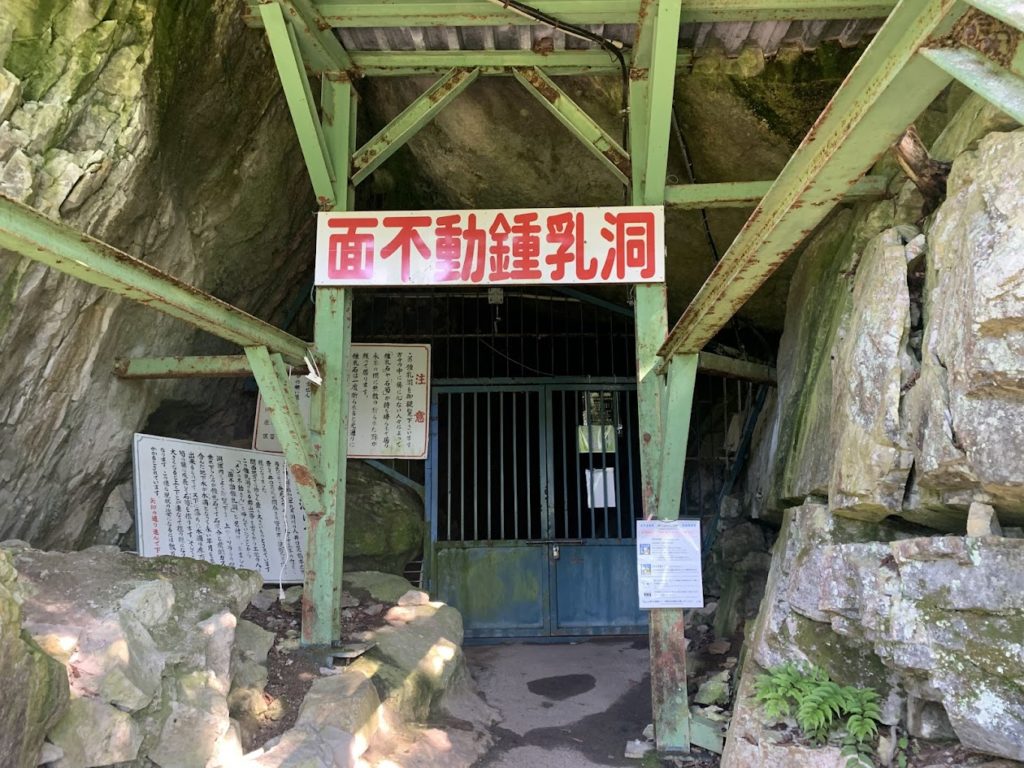
Since it was early morning, it was not open yet.
Inside, you can see many stalactites, stalagmites (stone formations growing from the ground like bamboo shoots), and stone pillars (formed where stalactites and stalagmites have joined).

This is the view of the mountains near the stalactite cave.
They are densely covered with trees.
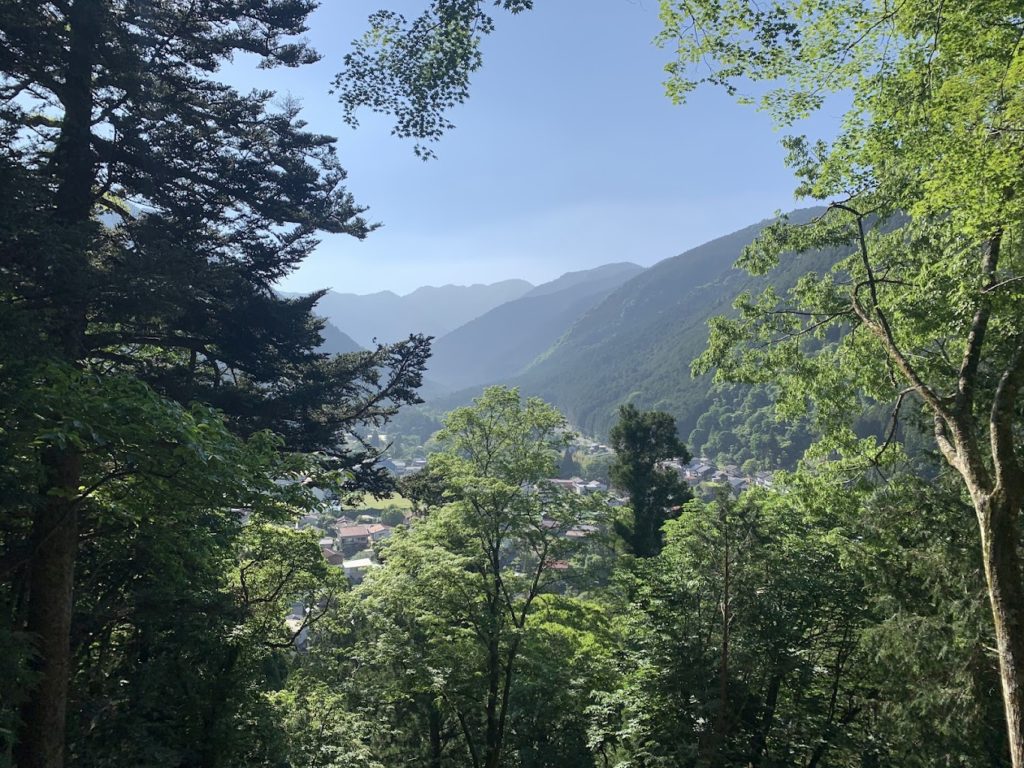
From near the stalactite cave, you can see the Dorogawa area below.
At an elevation of about 800 meters, summers are cool, and winters bring snowfall.
Ryusenji Temple
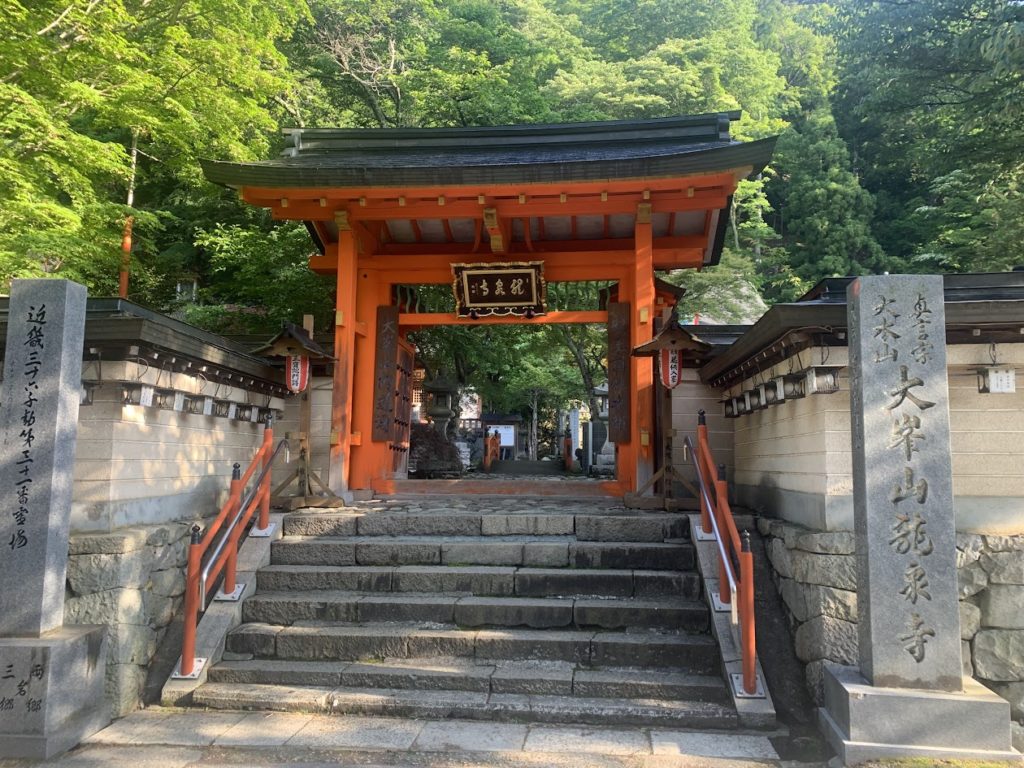
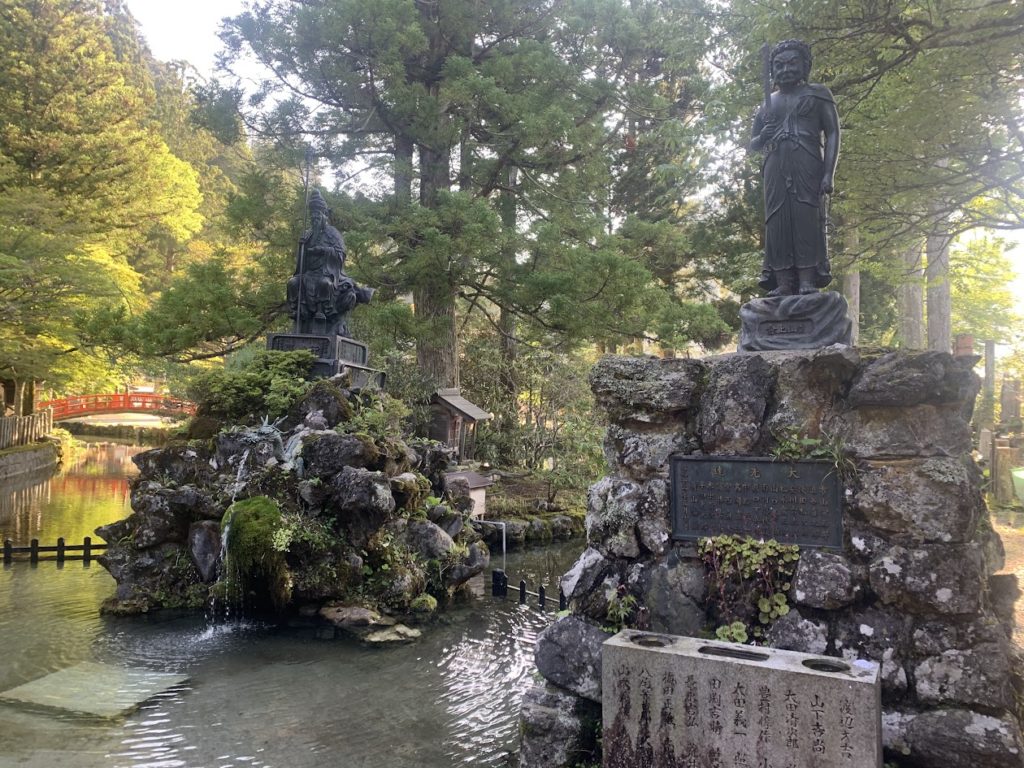
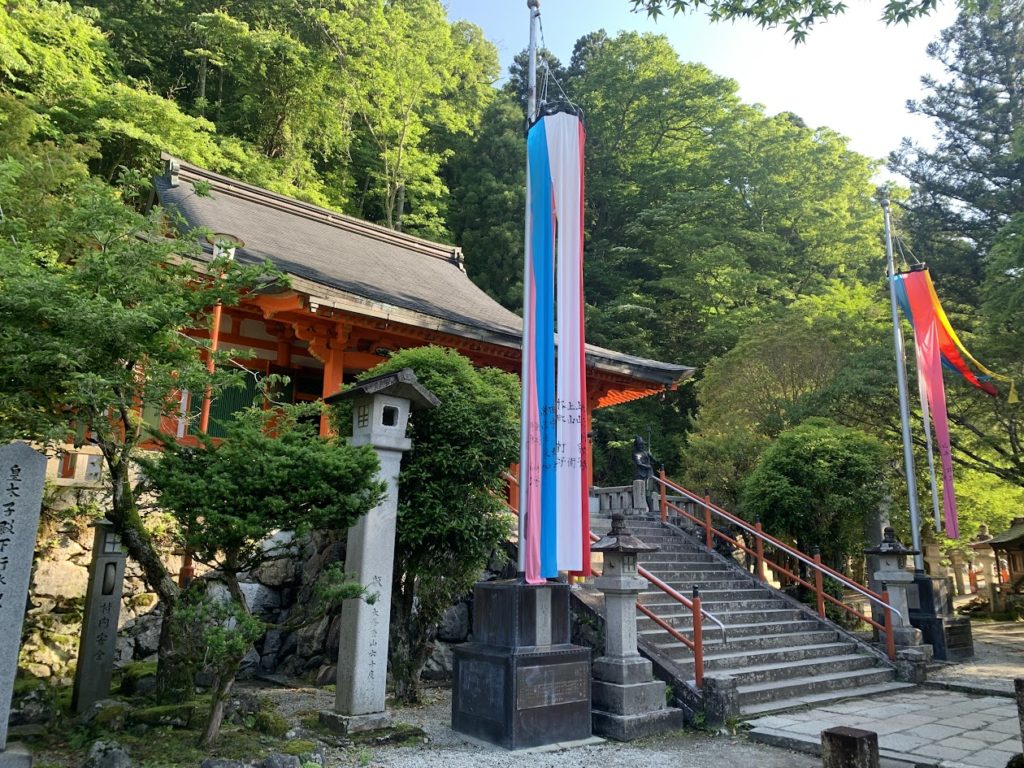
Ryusenji Temple is located right next to the entrance to Menfudo Stalactite Cave.
Shugendo practitioners on Mount Omine purify themselves here and pray for safety on their journey before heading to Sanjo-ga-take.
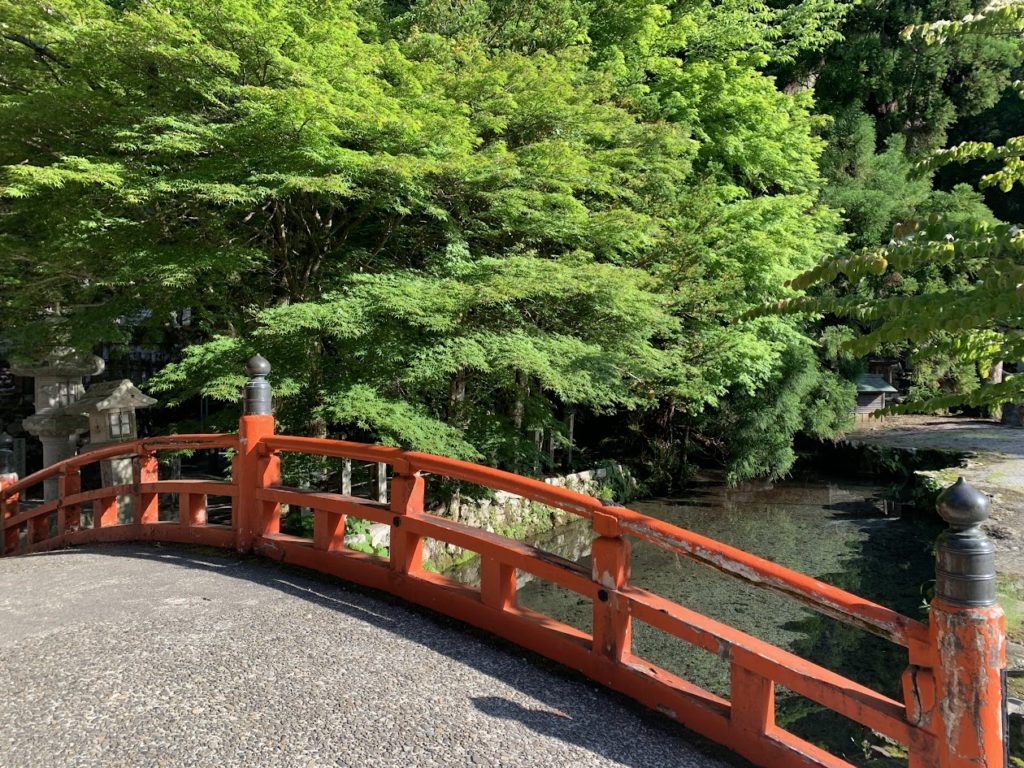
Within the temple grounds, clear spring water flows continuously.
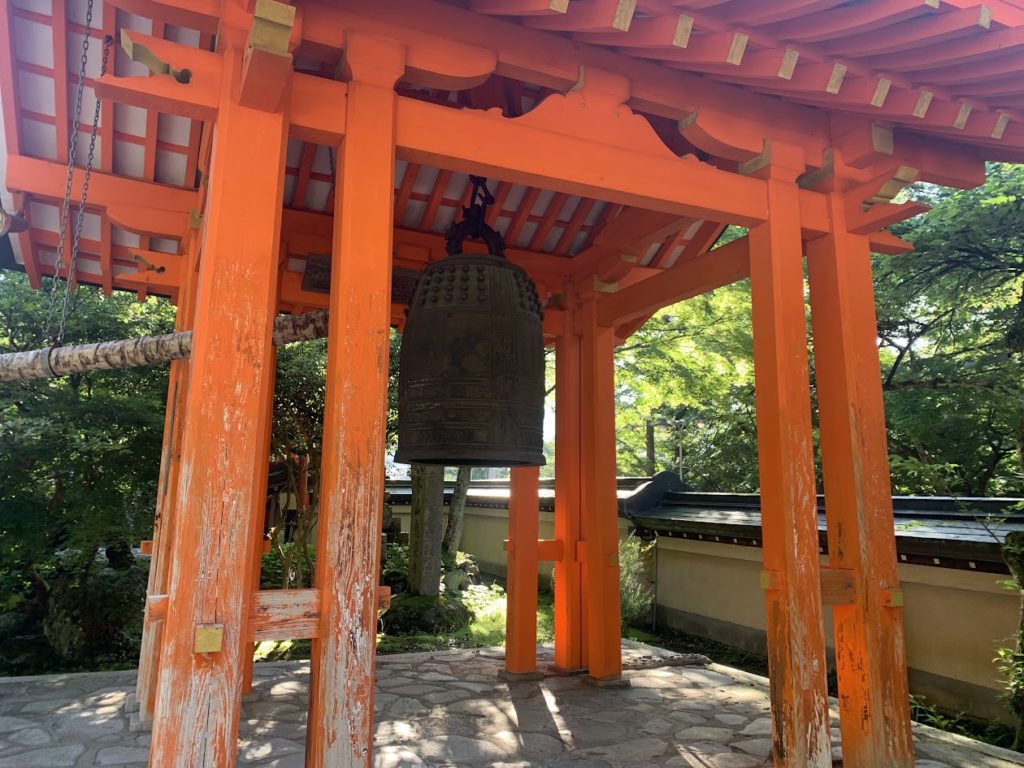
The temple bell and purification fountain.

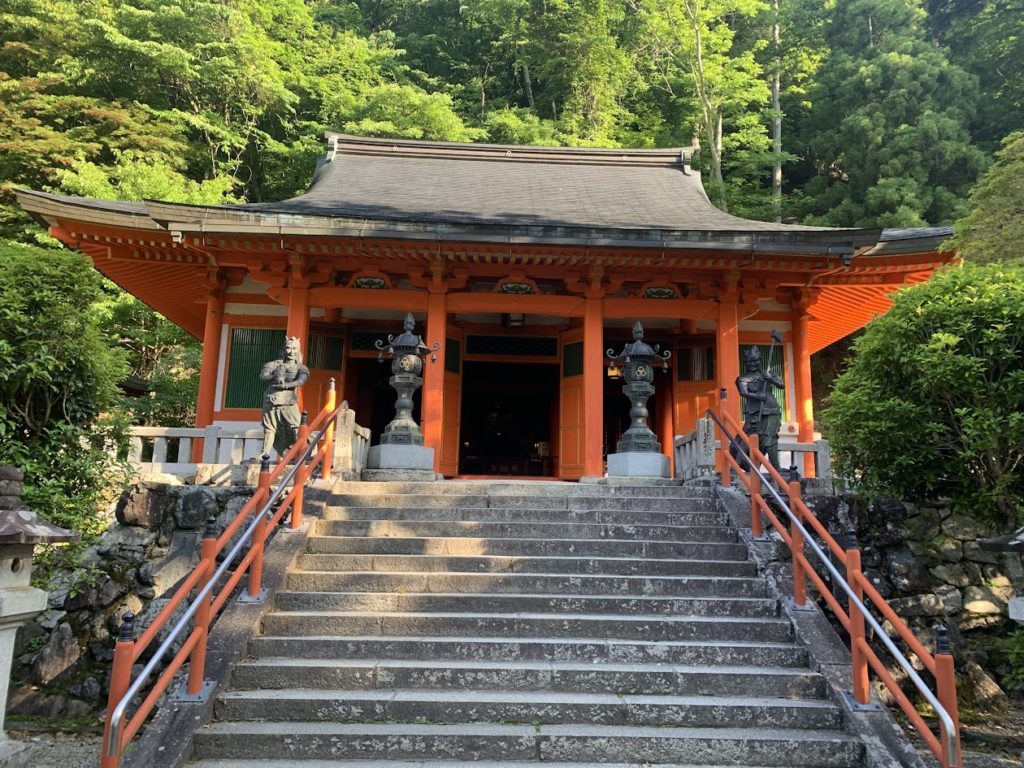
This is the main hall.
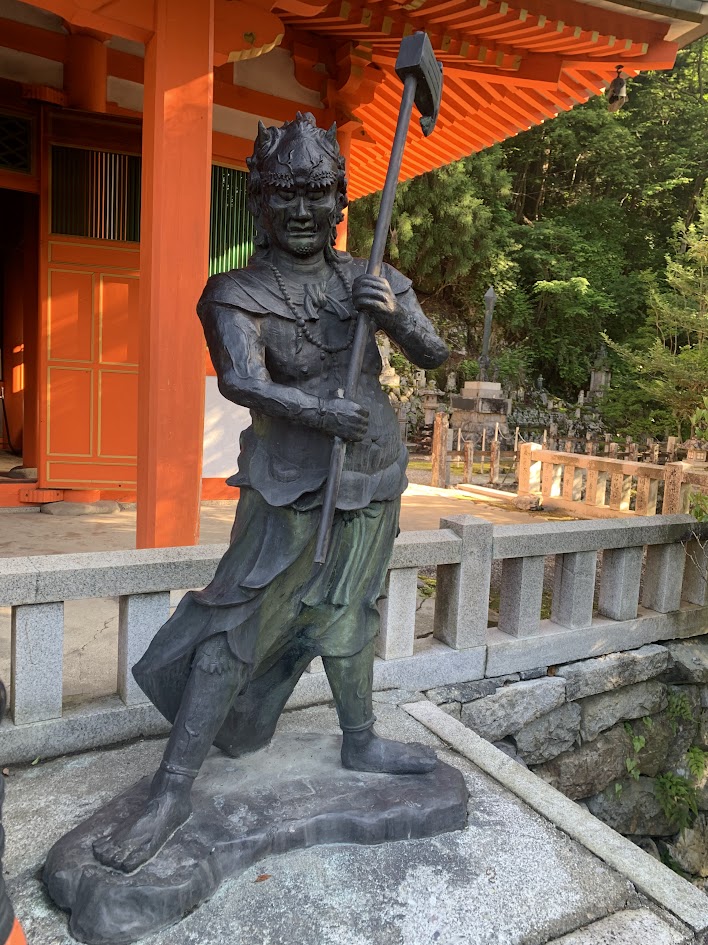
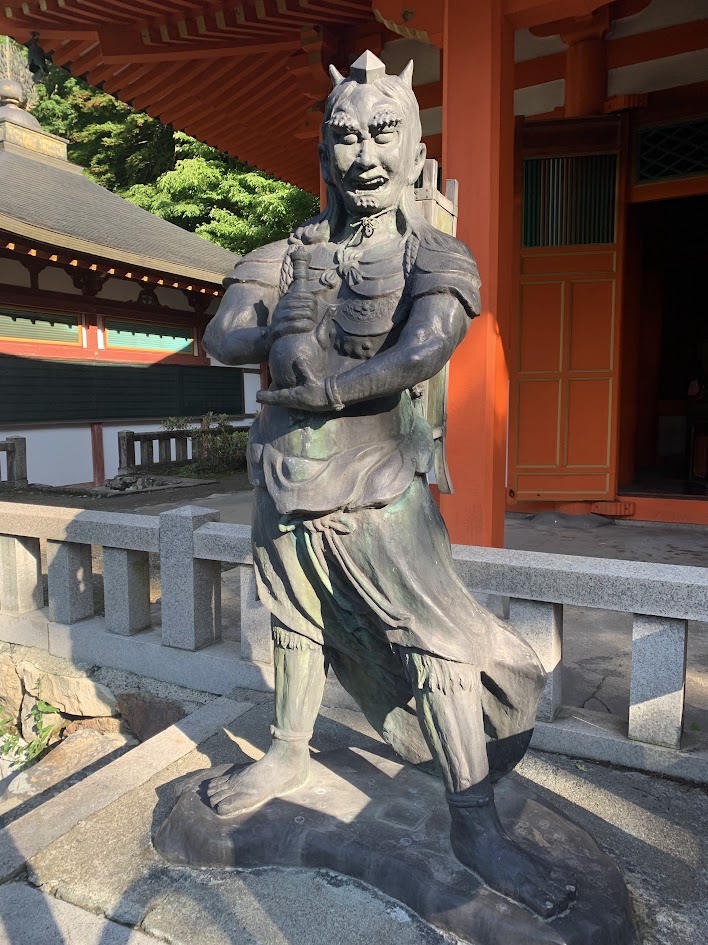
In front of the main hall, two guardian demon statues stand watch.
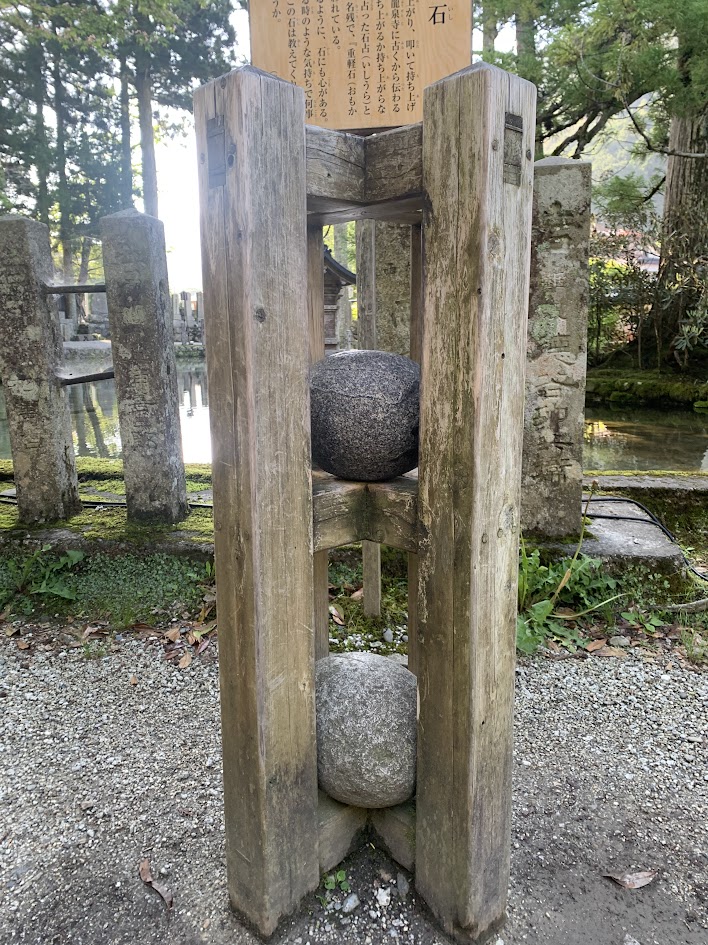
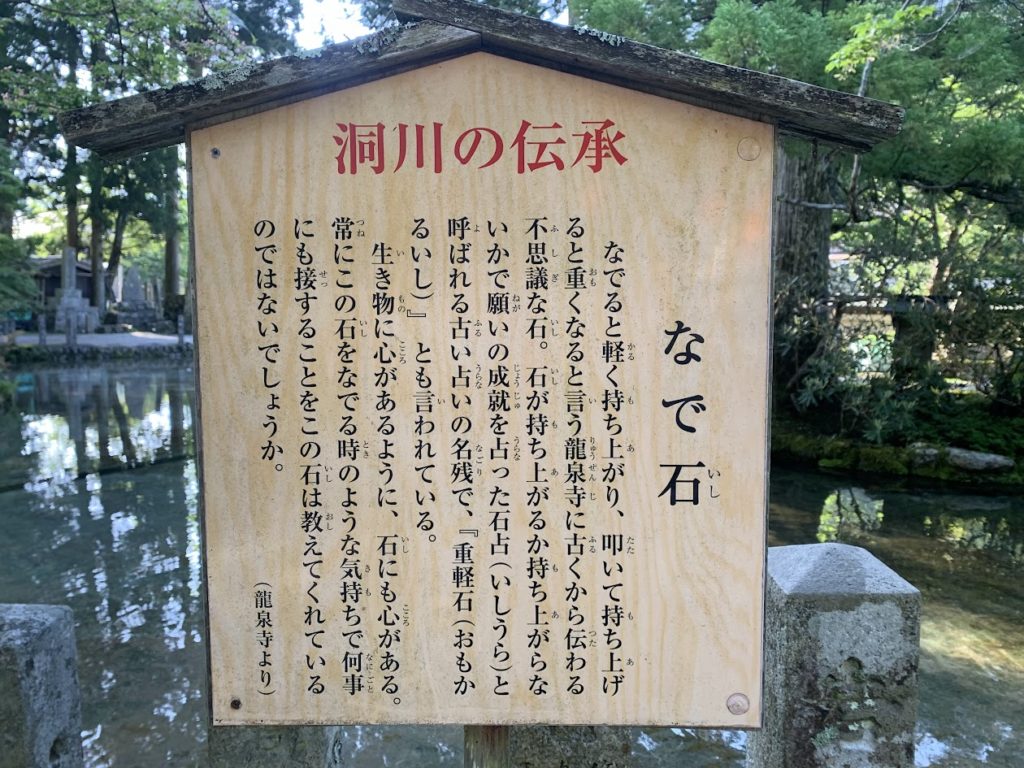
Nade-ishi (The Stroking Stone)
A mysterious stone that feels light when gently lifted, but becomes heavy when struck and lifted.
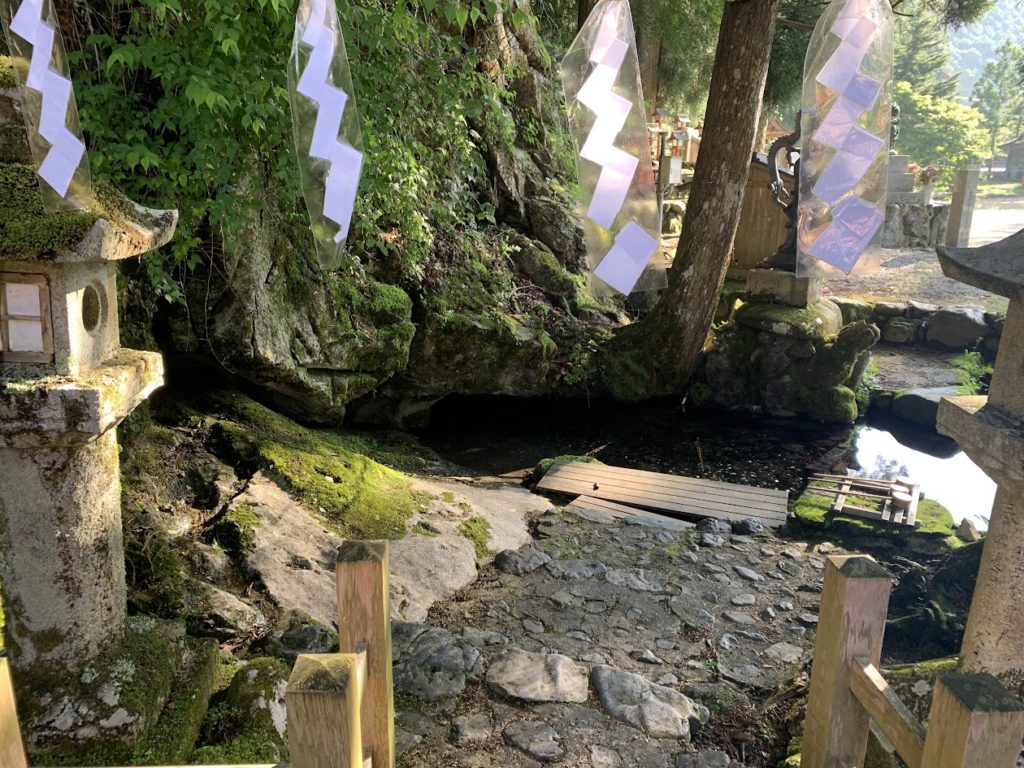
The Dragon’s Mouth Spring
Located deep within the temple grounds, this is the source where water quietly flows out from beneath the rocks. The water here is clear and pure.

The water has passed through the limestone layers of the mountain behind.
It feels cool in summer and warm in winter.
This is the purifying water used by the Omine Shugendo practitioners.
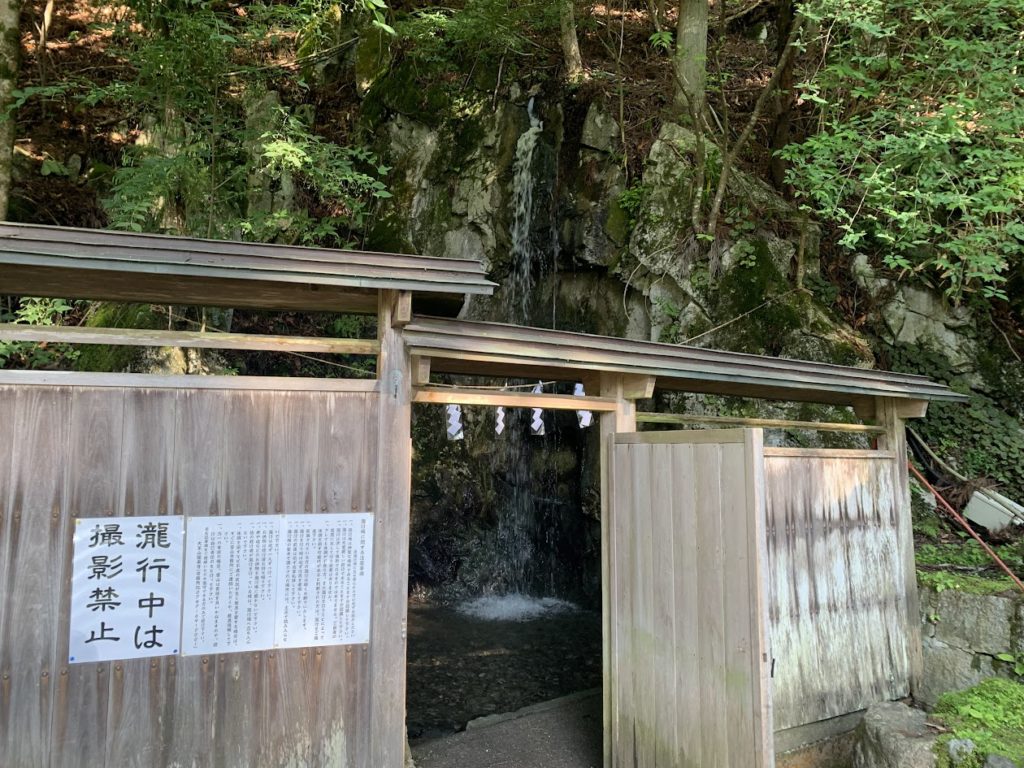
This is the place where practitioners perform waterfall ascetic training.
There is a sign that reads, “No photography during waterfall training.”
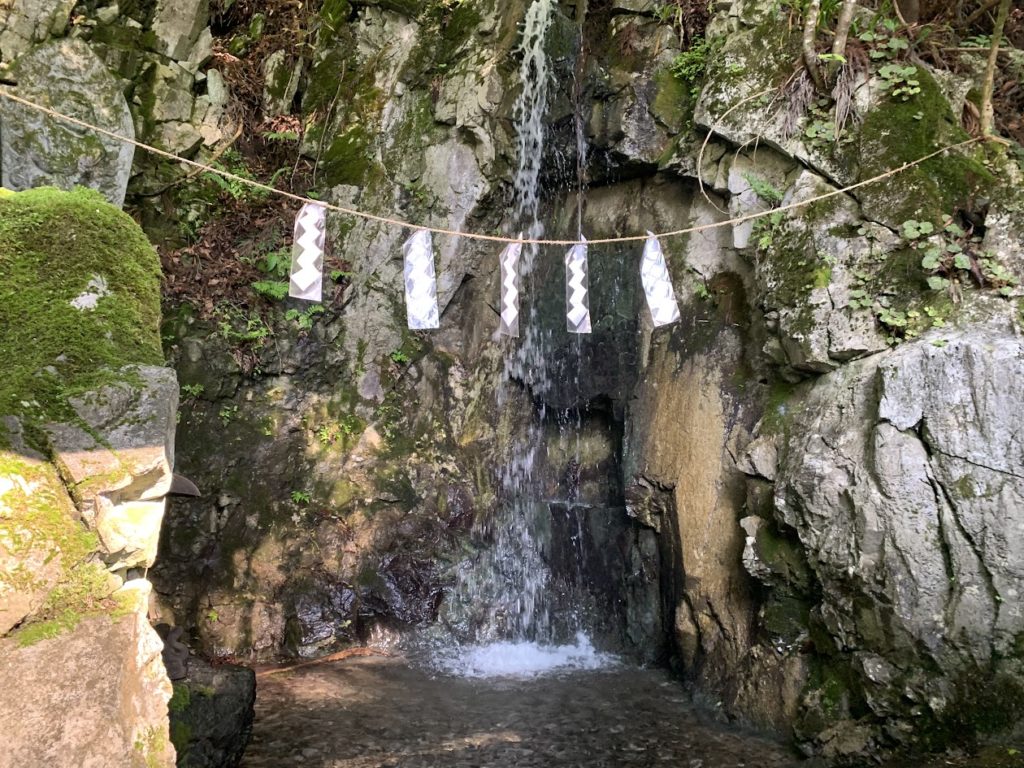
This waterfall is also formed by water that suddenly springs forth and flows down.
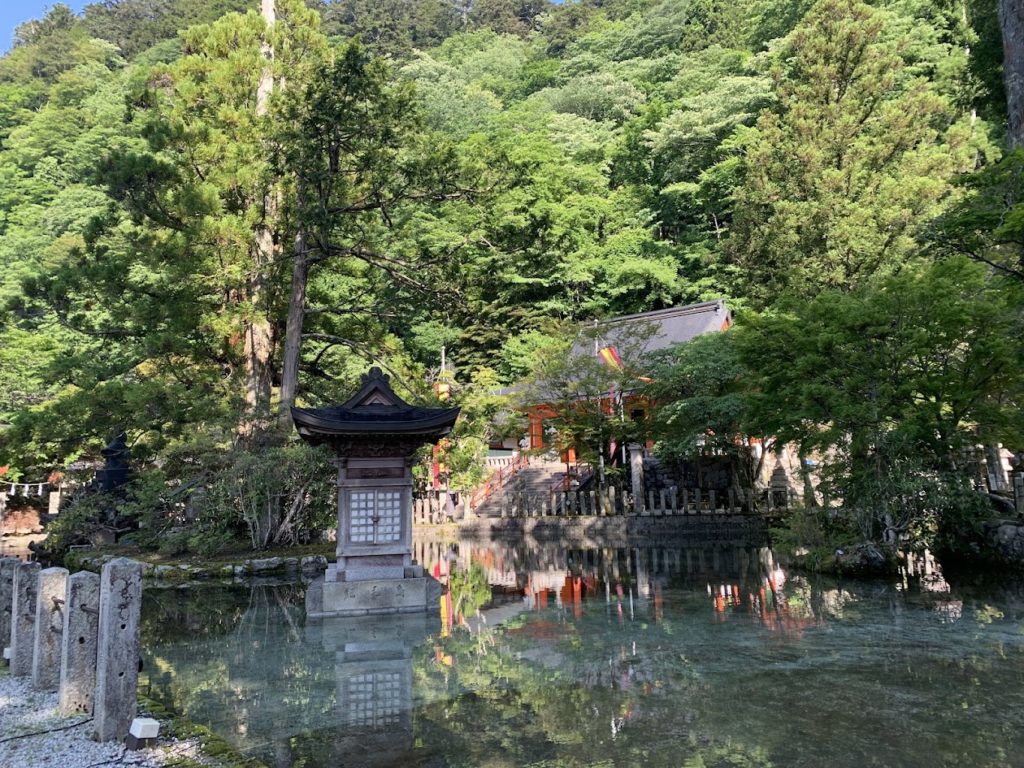
Please take a look at the clear water flowing through the temple grounds.
Mitarai Valley
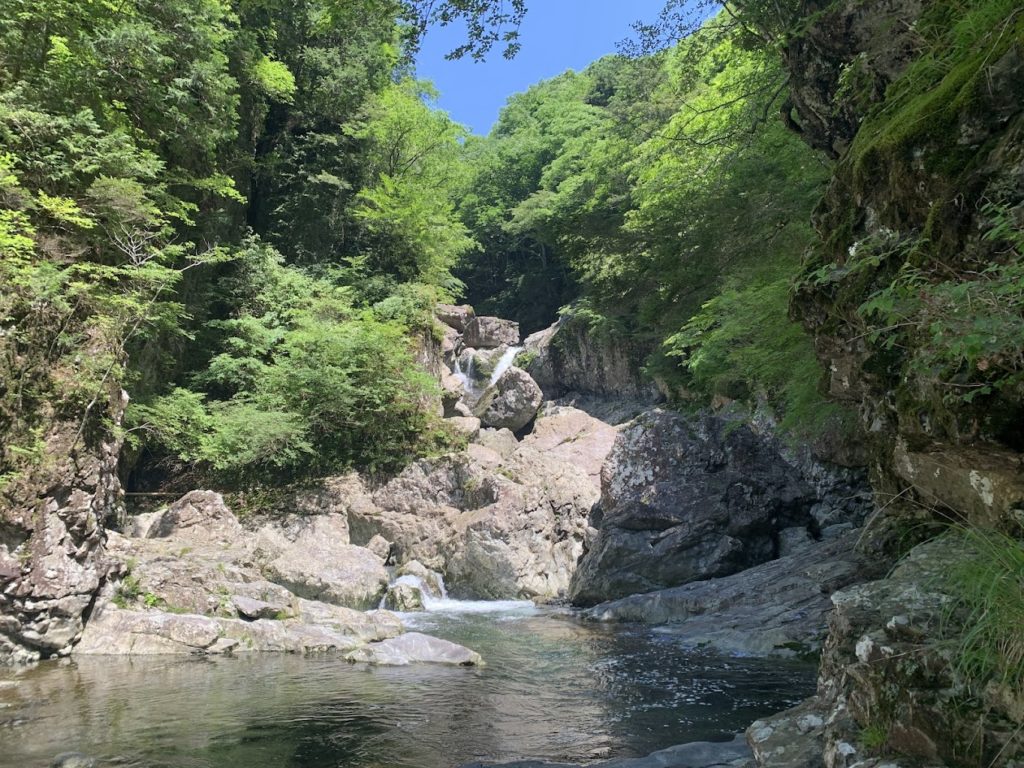
Mitarai Valley is located downstream from the Dorogawa area.
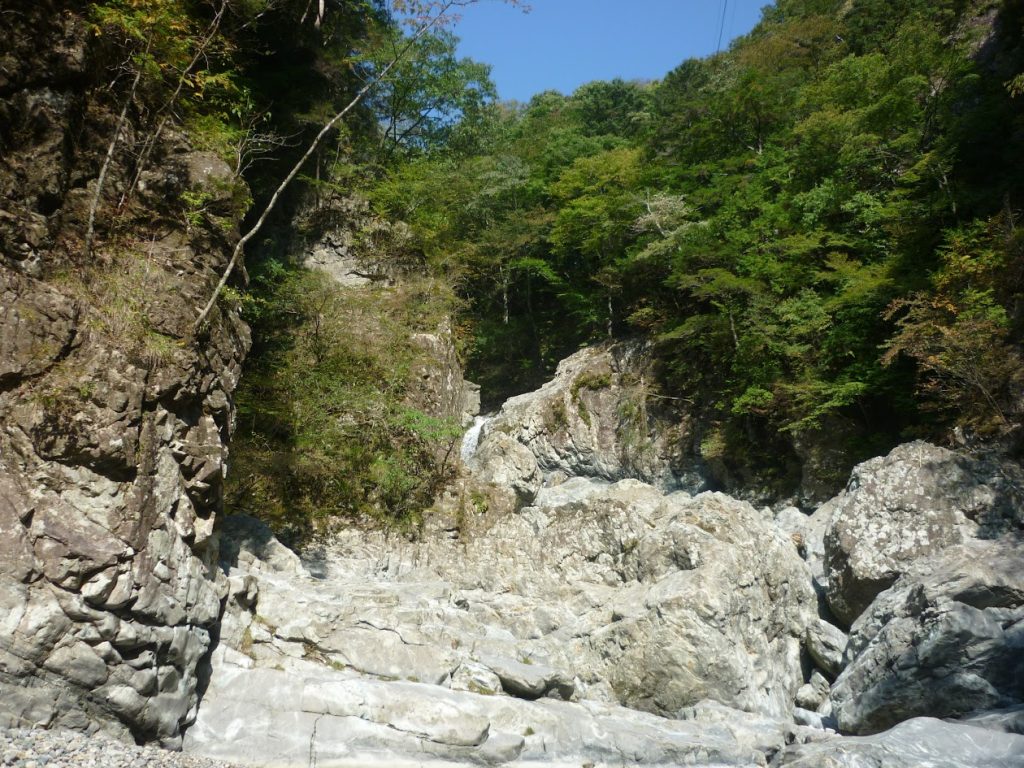
It features a beautiful natural landscape with large white limestone boulders, unique rock formations, waterfalls, and diverse trees.
From the riverside walking trails, you can enjoy views of the clear streams and waterfalls.
The valley offers seasonal beauty with fresh greenery in spring and vibrant autumn foliage.
It is an ideal spot for hiking.
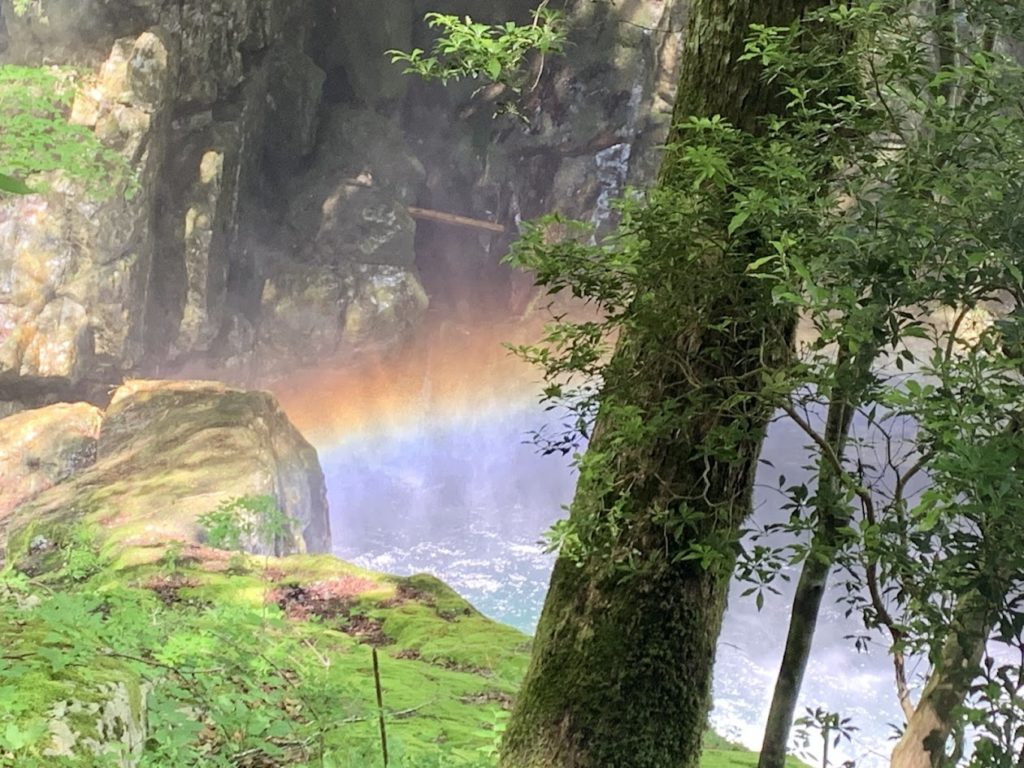
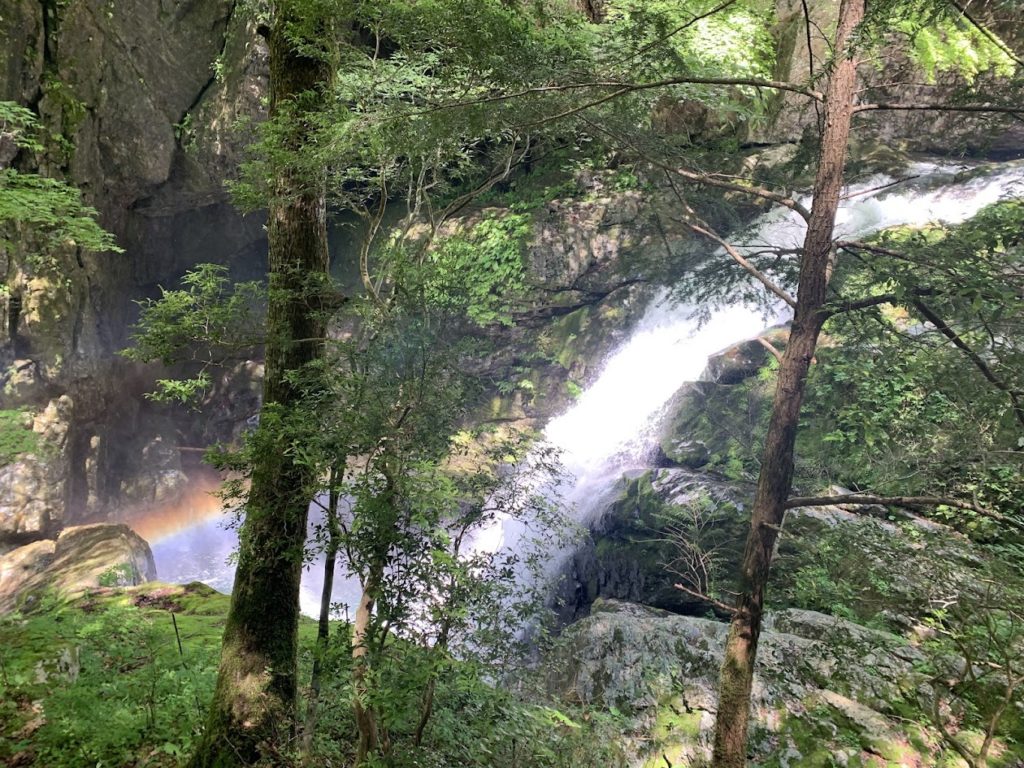
A beautiful rainbow appeared in the mist created by the waterfall’s powerful spray.
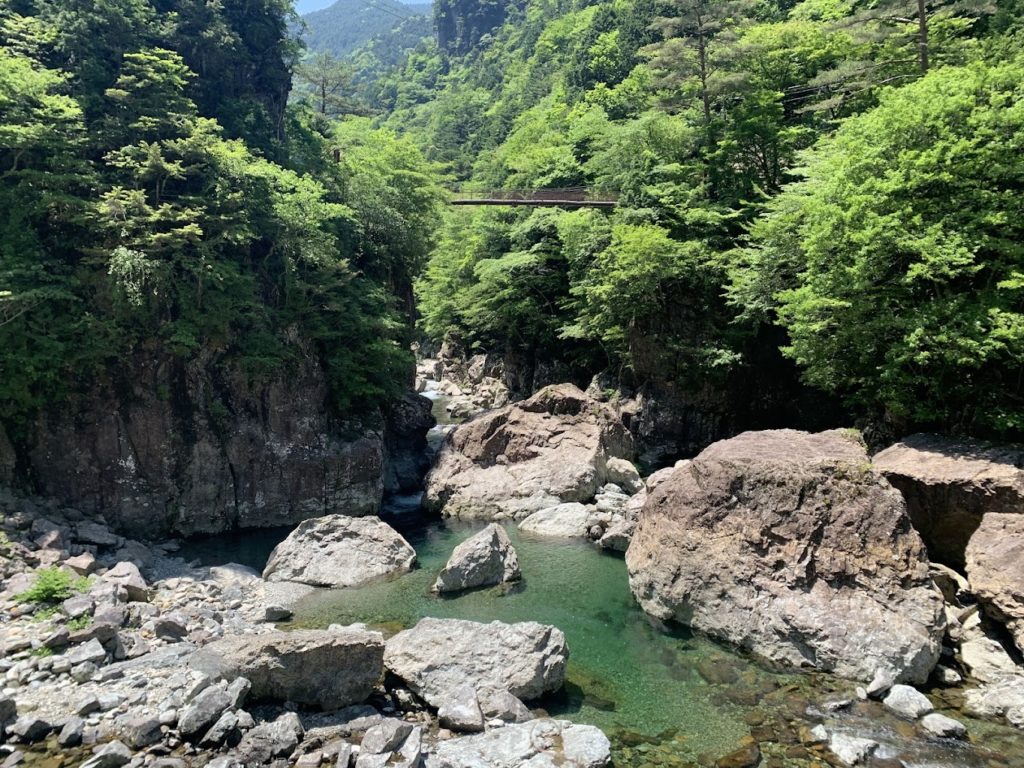
This is the downstream entrance to Mitarai Valley.
We parked the car here and walked upstream.
This photo shows the view of the river flowing below from the parking lot—the Amano River.
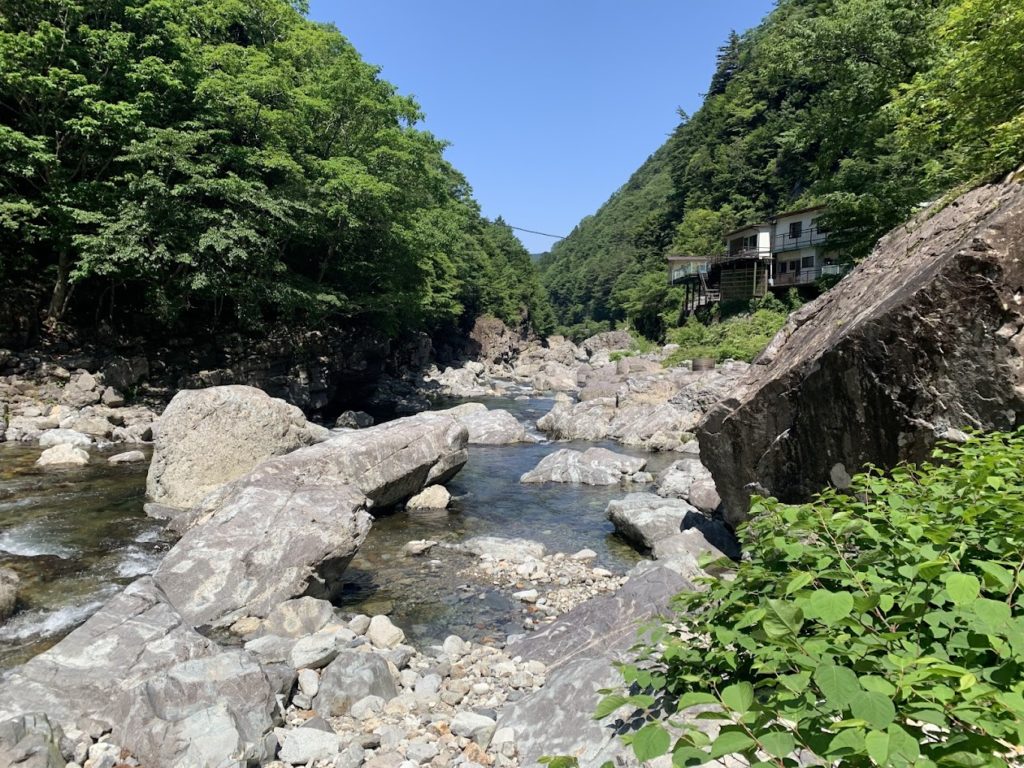
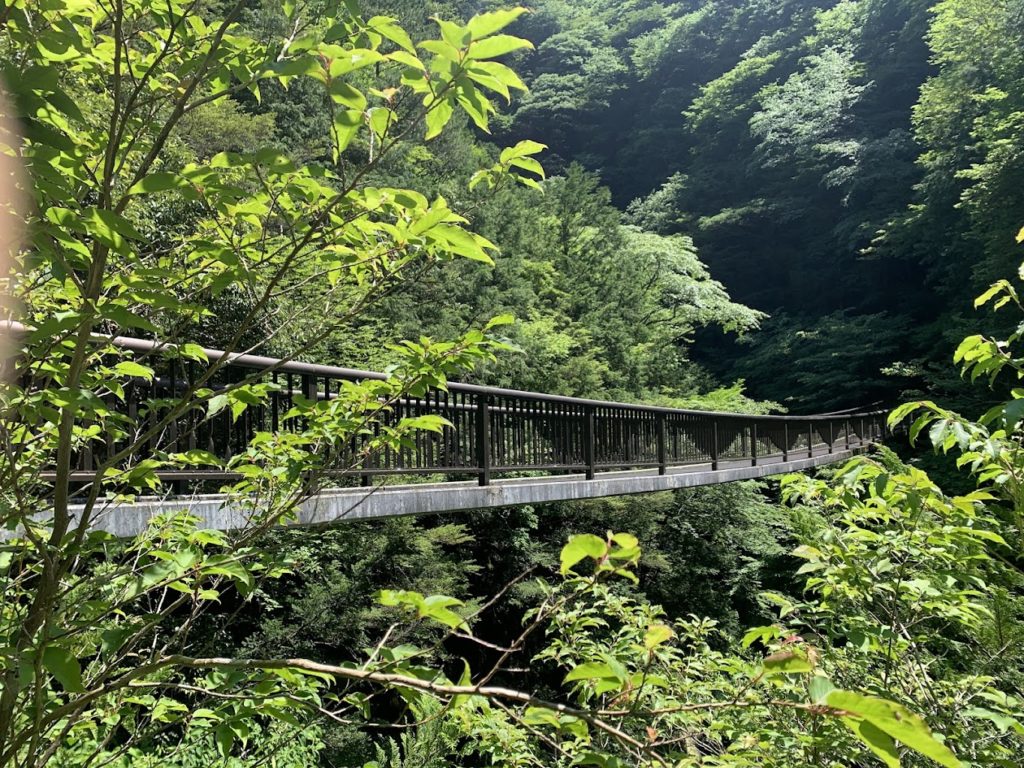
Just beyond this bridge is the entrance to Mitarai Valley.
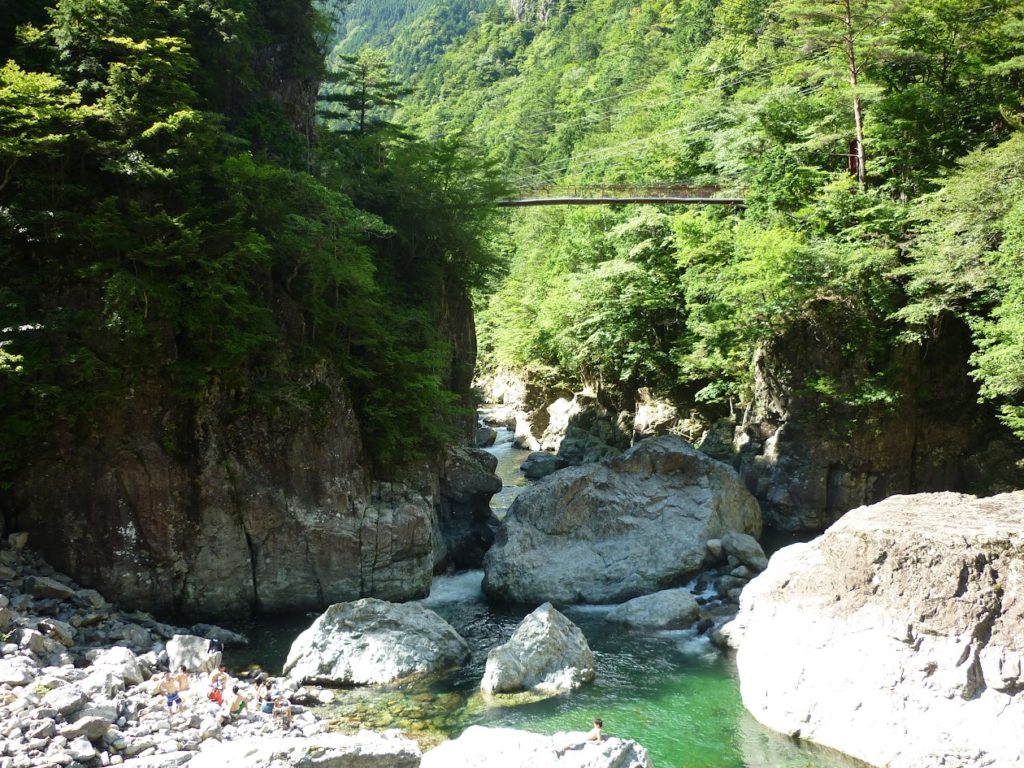
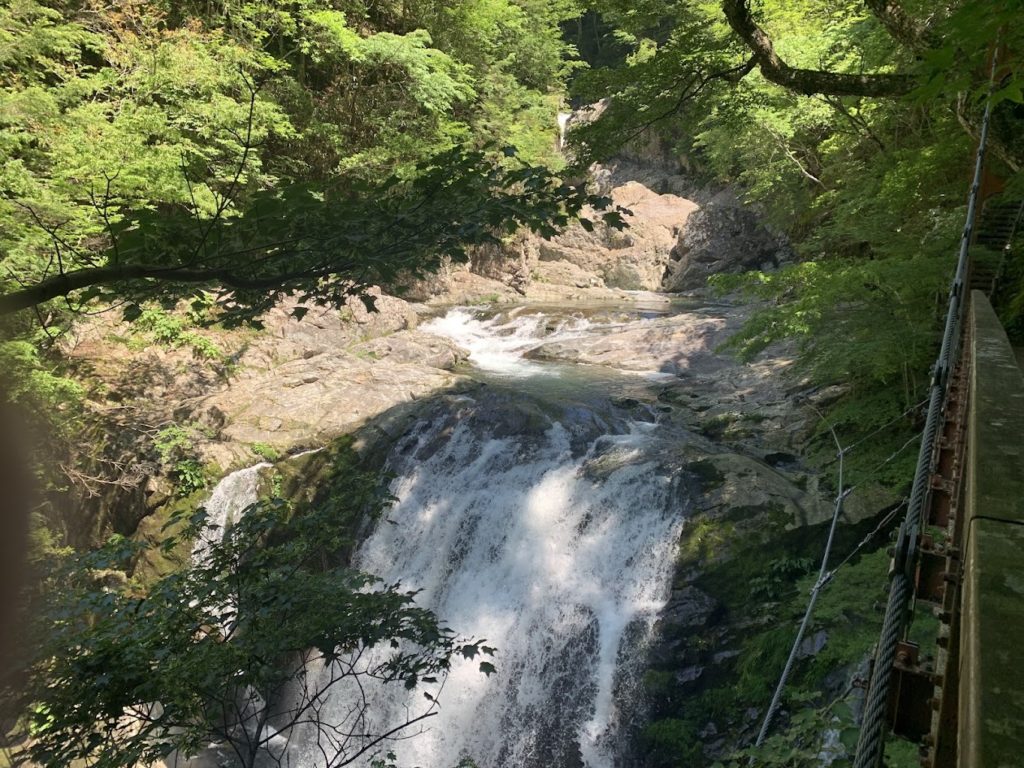
The photo was taken in early June.
The green maple leaves along the riverbank beautifully harmonize with the white limestone rocks.
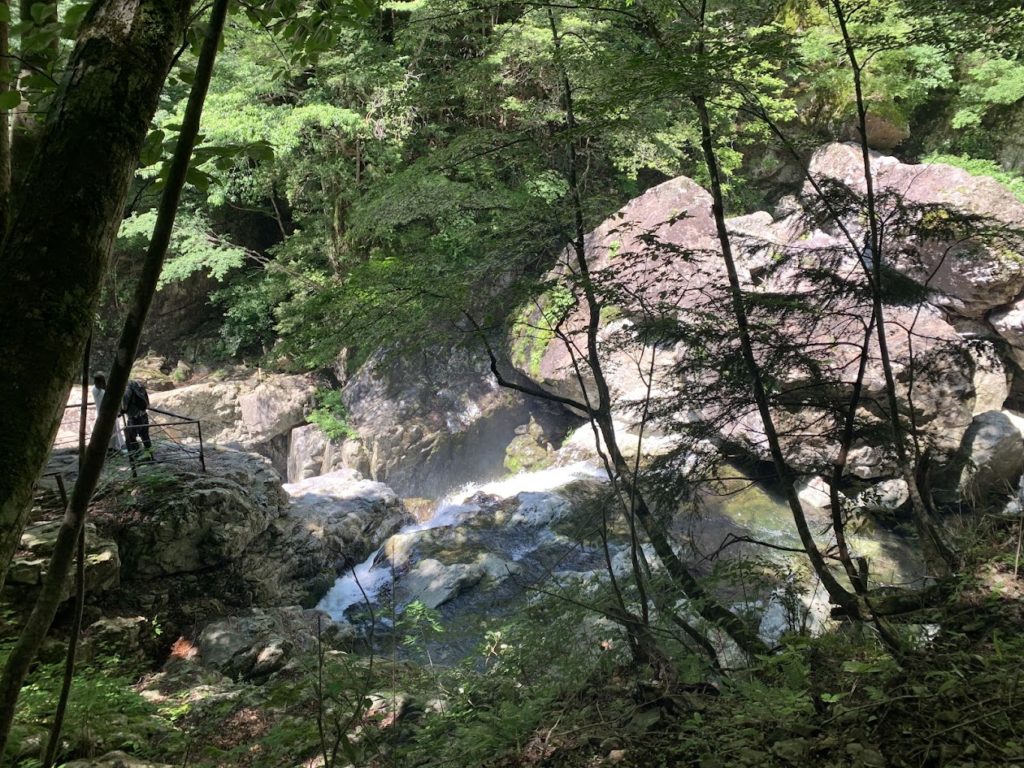
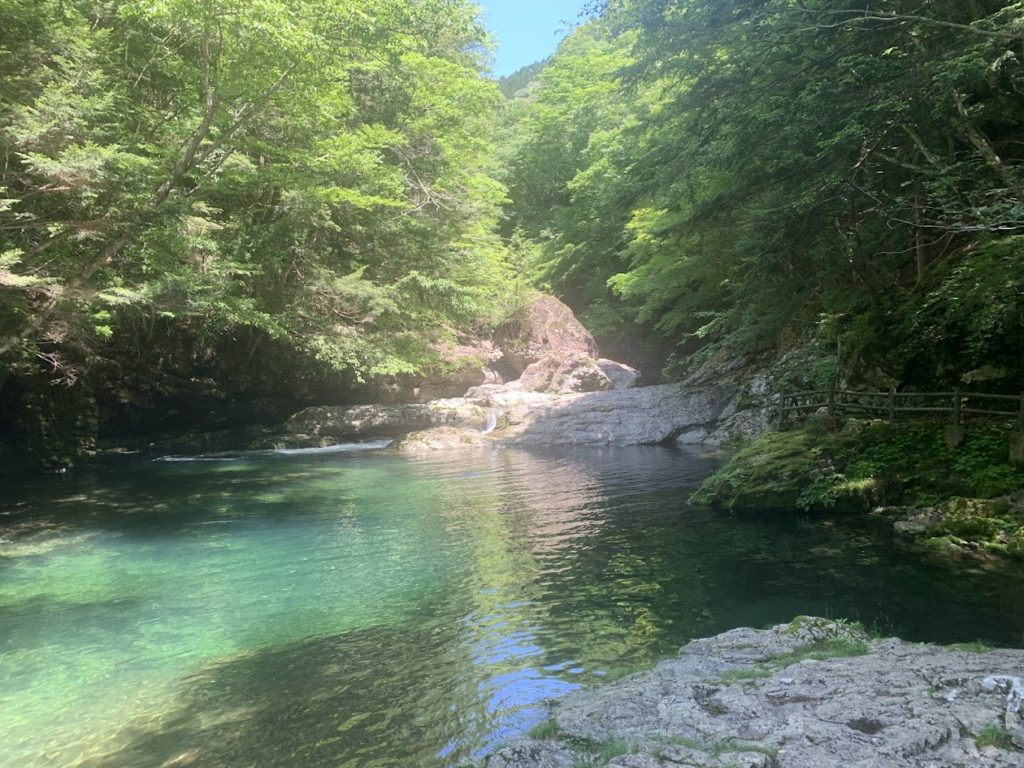
The water springs from the limestone and flows through the limestone valley, giving the river a beautiful, slightly greenish color.
In the photo, you can see the walking trail near the center on the right side.
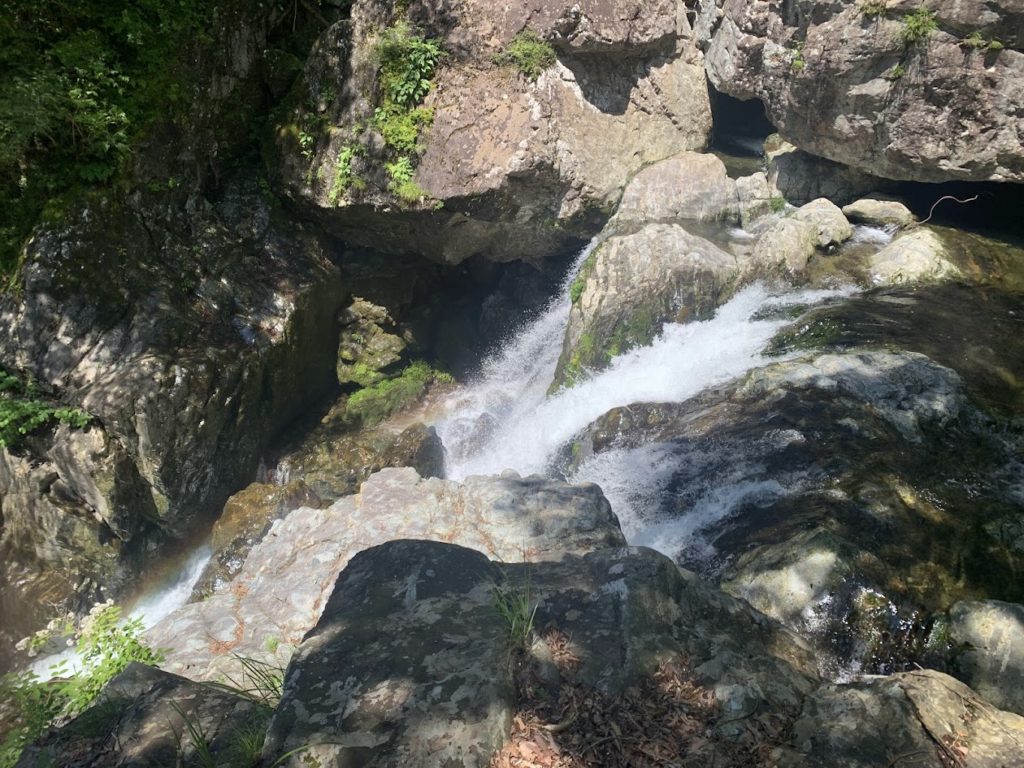
The river water flows down with great force.
Scenes like this continue along the valley.
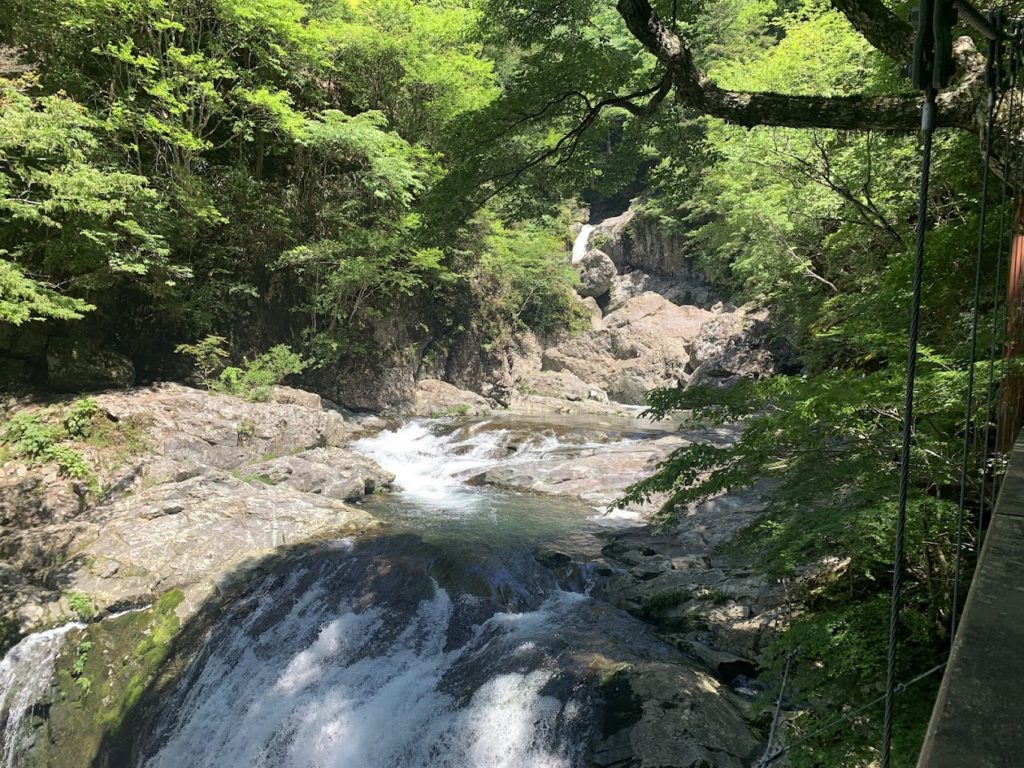
The maple trees, limestone rocks, and flowing river create a harmonious and beautiful scene.
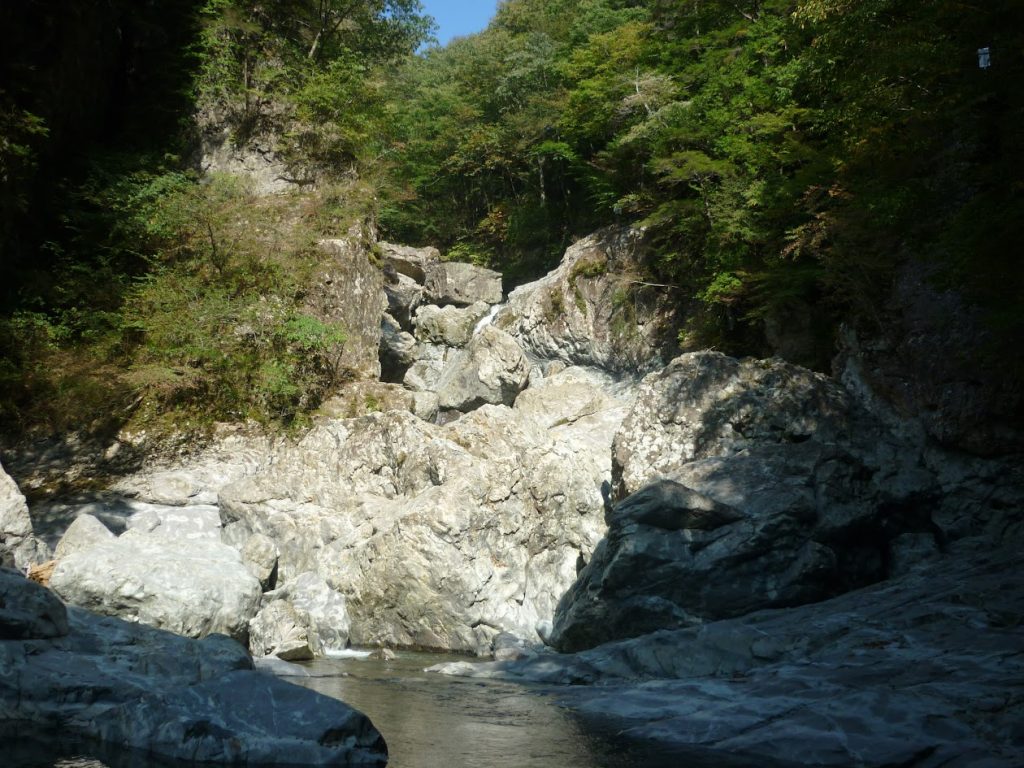
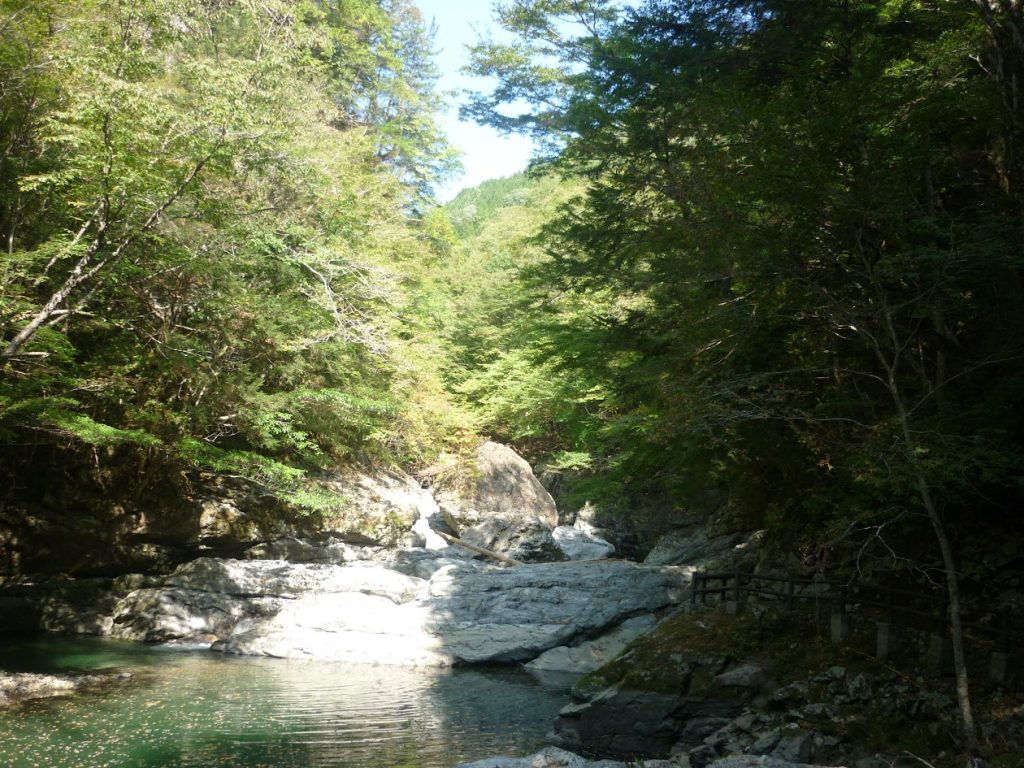
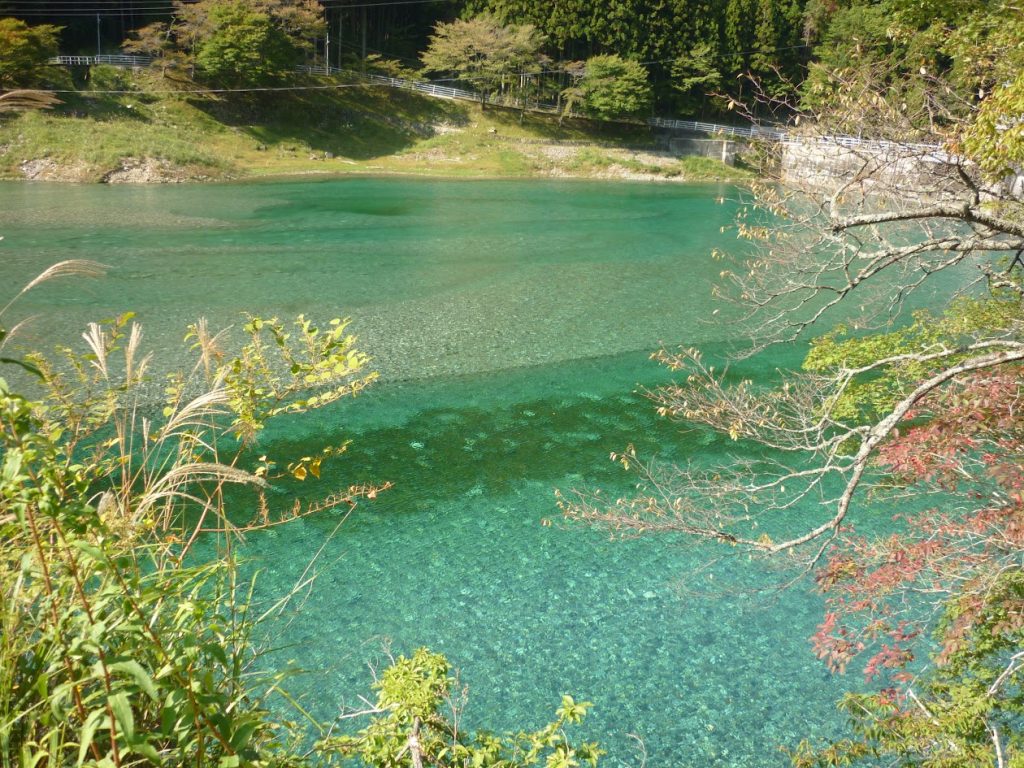
Just south of the downstream entrance to Mitarai Valley, we found this beautiful clear river water.
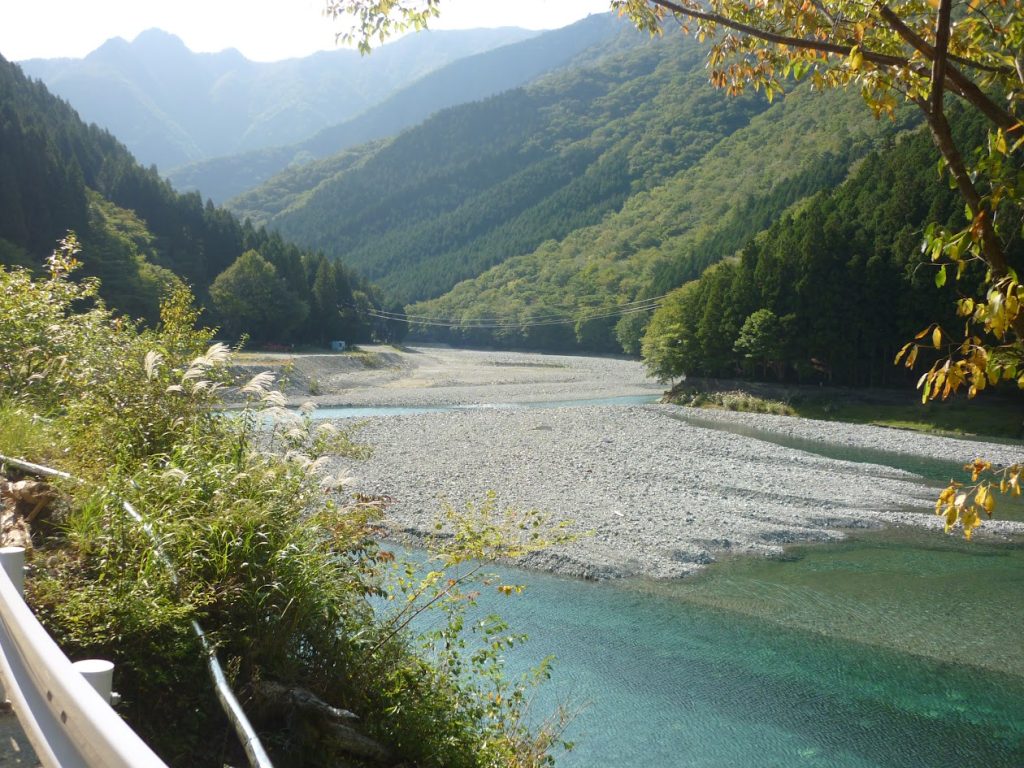
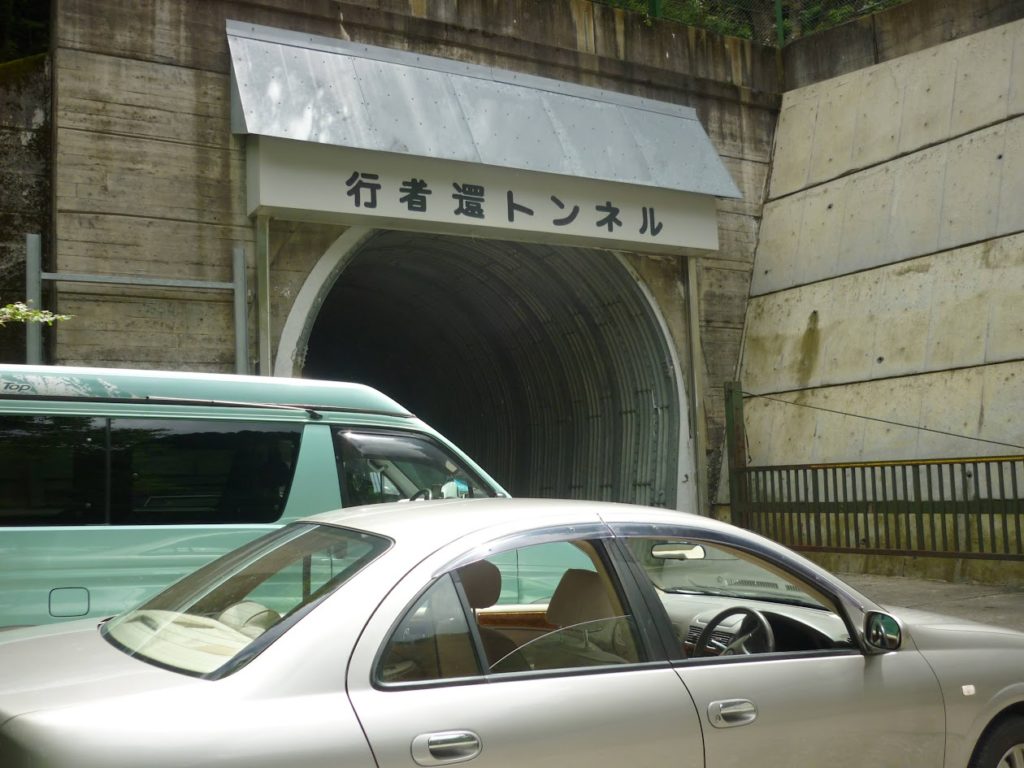
Continuing further upstream, you will reach the Gyōjagaeri Tunnel.
Beyond this tunnel lies Kamikitayama Village in Yoshino District.
Gyōjagaeri-dake, with an elevation of 1,546 meters, is a key point along the Omine Okugake Trail, a World Heritage site.
According to legend, En no Gyōja, who developed the Omine Okugake Trail, once turned back upon seeing the steep cliffs on the southern side of the mountain summit.
Tenkawa Daibenzaiten Shrine
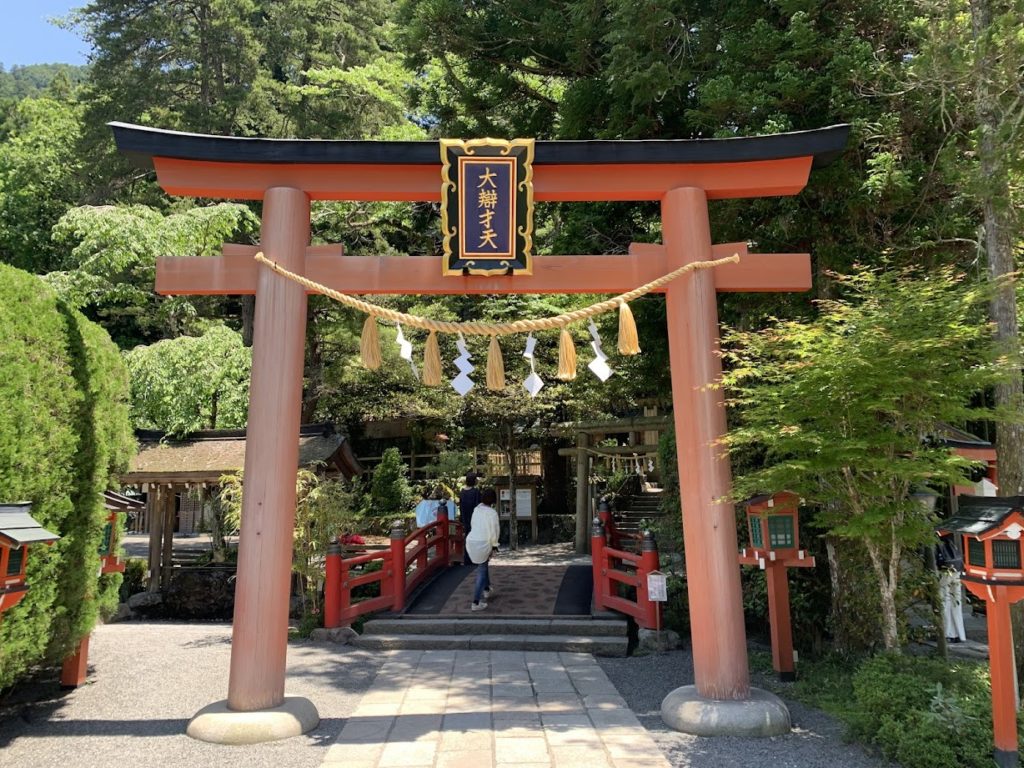
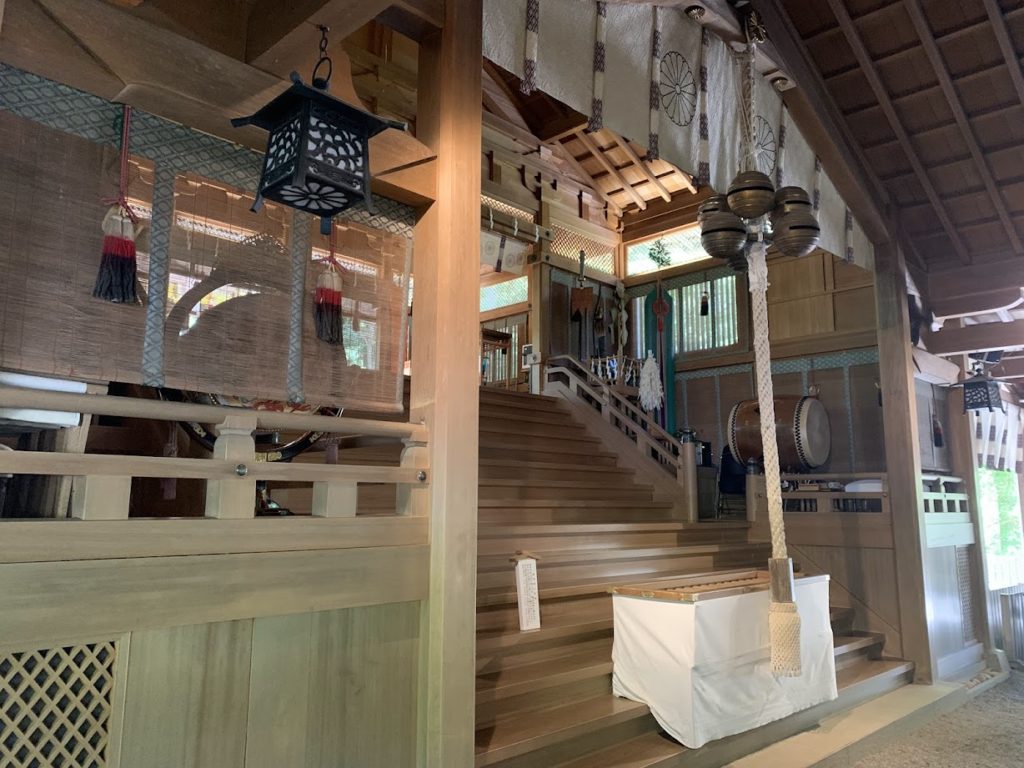
This is the worship hall.
The main hall is located further up the stairs beyond this one.
The area where the main hall stands is called “Mount Biwa.”
For more details, click on the photo to visit the “Tenkawa Daibenzaiten Shrine” page.
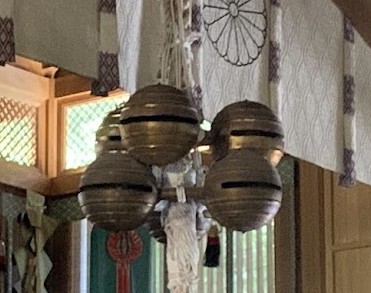
The bell of the worship hall is called “Isuzu” and has a very unique shape.
Long ago, there was an incident where Amaterasu Omikami, the Sun Goddess, hid herself in a cave called Amanoiwato, plunging the world into complete darkness.
At that time, a female deity named Ame-no-Uzume-no-Mikoto performed a dance in front of the cave. It is said that she used a sacred spear adorned with special bells called “Kamiyo Suzu” during her dance.
Thanks to Ame-no-Uzume-no-Mikoto’s joyful dance, the other deities burst into laughter. This intrigued Amaterasu Omikami, who wondered, “What could be happening outside?” and slightly opened the stone door of the cave. At that moment, a strong deity hiding beside the door flung it open so it could never be closed again. As a result, light returned to the world, and it became bright once more—a famous story from Japanese mythology.
It is said that the Isuzu bell here is modeled after the Kamiyo Suzu used on the sacred spear during Ame-no-Uzume-no-Mikoto’s dance.
For more details, click on the photo to visit the “Tenkawa Daibenzaiten Shrine” page.


Kaguraden (Sacred Dance Stage)
This is the stage in front of the worship hall.
Tenkawa Daibenzaiten Shrine is also dedicated to the deity of the arts, attracting many individuals involved in the performing arts to visit and pay their respects.
For more details, click on the photo to visit the “Tenkawa Daibenzaiten Shrine” page.
コメント