
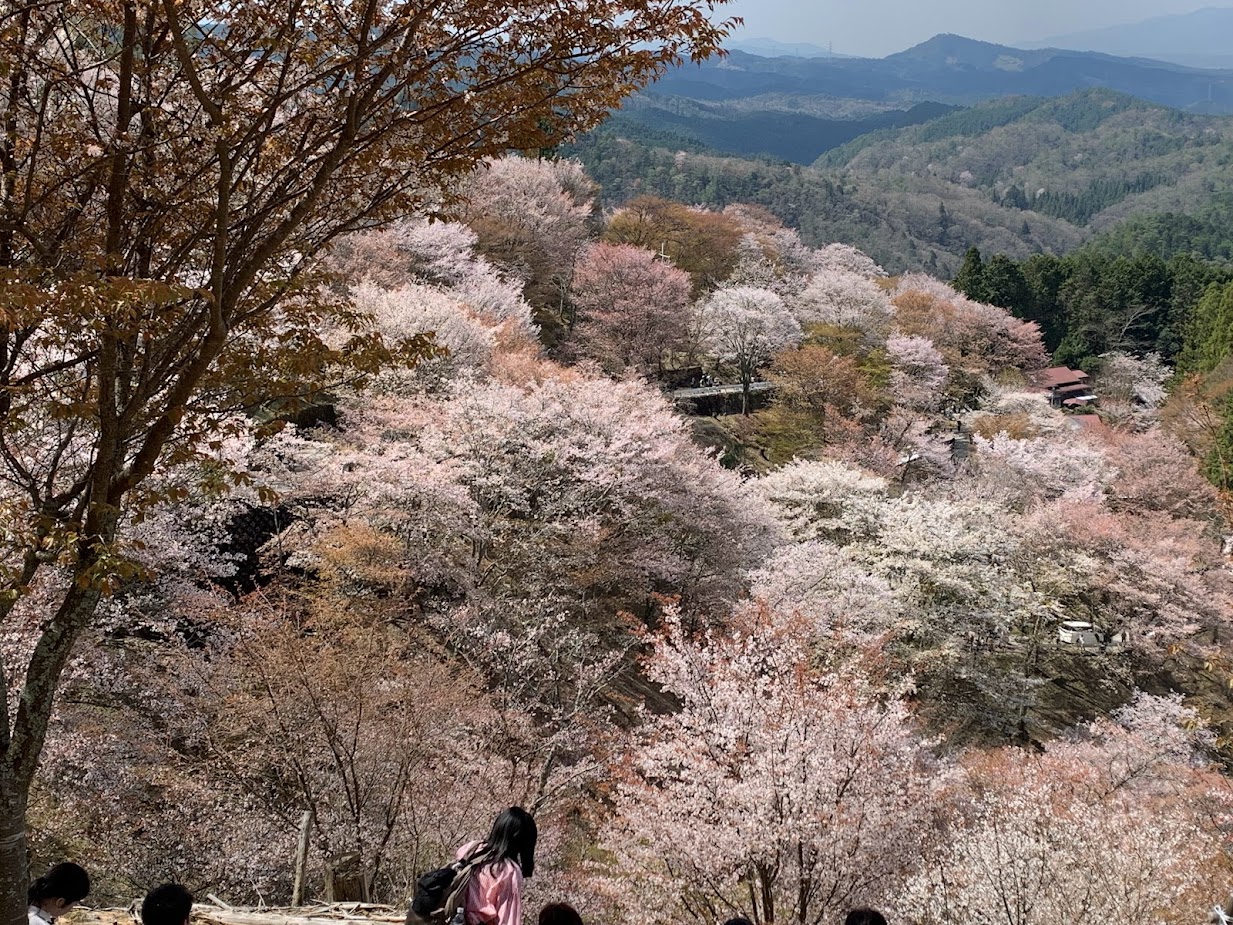
Yoshinoyama, a famous cherry blossom viewing spot, has been the stage for numerous historical events.
It is known as the sacred site of En no Gyoja, the tragic tale of Minamoto no Yoshitsune and Shizuka Gozen, the Southern Court of Emperor Go-Daigo, and Toyotomi Hideyoshi’s grand cherry blossom viewing party.
Be sure to check out the beautiful photos as well!

- Shimo Senbon
- Naka Senbon (The Path to Zaodo)
- Naka Senbon (Zao-do)
- Naka Senbon (Nancho Myoho-in)
- Naka Senbon (Yoshimizu Shrine)
- Naka Senbon (Katte Shrine)
- Naka Senbon (Street Scene)
- From Naka Senbon to Kami Shenbon
- Kami Senbon (Mikumari Shrine)
- Kami Senbon (Takagi-yama)
- Kami Senbon (Kimpu Shrine)
- Kami Senbon (around Saigyo-an)
Shimo Senbon

Shimo Senbon
The area around Kintetsu Yoshino Station is called ‘Shimo Senbon.’
This is a view from just after 7 a.m. during cherry blossom season.
Many people walk towards Mount Yoshino. Since the ropeway isn’t running yet, they make their way to Mount Yoshino on foot.
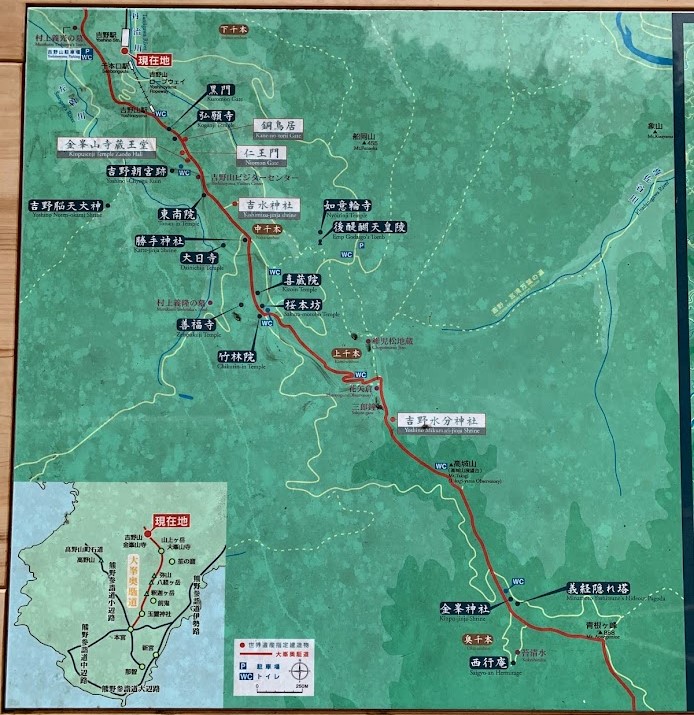
Here’s the information board at Yoshino Station:
- Top left: Yoshino Station (Shimo senbon)
- Zaodo and Yoshimizu Shrine (Naka senbon)
- Mikumari Shrine and Hanayagura (Kami senbon)
- Kinpu Shrine and Saigyo-an (Oku senbon)
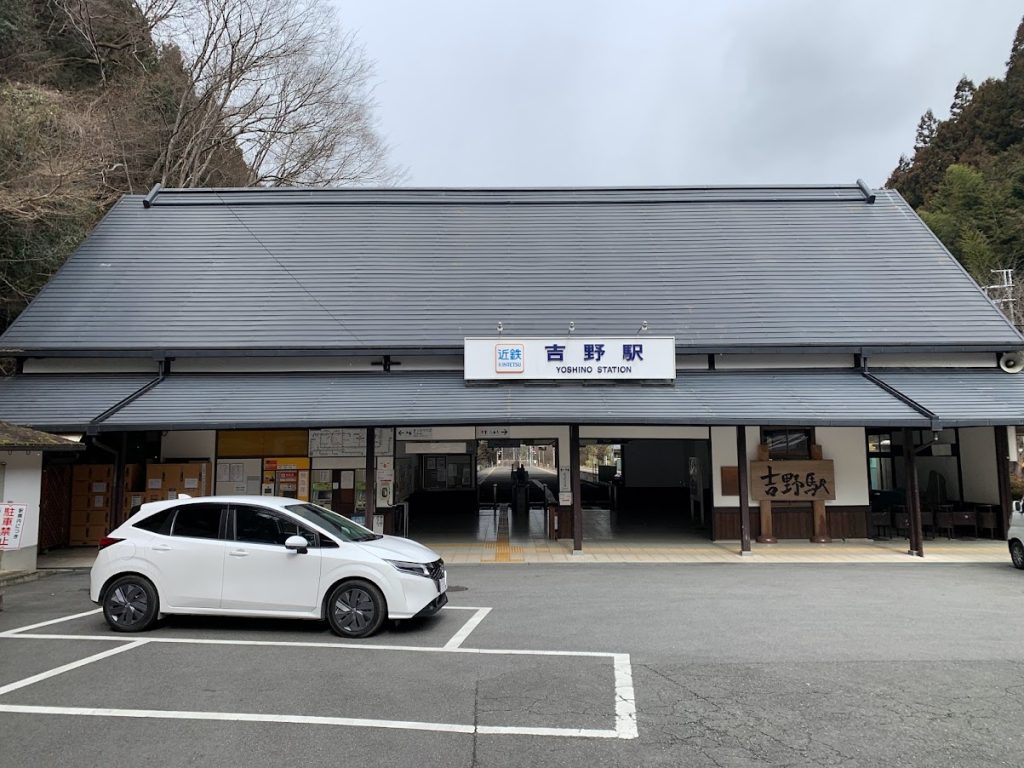
Kintetsu Yoshino Station, the entrance to Mount Yoshino
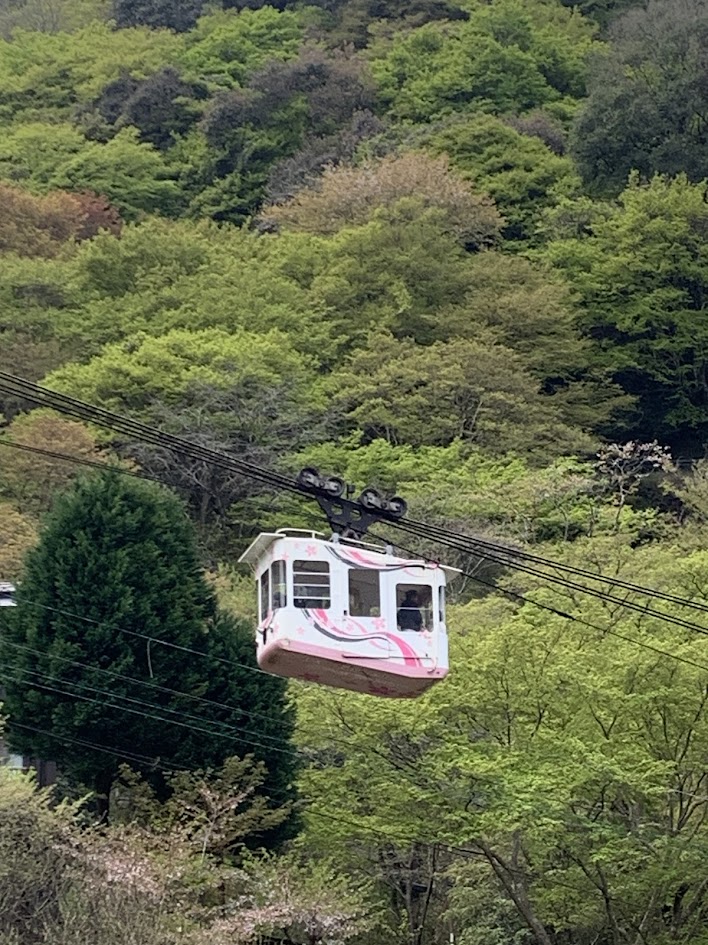
The ropeway from Kintetsu Yoshino Station to Mount Yoshino. On the day this photo was taken, the cherry blossoms in Shimo senbon had finished blooming, but the cherry blossoms in Oku senbon were in full bloom.
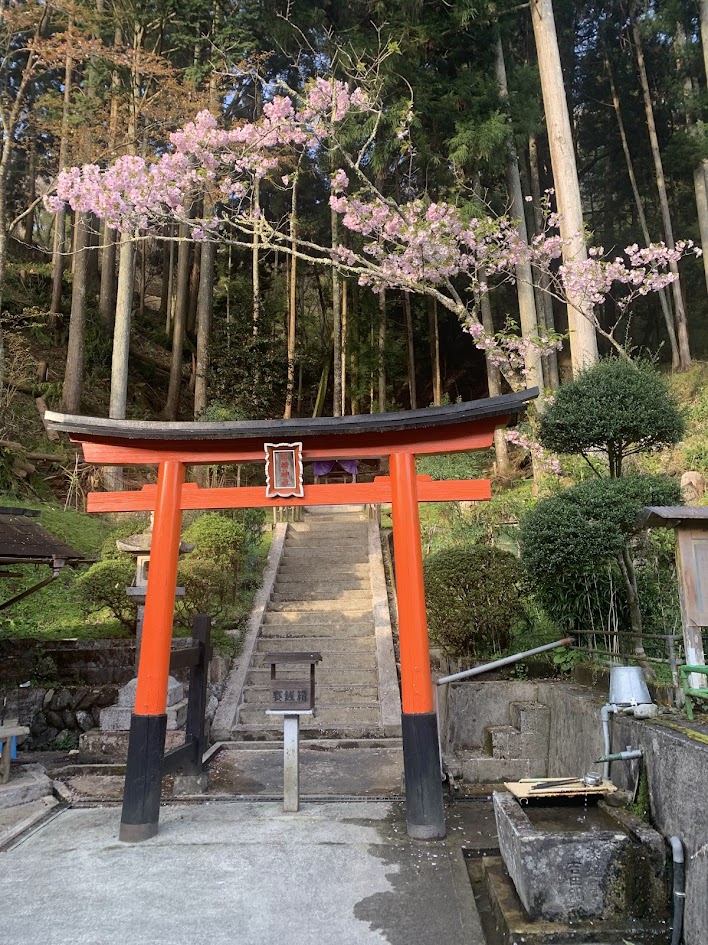
Shidekake Shrine
This shrine is located at the entrance to Mount Yoshino. The cherry tree here is known as Shidekake-zakura.
Most of the cherry blossoms on Mount Yoshino are mountain cherries (Shiro-yama-zakura), but this one is a variety called ‘Mikuruma-gaeshi.
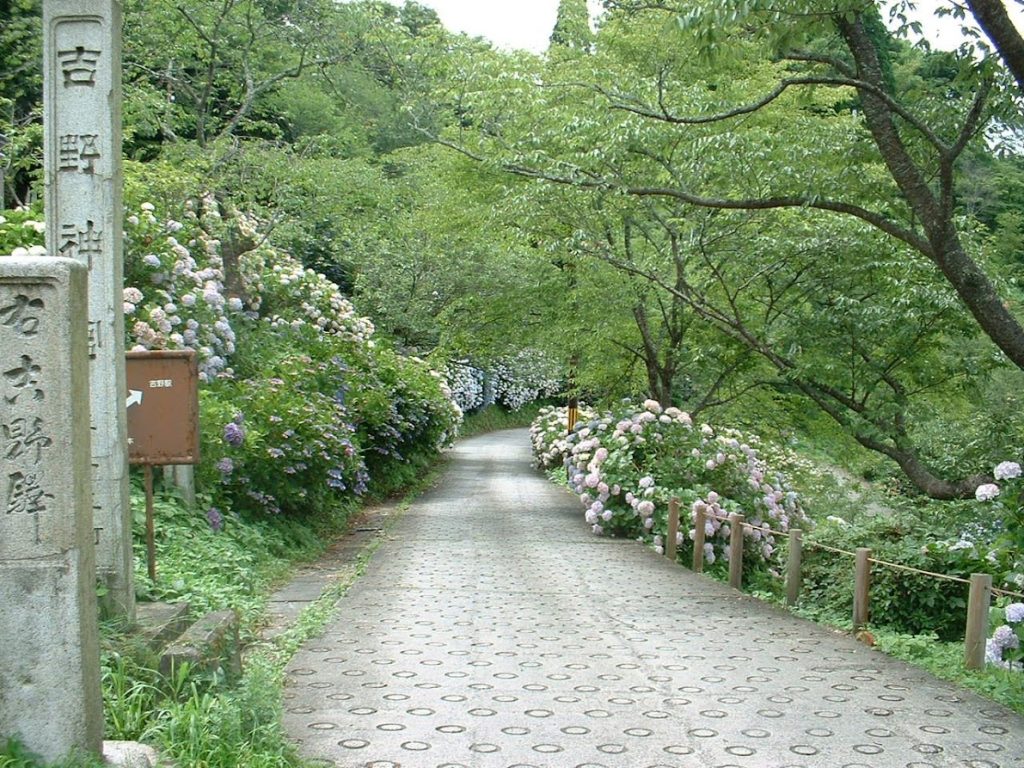
Nanamagari-zaka
The steep path leading to Mount Yoshino is called Nanamagari-zaka.
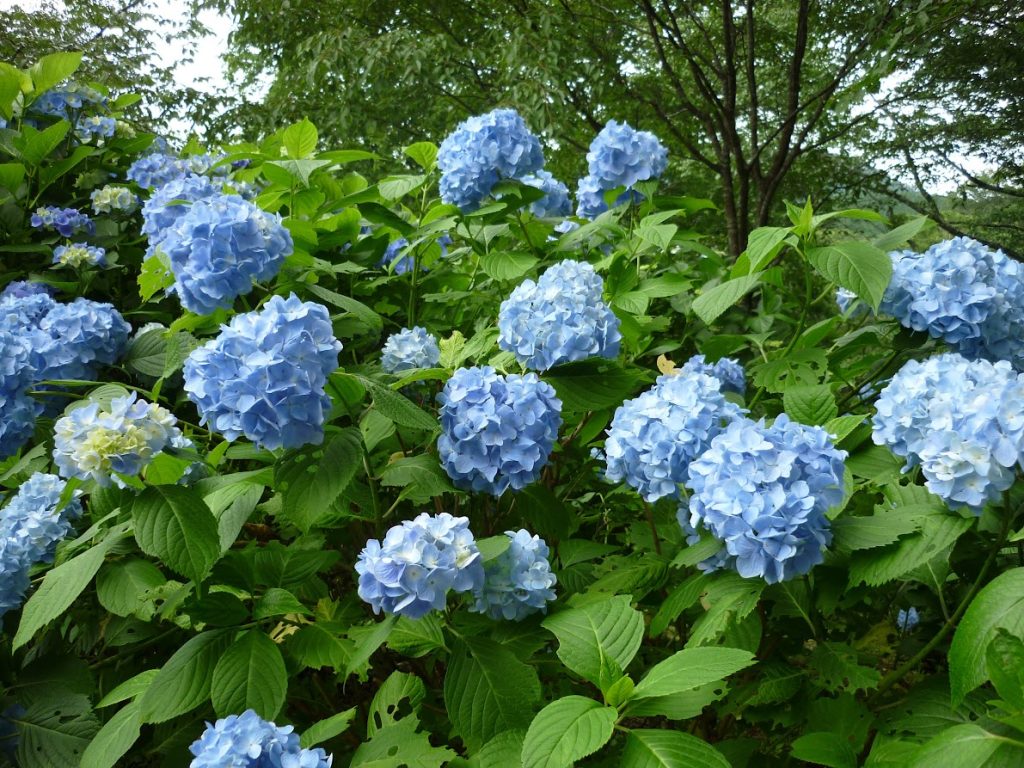
During the hydrangea season in June, you can see hydrangeas like those in the photo.
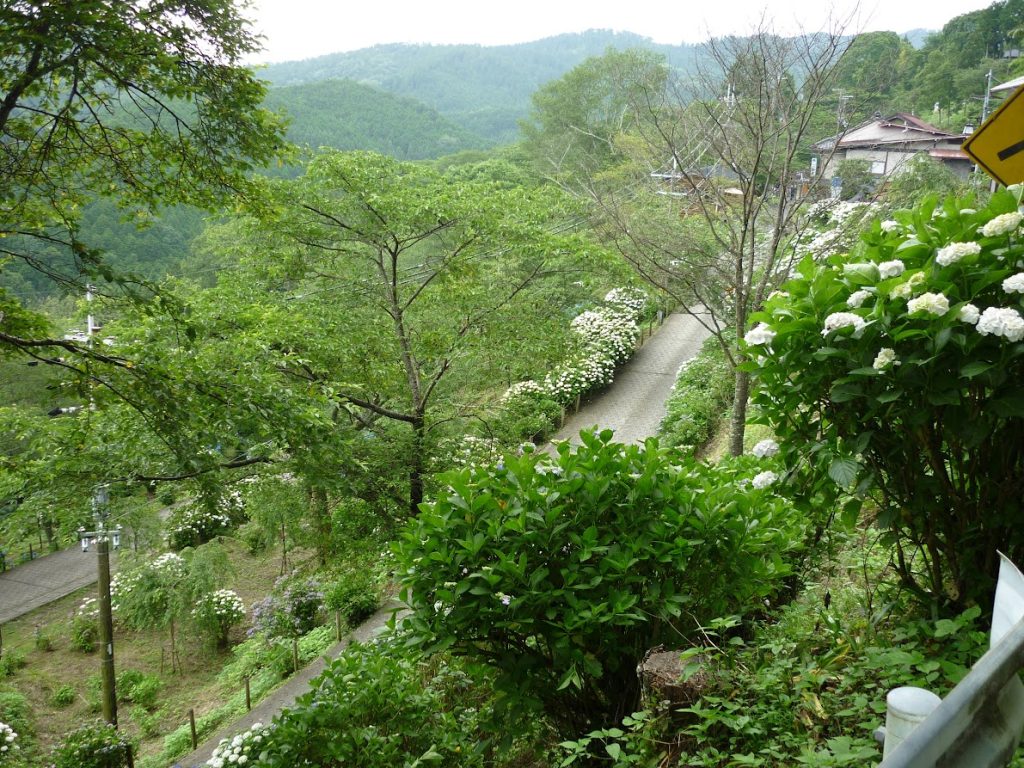
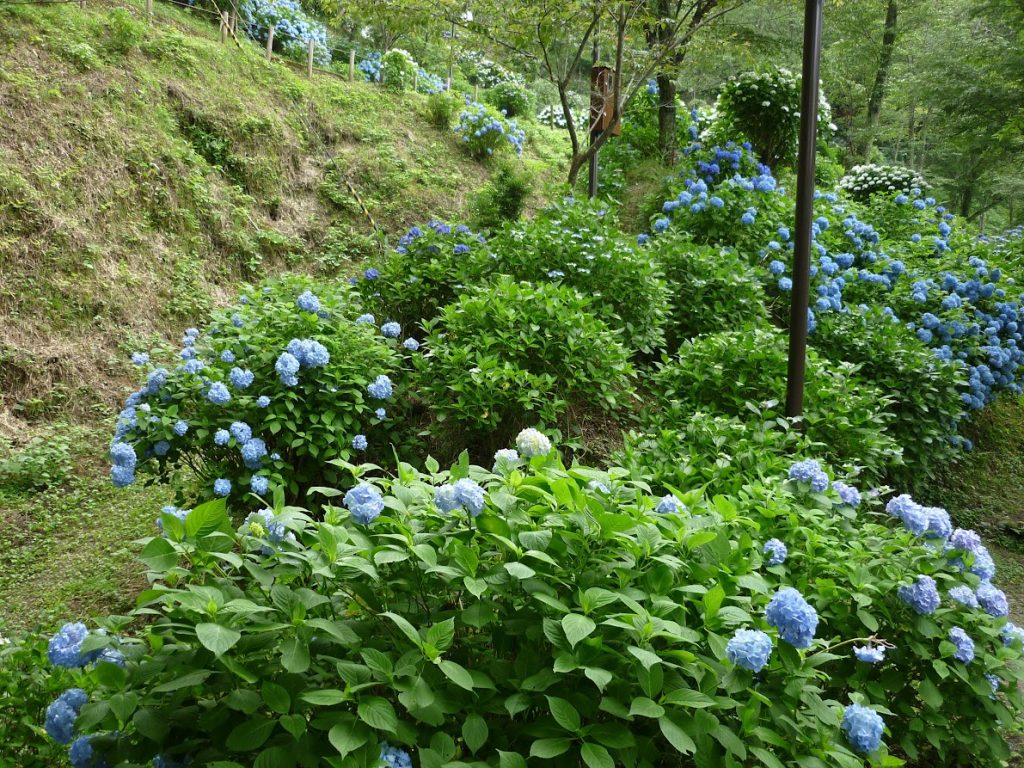
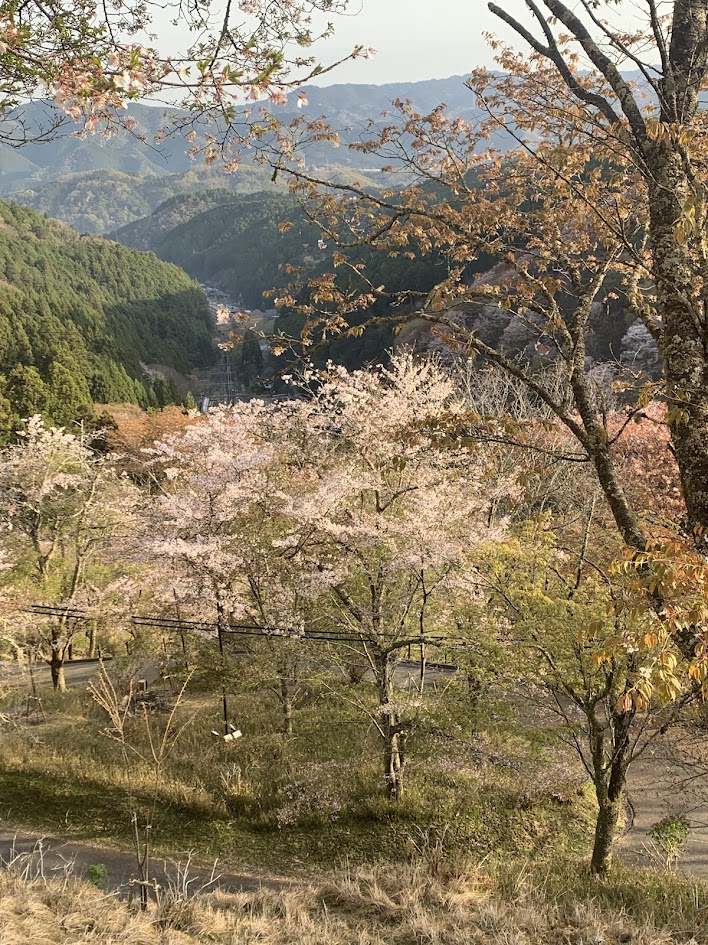
Looking down at Shimo senbon from naka senbon
You can also walk from Yoshino Station (Shimno Senbon) to Mount Yoshino (Naka Senbon) without using the ropeway.
It takes about 15 to 20 minutes.
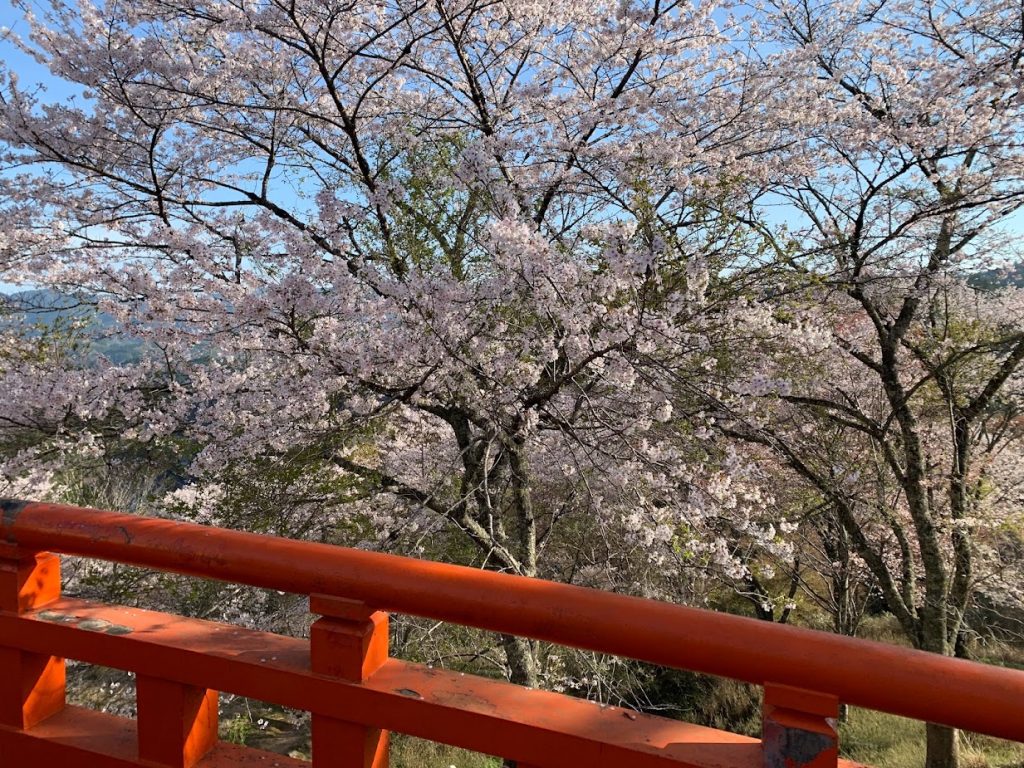
I have arrived at the ‘Ohashi’ (Great Bridge) in Naka Senbon. About 700 years ago, Prince Oto-no-miya, the son of Emperor Go-Daigo, raised an army at Mount Yoshino to overthrow the Kamakura Shogunate. Oto-no-miya fortified Mount Yoshino as his base and faced the shogunate’s forces. According to the Taiheiki, he withstood attacks by 60,000 shogunate troops with just 3,000 soldiers for a week. The area around the Ohashi (Great Bridge) was a major battlefield and is still known as ‘Seme-ga-tsuji’ (Attack Junction) today.
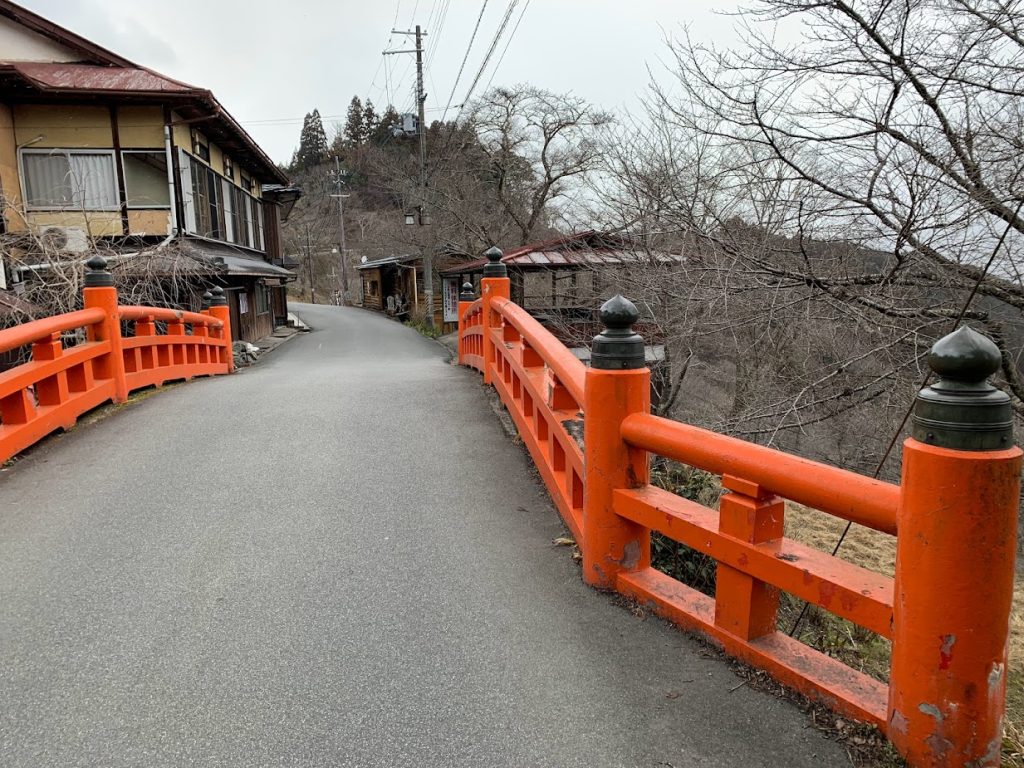
Winter at the ‘Ohashi’ (Great Bridge).
Naka Senbon (The Path to Zaodo)
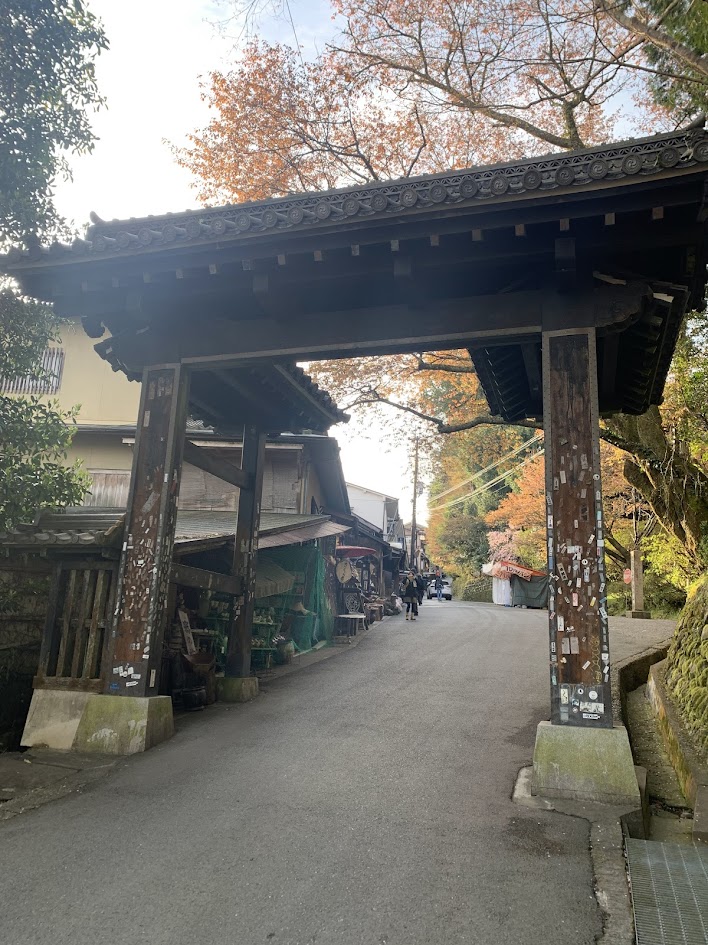
Kuro-mon
Kuro-mon is the main gate of Kinpusen-ji Temple, serving as the main entrance to the entire Yoshino area.
In the past, even noblemen and daimyos had to dismount from their horses and lower their spears before proceeding beyond this gate.
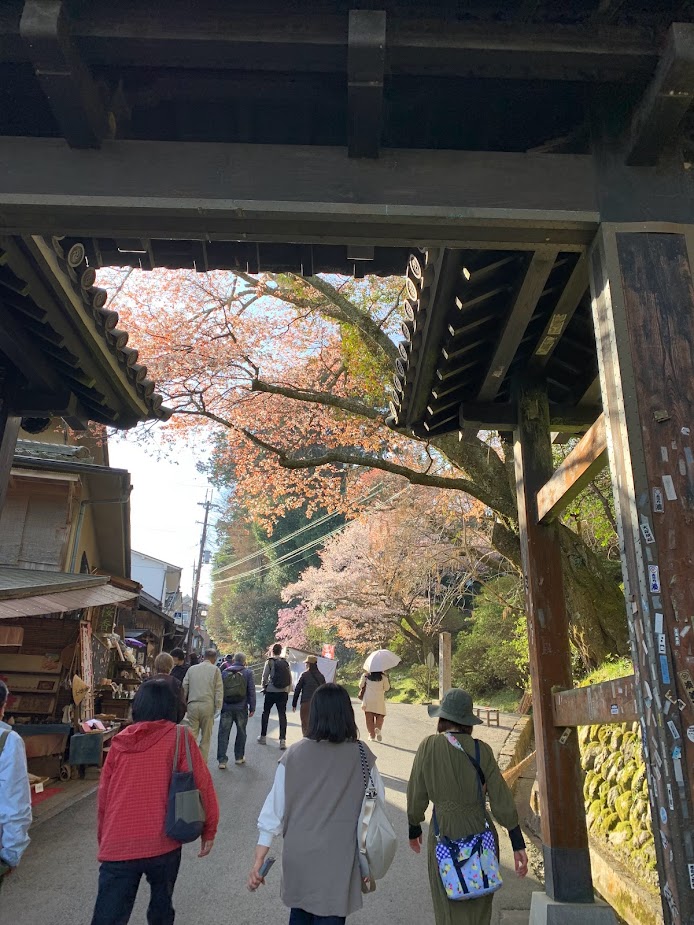
Cherry Blossoms and Kuro-mon
Everyone is walking towards Kinpusen-ji Temple.
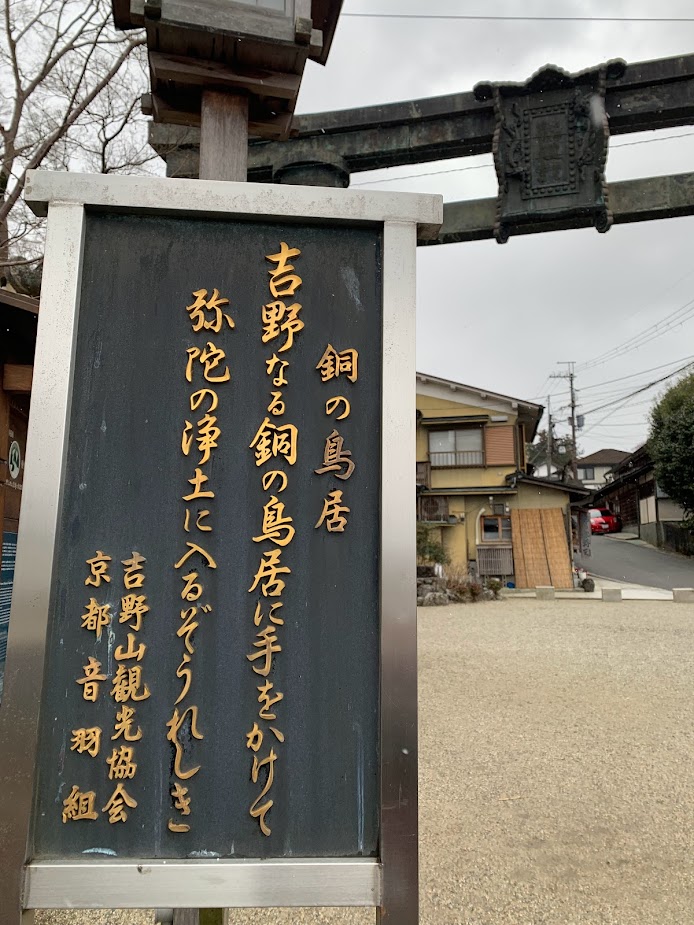
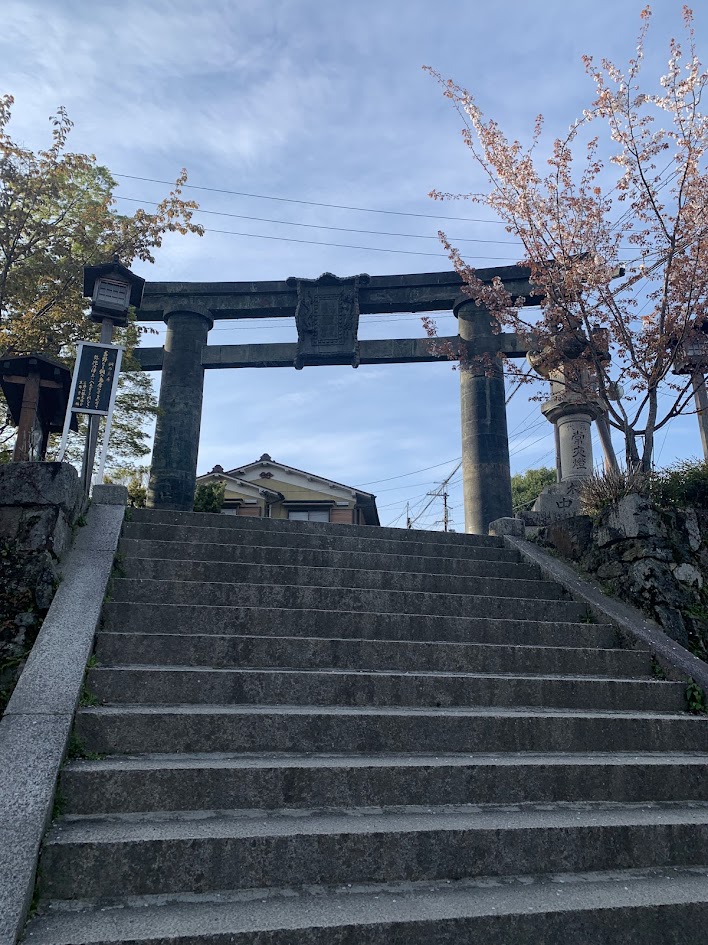
Bronze Torii Gate
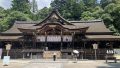
Naka Senbon (Zao-do)
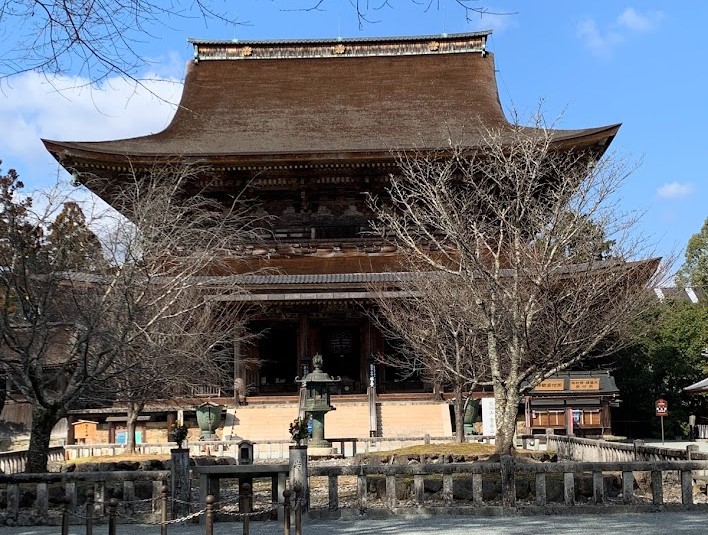
Zao-do (National Treasure)
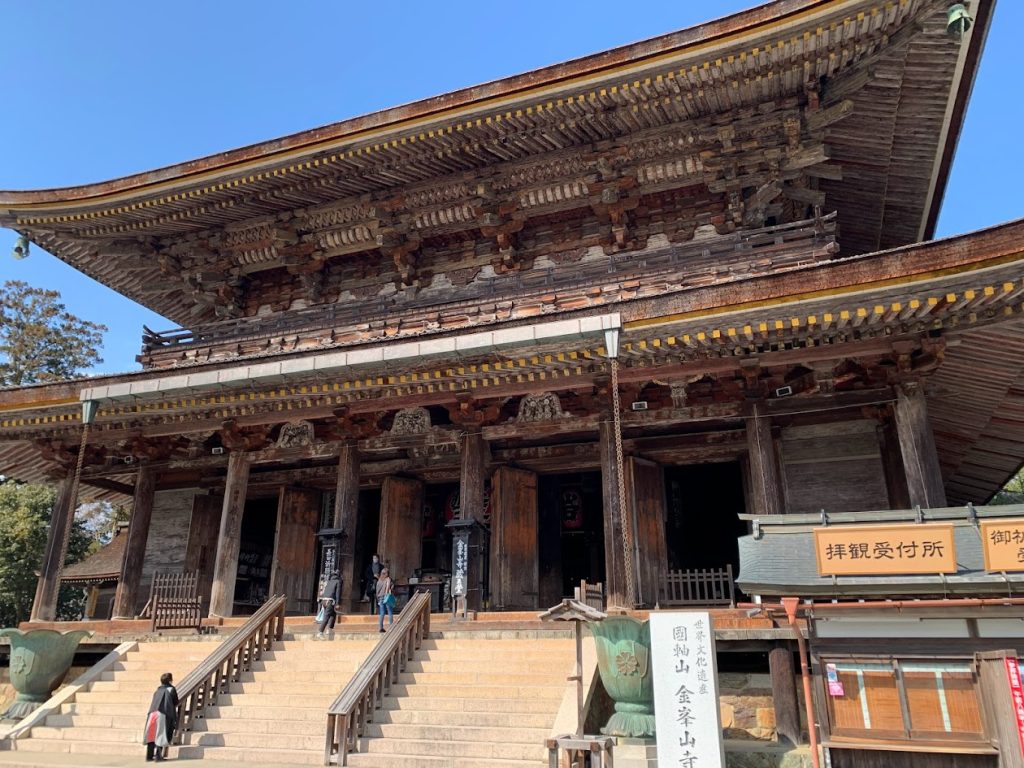
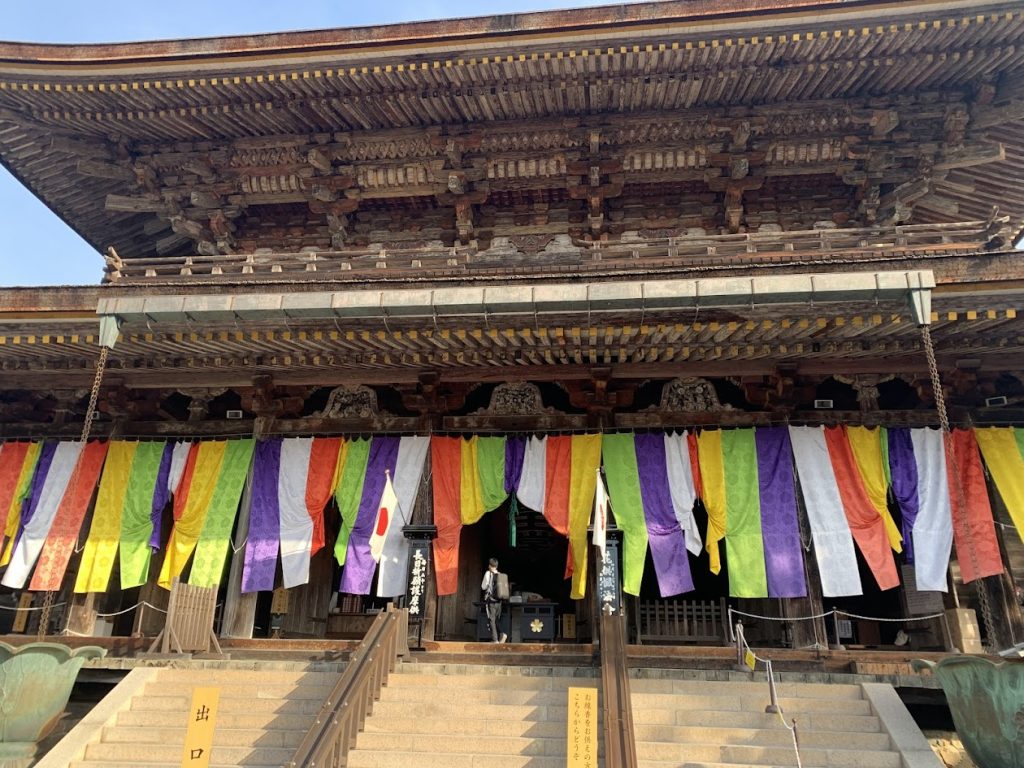
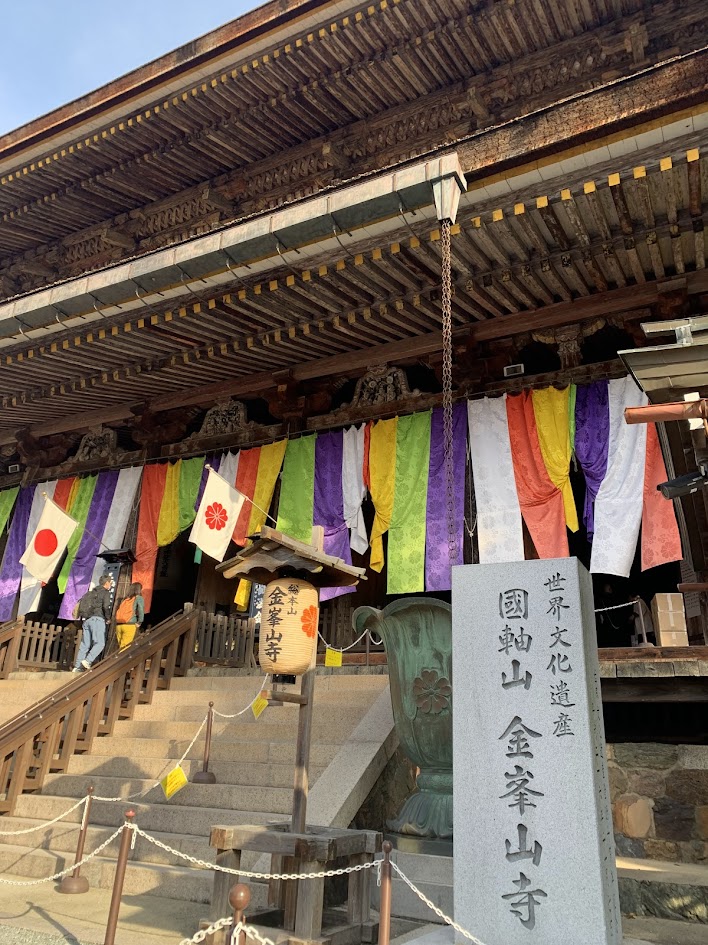
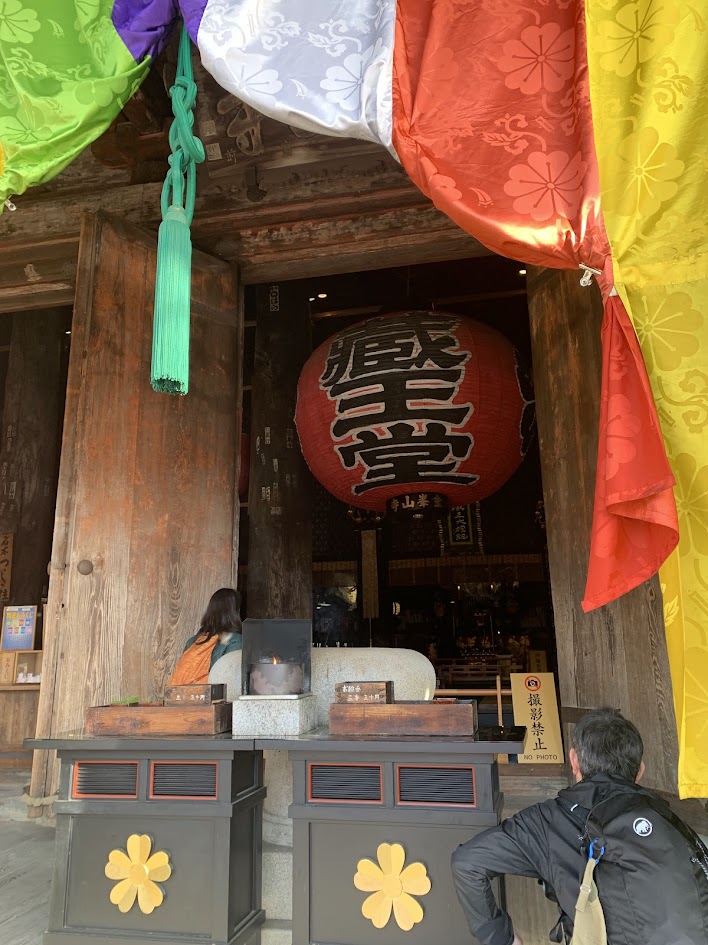

It’s cherry blossom season.
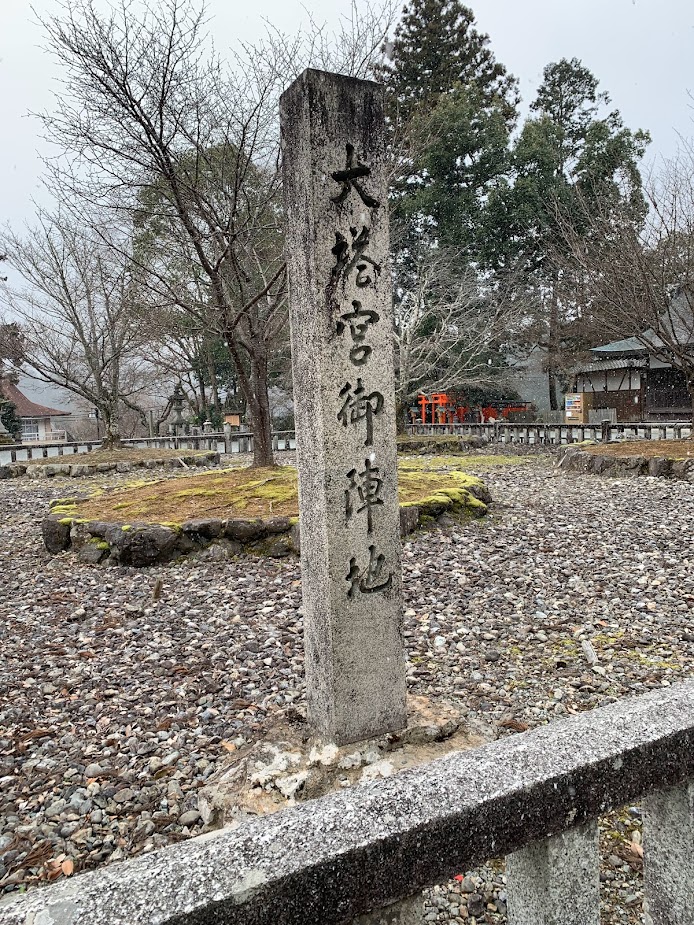
“In front of Zao-do, there is a monument marking the ‘Oto-no-miya’s Headquarters.’
In 1333, when Prince Oto-no-miya, the son of Emperor Go-Daigo, was attacked by a large army of the Kamakura Shogunate and fought from his base on Mount Yoshino, he used Zao-do as his main base.
Before the fortress fell, he held a final sake ceremony in front of this site, a traditional ritual of sharing drinks before facing death in battle.
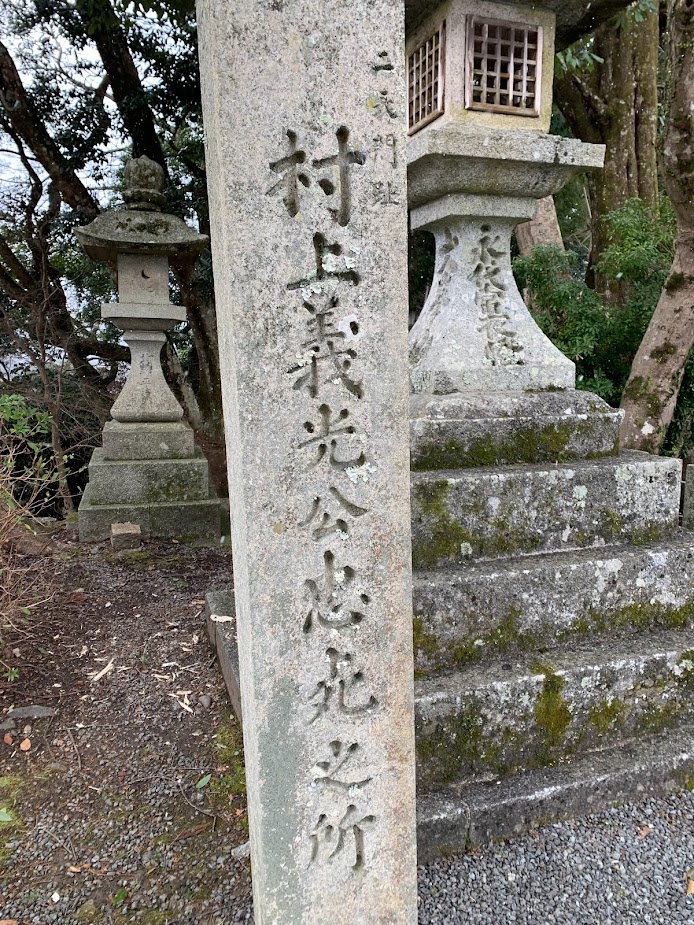
The Place of Murakami Yoshiteru’s Death
After the final sake ceremony had ended, Murakami Yoshiteru, a retainer, wore Prince Oto-no-miya’s helmet and armor and impersonated him. He committed harakiri in front of the temple. While this was happening, Prince Oto-no-miya was persuaded to escape and managed to flee through the adjacent valley to safety at Mount Koya.
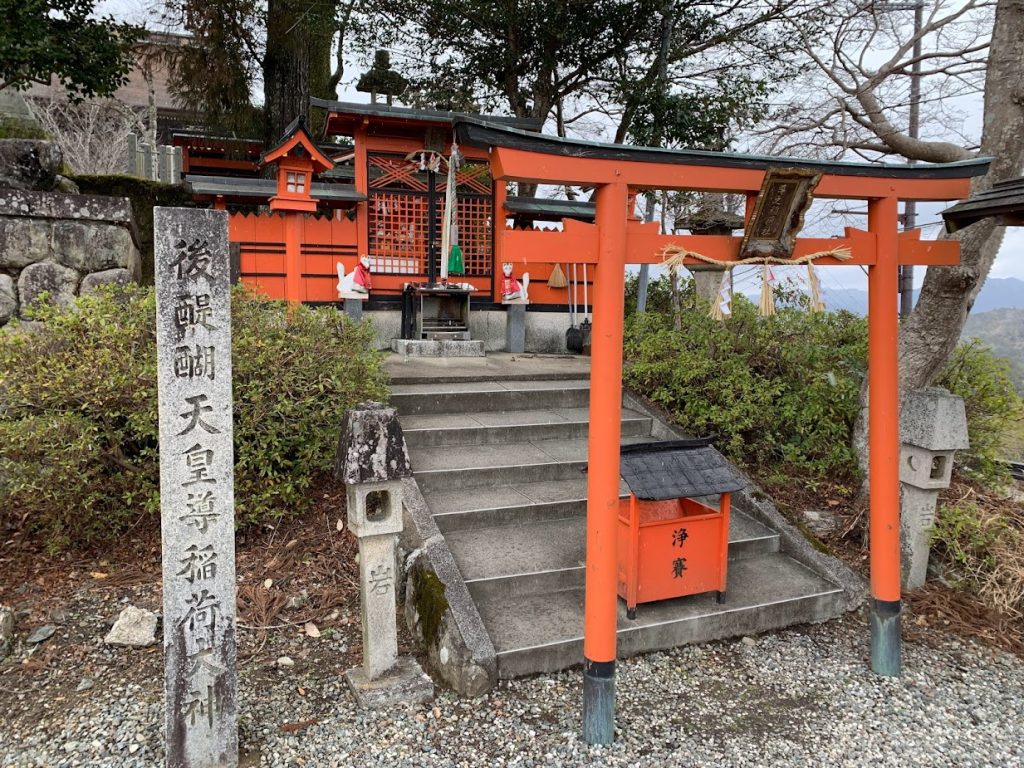
The Inari Deity Who Guided Emperor Go-Daigo
Located in a corner of the Zao-do grounds, this shrine is dedicated to Inari.
At the end of 1336, as tensions with the Northern Court escalated, Emperor Go-Daigo, having no choice but to secretly flee Kyoto, found himself lost on a dark road.
At the front of an Inari shrine, he composed a poem asking for light.
A red cloud then appeared, illuminating the path to Yoshino and guiding him safely there.
Since then, this shrine has been honored as the “Inari Deity Who Guided Emperor Go-Daigo.”

Zao-do in the snow
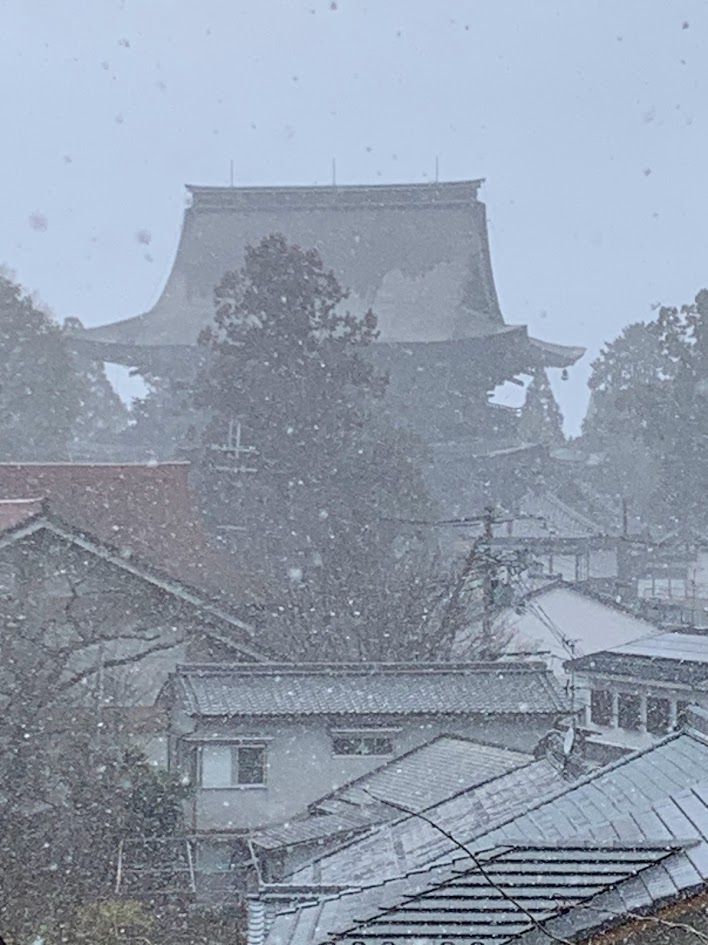
Zao-do in the snow
Naka Senbon (Nancho Myoho-in)
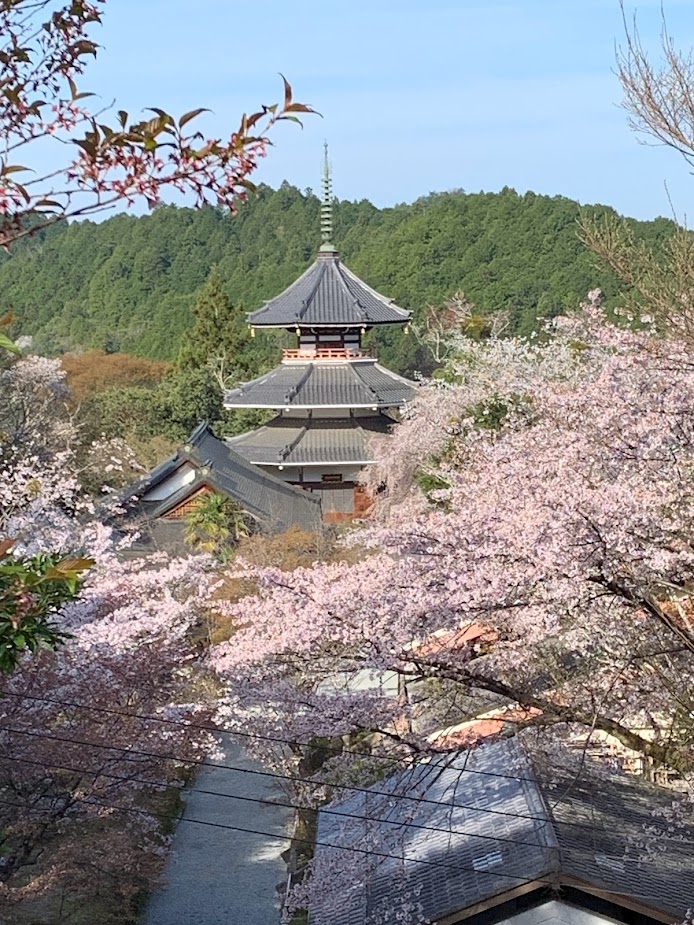
Myoho-in
This photo was taken from Zao-do during the peak of cherry blossom season.
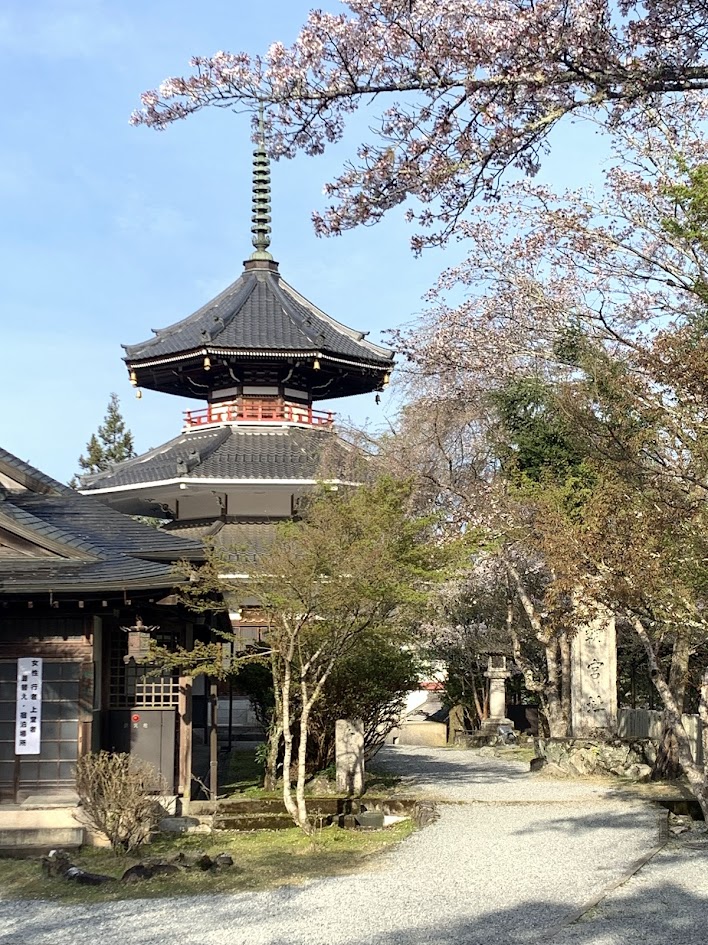
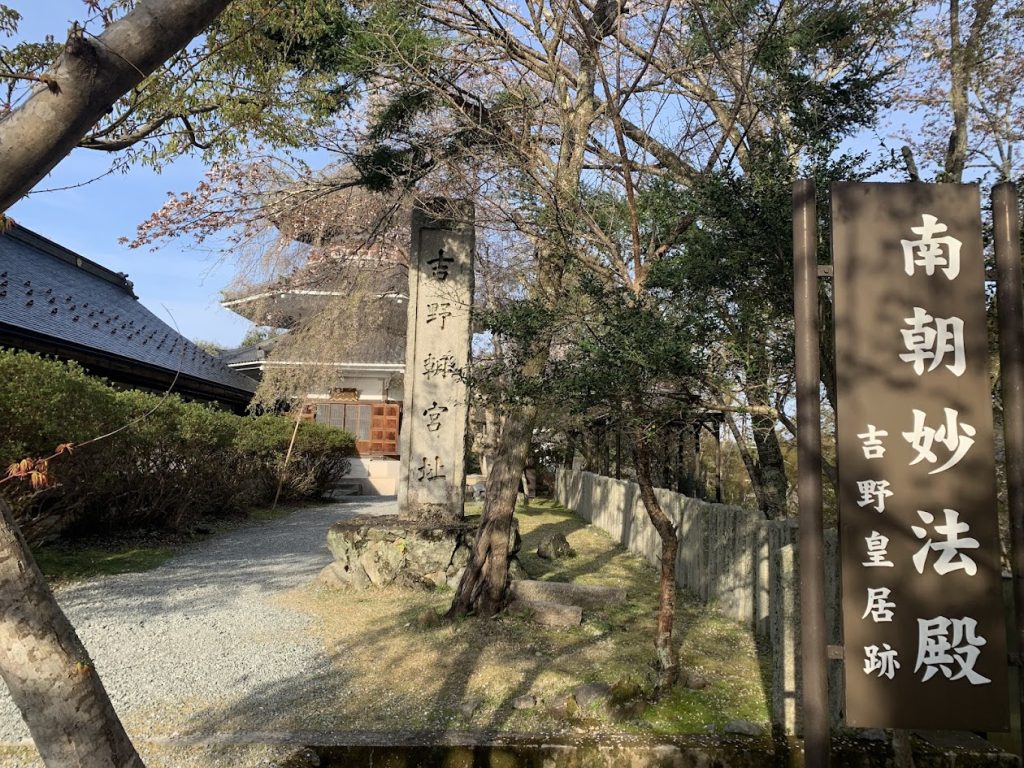
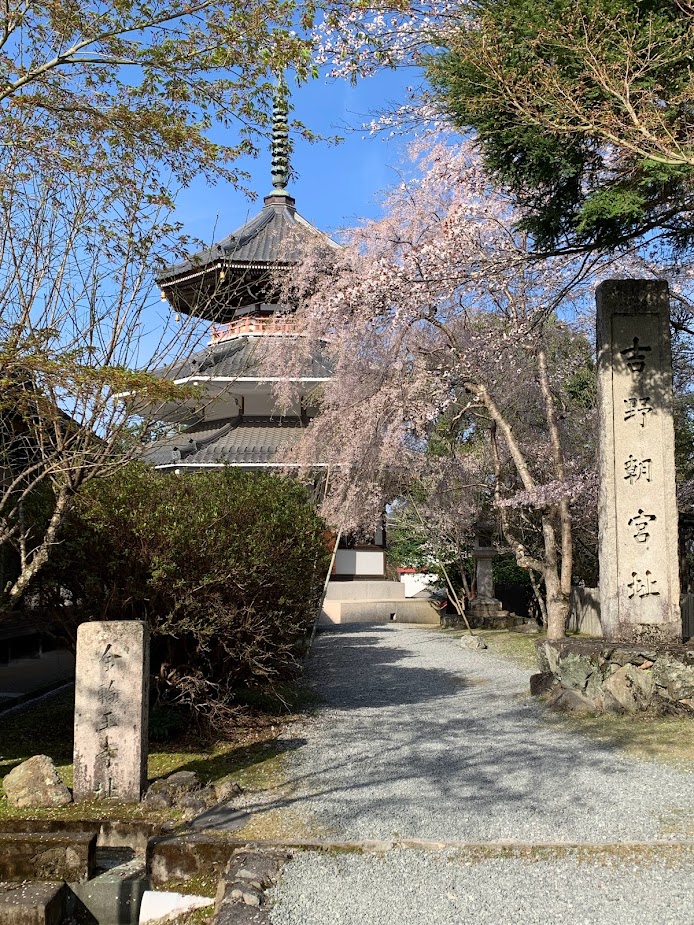
Yoshino Nan-cho Remains
This is the site of the former Nan-cho Imperial Palace.
It served as the base of the Nan-cho forces, led by Emperor Go-Daigo, who used it to resist the Ashikaga Shogunate and the Northern Court.
After secretly escaping from Kyoto at the end of December 1336, Emperor Go-Daigo passed away here in August 1339 at the age of 52.
Naka Senbon (Yoshimizu Shrine)
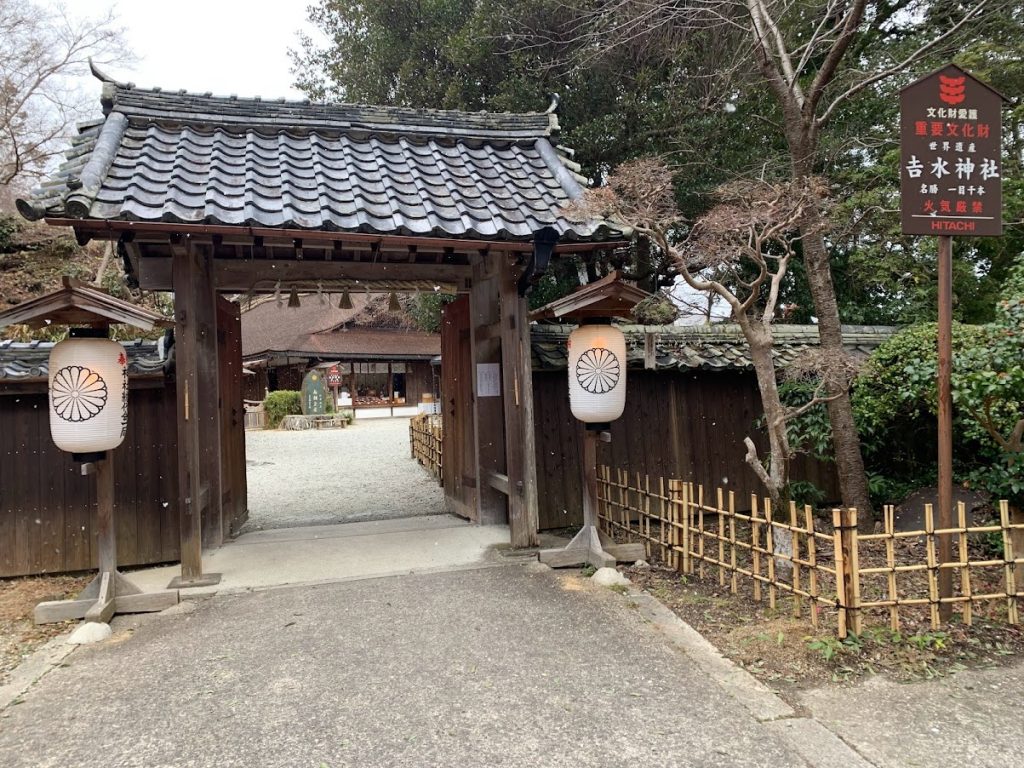
Originally known as Yoshimizu-in, this was a highly prestigious temple lodging founded by En no Gyoja during the Hakuho period of Emperor Tenmu (late 7th century). In the Meiji era, it was renamed Yoshimizu Shrine due to its significance as the imperial residence of Emperor Go-Daigo’s Southern Court.
At the end of the Heian period (over 900 years ago), Minamoto no Yoshitsune, pursued by his brother Yoritomo (Shogun of Kamakura), hid here with Shizuka Gozen (his lover) and Benkei (his retainer).
It was also the residence of Emperor Go-Daigo during the Southern Court period (about 700 years ago), marking the start of its 57-year, four-generation history.
During the Azuchi-Momoyama period (about 400 years ago), Toyotomi Hideyoshi (Lord Taiko) used this location as his main base and stayed for several days during his grand cherry blossom viewing event at Yoshino.
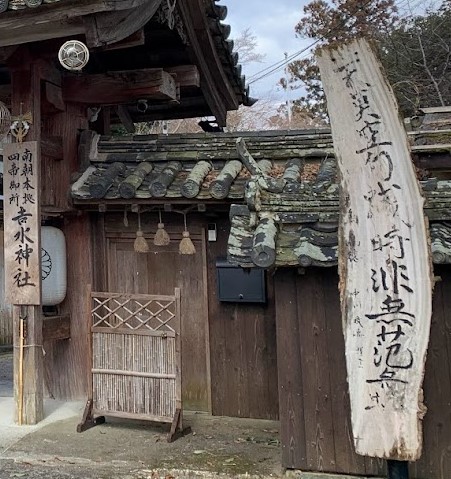
When Emperor Go-Daigo was defeated in the Genko Incident and exiled to the Oki Islands, a loyal samurai carved a ten-character poem into a cherry tree to encourage him.
The inscription read, “In time, perhaps a loyal retainer like Hanrei will appear,” offering hope to Emperor Go-Daigo during his exile.
At Yoshimizu Shrine, this ten-character inscription is displayed at the entrance.
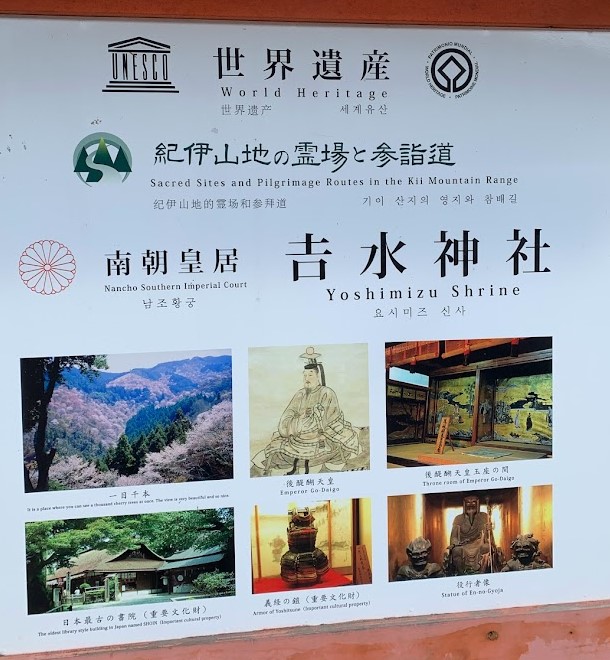
Signboard at the Shrine Entrance
・One Thousand Cherry Trees at a Glance
・Emperor Go-Daigo
・Emperor Go-Daigo’s Throne Room
・Japan’s Oldest Shoin
・Yoshitsune’s Armor
・Statue of En no Gyoja
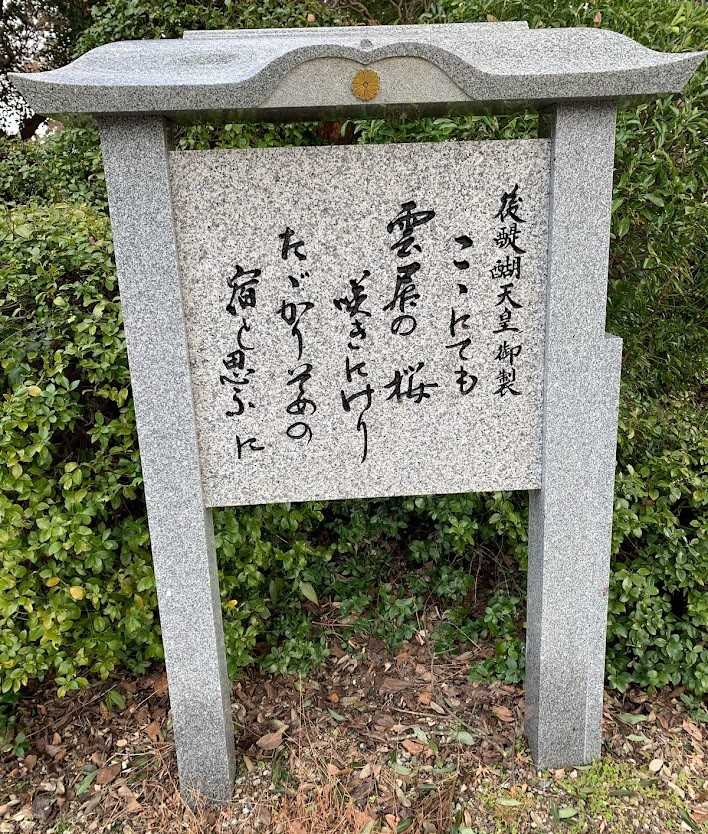
The poem composed by Emperor Go-Daigo as he gazed at the cherry blossoms here.
The meaning is:
Even here, the ‘Kumo-i’ cherry blossoms, which bloom in the palace, are blooming.
I thought this place was only a temporary lodging.
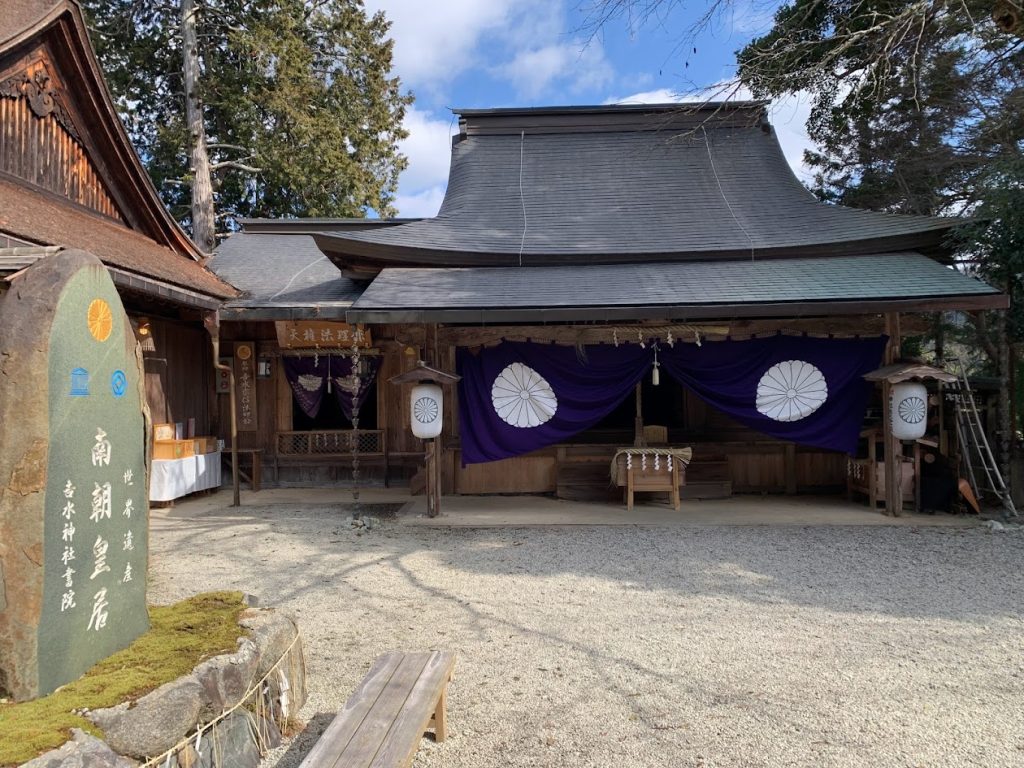
Yoshimizu Shrine
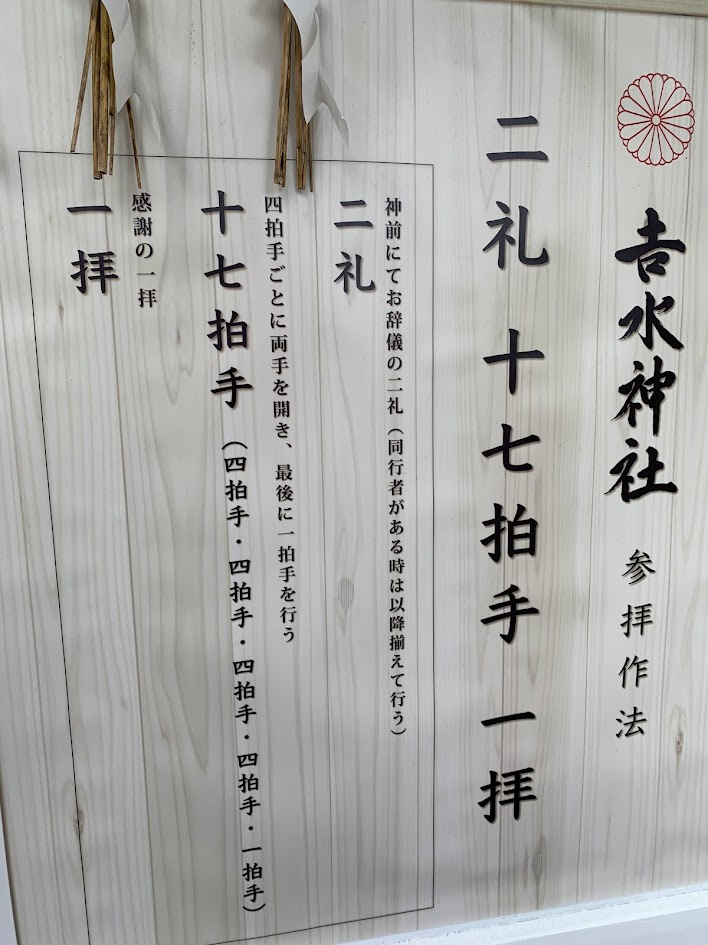
Worship Etiquette at Yoshimizu Shrine
(A very unique ritual)
Bow twice
Clap your hands 17 times (4 claps, 4 claps, 4 claps, 4 claps, 1 clap)
Bow once
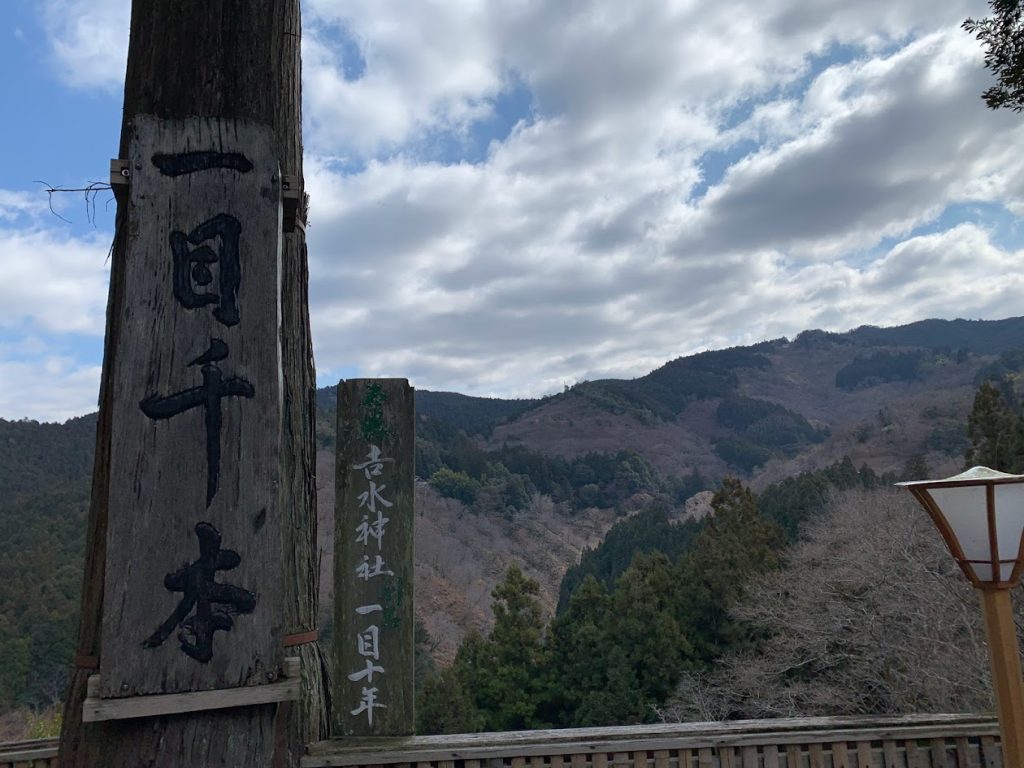
Winter scenery
Hitome Senbon (a thousand cherry trees at a glance)
Naka Senbon (Katte Shrine)
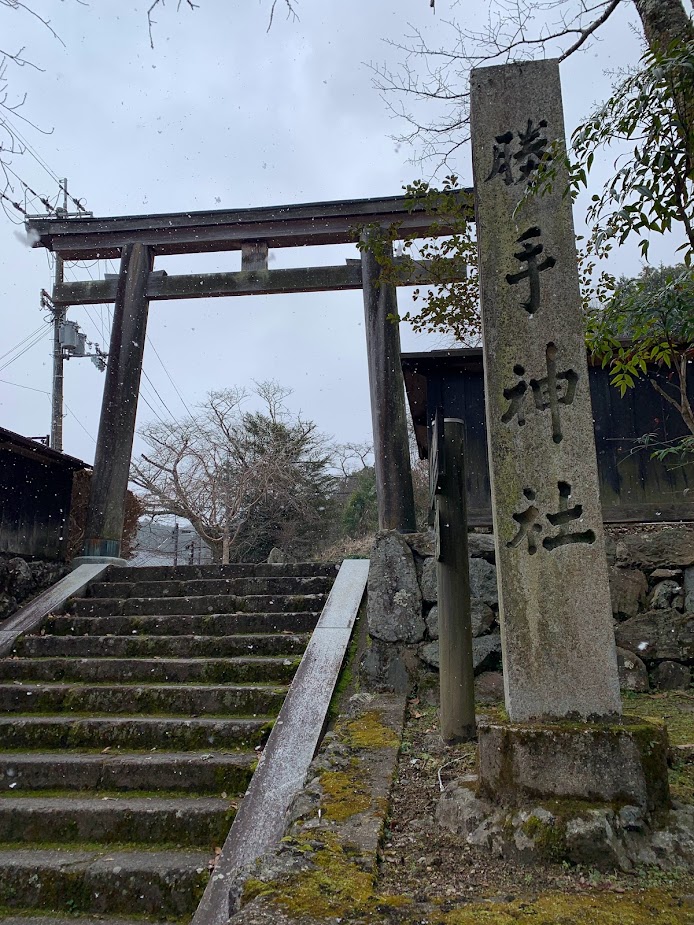
Katte Shrine
Snow is swirling in the air.

Shizuka Gozen, who tearfully parted with Yoshitsune as snow was falling at Mount Yoshino, was robbed of her money by her attendants and was later captured by pursuers while wandering. It is said that, when soldiers doubted whether she was truly Shizuka Gozen, she danced elegantly in front of Katte Shrine, impressing them with her refined grace.
It is said that Prince Oama (later Emperor Tenmu) was playing the koto in front of this shrine when a celestial maiden appeared, gracefully dancing and waving her sleeves as she descended from the mountain behind him.
This mountain is called as “Sodefuri-yama” (Mountain of Waving Sleeves).
Naka Senbon (Street Scene)
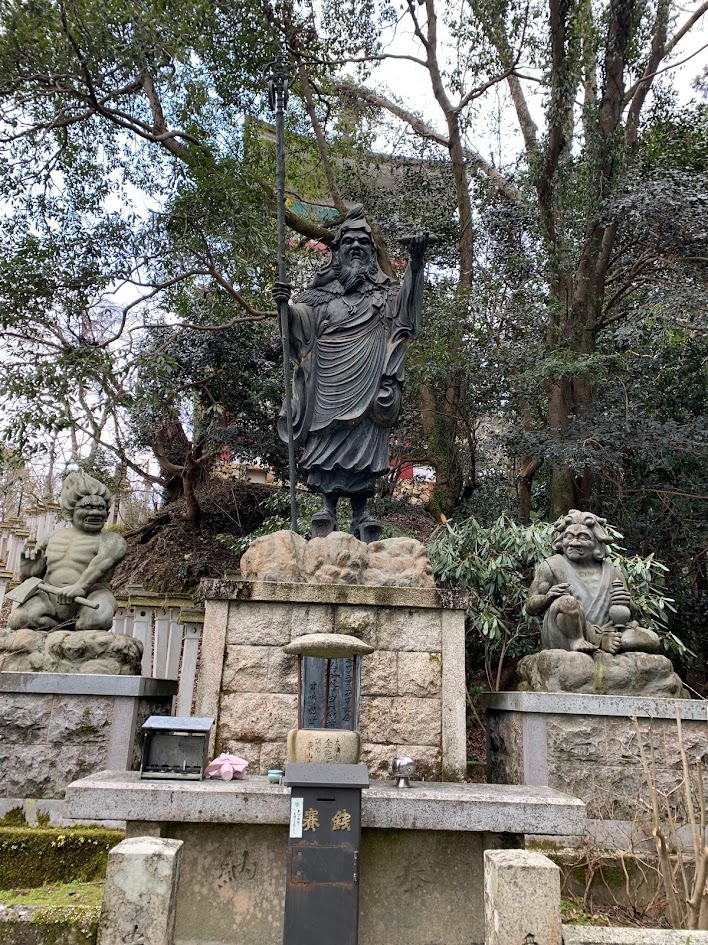
En no Gyoja, the founder of Shugendo, was a great ascetic from the late 7th century, and many legends about him remain.
The “Omine Okugake-michi,” a pilgrimage route registered as a World Heritage site, stretching from Mount Yoshino to Kumano Taisha Shrine, was also opened by En no Gyoja.
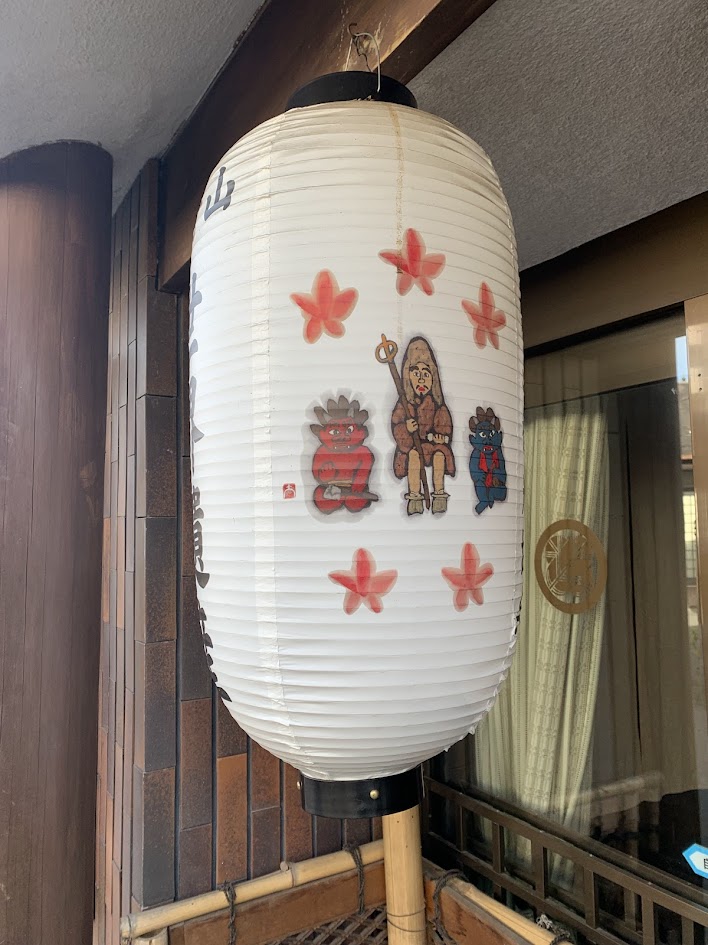
He was always accompanied by Zenki (the Front Demon) and Goki (the Rear Demon).
Zenki and Goki were a married pair of demons who had been causing harm to people in the mountain of Ikoma.
However, they regretted their actions after being guided by En no Gyoja, and from then on, the husband Zenki walked in front of him, while his wife Goki followed behind him.
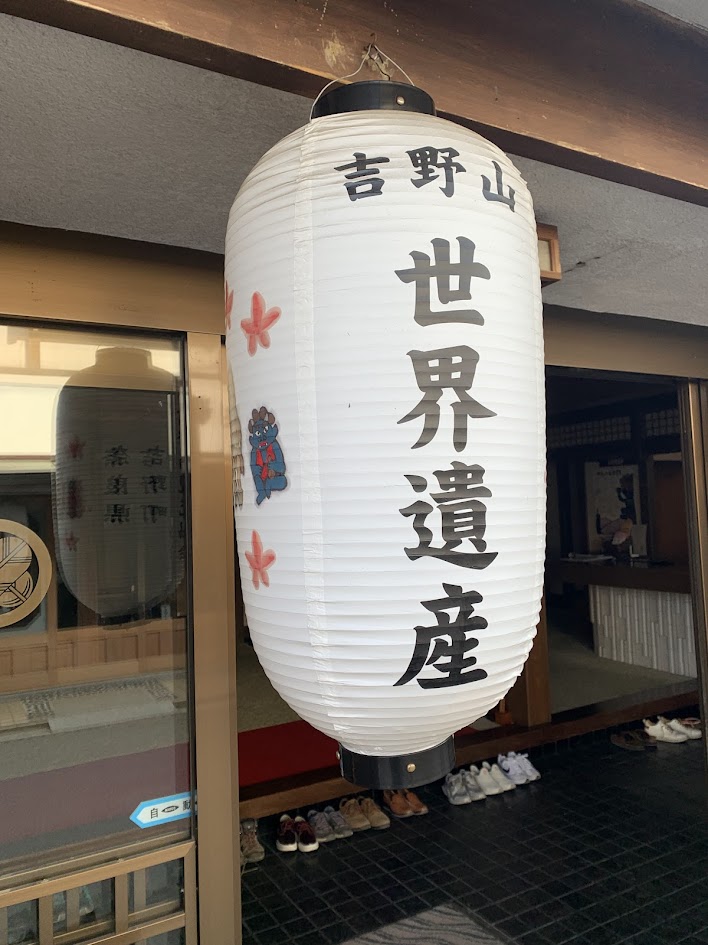
The “World Heritage” lanterns displayed in front of inns and shops feature illustrations of En no Gyoja, along with Zenki and Goki.
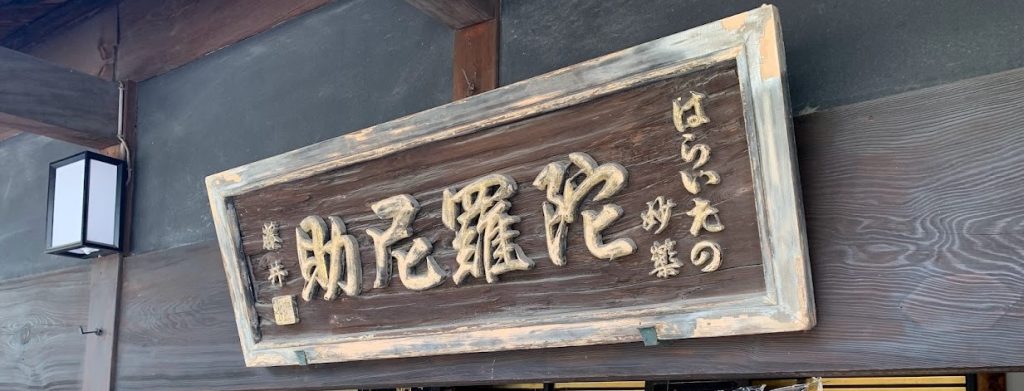
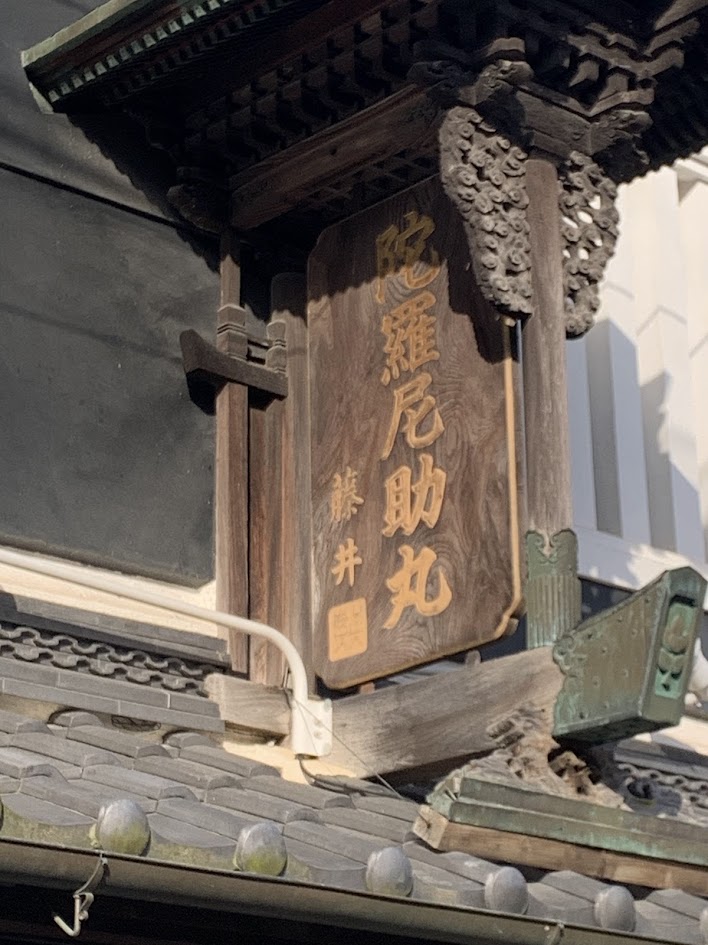
Daranisuke
A miraculous remedy for stomach pain.
En no Gyoja, who trained at Yoshino, passed down the method of making it to his disciples, and the recipe has been preserved to this day.
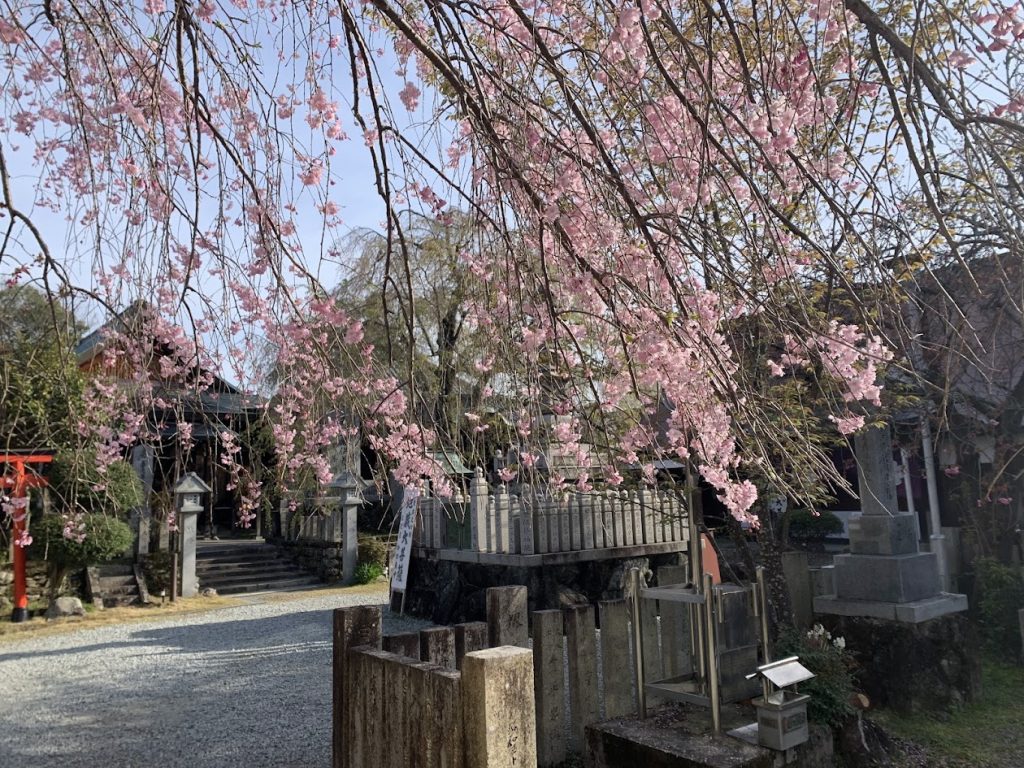
Sakuramotobo
This ancient temple was built after Emperor Tenmu had a lucky dream about cherry blossoms.
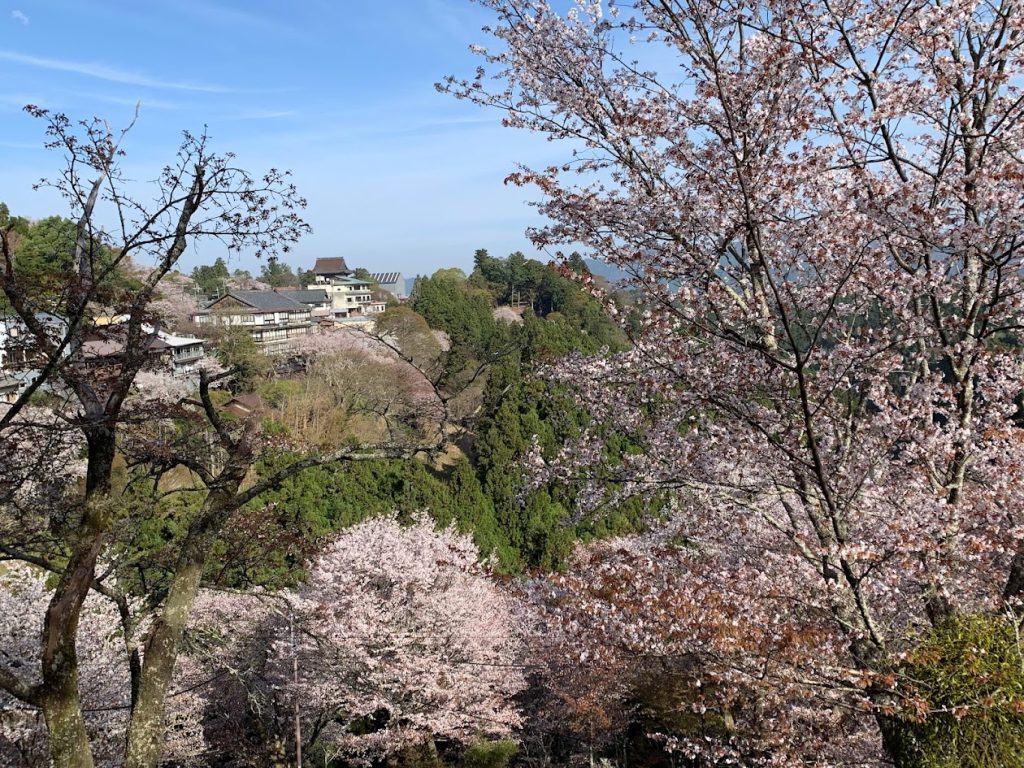
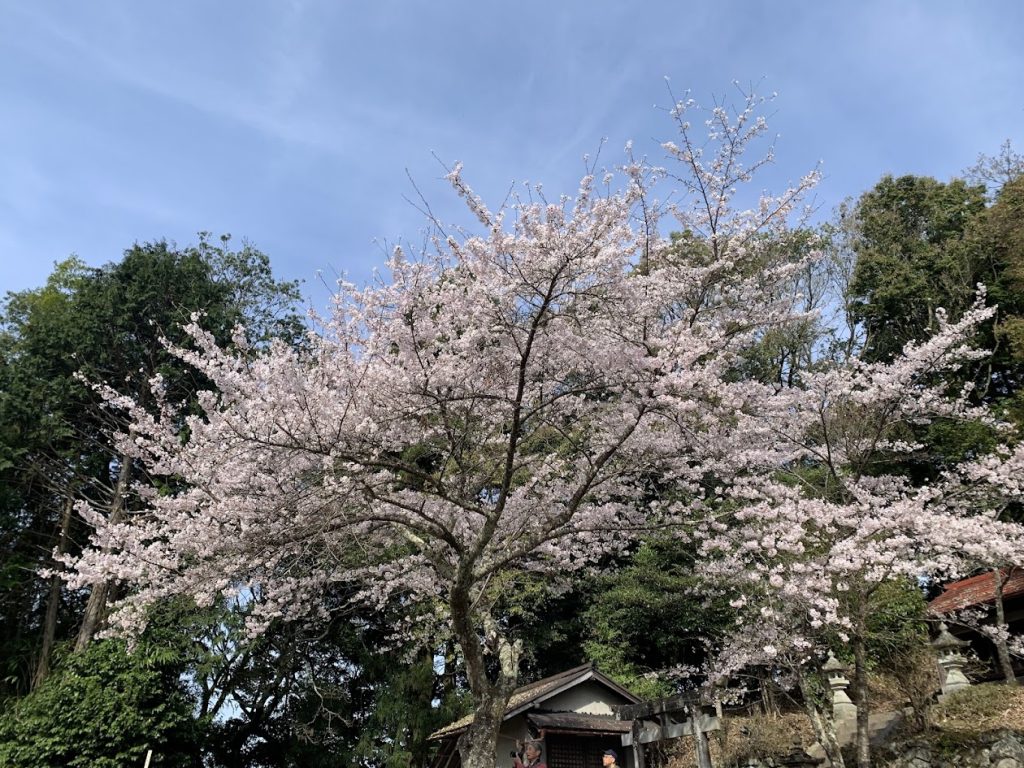
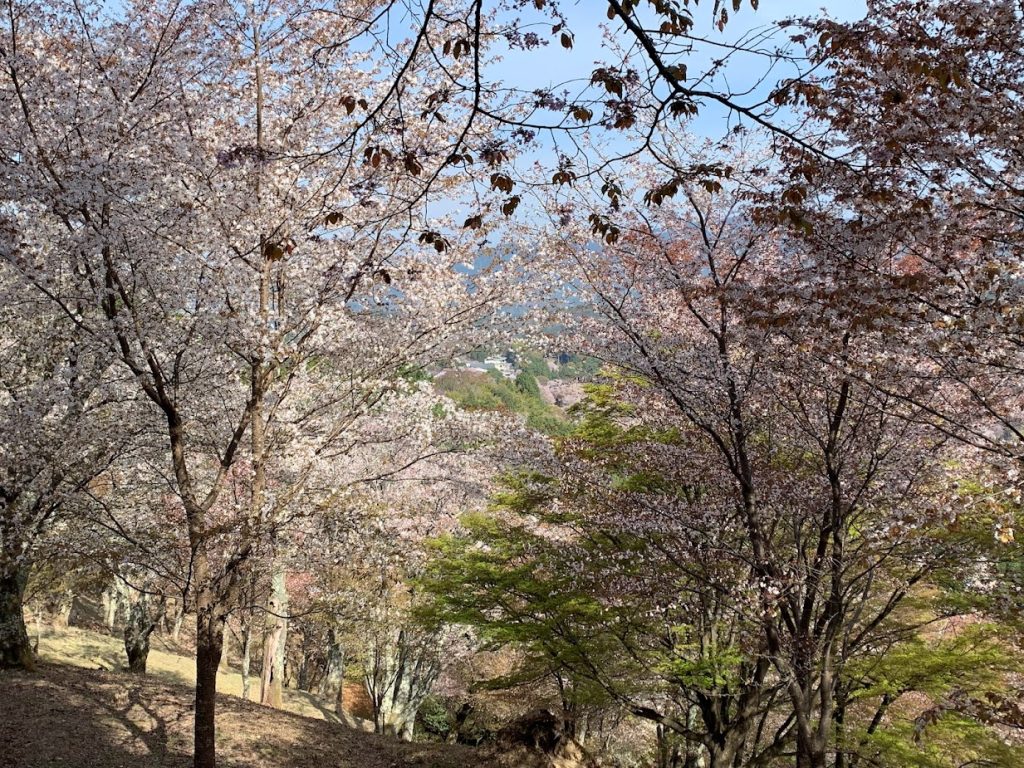
During cherry blossom season
Zao-do can be seen in the distance.
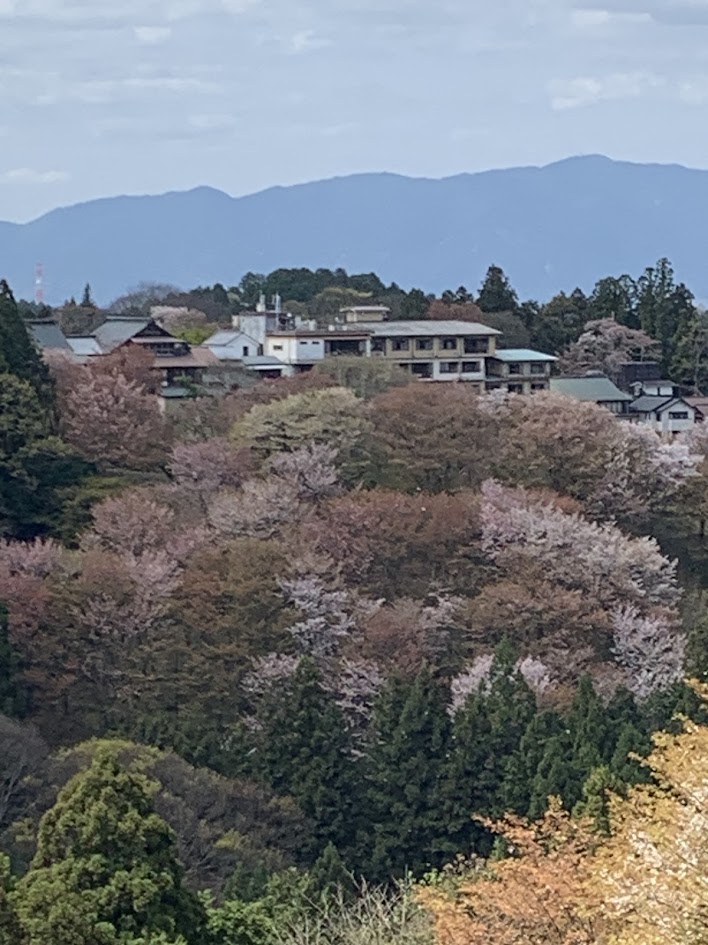
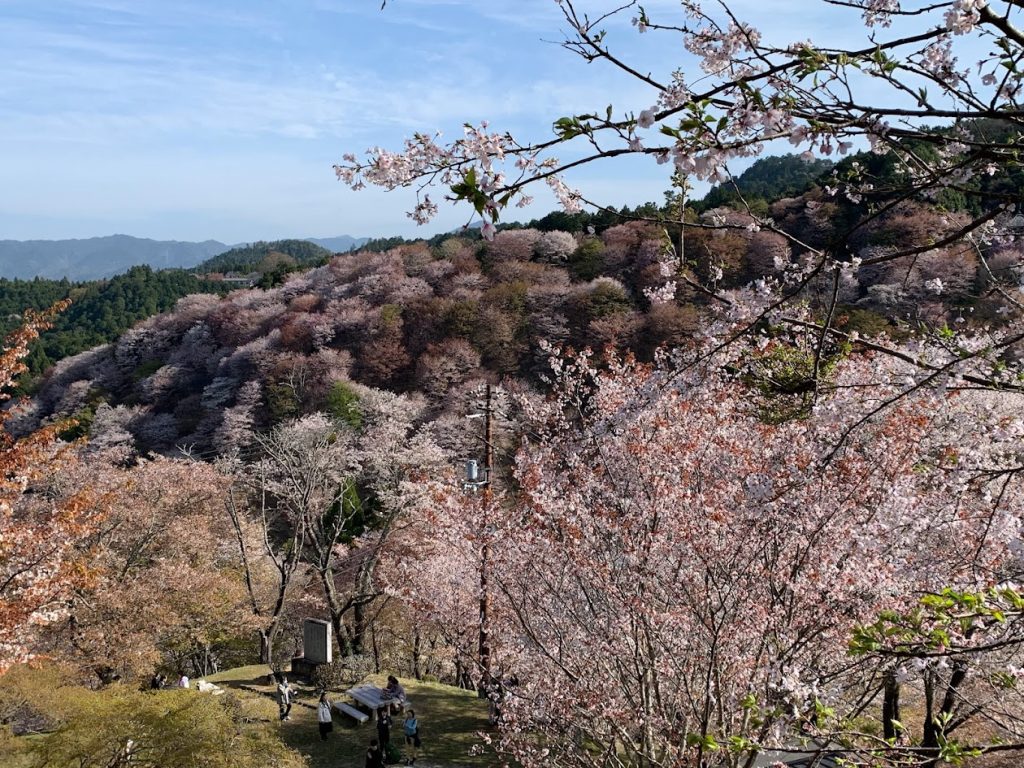
Cherry Blossoms from Gorobei Chaya
A short distance from the middle of the naka senbon street, on the way to Nyoirin-do.
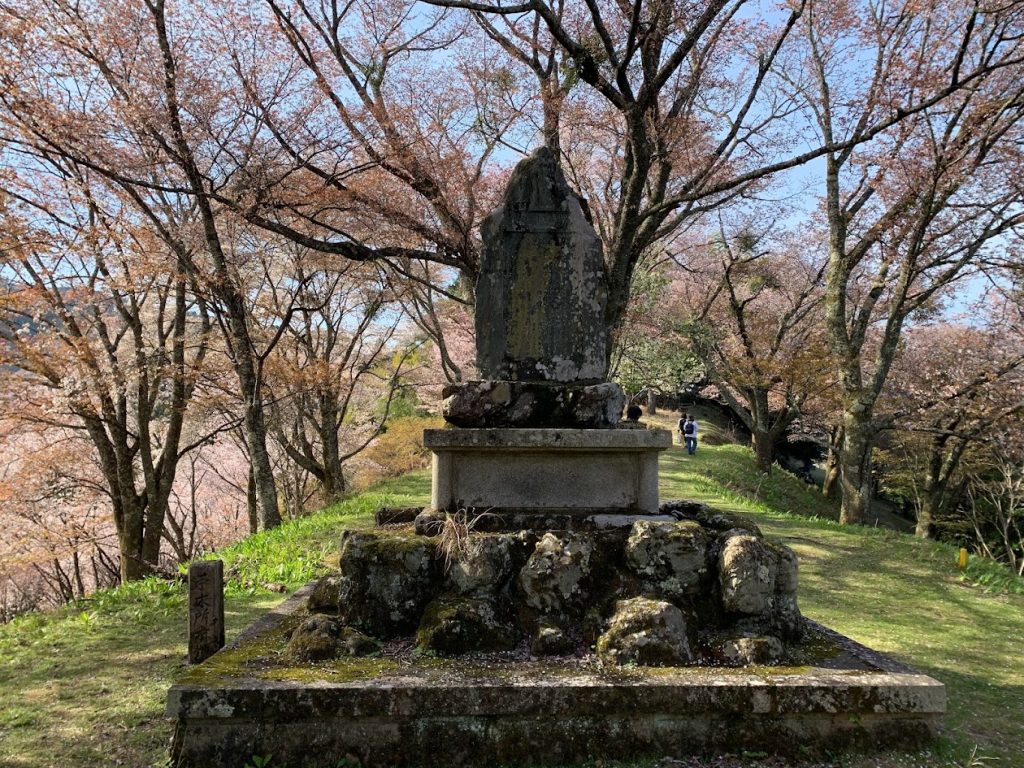
From Naka Senbon to Kami Shenbon
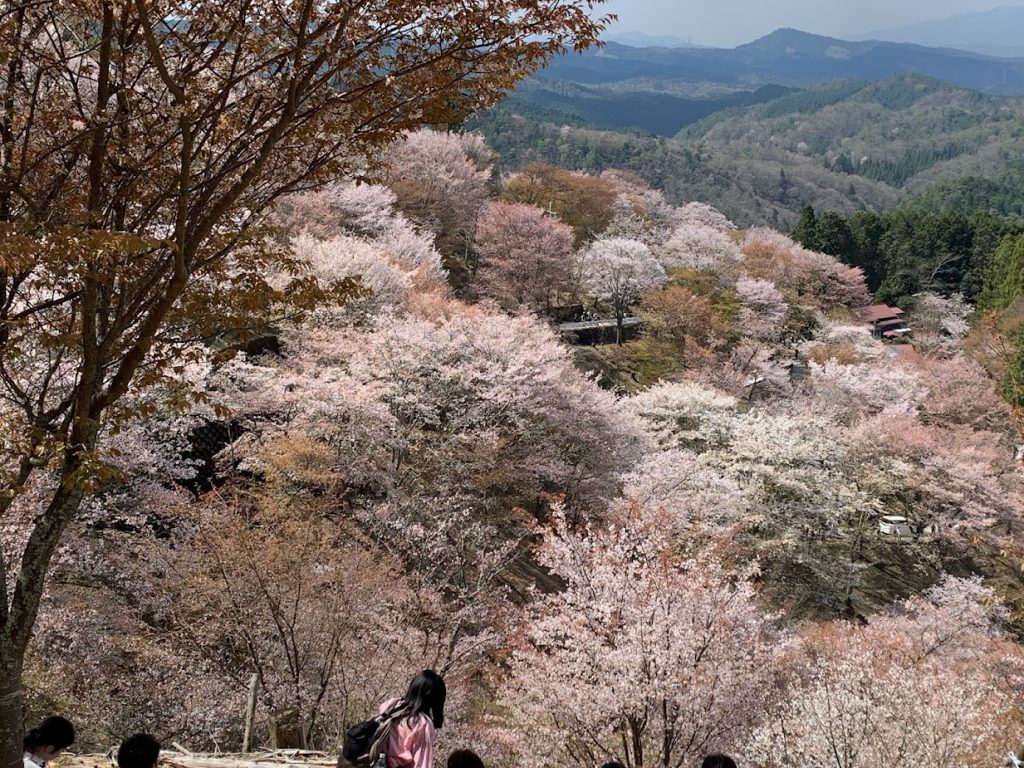
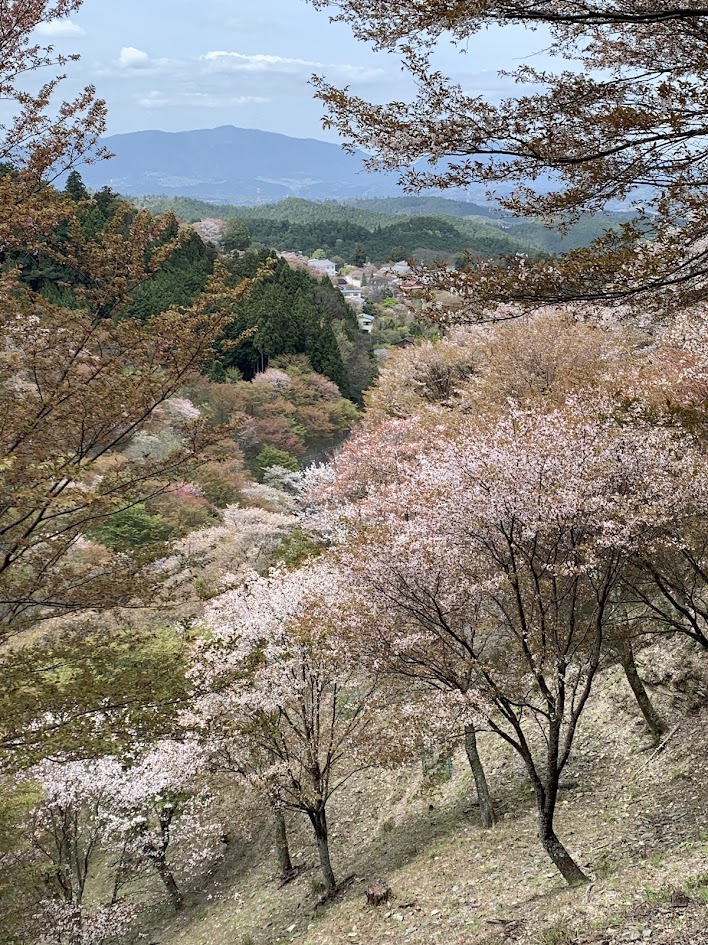
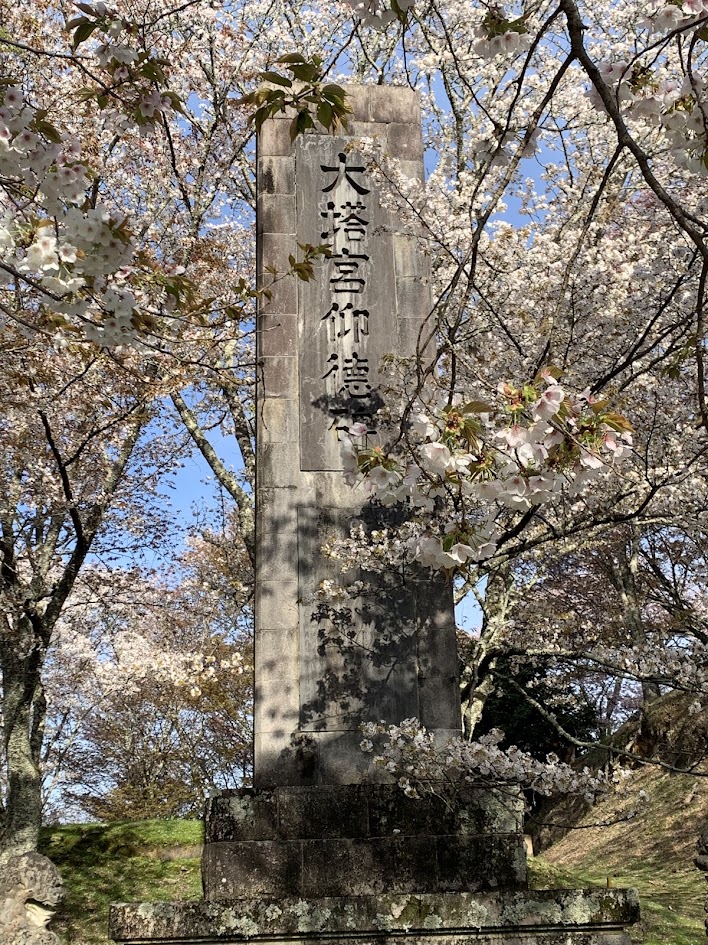
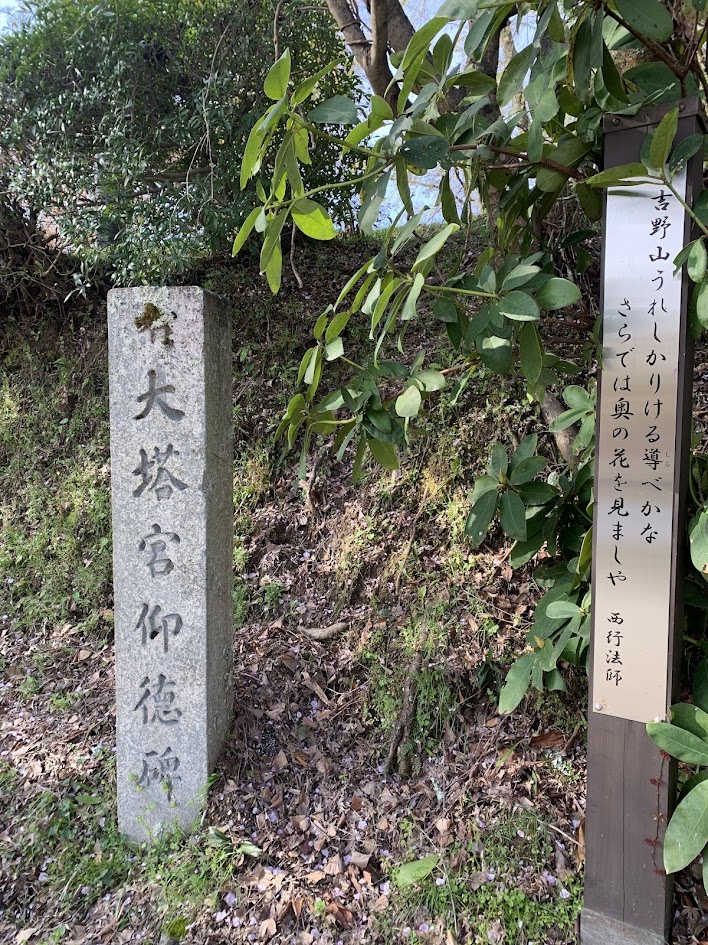

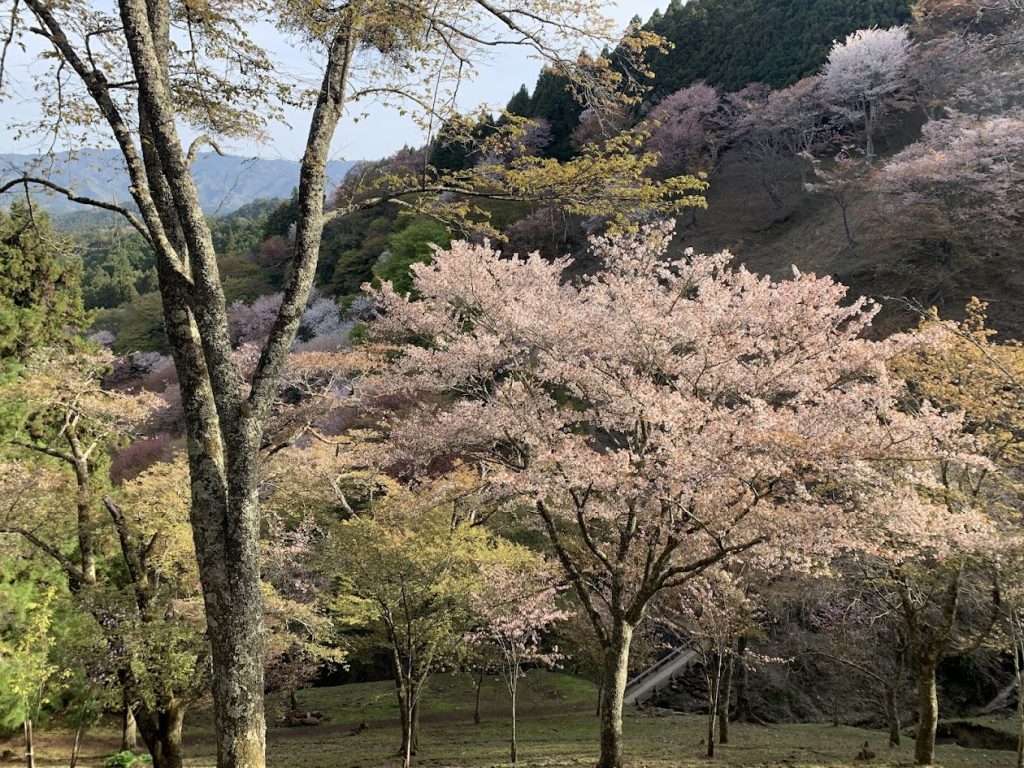
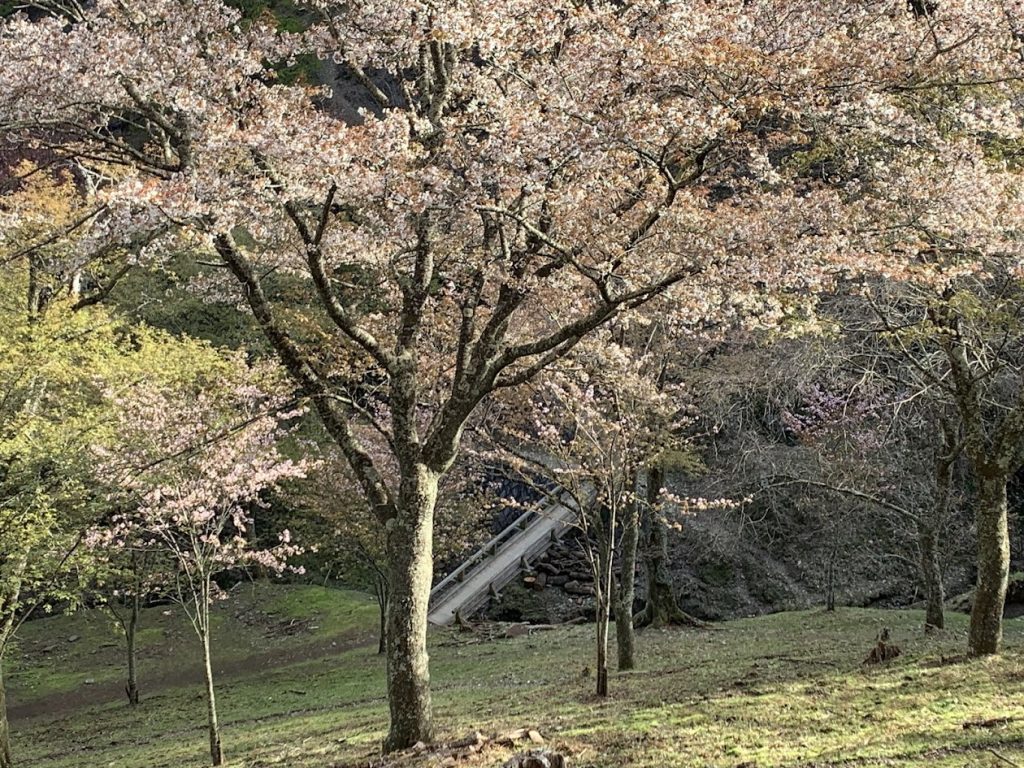
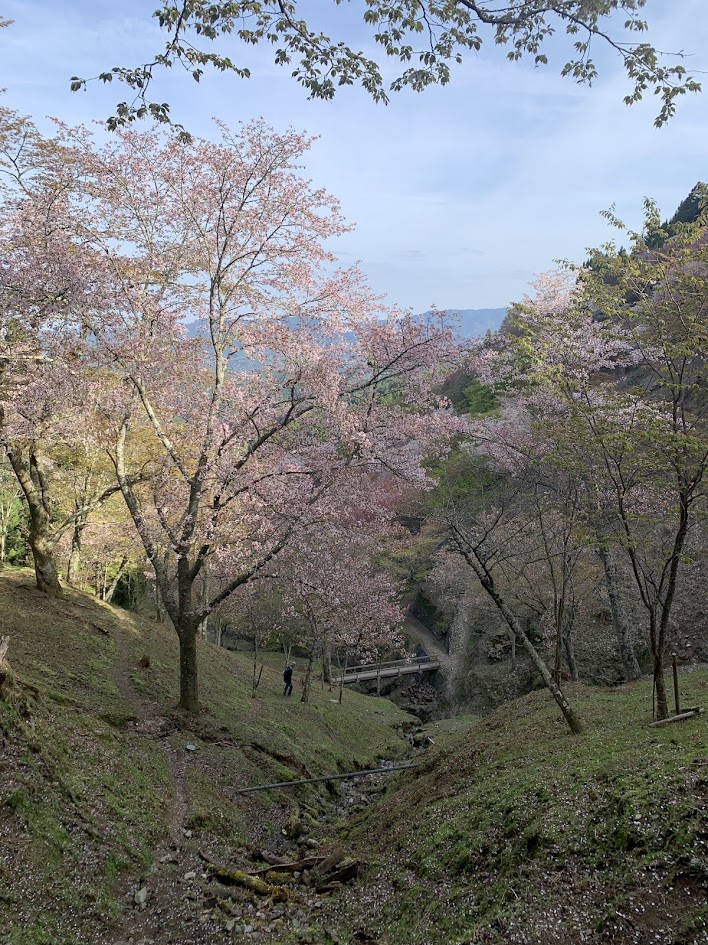

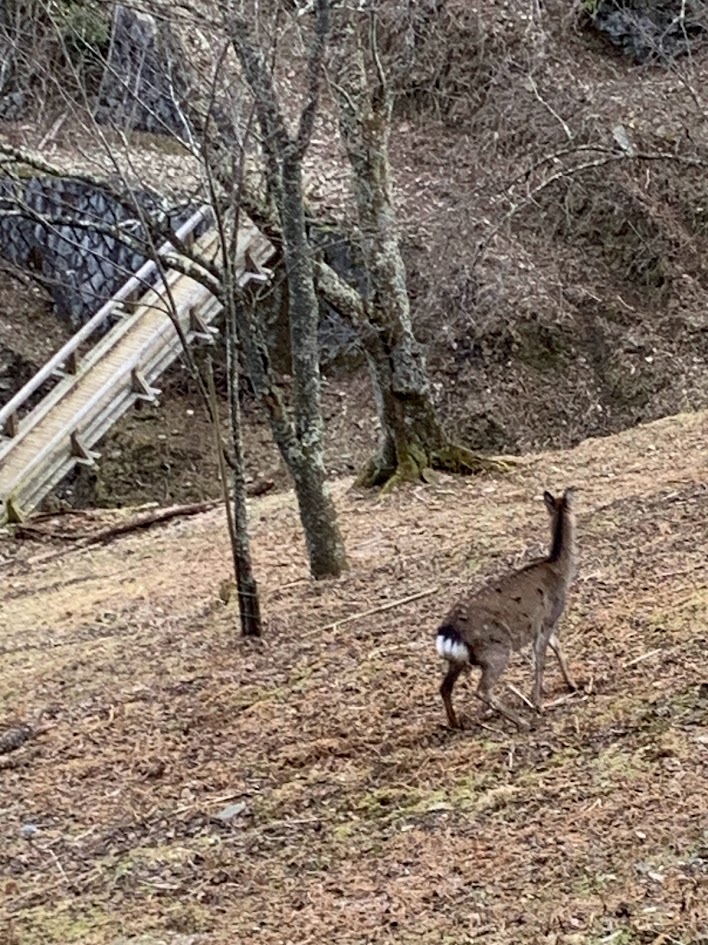
In winter, I found wild deer.
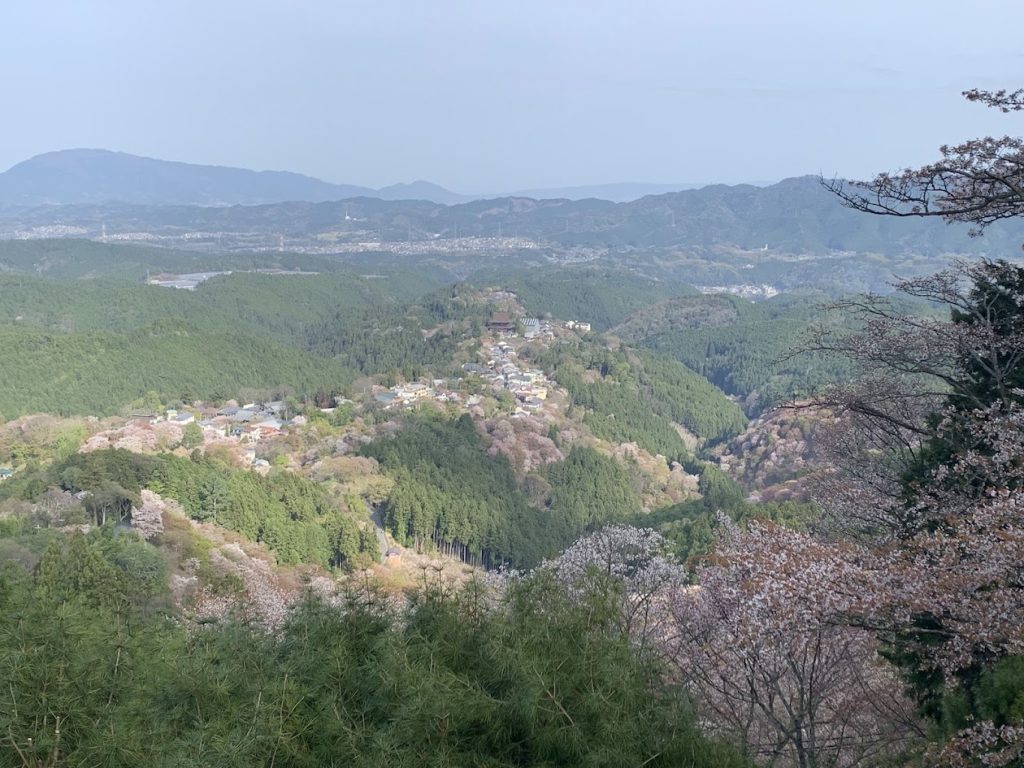
Zao-do can be seen in the distance.

Kami Senbon (Mikumari Shrine)
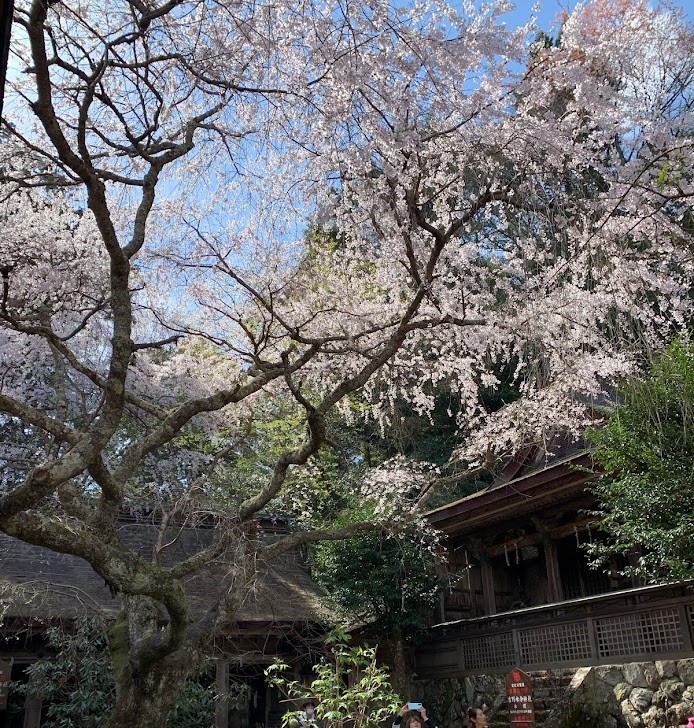
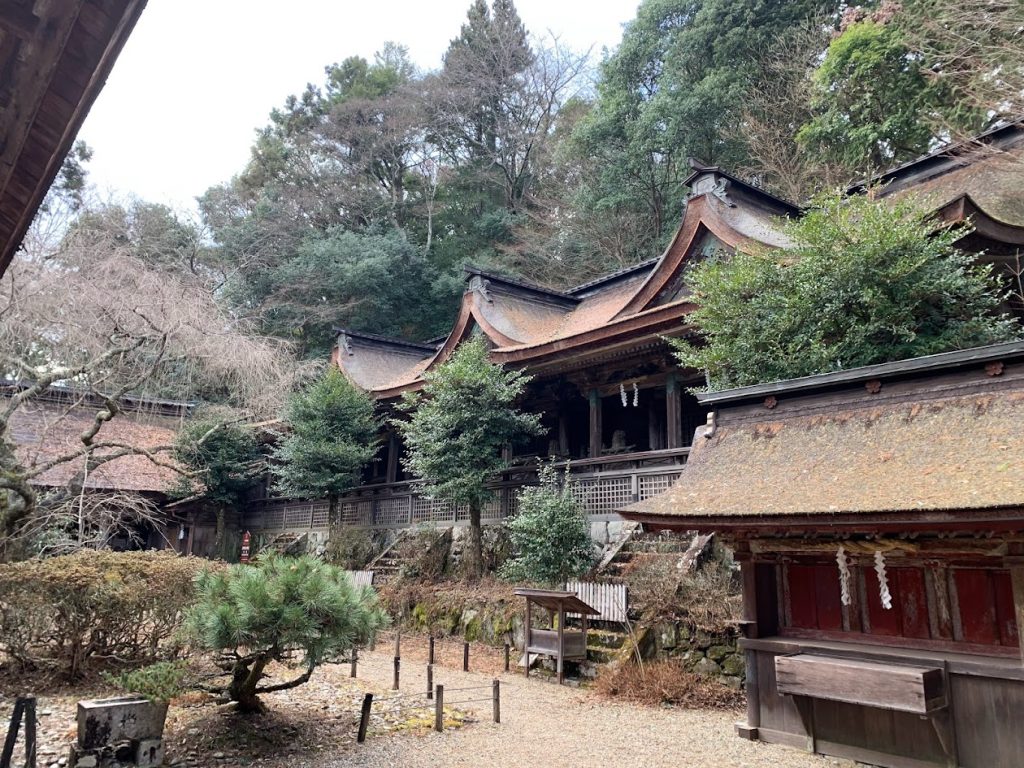
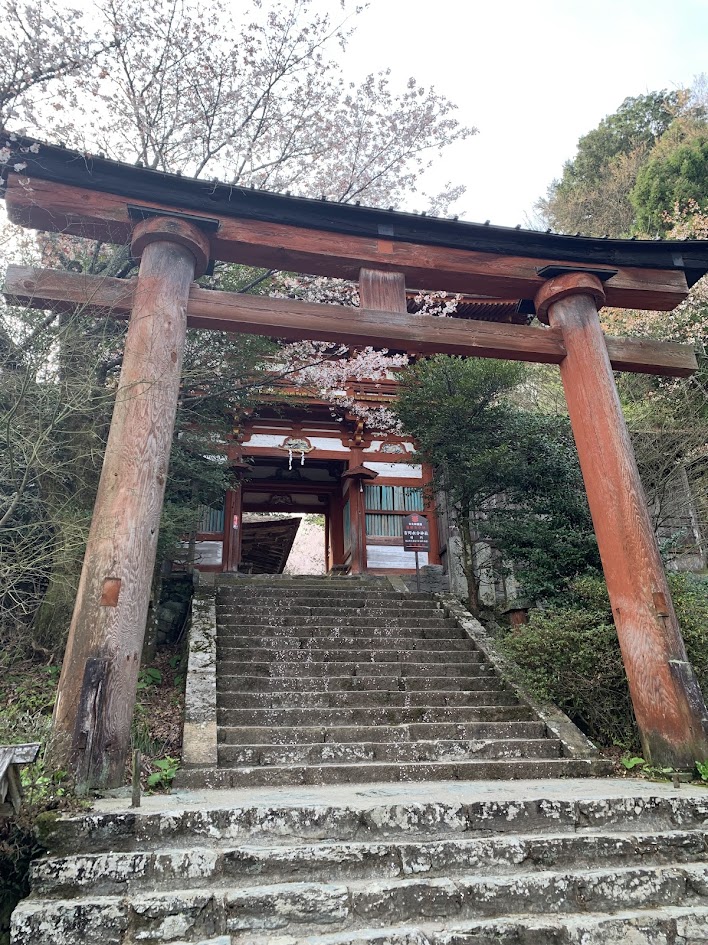
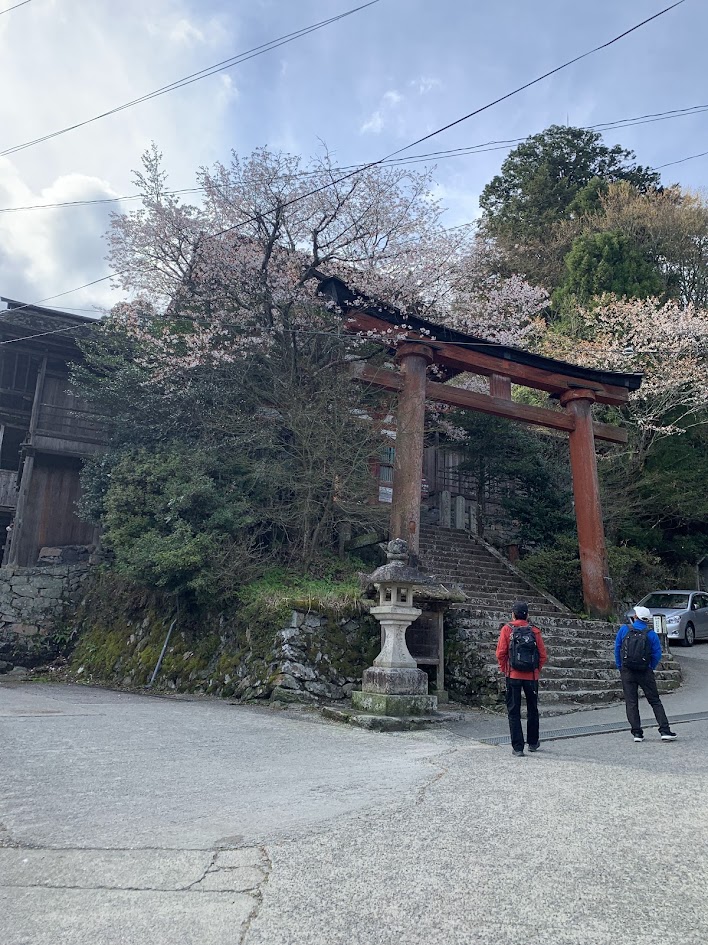
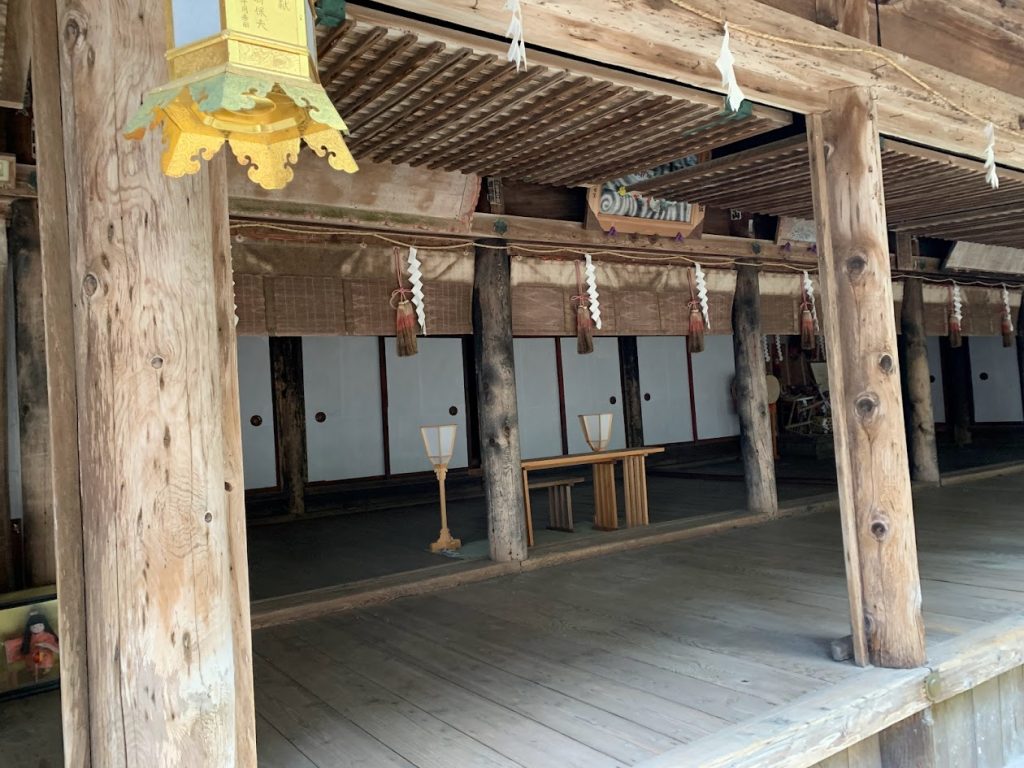
Mikumari Shrine
The main deity is Amenomikumari no Okami, who oversees the distribution of water.
Also known as Komori-miya, the shrine is revered as a guardian for fertility, safe childbirth, and children.
Toyotomi Hideyoshi (Lord Taiko) prayed here for the blessing of a child and was granted a son, Hideyori.
The current shrine building was reconstructed by Hideyori in 1604.

Kami Senbon (Takagi-yama)
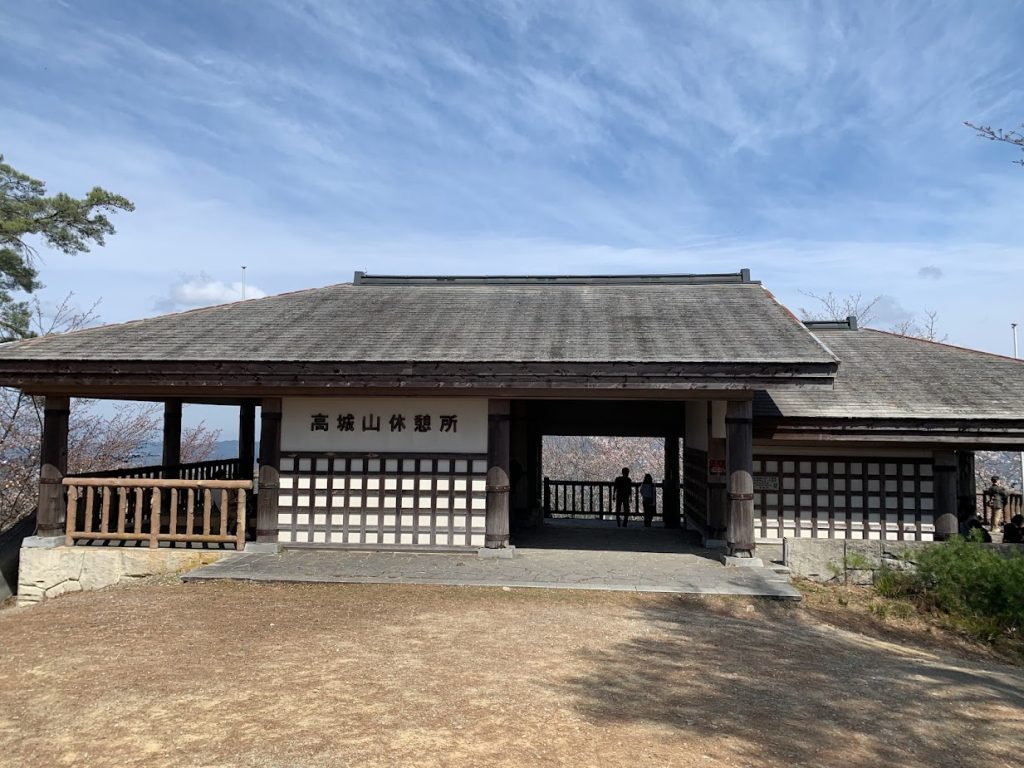
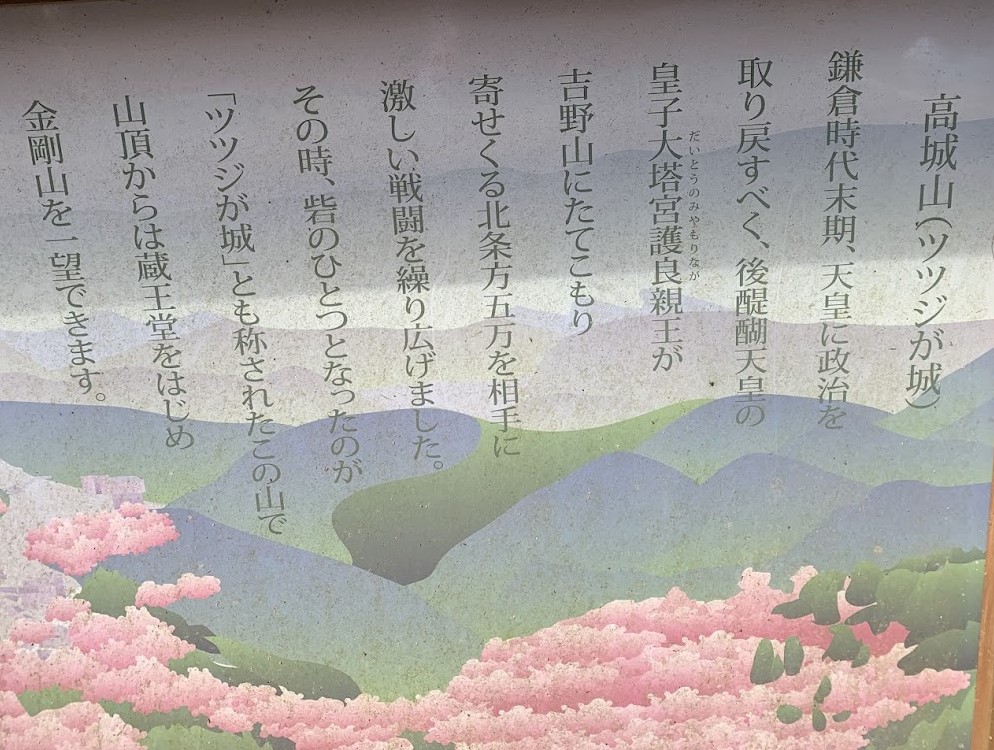
Takagi-yama
At the end of the Kamakura period, Prince Oto-no-miya, a son of Emperor Go-Daigo, sought to restore the emperor’s power and took refuge on Mount Yoshino.
He fought hard against the 50,000 soldiers of the Kamakura clan.
During this time, one of the fortresses was this mountain.
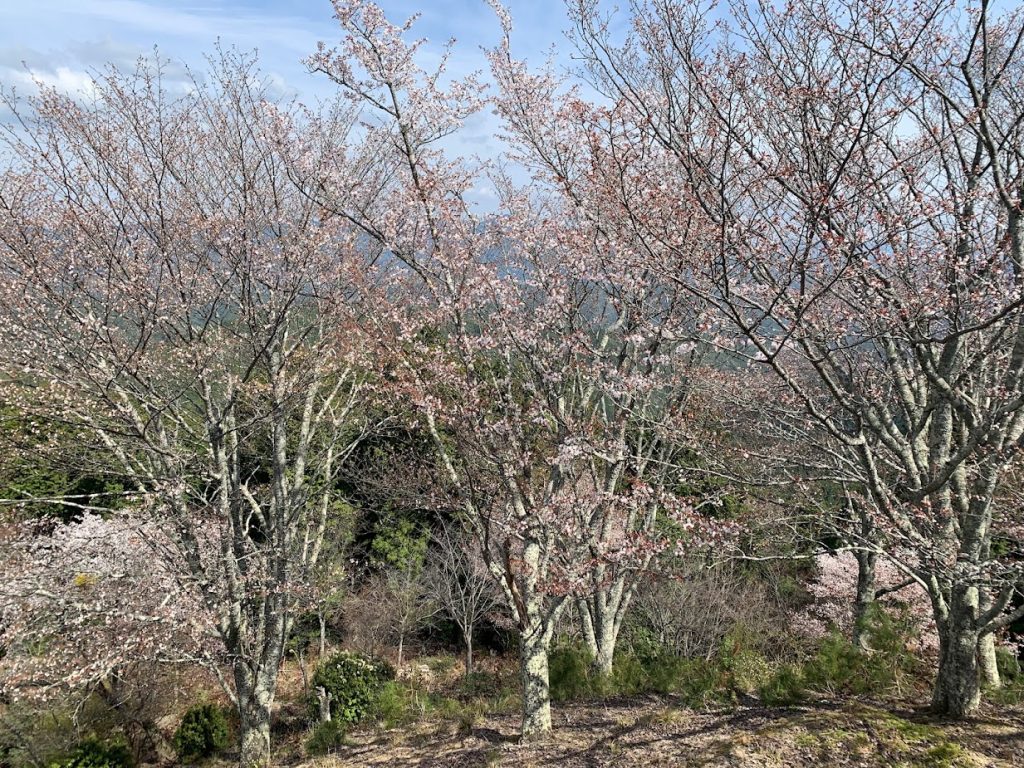
From the top, you can see a great view of Zao-do and Mount Kongo.

Kami Senbon (Kimpu Shrine)
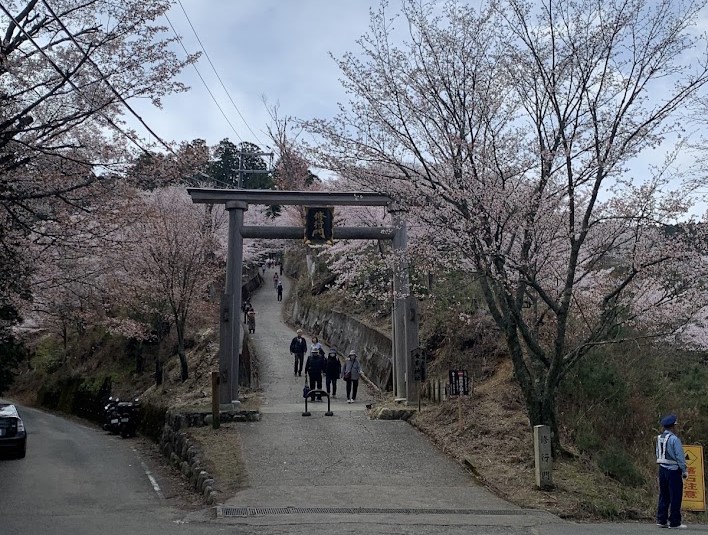
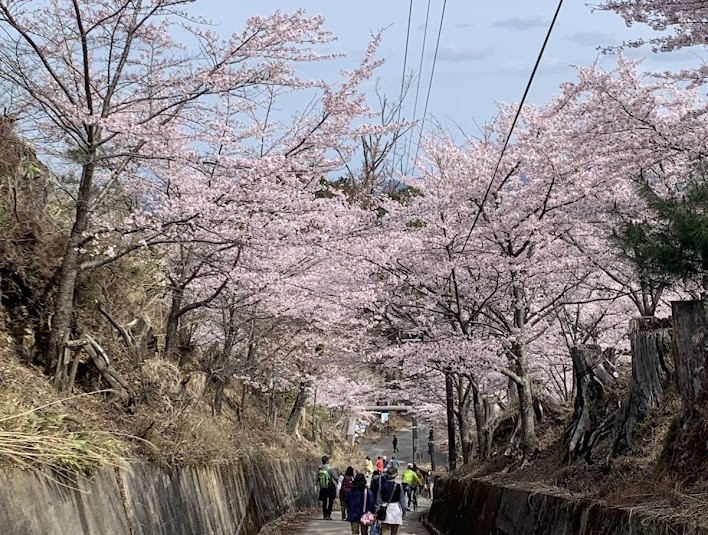

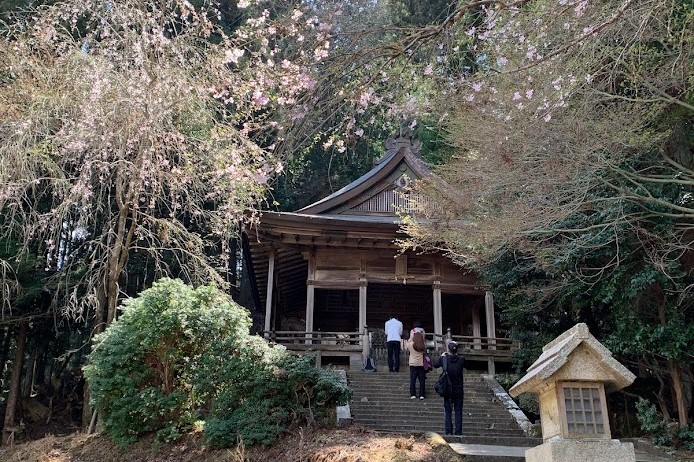
Kimpu Shrine
The name Kimpu refers to the general area extending from here to Mount Omine.
Historically, it was believed that golden veins lay underground in this region.
There are stories that people who climbed this mountain found gold.
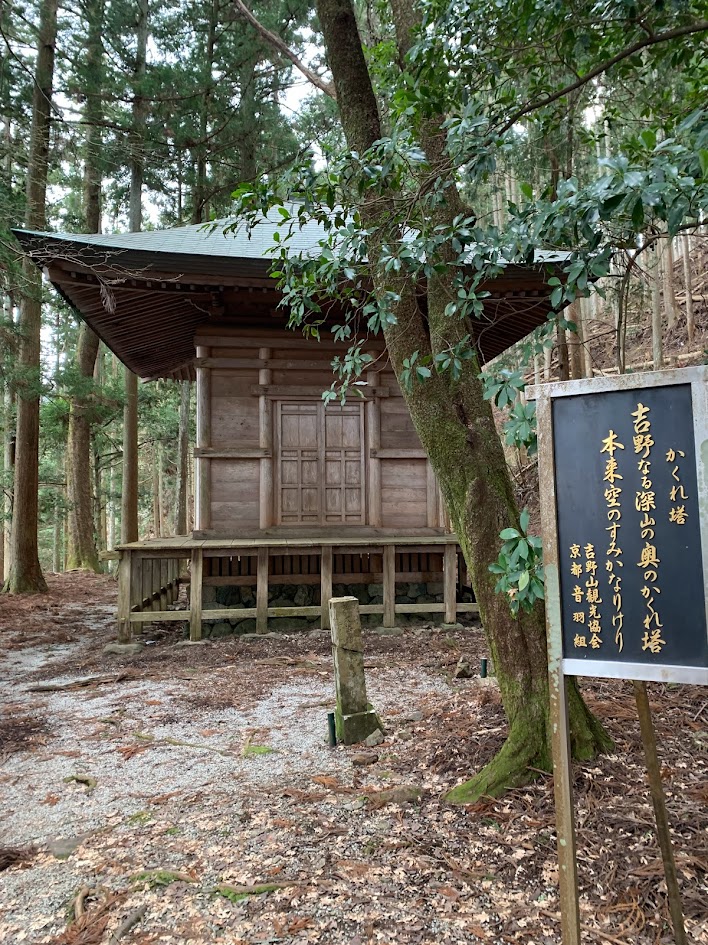
Kakure-to (Hidden Tower)
In 1185, Minamoto no Yoshitsune is said to have hidden in this tower.
To escape his pursuers, he broke through the roof, which is why it is also known as “Yoshitsune’s Hidden Tower.”
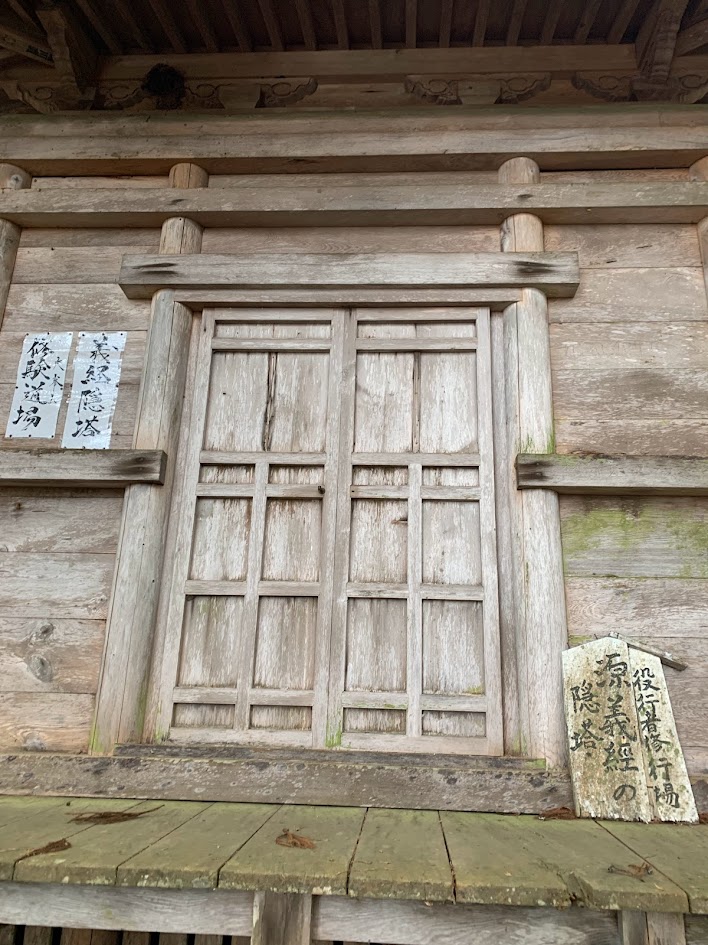
It is written as follows:
En no Gyoja’s Ascetic Training Site.
It is also known as Yoshitsune’s Hidden Tower.
Kami Senbon (around Saigyo-an)
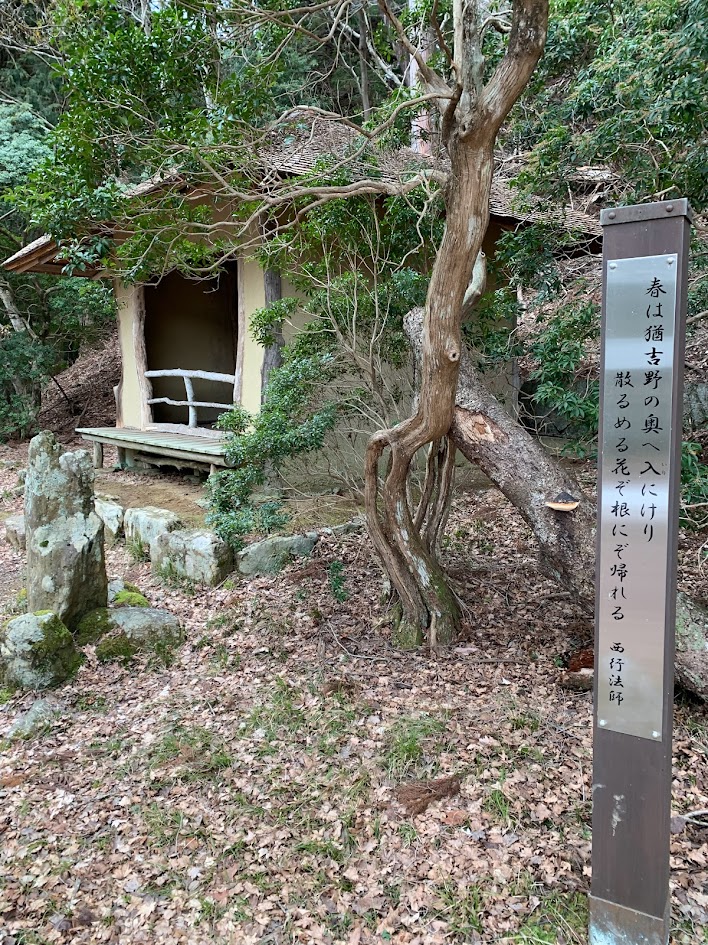
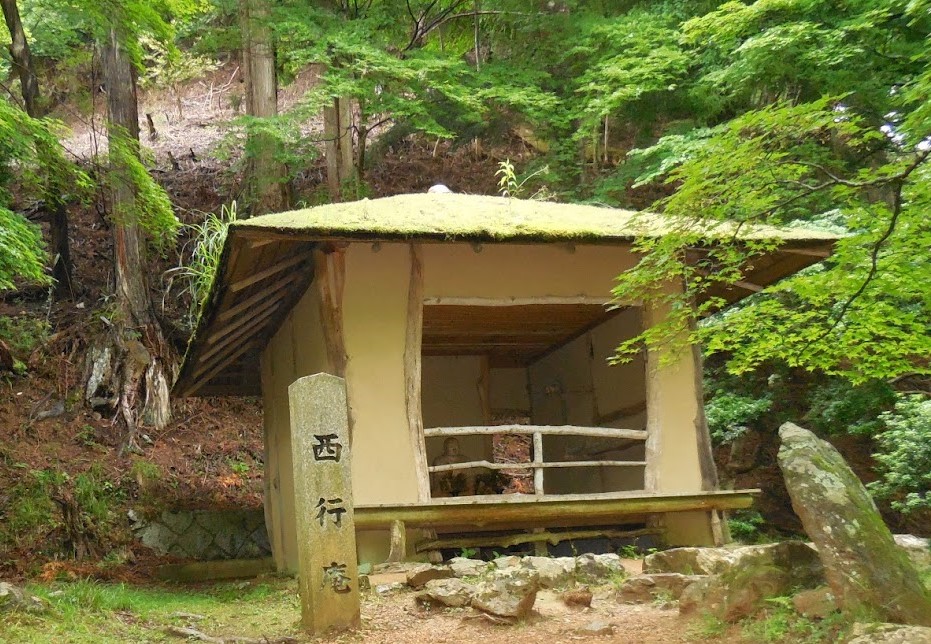
Saigyo-an
Continue further from Kimpu Shrine.
About 800 years ago, the monk Saigyo lived here in solitude to escape the ordinary world.
Originally a warrior who guarded the imperial palace, Saigyo left the world of battle behind and became a poet who deeply loved the moon and flowers.
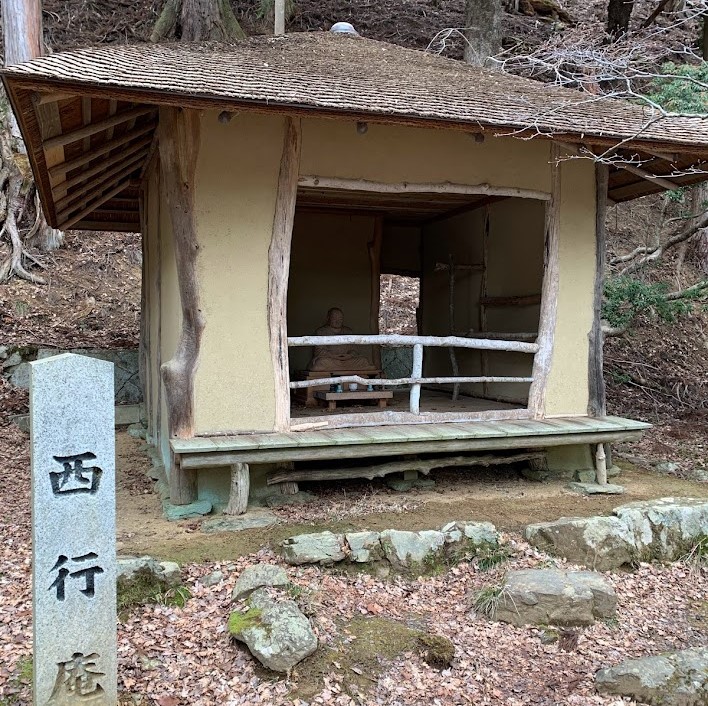
In winter and spring
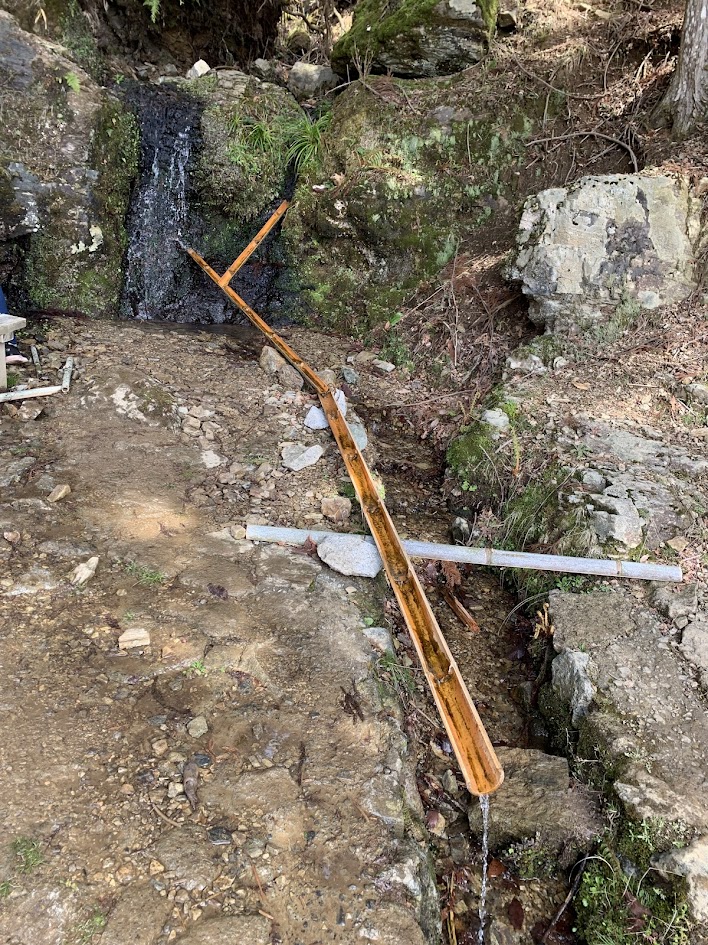
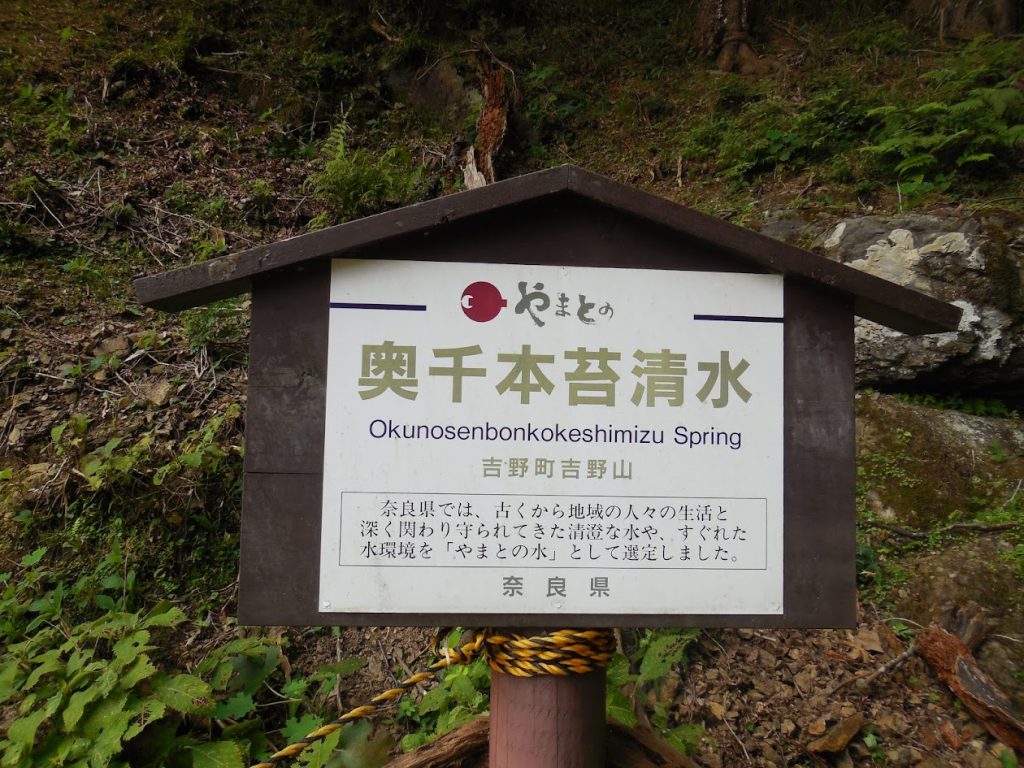
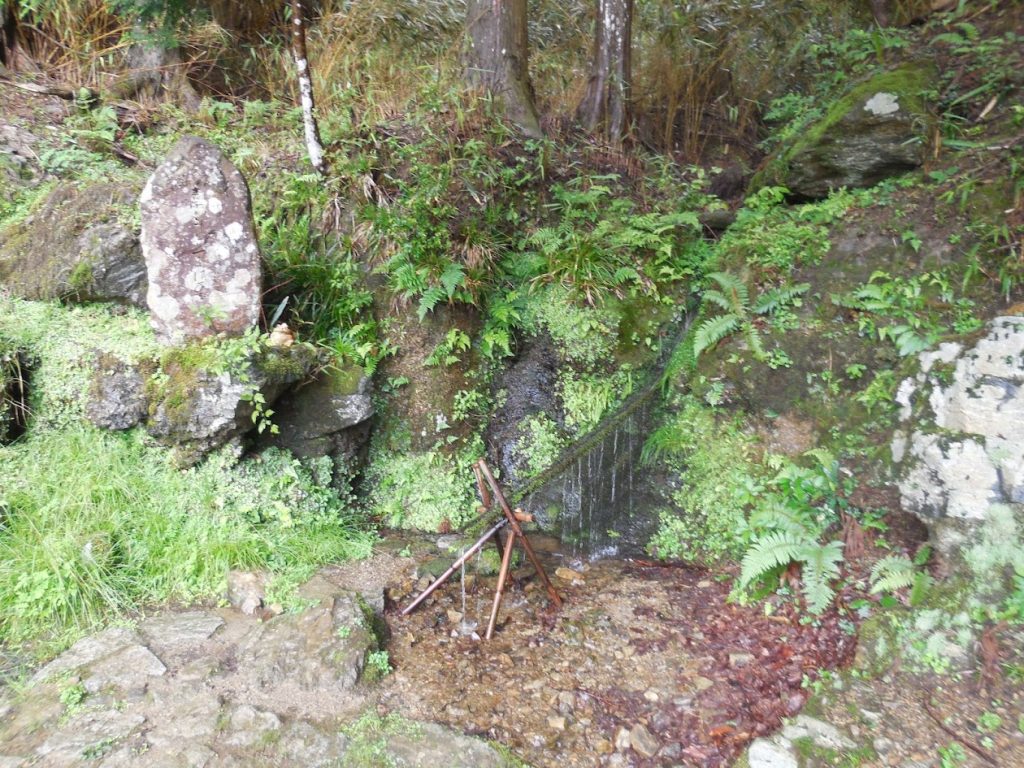
Tokutoku to / otsu mo iwa-ma no / koke-shimizu / kumi hosu made mo / naki sumika kana
written by Saigyō Hōshi
the mossy spring water falling between the rocks. A dwelling so serene, I feel no need to draw it all.
Saigyō Hōshi — a renowned 12th-century Japanese poet and Buddhist monk known for his deeply reflective waka poetry and his love of nature, especially cherry blossoms.
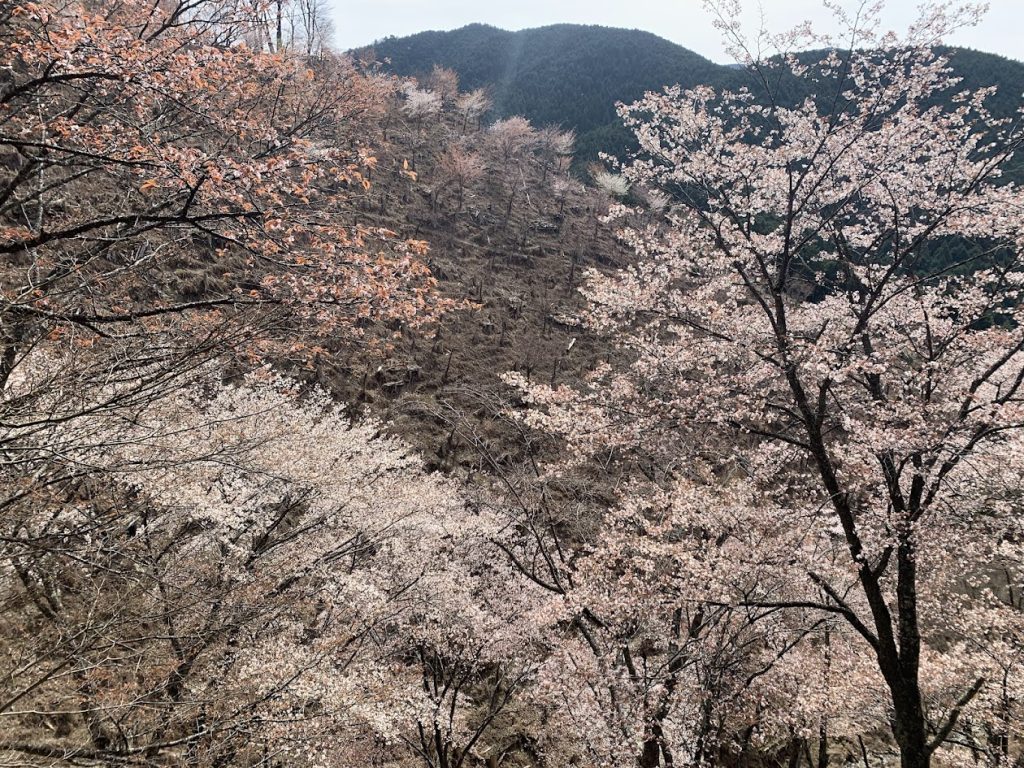
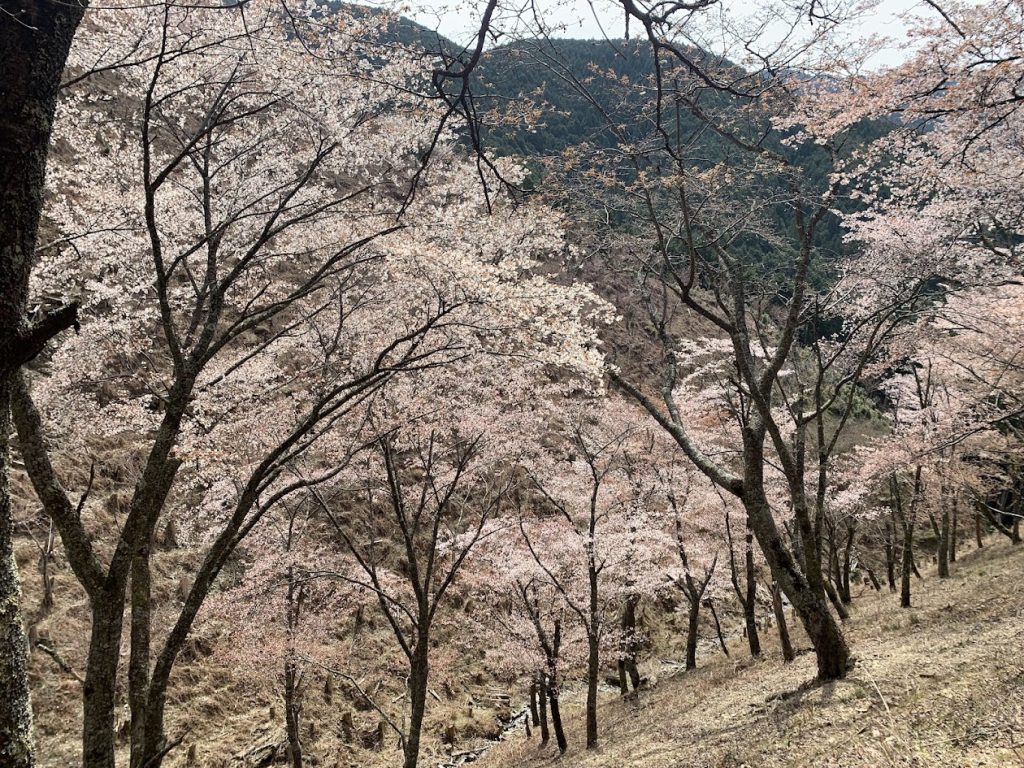
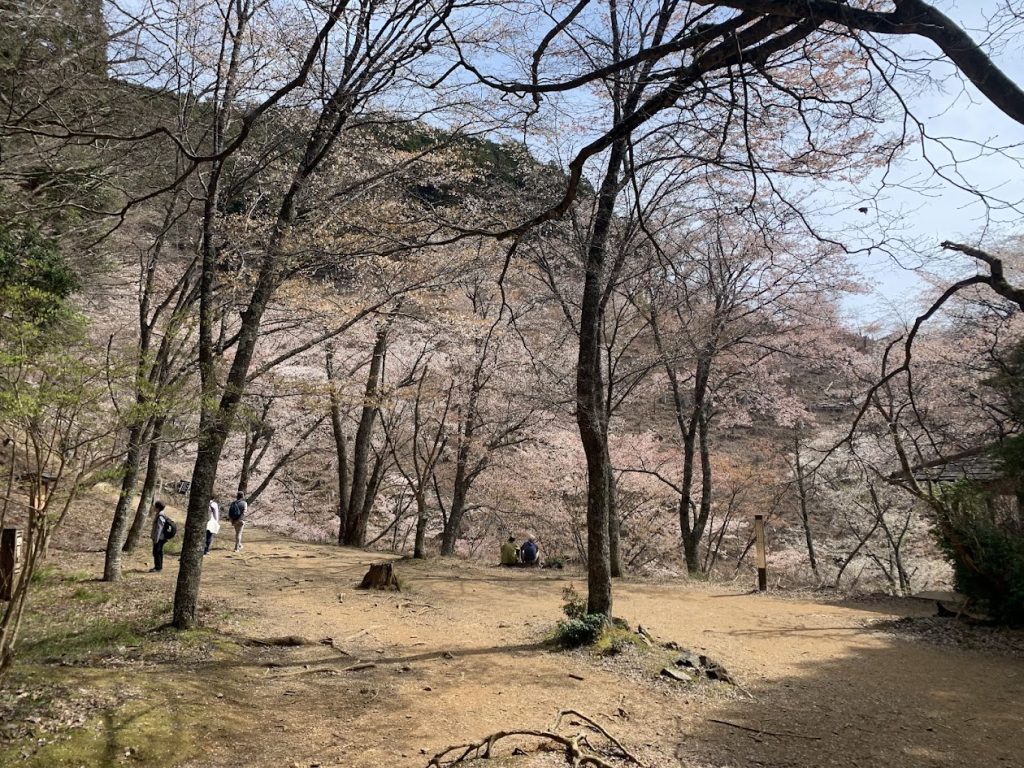
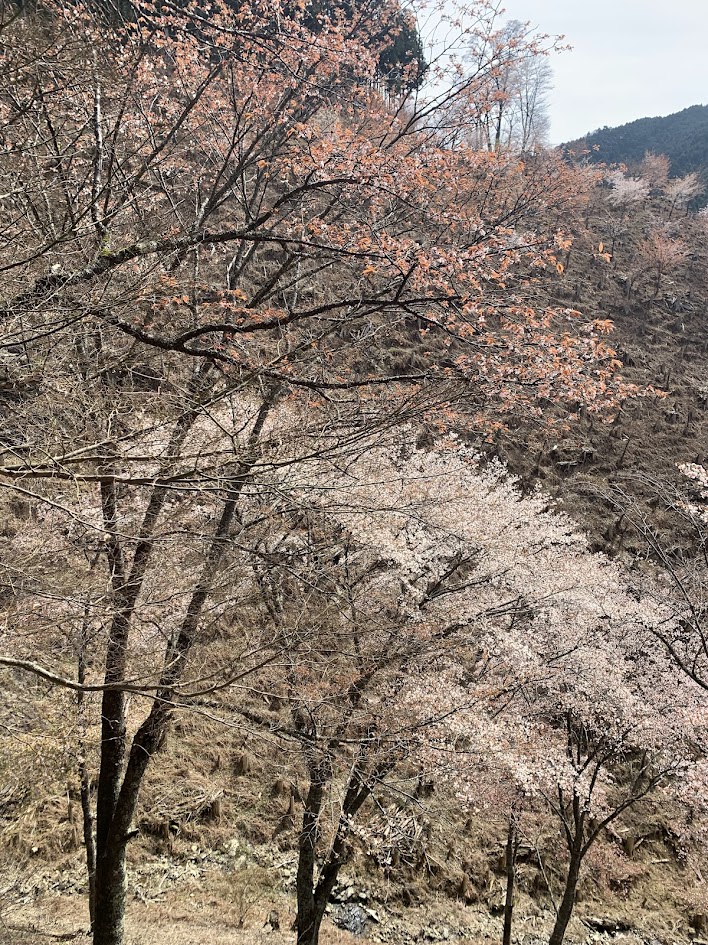
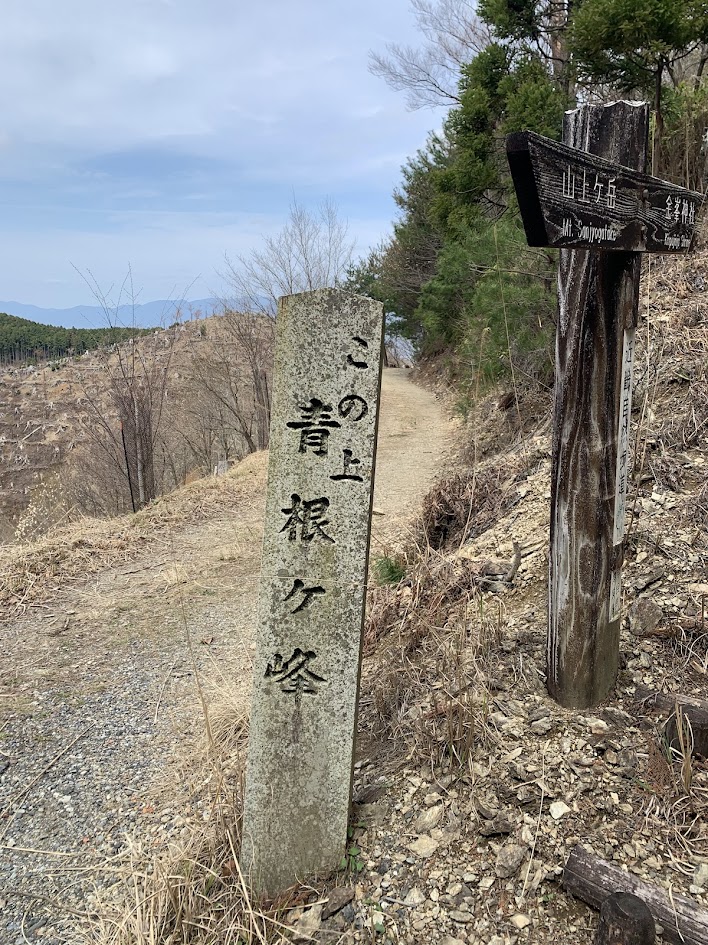
A little further in, we found the entrance to Aone-ga-mine mountain.
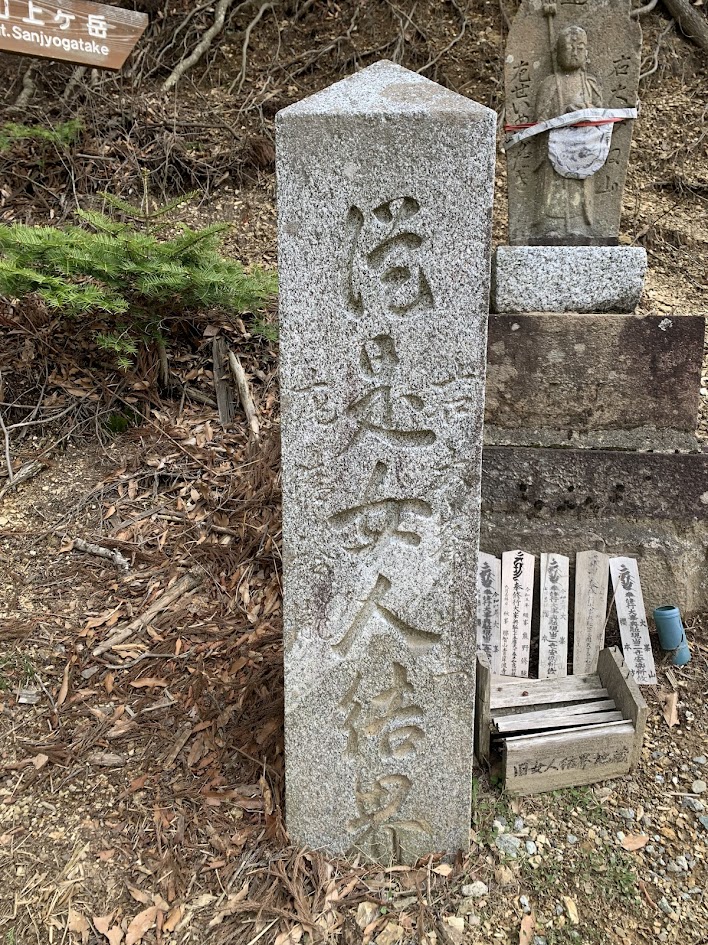
Next to it was a stone monument that reads “Starting from here, women are restricted.”
However, nowadays, women can also enter.
The only place where the “women’s restriction” still remains is at Mount Omine’s Sanjo-gatake further to the south.
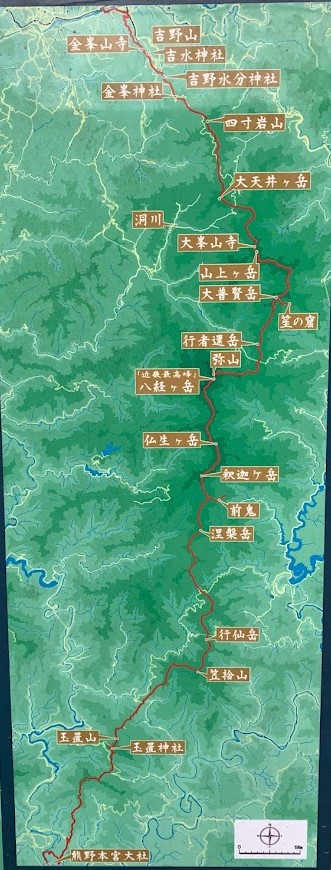
The Omiine Okugake Trail was established by En no Gyoja, the founder of Japan’s unique mountain religion, Shugendo, in the late 7th century.
This trail connects the two major sacred sites of Shugendo, Yoshino and Kumano, and is considered one of the most challenging training routes for practitioners (yamabushi).
The trail involves traversing mountain ridges at elevations below 2,000 meters and usually takes about six days to complete. It requires supplies such as food, water, and climbing equipment.
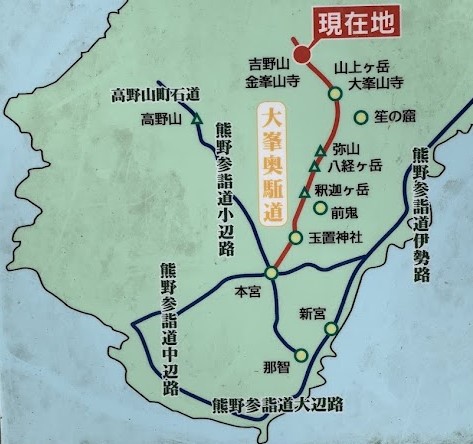
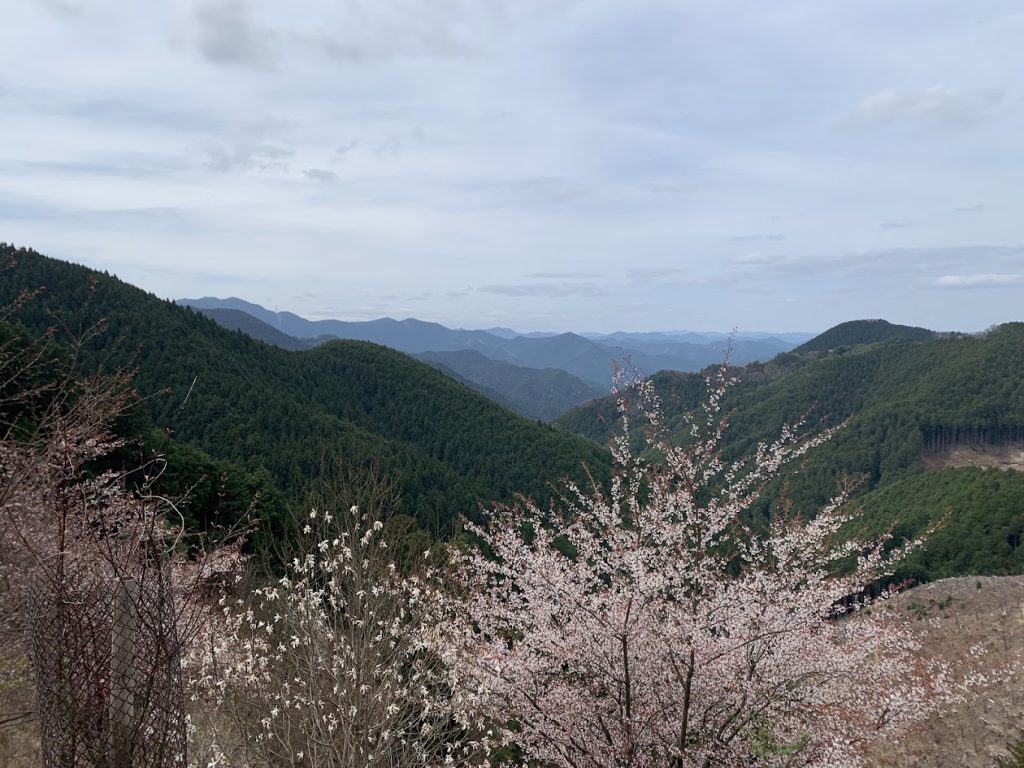
From the entrance to Aonone-ga-mine Mountain, you can see the direction leading south to Kumano Taisha Shrine.
The Omiine Okugake Trail is a route that traverses the peaks of the mountains seen in the distance in the photo. With over 1,300 years of history, undertaking this trail would have required significant determination. One would have needed to be prepared to risk their life for their training, as it is unlikely that anyone could have proceeded further without such resolve.
コメント