

When it was originally built in the Nara period, the temple complex featured beautiful structures known as ‘Dragon Palace architecture.’
The Three-Story East Pagoda is one of the original buildings, preserving the excellent architectural style of the Nara period to this day.


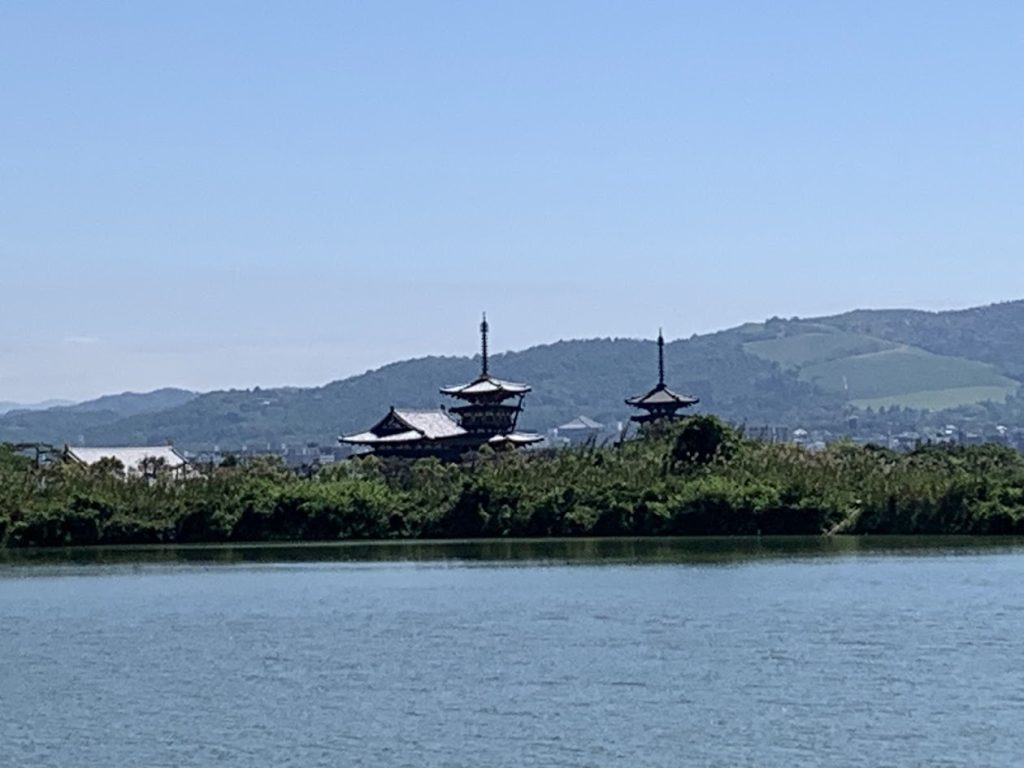
Yakushi-ji Temple and Wakakusa-yama Mountain
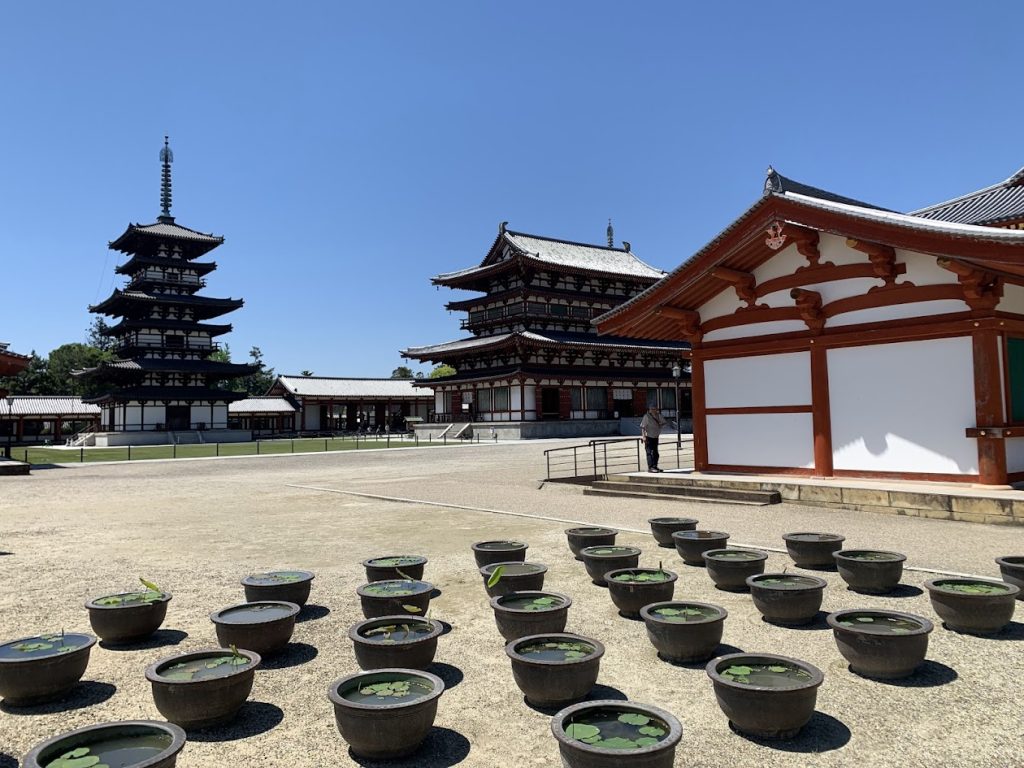
From this pond, you can see the East Pagoda and West Pagoda of Yakushi-ji Temple, as well as the roof of the Great Lecture Hall. To the right, the lightly green mountain is Wakakusa-yama Mountain.
Yakushi-ji Temple was originally built in 697 by Emperor Tenmu and Empress Jito in Fujiwara-kyo (present-day Kashihara City). Following the relocation of the capital to Nara by Emperor Genmei in 710, the temple was moved to its current location. At that time, the temple complex featured beautiful structures, including the Golden Hall, Great Lecture Hall, and both East and West Pagodas.
Throughout its long history, the temple has suffered numerous fires, resulting in the loss of many of its buildings.
However, since 1968, a project has been underway to restore the temple complex using funds raised from the submission of transcribed sutras.
Thanks to these efforts, many of the temple’s structures have been successfully restored.
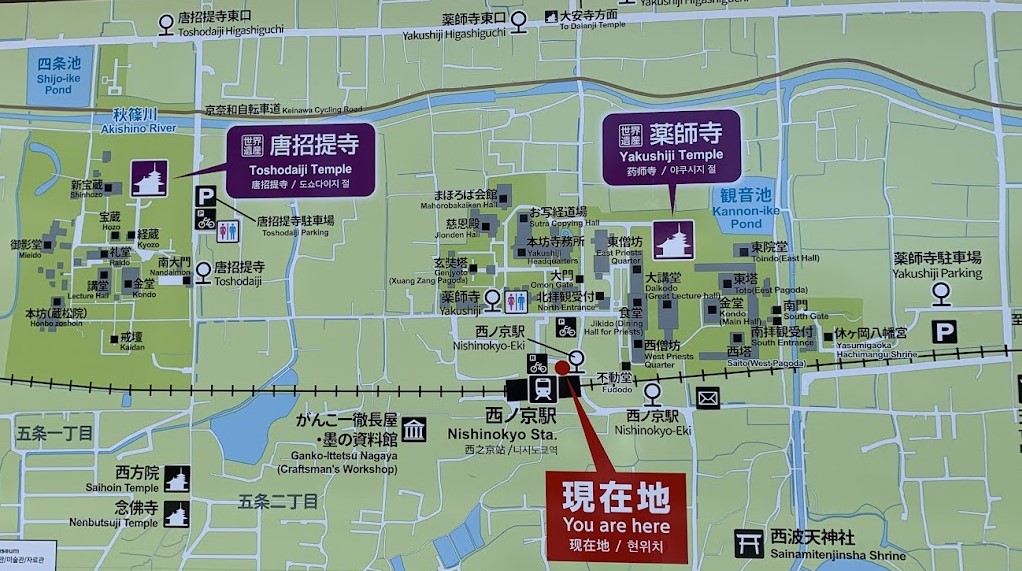
Here is the guide map in front of Kintetsu Nishinokyo Station.
Yakushi-ji Temple is located right next to the station.
It takes about 10 minutes to walk to Toshodaiji Temple.
Buses run twice an hour from JR Nara Station, with a travel time of approximately 20 minutes.

Yakushi-ji East Pagoda (National Treasure)
The six-tiered roof is visible, but the interior consists of three tiers, making it a three-story pagoda.
It is the only building at Yakushi-ji that has survived from the time of its founding.
Standing at 34 meters tall, including the finial, it is a valuable example of high craftsmanship from the Nara period that continues to be appreciated today.
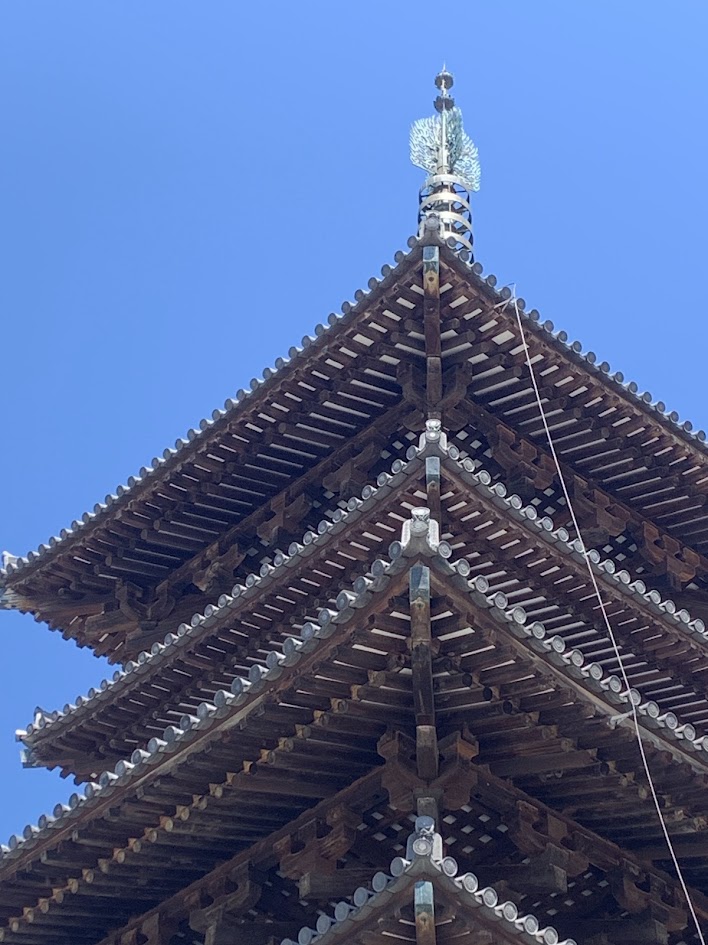
Looking up at the underside of the roof of the East Pagoda, you can see many ingenious methods used to support the heavy roof. It is impressive to think how such a large structure could be built without cranes. The intricate wooden framework and support mechanisms under the eaves are also astonishing. Most of all, it is remarkable that a wooden building has survived for over 1,300 years.
From the roof, a cable extends down to the ground, acting as a lightning rod to protect the building from lightning damage. In the past, fires caused by lightning strikes were common, but now there is no need to worry about such risks.

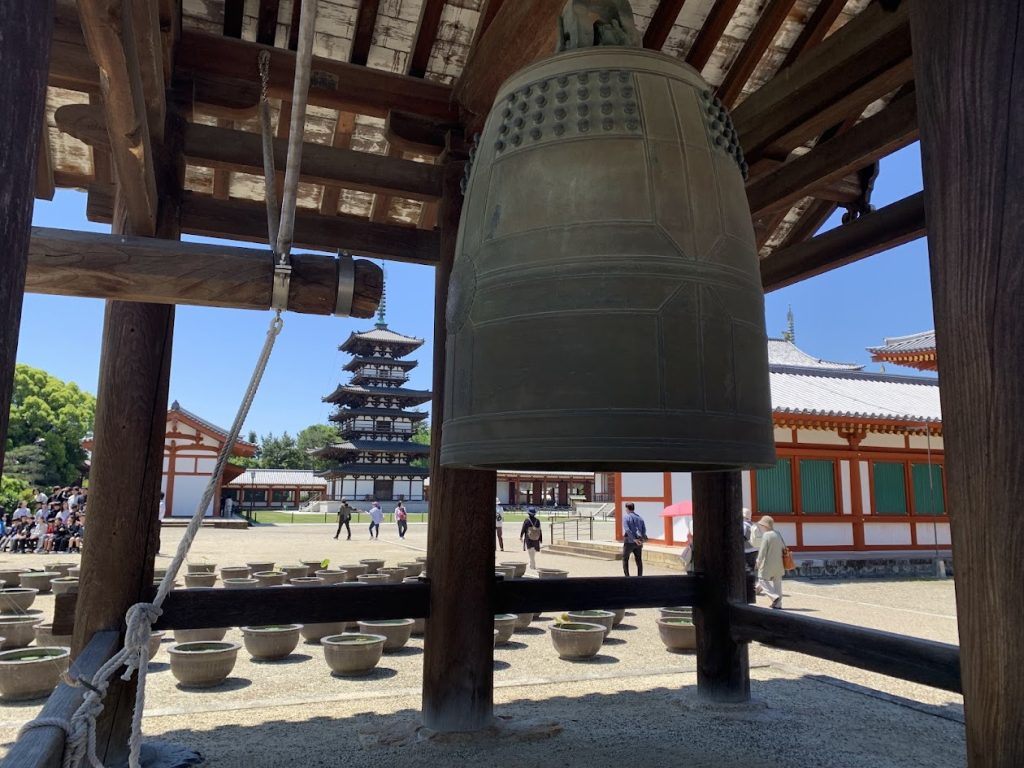
The pagoda in the foreground is the East Pagoda, while the one in the background is the West Pagoda.

This is the Main Hall (Kondo).
Inside, the National Treasure “Yakushi Triad” is enshrined.
The principal deity of Yakushi-ji Temple, it has been worshipped here since the temple’s founding.
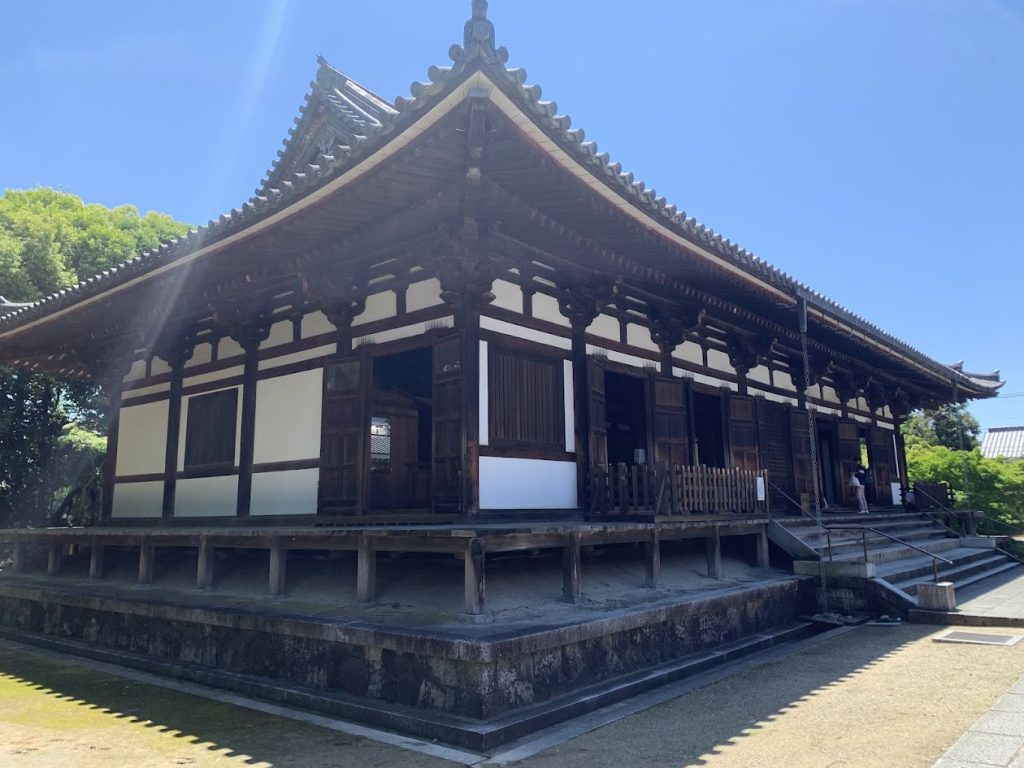
The East Hall (Toindo) is a National Treasure.
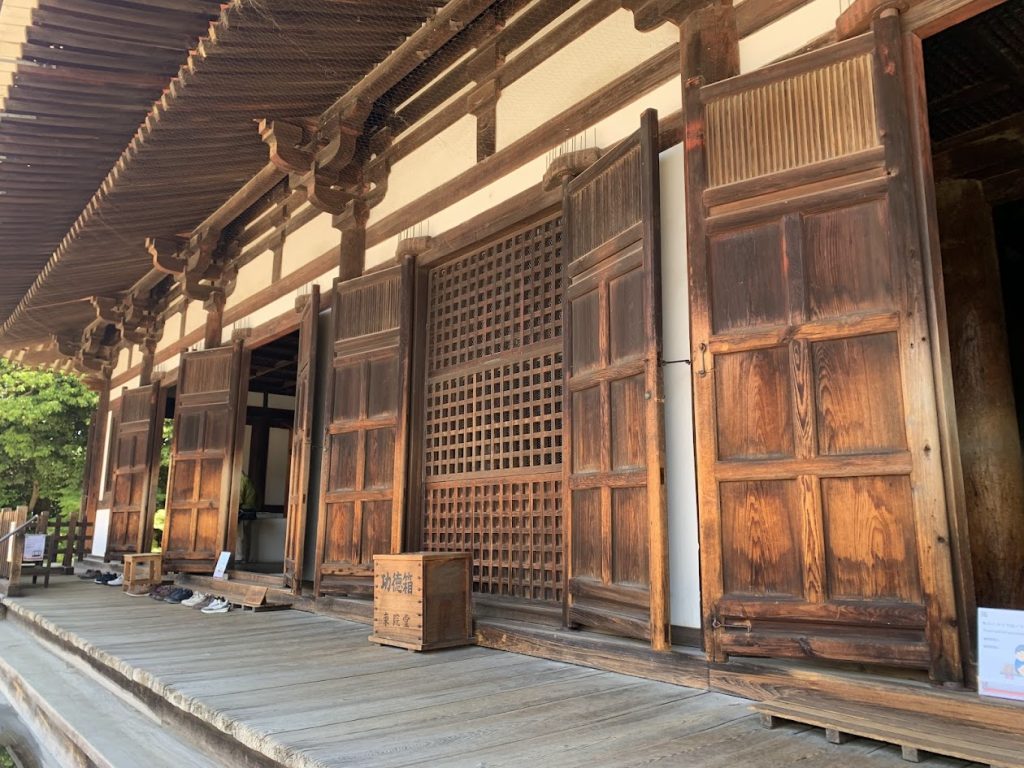
The East Hall (Toindo) was rebuilt in 1285.
The statue enshrined inside was created over 1,300 years ago.
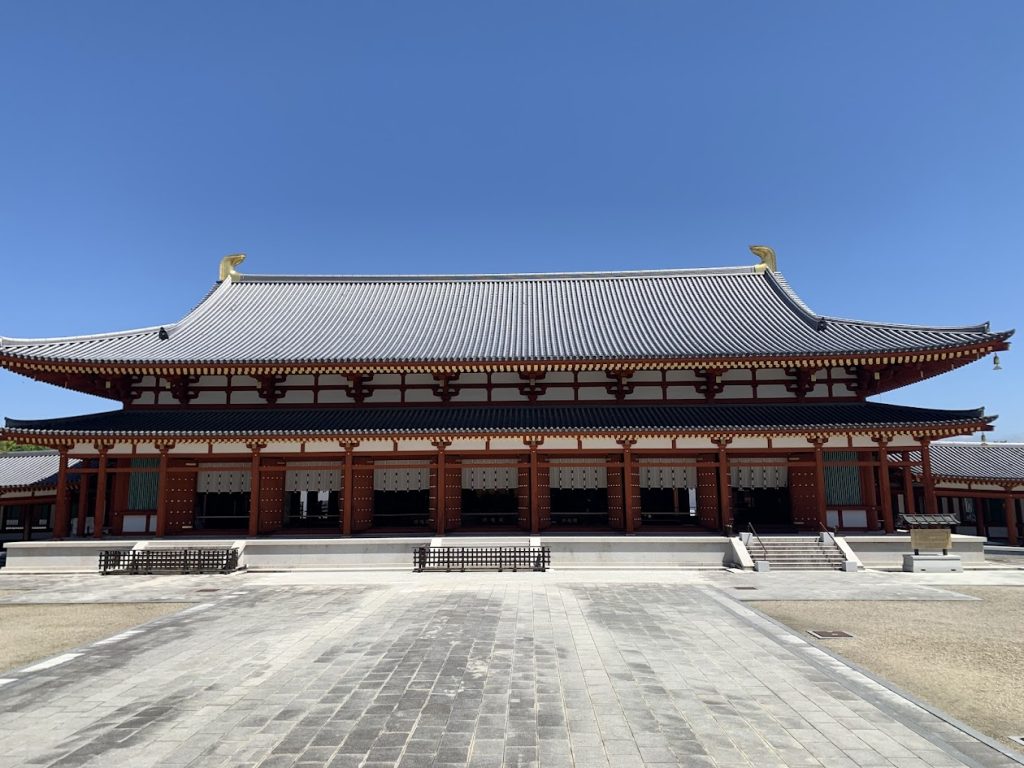
The Great Lecture Hall (Daikodo)


コメント