
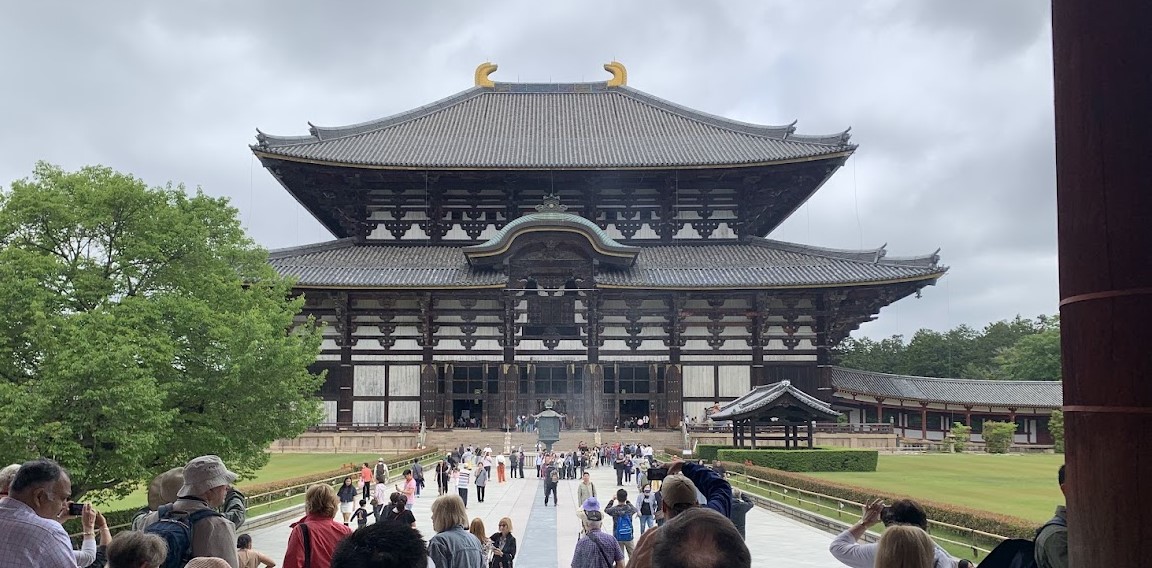

Great Buddha Hall and Its Surroundings
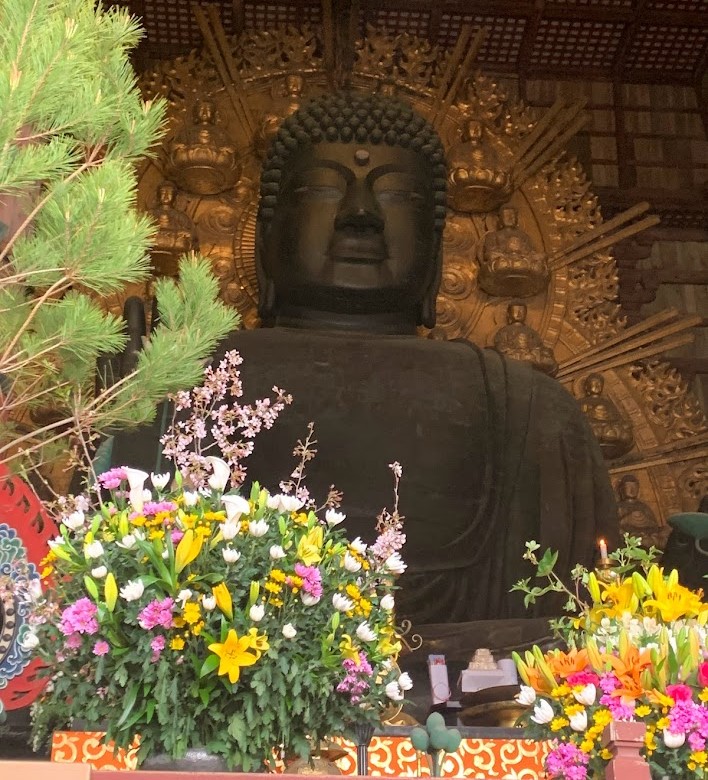
The Great Buddha of Todai-ji
The construction of the Great Buddha of Todai-ji began in the Nara period in 743, under the initiative of Emperor Shomu.
“With a single blade of grass or a handful of soil, let everyone contribute to this statue.”
Guided by Emperor Shomu’s vision, people across the nation came together, pooling their resources and efforts to create the Great Buddha.
Donations included not only precious materials such as wood, gold, and bronze but also the hard work and dedication of countless individuals. The construction of the Great Buddha can truly be seen as the foundation of Japan’s culture of giving.
In 752, all these efforts came to fruition. A grand eye-opening ceremony was held, symbolically bringing life to the Great Buddha.
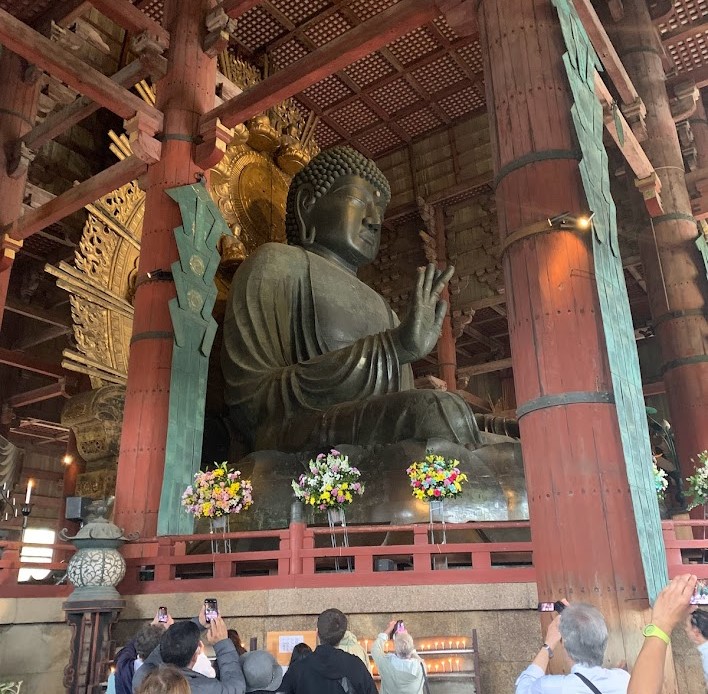
(Viewing the Great Buddha from the side)
Height of the statue: 14.98 meters
Eye length: 1.02 meters
Ear length: 2.54 meters
Face length: 5.33 meters
Nose height: 0.50 meters
Weight: approximately 250 tons
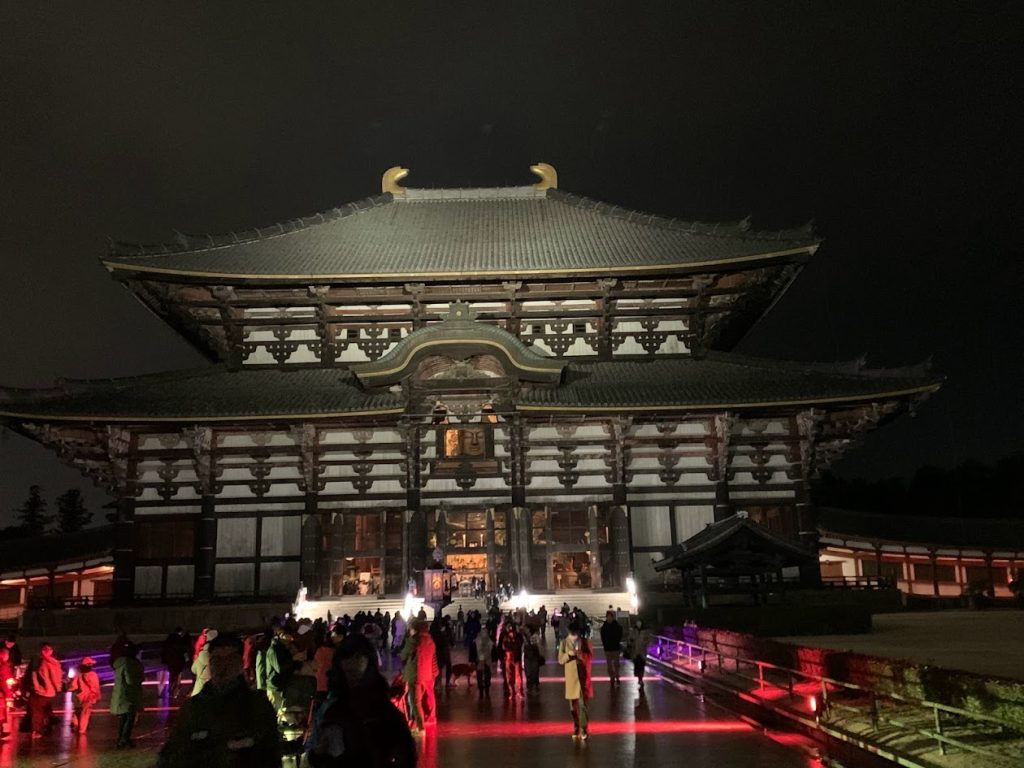
Illuminated Todai-ji Great Buddha Hall
During the “Nara Rurie” event held in February 2024, the Great Buddha Hall and the Great Buddha statue were illuminated. (Clicking on the photos will take you to the “Festivals” page.)

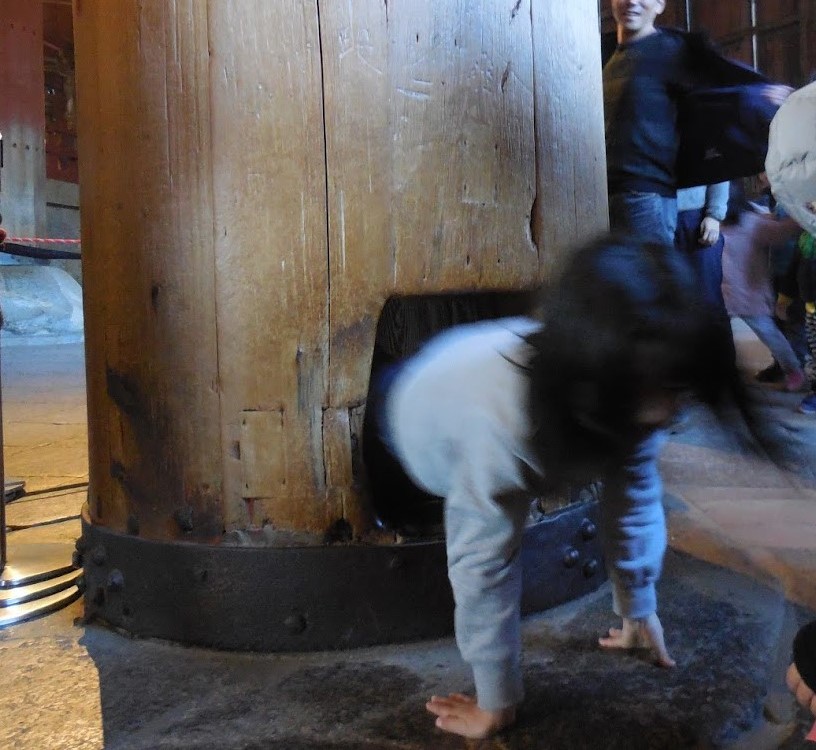
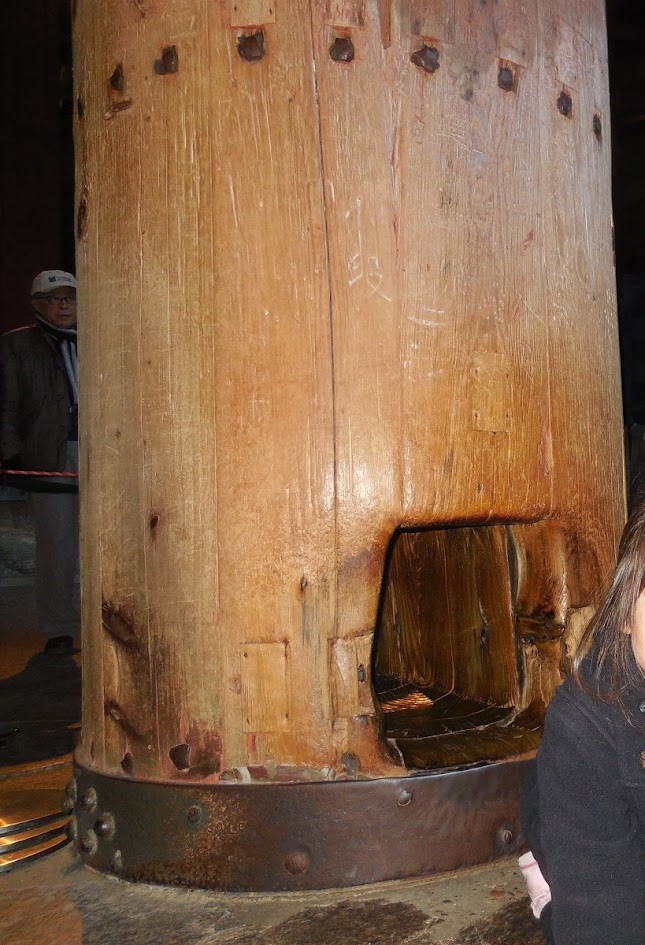
Passing Through the Small Hole in the Great Buddha Hall
There is a Small “hole” in a pillar behind the Great Buddha, which is said to be the same size as the Buddha’s nostril hole. It is believed that passing through this hole brings benefits such as “not falling ill” and “fulfilling one’s wishes.” Many people, including adults, try this challenge.
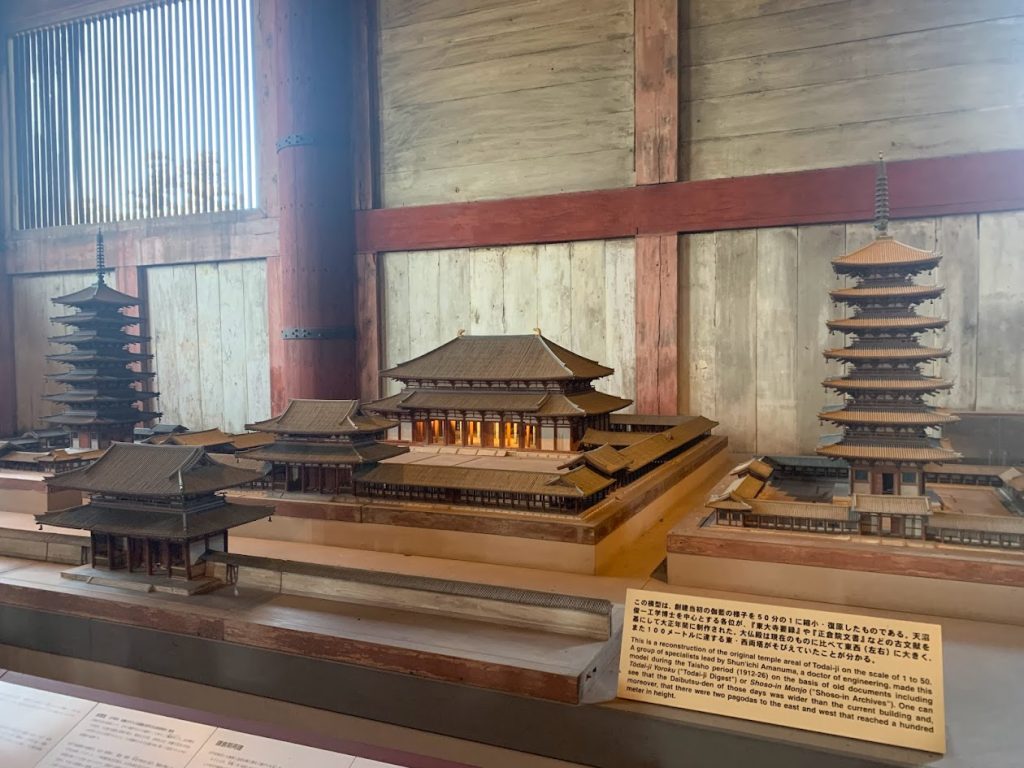
It is said that when Todai-ji Temple was originally built, there were “seven-story pagodas” on both the east and west sides.
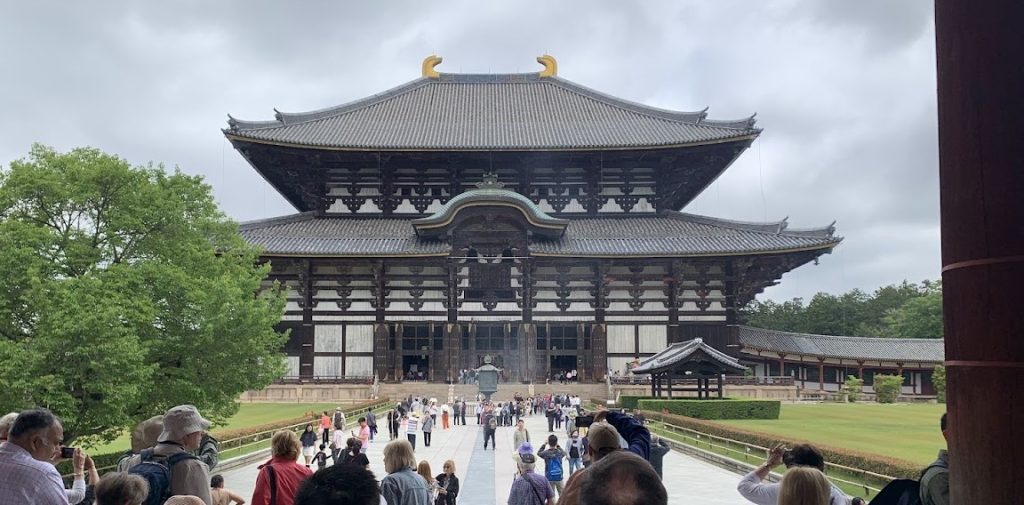

Todai-ji Great Buddha Hall and Kagami ike Pond
The Great Buddha Hall is one of the largest wooden structures in the world.
Since its original construction, it has been destroyed by fire twice, and the current building was reconstructed in 1709.
However, the original Great Buddha Hall was 1.5 times wider than the current structure, though its depth and height remain the same.
It’s truly remarkable that more than 1,200 years ago, such a large wooden structure was built without the use of cranes.
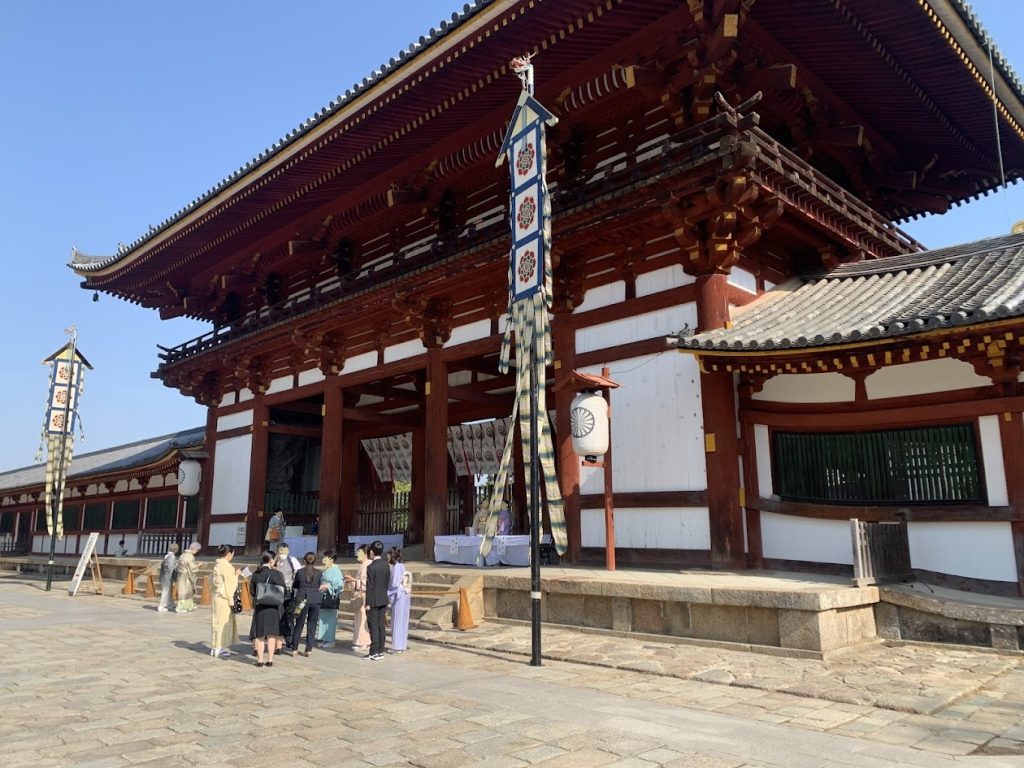
Todai-ji Chumon (Middle Gate)
This photo was taken on May 2, the day after the Tenpyo Festival. Inside the Middle Gate stands the Great Buddha Hall.
Typically, the Middle Gate is larger than the South Gate, but at Todai-ji, the South Gate, located about 200 meters to the south, is the larger structure.
The two flags standing in front of the gate are called “Ban” (ceremonial flags). They are used during important Buddhist ceremonies and rituals.
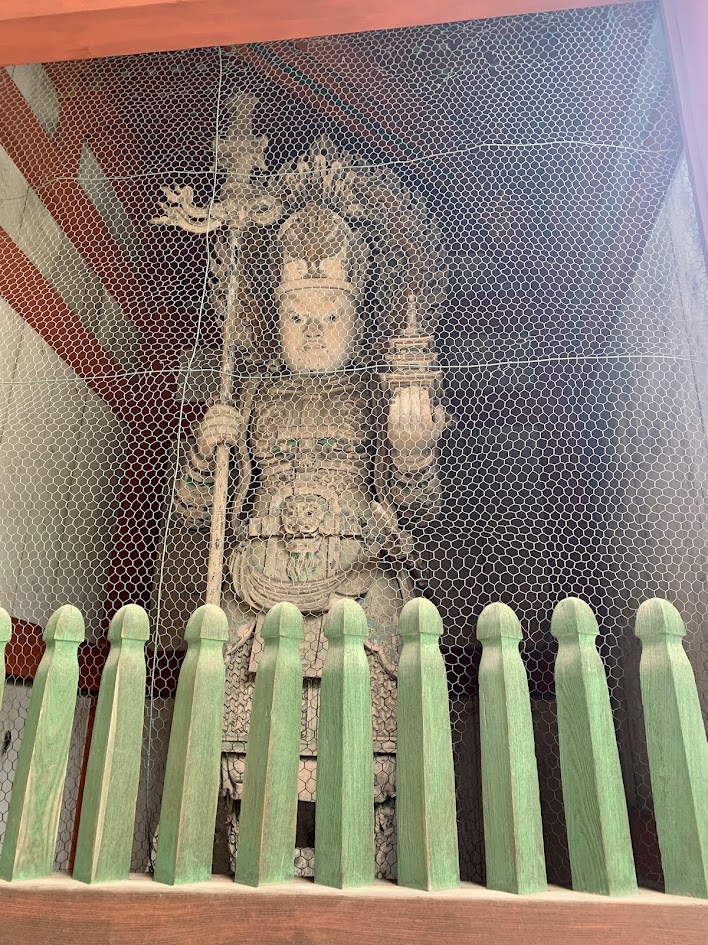
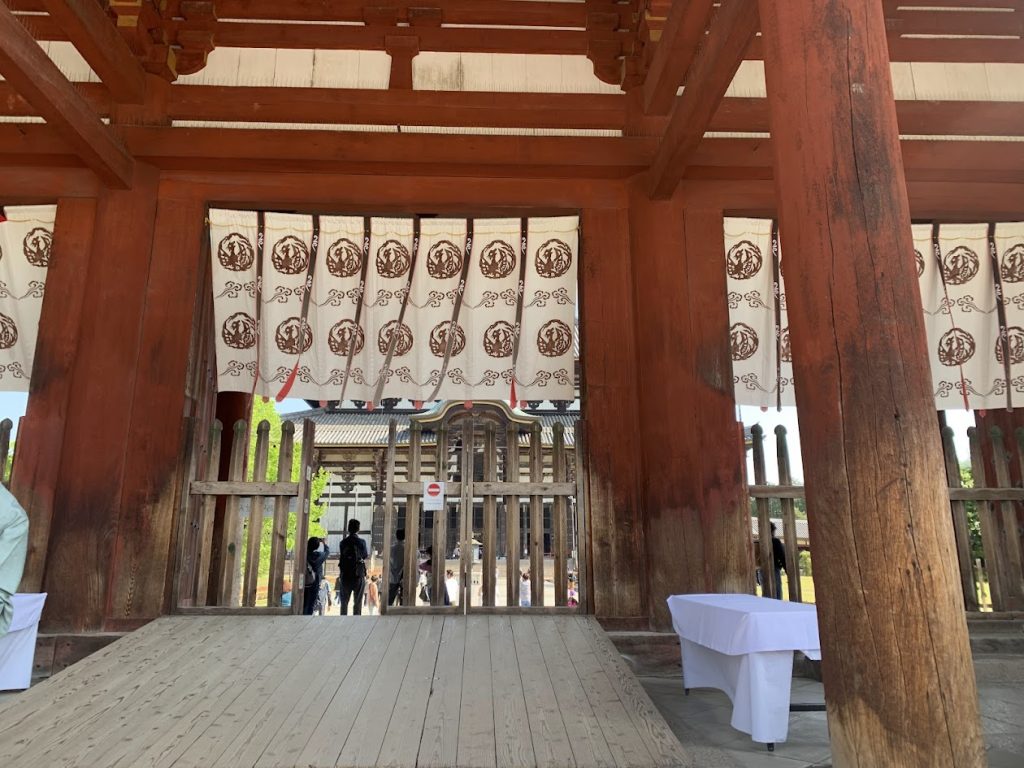
I am looking at the Great Buddha Hall from the Middle Gate.
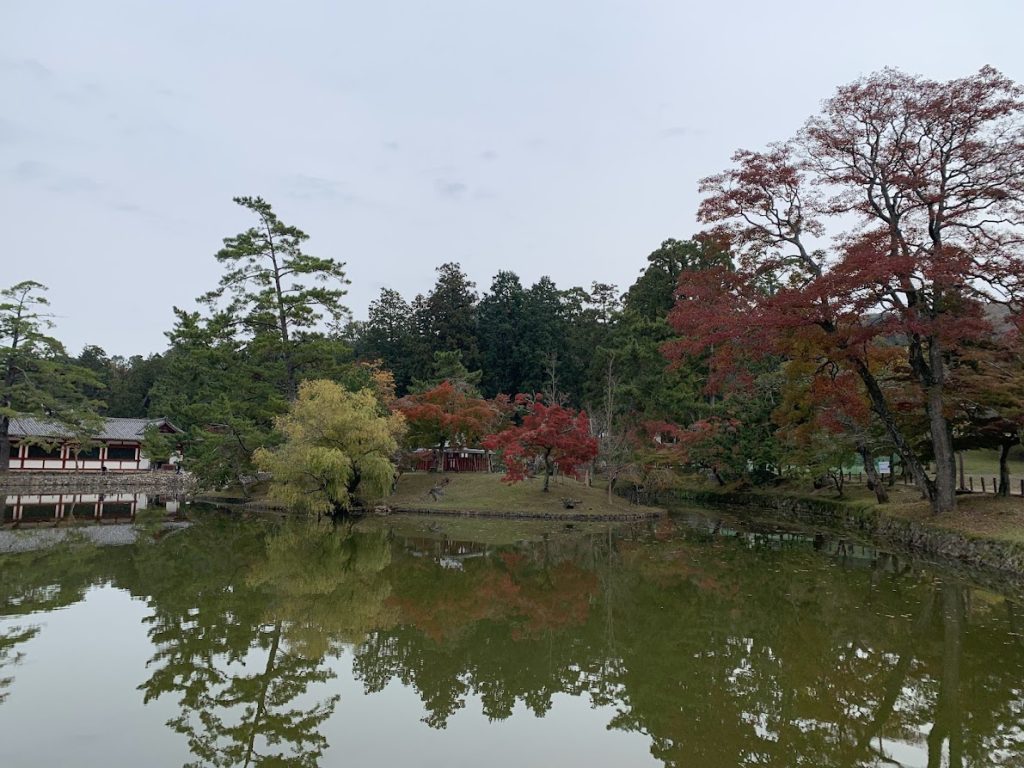
The autumn leaves around the Mirror Pond in front of the Great Buddha Hall.
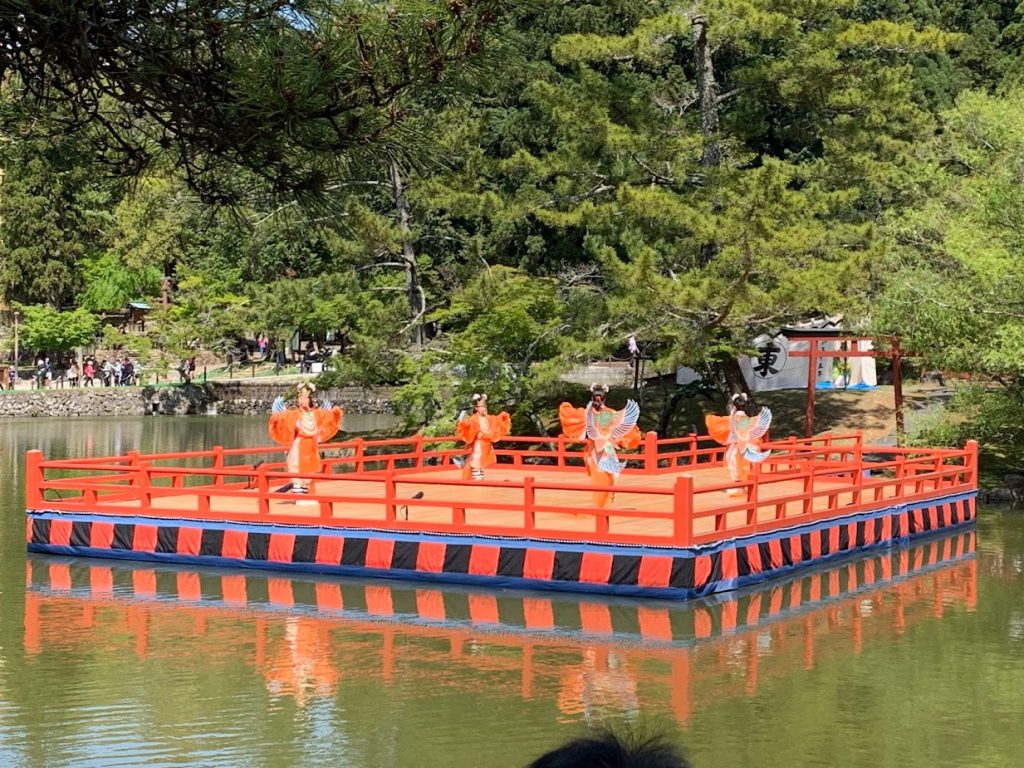
Shomu Emperor Festival on May 2nd
May 2nd marks the day of Emperor Shomu’s passing.
On this day in 2023, traditional Gagaku music was performed as a sacred offering at Kagami ike Pond in front of the Great Buddha Hall.
(Clicking on the photo will take you to the “Festivals” page, where you can see more of this event.)
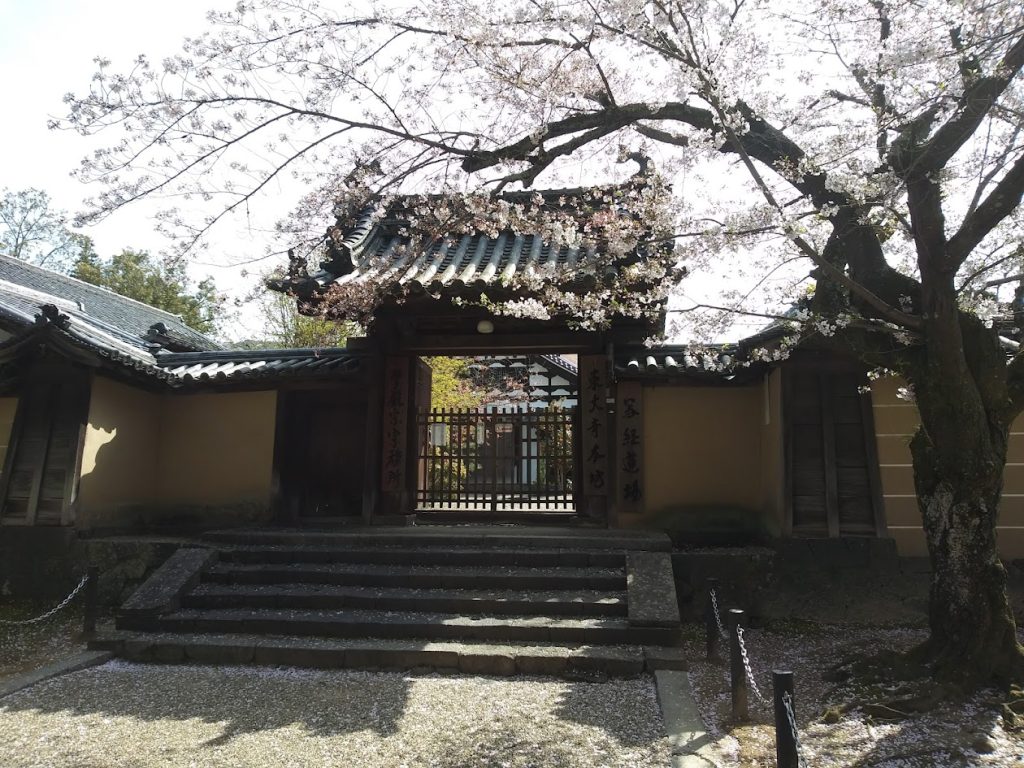
Todai-ji Main Temple Building
The main temple building is located on the right-hand side (to the east) as you walk from the South Gate toward the Great Buddha Hall.
It is the season of cherry blossoms.
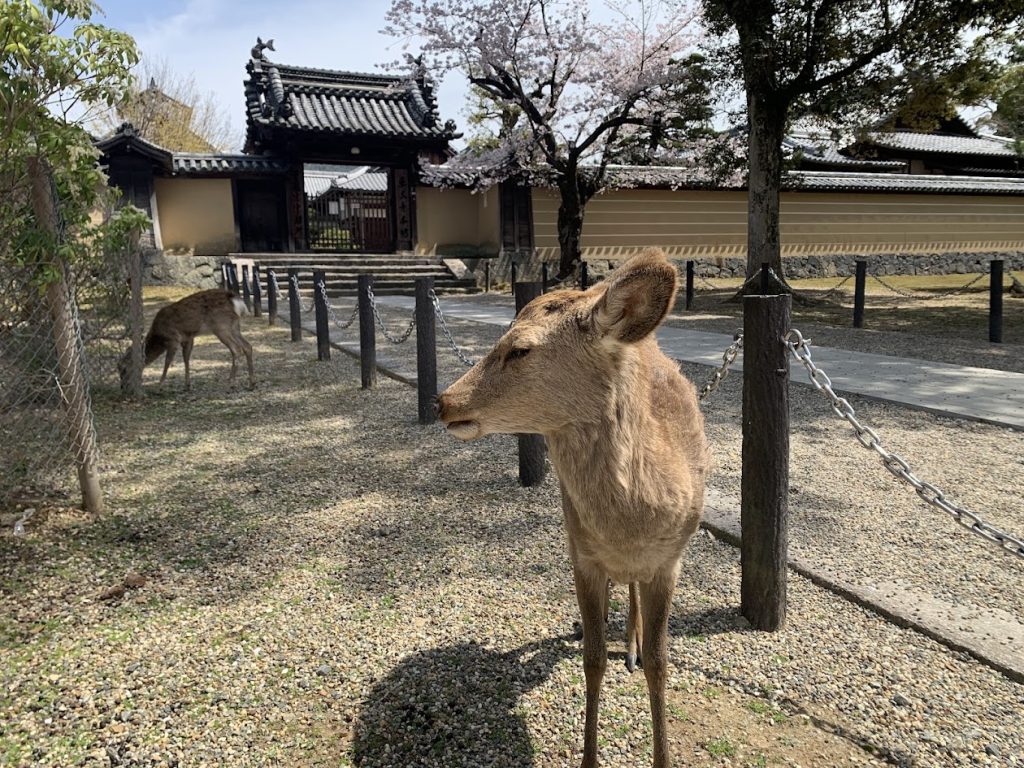
In front of the Todai-ji Main Temple Building.

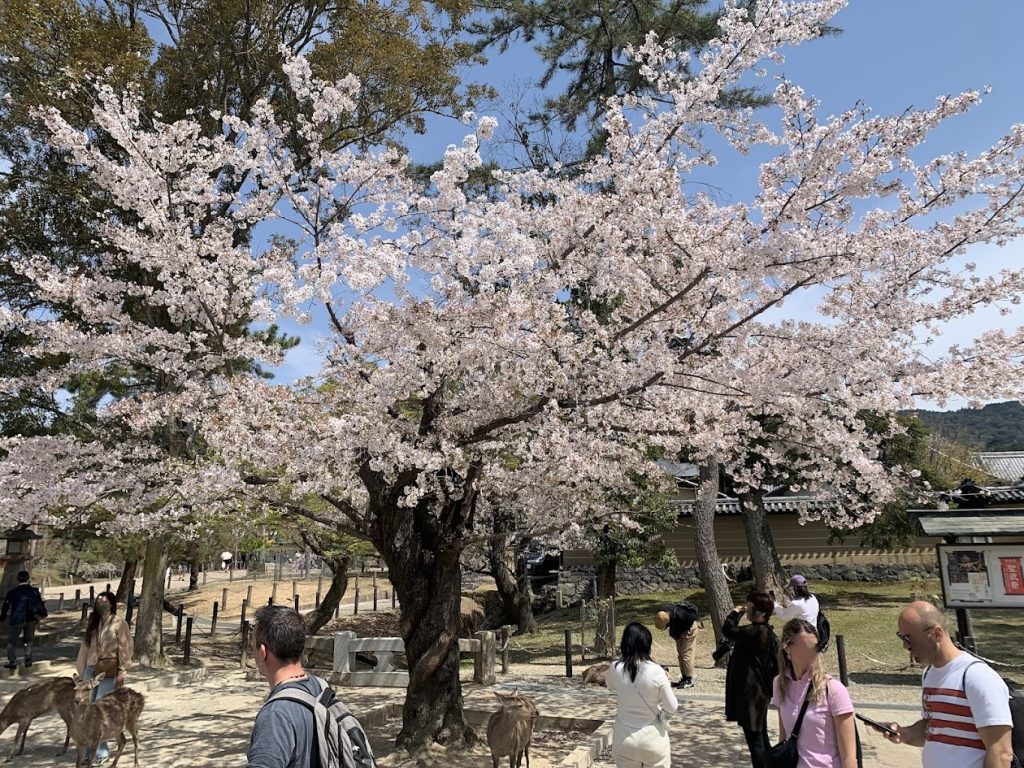
The cherry blossoms and deer in front of the Todai-ji Main Temple Building.
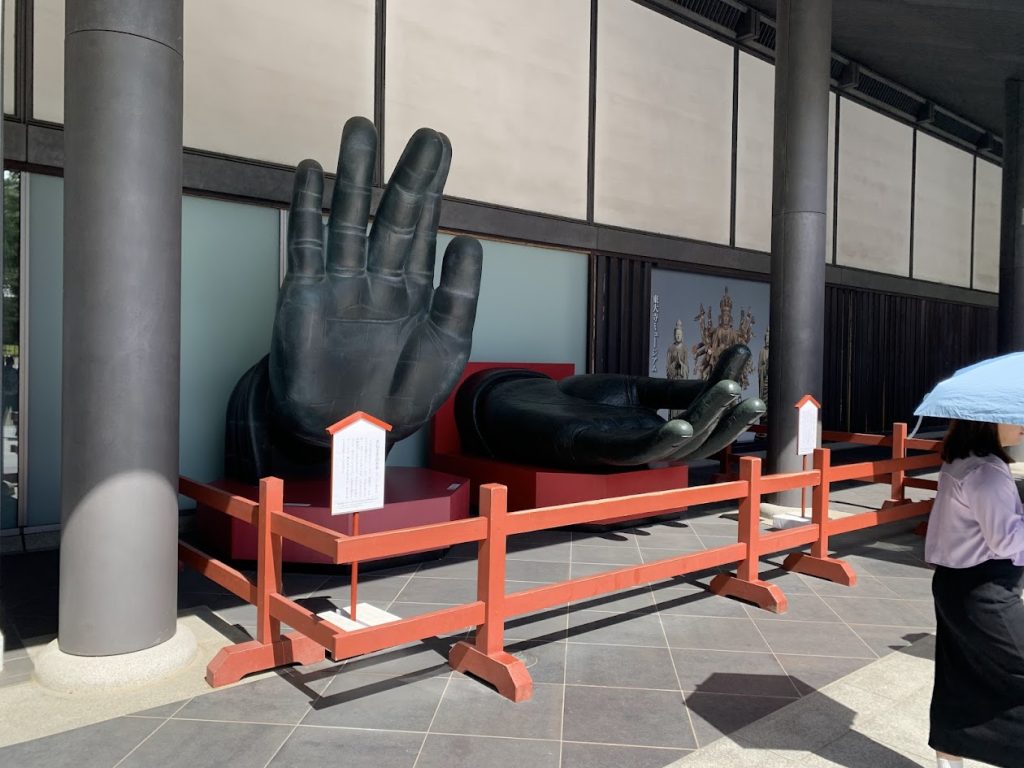
In front of the Todai-ji Museum
These monuments are the same size as the Great Buddha’s hands.
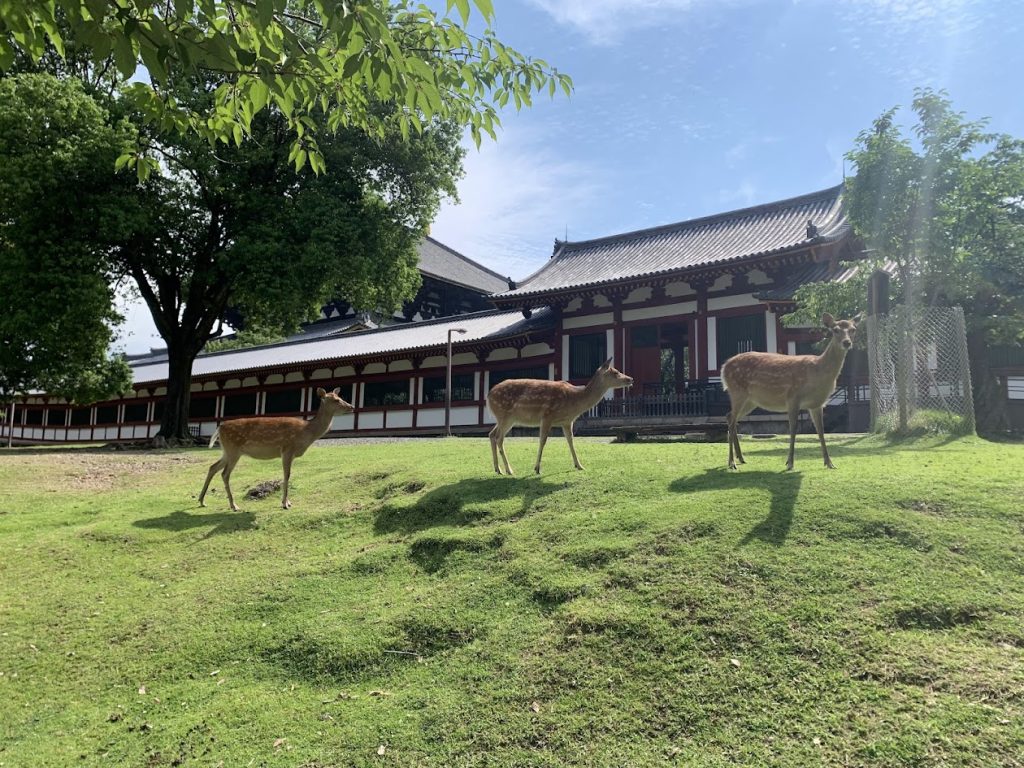
The west side of the Great Buddha Hall
You can see that the grass has been neatly trimmed and maintained by the deer.
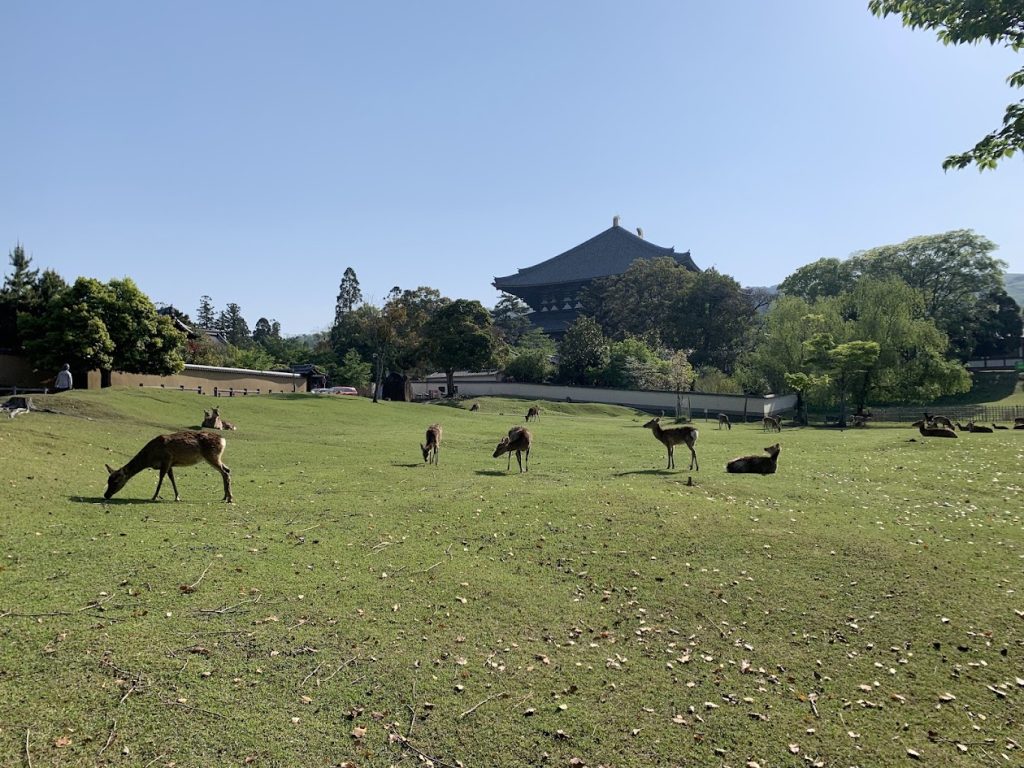
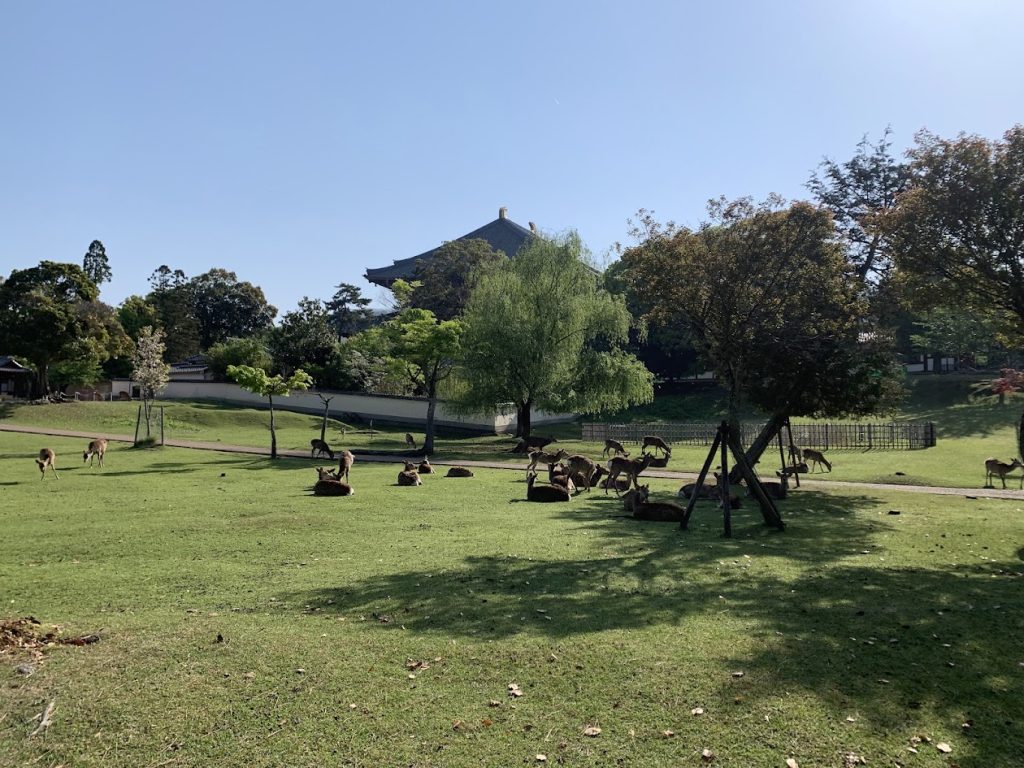
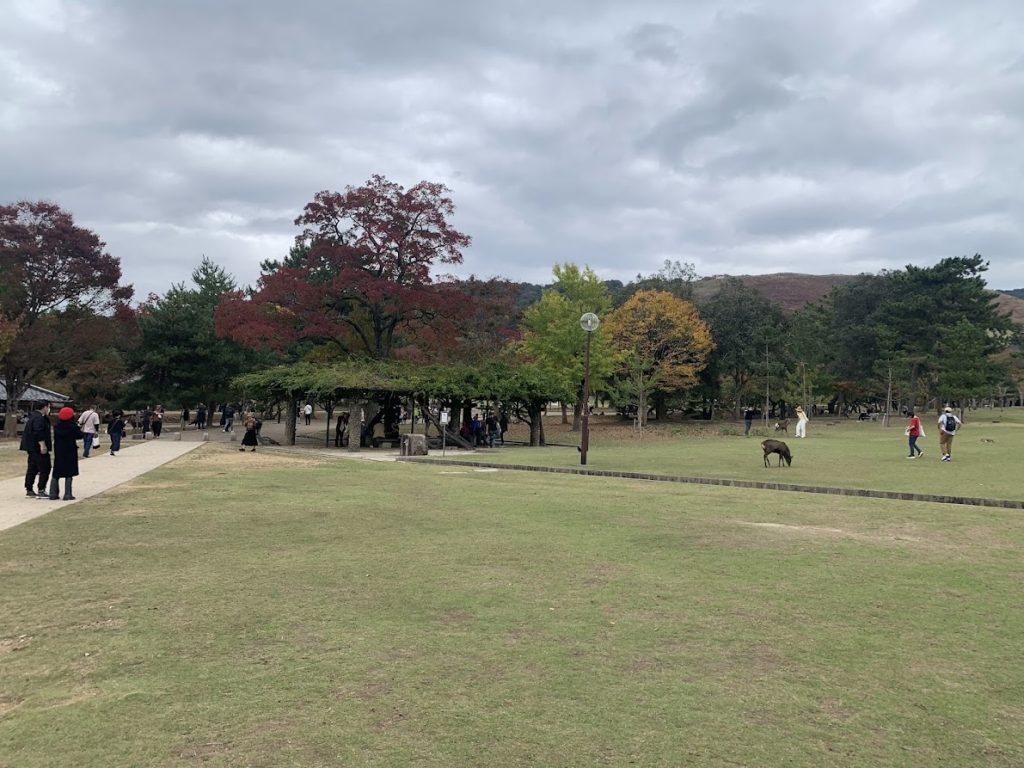
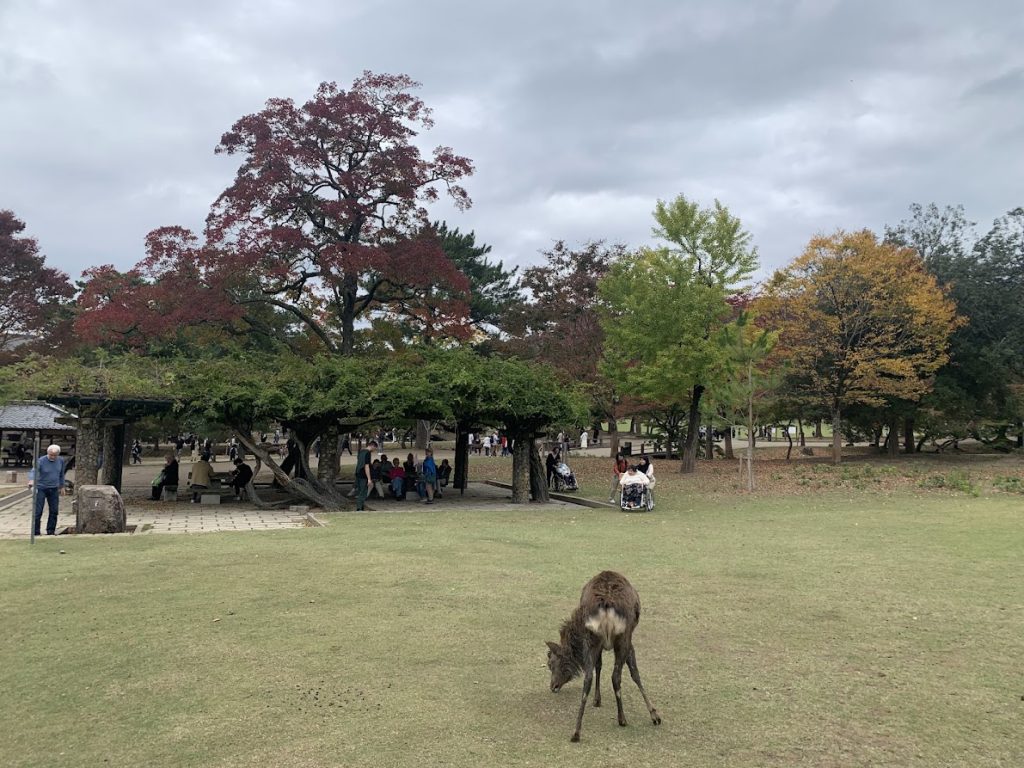
Autumn scenery beside the approach to Todai-ji Temple.
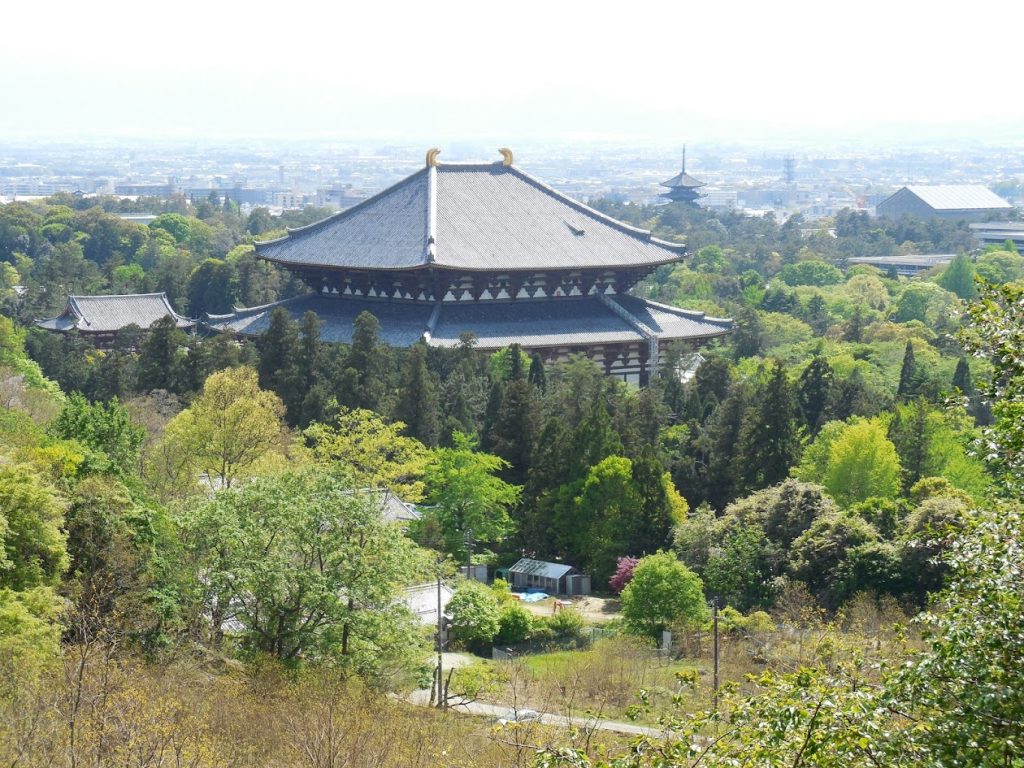
The Great Buddha Hall taken from the middle of the Wakakusa -yama Mountain Driveway
You can see the north side (the back) and the east side of the Great Buddha Hall.
In the distance on the right side of the Great Buddha Hall, the five-story pagoda of Kofuku-ji Temple is visible, though it appears small.
Nandaimon (The Great Southern Gate) and Its Surroundings
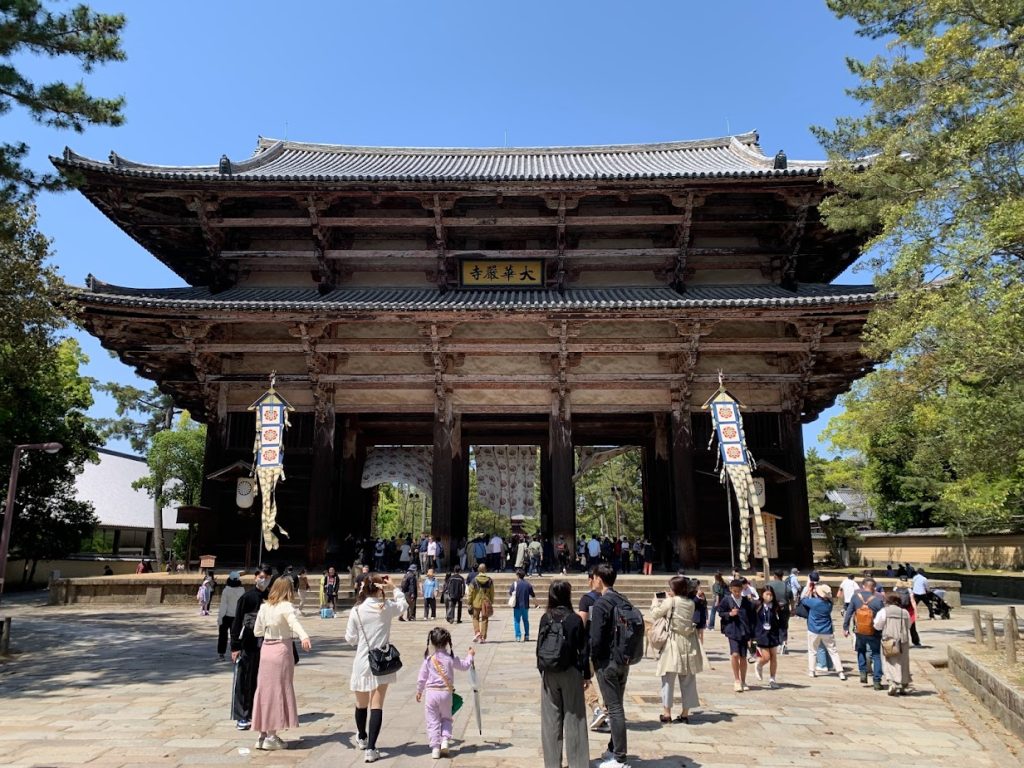
Todai-ji Nandaimon
“Nandaimon” means Great Southern Gate.
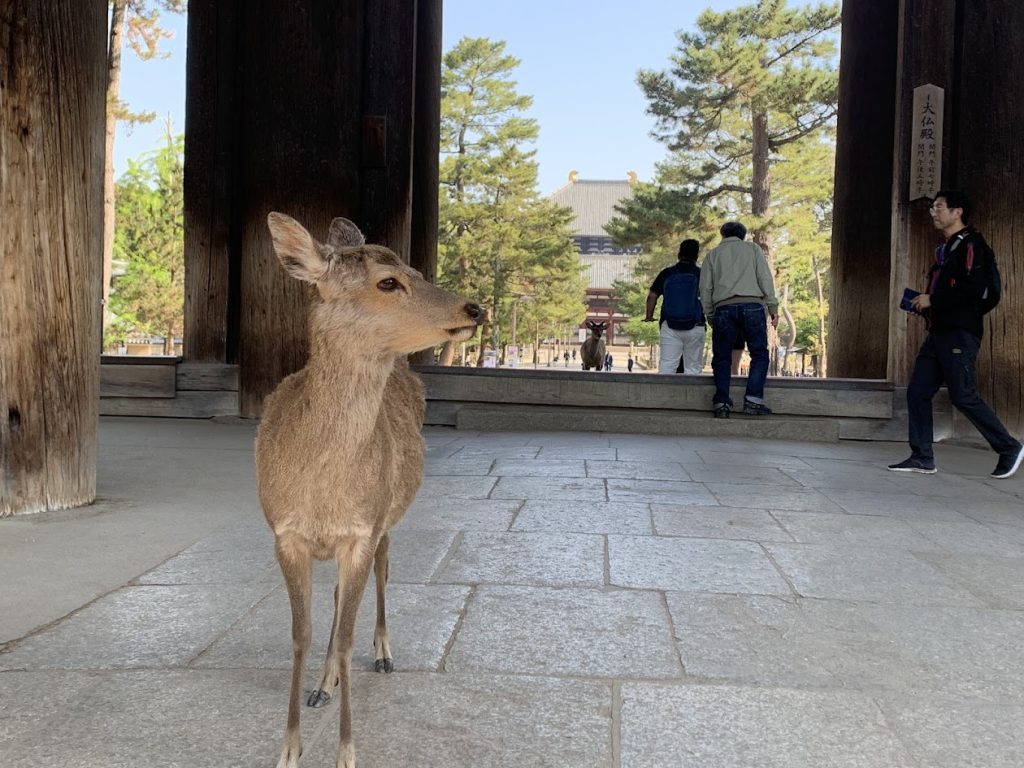
A deer standing quietly in front of the Great South Gate (Nandaimon).

A young buck stands by the Great South Gate, its soft antlers still covered in velvet.

A proud deer stands with dignity before the Great South Gate (Nandaimon).
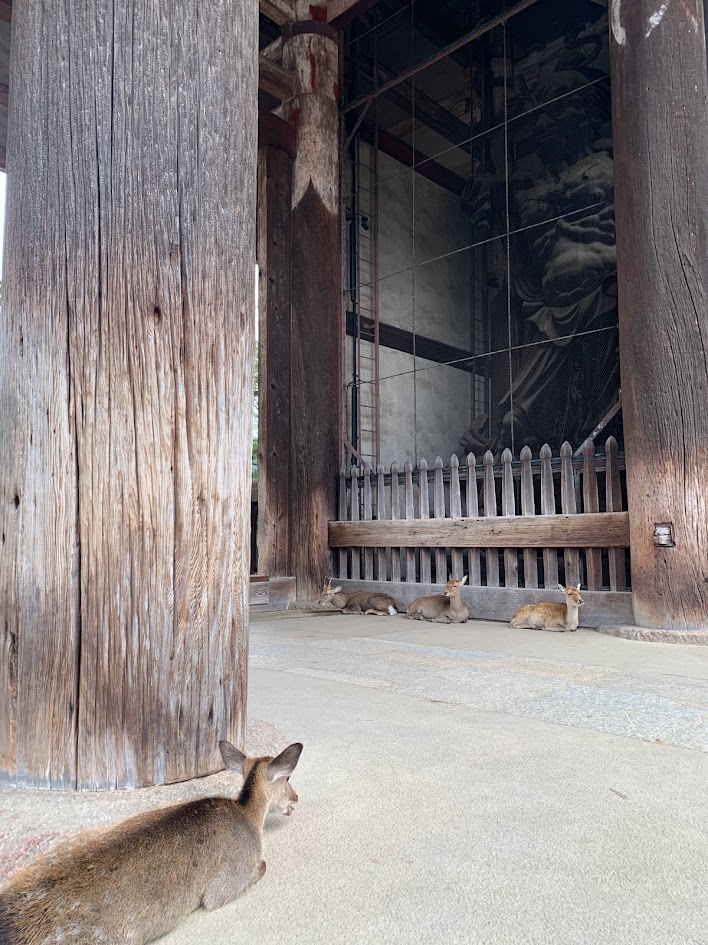
A line of deer rests peacefully before the Nio guardian statues of the Great South Gate.
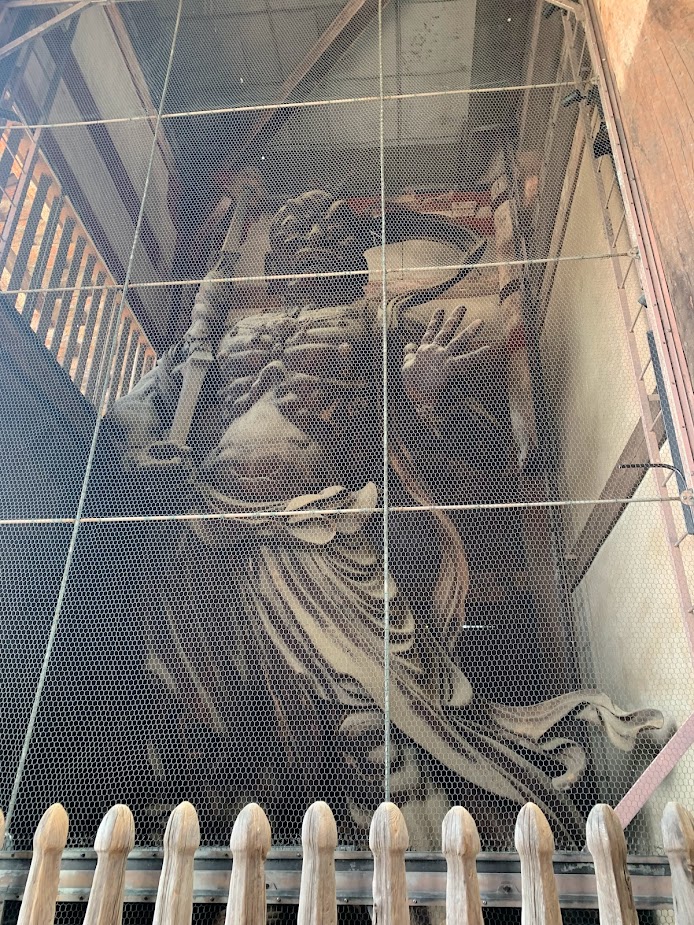
Kongorikishi Statues at Todai-ji Nandaimon
The Kongorikishi statues (guardian deities) at Nandaimon were created in just 69 days in 1203 by renowned sculptors Unkei and Kaikei.
This statue is called the Agyo statue. The Agyo statue has its mouth open, forming the shape of the syllable “A” in Japanese.
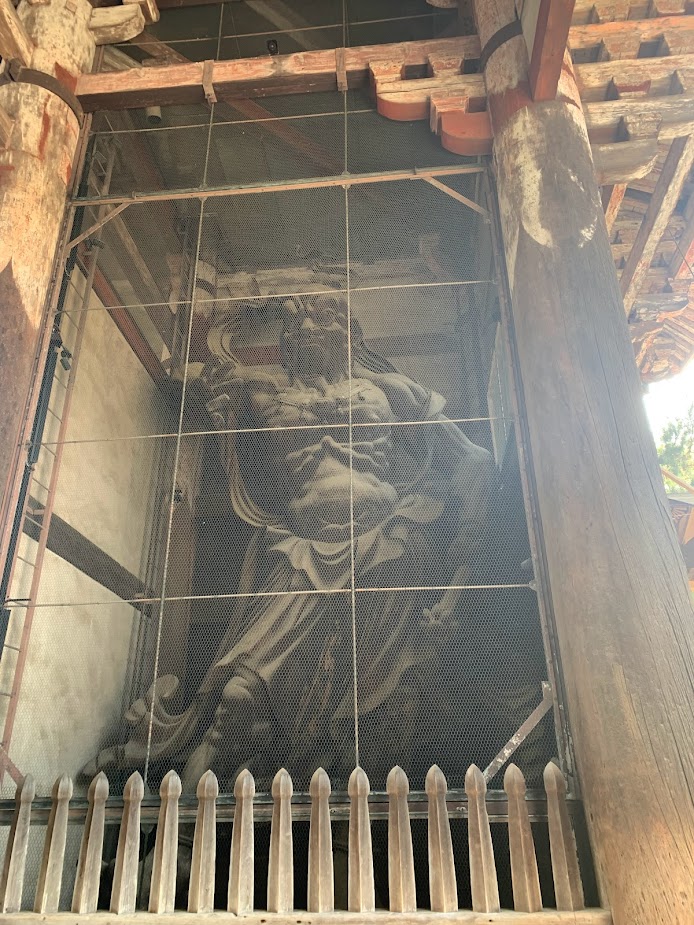
Kongorikishi Statues at Todaiji Nandaimon
The other statue is called the Ungyo statue. The Ungyo statue has its mouth closed, forming the shape of the syllable “Un” in Japanese.
“A” and “Un” represent the beginning and the end of all things, respectively.

Map of Todai-ji Temple Grounds
(This information board is located near the Nandaimon Gate. )
- The Great Buddha Hall is at the center.
- The Nandaimon Gate is at the lower center.
- The Nigatsudo Hall and Tamukeyama Hachimangu Shrine are at the right center.
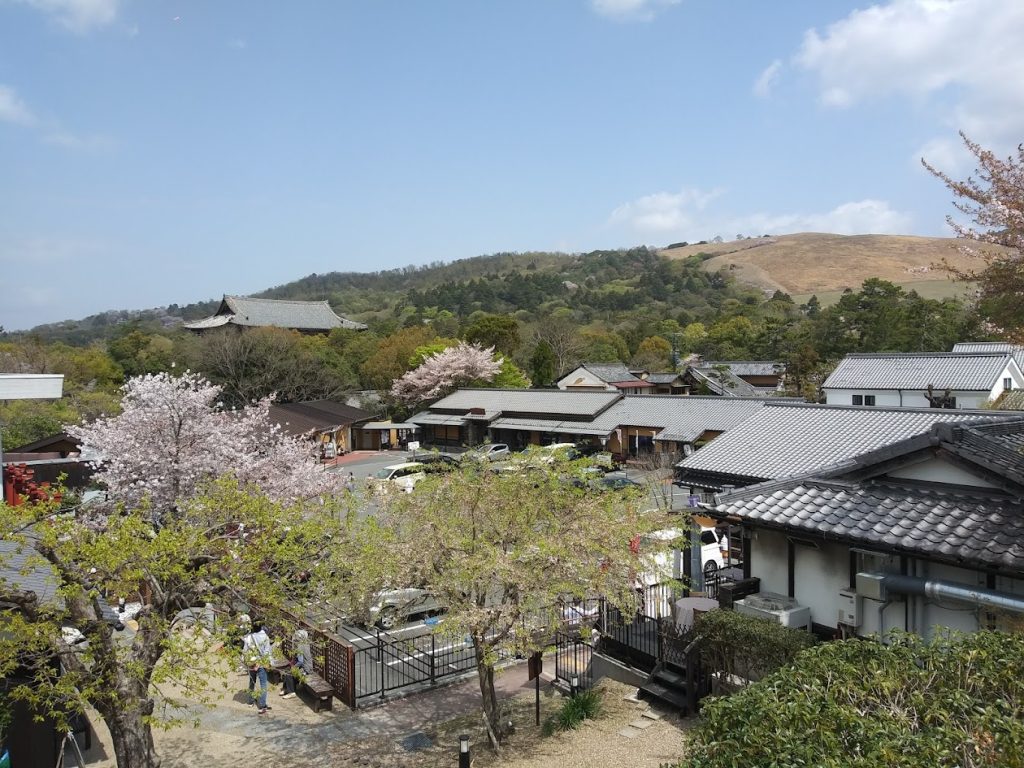
The spring view from the Okumura Commemorative Museum, located just before the entrance to the approach to Todai-ji Temple.
To the upper left, the roof of Todaiji’s Great South Gate (Nandaimon) peeks into view.
On the central right, the light brown mountain is Wakakusa-yama mountain, which will soon turn into a beautiful green.
The buildings in the center are the restaurants and souvenir shops at Yume-Kaze Plaza.
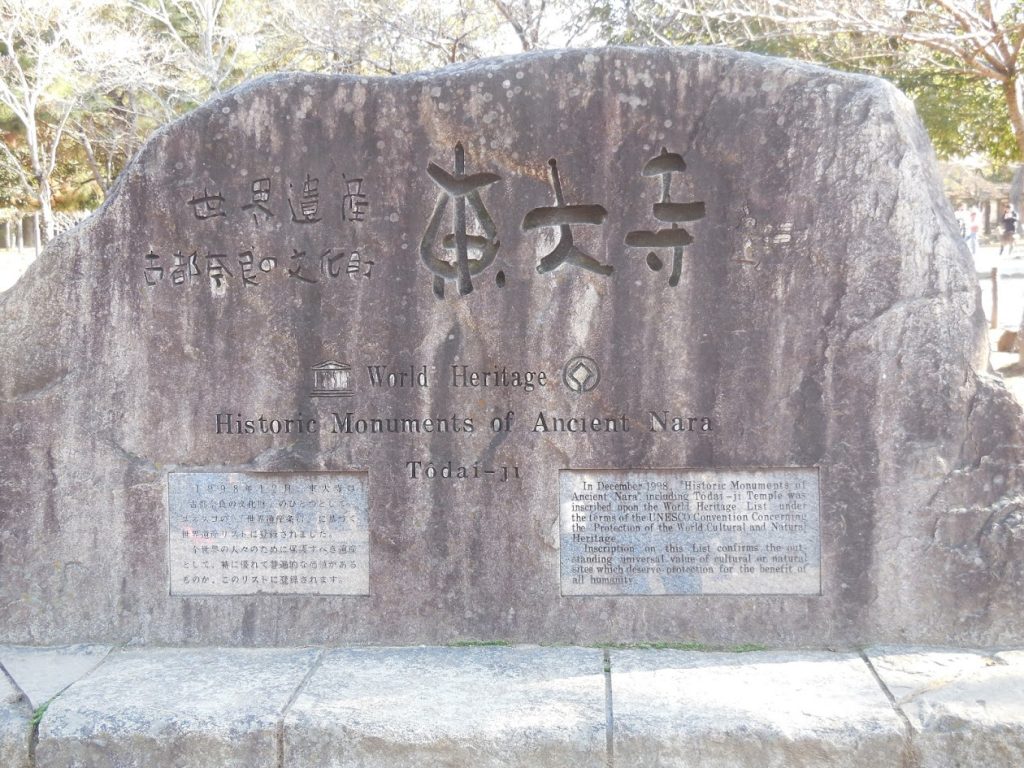
Todai-ji Temple was registered as a UNESCO World Heritage site in 1998 as part of the ‘Historic Monuments of Ancient Nara.’
The eight cultural properties that were registered are:
Todai-ji Temple
Kofuku-ji Temple
Kasuga Taisha Shrine
Kasugayama Primeval Forest
Gango-ji Temple
Heijo Palace Site
Yakushi-ji Temple
Toshodai-ji Temple
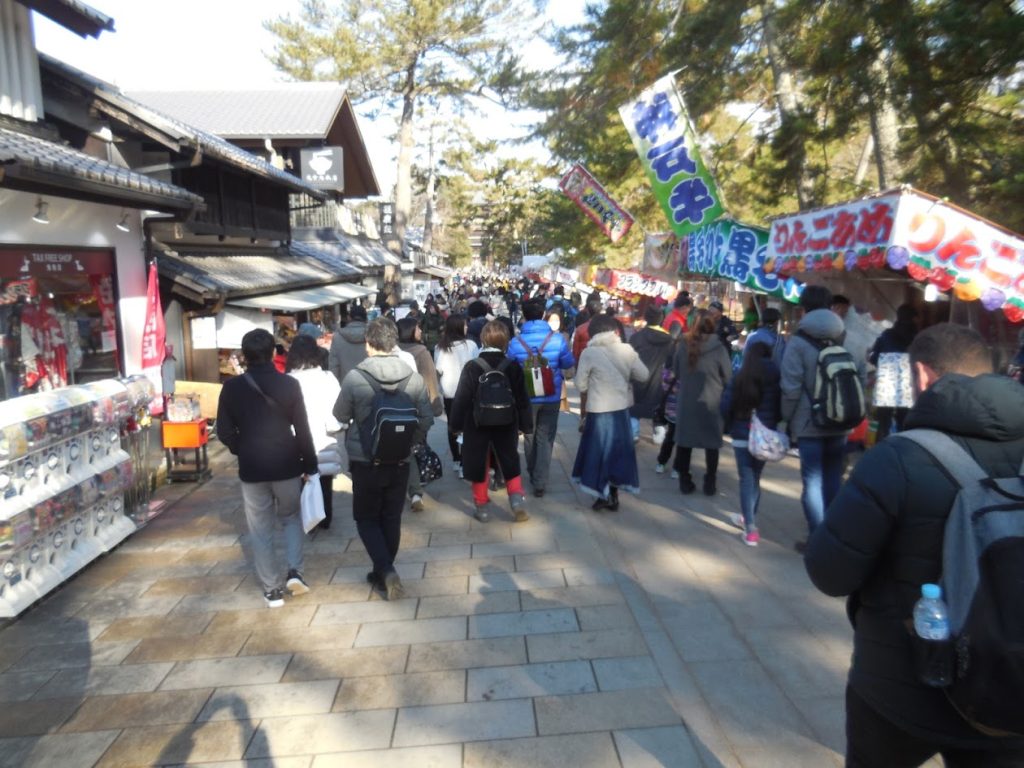
This is the main approach leading to the Daibutsuden Hall.
From spring to autumn, it is bustling with many school excursion students.
Recently, there has also been a significant increase in tourists from abroad.
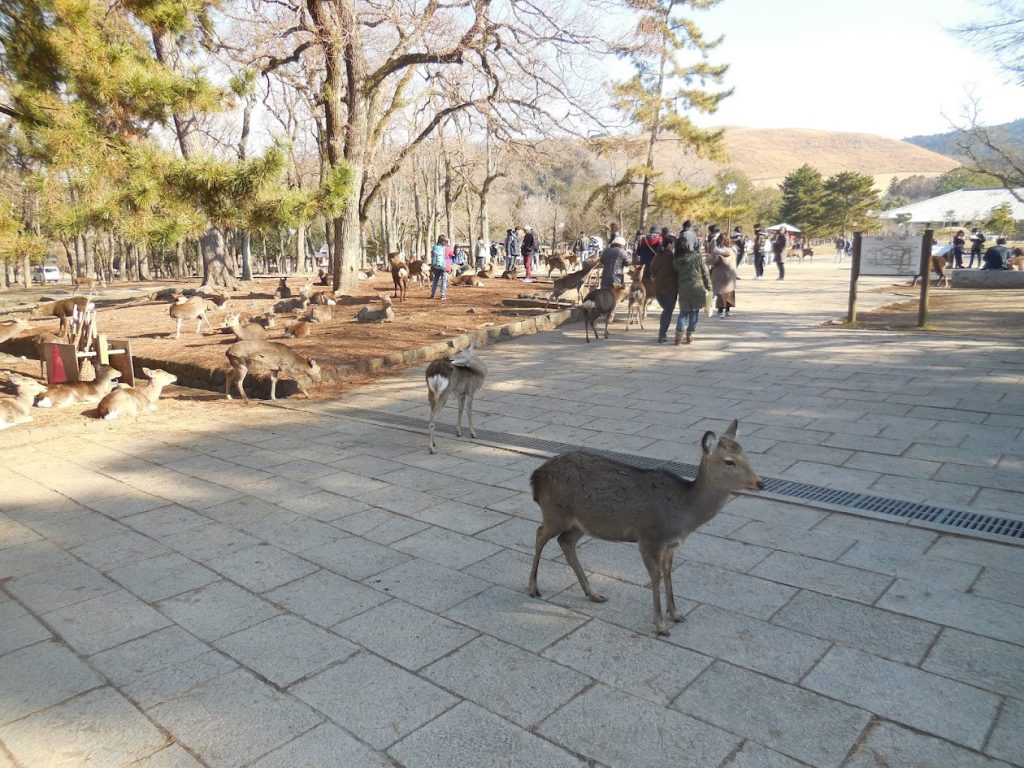
At the side of the approach to Todai-ji Temple
The light brown mountain visible in the distance is Wakakusa-yama mountain.
A traditional burning event called ‘yama yaki’ is held in January, and the mountain turns a beautiful green in spring.
On the right side of it, the partially visible green mountain is Kasugayama Primeval Forest, which is a sacred area of Kasuga Taisha Shrine.
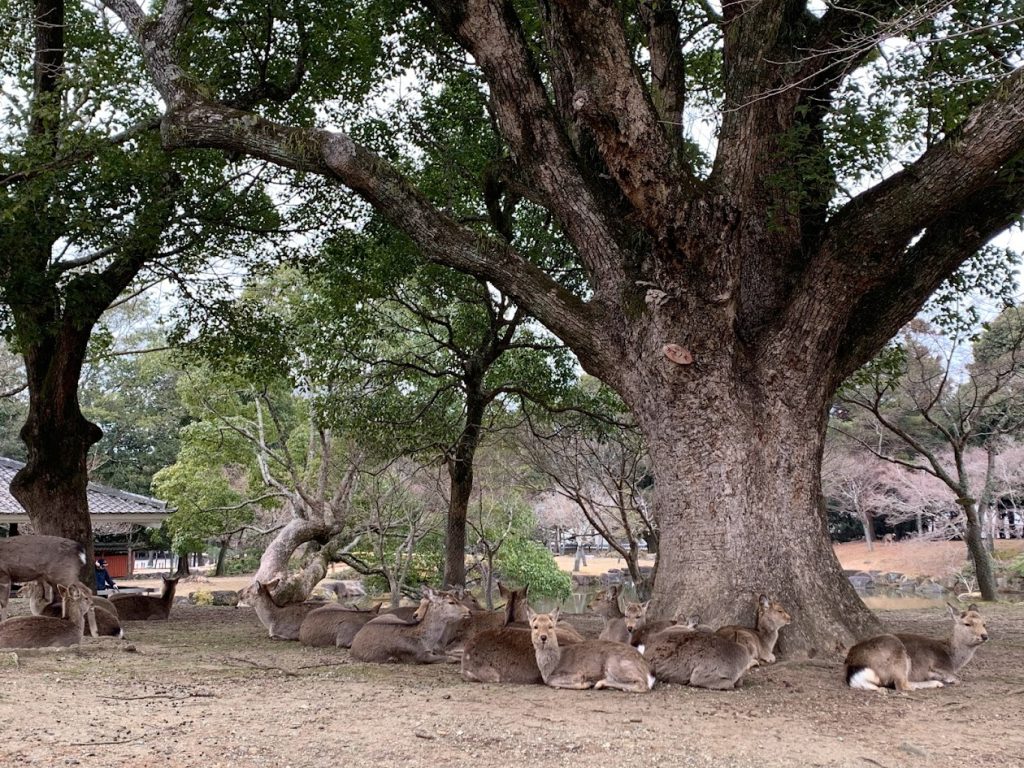
Deer resting under the giant tree on the eastern side of the Great Southern Gate of Todai-ji Temple.
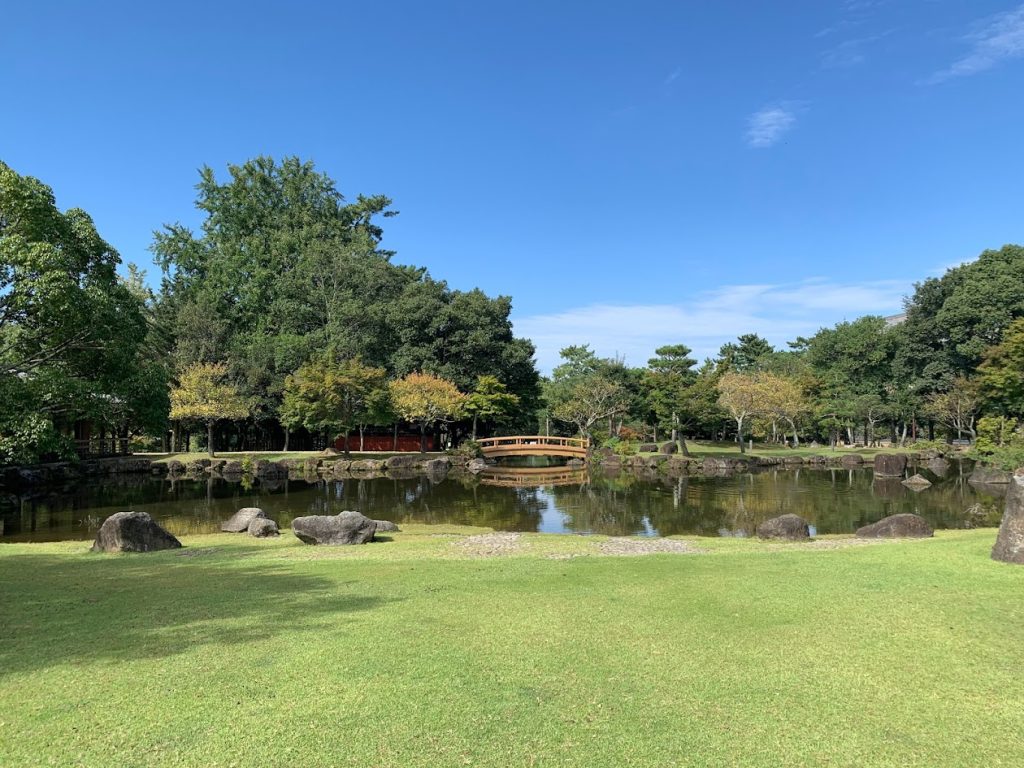
This pond is located to the east of the Great Southern Gate.
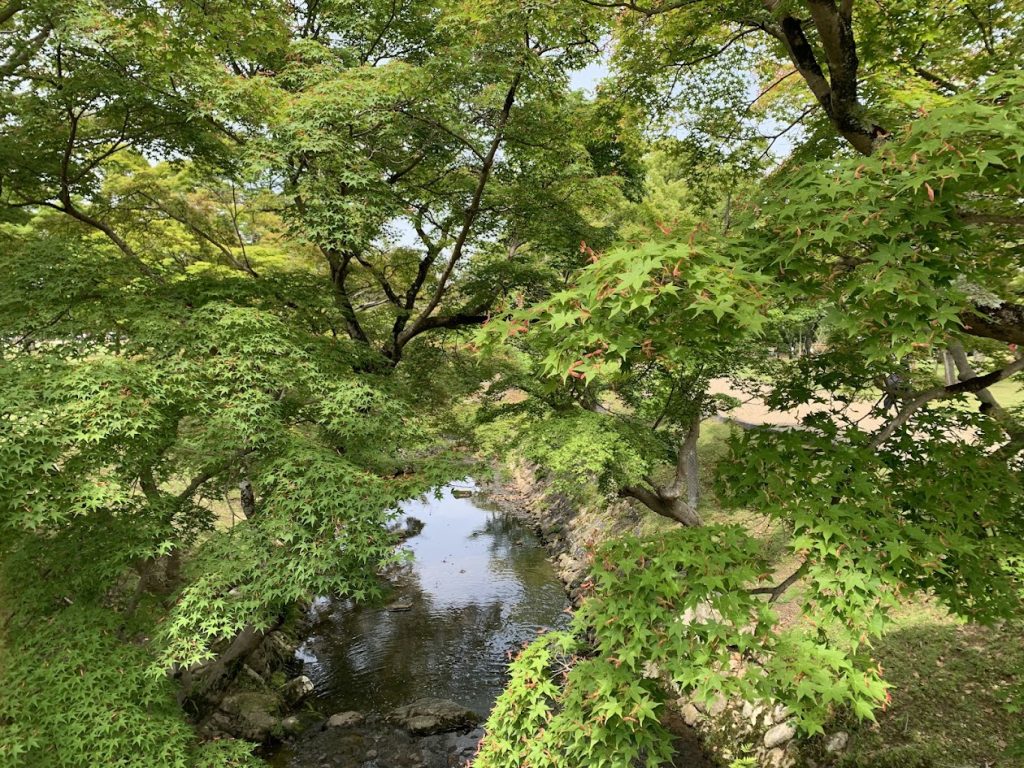
Maple leaves along the riverbank of the Yoshikigawa, which flows gently from the primeval forest of Mt. Kasuga.
Maple seeds —photographed in mid-May.
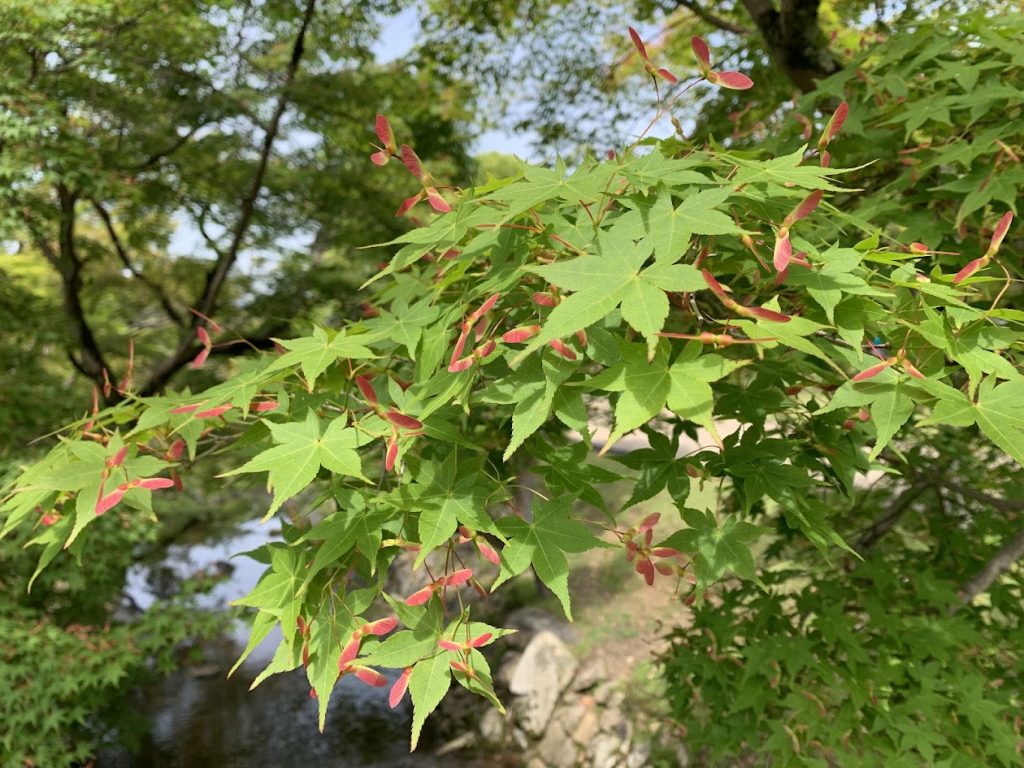
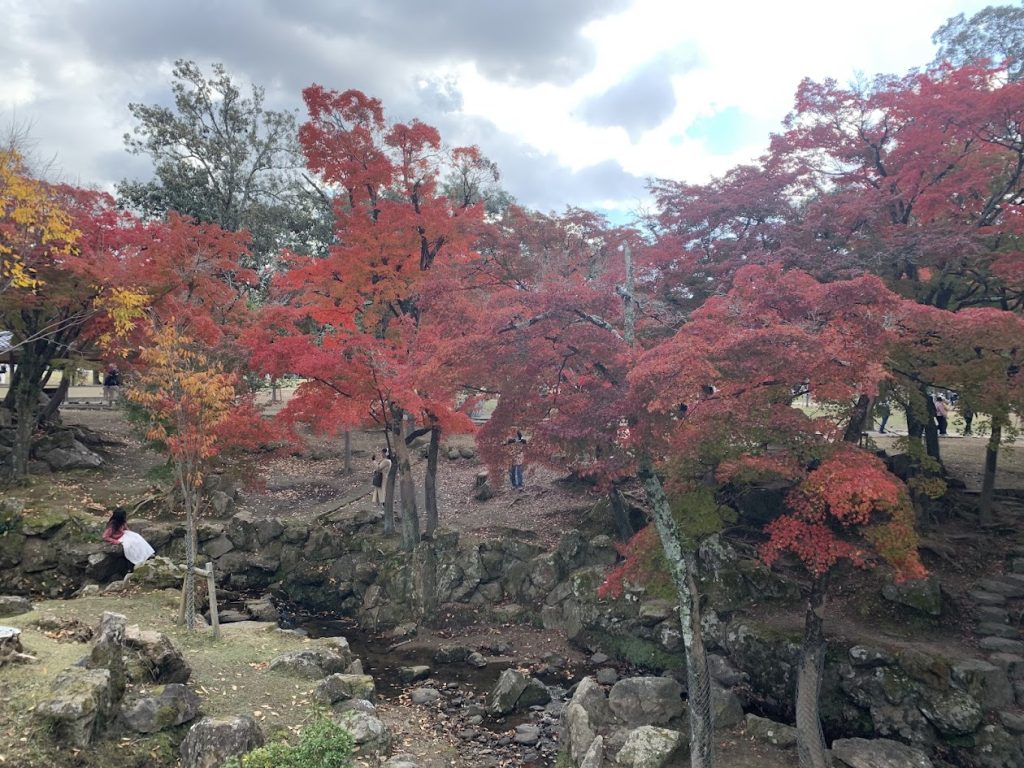
Beside the approach to Todaiji Temple in autumn.
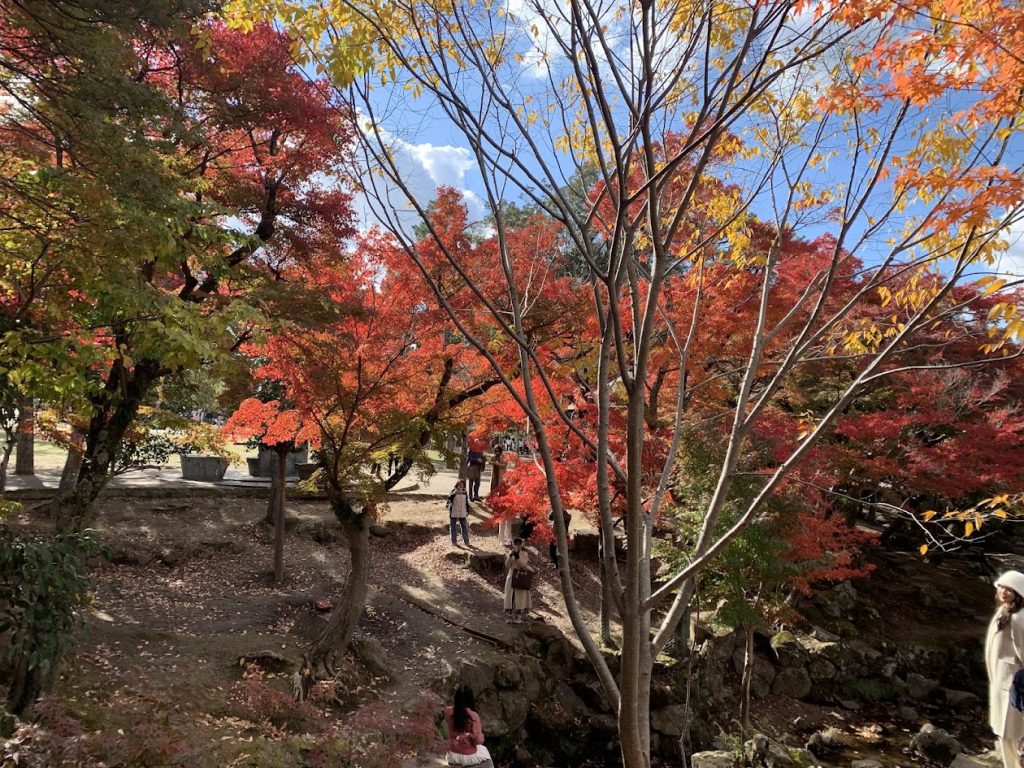

The vivid yellow of autumn ginkgo leaves brightens the scene.
Shoro and Bonsho(The Bell Tower and The Sacred Temple Bell)
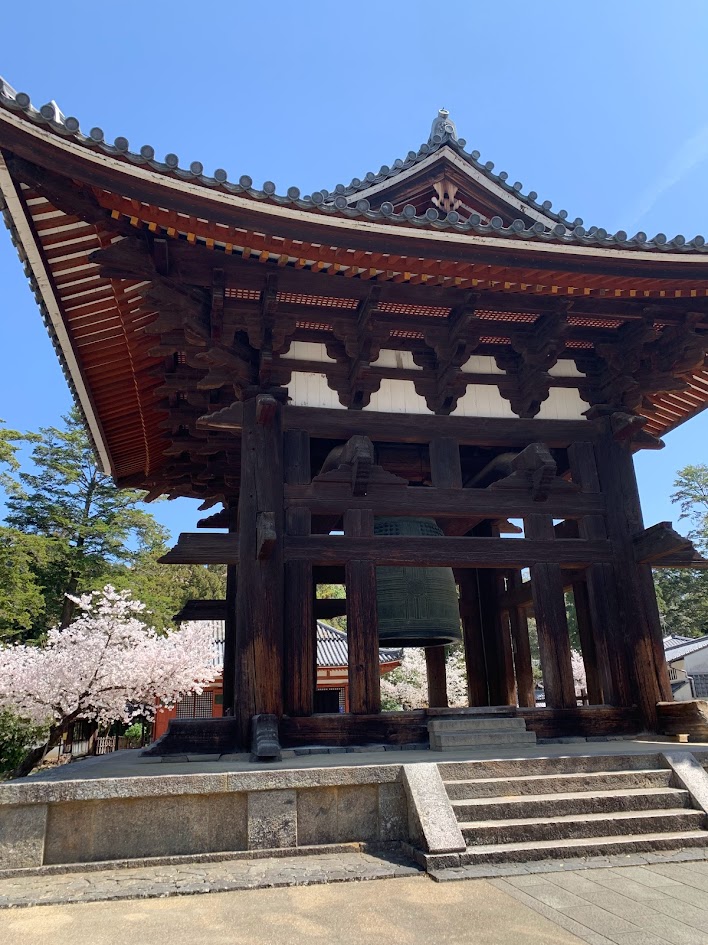
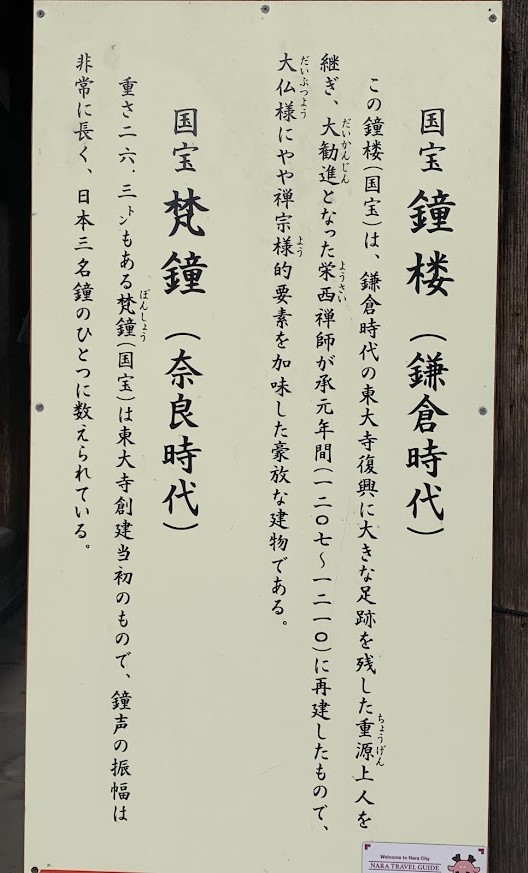
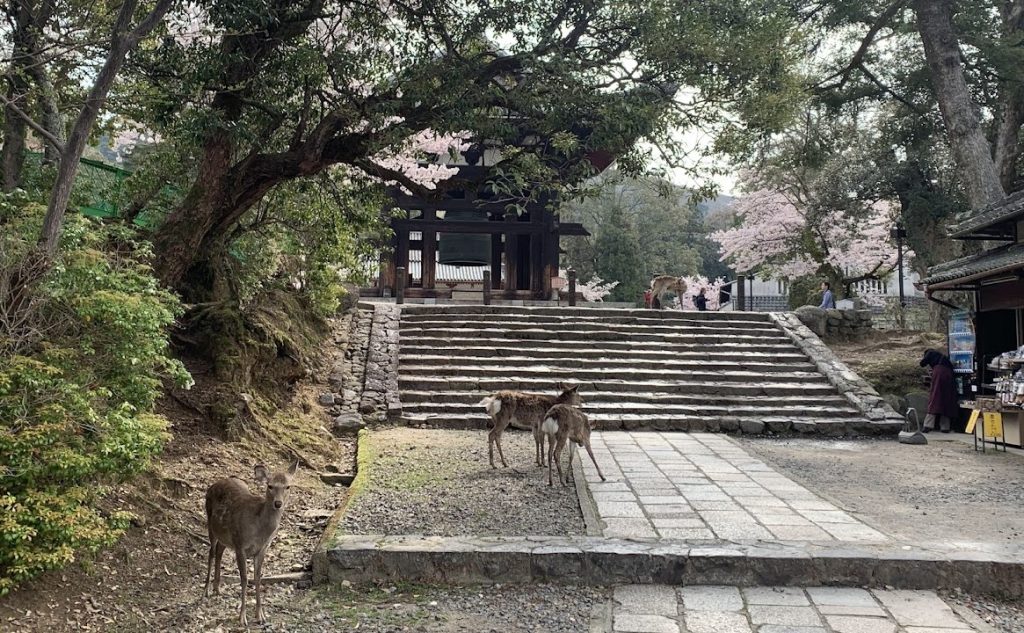
The Bell Tower of Todai-ji Temple (National Treasure)
In 1180, a fire during internal conflicts destroyed most of the temple’s buildings.
However, reconstruction began the following year, and this bell tower was rebuilt between 1207 and 1210.
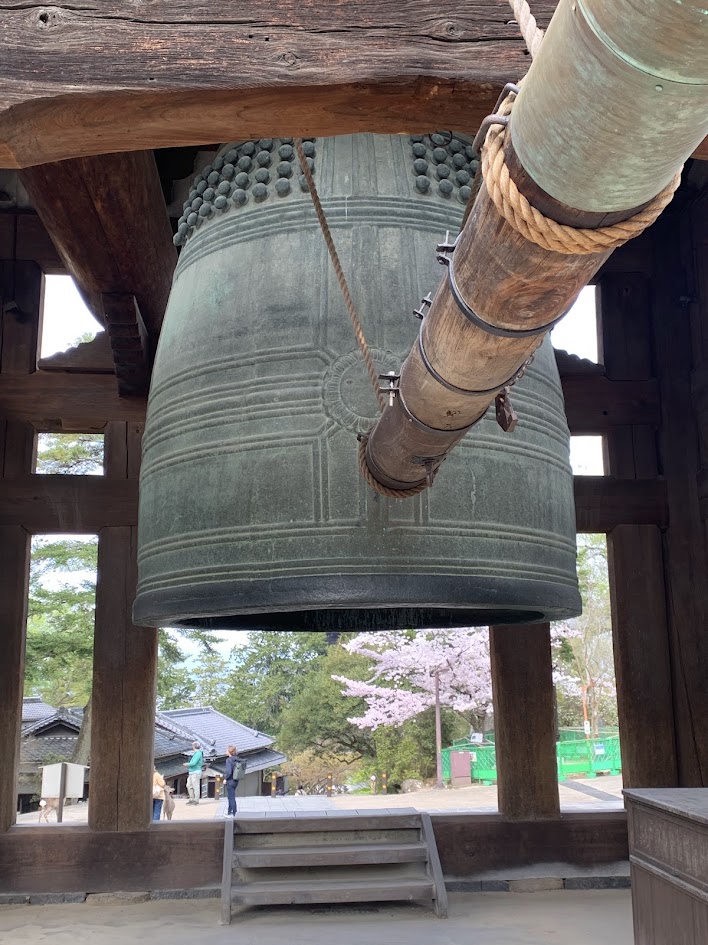
The Bonsho (National Treasure)
Weighing 26.3 tons, this Bonsho is an original bell from the founding of Todai-ji Temple.
It is one of Japan’s three famous bells.
Oyuya(The Great Bath House)
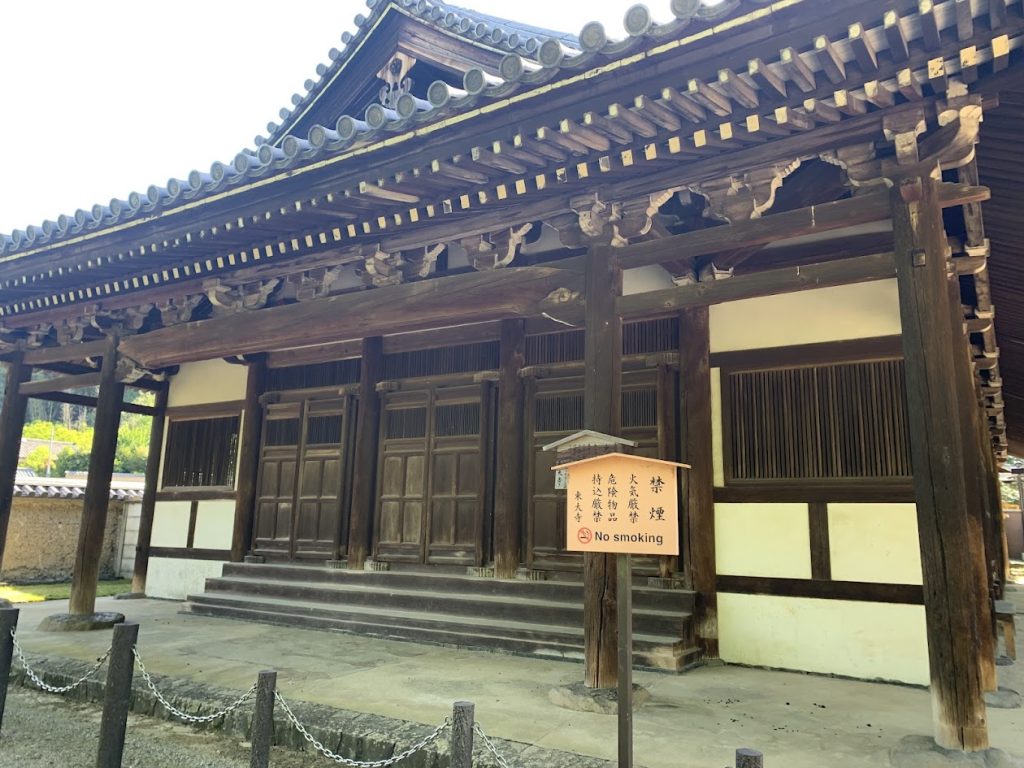
Oyuya (The Great Bath House)
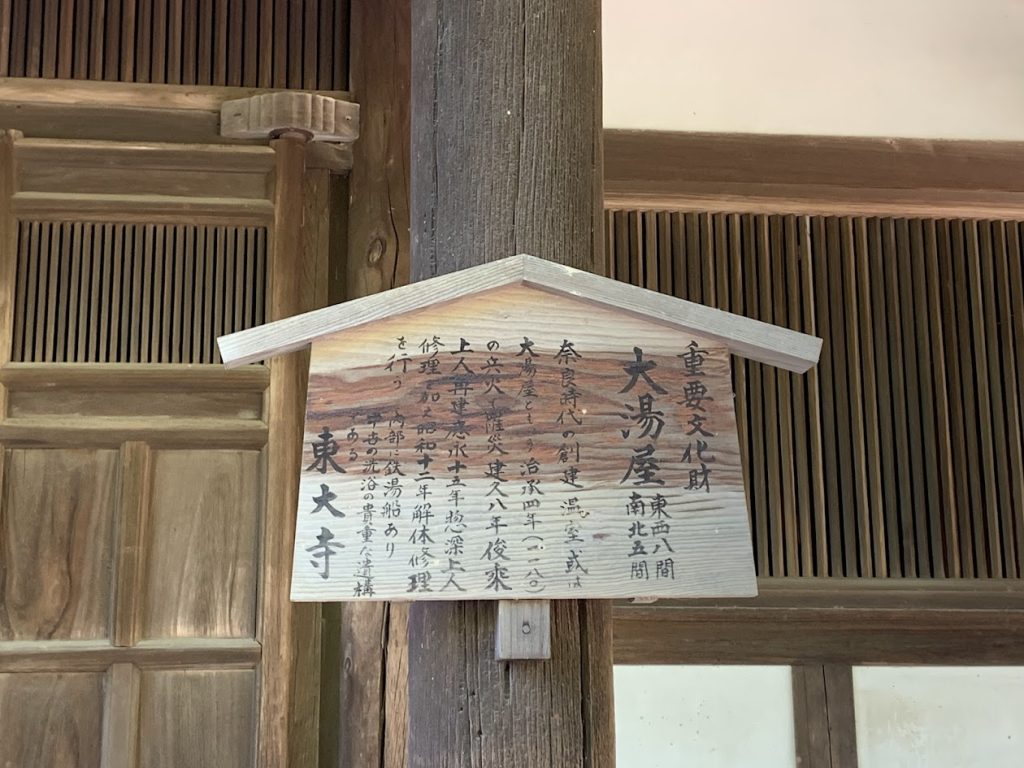
Located to the north of the bell tower, the Oyuya has been used as a bathhouse for Todai-ji Temple since the Nara period (about 1,300 years ago).
The original building was destroyed by fire, and the current structure was rebuilt around 800 years ago.
Inside, there is a large iron bathtub.
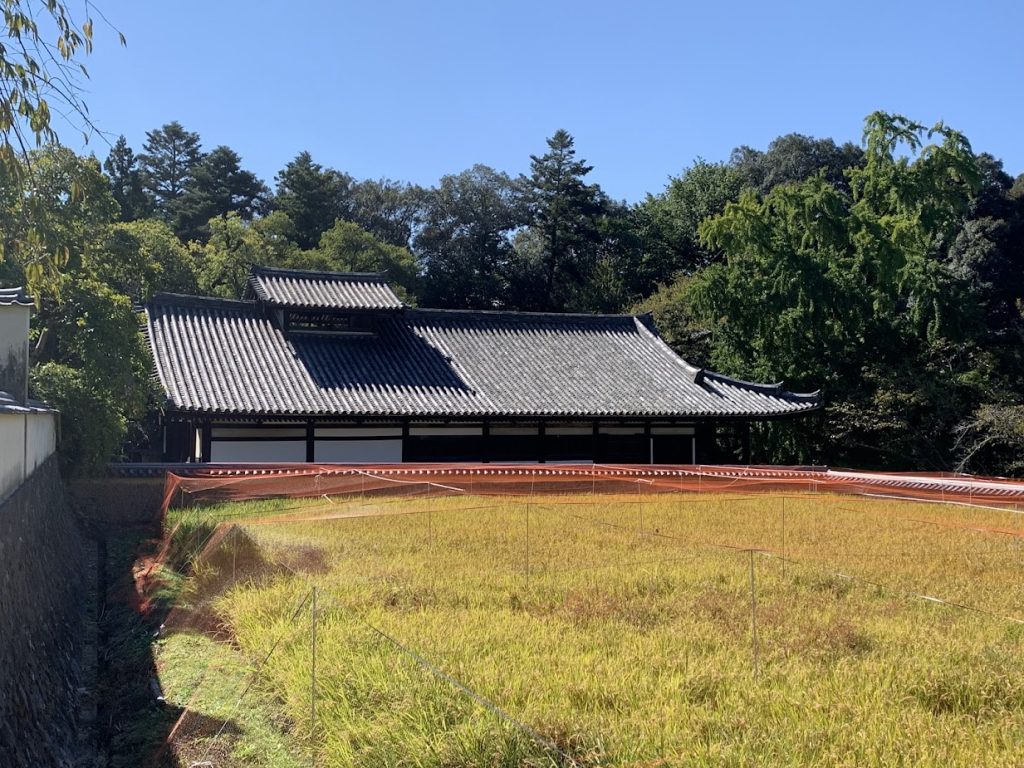
The roof of the Oyuya and the rice fields of Nigatsudo, known as Kuden.
In these fields, glutinous rice is cultivated to make rice cakes offered to the deities of Nigatsudo.
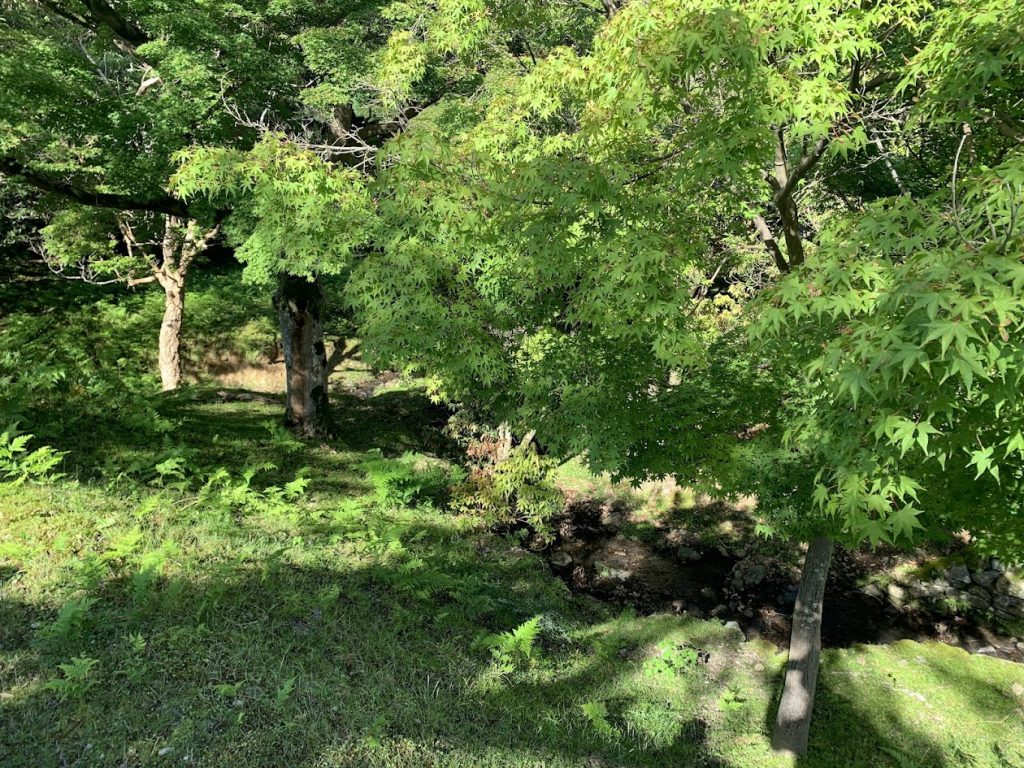
The Stream in Front of the Oyuya(Large Bathhouse)
From early to mid-June, we can see natural fireflies in this area. They are known as Daibutsu Fireflies.
Nigatsudo Hall
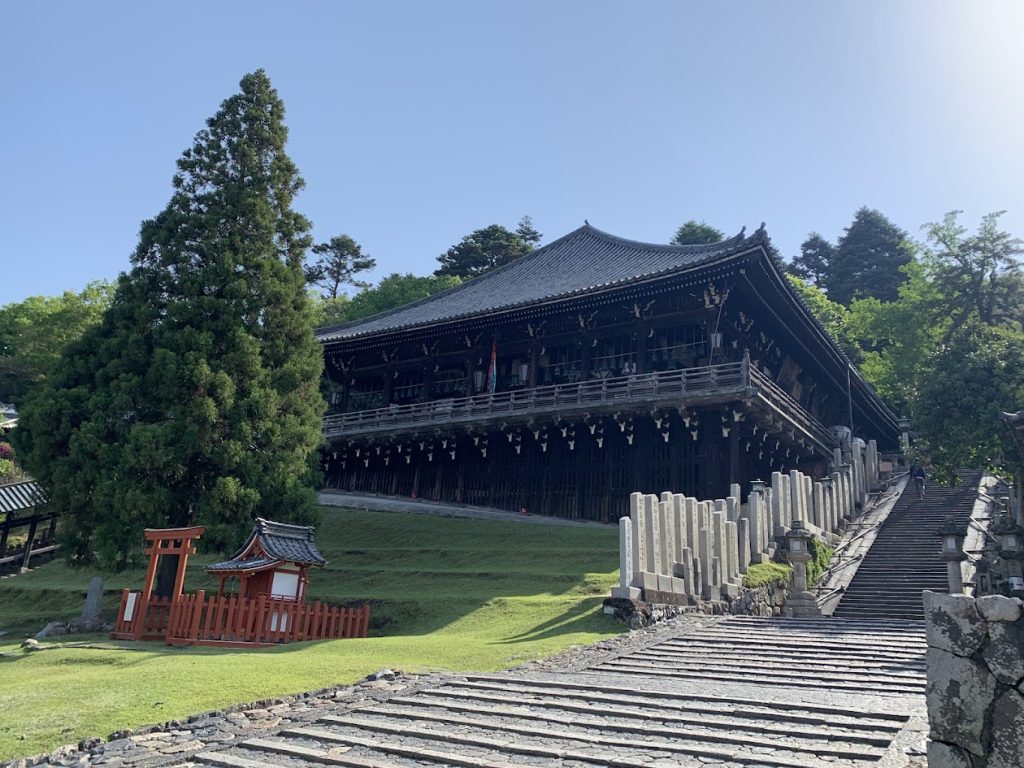
二Niigatsudo
Nigatsudo is famous for the ‘Omizutori’ ceremony held in early March.
The ceremony was originally performed in early February according to the old lunar calendar, which is why the name ‘Nigatsudo’ (meaning ‘February Hall’) was given.
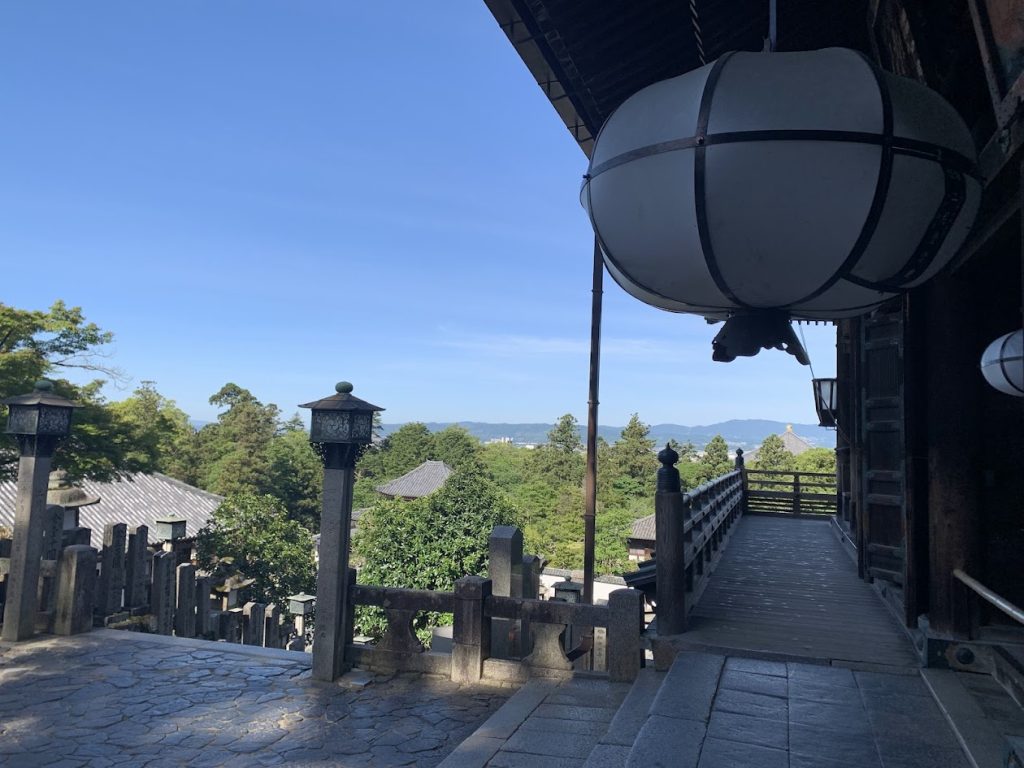
The building itself is impressive, and the view of Nara from the corridors is stunning.
Be sure to visit while walking between Todai-ji Temple and Kasuga Taisha Shrine.
Visitors are welcome to enter Nigatsu-do Hall at any time, day or night.”
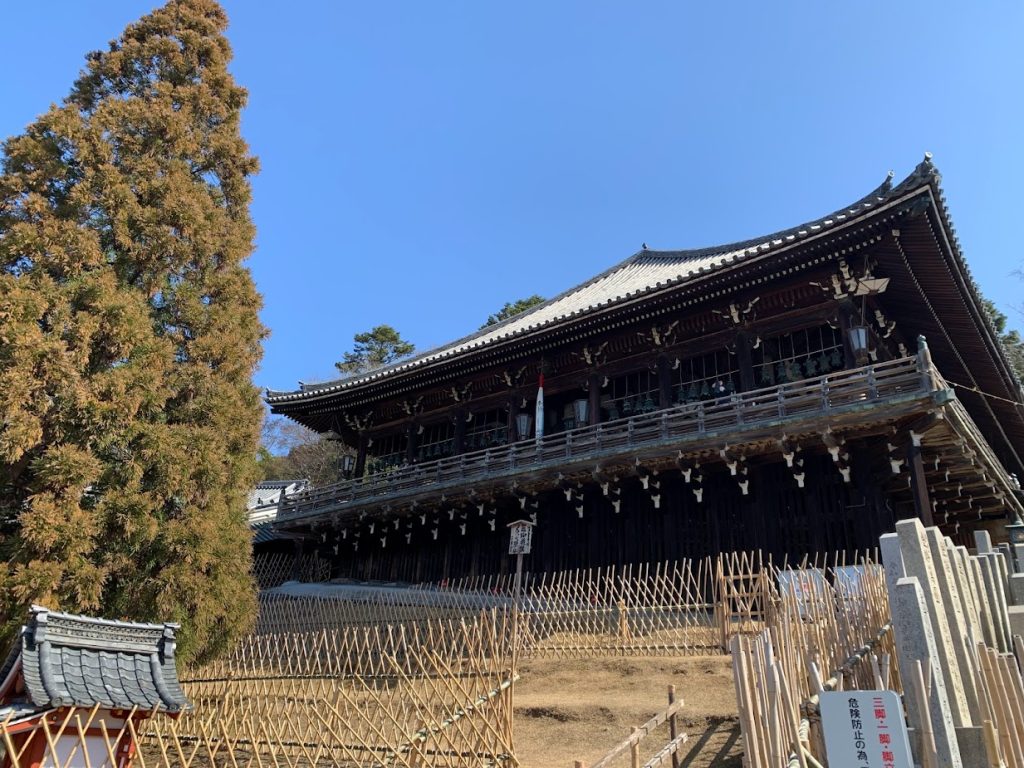
Niigatsudo
Bamboo railings are set up for spectators attending the Omizutori ceremony. This photo was taken in early March.
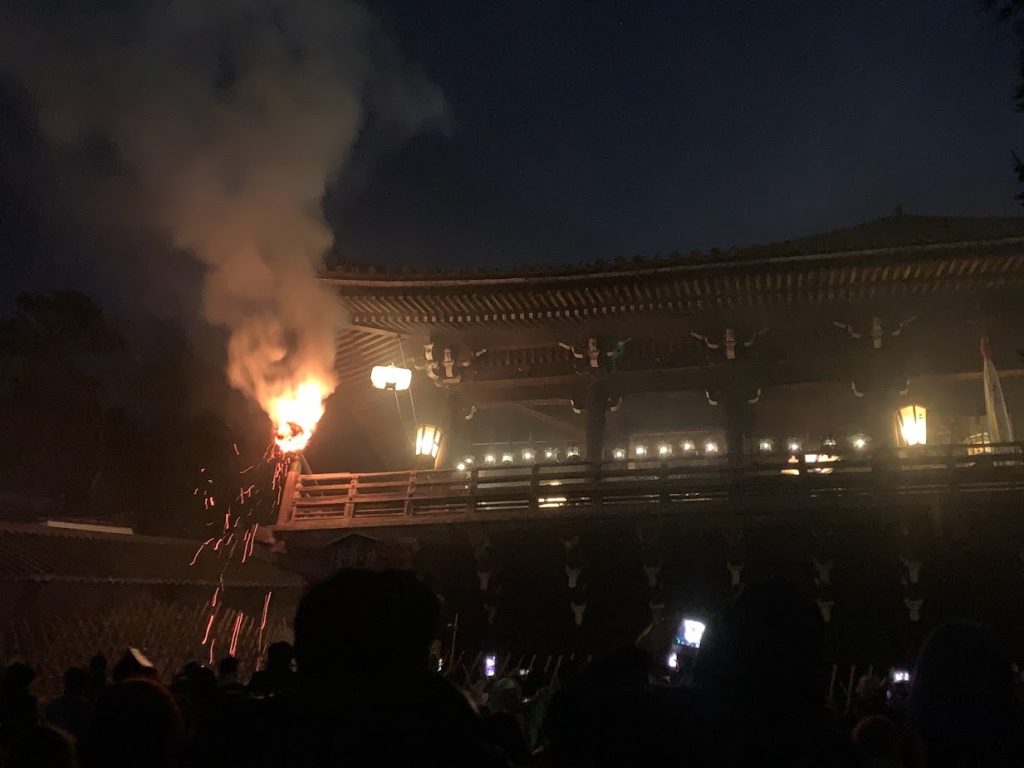
Omizutori at Nigatsudo, held every March, has been conducted without interruption since it began in 752 AD.
In 2024, it marked the 1,273rd event.
Although Todai-ji Temple has been destroyed by fires twice since its founding, losing most of its buildings, Omizutori has continued without interruption.
(Click the photo to visit the ‘Festivals’ page and learn more about this event.)
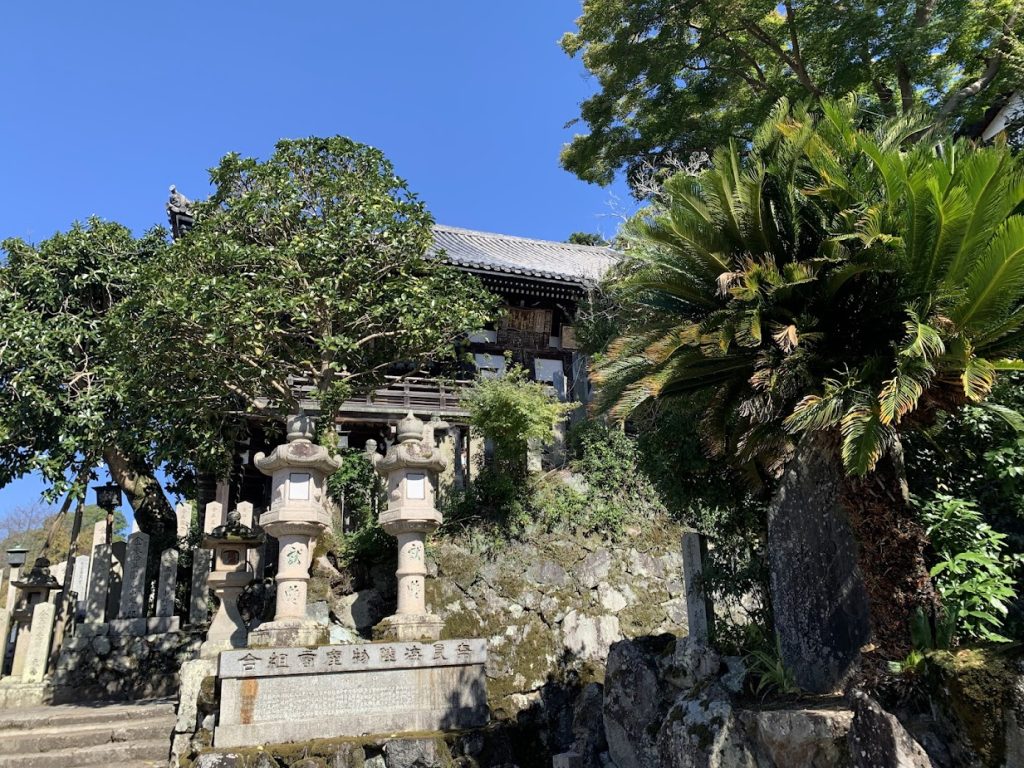
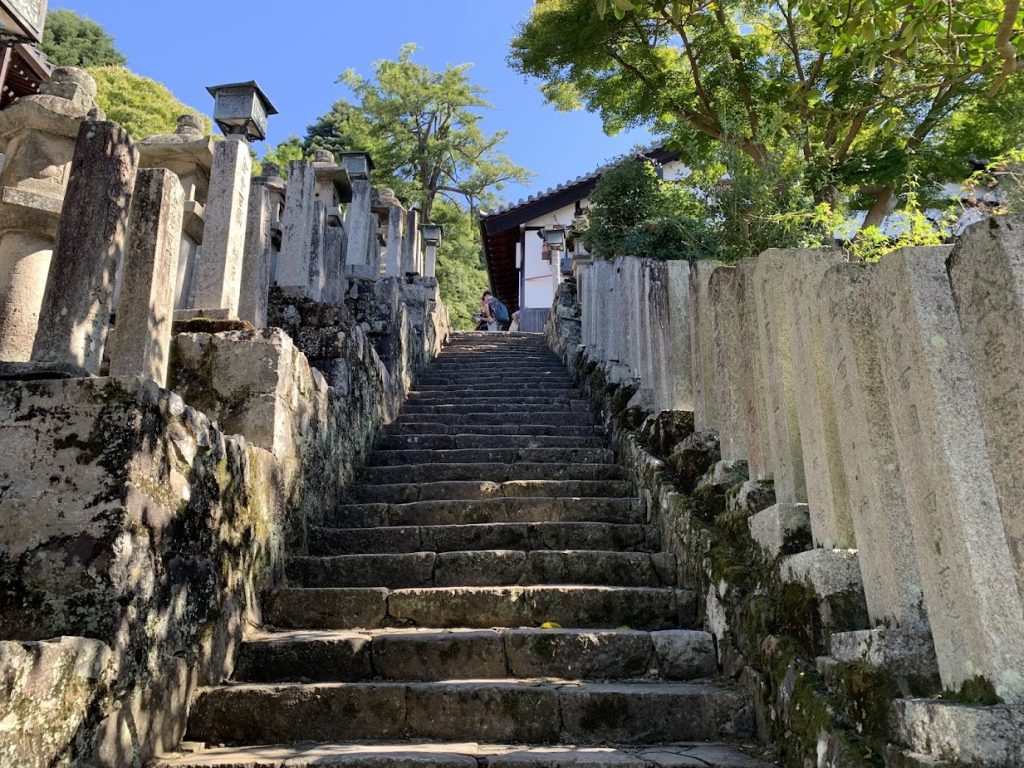
One of the stairways that gently leads visitors up to the serene Nigatsu-do Hall.
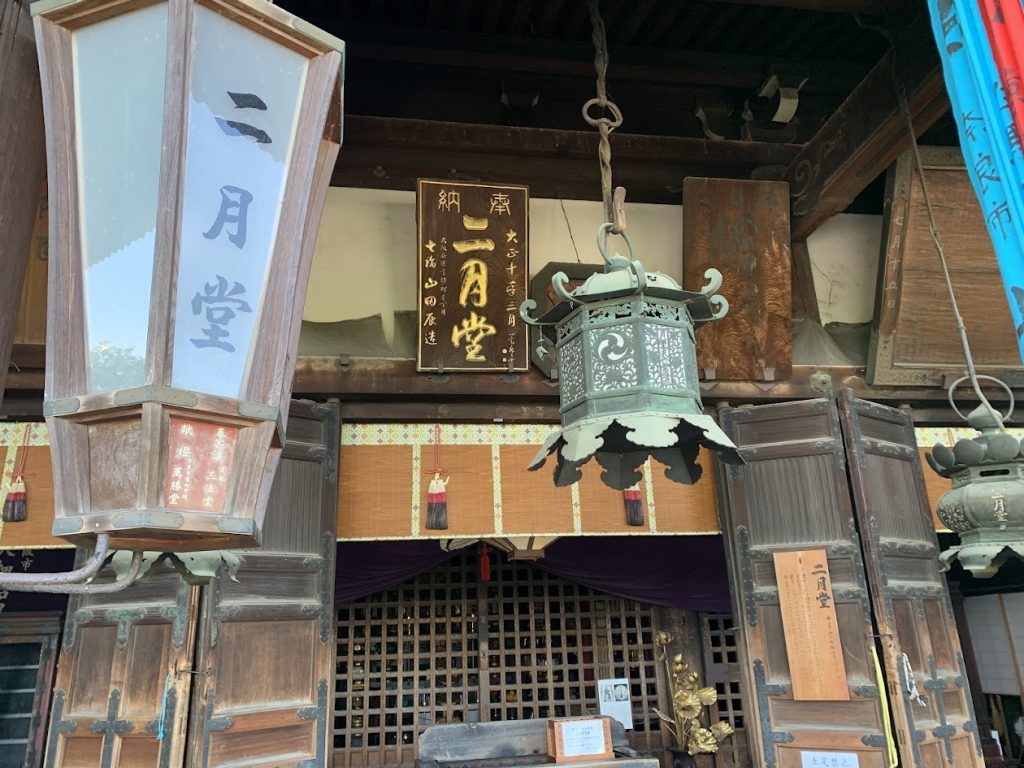
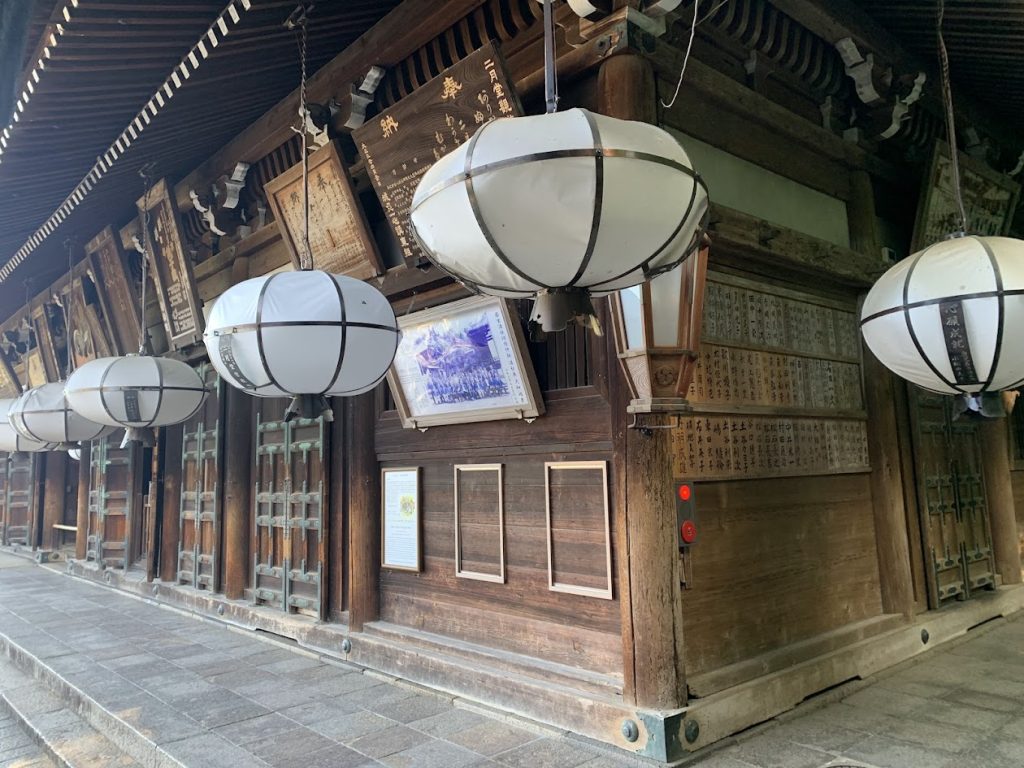
Front view of Nigatsudo facing west
At sunset, the platform becomes crowded with international visitors hoping to catch a glimpse of the setting sun.
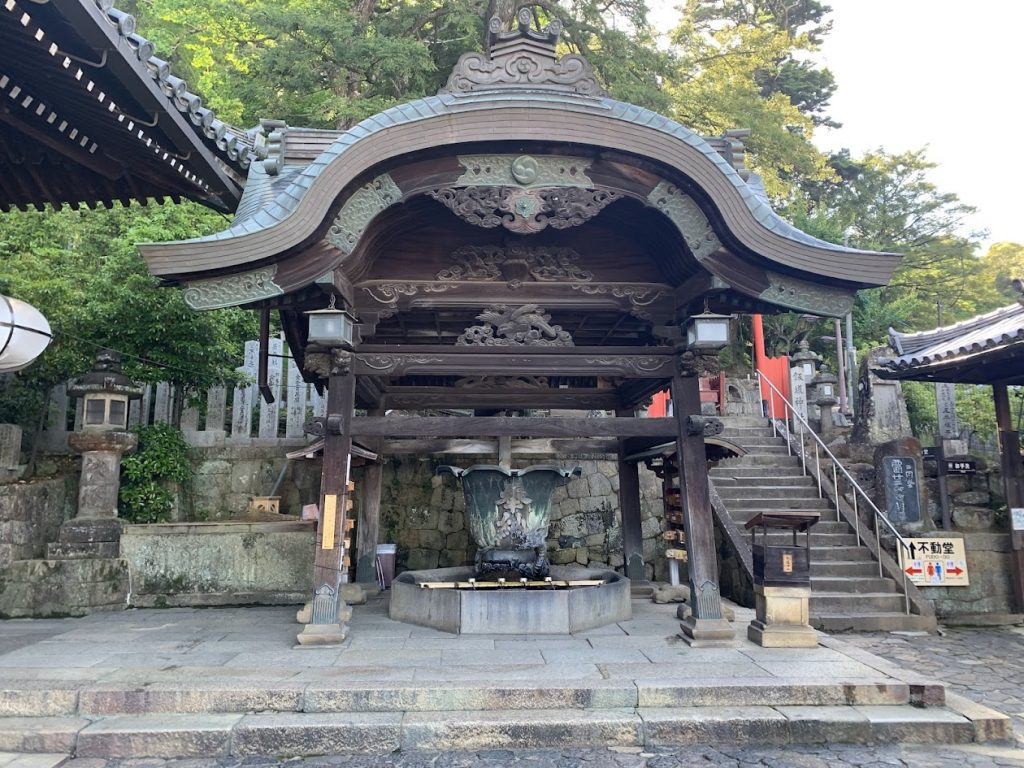
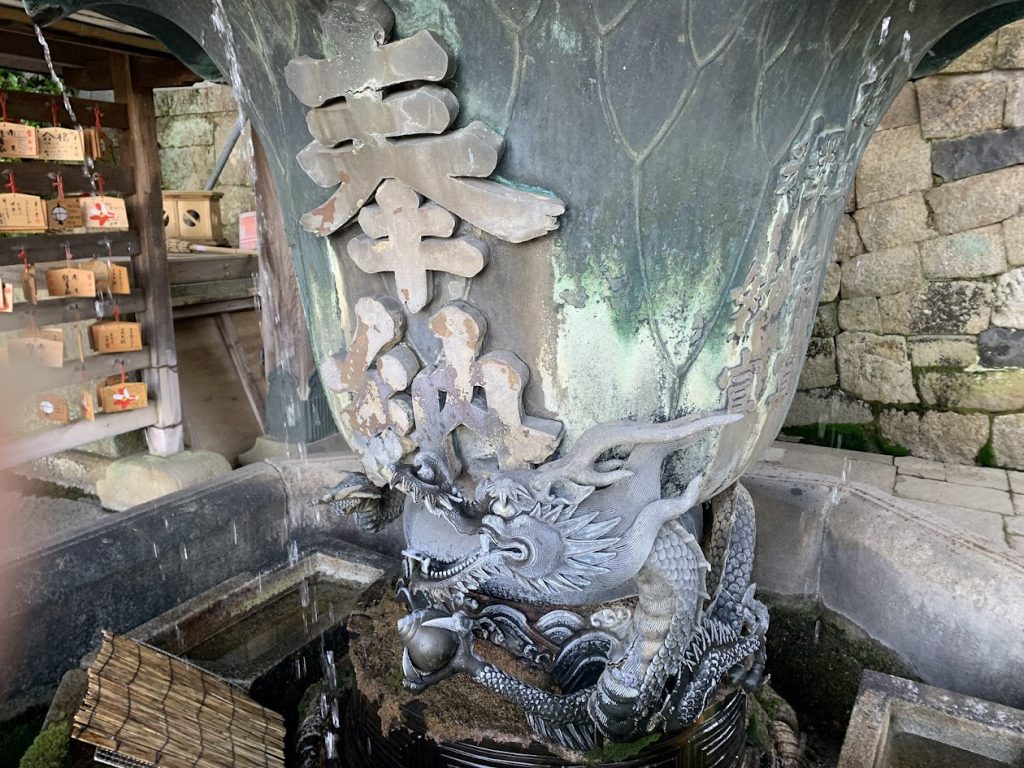
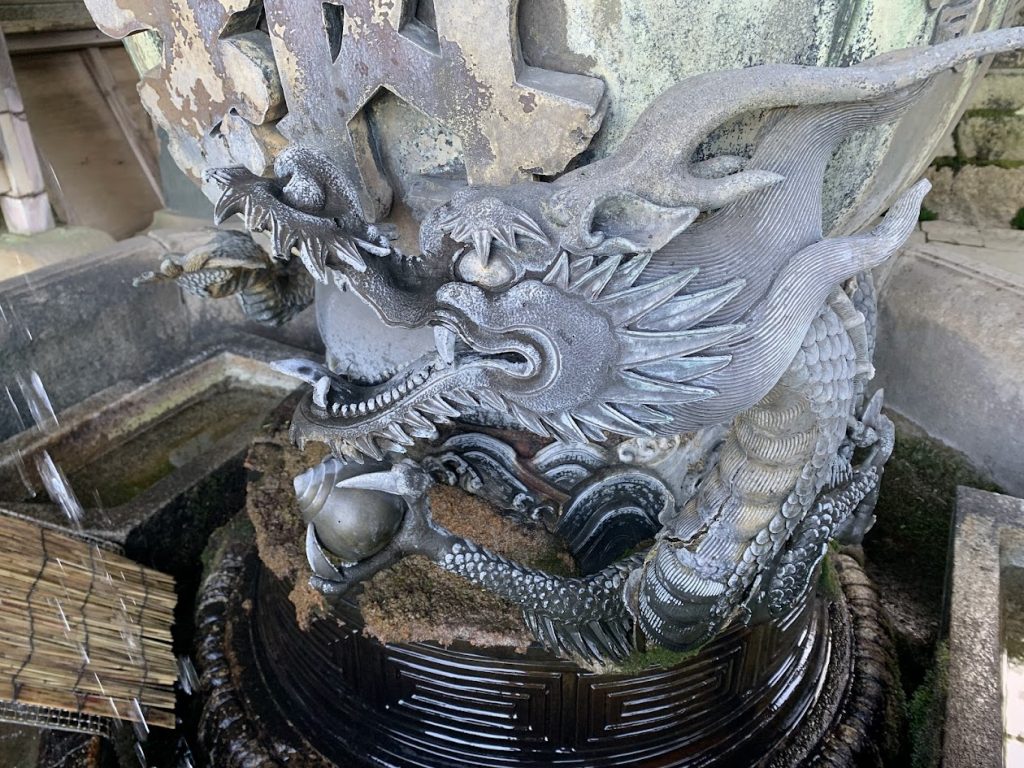
This is the temizuya (a water purification station found at the entrance of Shinto shrines and Buddhist temples in Japan), located at the top of the stairs on the south side.
The building on the left is Nigatsudo.
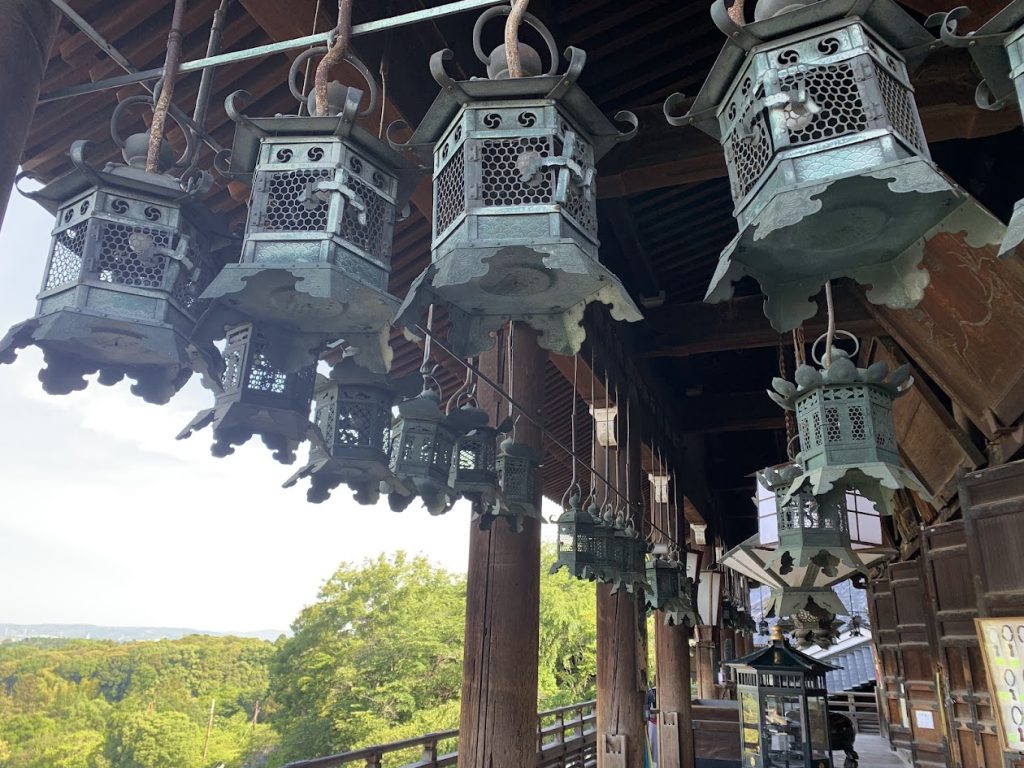
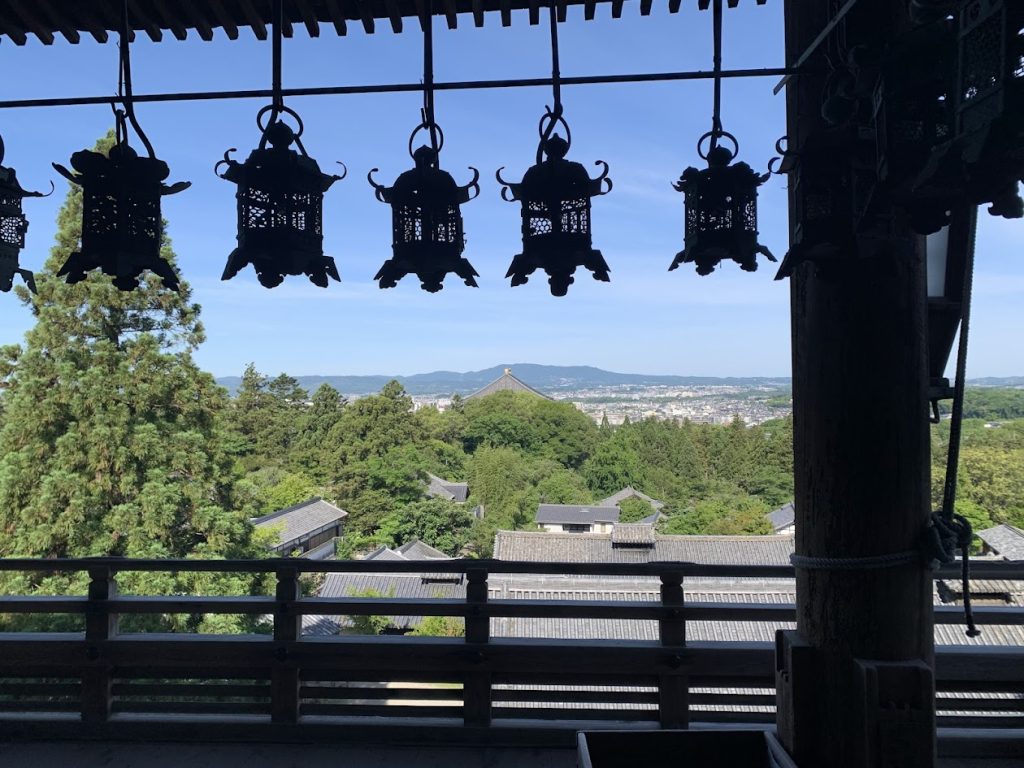
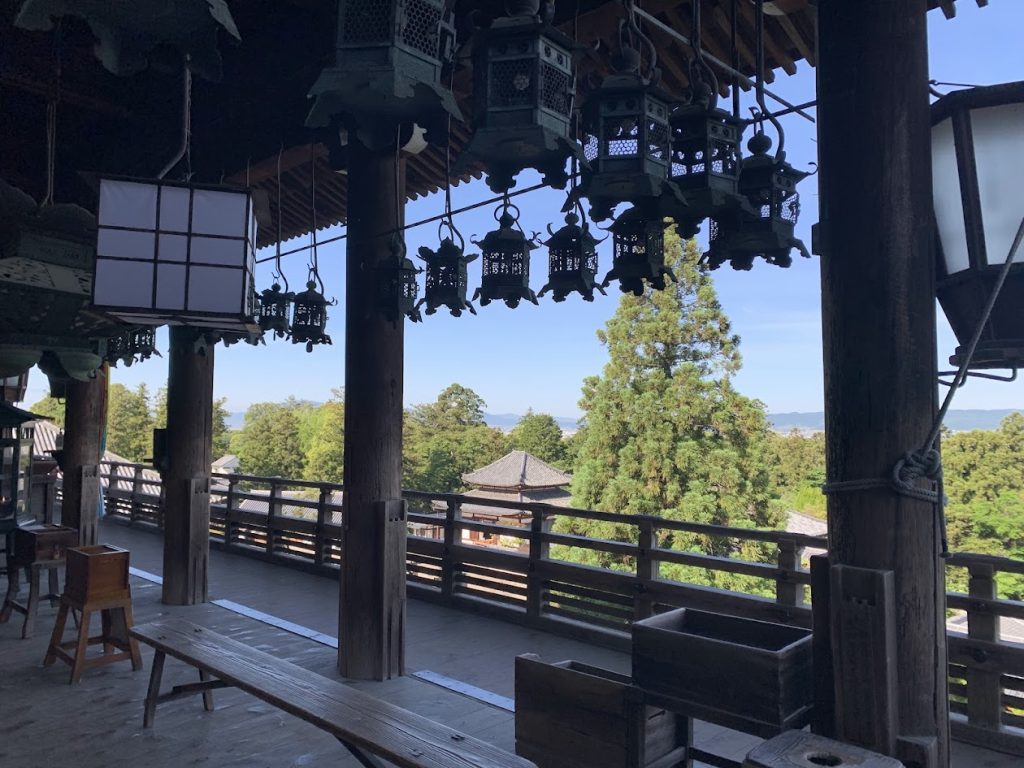
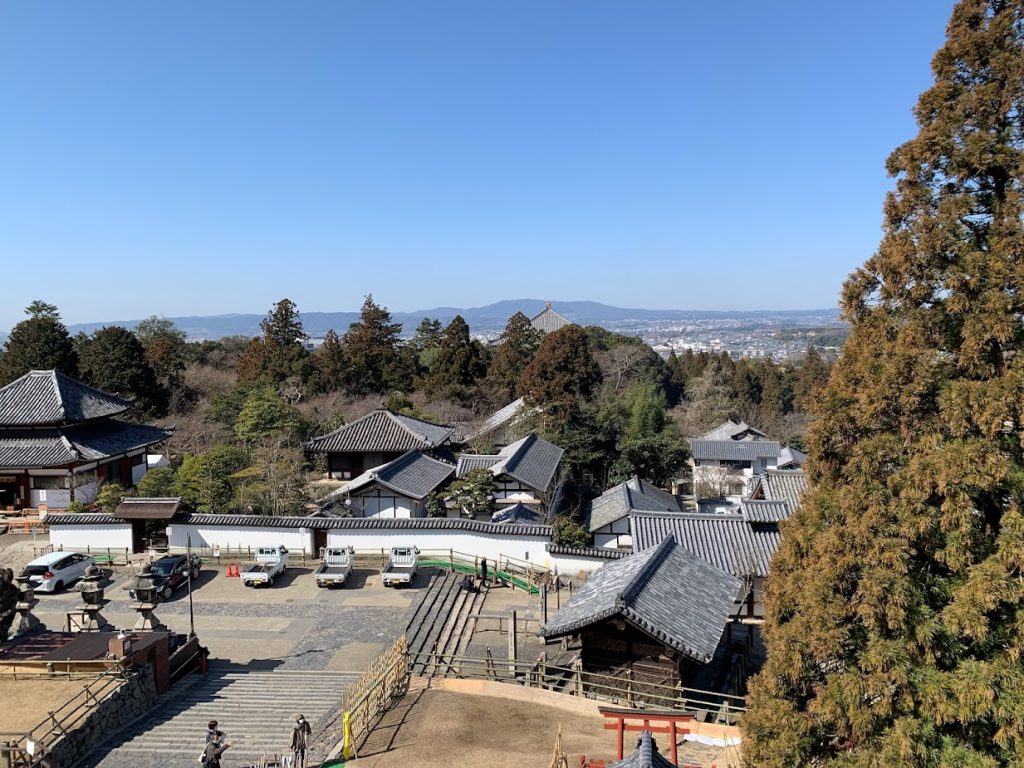
This photo is taken facing Todai-ji Temple’s main hall.
The highest mountain in the distance is Ikoma Mountain, and beyond that is Osaka.
In the medieval period, many people would set out early in the morning from Osaka, stay overnight in Naramachi (around Sarusawa Pond, near Kofuku-ji Temple), and then walk south the next day to Hase-dera Temple (in Sakurai City). They would continue along the Ise Kaido (the old Ise Route) to visit Ise Jingu Shrine.
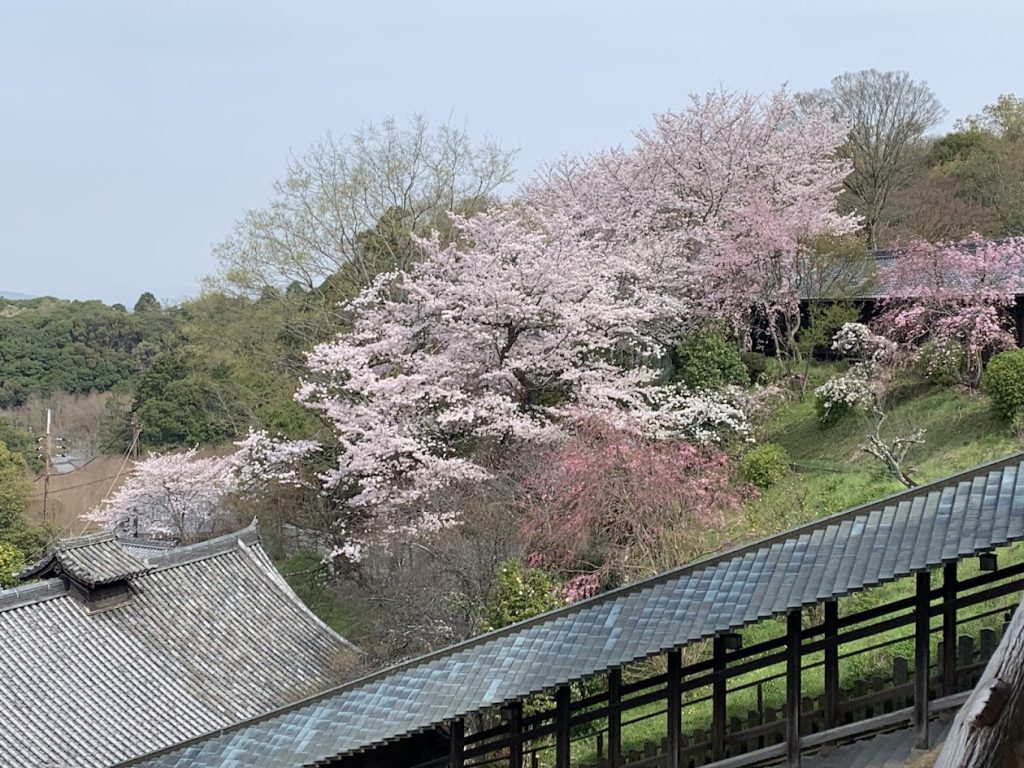
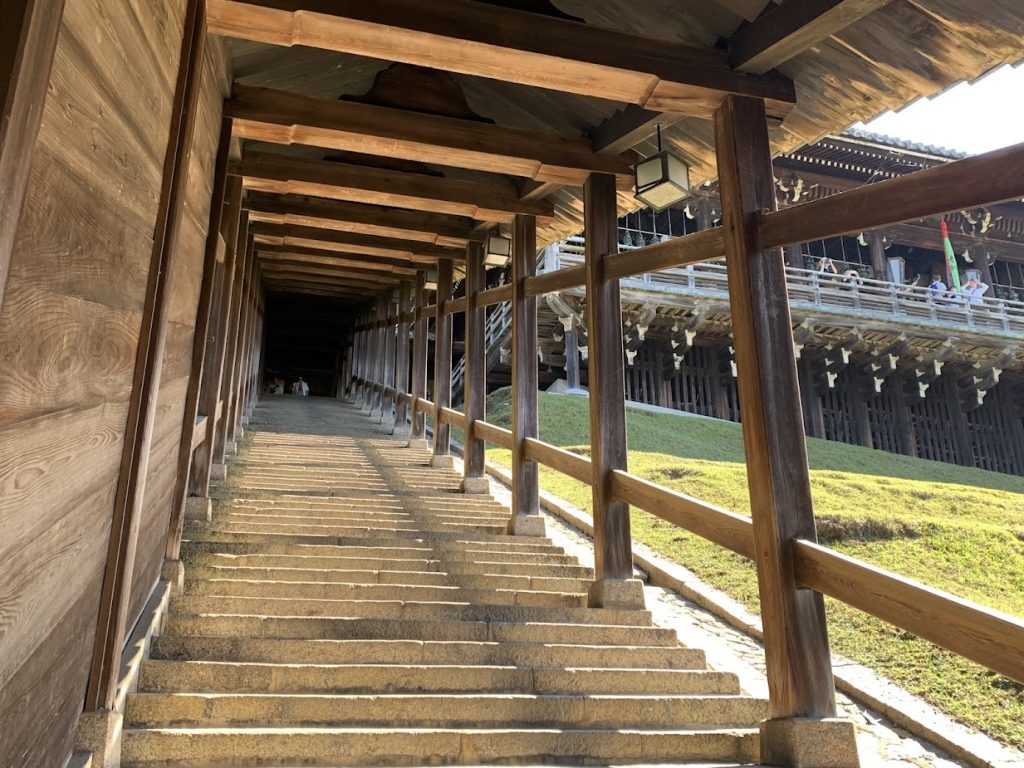
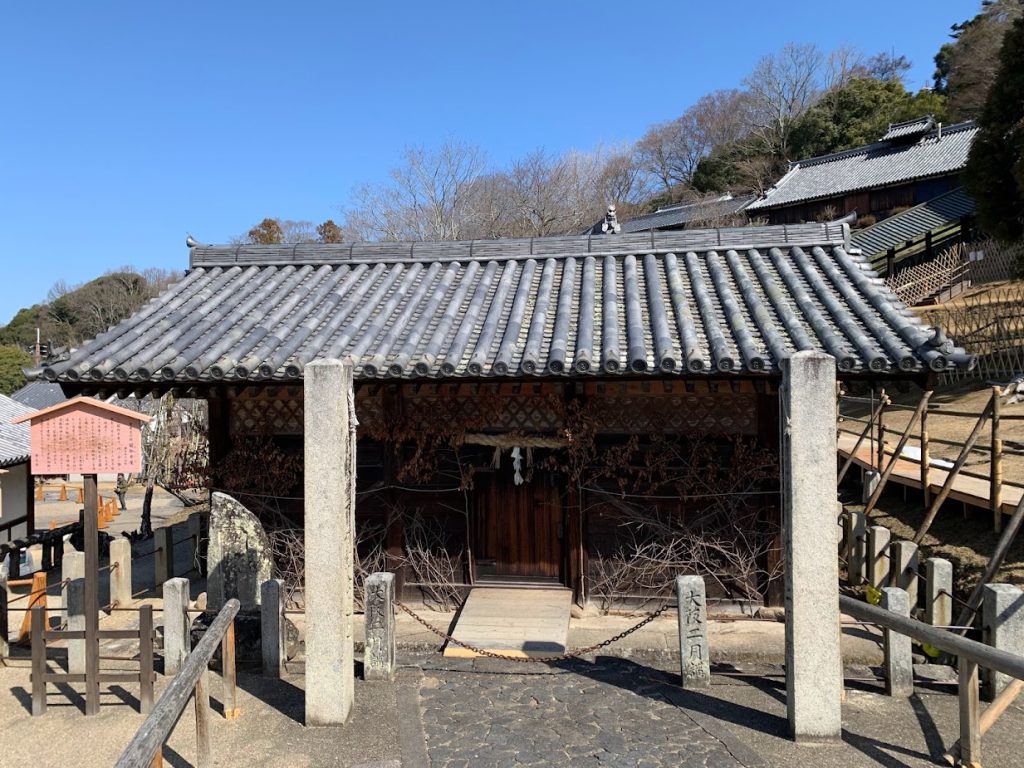
Akaiya
During the Omizutori ceremony at midnight on March 12th, a ritual is performed here to draw sacred water (okozui) from the inner well to offer to the main deity.
It is also known as Wakasa-i (Wakasa Well).
.
There is an old tale about Wakasa-i (Wakasa Well).
Long ago, during the Omizutori ceremony, a high priest read out the names of over 17,000 deities and requested them to gather at Nigatsudo Hall.
Almost all the deities arrived on time, but the deity of Wakasa was late because he was fishing. He was scolded by the other deities for his tardiness. To make amends, the Wakasa deity said, “To apologize, I will send sacred water from Wakasa to offer to the main hall.” When he prayed at the base of Nigatsudo Hall, the sacred water sprang forth. This is what is known as Wakasa-i (Wakasa Well).
Additionally, in Wakasa, a ritual called “Omizu Okuri” (the ritual of sending sacred water from Wakasa to Nigatsudo Hall) is held every year on March 2nd. Instead of physically transporting the sacred water from Wakasa, it is believed that through the ritual, sacred water magically springs forth from this “Wakasa-i (Wakasa Well) due to divine power.
It’s a charming and delightful story.
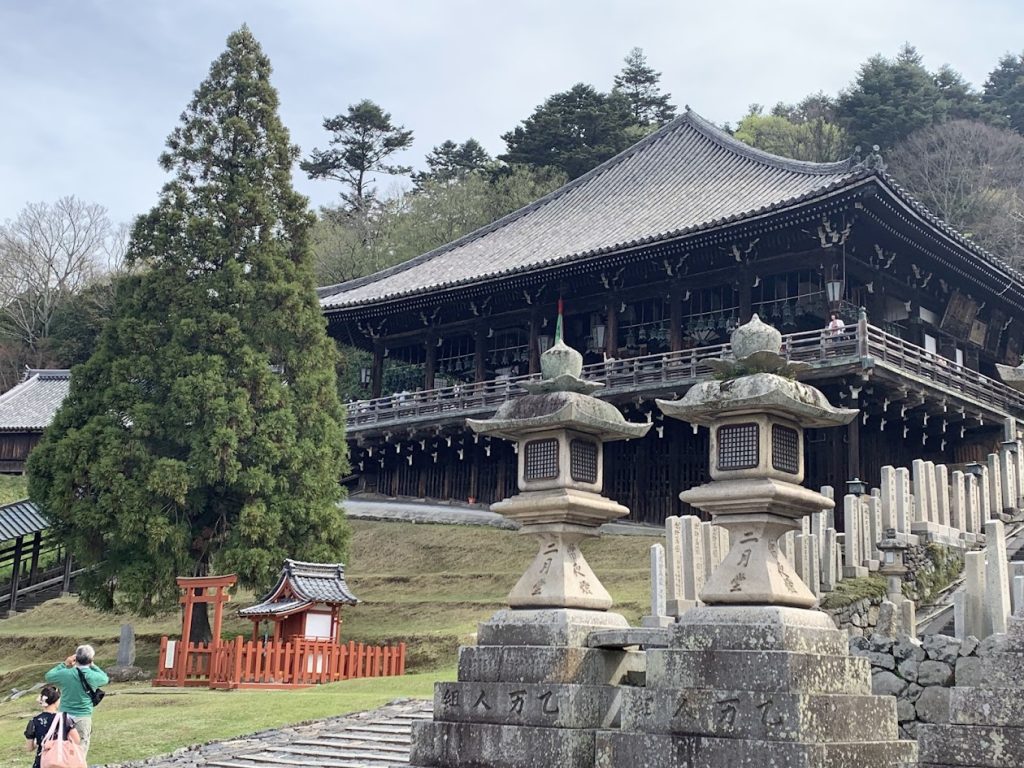
Roben sugi (Roben Cedar)
Roben was a prominent high priest during the Nara period who dedicated himself to the founding of Todai-ji Temple. Here is a story related to the Roben sugi (Roben Cedar):
Long ago, in the former province of Omi (present-day Shiga Prefecture), a baby boy was born. When he was two years old, something extraordinary happened. One day, while his mother was working in the fields, the child lay quietly nearby. Suddenly, a giant eagle swooped down from the sky, seized him with its sharp talons, and flew off into the air.
Some time later, a high-ranking monk from a temple in Asuka (now southern Nara Prefecture) stopped by Nigatsu-do Hall during a pilgrimage to Kasuga Taisha Shrine. There, he heard the sound of a baby crying from the top of a cedar tree. Climbing up in haste, the monk discovered the missing child, who wore a small wooden Buddha image around his neck.
The boy was named Roben. He grew up to be a wise and virtuous young man, eventually becoming a prominent priest of Todaiji Temple, known far and wide for his teachings and character.
Meanwhile, the mother searched desperately for her son, never giving up despite the passing years. She lived in sorrow, holding on to hope.
Nearly fifty years later, she heard a curious story—that the high priest of Todaiji had once been carried off by an eagle as a child. Deeply moved, she visited the temple. When she saw the wooden Buddha image the monk still wore, she realized it was the very same one she had once given to her baby.
Thus, mother and son were finally reunited. Filled with gratitude, Roben cared for her with great devotion. His mother lived out her remaining days in peace and fulfillment, their bond sealed forever.

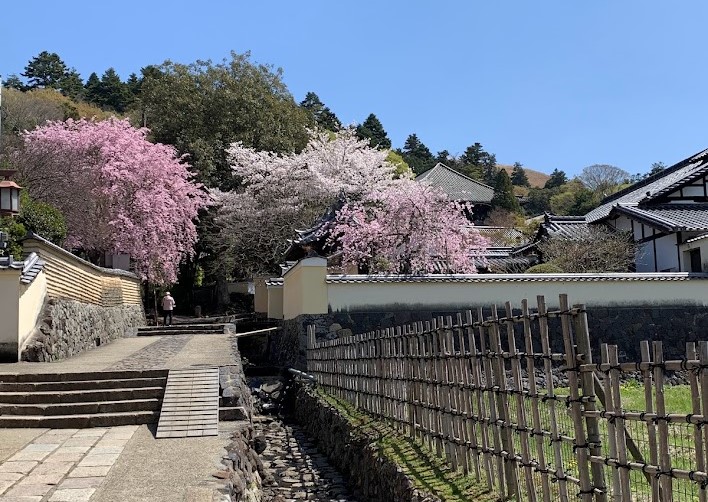
“This is the path leading from the back of Todai-ji Temple toward Nigatsudo.
The building in the center is Nigatsudo.
On the right side, a traditional earthen wall extends along the path, adding a sense of historical charm to the approach.
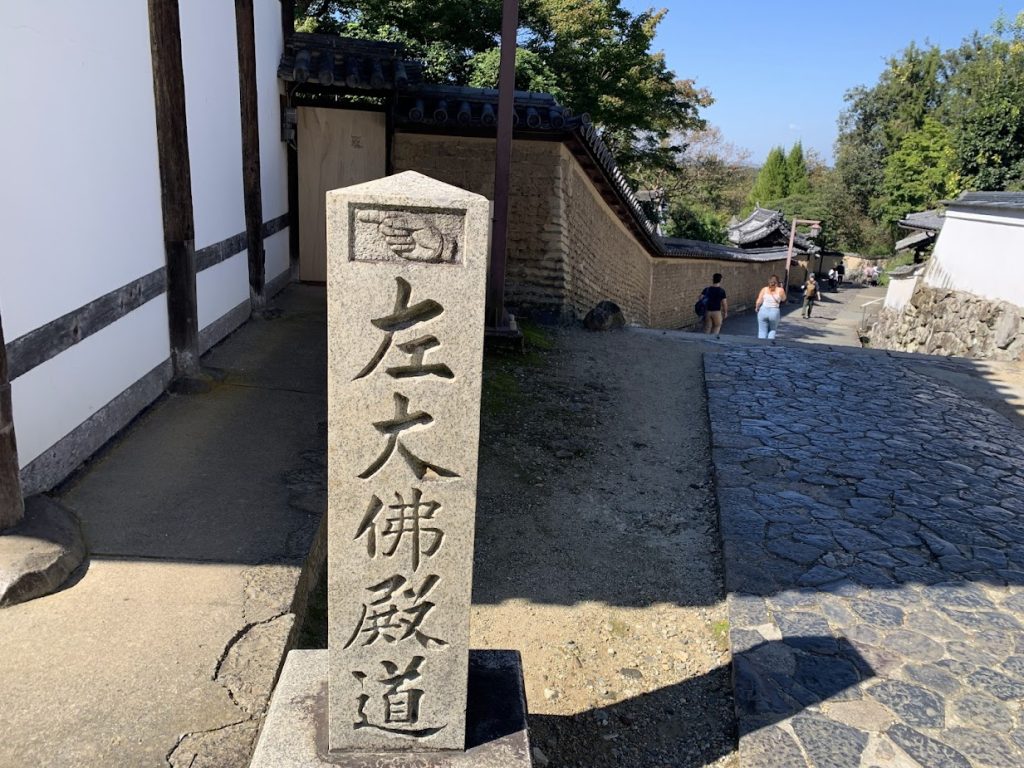
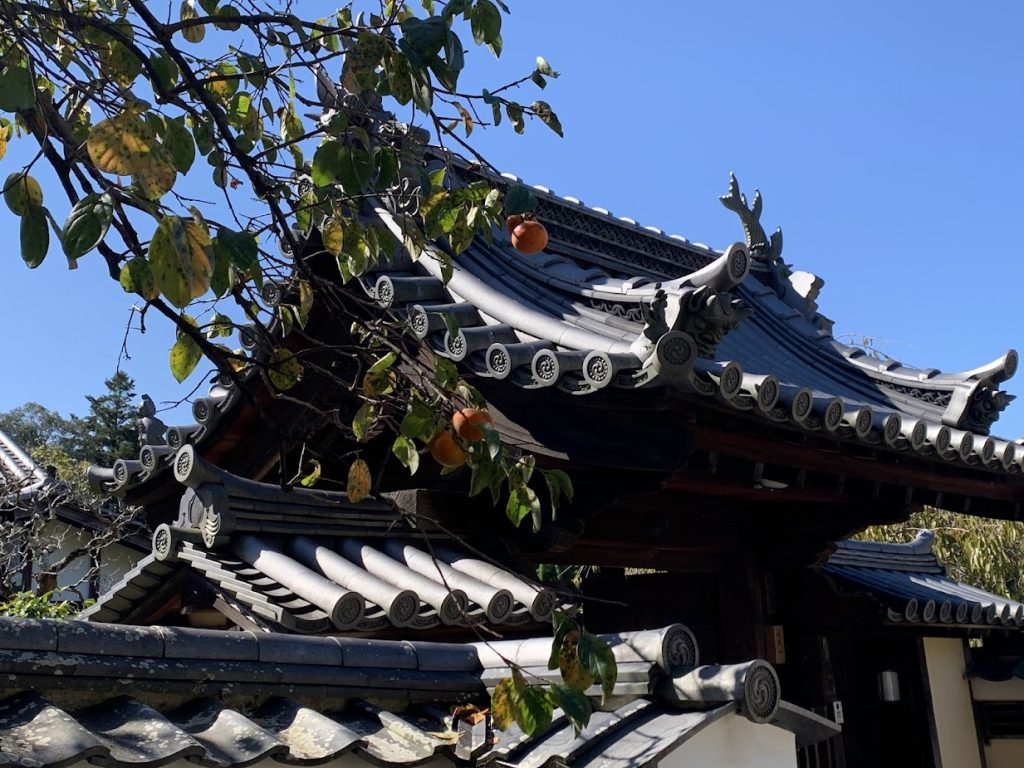
Hokkedo Hall (Sangatsudo)
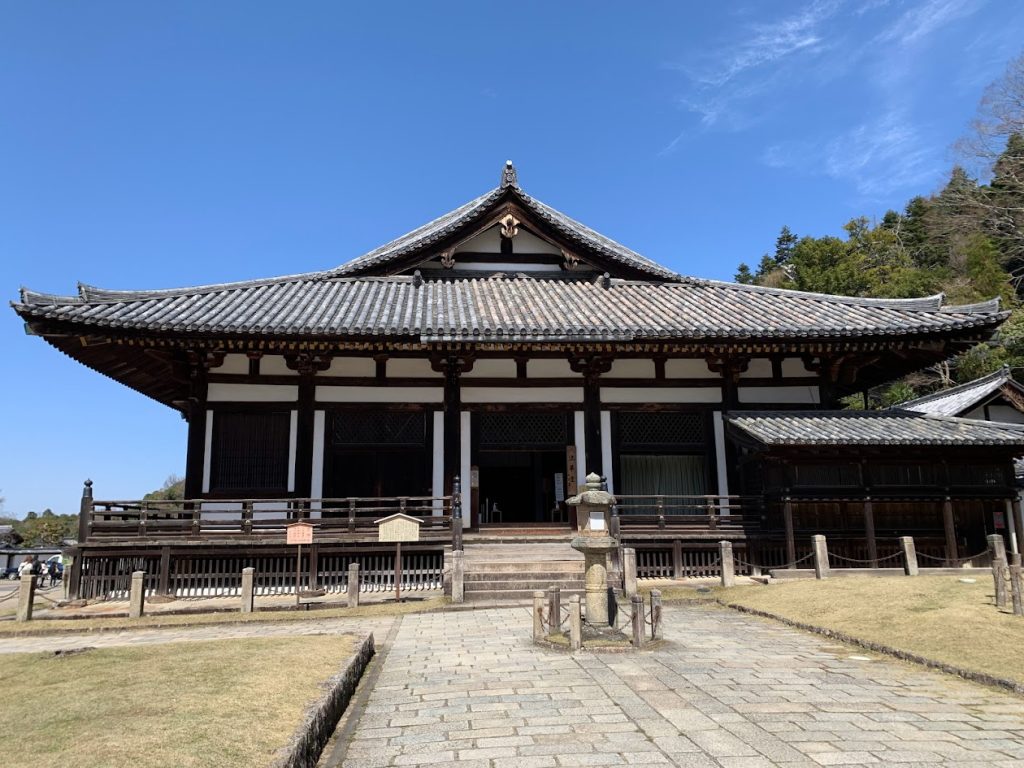
Hokkedo (Sangatsudo)
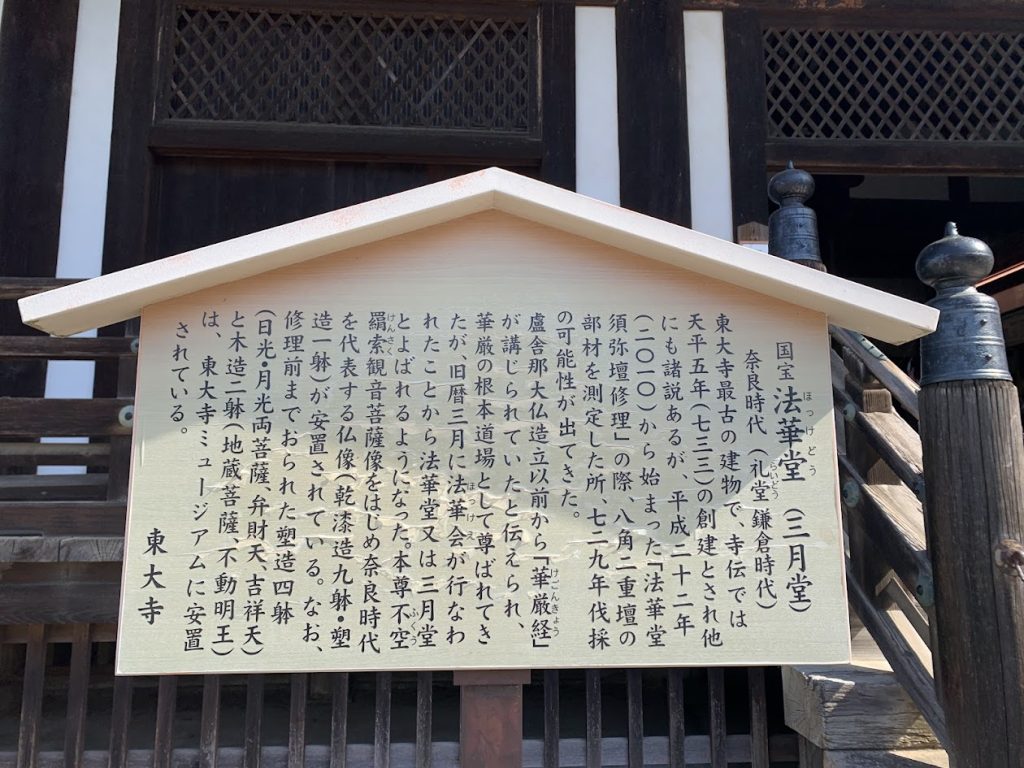
The Hokkedo is the oldest building in Todai-ji Temple, believed to have been constructed in 733.
It is also known as “Sangatsudo(The Hall of March)” because a Buddhist service called “Hokke-e” was held here in the third month of the lunar calendar.
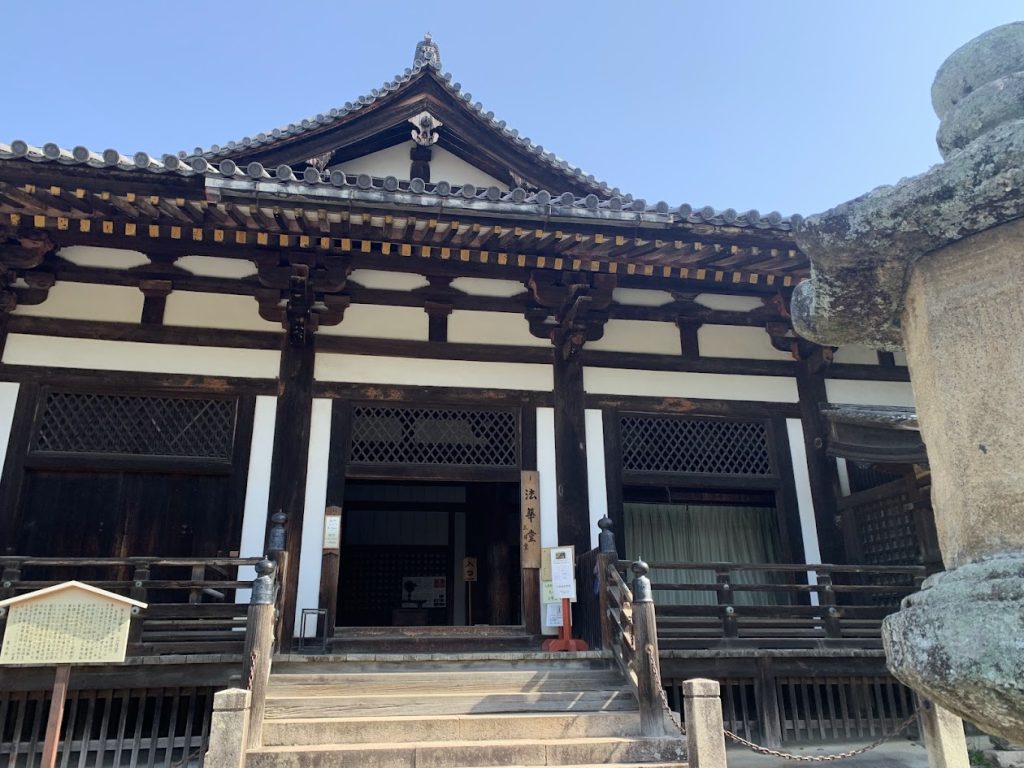
The architectural style of the Nara period is beautifully preserved.
Kaidando Hall
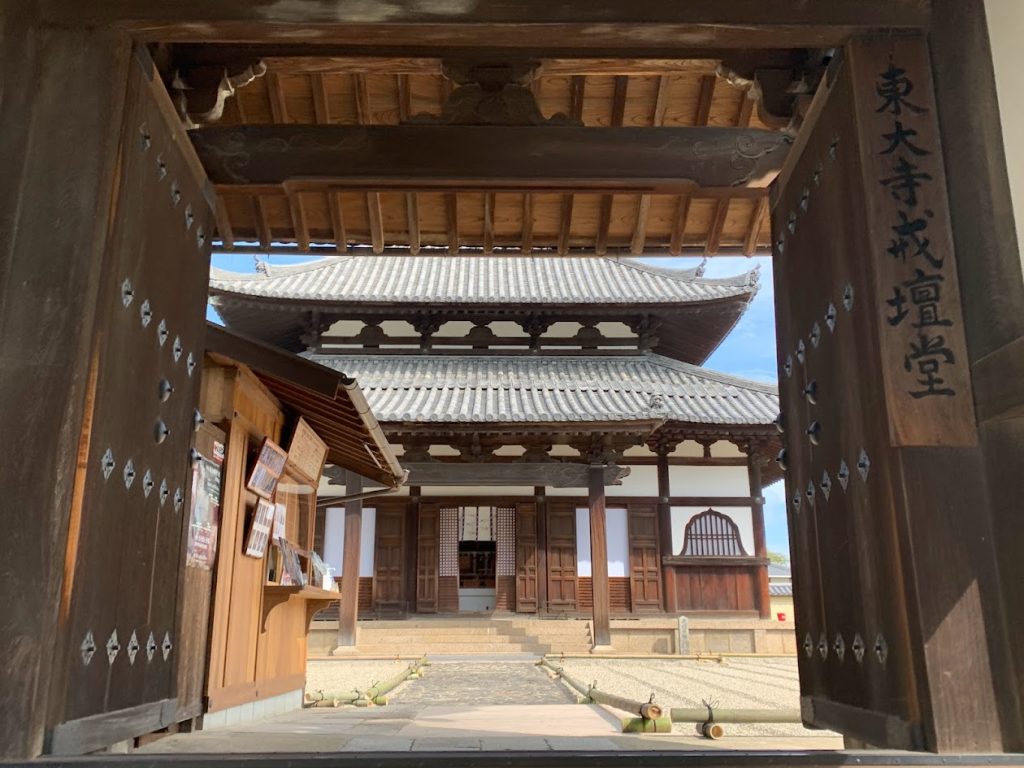
Kaidando (Ordination Hall)
The kaidan refers to the platform where the jukai (ordination) ceremony is conducted to give the precepts necessary for becoming a formal Buddhist monk.
In 754 AD, Emperor Shomu and Empress Komyo received their ordination from the respected monk Ganjin, who had been invited from Tang China.
This ceremony was held at a temporary kaidan set up for the occasion.
The following year, the Kaidando was constructed as Japan’s first permanent ordination hall.
Many monks have embarked on their spiritual journeys from this kaidan at Todai-ji Temple.
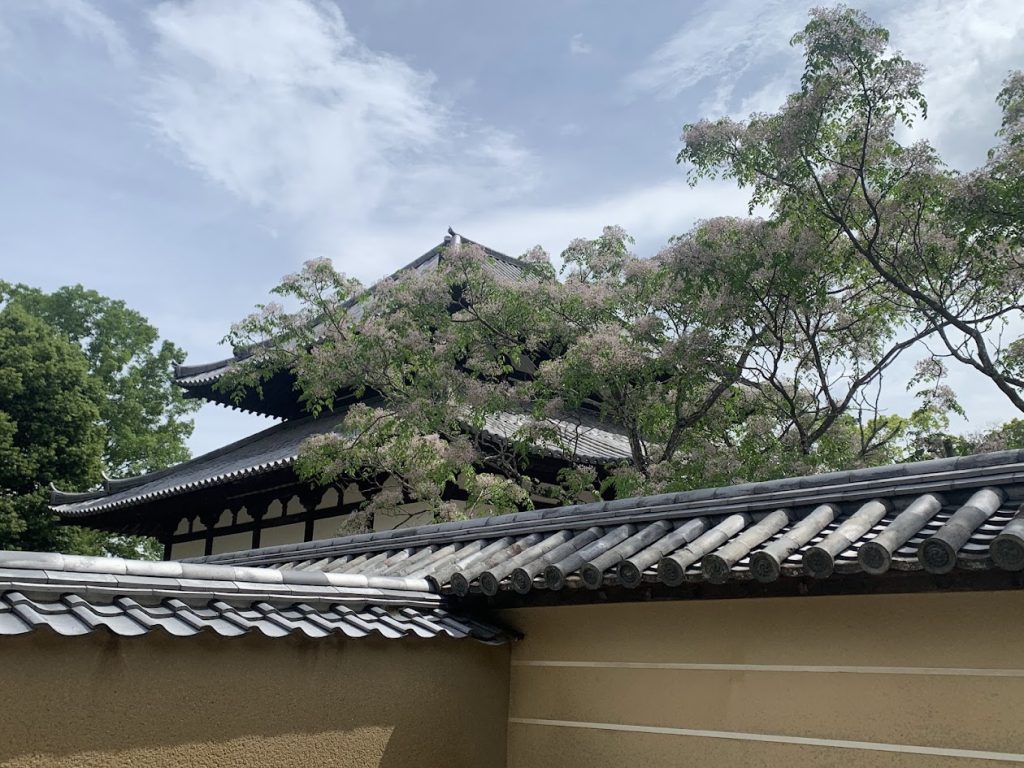
This view was captured in mid-May.
Sashizudo Hall
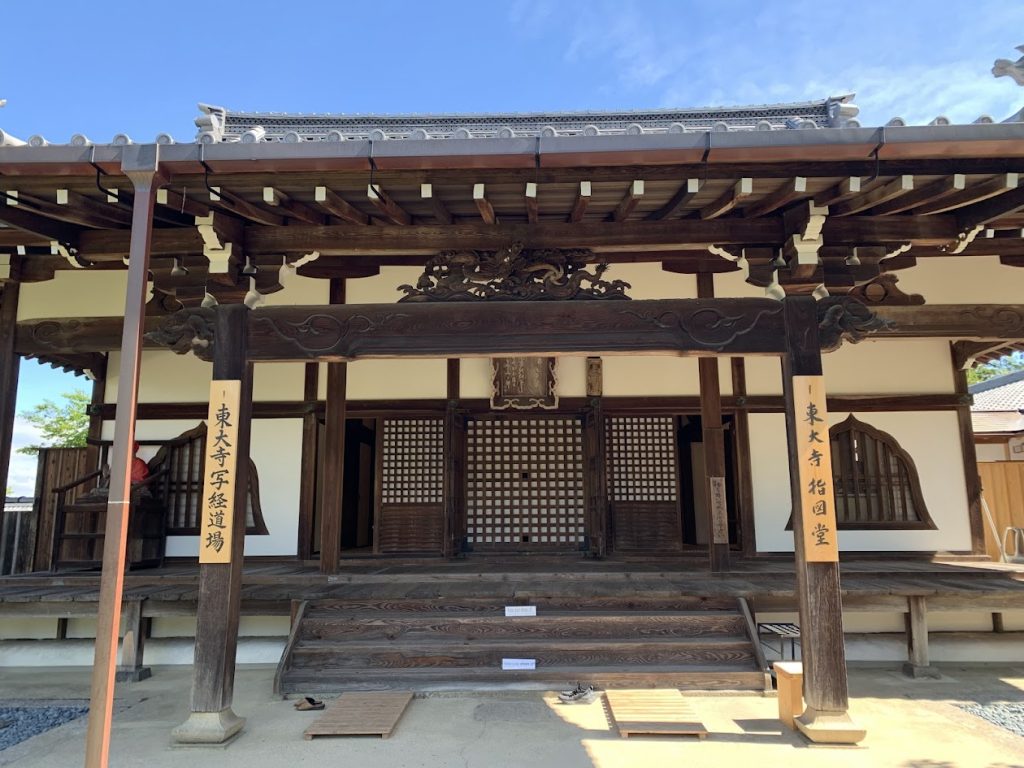
Sashizudo Hall, located to the west of the Todai-ji Daibutsuden Hall,
This hall was used for creating and preserving the architectural plans and restoration projects of Todai-ji Temple.
Today, there is a scriptorium next to it where you can participate in copying the Heart Sutra and other Todai-ji scriptures.”
Tegai Gate
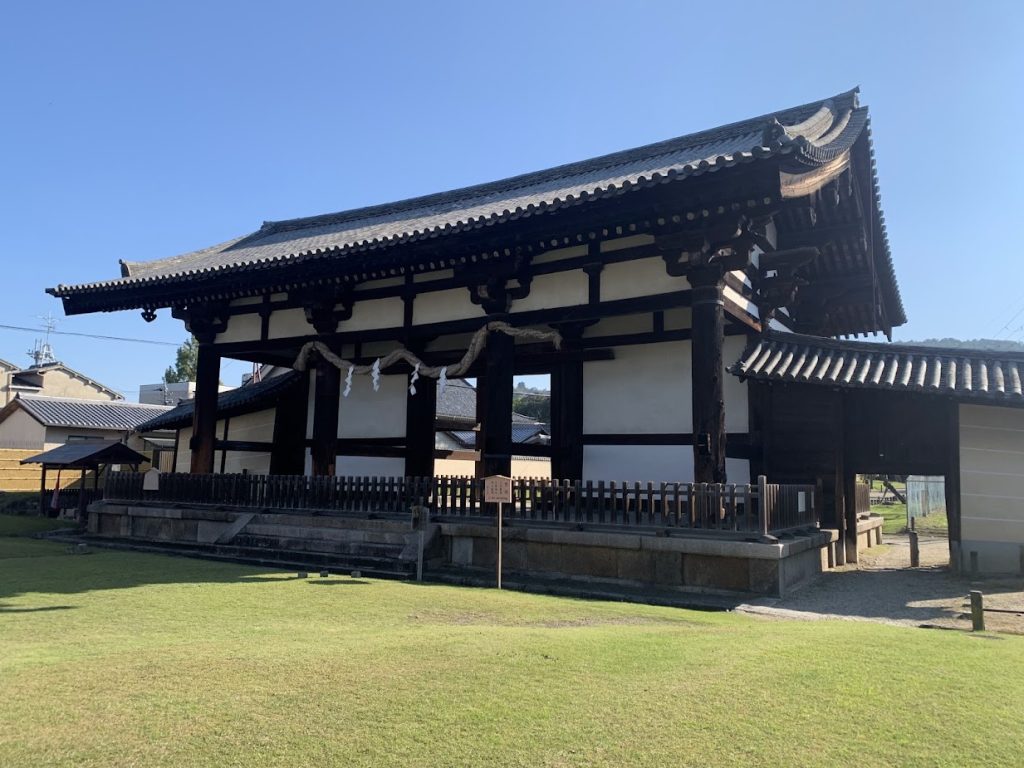
This is the Tangai Gate, a National Treasure.
From the location of the Daigokuden in Heijokyo, Ichijo Avenue extends east and west.
Heading east along this avenue brings you to this gate.
It measures 15 meters north to south, 7.73 meters east to west, and stands 11 meters tall.
While many buildings of Todaiji were lost in wartime fires, this gate, situated slightly apart from Todaiji’s main hall, escaped destruction.
Thanks to this, visitors can admire this precious structure from the Nara era.
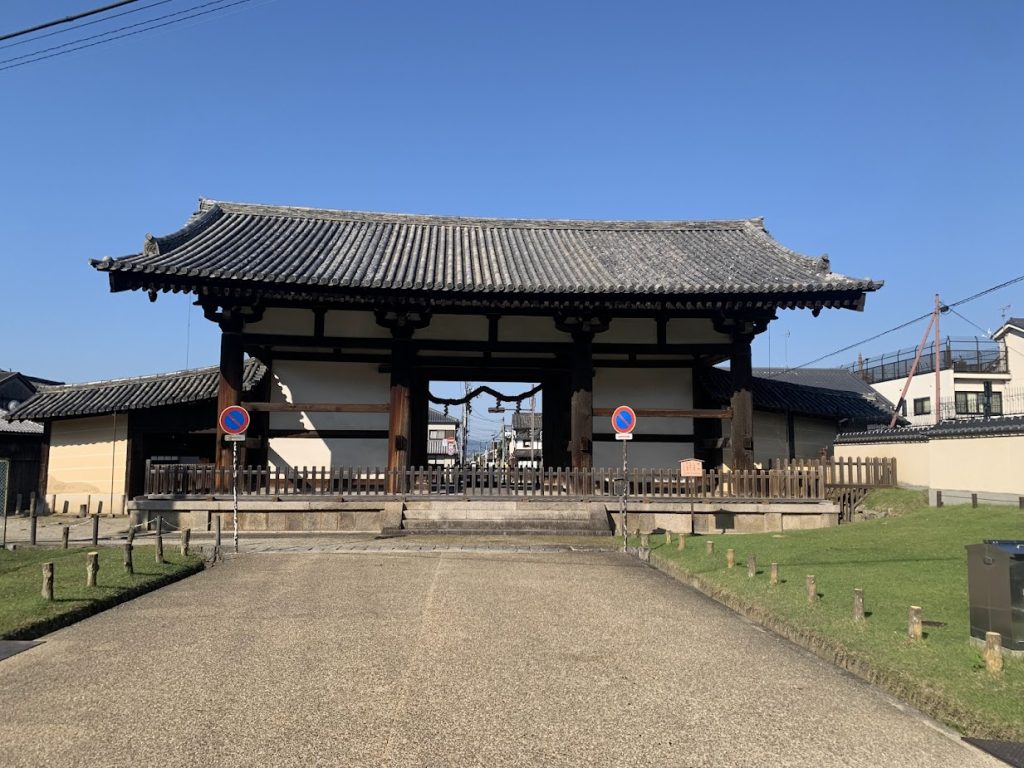
This photo was taken from inside the gate, facing the Heijokyo Palace to the west.
The road visible beyond the gate is Ichijo Avenue.
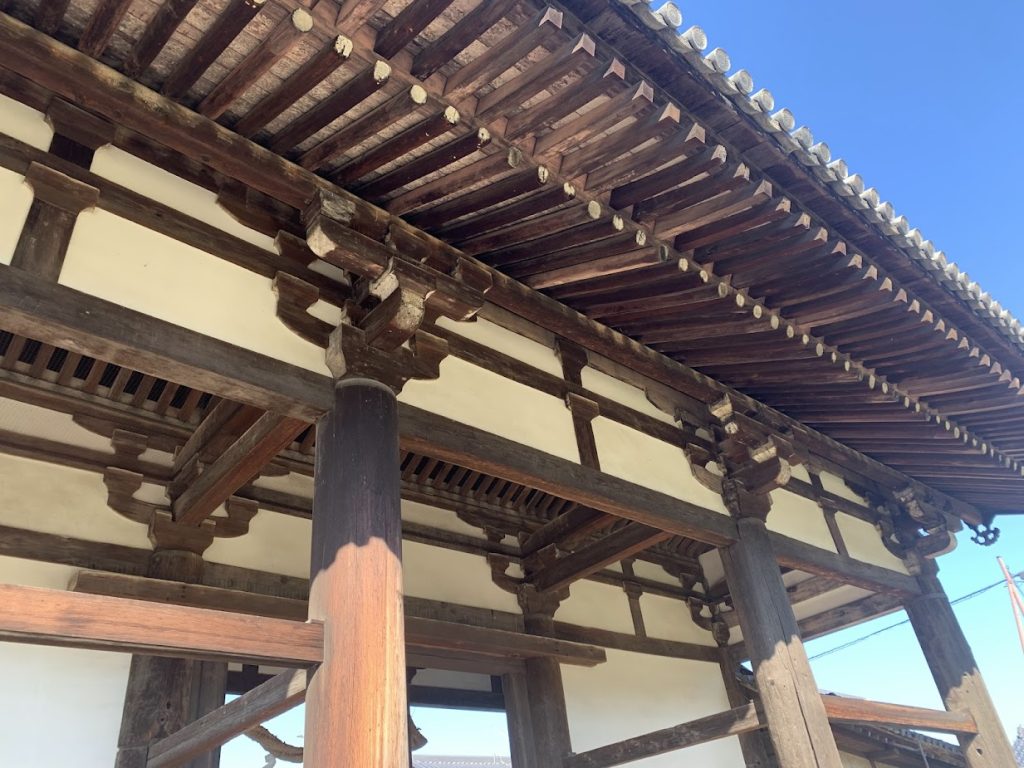
Many of Todaiji’s buildings were destroyed during a civil war, but most were rebuilt in the early Kamakura period.
During that time, the Tangai Gate also underwent repairs, mainly on the front side.
However, the back side shown in this photo retains much of its original Nara period style
Shosoin
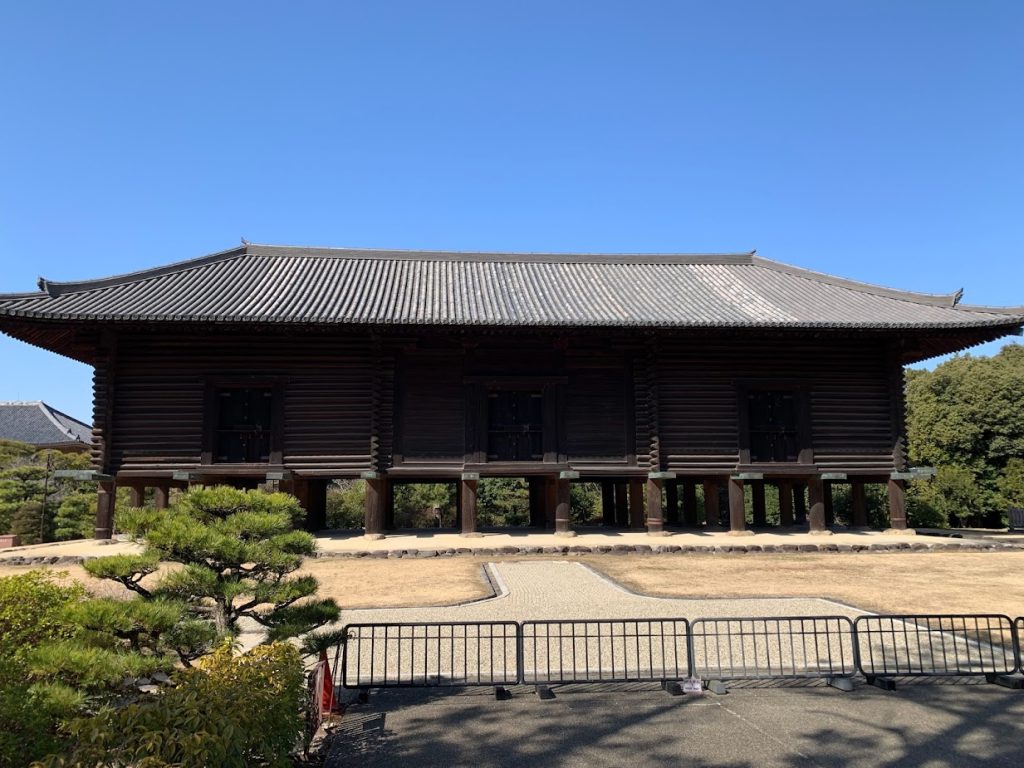
Shosoin
It is located behind (to the north of) the Todai-ji Daibutsuden Hall.
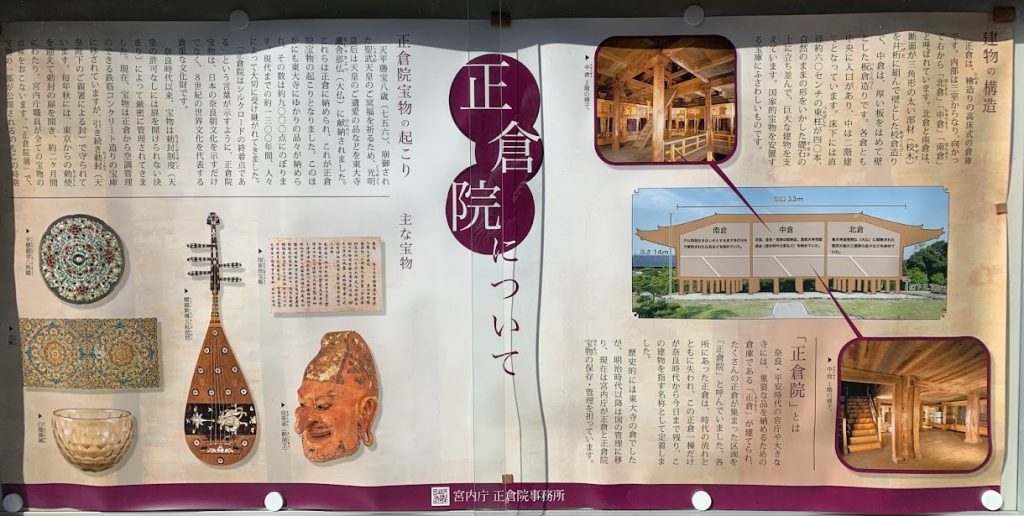
Shosoin is an elevated warehouse made of cypress wood. The interior is divided into three sections: the North, Central, and South Chambers.
It houses various cherished items of Emperor Shomu, who initiated the construction of the Great Buddha.
You can view the exterior from the location where this photo was taken on weekdays from 10 AM to 3 PM.
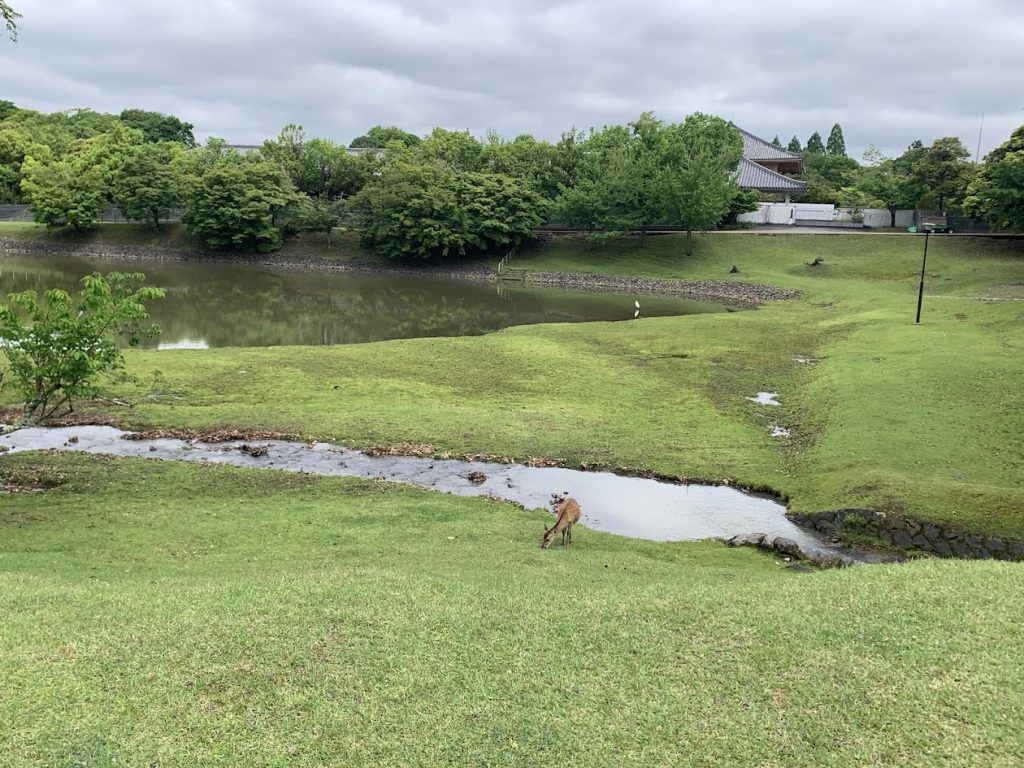
Daibutsu Pond
It is a pond located on the north side of Todaiji Temple, between the temple and Shosoin.
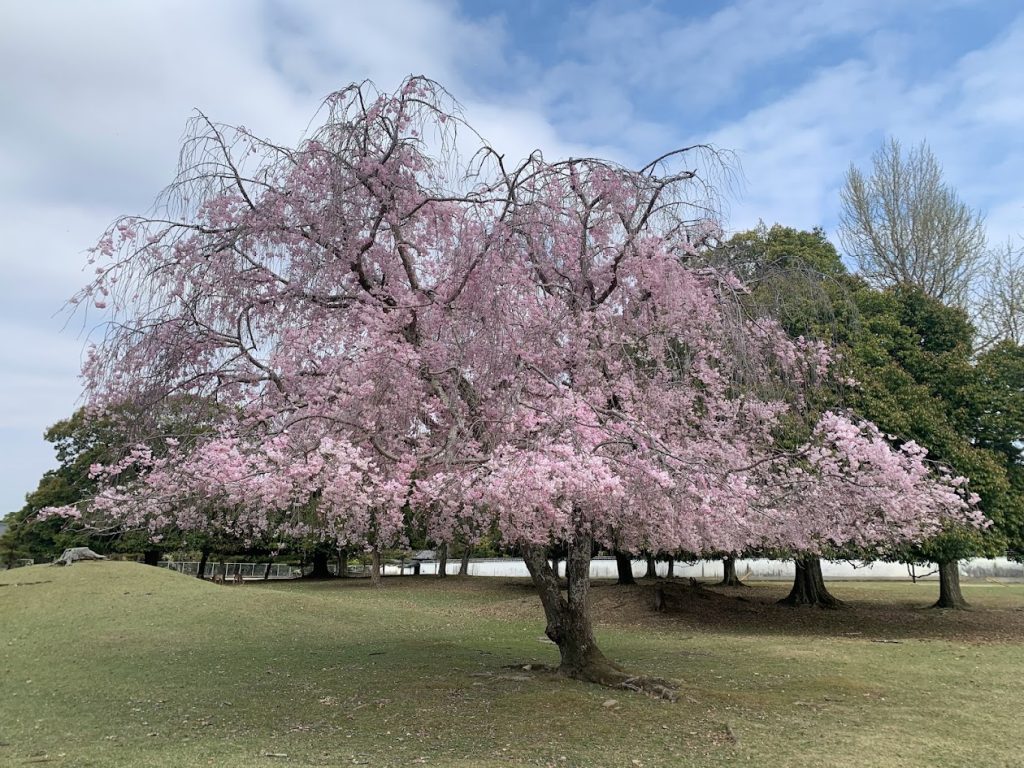
This is the “Okappa-zakura” cherry tree behind the Great Buddha Hall. The leaves up to about two meters from the ground have been neatly eaten—within reach of deer standing on their hind legs.
Statue of Gyoki Bosatsu
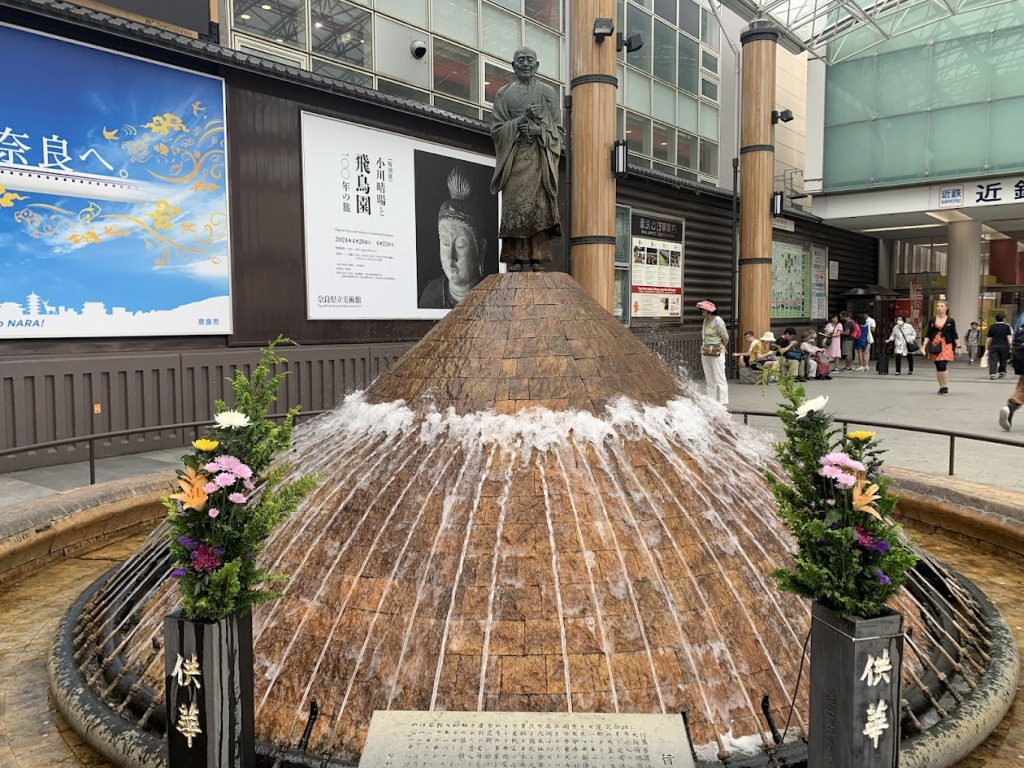
Statue of Gyoki Bosatsu in Front of Kintetsu Nara Station
Gyoki Bosatsu was born in 668 in Sakai City, Osaka Prefecture.
He traveled across the country, contributing significantly through the construction of bridges and ponds, as well as the establishment of medical facilities.
Emperor Shomu, aiming for the peace and prosperity of the country through the power of Buddhism, issued the imperial decree to build the Great Buddha.
However, securing funding and labor were challenges.
Gyoki used his charismatic leadership and popularity to successfully gather funds and people from across the country, leading to the successful completion of the Great Buddha in 752.
The statue of Gyoki Bosatsu stands facing Todai-ji Temple’s Daibutsuden Hall, located in front of Kintetsu Nara Station.

コメント