

Kofuku-ji Temple was originally founded in 669 by Fujiwara no Kamatari’s wife, who built Yamashina-dera (located in present-day Yamashina, Kyoto) to pray for her husband’s recovery from a serious illness.
The temple was later moved to Asuka (the capital at that time) and then relocated to Nara when the capital was moved to Nara. At that time, its name was changed to Kofuku-ji.
During the Nara and Heian periods, the Fujiwara clan, who held significant power, heavily supported and protected Kofuku-ji as their family temple. Later, during the Kamakura and Muromachi periods, both the Kamakura and Muromachi shogunates did not appoint a governor for Nara Province, and Kofuku-ji took on this role.
In the Edo period, the temple and Kasuga Taisha Shrine were granted a combined landholding of 21,000 koku of rice (one koku being the amount of rice consumed by one person in a year).
Five-Story Pagoda, East Golden Hall, Central Golden Hall
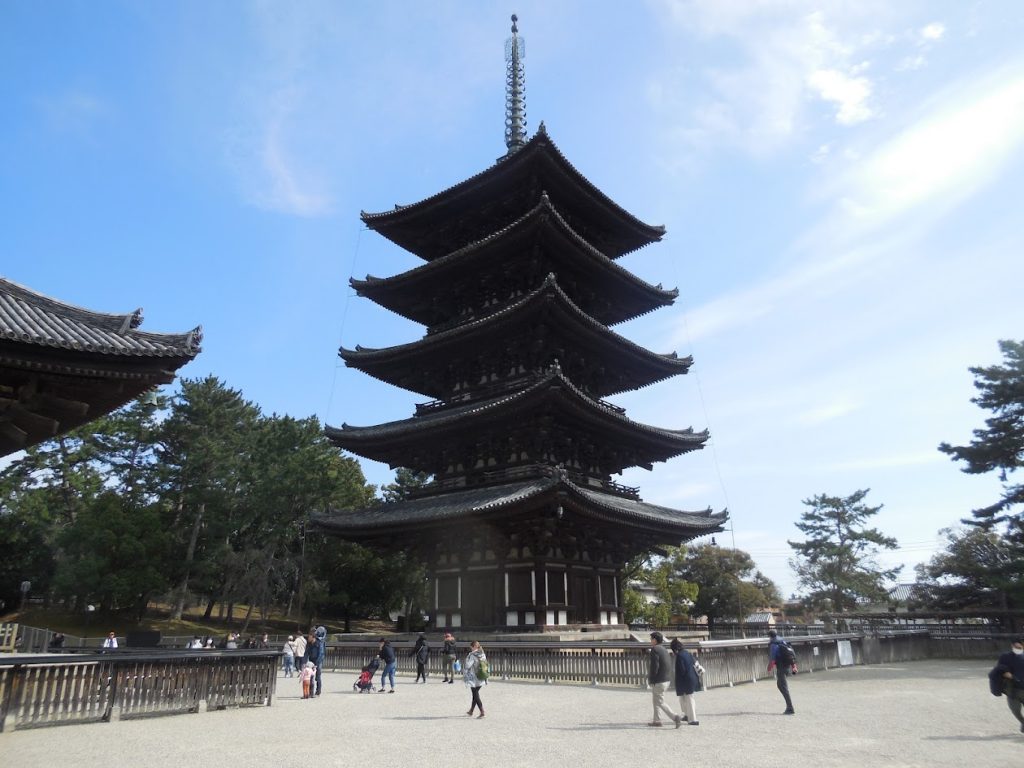
The Five-Story Pagoda at Kofuku-ji Temple (National Treasure)
The pagoda was originally built in 730 by Empress Komyo, the wife of Emperor Shomu and daughter of Fujiwara no Fuhito. After being destroyed and rebuilt five times, the current structure was reconstructed around 1426. The pagoda stands 45 meters tall.
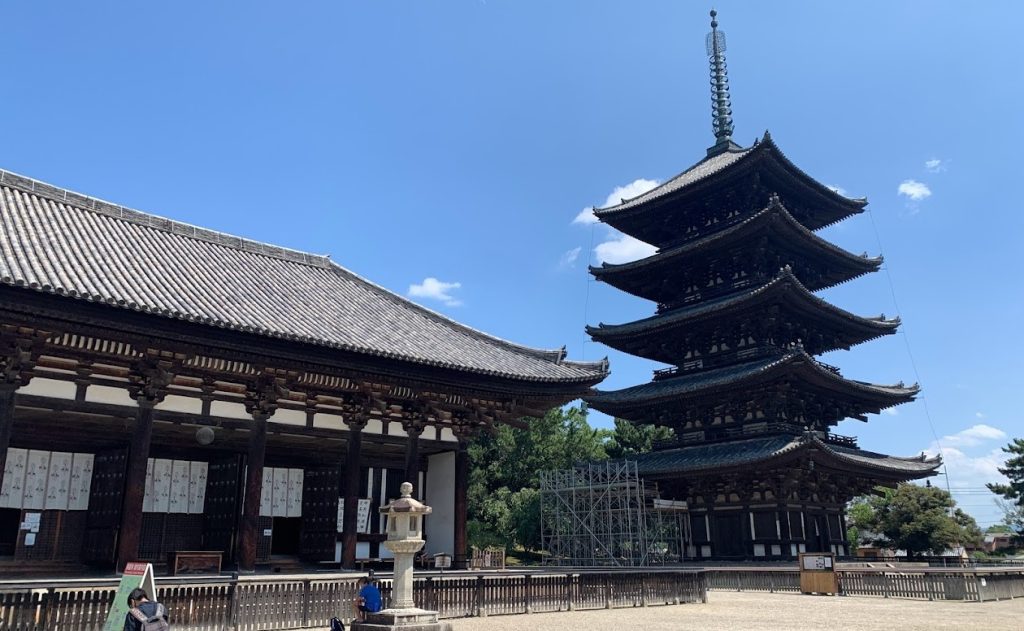
Due to deterioration of the roof and other parts, the pagoda will undergo its first major renovation in 120 years since the Meiji period. The restoration is scheduled to be completed in 2031.
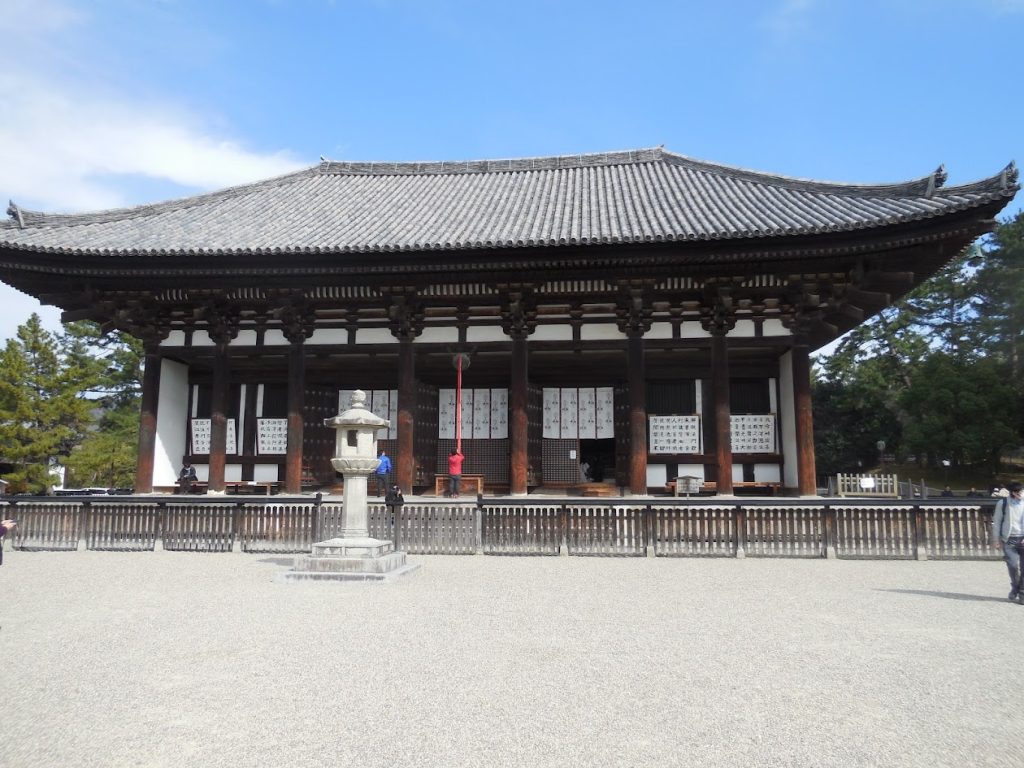
East Golden Hall (National Treasure)
The East Golden Hall was originally built in 726 by Emperor Shomu. After being damaged and rebuilt five times, the current structure was completed in 1415.
Although it is a reconstruction, the hall retains much of the atmosphere of the Nara period.
Inside the hall, the main image of worship is a seated statue of Yakushi Nyorai (the Medicine Buddha).
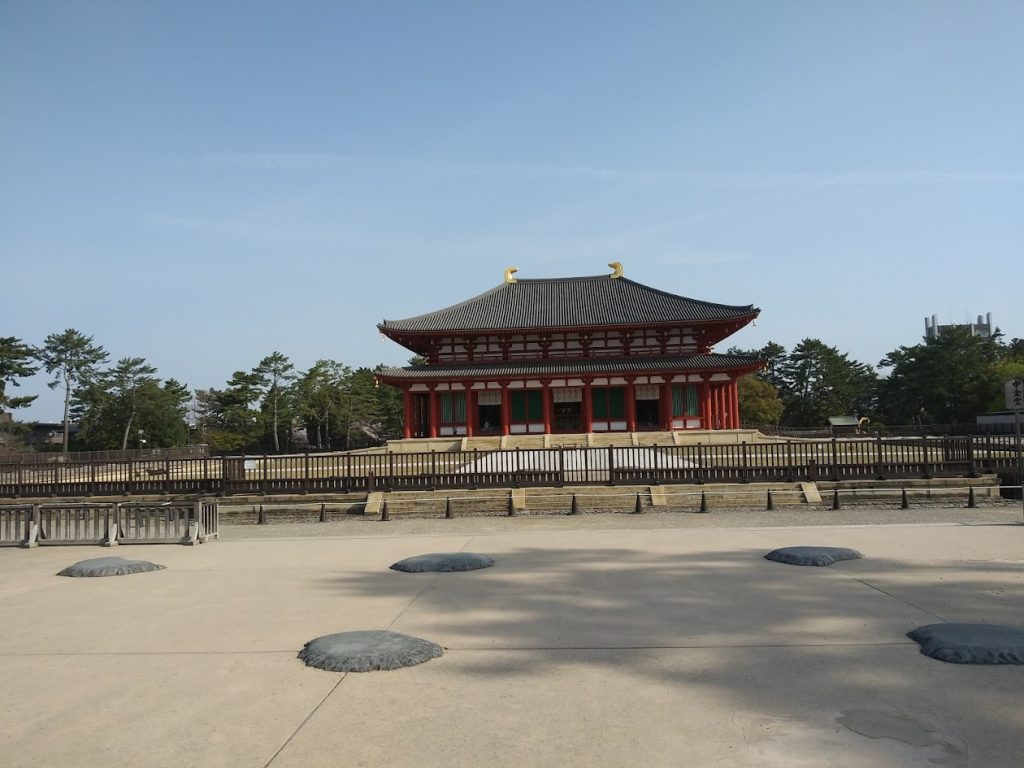
Central Golden Hall
The Central Golden Hall is the most important building at Kofuku-ji Temple, serving as its main structure.
The current hall was restored in 2018.
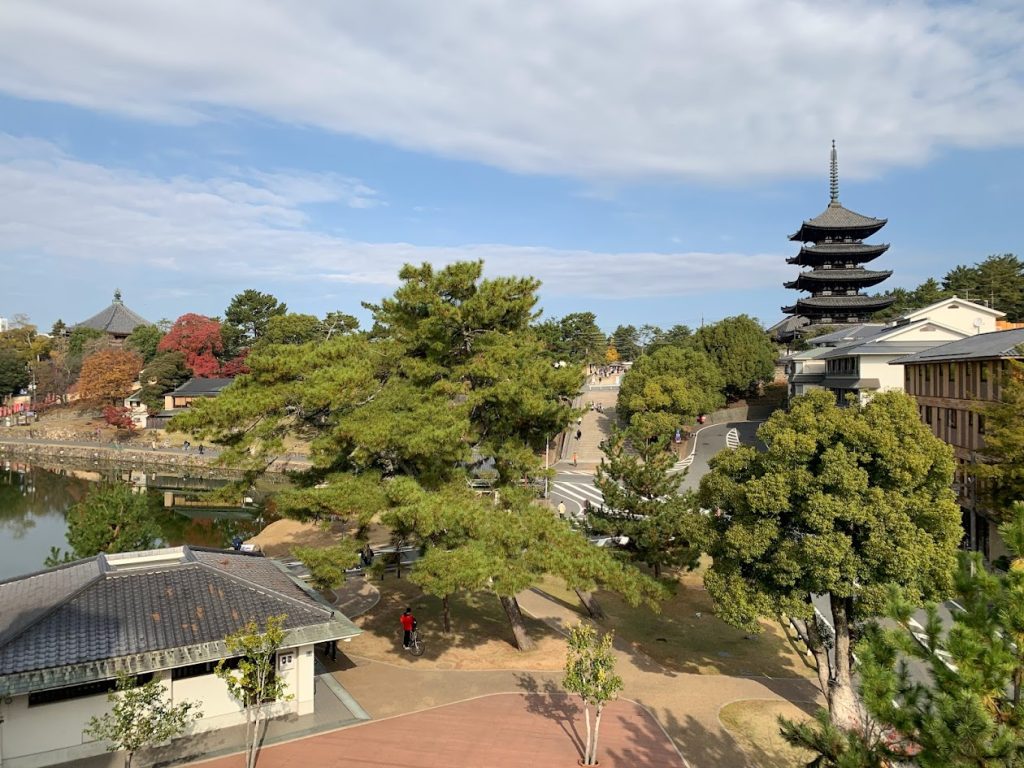
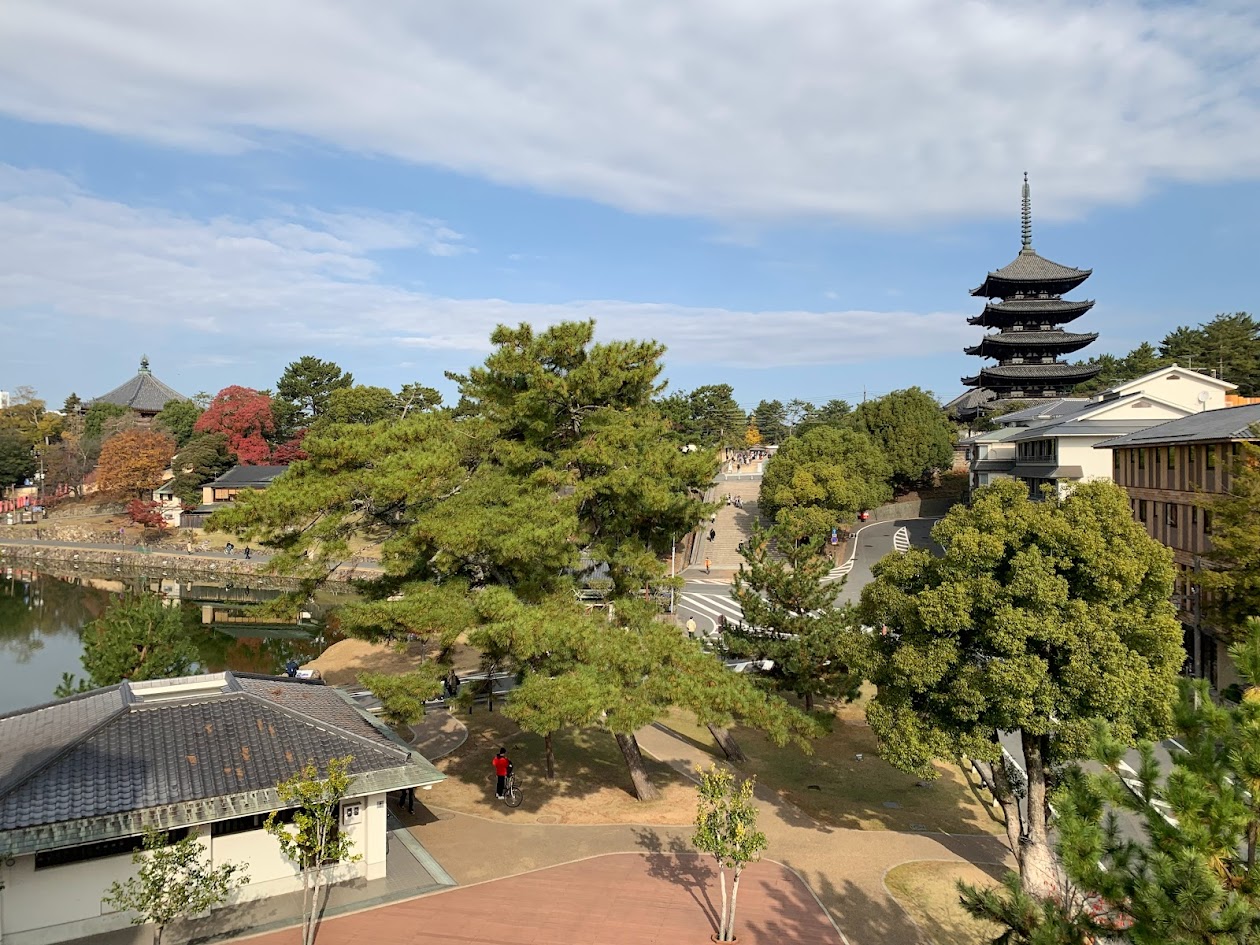
Distant View of Kofuku-ji temple’s Five-Story Pagoda
To the left, you can see Sarusawa Pond, with the pointed roof of the South Octagonal Hall (Nanendo) visible above it.
The staircase in the center of the photo is called “Gojuni-dan” (Fifty-Two Steps), named for its 52 steps.
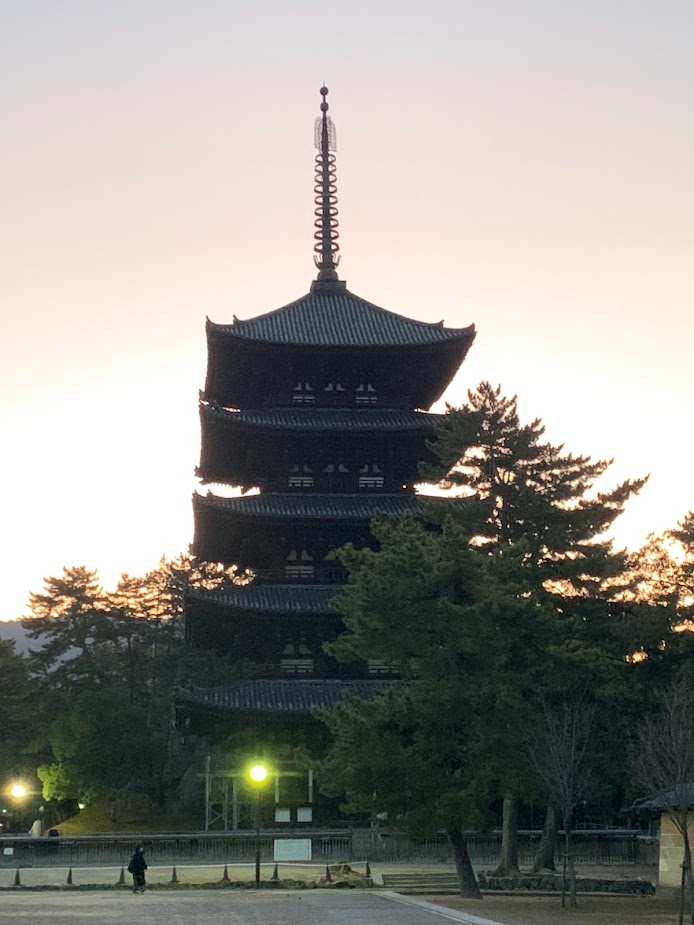
Dawn at the Five-Story Pagoda
The sun rises from behind Kasuga-yama Mountain and Wakakusa-yama Mountain to the east.
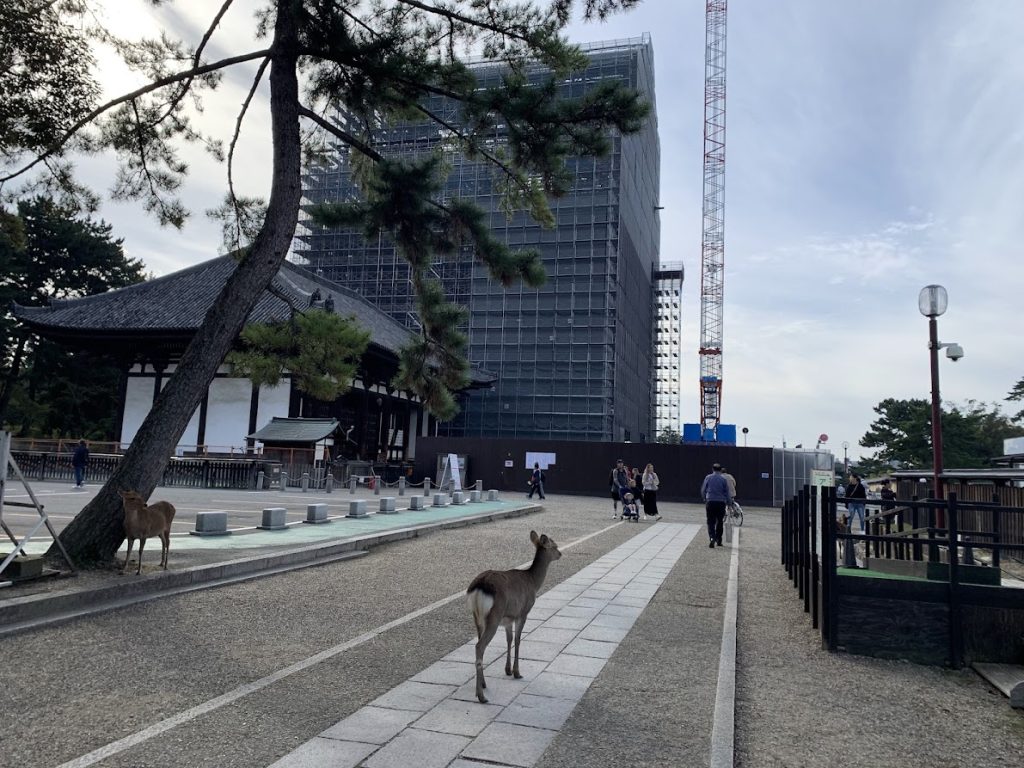
Unfortunately, a large-scale preservation and repair project is currently underway for the five-story pagoda, the first of its kind in 120 years. The completion is scheduled for spring of 2031.
South Octagonal Hall

South Octagonal Hall
The South Octagonal Hall attracts many visitors as the 9th temple of the Saigoku Thirty-Three Kannon Pilgrimage.
Established in 813, the current structure is the fourth, rebuilt in 1789.
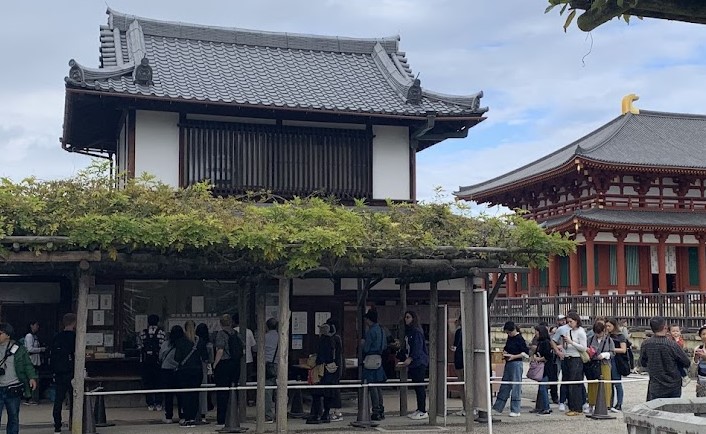
A line of people waiting to receive goshuin Goshuin—temple or shrine stamps—are also popular among international visitors.
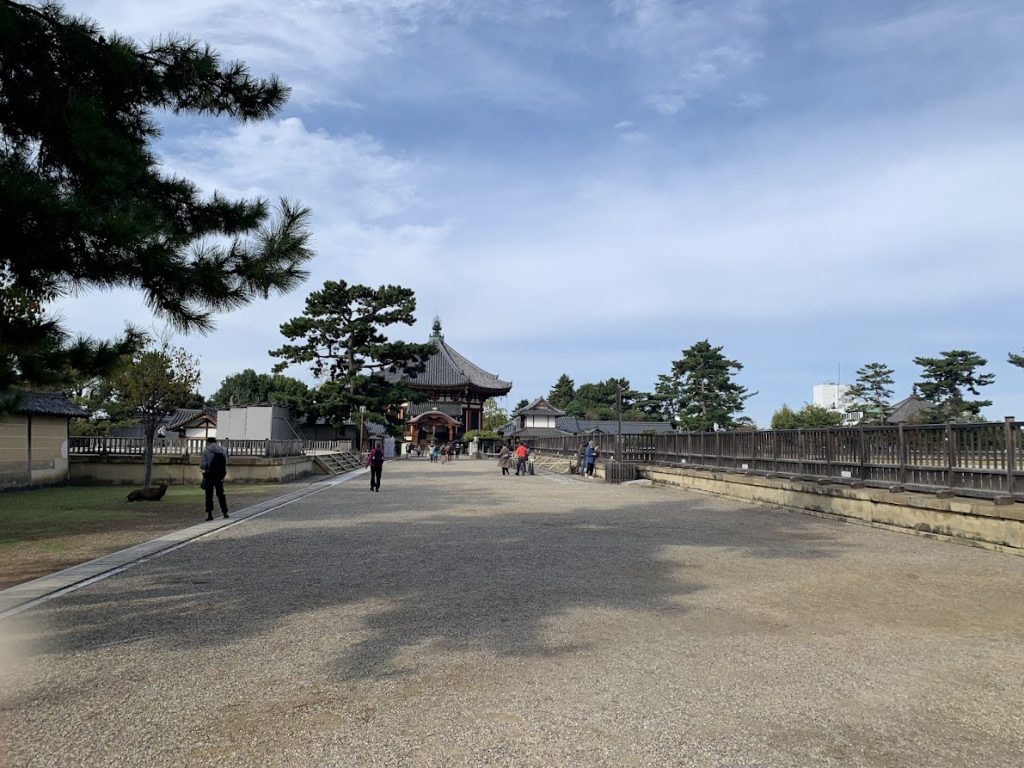
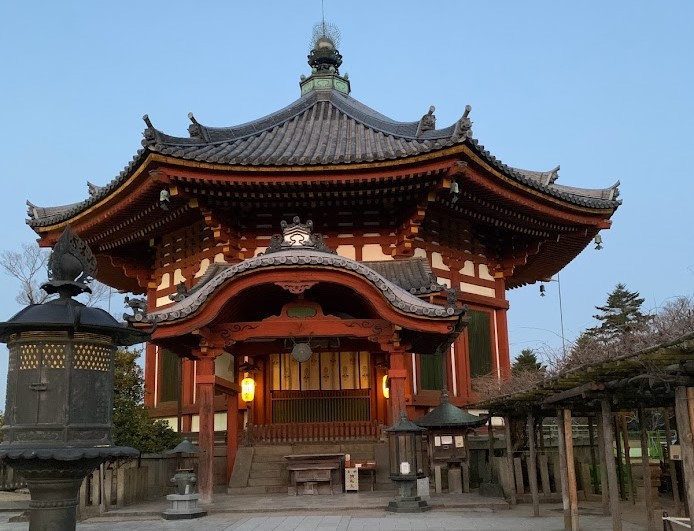
Front View of the South Octagonal Hall
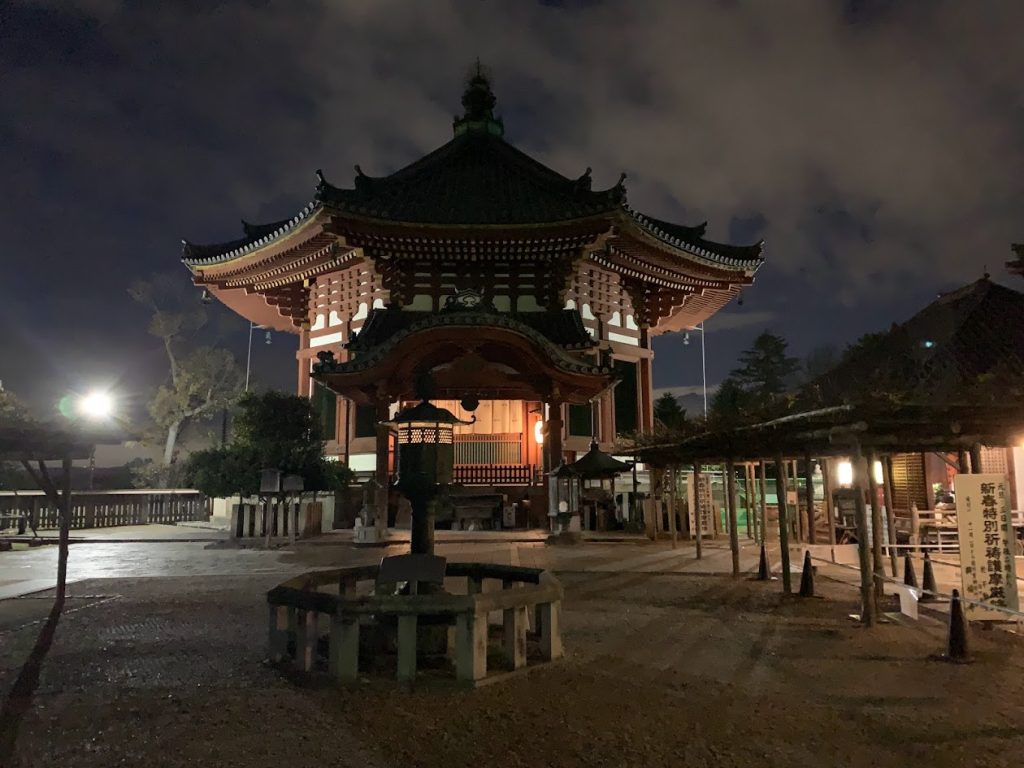
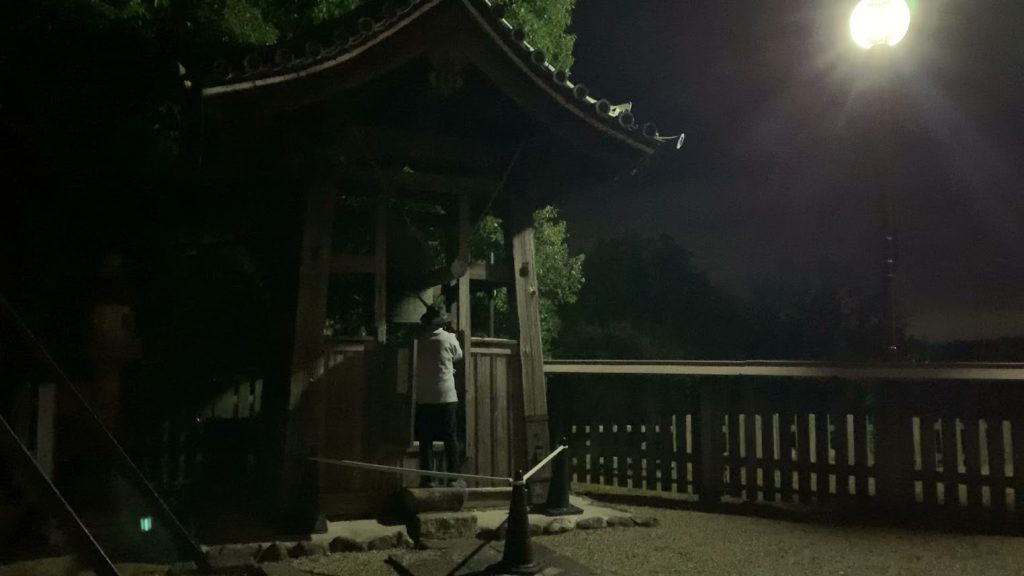
The Winter Morning Bell at the South Octagonal Hall
The bell is struck three times daily at 6 a.m., noon, and 6 p.m.
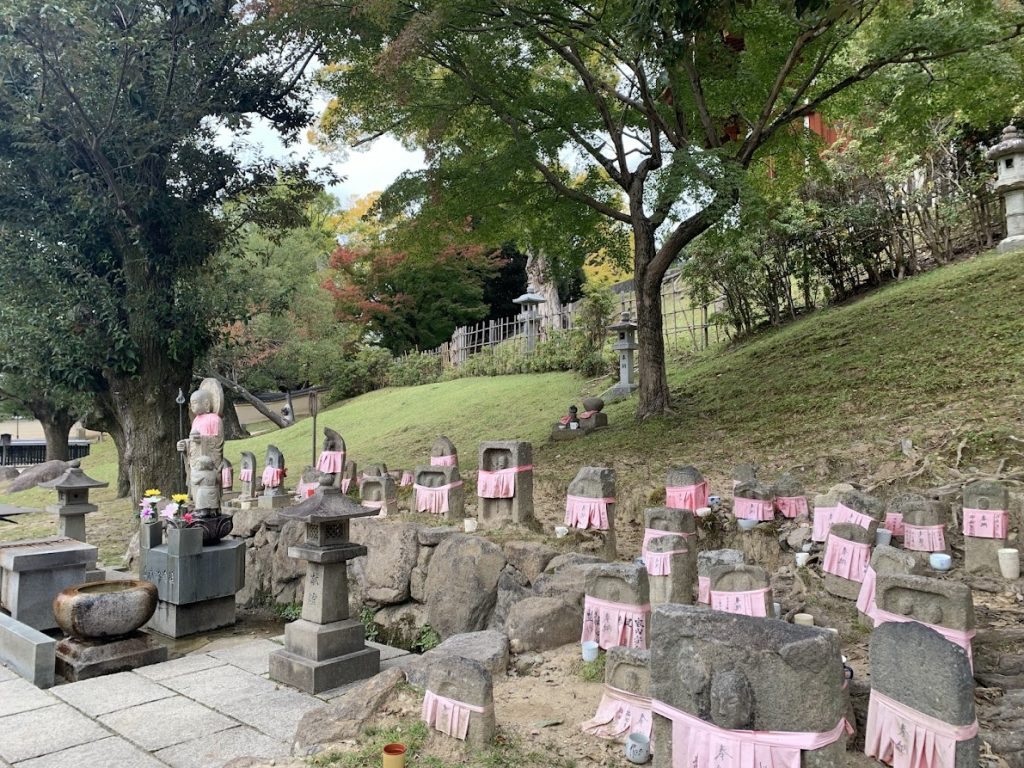
Jizo statues standing quietly south of the Nanen-do Hall
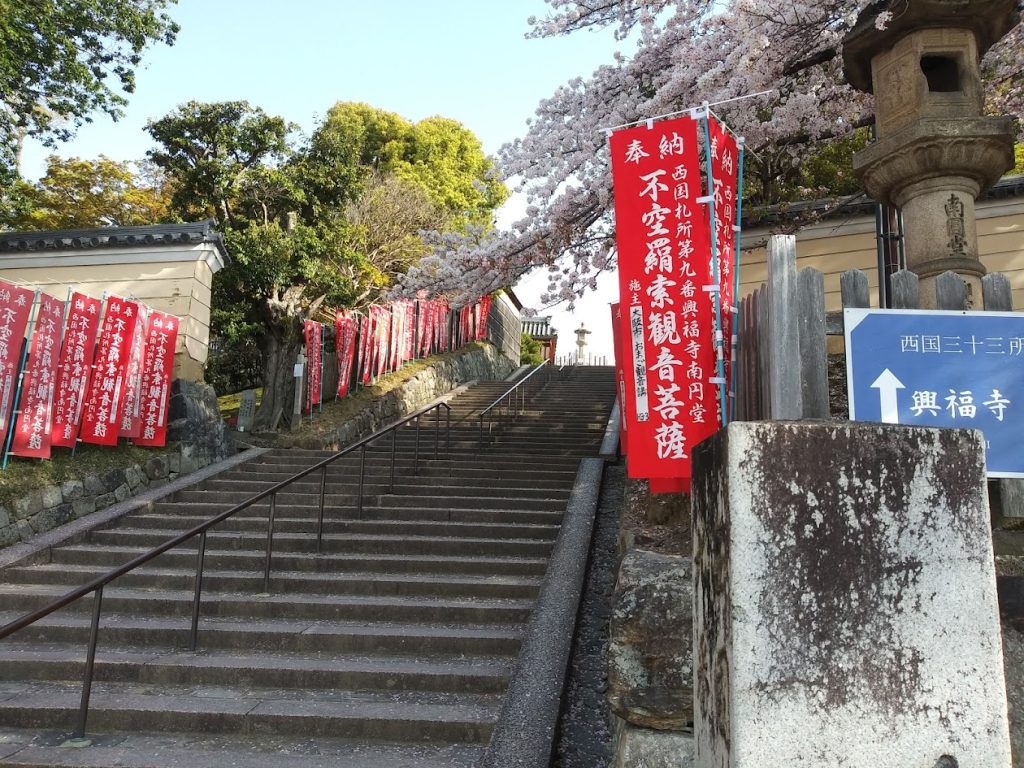
The Staircase from Sarusawa Pond to the South Octagonal Hall
It is cherry blossom season.
The main deity of the South Octagonal Hall is the Wooden Fuku Kensaku Kannon Bosatsu. This statue, crafted during the Kamakura period using the yosegi-zukuri (joined wood) technique, is designated as a National Treasure. The Kannon holds a net (ken saku) in its hand, symbolizing the wish to ensure that people’s desires are not in vain and representing great compassion.
Three-Story Pagoda

Three-Story Pagoda (National Treasure)
Established in 1143, the pagoda was destroyed by fire in 1180 but was soon rebuilt. Along with the North Octagonal Hall, it is one of the oldest buildings at Kofuku-ji Temple. One of the great aspects of Nara is the opportunity to see National Treasures up close while strolling through the park.
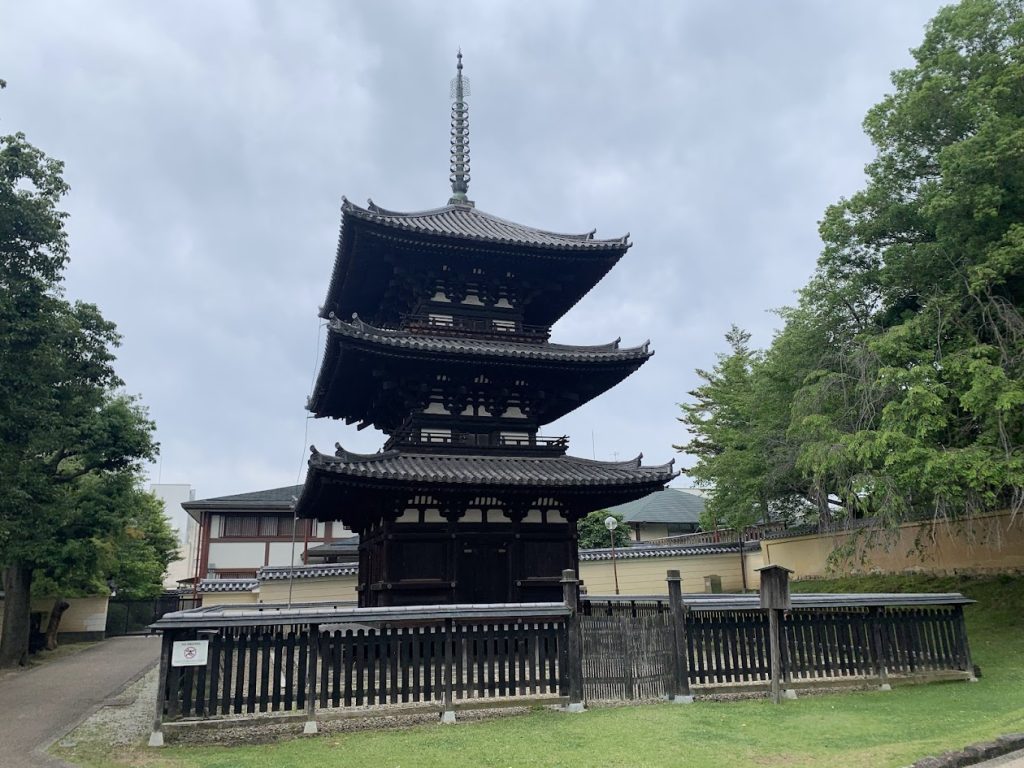
The North Octagonal Hall (Hokuen-do)
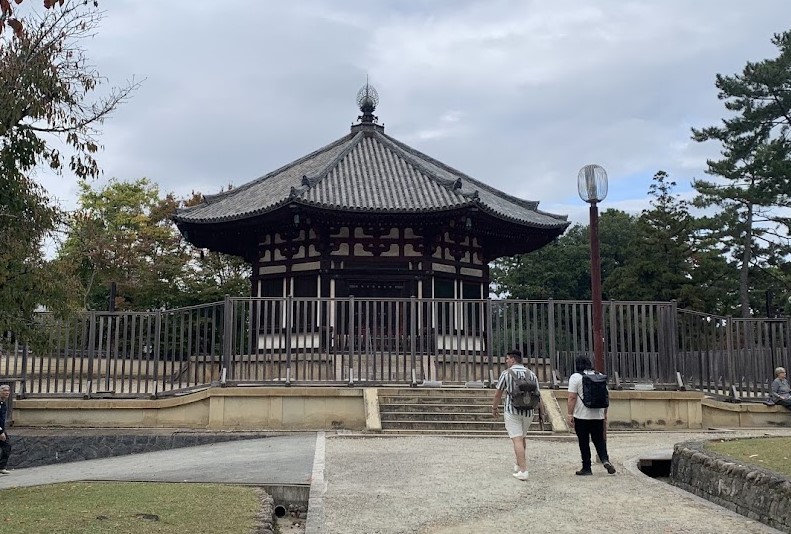
Hokuen-do (National Treasure)
Kofukuji National Treasure Museum, Main Temple Building

The Kofuku-ji National Treasure Museum is situated next to the East Golden Hall.
It houses an extensive collection of the temple’s National Treasure statues, with the Ashura Statue being particularly notable.
If you have an interest in Buddhist statues, this museum is highly recommended.
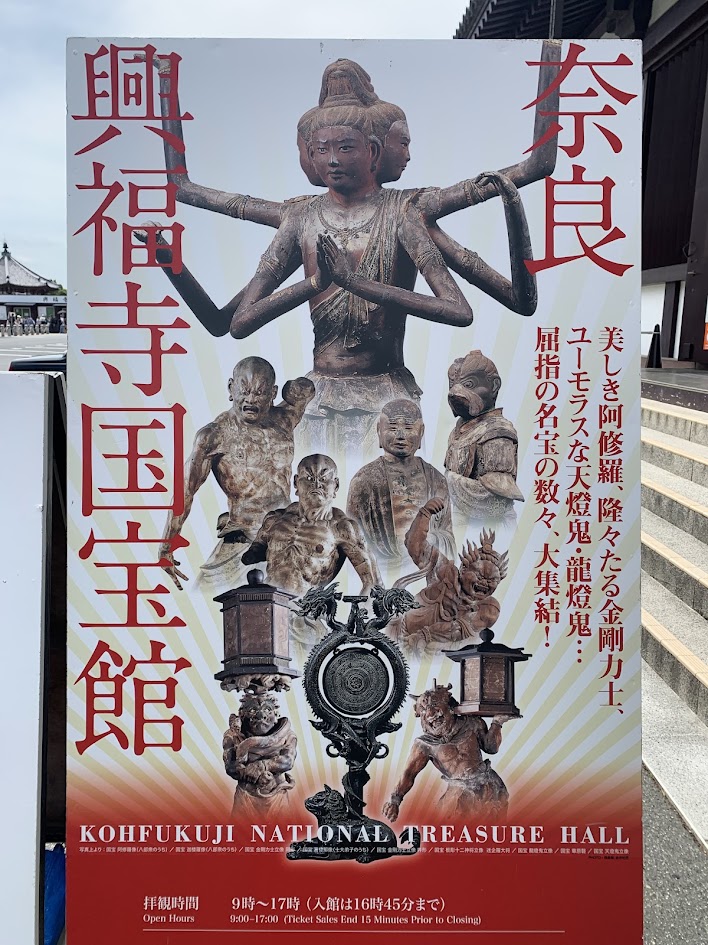
The signboard in front of the National Treasure Museum features a photo of the Ashura Statue at the top center.
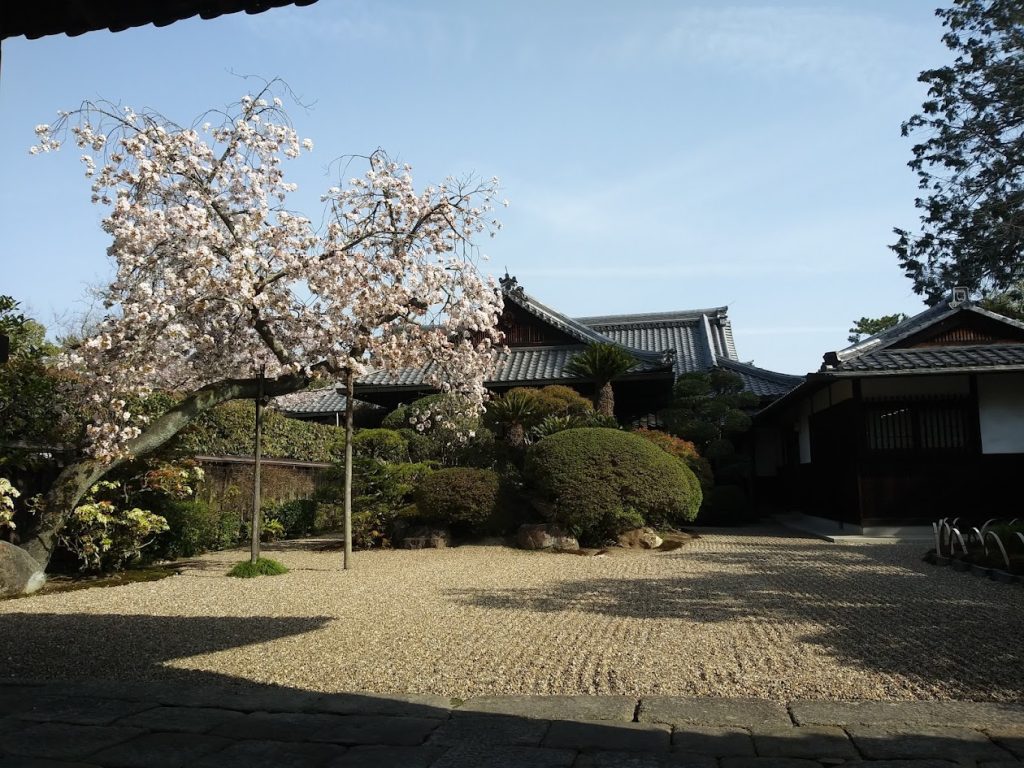
Main Temple Buildings
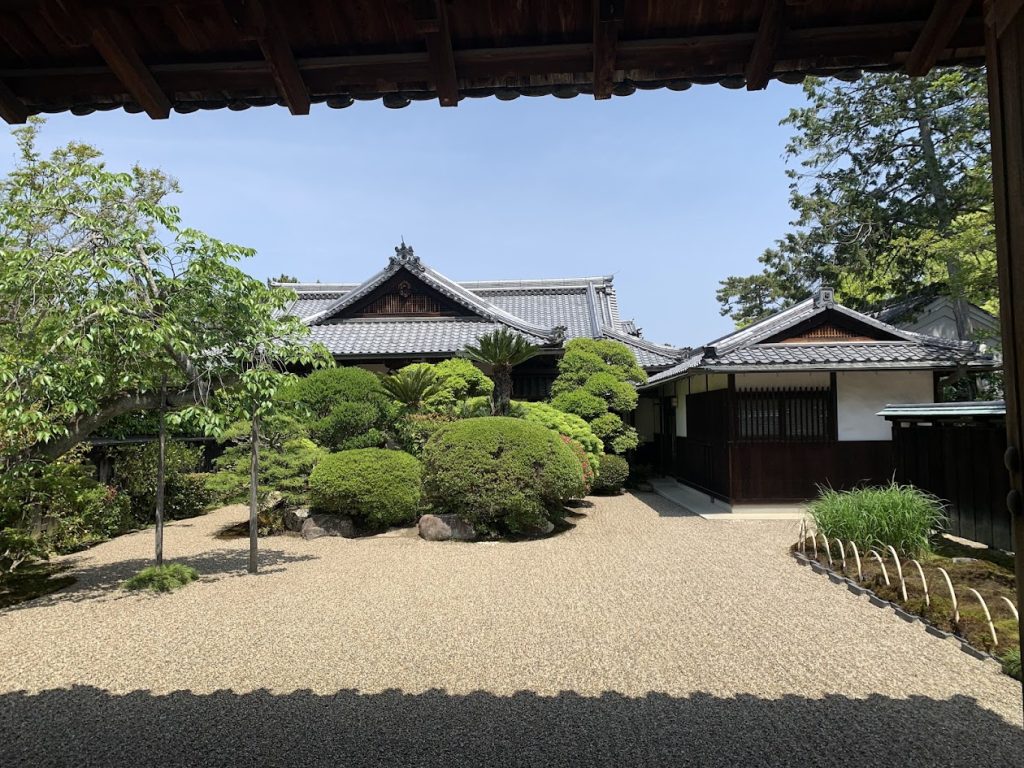
The Kofuku-ji Head Priest’s Residence (Honbo) surrounded by fresh greenery in mid-May.
コメント