

When thinking of Kasuga Taisha Shrine, deer, stone lanterns, and wisteria blossoms come to mind.
Around 1,300 years ago, Kasuga Taisha Shrine was founded by welcoming the deity Takemikazuchi-no-Mikoto from Kashima Taisha Shrine in Ibaraki Prefecture, praying for Japan’s prosperity and the happiness of its people.
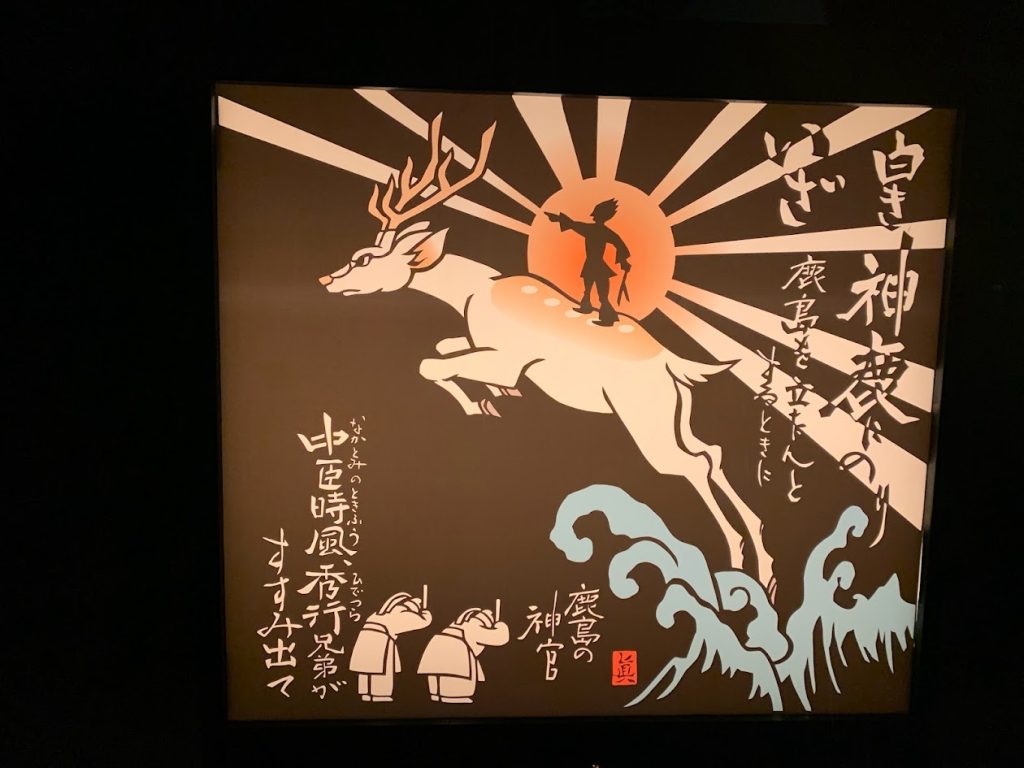
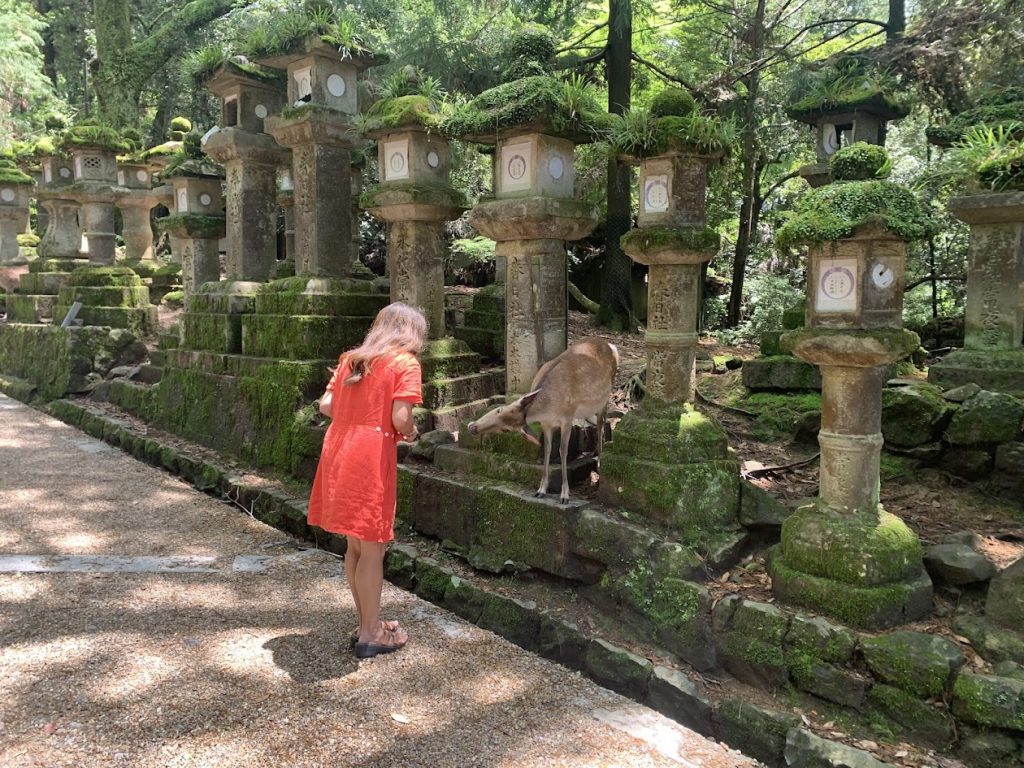
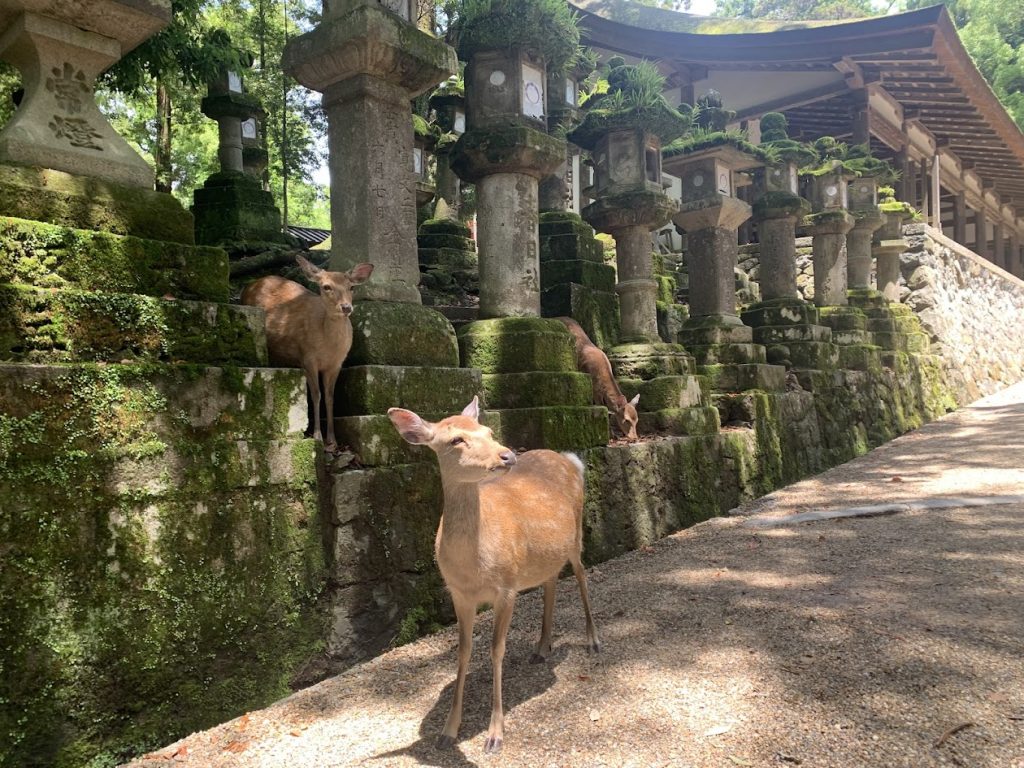
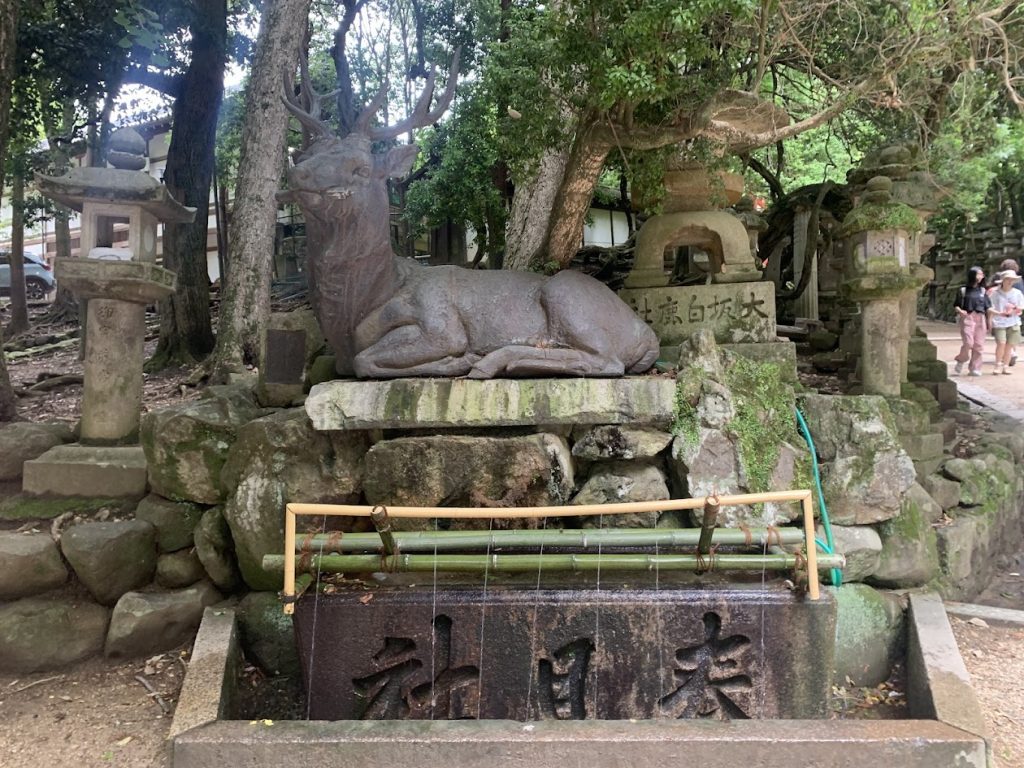
Takemikazuchi-no-Mikoto descended on the sacred Mount Mikasa, behind the Shrine, riding on the back of a white deer. Since then, deer have been cherished and protected as messengers of the deities.
For 1,300 years, the town of Nara has been a place where people and deer live together in harmony.
The shrine buildings were completed in the year 768.
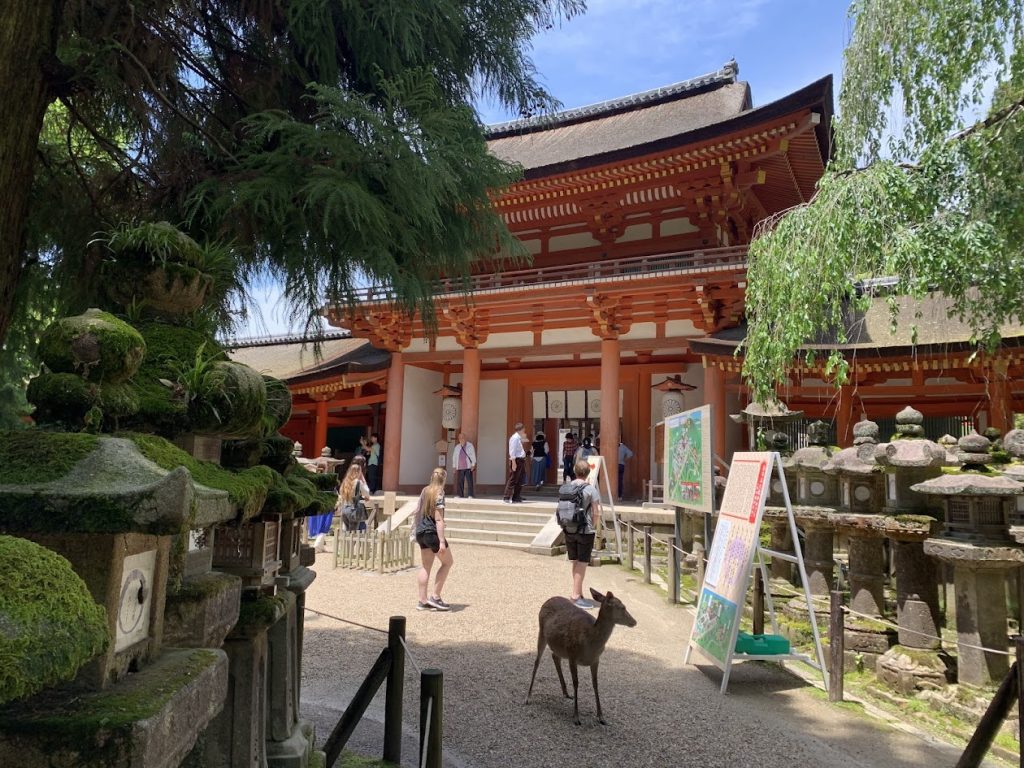
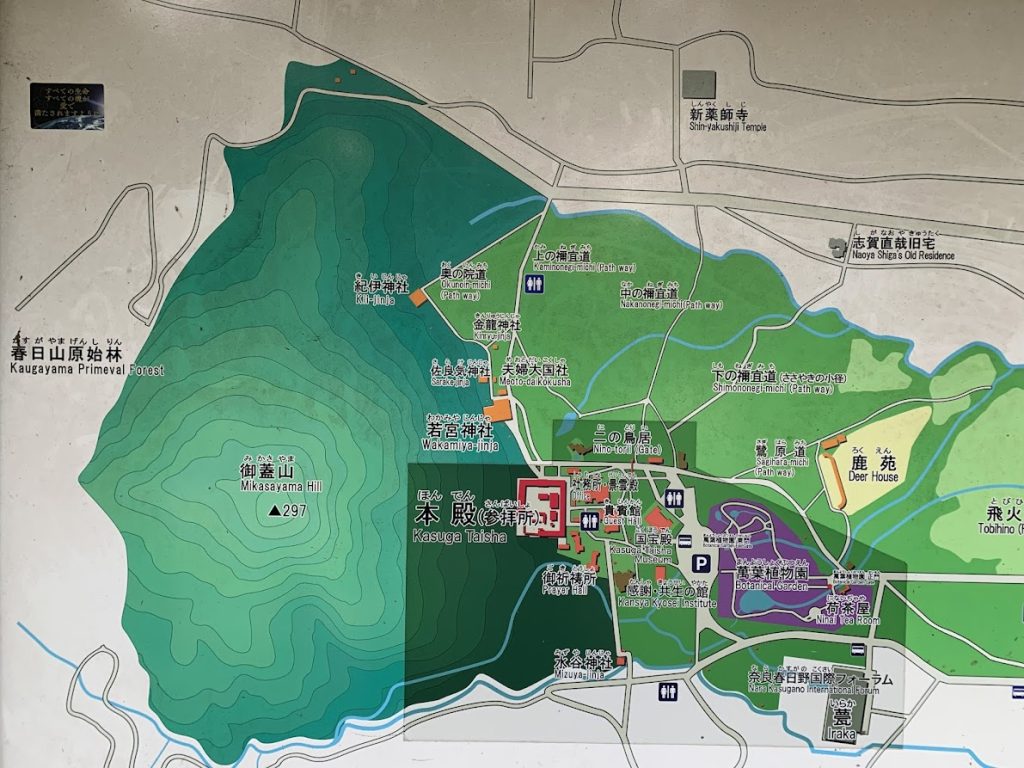
拝殿・本殿
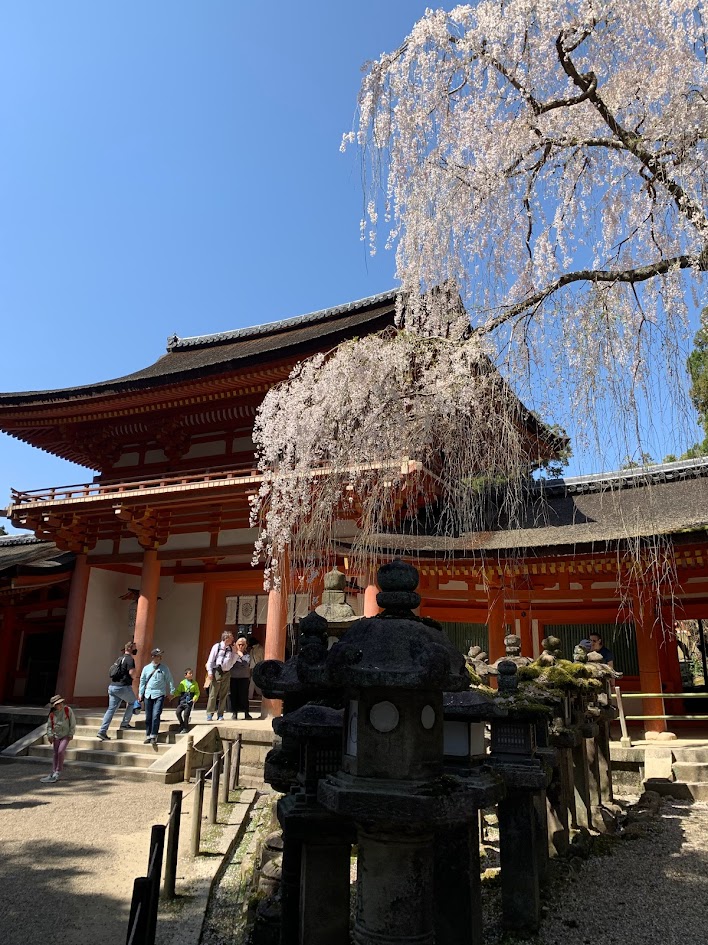
桜の季節の春日大社
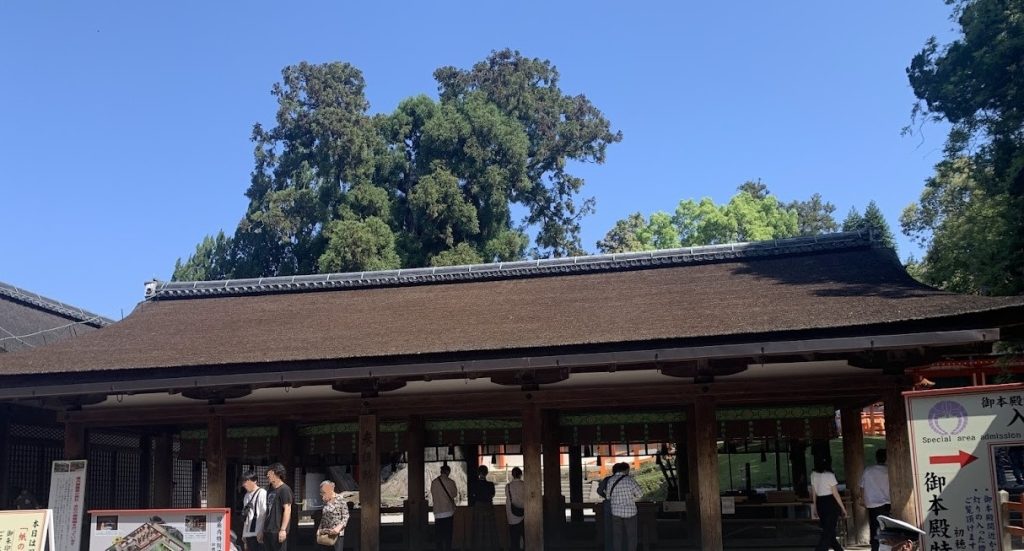

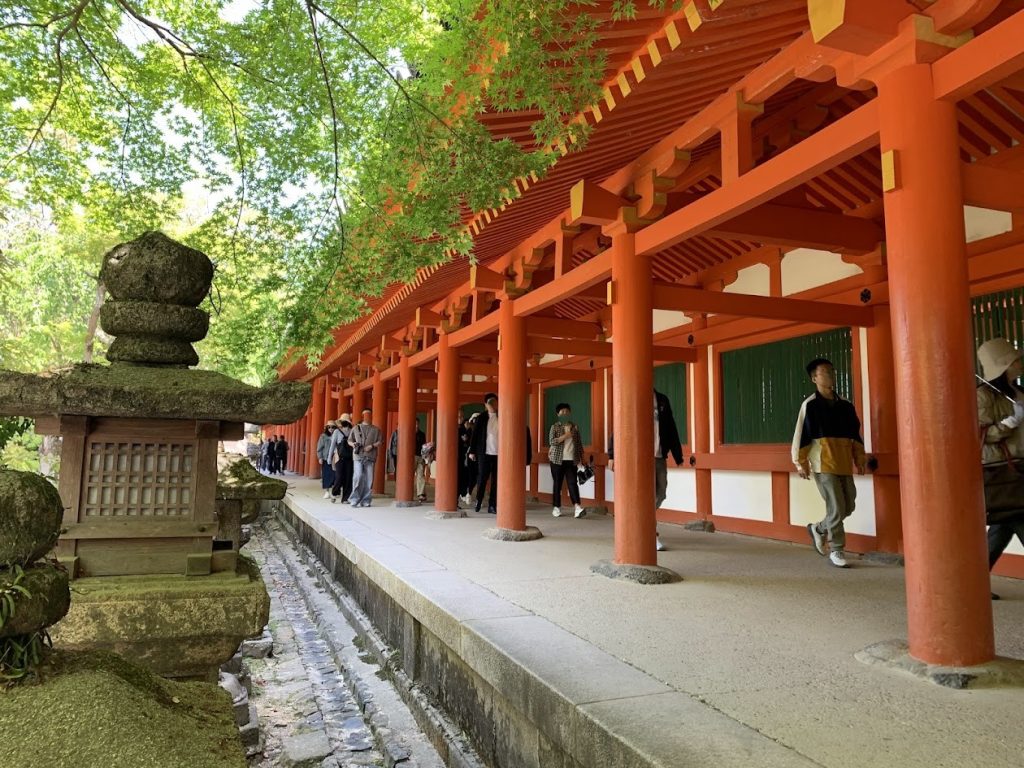
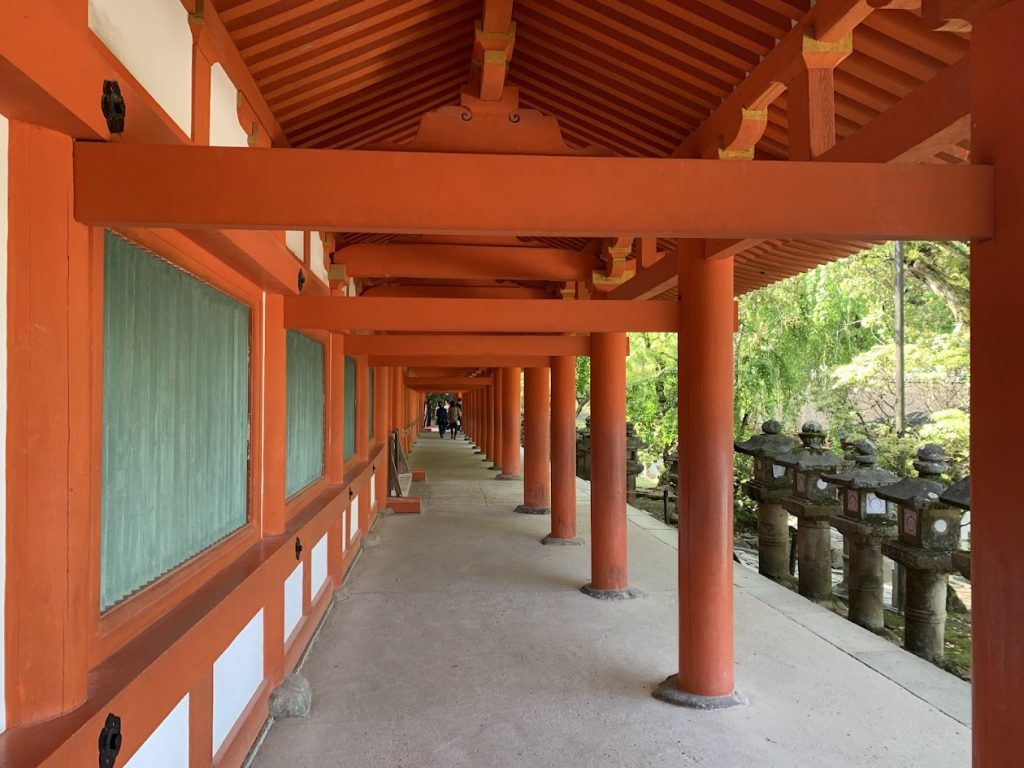

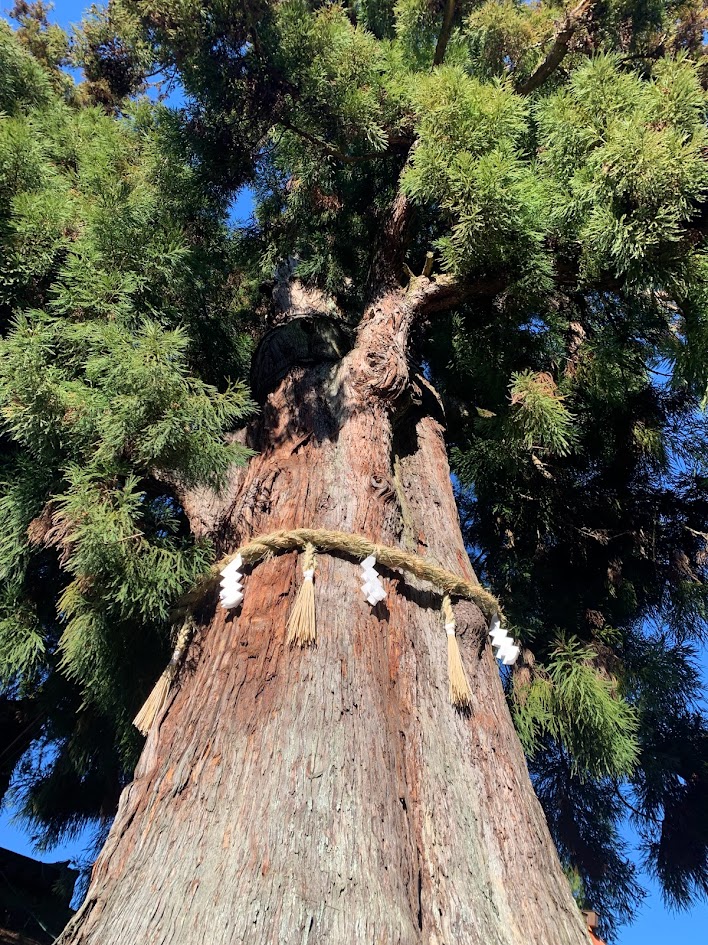
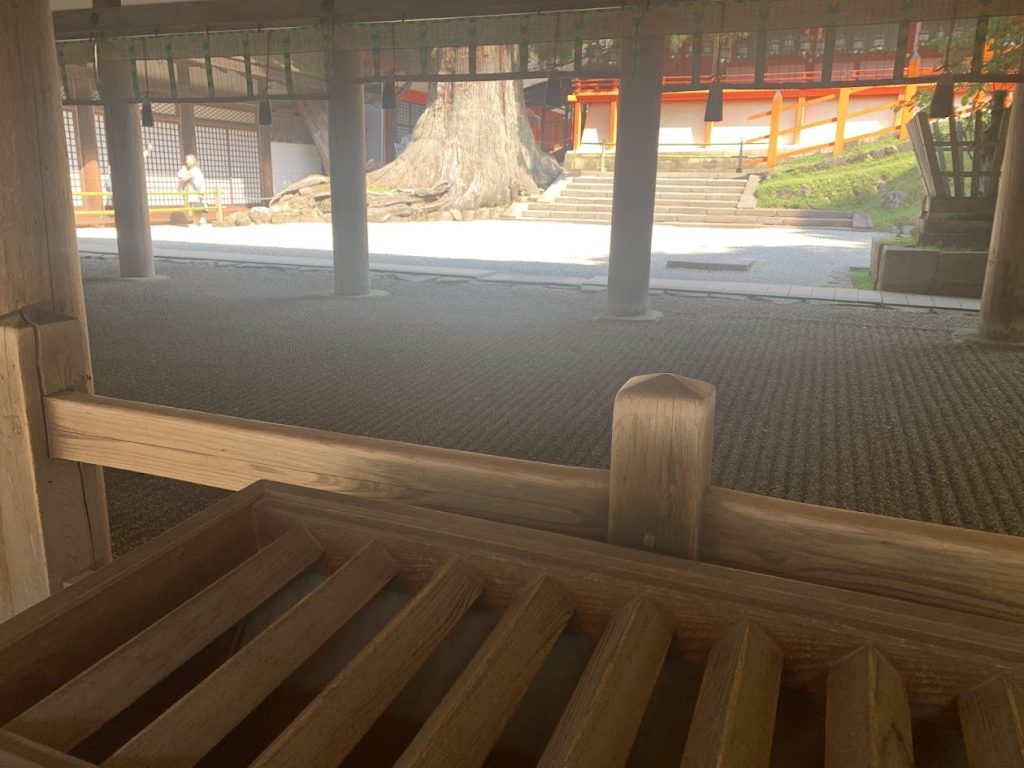
Sacred Tree within Kasuga Taisha Grounds With a circumference of 8.7 meters, a height of 25 meters, and an estimated age of 800 to 1,000 years, this sacred tree stands as a silent witness to centuries of devotion and tradition.
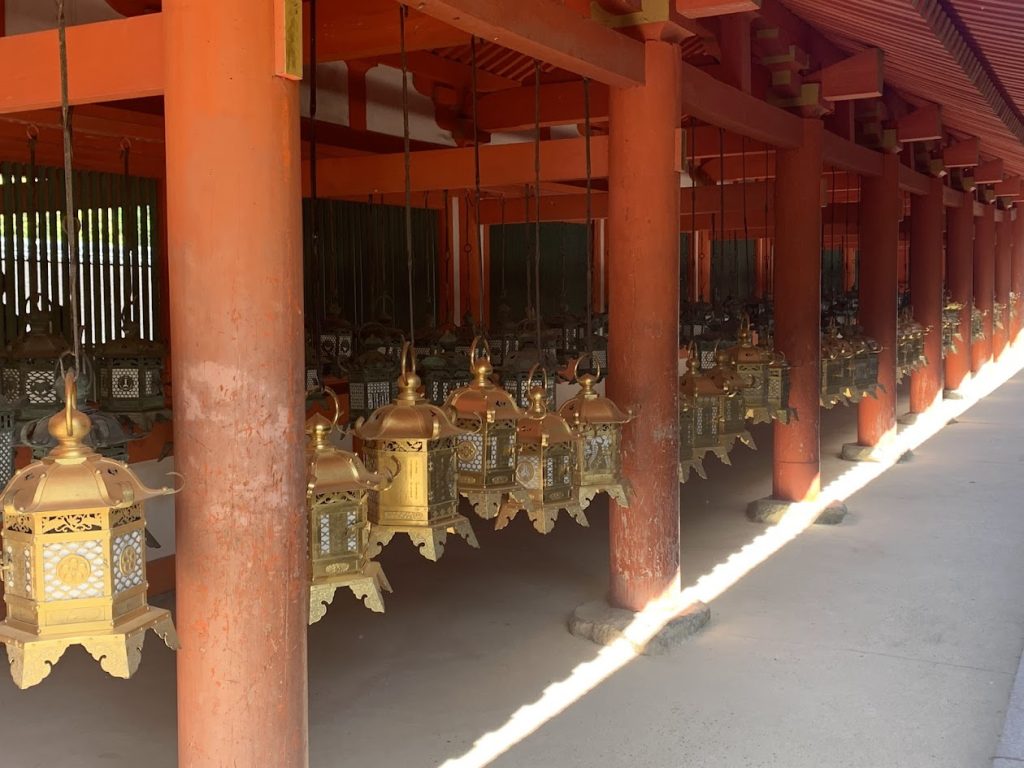
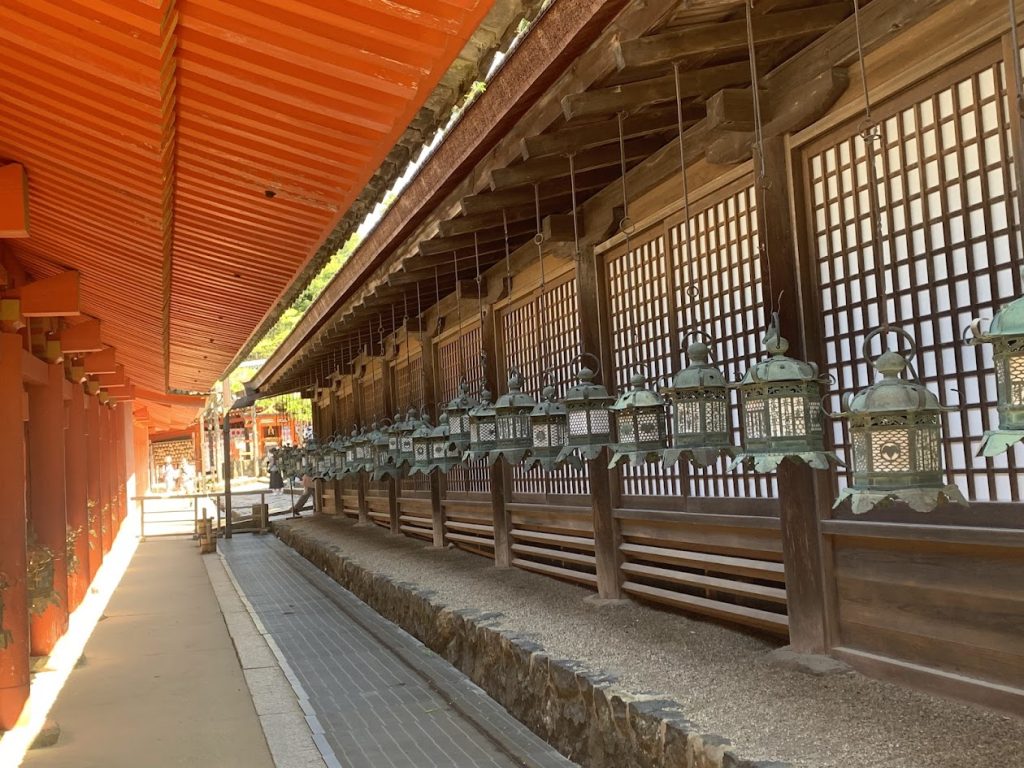
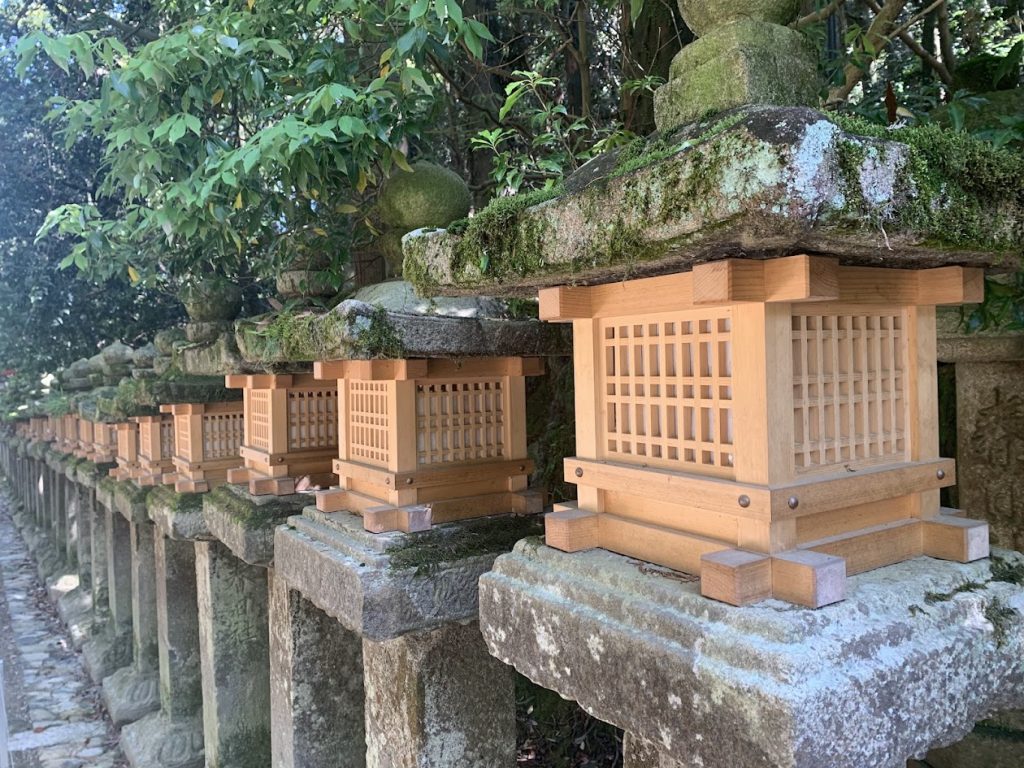
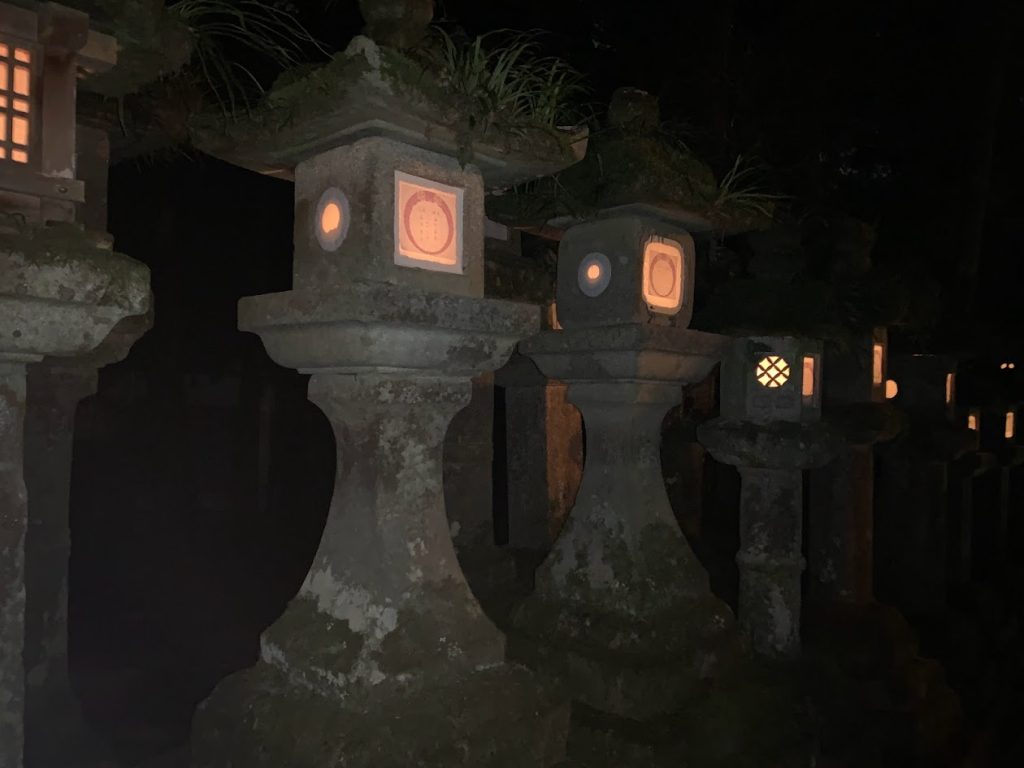
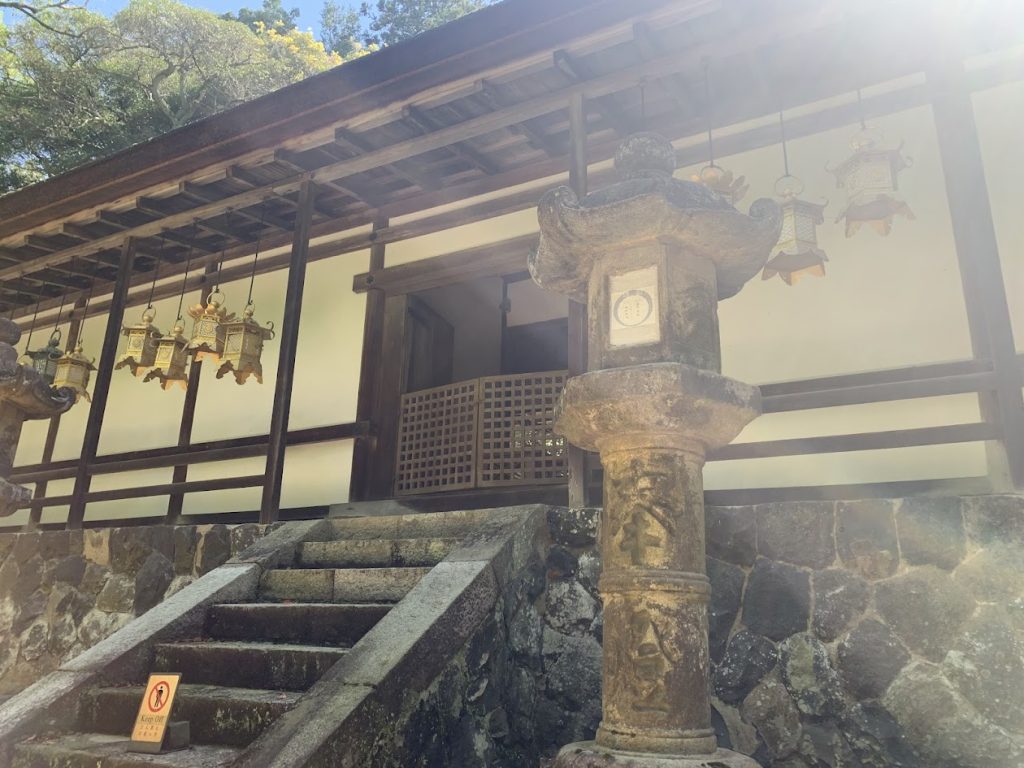
There are approximately 1,000 hanging lanterns.
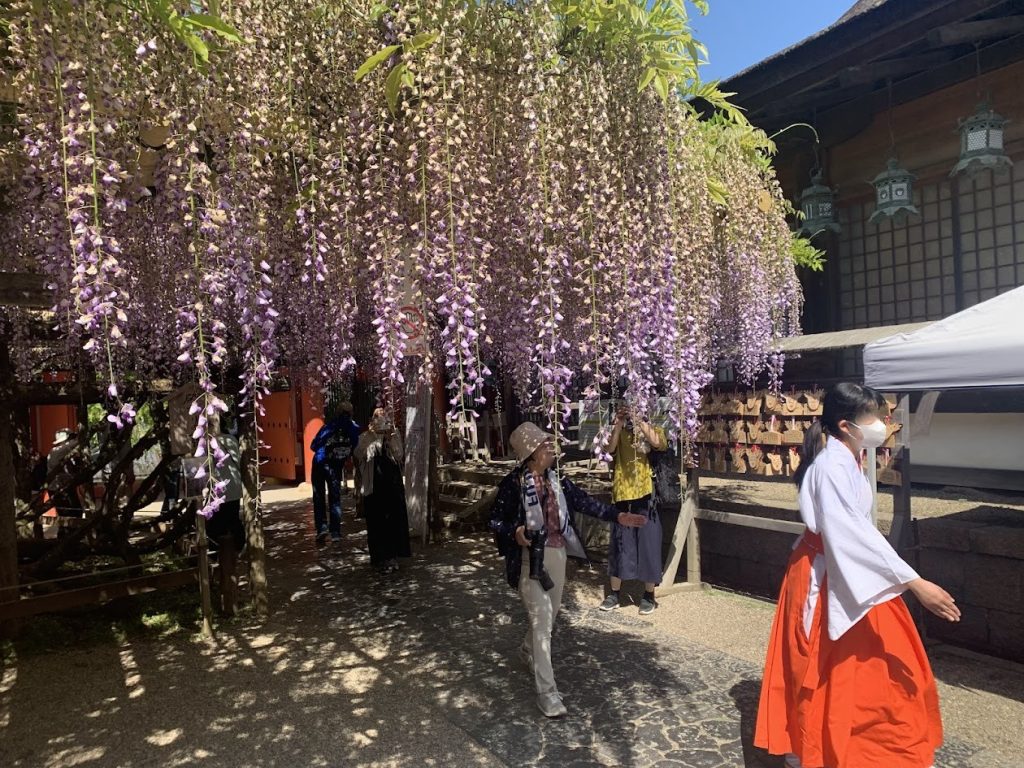
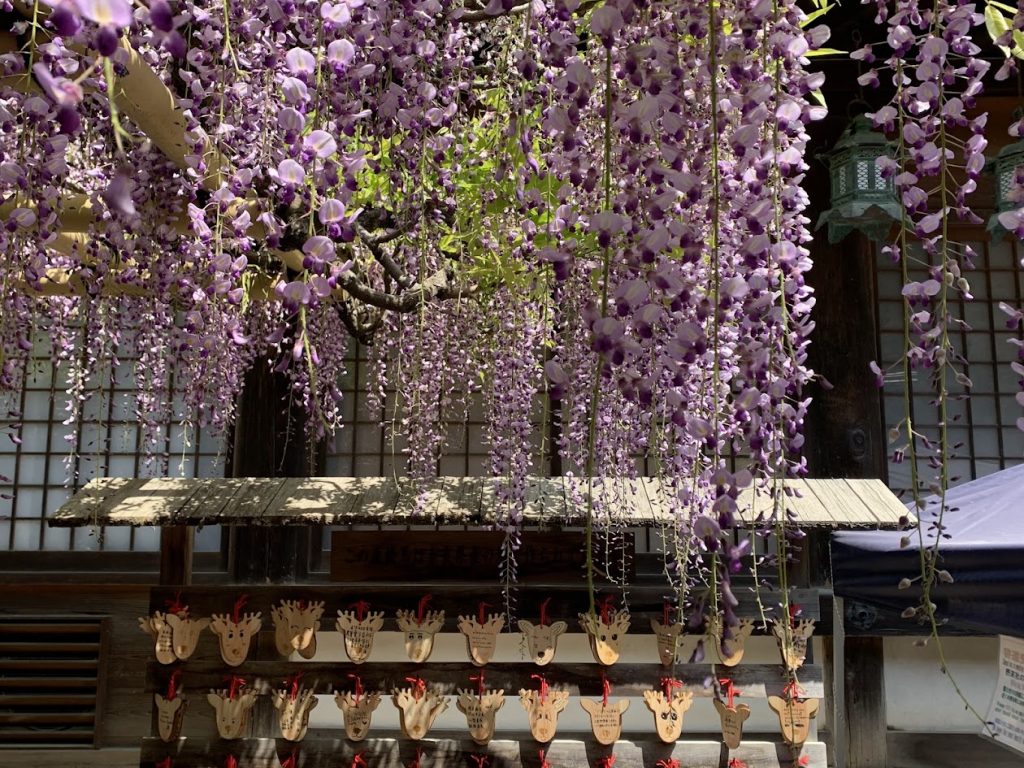
Sunazuri no Fuji — The Earth-Brushing Wisteria
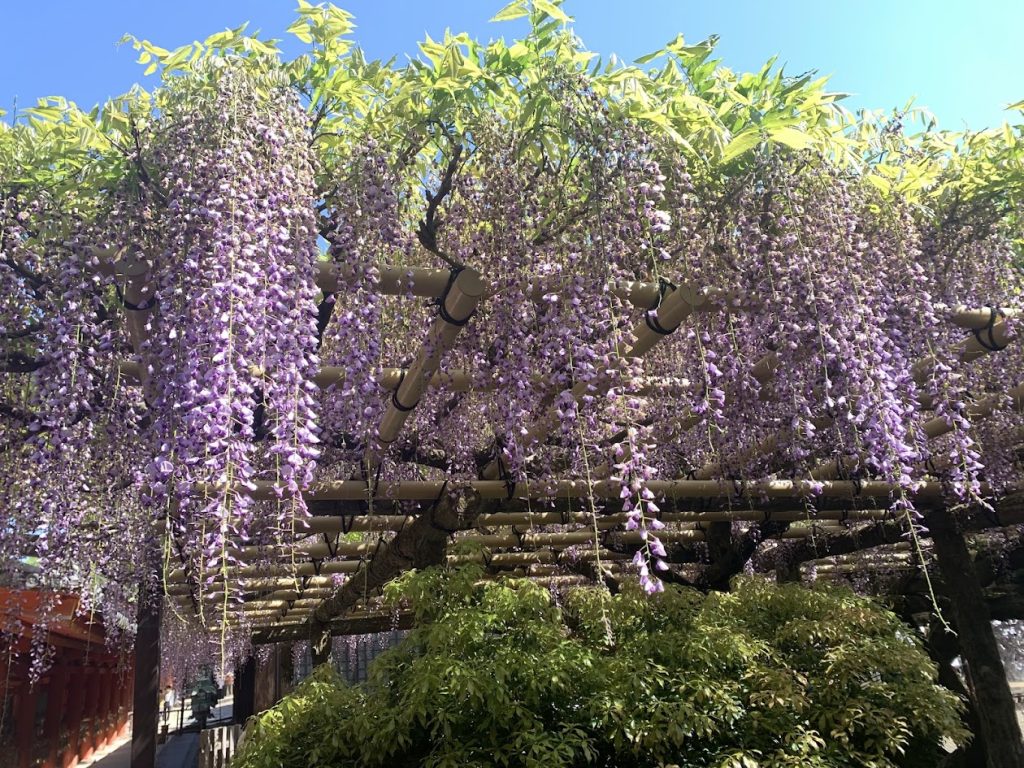
Shunazuri no Fuji (The Earth-Brushing Wisteria)
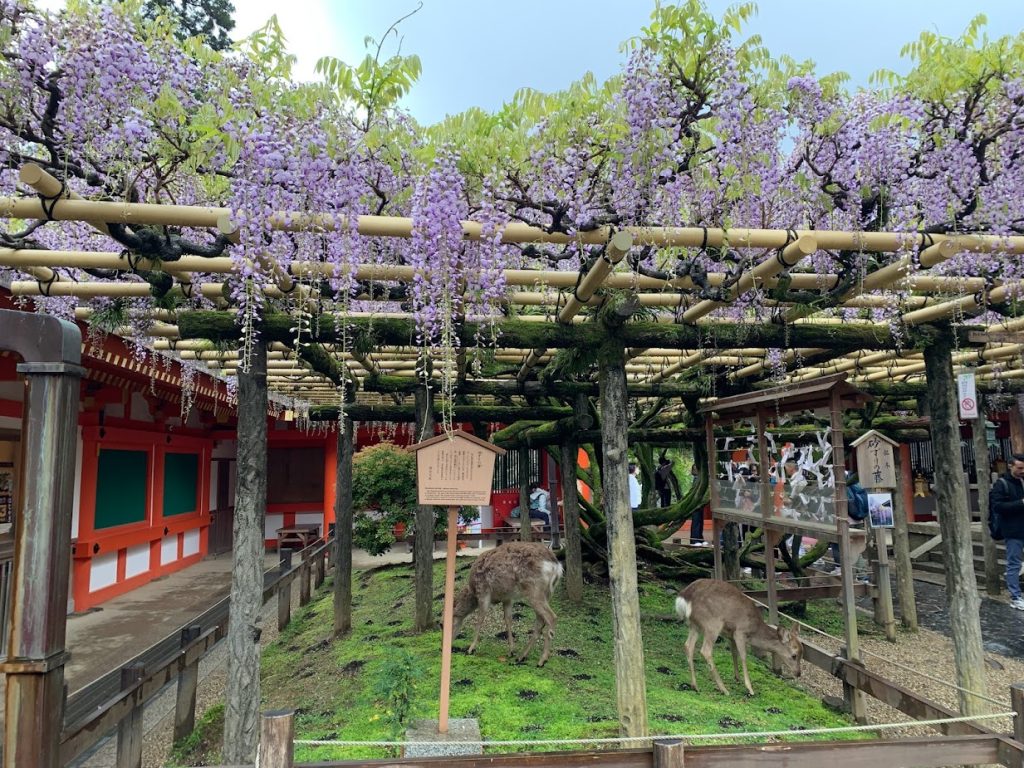
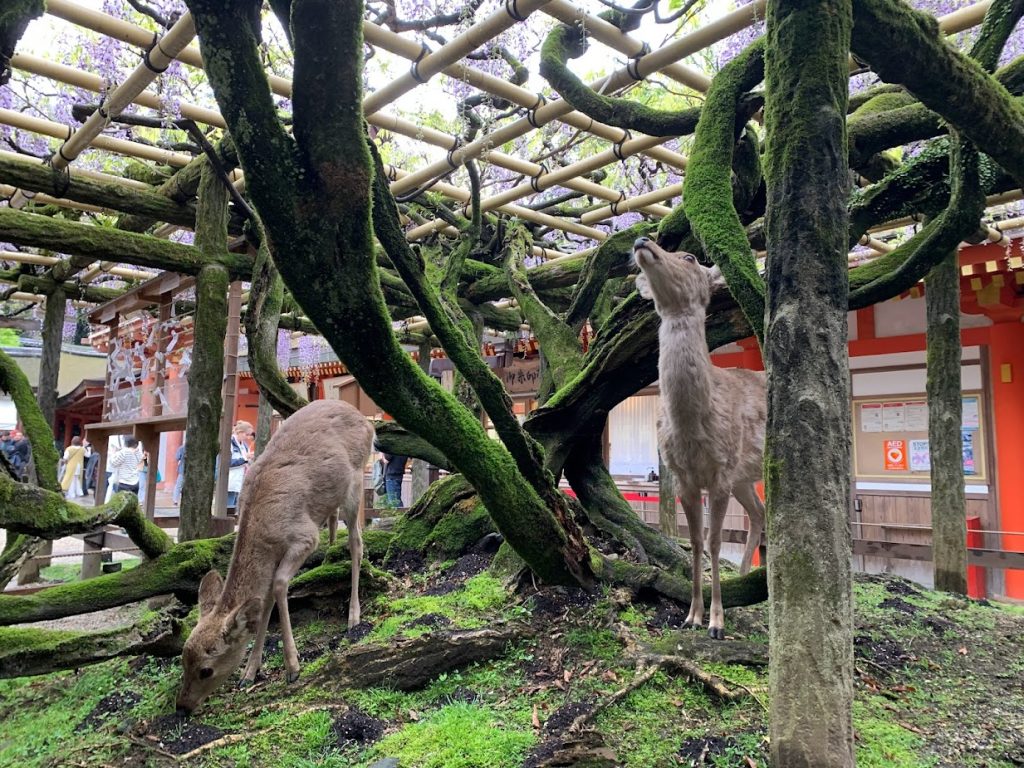
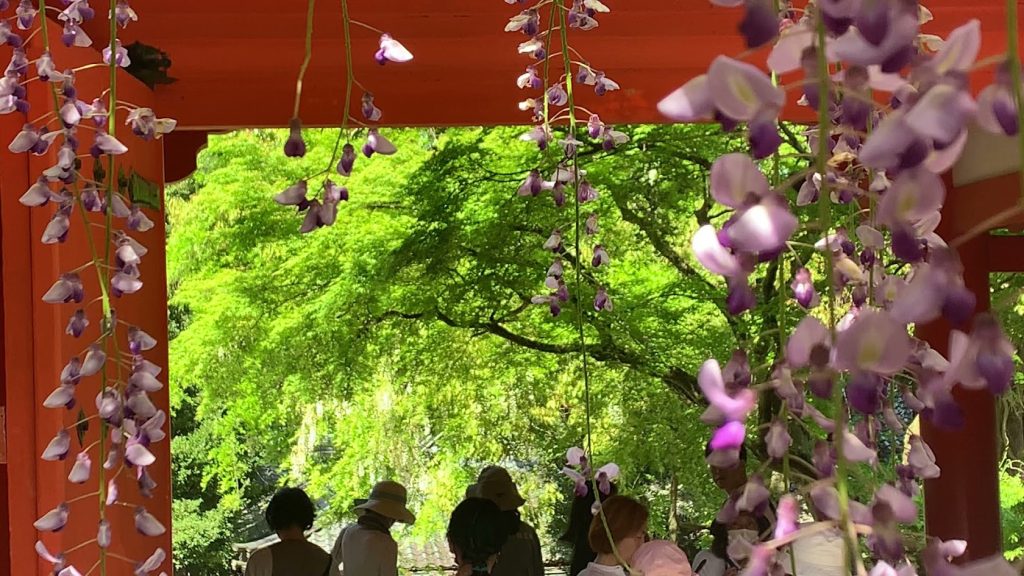
Located to the left of the worship hall, this wisteria is named for its blossoms, which are so long that they brush against the ground. It is said to be an ancient tree, with an estimated age of around 800 years.
Takemikazuchi-no-Mikoto
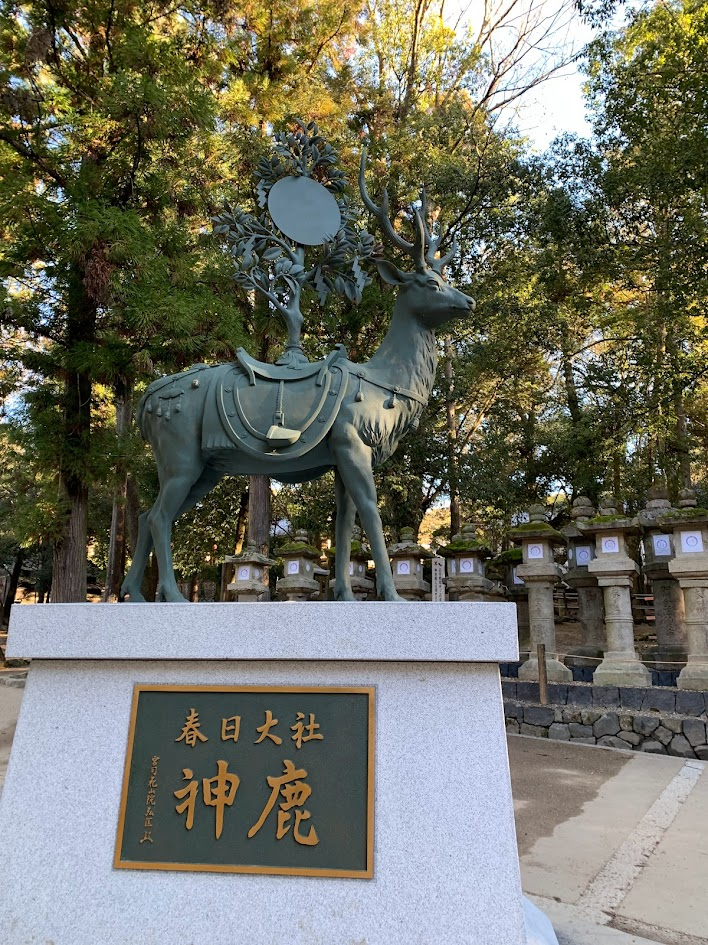
Takemikazuchi-no-Mikoto is the mightiest warrior deity in Japanese mythology.

The deity Takemikazuchi-no-Mikoto, riding a white deer, once arrived at Nara’s Kasuga Taisha Shrine and has since resided there. Because of this, the deer in Nara have long been cherished and protected as sacred messengers of the deities.
Takemikazuchi-no-Mikoto is renowned for his role in the myth of the “Transfer of Sovereignty.”
In the high heavens of Takamagahara, the supreme deity Amaterasu-Omikami declared, “This land, governed by Okuninushi-no-Mikoto, should be ruled by my descendants.” To accomplish this, she dispatched Takemikazuchi-no-Mikoto as her official envoy.
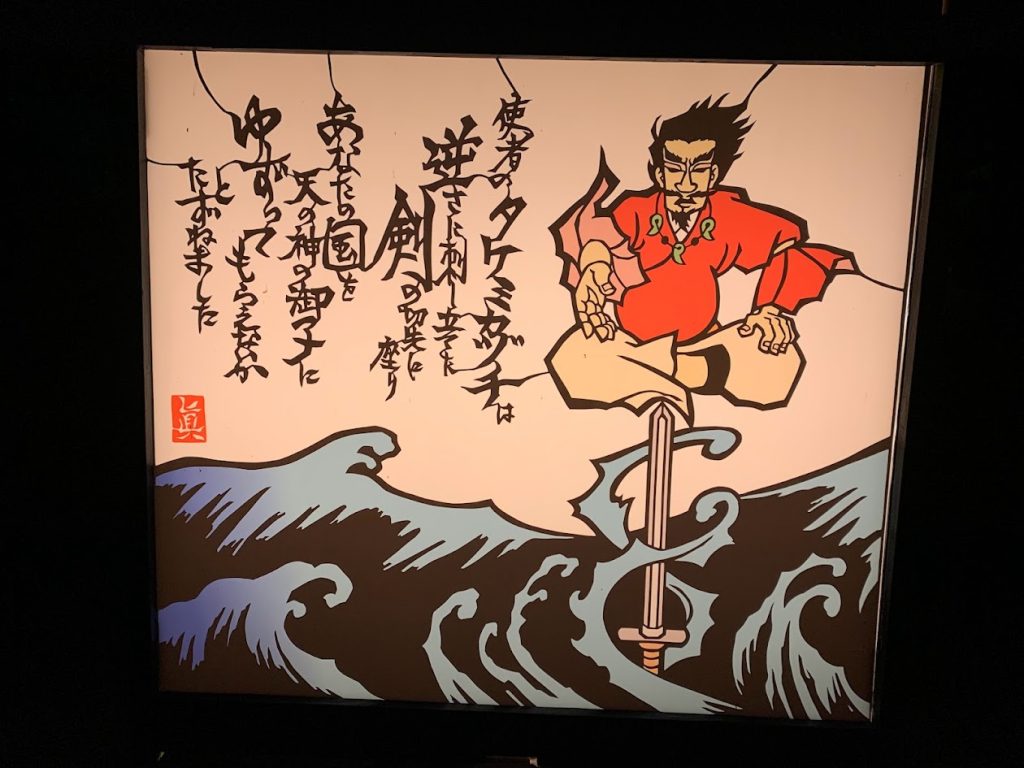
Takemikazuchi-no-Mikoto descended to Inasa Beach in Izumo (present-day Shimane Prefecture), where He planted his sword upside down in the sand and sat firmly upon its tip in a cross-legged posture. There, he confronted Okuninushi-no-Mikoto, demanding that he hand over the land to the deities. Okuninushi responded, “Consult my sons first.”
The eldest son agreed, saying, “It is right to hand over the land to the divine descendants of Amaterasu-Omikami.” However, the younger son proposed a contest of strength to decide the matter. The two engaged in a contest, but the younger son was quickly defeated and fled to Lake Suwa (present-day Nagano Prefecture). He was allowed to stay there under the condition that he would never leave Suwa, where he later became the enshrined deity of Suwa Shrine.
Okuninushi then consented to hand over the land, on the condition that a grand palace, comparable to the heavenly residence of Amaterasu-Omikami, be constructed as his abode. Thus, the grand Izumo Taisha Shrine was built, where he was enshrined.
Takemikazuchi-no-Mikoto was later enshrined at Kashima Jingu Shrine in Ibaraki Prefecture.
It is said that in the Nara period, Takemikazuchi-no-Mikoto rode on the back of a white deer from Kashima Jingu Shrine to Kasuga Taisha Shrine.
Abe no Nakamaro
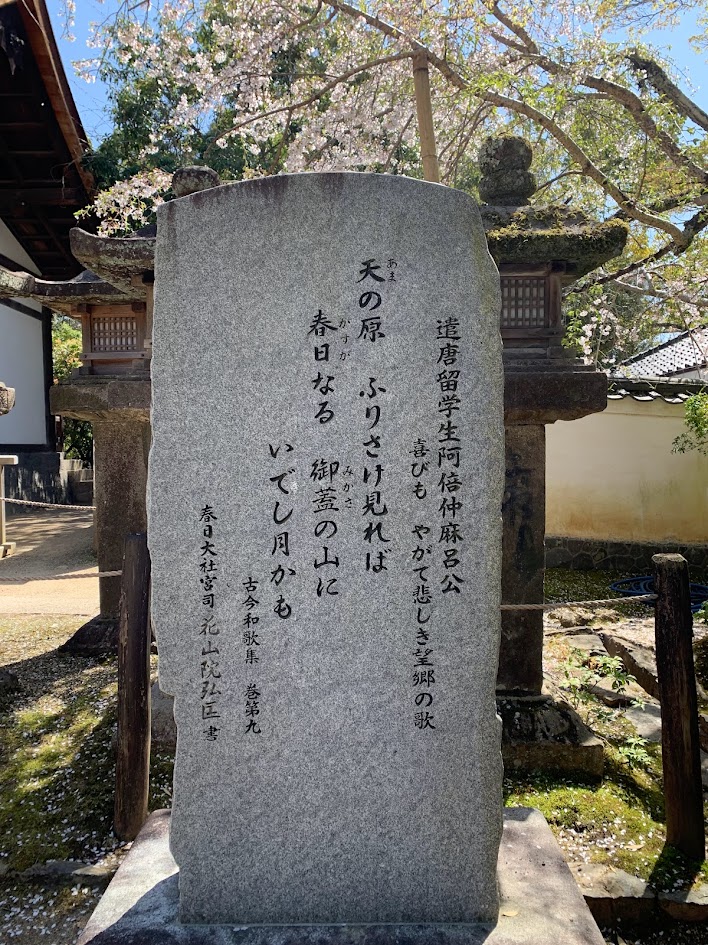
Meaning of the Poem:
As I gaze up at the vast sky and look far into the distance, I see a beautiful moon rising. That very same moon once rose over Mikasa Mountain in Kasuga.
—By Abe no Nakamaro
Abe no Nakamaro was born in 698.
At the age of 19, he was sent to Tang China as a study abroad student. Before his departure, a special ceremony was held at Kasuga Taisha Shrine to pray for his safe journey.
Although he was Japanese, Abe no Nakamaro passed the extremely difficult civil service exam in China and rose to high ranks in the Chinese government.
When he was 33, he requested to return to Japan, but the emperor denied his request.
Finally, at the age of 53, he was allowed to return home temporarily. During this time, he wrote the above poem, reminiscing about his hometown of Nara.
Unfortunately, his ship was wrecked, and he ended up in present-day Vietnam. He eventually made it back to the Chinese capital, but he was never able to return to Japan. He passed away at the age of 70.

Wakamiya Shrine, a historic sub-shrine of Kasuga Taisha
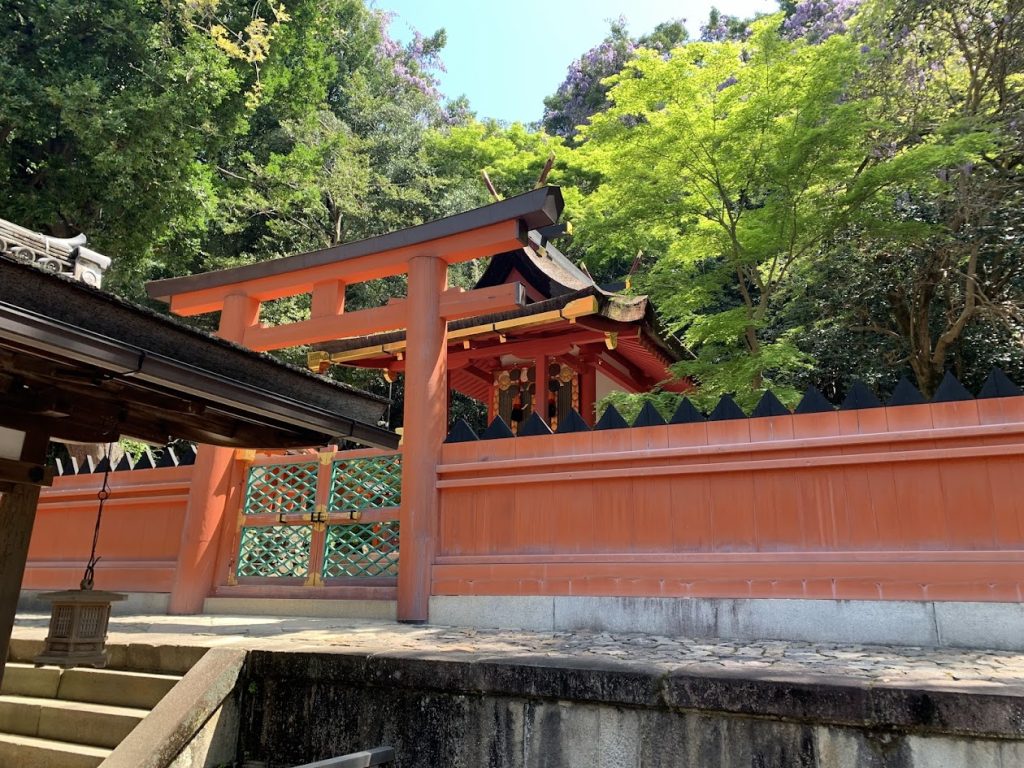
Wakamiya Shrine is dedicated to the deity Ame-no-Oshikumone-no-Mikoto.
Wakamiya Shrine – The Youthful Deity of Kasuga Taisha
Kasuga Taisha enshrines four principal deities. Among them, the third deity, Ame-no-Koyane-no-Mikoto, and the fourth, Himegami, are worshipped as a divine couple. Their child, Ame-no-Oshikumone-no-Mikoto, is said to have been born in the mid-Heian period (approximately 1,000 years ago) as a youthful deity.
At first, this young deity—affectionately known as Wakamiya-sama—was enshrined together with the four main deities. However, because of his vibrant spiritual power and miraculous ability to save people, a separate shrine was established through the earnest devotion of many.
In 1135, Wakamiya Shrine was built approximately 100 meters south of the main sanctuary of Kasuga Taisha, mirroring its architectural style. During that time, when poor harvests and epidemics afflicted the population, it is said that Wakamiya-sama demonstrated extraordinary divine power to bring relief and healing to the suffering.
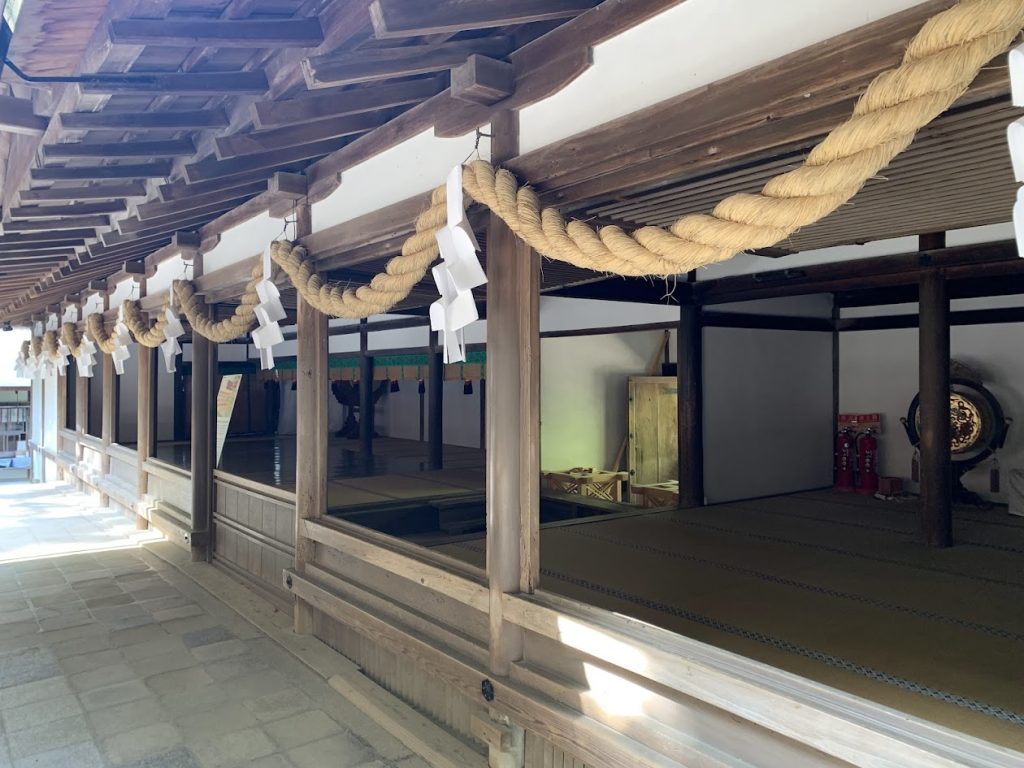
Wakamiya Kaguraden – The Sacred Dance Pavilion of Wakamiya Shrine
The Origins of Personal Prayer at Wakamiya Shrine
Originally, grand shrines such as Ise Jingu, Izumo Taisha, Omiwa Shrine, and Kasuga Taisha were established to pray for the peace and prosperity of the nation.
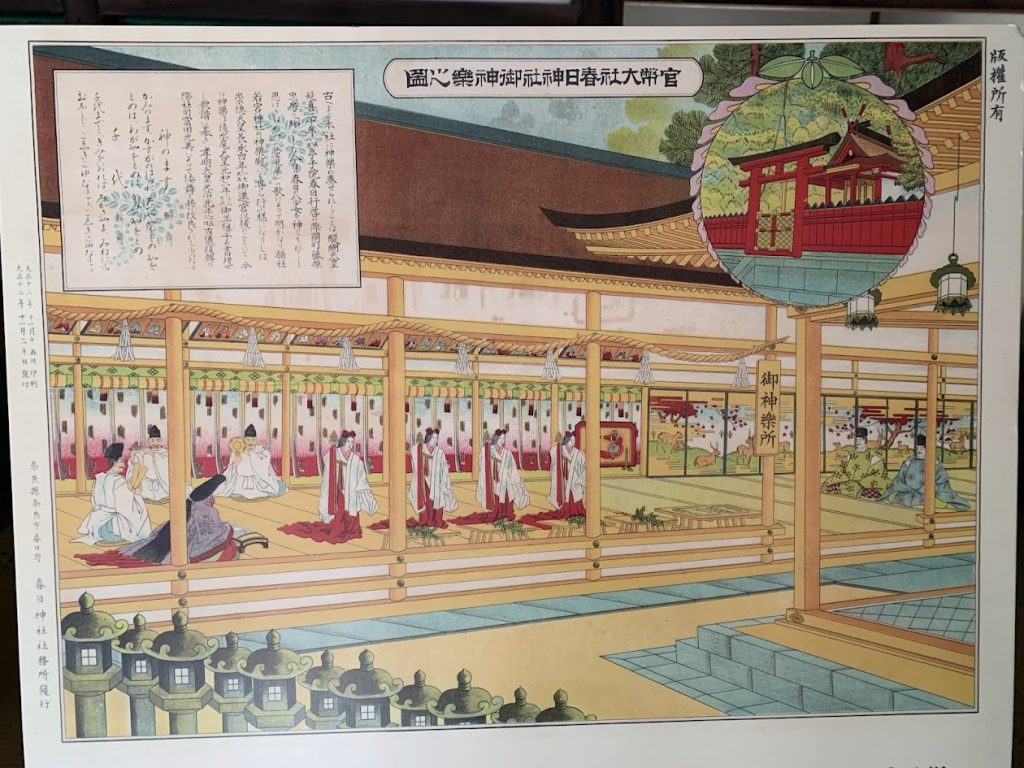
However, with the founding of Wakamiya Shrine in the Heian period, a new tradition emerged. In front of the shrine, a Kaguraden (sacred dance pavilion) was built, where a group of shrine maidens (miko) began offering kagura—ritual dances—to the deity on behalf of individual worshippers. By the medieval period, more than 40 miko were performing these sacred dances before the deities.
After praying at Wakamiya Shrine, visitors would request a kagura performance from the miko. During the ritual, a formal petition (mōshiage) was recited, conveying the worshipper’s personal wishes to the deity.
Today, this tradition continues in ceremonies such as omiyamairi (a newborn’s first shrine visit), Shichi-Go-San (the “Seven-Five-Three” Festival, when boys aged three and five and girls aged three and seven are taken to a shrine for blessings), and New Year’s prayers, where norito (Shinto prayers) are offered to the deities on behalf of individuals. The Wakamiya Kaguraden is believed to be the first place in Japan where such personal intercessions were formally conducted.
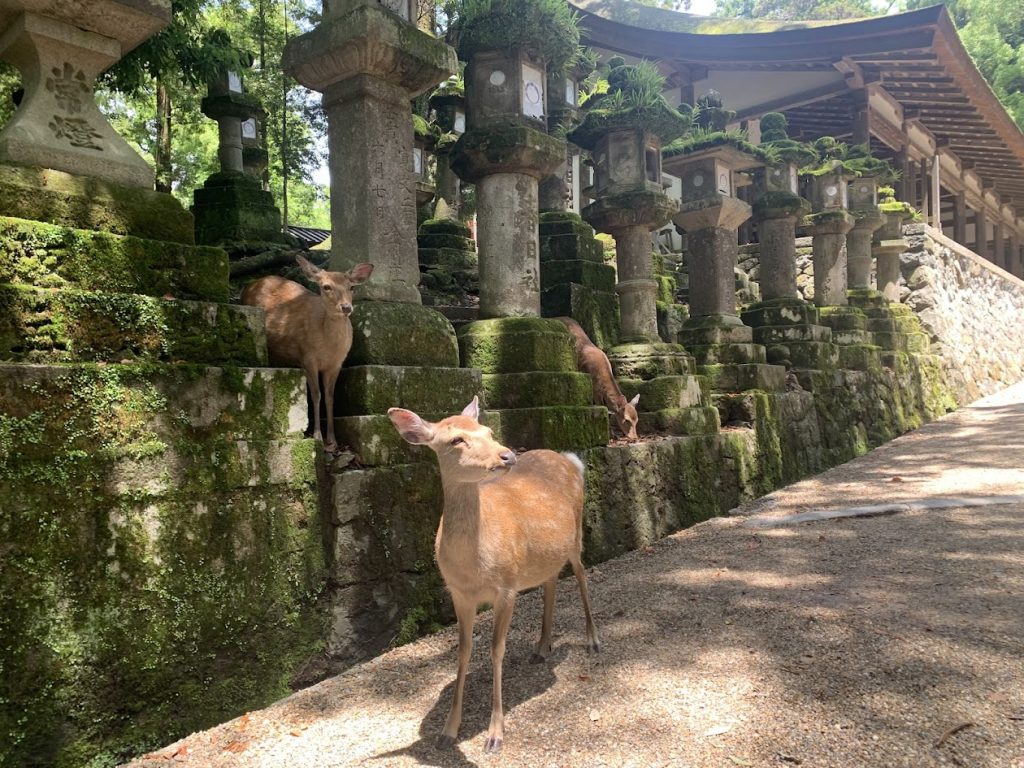
Those whose prayers were answered often expressed their gratitude by donating stone lanterns along the approach from Wakamiya Shrine to the main sanctuary of Kasuga Taisha. As the number of lanterns grew, they eventually lined not only the path but spread throughout the entire shrine precinct.
Given the deep reverence for Wakamiya-sama, it is no surprise that the Kasuga Wakamiya On-Matsuri festival, first held in 1136, has continued unbroken for over 900 years.
Click here to visit the festival page.

The Great Camphor Tree of Wakamiya
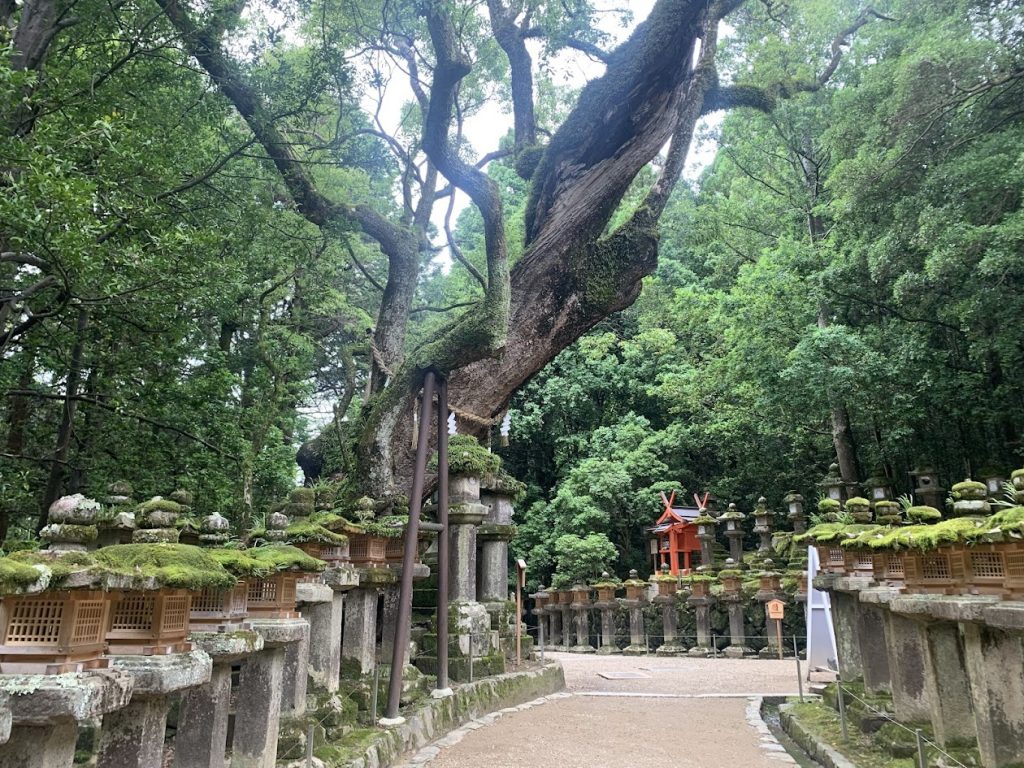
Standing along the approach from Wakamiya Shrine to Kasuga Taisha, this majestic camphor tree is one of the largest in Nara Prefecture. It is said to have grown from three saplings that gradually fused together as they matured, forming a single massive trunk. This sacred tree marks the starting point of the stone lanterns that now line the entire path to the main sanctuary.
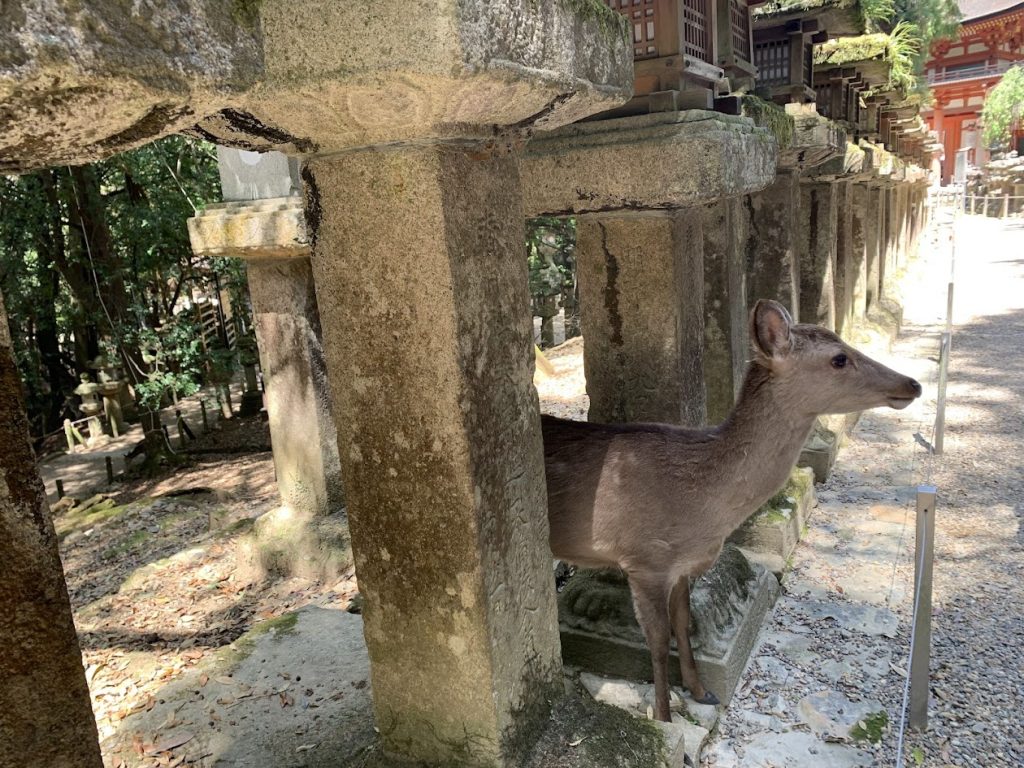
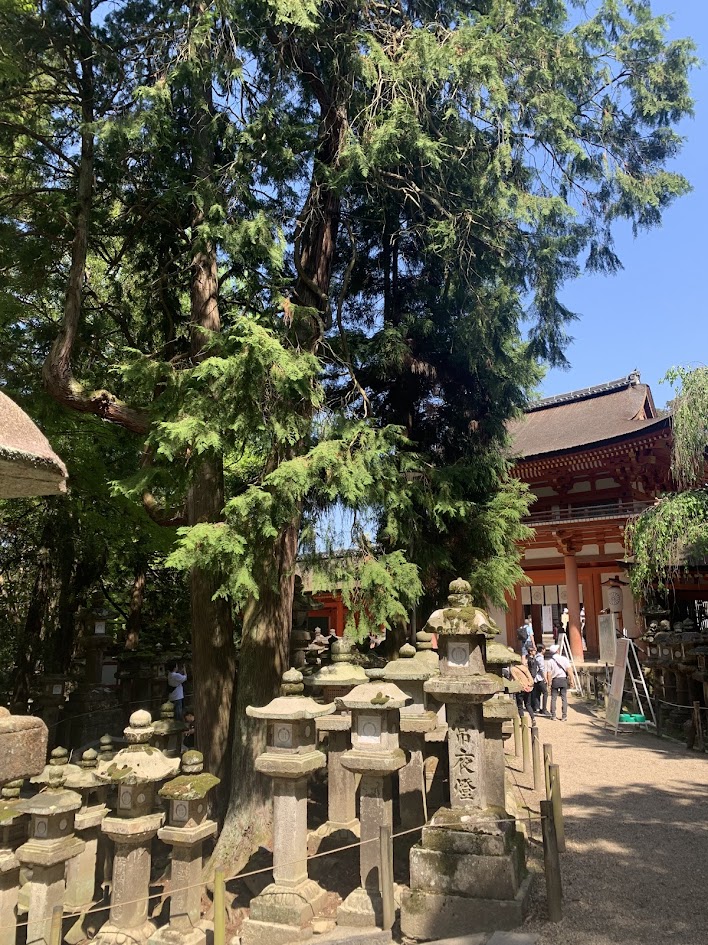
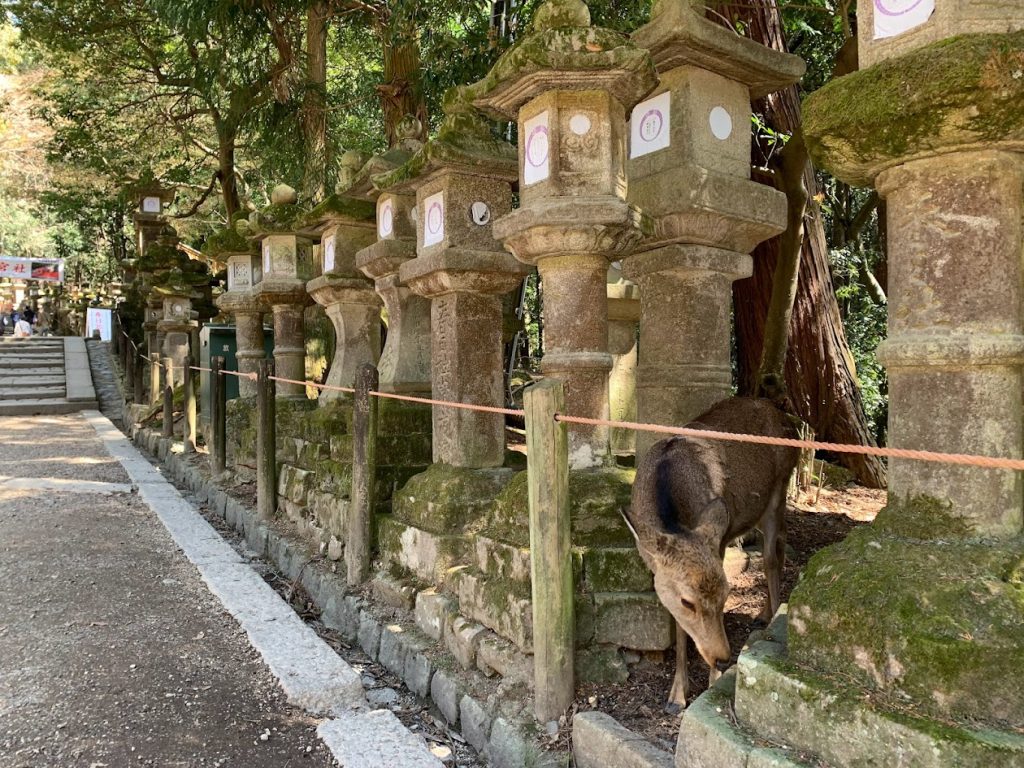
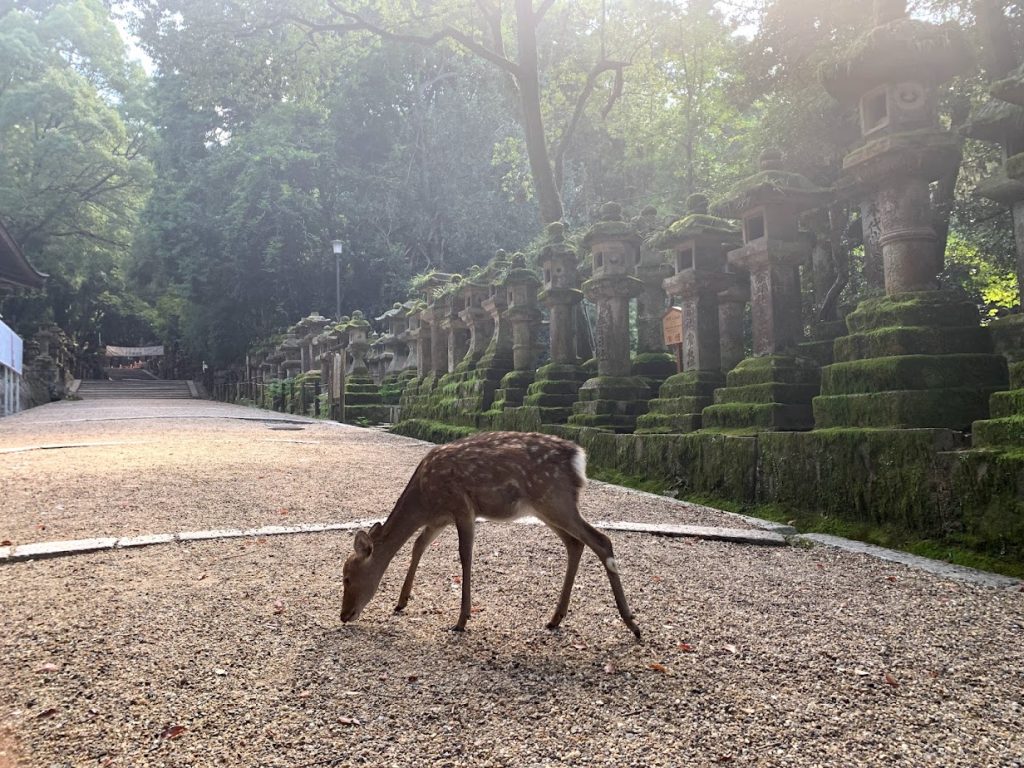
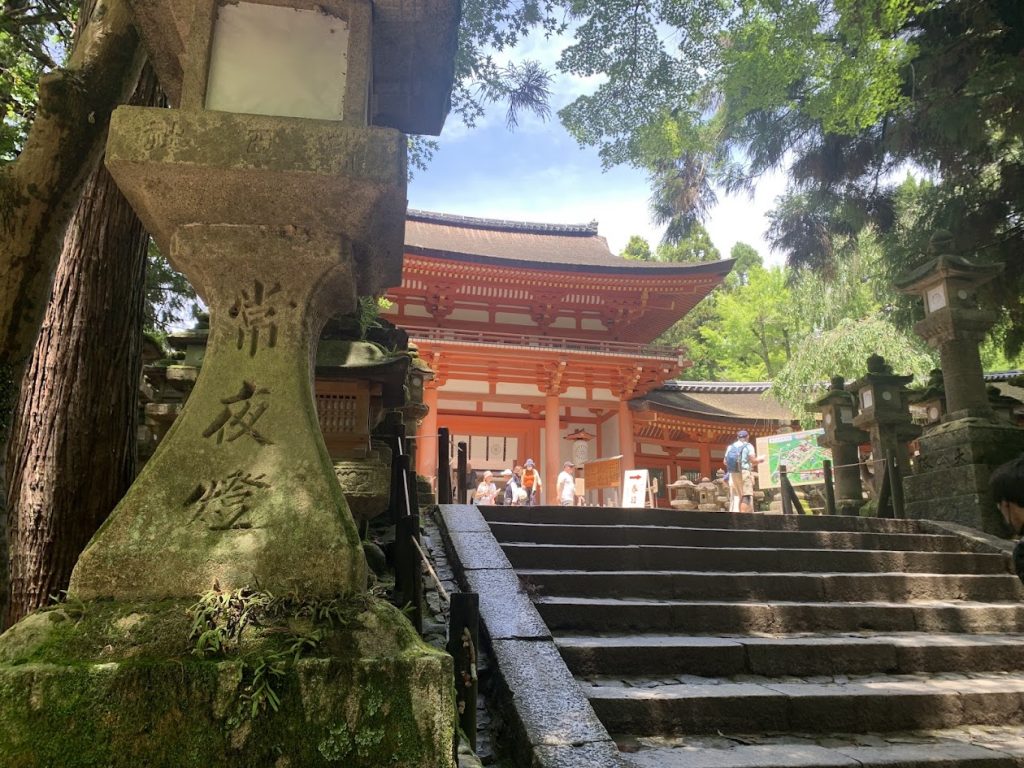
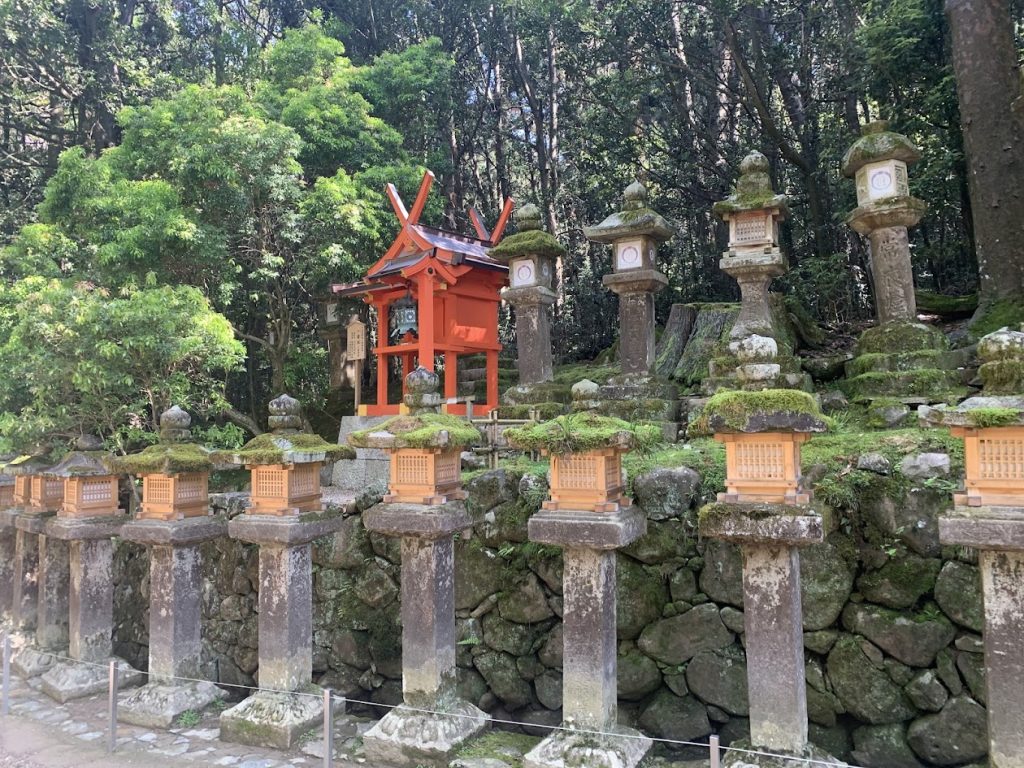
Along the approach to Kasuga Taisha Shrine, there are many stone lanterns—2,000 to be exact—along with an additional 1,000 hanging lanterns.
The oldest stone lantern at Kasuga Taisha Shrine is said to have been donated in 1136 by Fujiwara no Tadamichi, the regent. For about 900 years, these lanterns have been dedicated with prayers for family safety, good fortune in battle, and other wishes, a tradition that continues to this day.
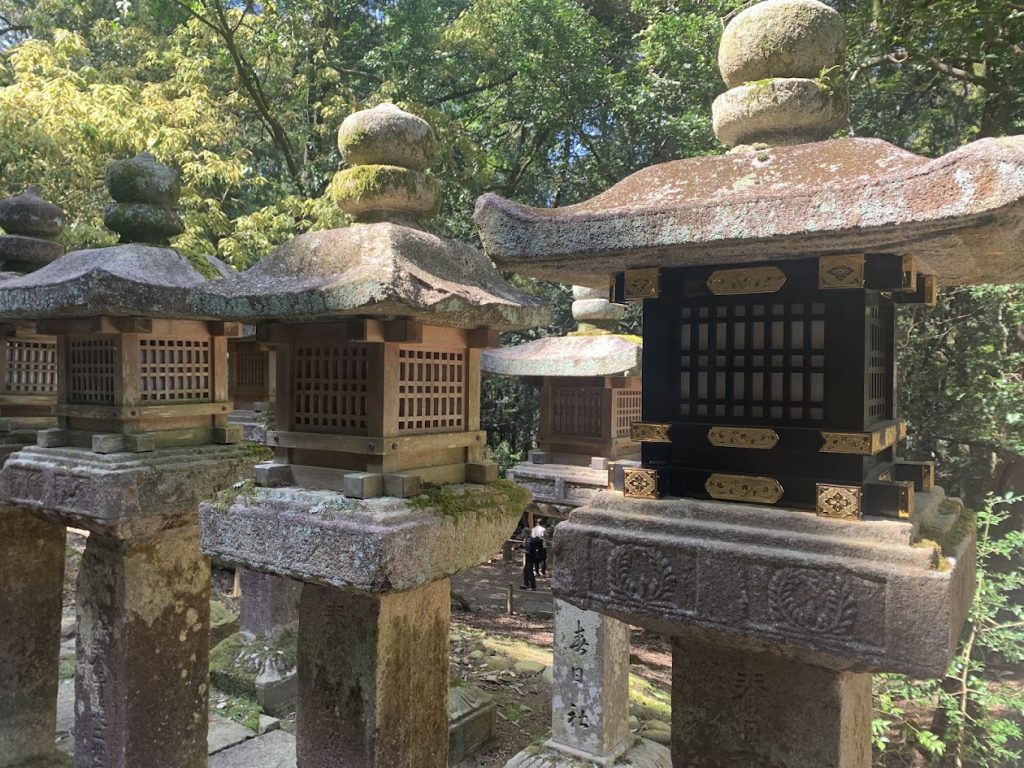
Oaigata Lantern
The wooden firebox is coated with black urushi (Japanese lacquer) and framed with gilded brass. Since it is made of wood, it requires replacement every ten years.
Except for one lantern donated by Tokugawa Yorinobu, most have turned into plain wood over time.
Sacred Grounds Adorned with Stone Lanterns
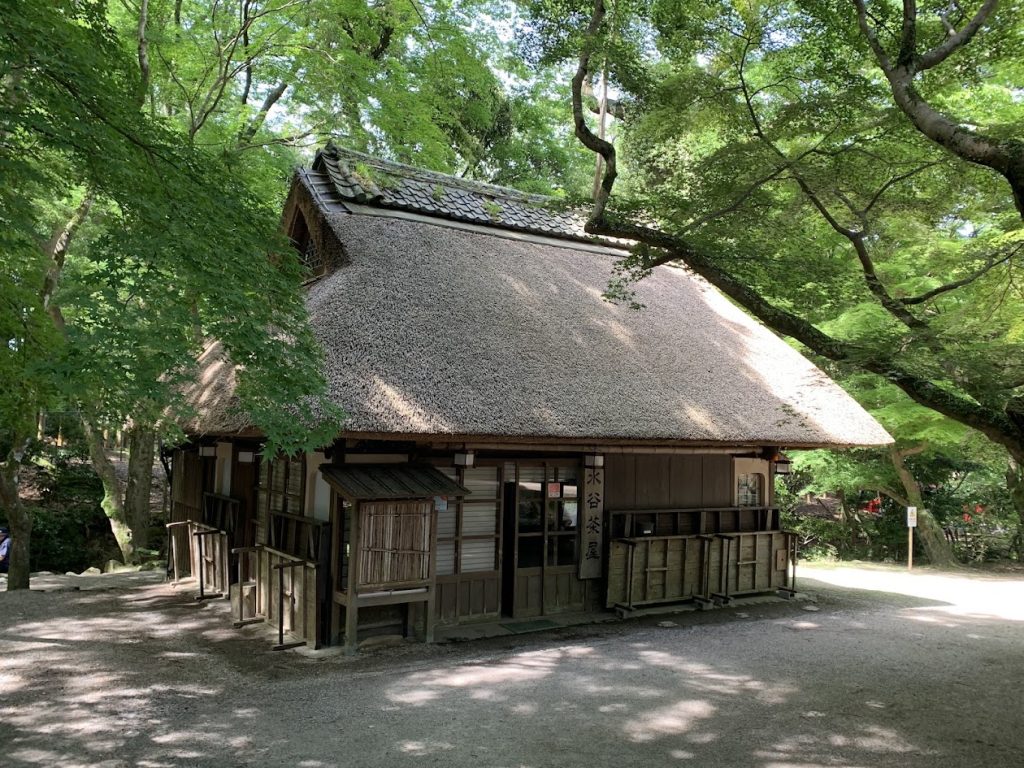
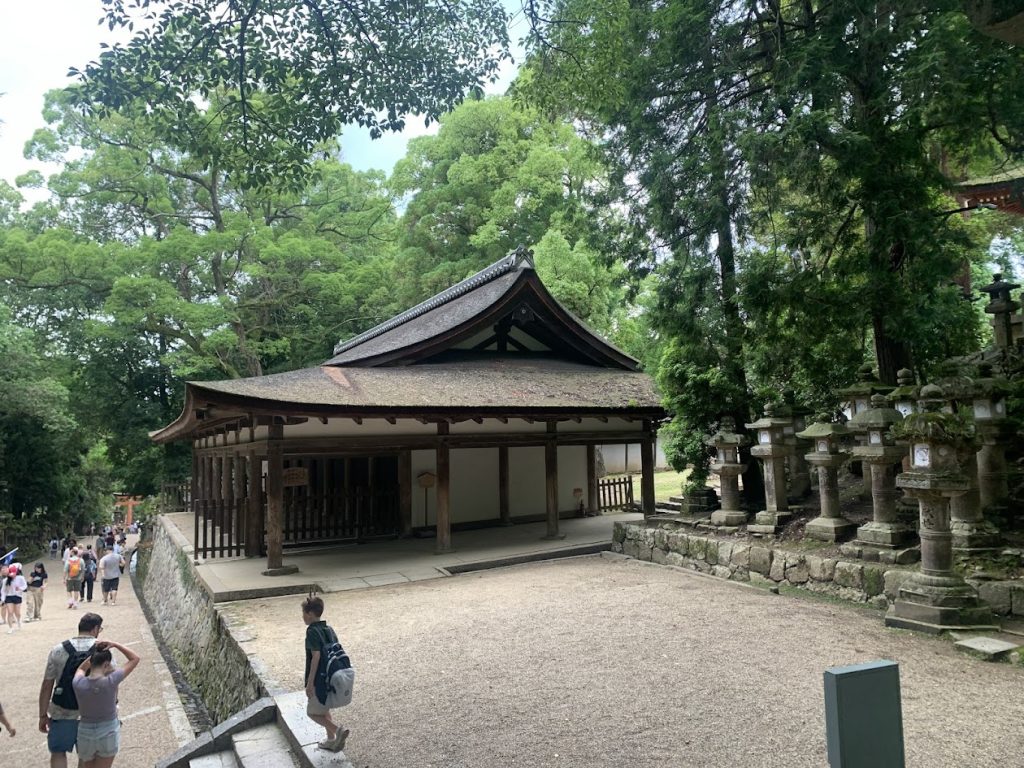
Mizuya Tea House
As you walk from the base of Wakakusa Mountain toward Kasuga Taisha Shrine, you’ll come across a set of stairs. Directly across from the bottom of these stairs is the Mizuya Tea House, a charming building with a thatched roof, popular among tourists.
Behind the tea house flows the Mizuya River, which originates from the primeval forest of Mount Kasuga. Beyond this point, you will enter the grounds of Kasuga Taisha Shrine.
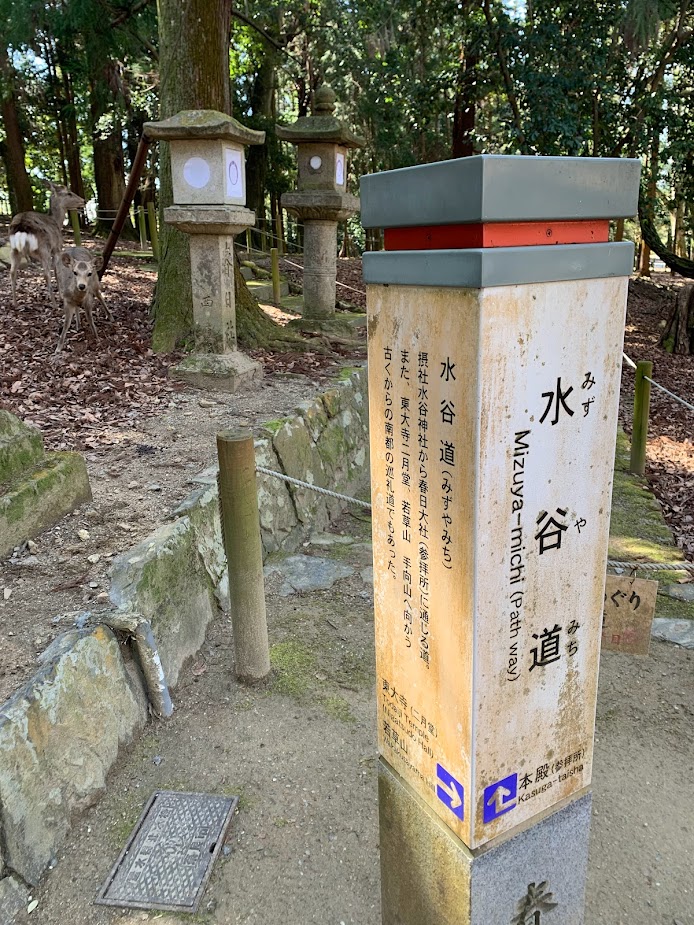

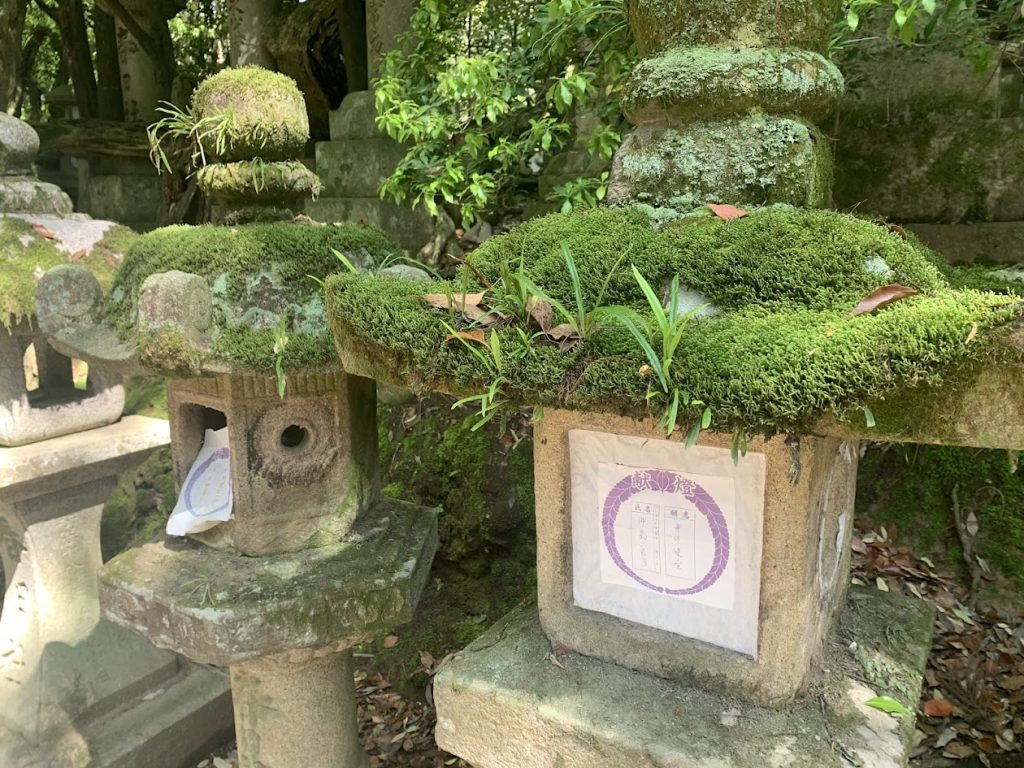
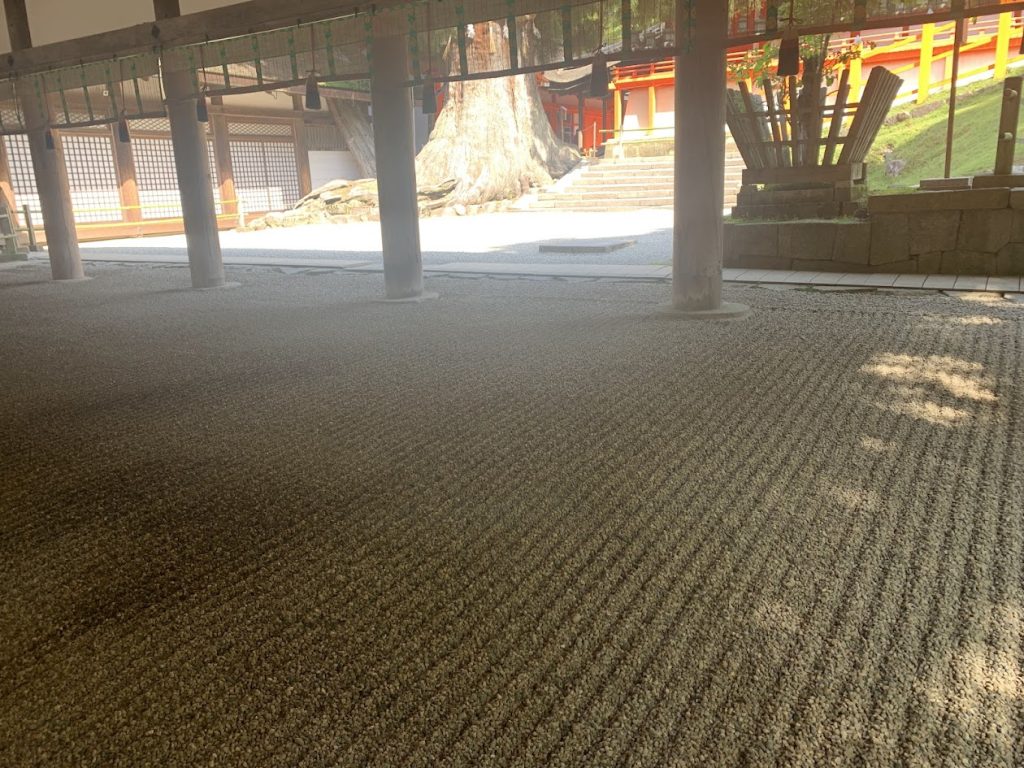

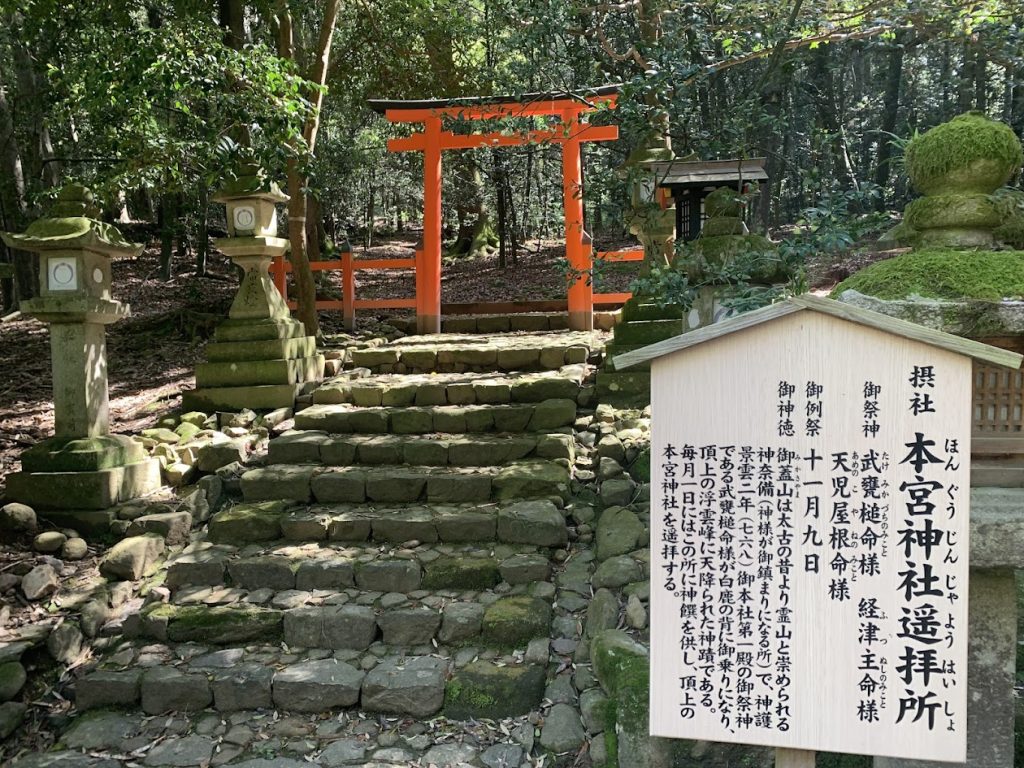
To the east of Kasuga Taisha Shrine lies Mount Mikasa, a sacred site believed since ancient times to be the dwelling place of deities.
In 768, Takemikazuchi no Mikoto, the shrine’s main deity, is said to have descended from the heavens to the summit, riding on the back of a white deer.

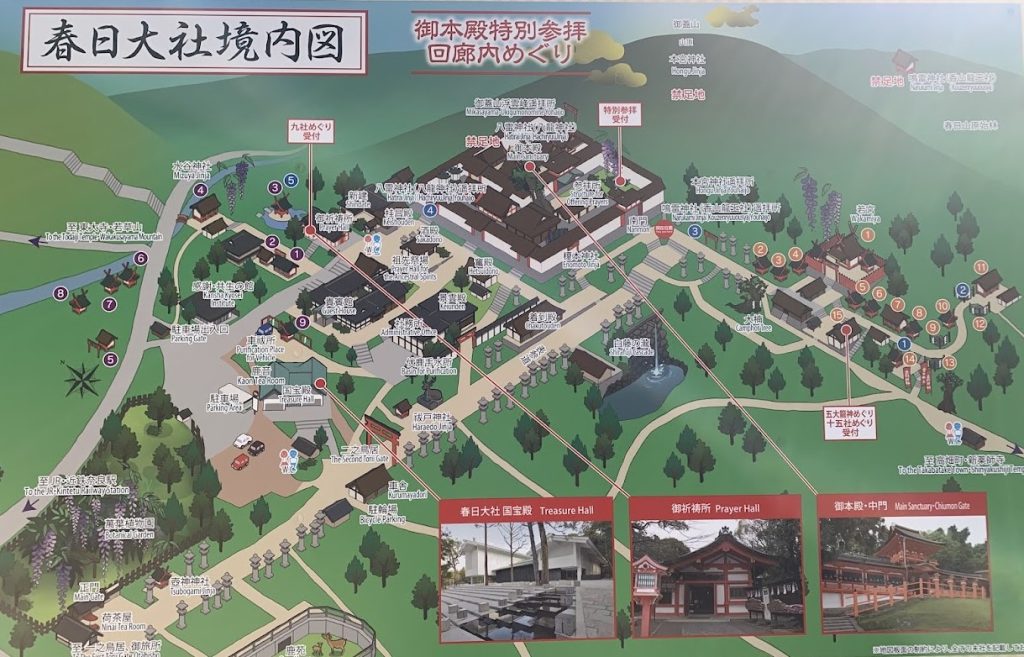
Kasugataisha Shrine Manyo Botanical Garden
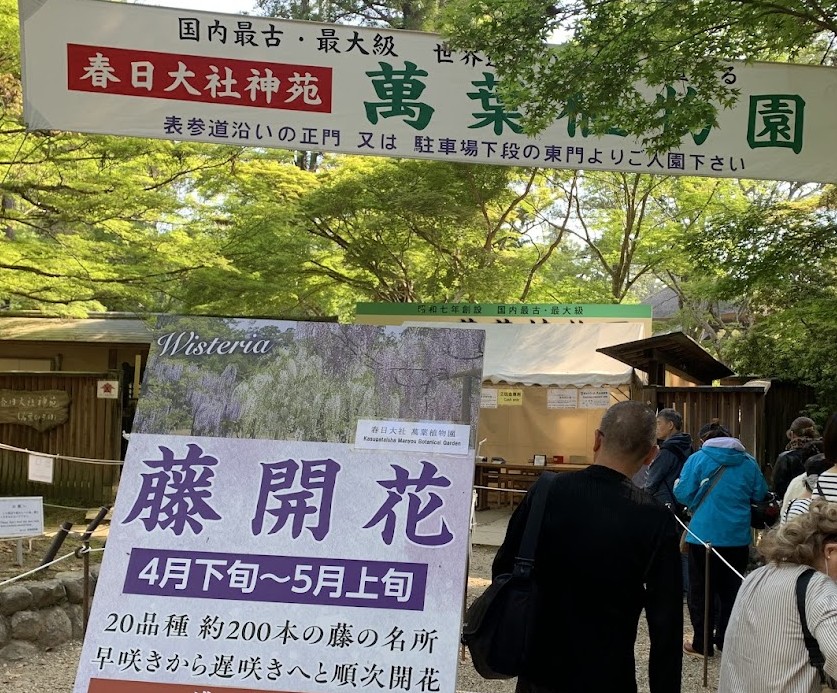
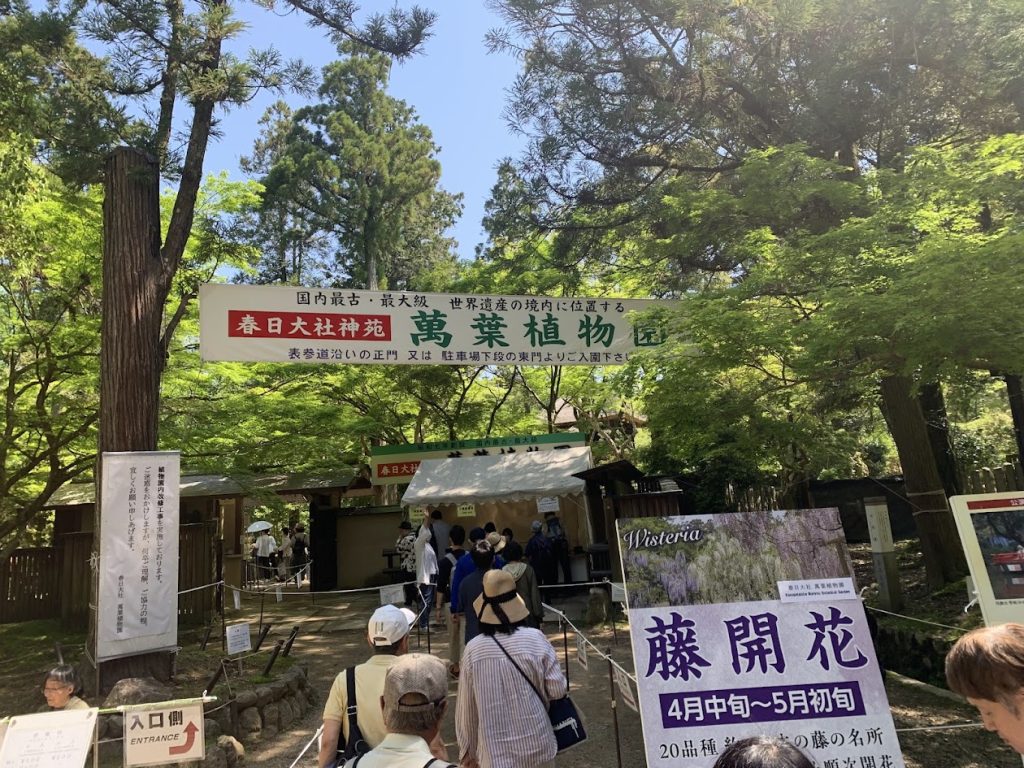
Man’yō Botanical Garden
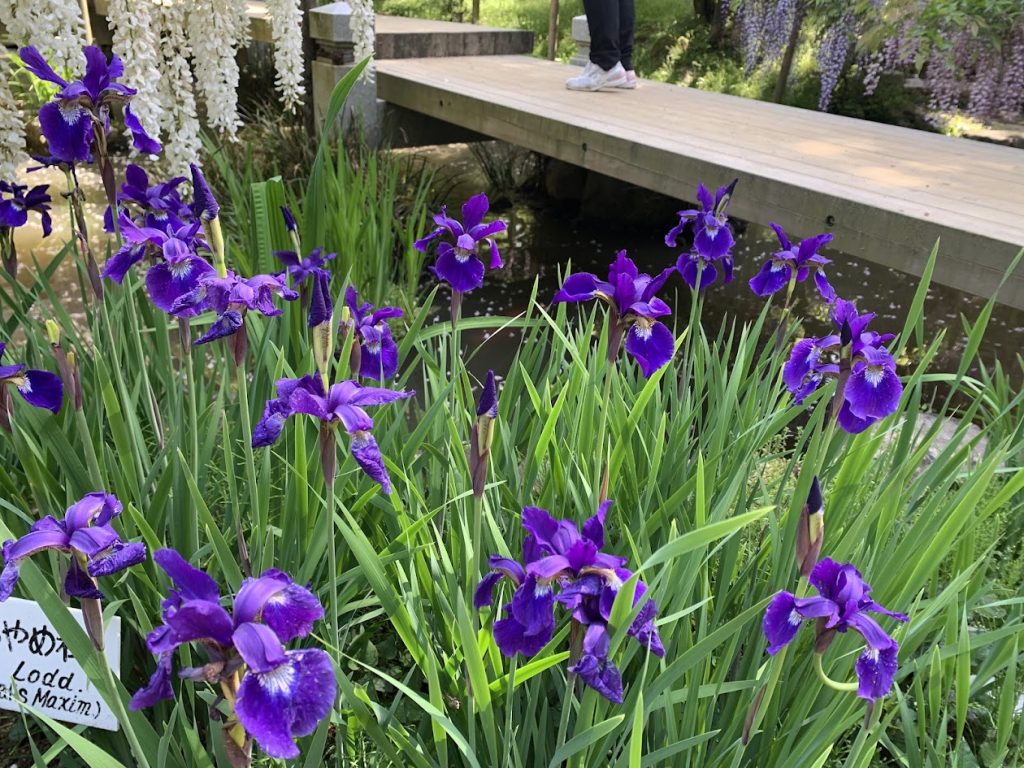
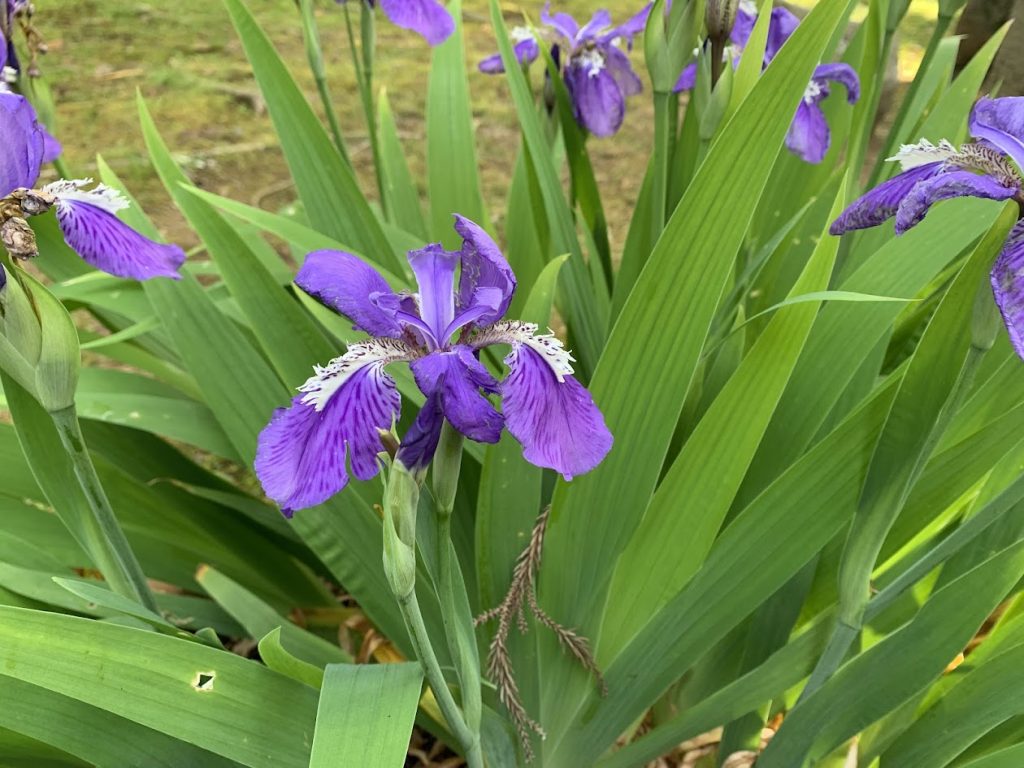
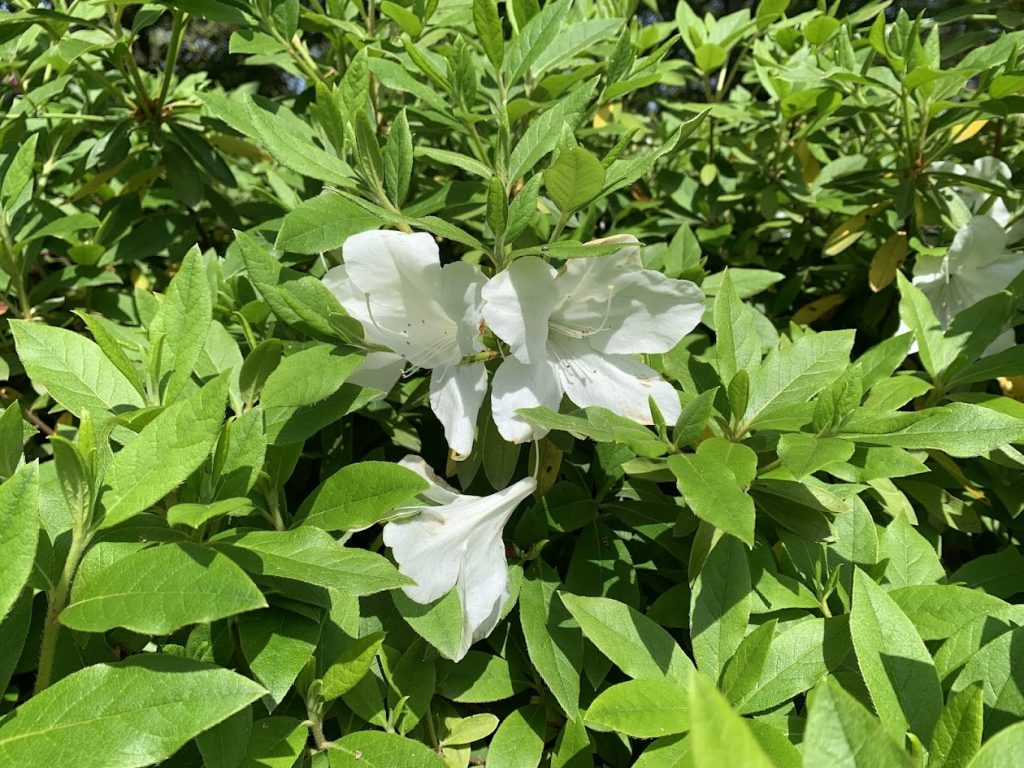
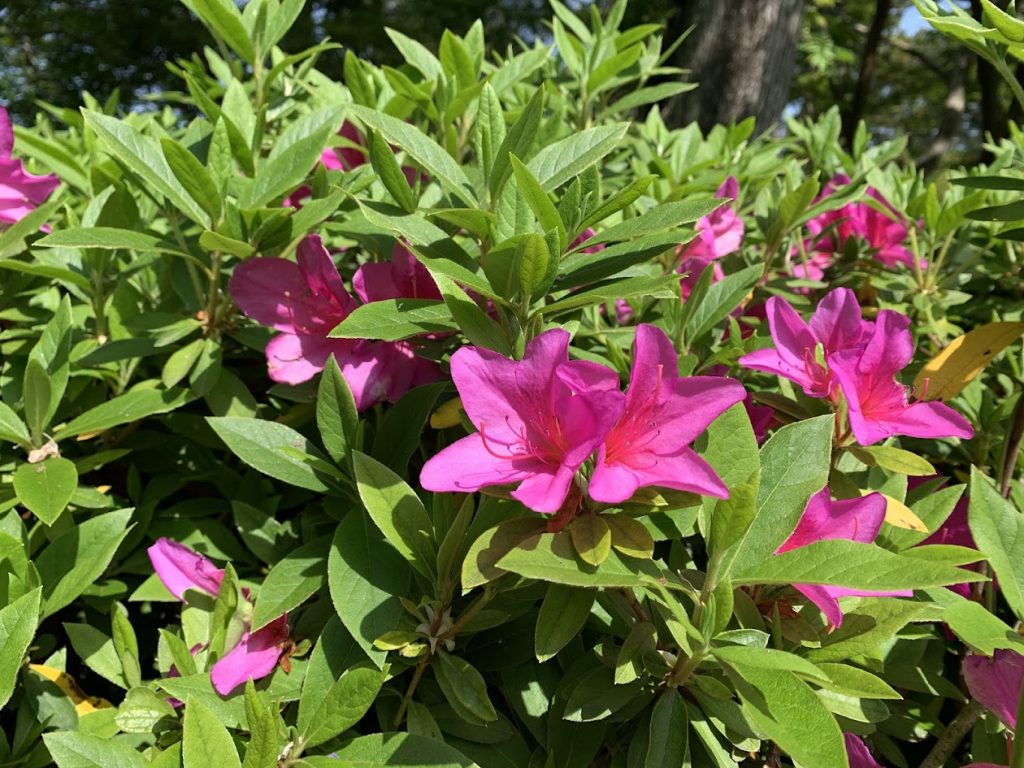
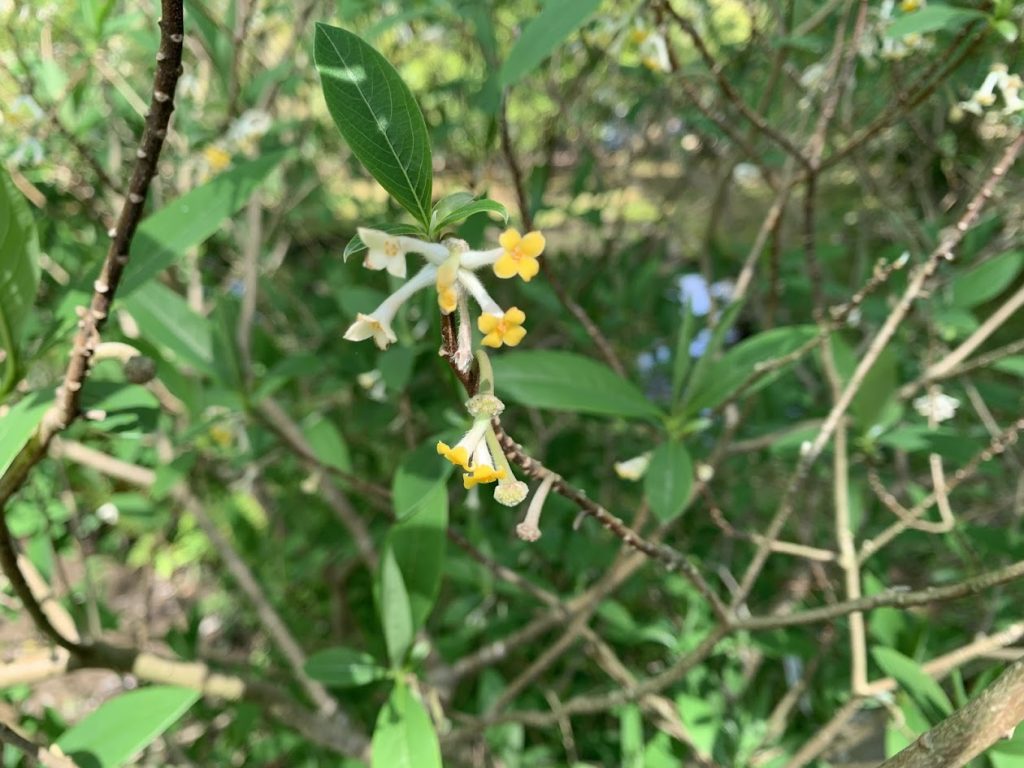
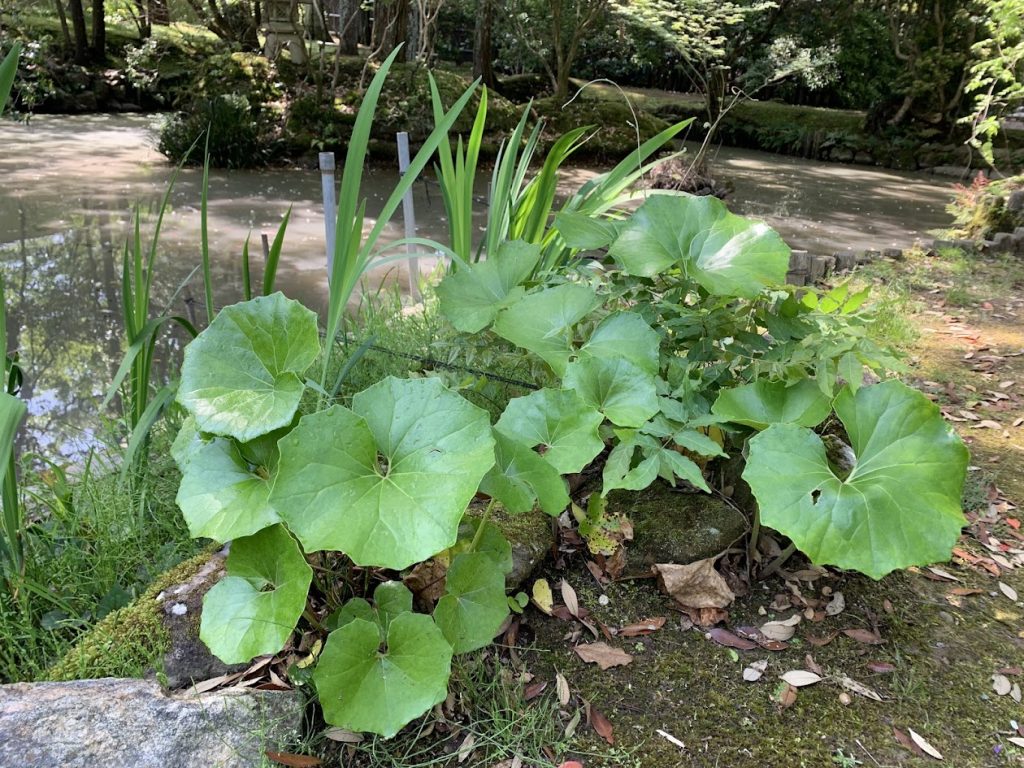
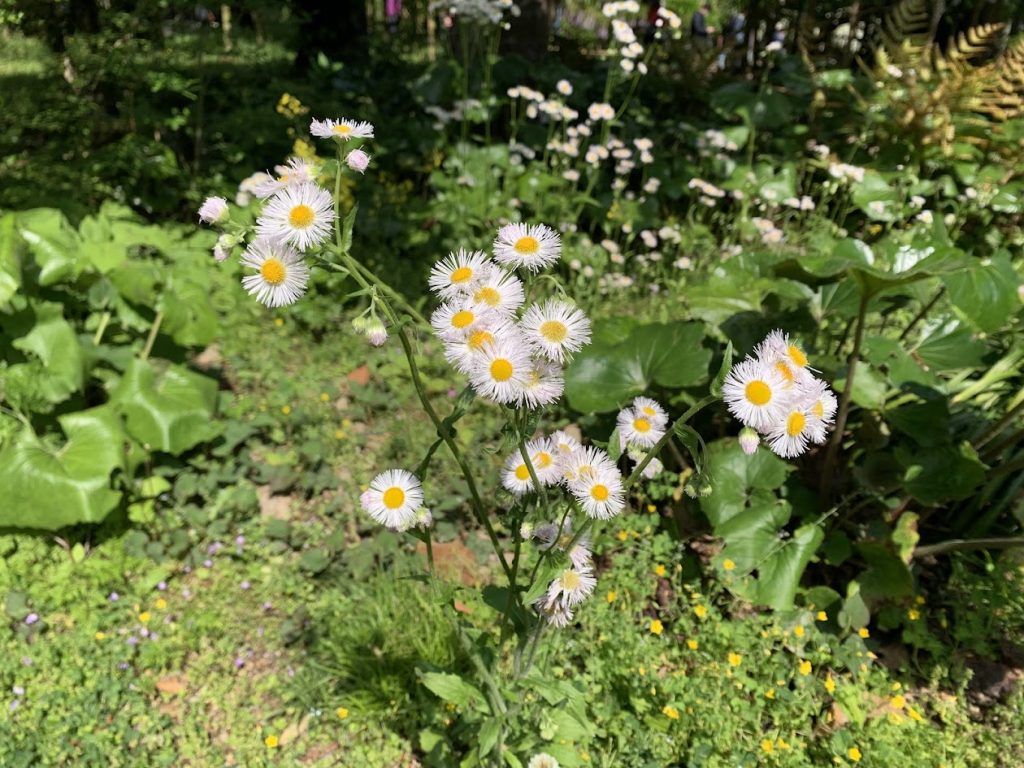
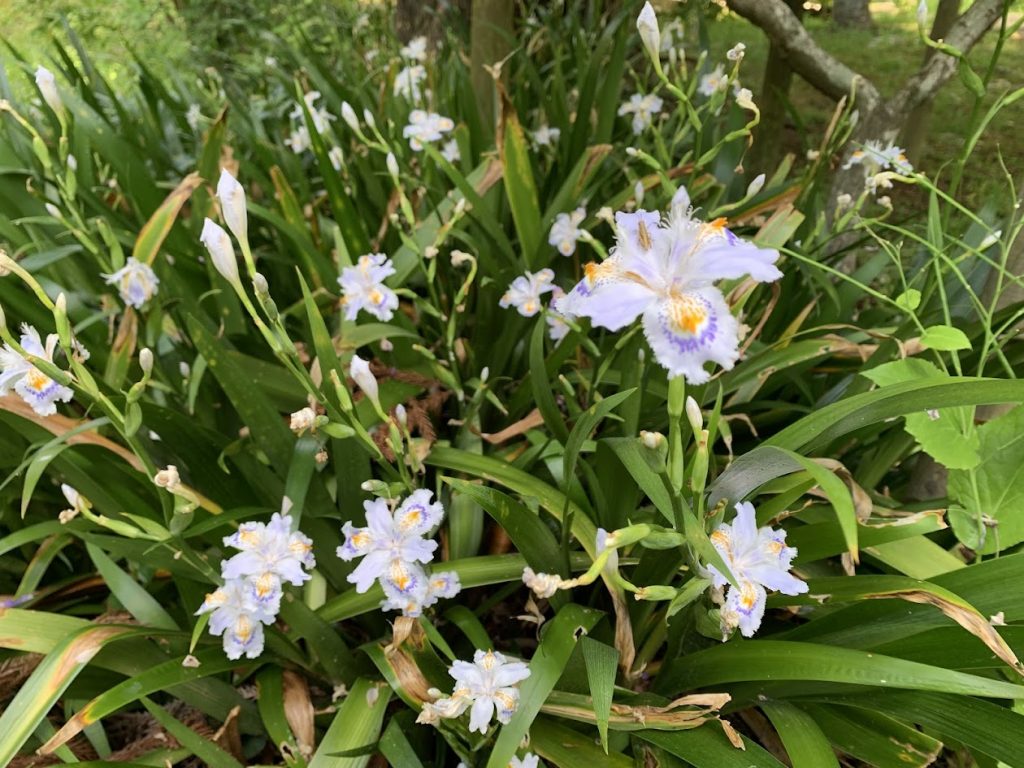
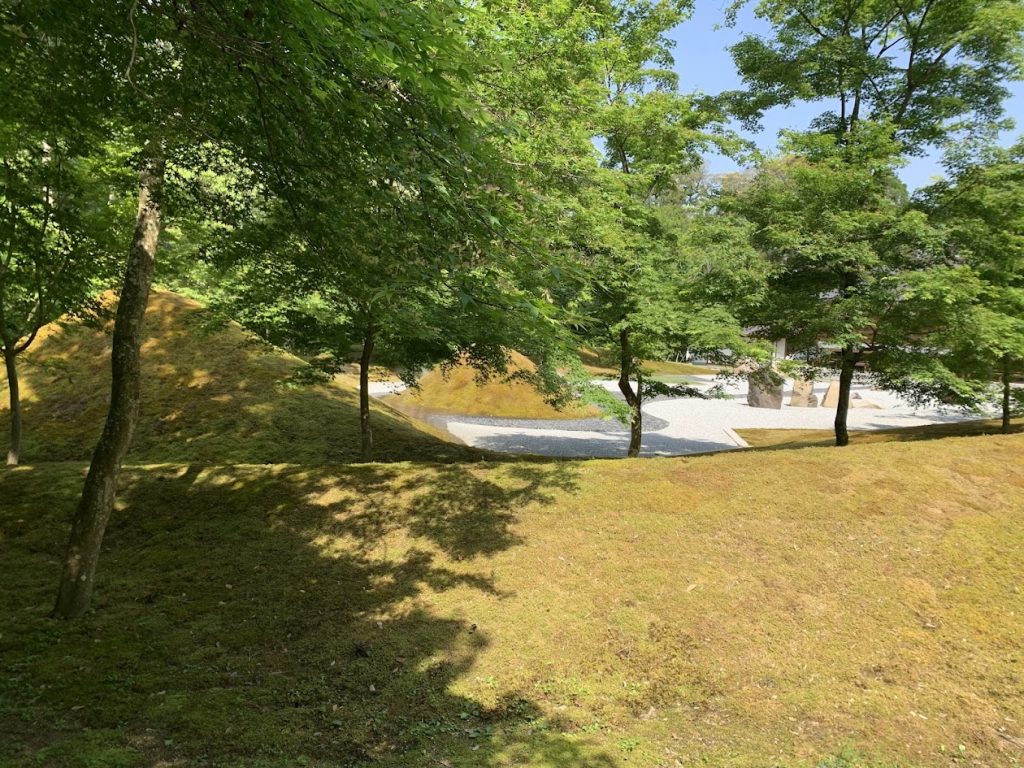
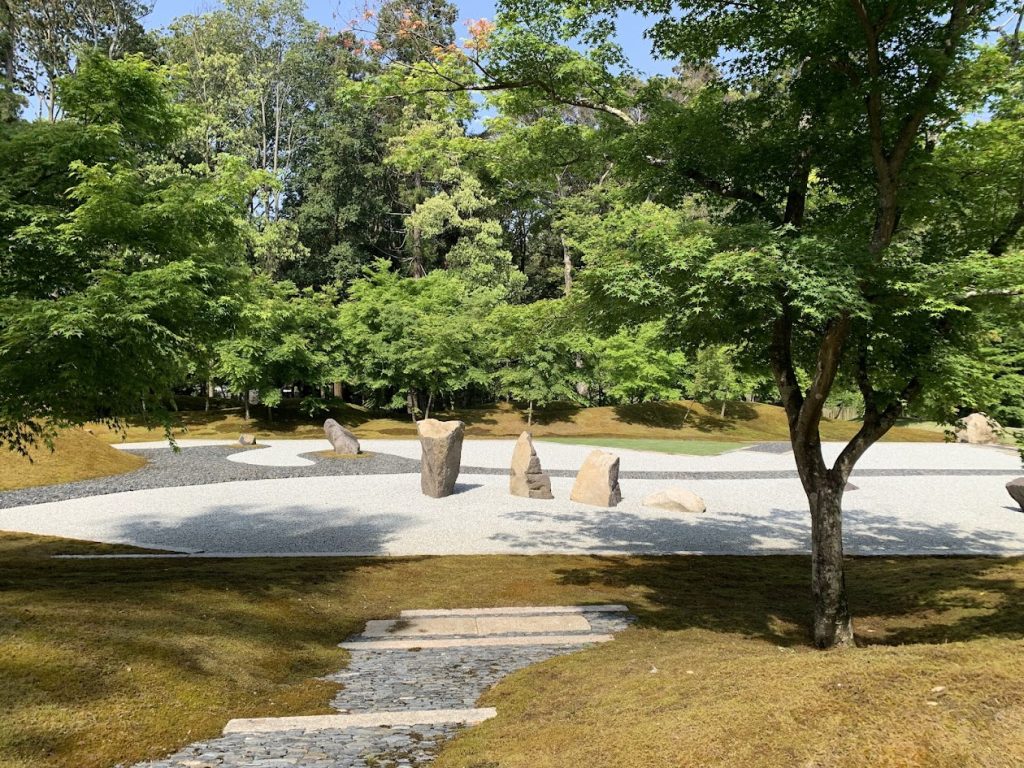
Established in 1932, the Man’yō Botanical Garden is dedicated to plants featured in the Man’yōshū, Japan’s oldest anthology of poetry. While some of the approximately 180 species mentioned in the poems are ornamental, many are modest, unassuming plants that quietly thrive in nature. The collection also includes species historically used for food, medicine, and dye—plants deeply woven into daily life in ancient Japan.
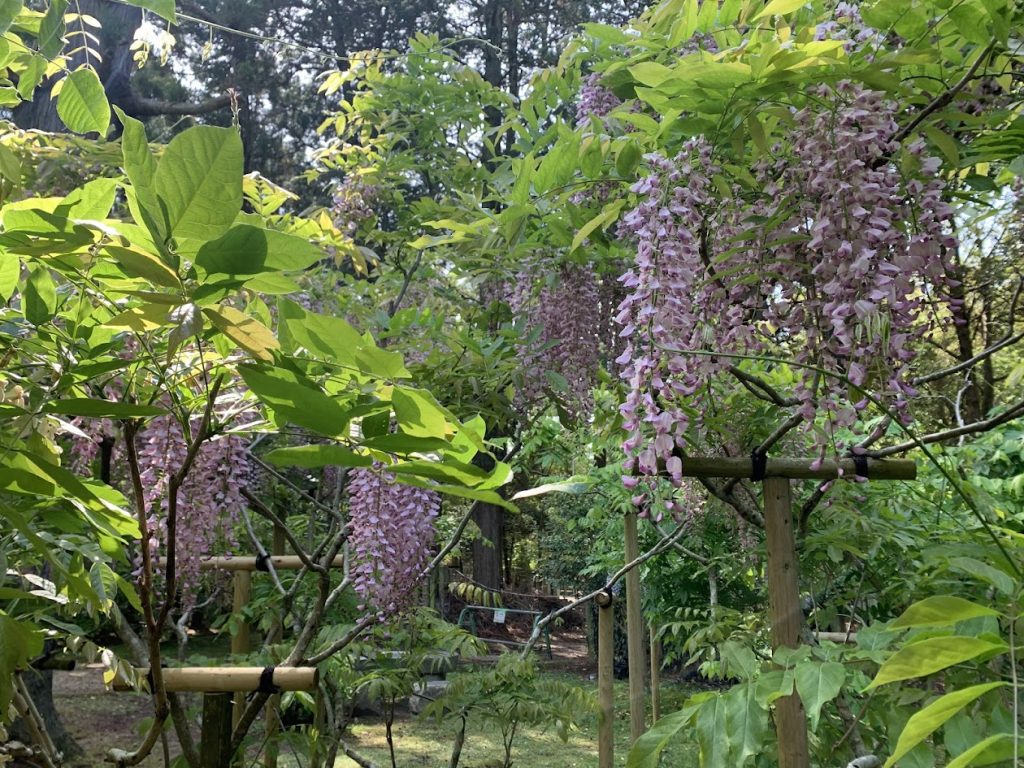
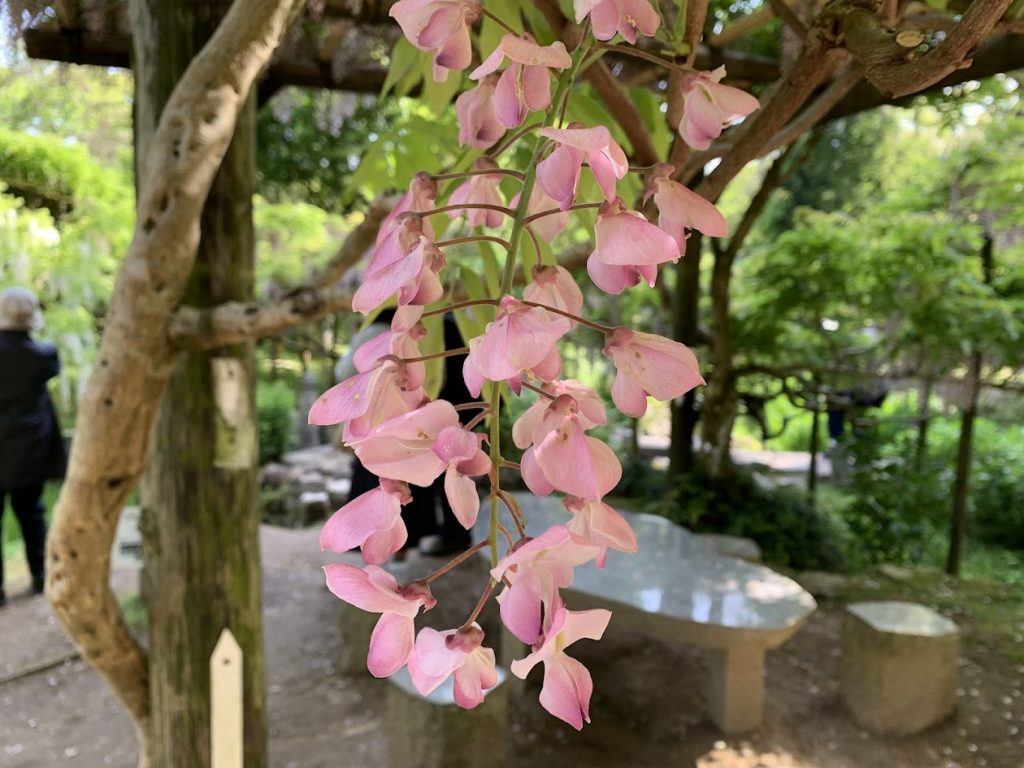
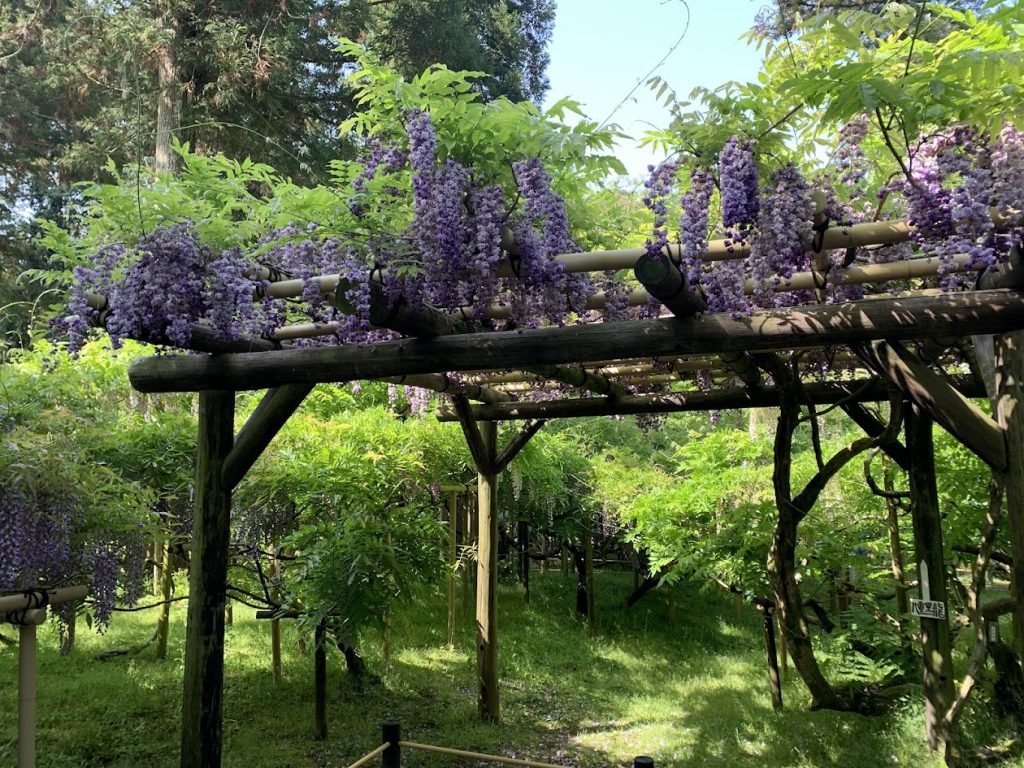
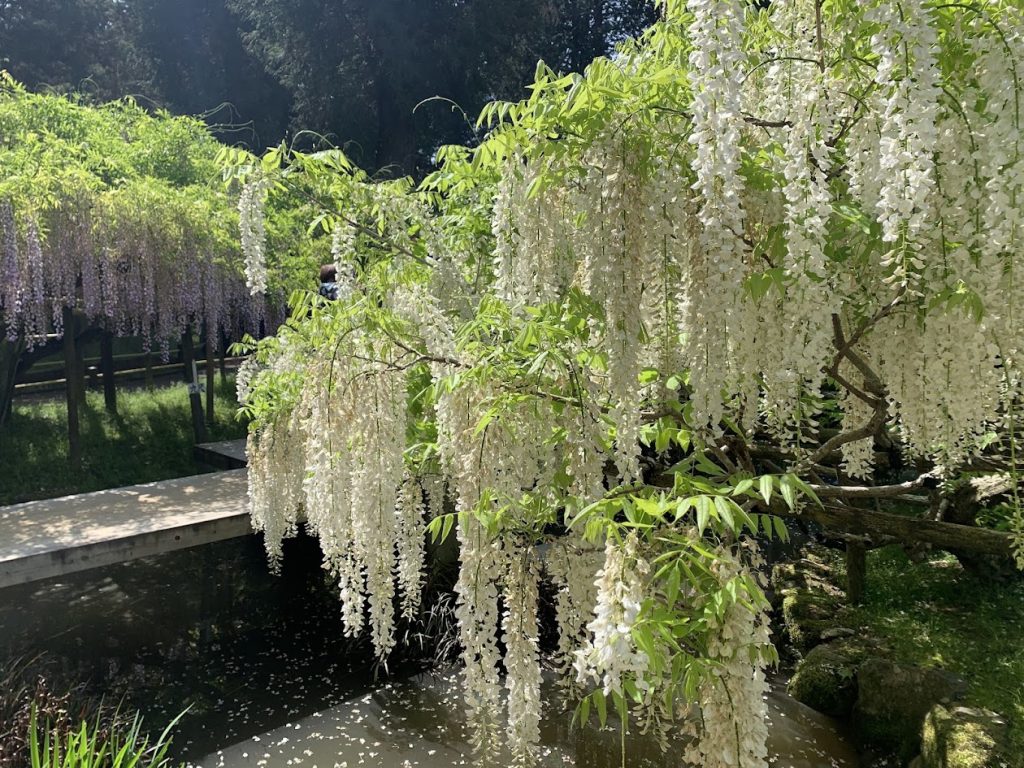
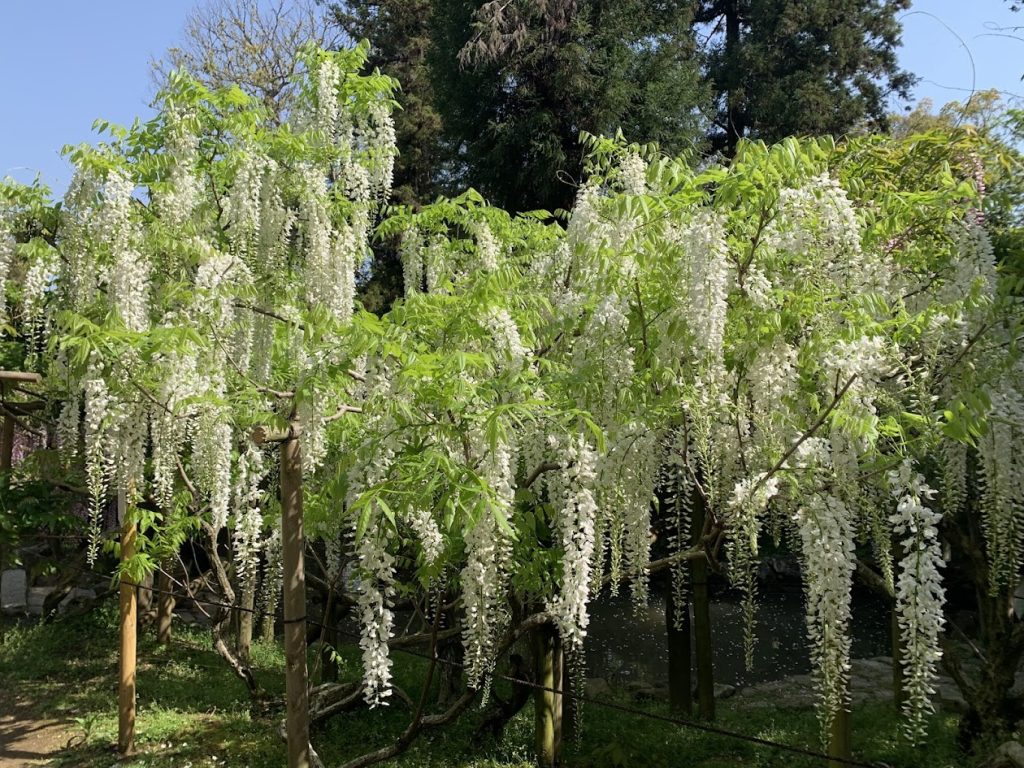
The garden spans about 3 hectares (roughly 9,000 tsubo) and is divided into four themed areas: Man’yō Garden, Village of the Five Grains, Camellia Garden, and Wisteria Garden.
Click the photo of the wisteria blossoms to go to the “Flowers” page.



コメント