
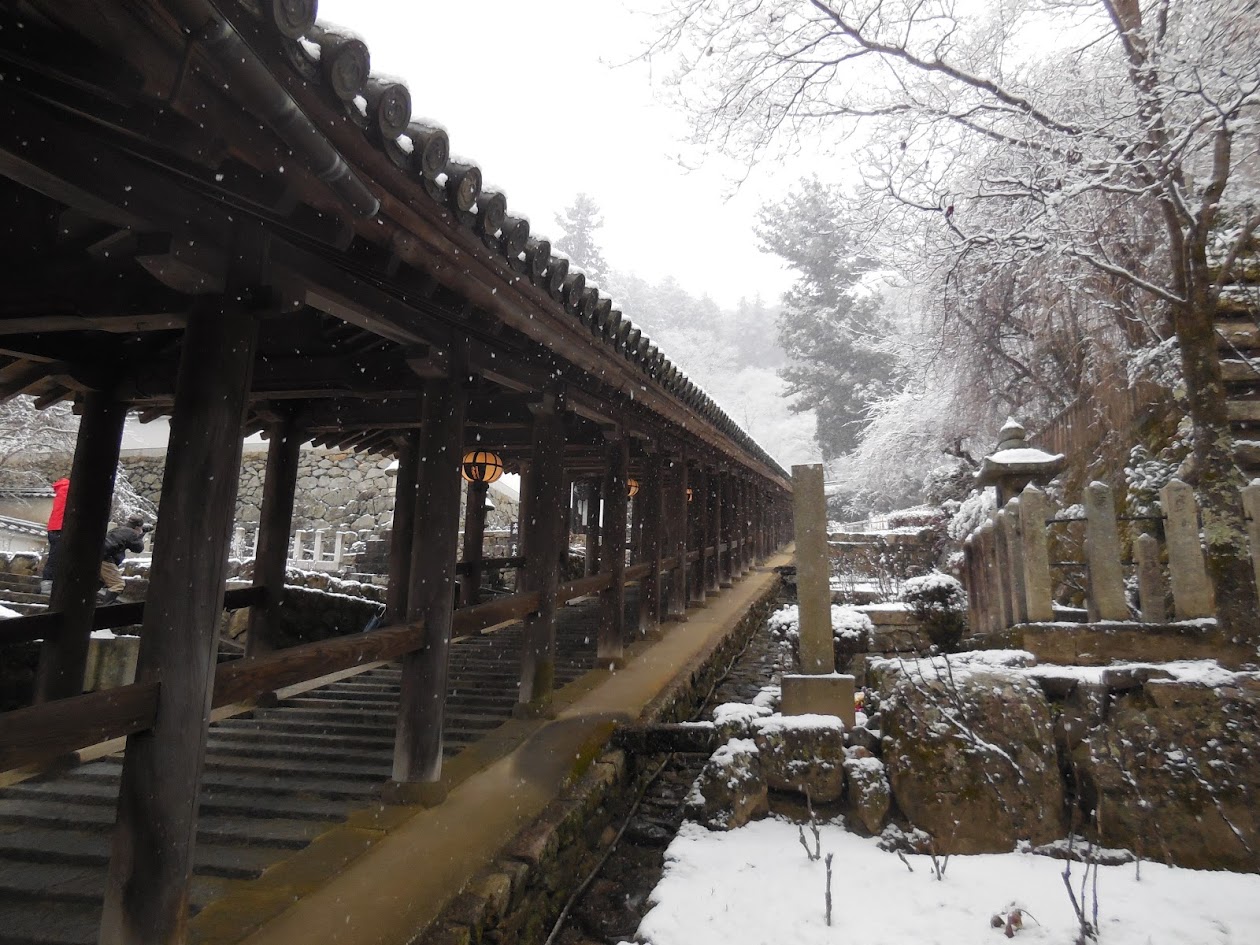
Hasedera has long been a place where many people from afar have come to seek the compassion of the revered ‘Kannon,’ renowned for its miraculous blessings.
The 399-step covered staircase leading from the temple gate is both beautiful and impressive.
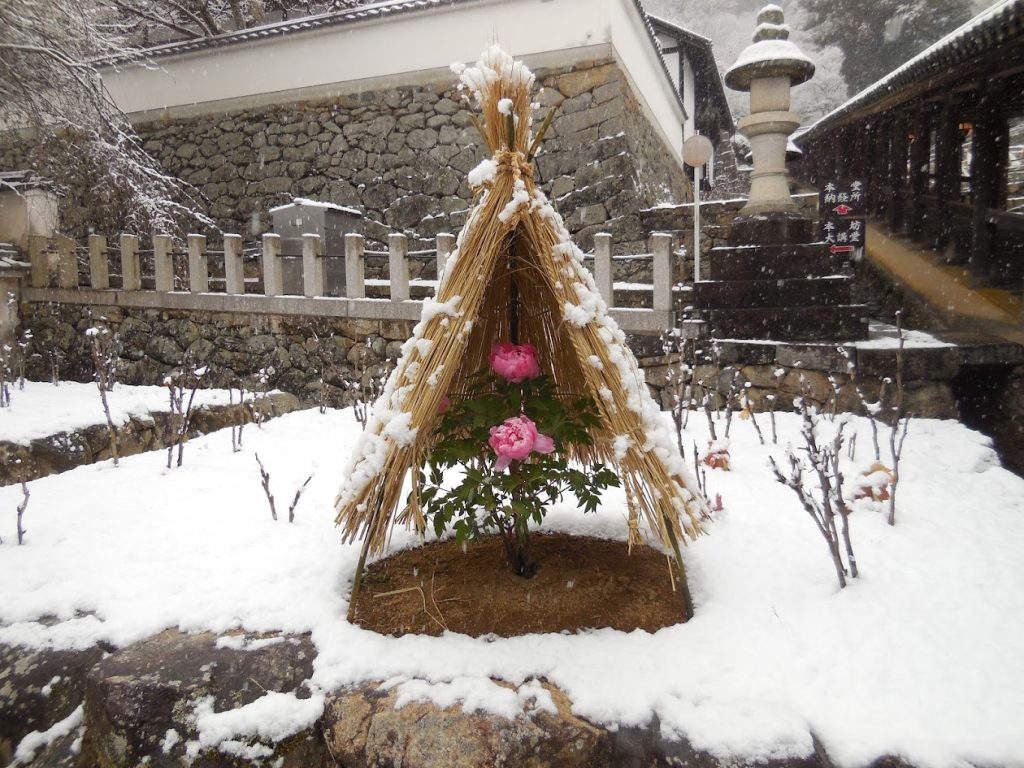
Hasedera is also famous as a temple of flowers, especially for its peonies.

Hasedera Temple in Autumn
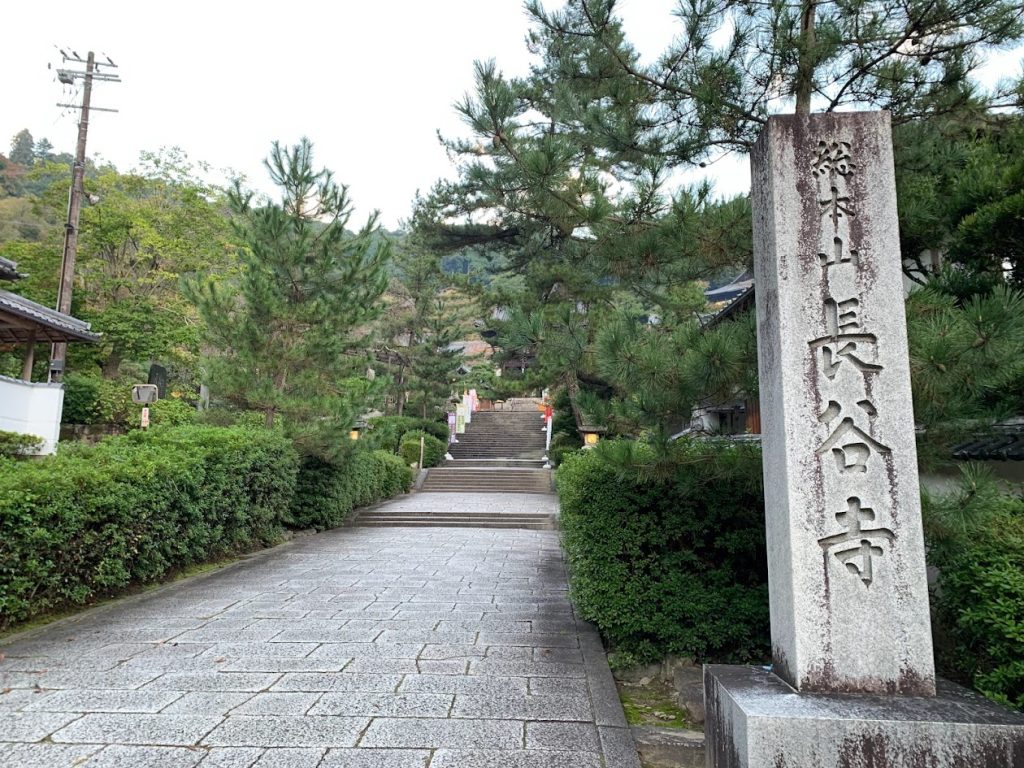
Hase-dera Temple is located in the eastern part of Sakurai City. It was originally established in 686 when the monk Domyo from Asuka’s Kawahara-dera Temple built a three-story pagoda to pray for the recovery of Emperor Tenmu’s illness, enshrining the “Copper Plate Lotus Sutra Illustrations” (National Treasure) as part of his prayers.
Later, under the imperial command of Emperor Shomu, a hall was built with an Eleven-Headed Kannon statue as its main deity, which became the foundation for the current main hall.
The present main hall (National Treasure) was reconstructed in 1588.
The current Eleven-Headed Kannon statue, created in 1538, is the largest wooden Buddhist statue in Japan, standing about 10 meters tall.

The 399-step approach leading from the mountain gate is a magnificent corridor, with peonies and other flowers planted along the slopes on either side.
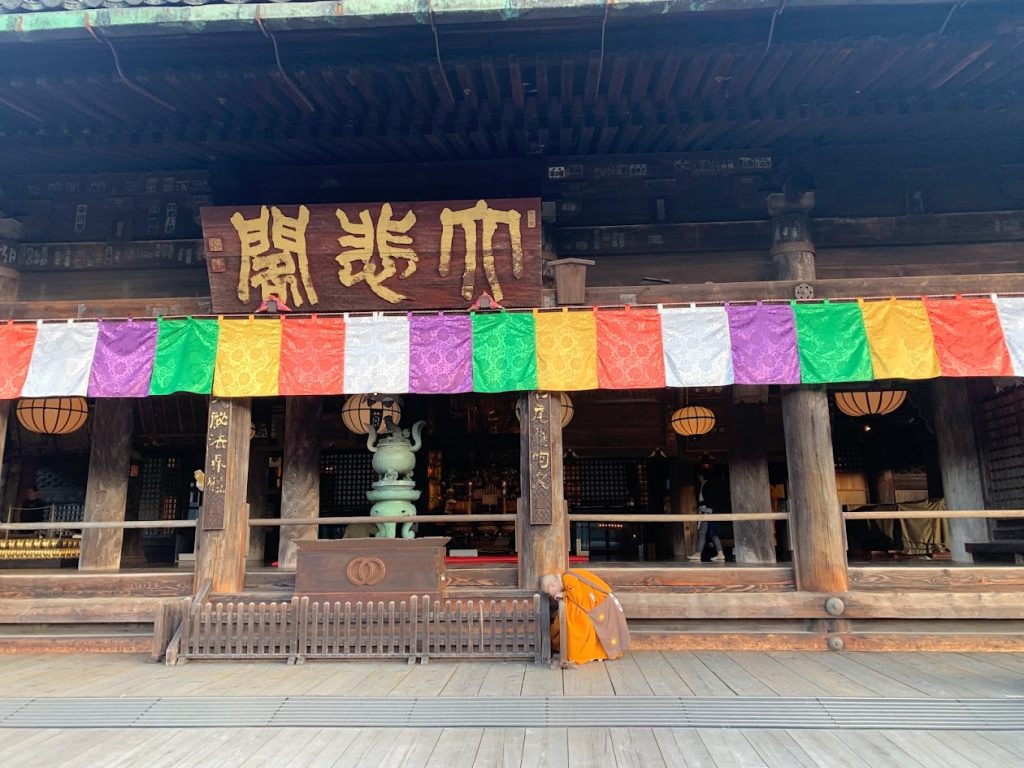
The main hall of Hase-dera Temple has long been a place where many people have come to worship the Eleven-Faced Kannon Bosatu.
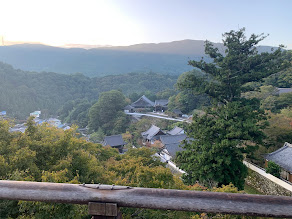
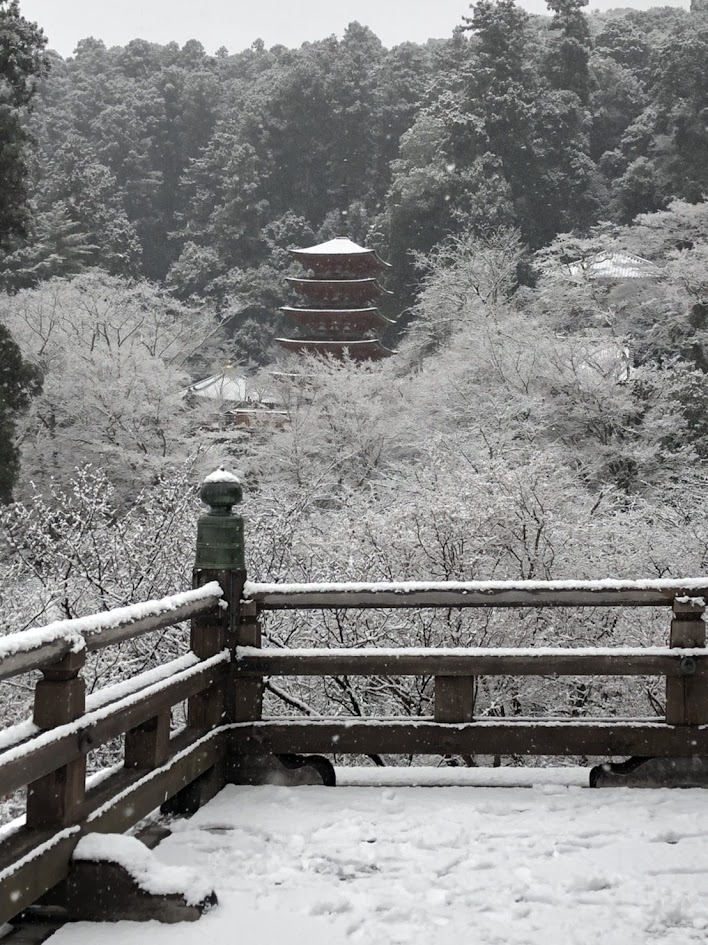
View from the stage of the main hall
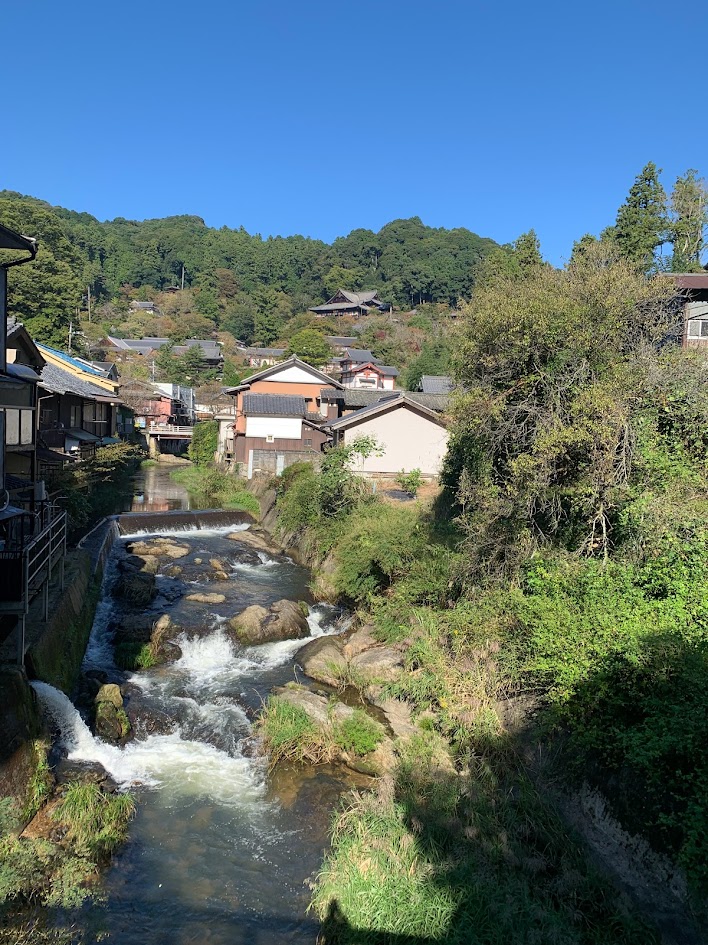
The river next to Hase-dera Temple, known as Hasegawa (formerly Hatsusegawa).
There are many stories associated with the Hase Kannon statue (the Eleven-Faced Kannon Bosatsu). One of them is the tale of “Warashibe Choja” (The Straw Millionaire) from the Konjaku Monogatari (old Japanese stories).
In this story, a poor man earnestly prayed to the Kannon statue at Hase-dera Temple for 21 days. In a dream, he received a divine message instructing him to take whatever he touched first when leaving the temple.
As he left the temple, he stumbled, and when he got up, his touched piece of straw. He took it with him, and as he walked, a horsefly buzzed around him. He caught the horsefly and tied it to the straw. A child saw this, became interested, and asked for it. He gave it to the child and received three tangerines in return.
Later, he met a high-ranking person who was thirsty. He gave the person the tangerines and, in gratitude, received three rolls of cloth. Continuing on, he encountered a nobleman on a splendid horse. Suddenly, the horse collapsed and died. The man exchanged the cloth for the dead horse, prayed to the Hase Kannon, and the horse was revived.
Returning to Kyoto, he met someone who was about to start a journey and wanted to exchange a field for the horse. The man agreed, and from then on, he continued to grow richer and richer.
This is the story of the Straw Millionaire.
Winter at Hase-dera Temple
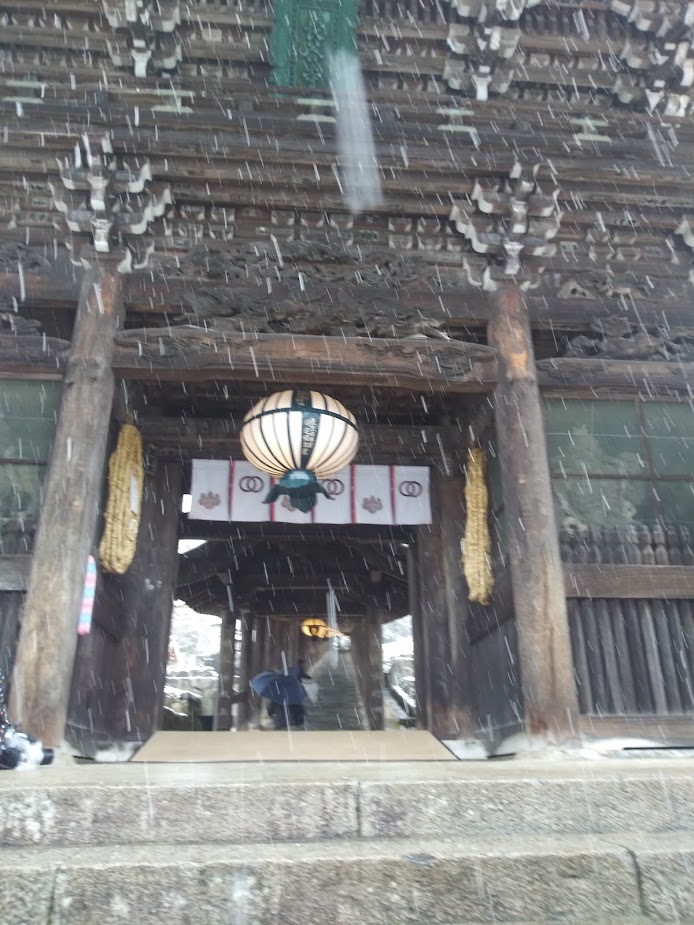
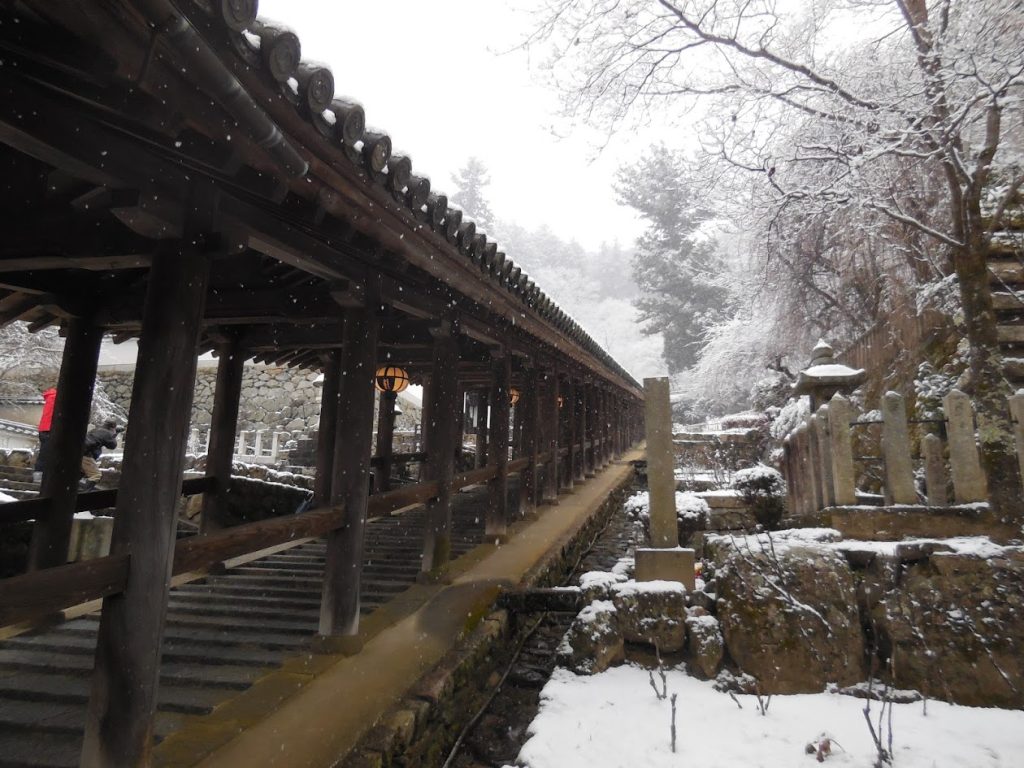
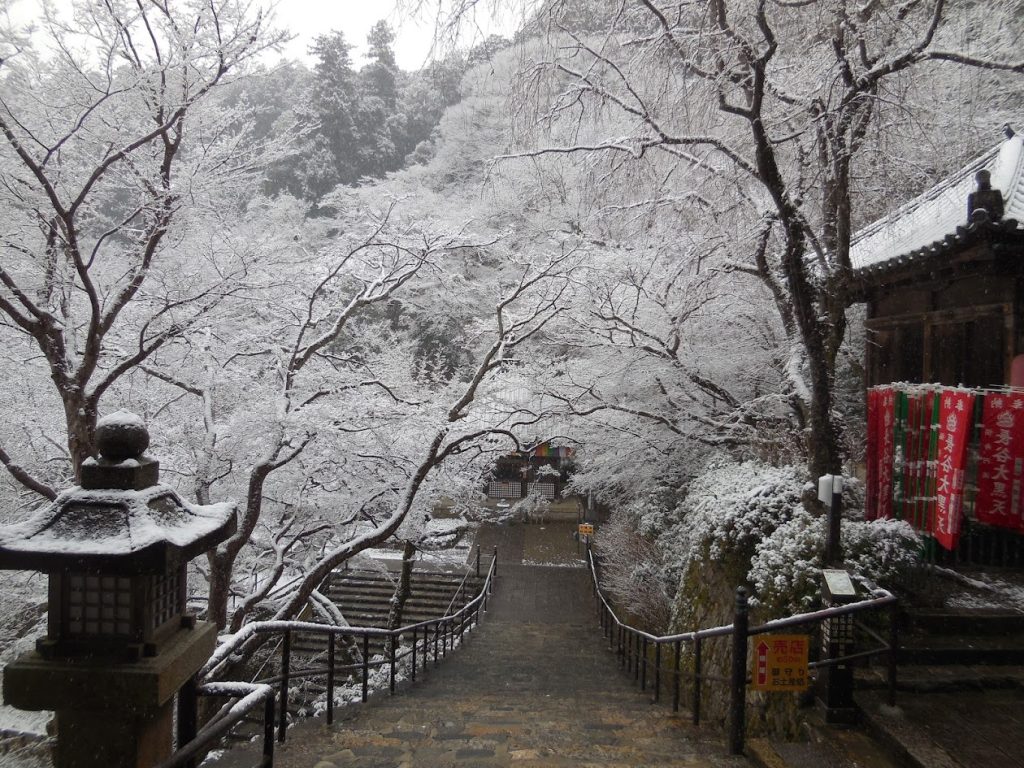
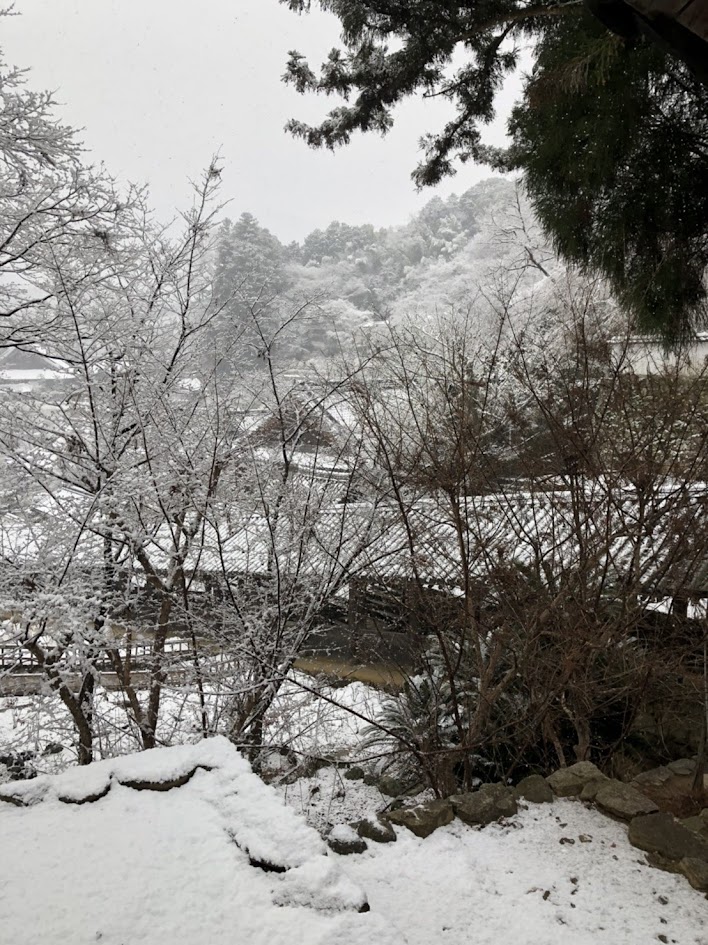
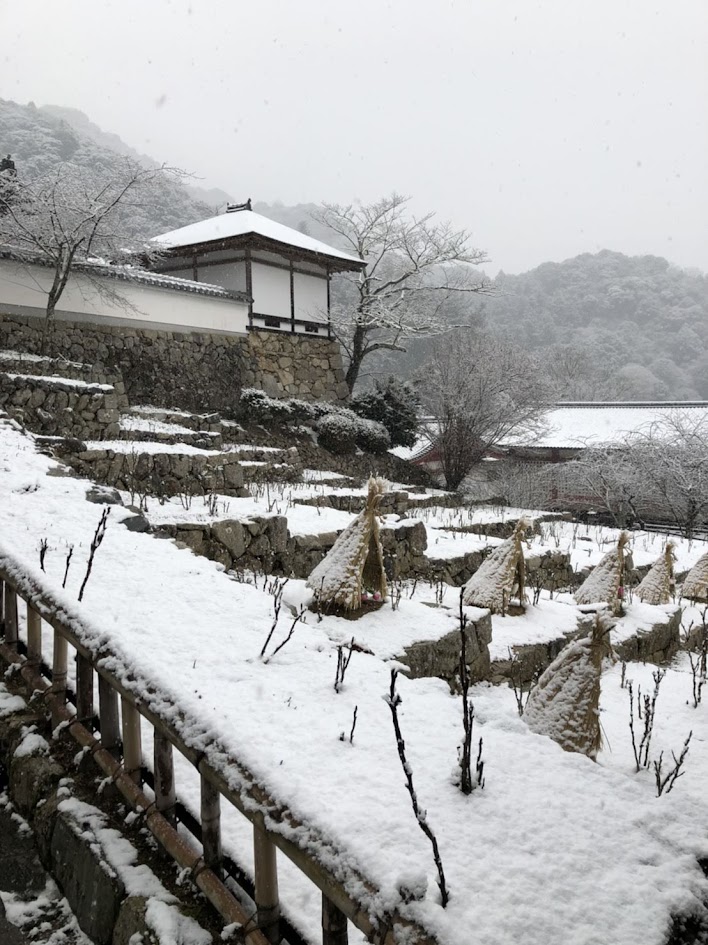
These are photos from a visit on a snowy day in January.

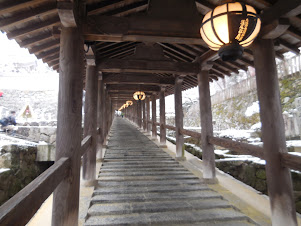
The symbol of Hase-dera Temple is the approach with its distinctive corridors.
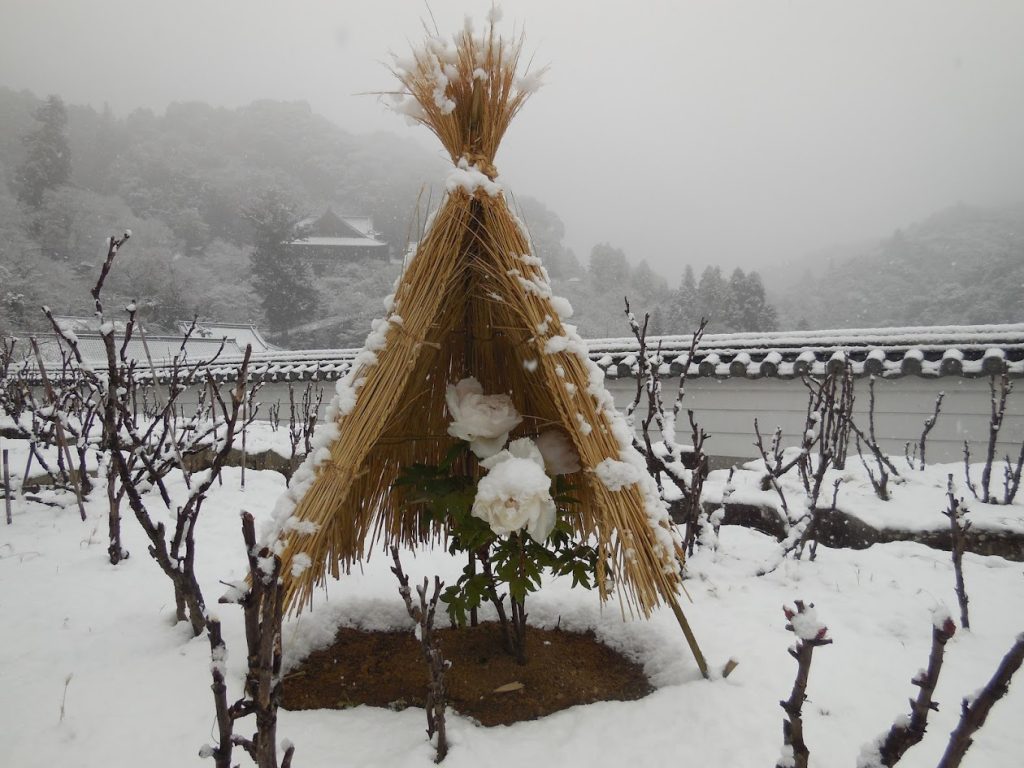
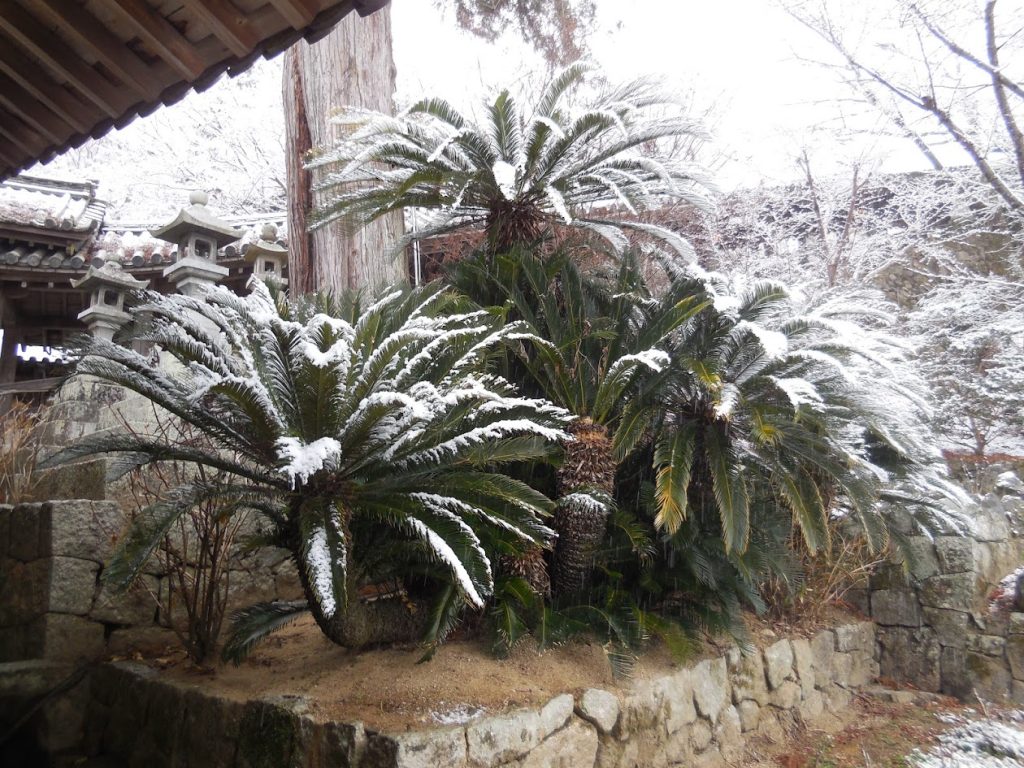
The “warabocchi” (straw doll) protecting the winter peonies at Hase-dera Temple and the cycad enduring the cold.
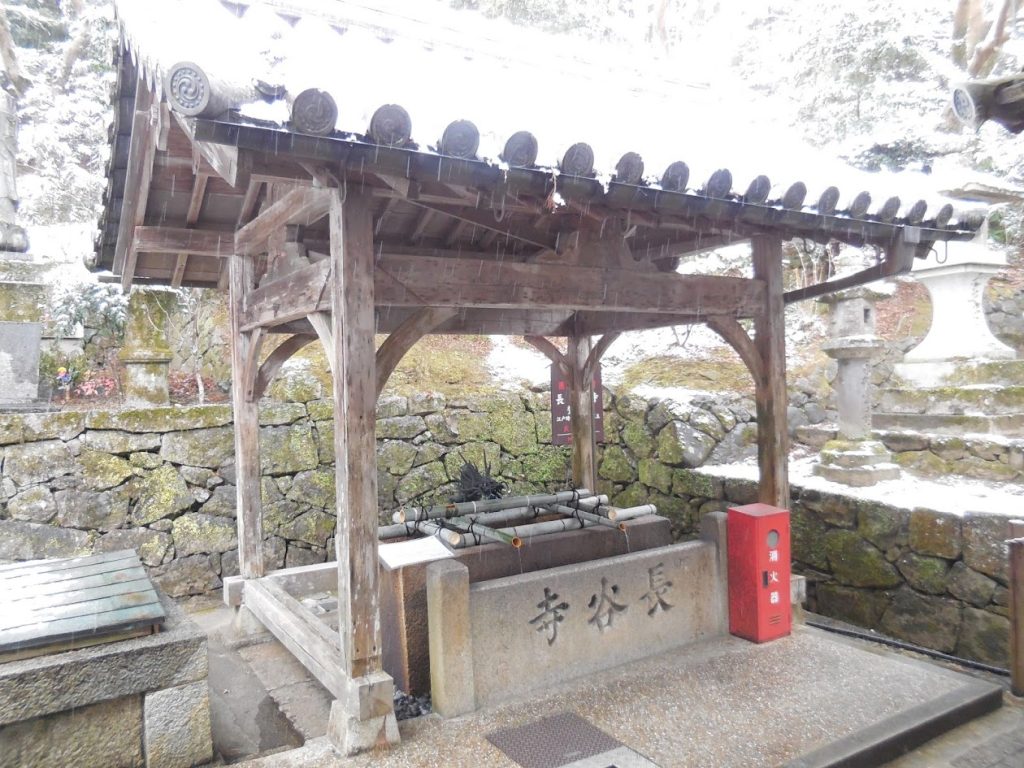
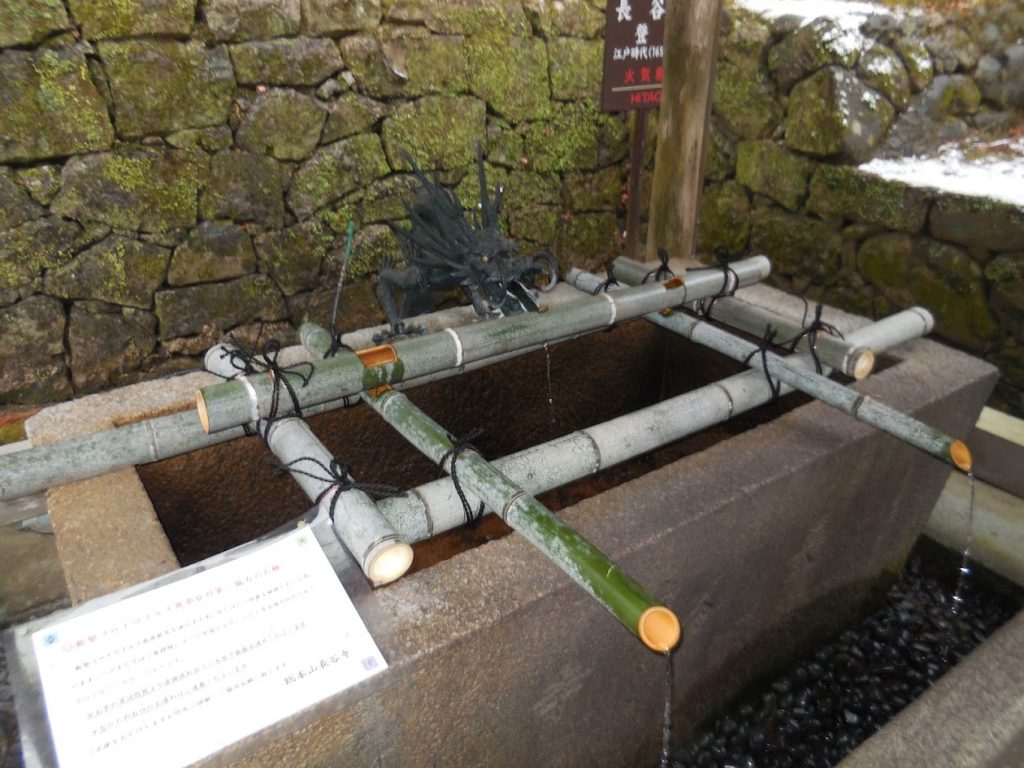
The chozusha

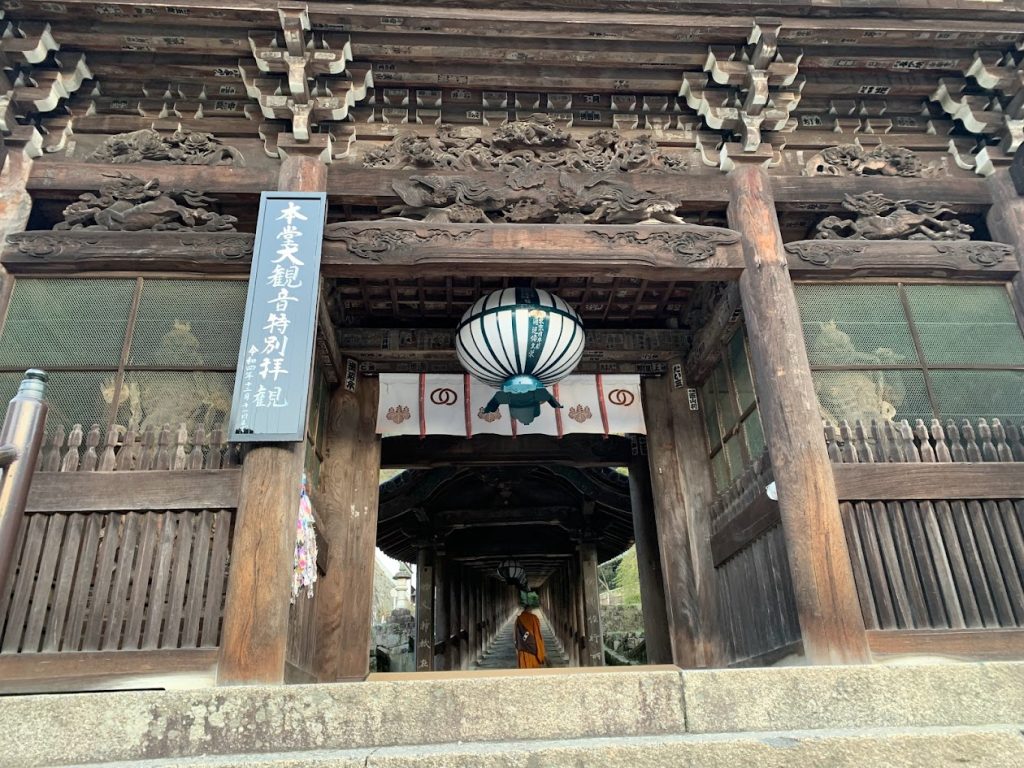
At the top of the steps is the entrance to the main hall.
The Kannon deity is right in front of you.
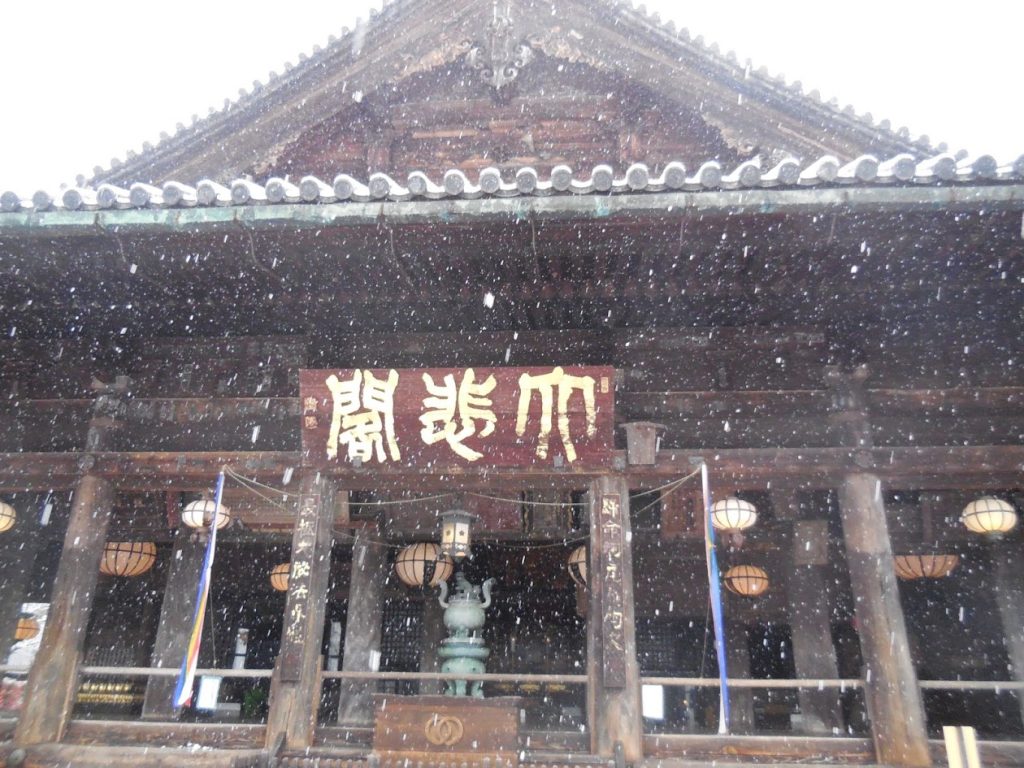
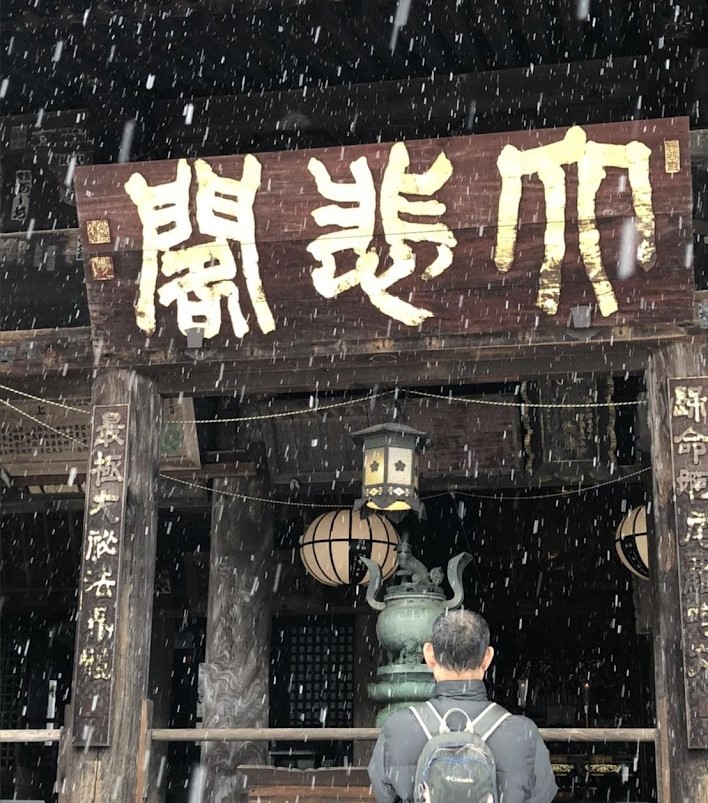
This is the main hall. For centuries, many people have visited Hase-dera Temple to seek the compassion of the Eleven-Faced Kannon.
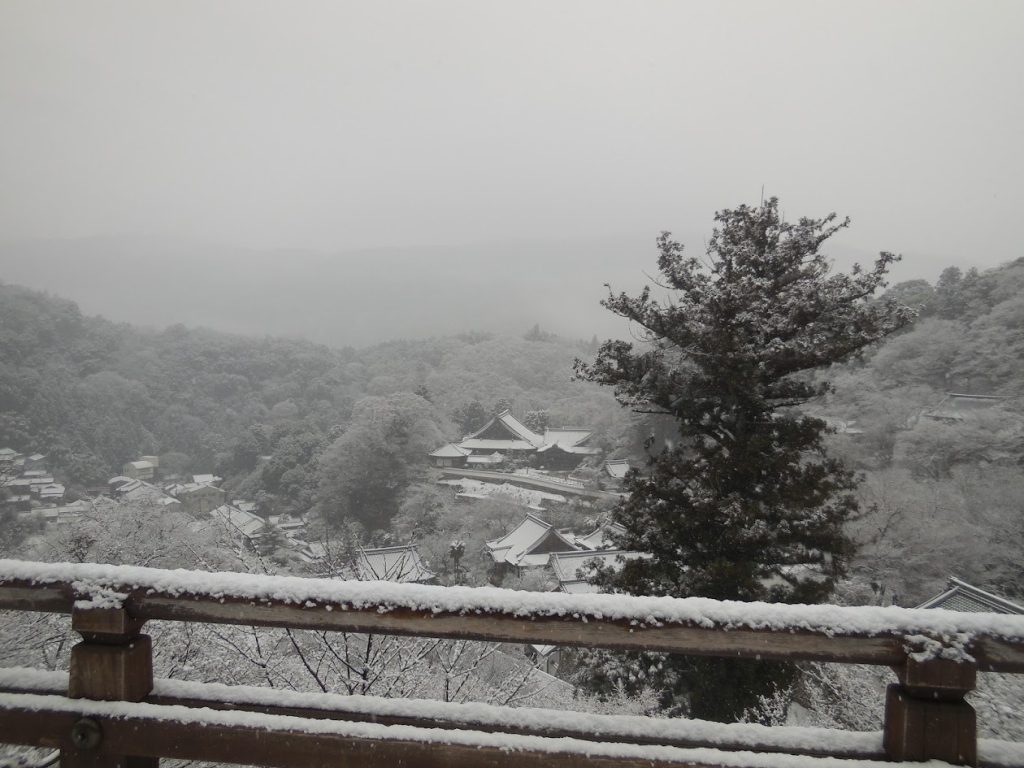
This is a view of the snowy landscape from the stage of Hase-dera Temple.
It looks like a black-and-white photograph.


コメント