

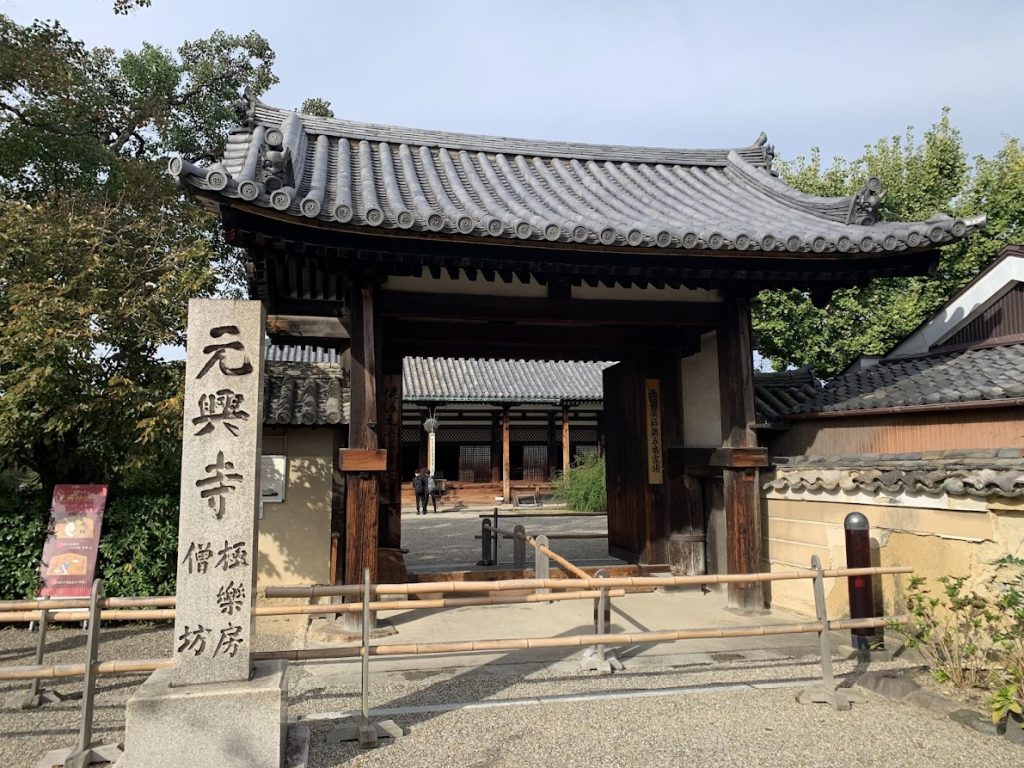
In 588, Japan’s first temple with many buildings began construction in Asuka. It was originally named “Hokkoji,” but later became known as “Asukadera” after its location.
When the capital moved to Heijokyo in 710, Asukadera was relocated to what is now Nara and renamed “Gangoji.”
At that time, Gangoji was a vast temple complex extending south of Sarusawa Pond, and people began calling the area around it “Asuka.”
Even today, the name “Asuka” is still seen in various places around the temple.
Throughout its long history, the temple suffered several fires. Each time, people settled in the burned areas, gradually forming what is now “Naramachi.”
During the medieval period, this area became the center of Nara, with many inns for travelers.
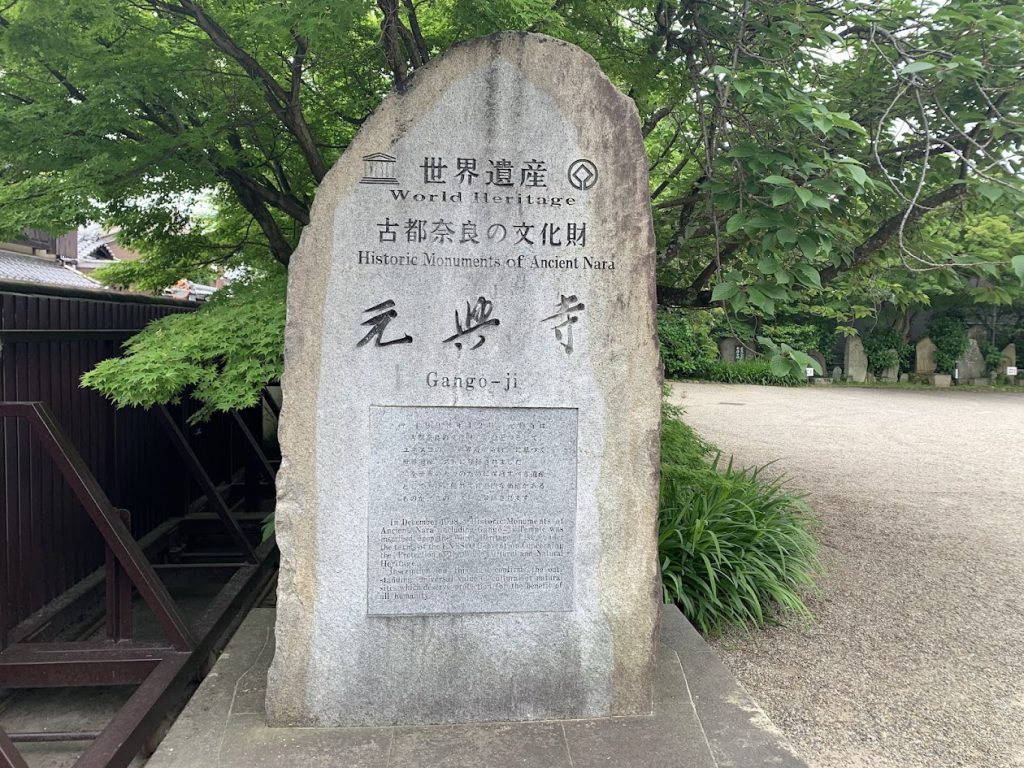
This area is a World Heritage Site.
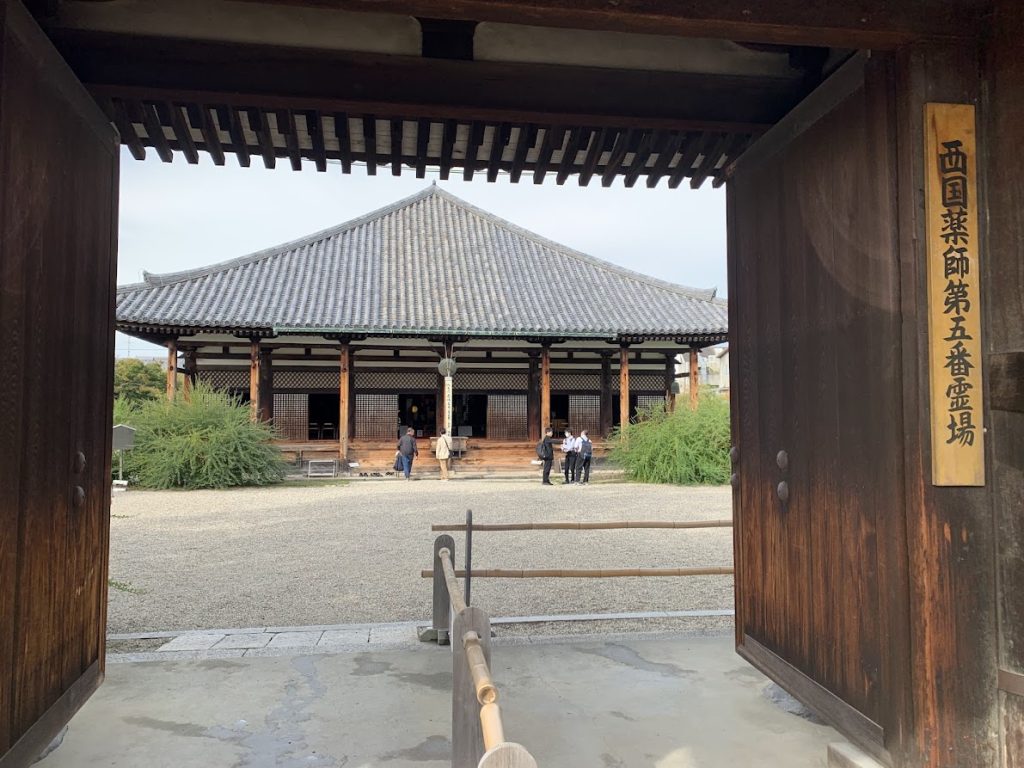
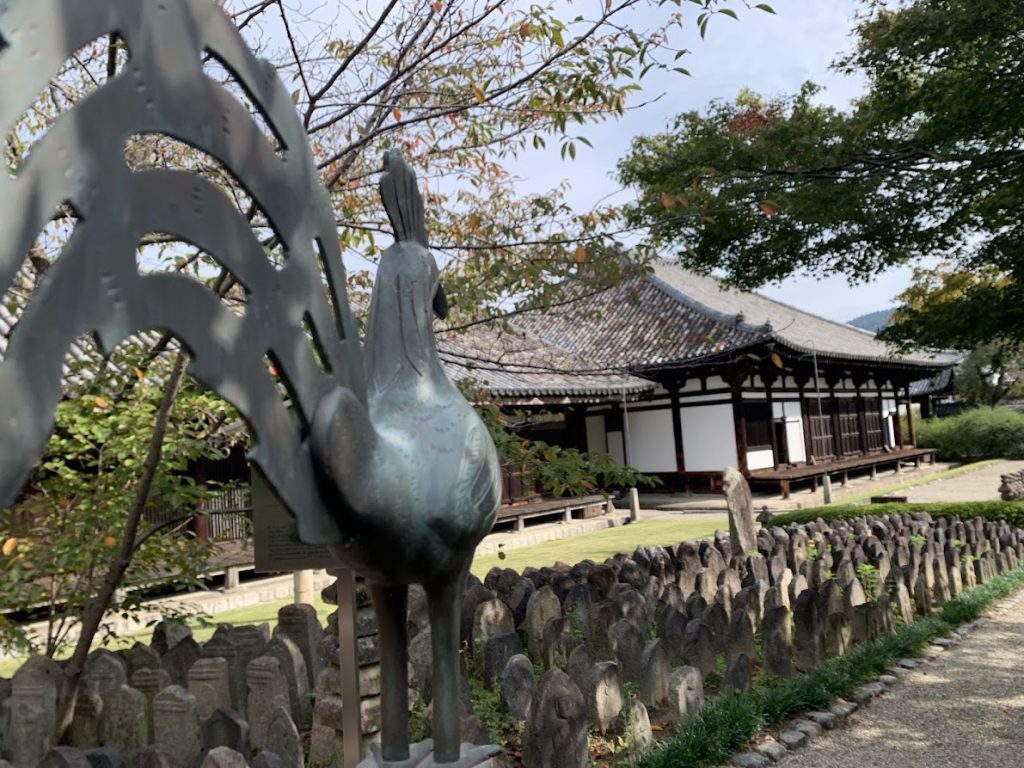
This is the Gokurakudo Hall of Gangoji.
All other buildings of Gangoji have been lost over time, and only a few, including this Gokurakudo Hall, remain.
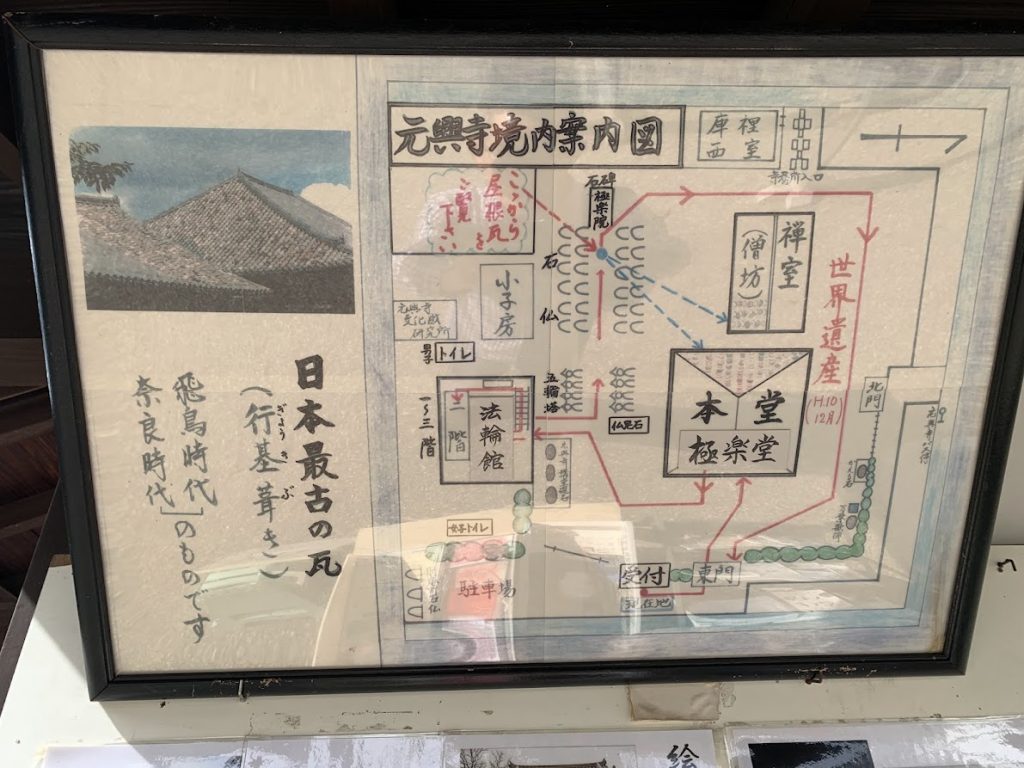
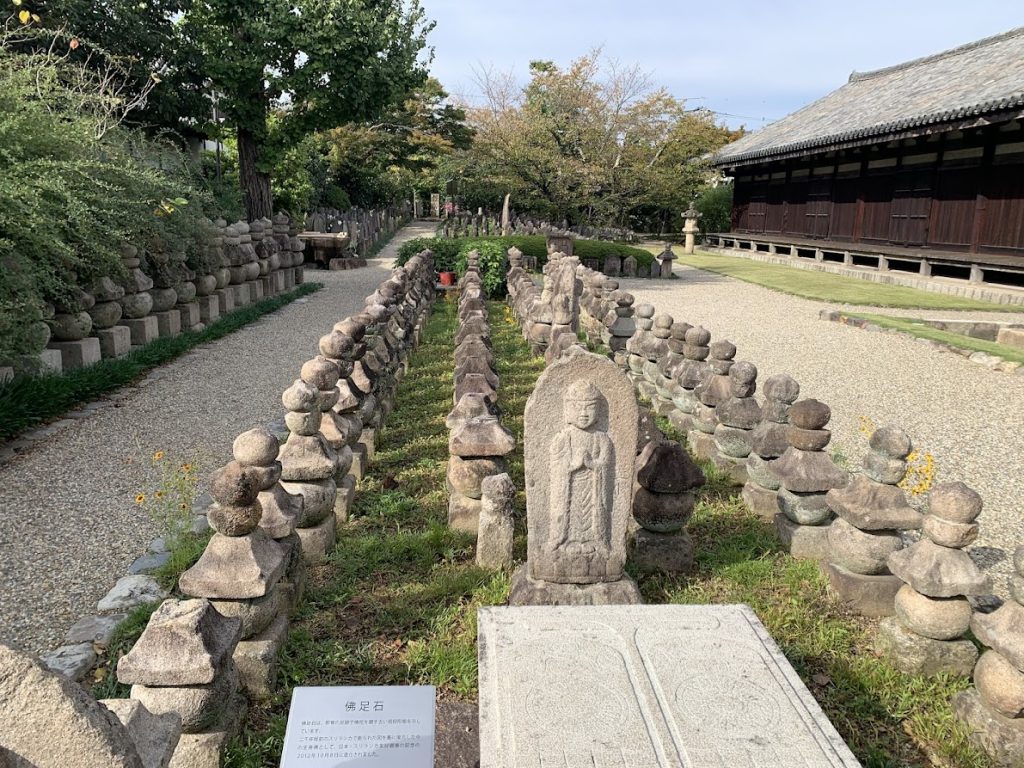
This area is known as the “Gangoji Gokurakubo Precinct.”
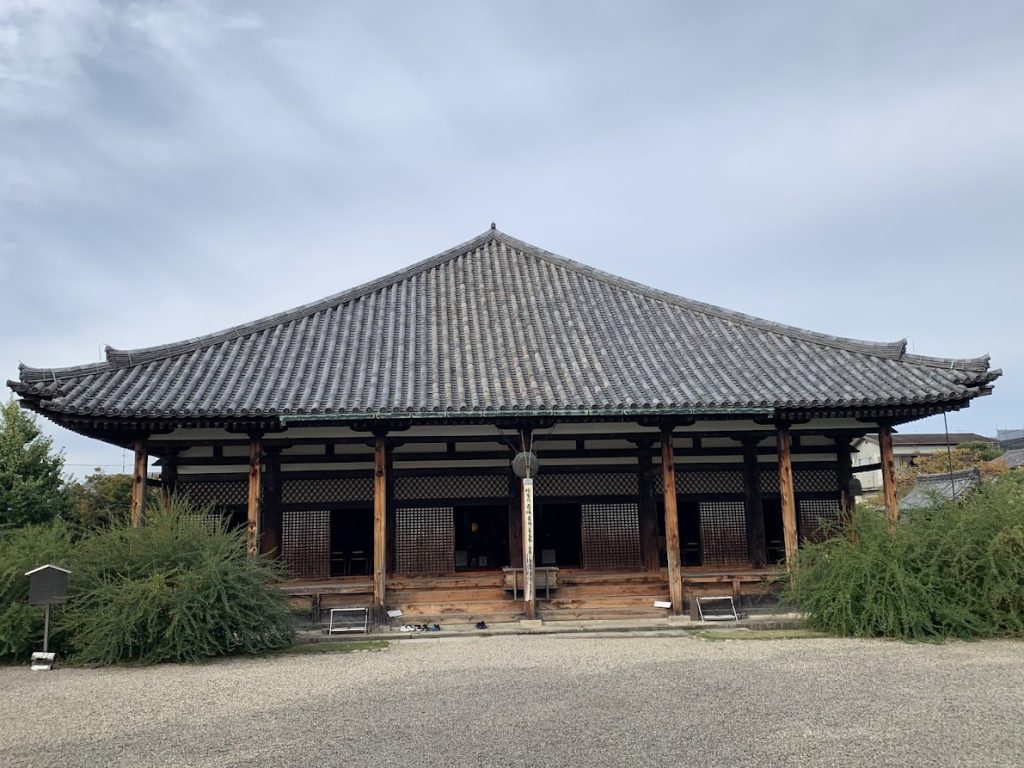
This is the front view of the Gokurakudo Hall.
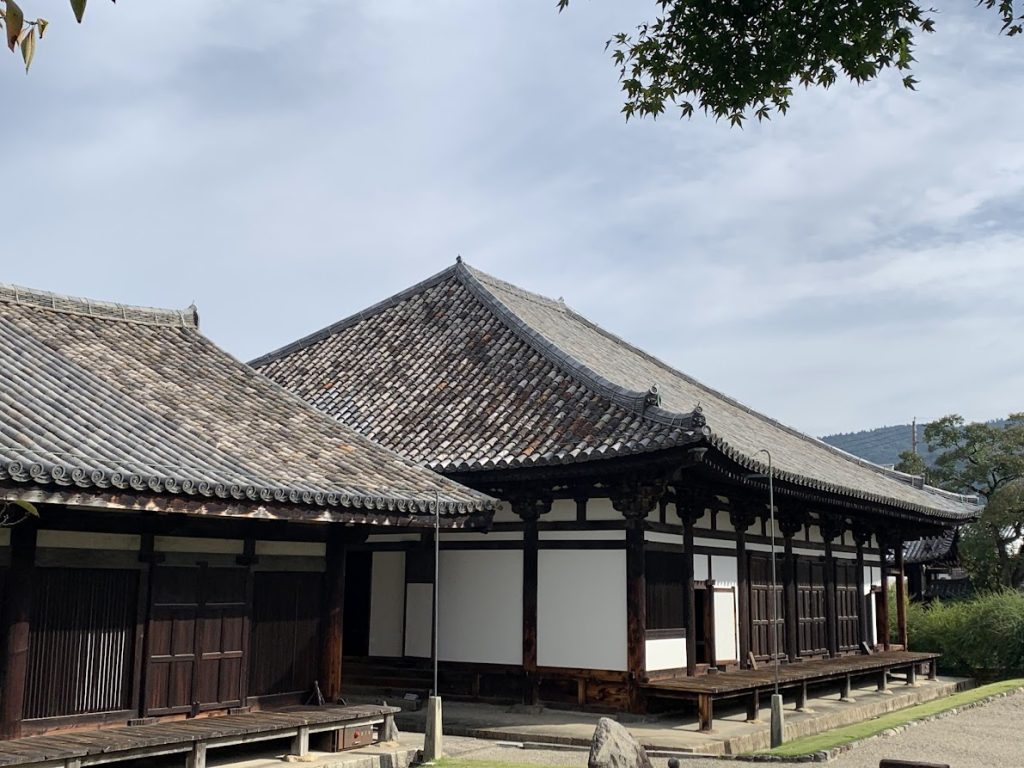
This is the back side of the Gokurakudo Hall.
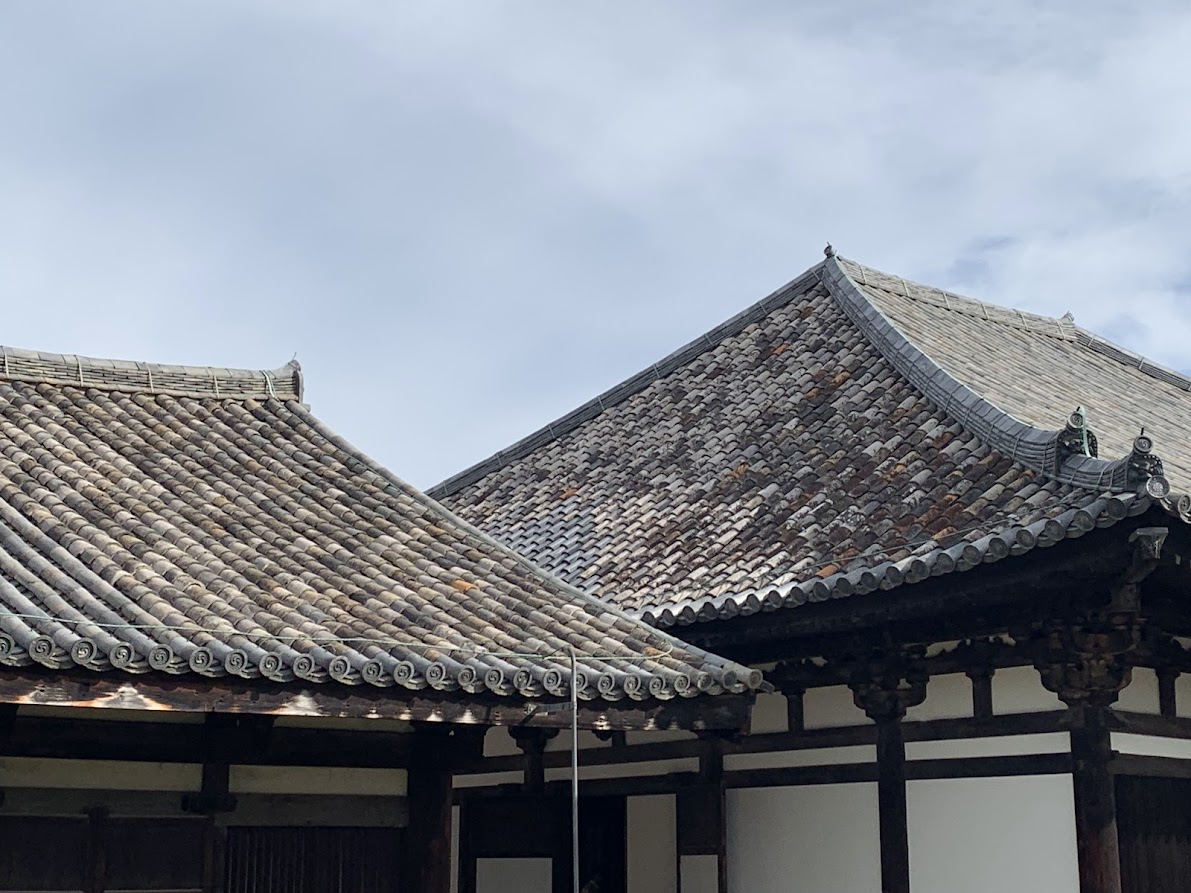
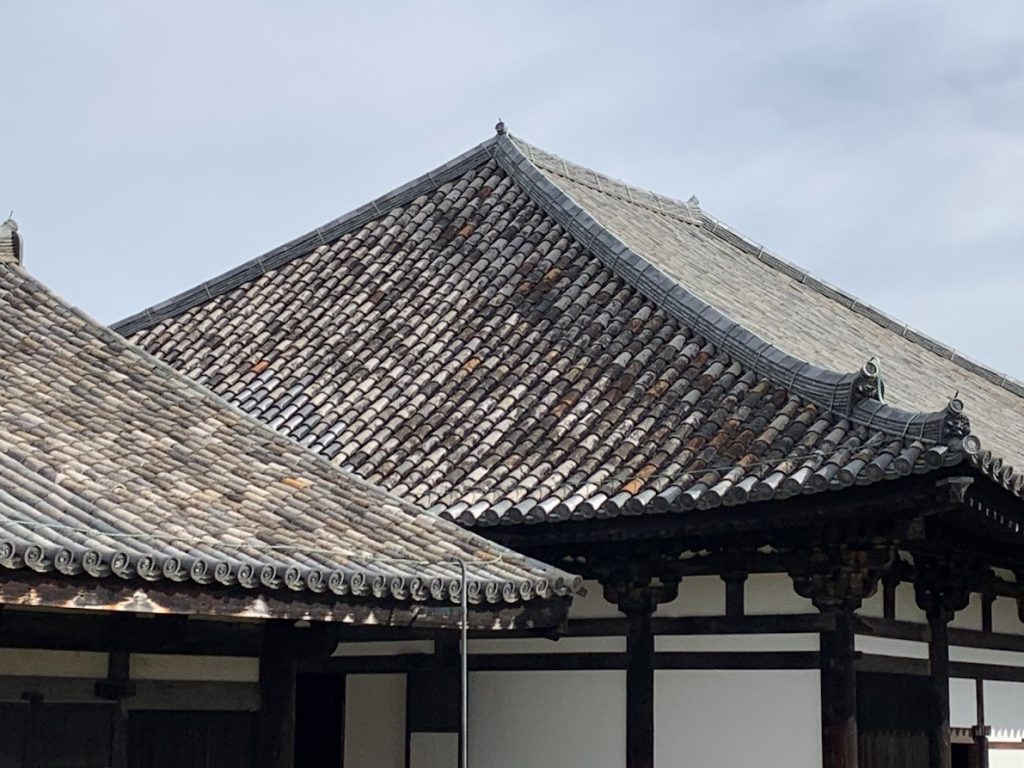
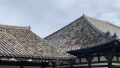
You can see roof tiles in various colors. The differently colored tiles are Japan’s oldest, dating back to the temple’s origins. When the temple was relocated from Asuka to Nara, these tiles were also moved, and thousands of these original tiles are still in use today.
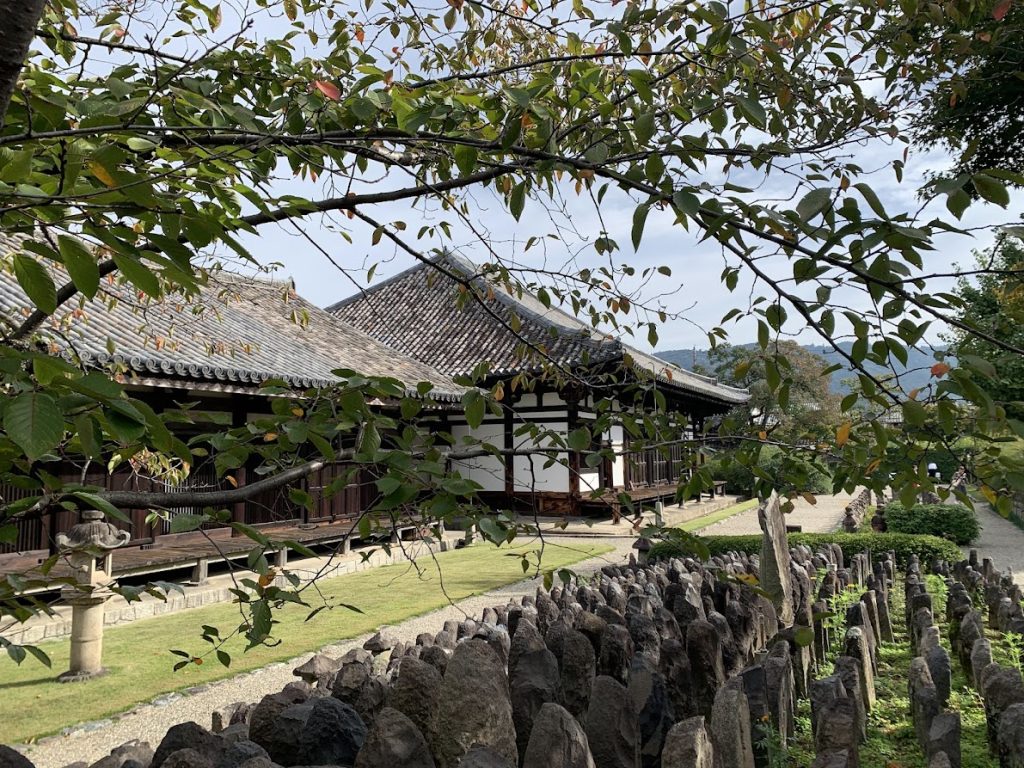
This photo was taken from a scenic viewpoint.
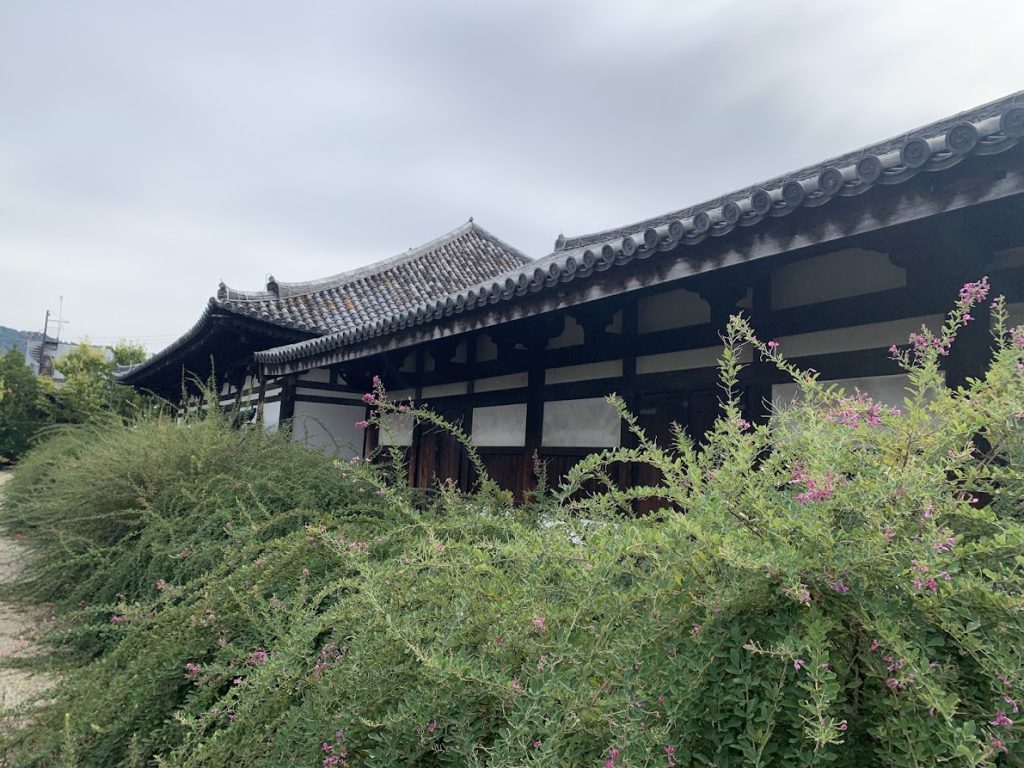
This is a view of the bush clover, Gokurakudo Hall, and Zen Hall.
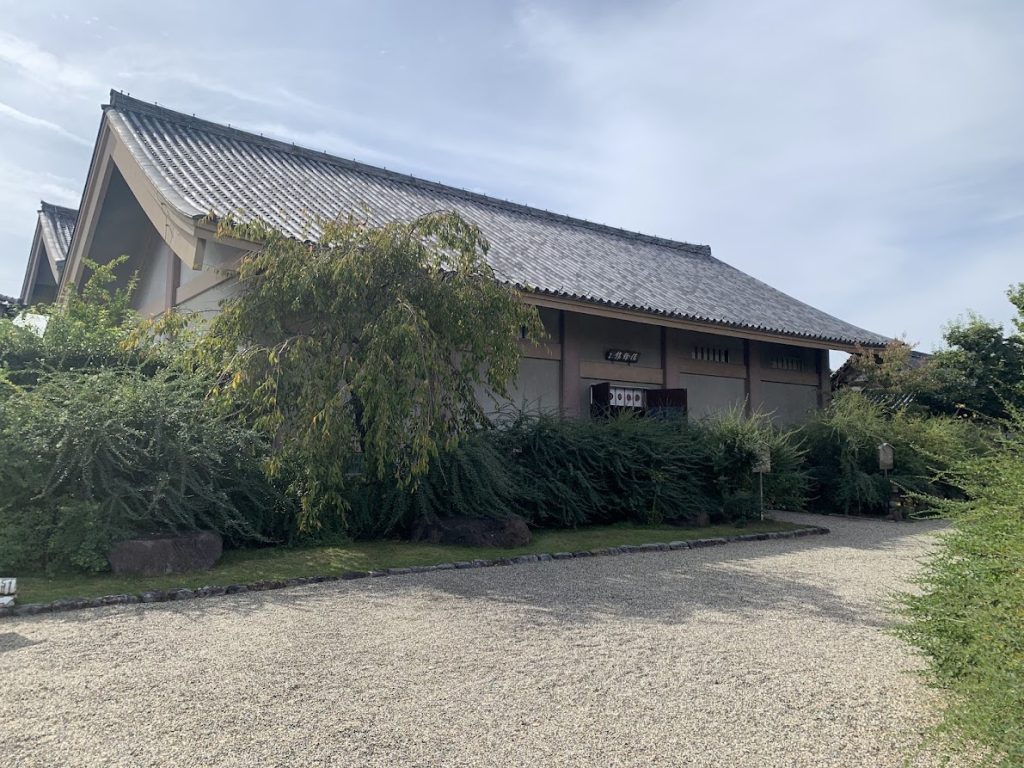
Horinkan
This hall houses various Buddhist statues and artifacts.
Its main exhibit is the National Treasure “Five-Storied Miniature Pagoda.”
This small-scale pagoda is said to have served as a model for the construction of five-storied pagodas across Japan. Because it has been kept indoors throughout its history, it remains remarkably well-preserved, allowing us to see it much as it looked when it was originally built.
コメント