


Hirose Taisha Shrine

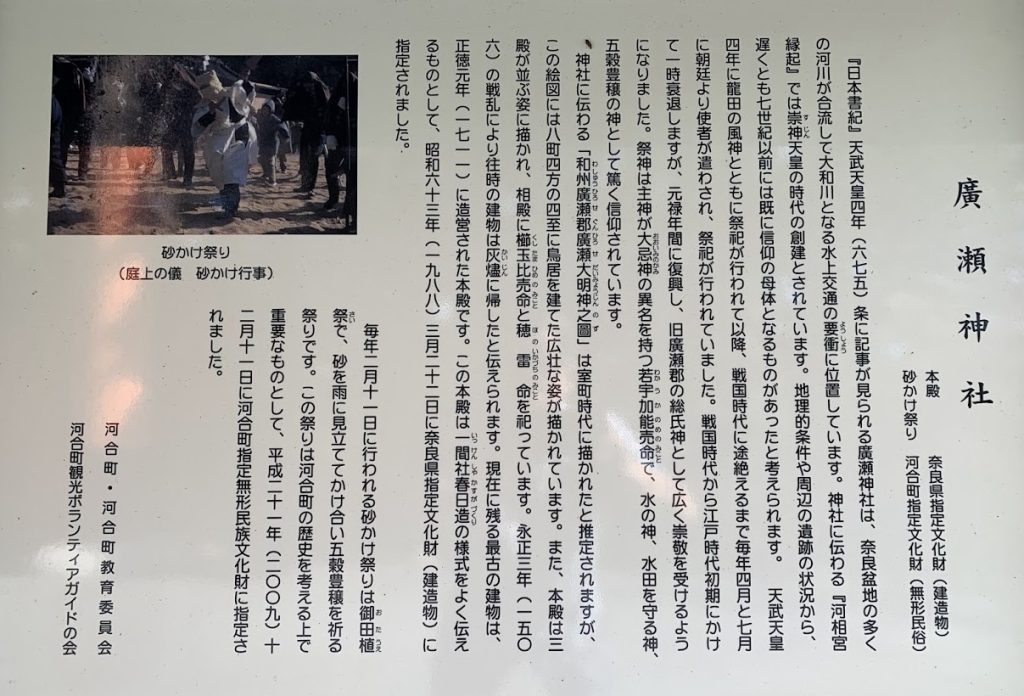
Hirose Taisha Shrine is located at the confluence of many rivers in the Nara Basin, where they merge to form the Yamato River, a key point of waterway transport in the past. The shrine has long been revered as a deity of water, a protector of rice paddies, and a deity of abundant harvests. The famous ‘Sand Throwing Festival’ is held here annually on February 11th.
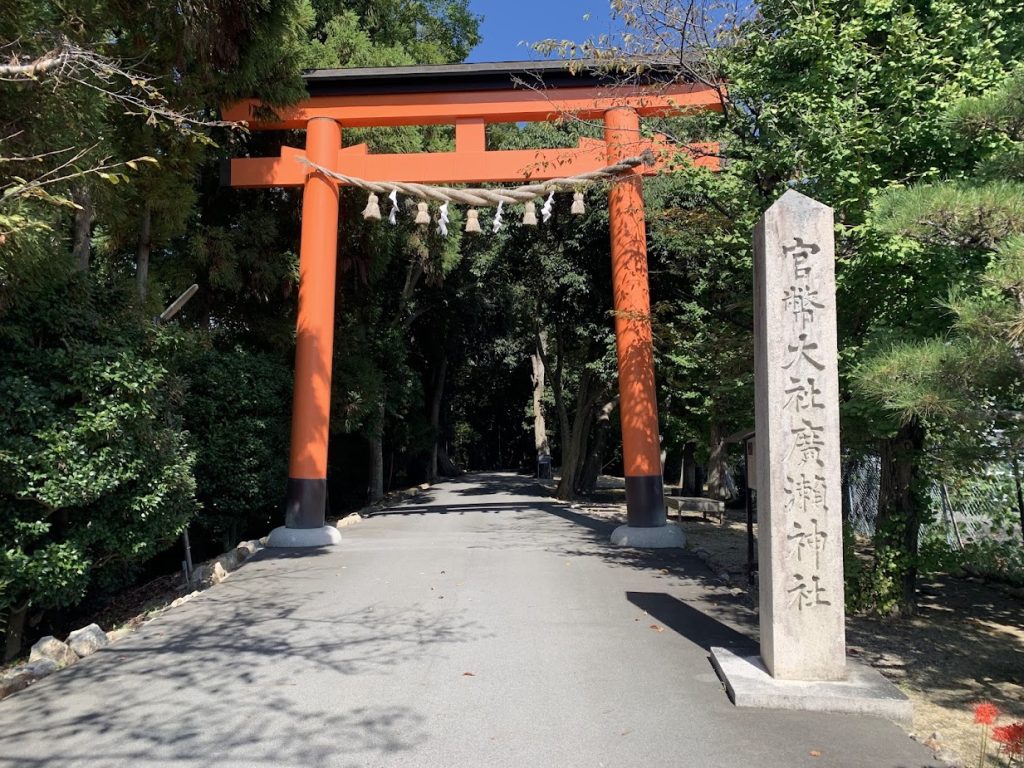
This is in front of the torii gate of HiroseTaisha Shrine.
The inscription reads, ‘Kanpei Taisha Hirose Shrine.’ Kanpei Taisha refers to a designation within the former shrine ranking system, indicating a shrine that was especially important to the state. Between the Meiji period and the prewar era, there were 61 Kanpei Taisha shrines across Japan.
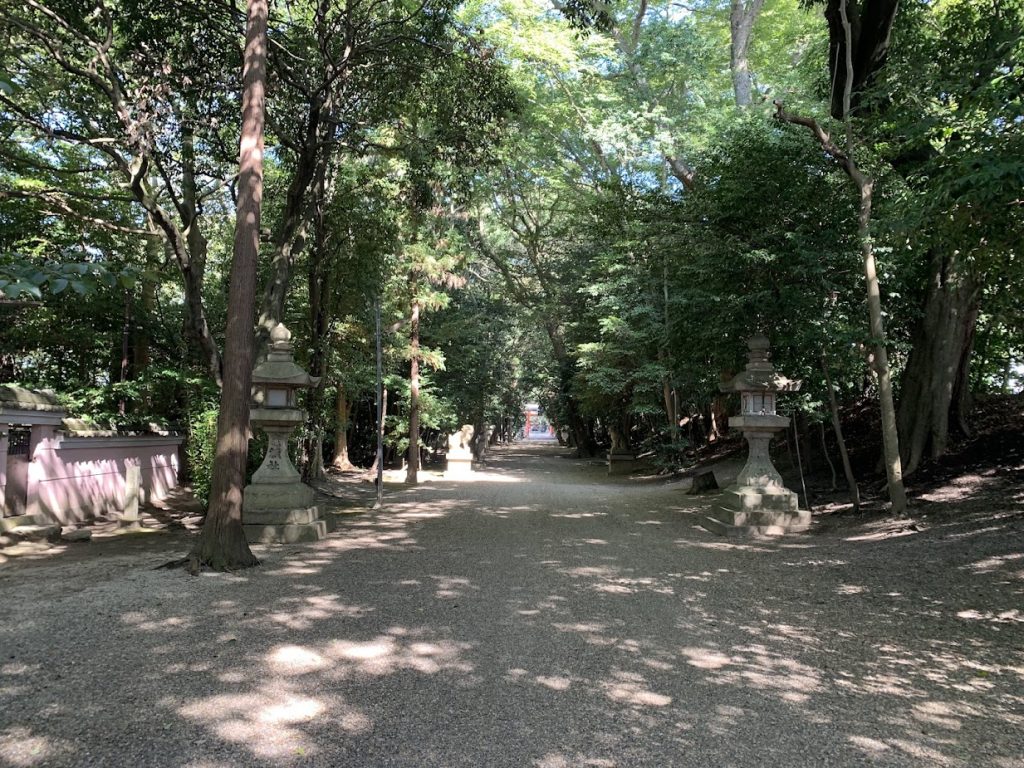
Hirose Taisha Shrine is about 3 km from JR Horyuji Station, a 45-minute walk. Taking a taxi from the station is a convenient option.
For those traveling by car, it’s about 5 minutes from the Horyuji Interchange on the Meihan National Highway.


This is the worship hall. The ‘Sand Throwing Festival’ takes place in front of this hall.
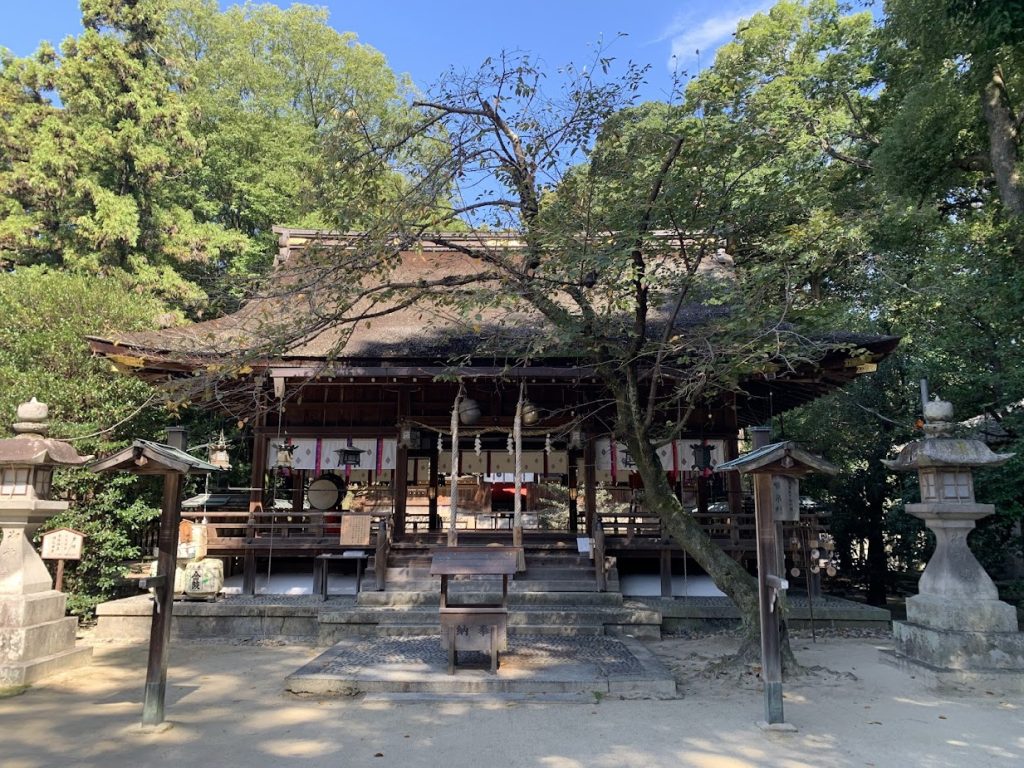
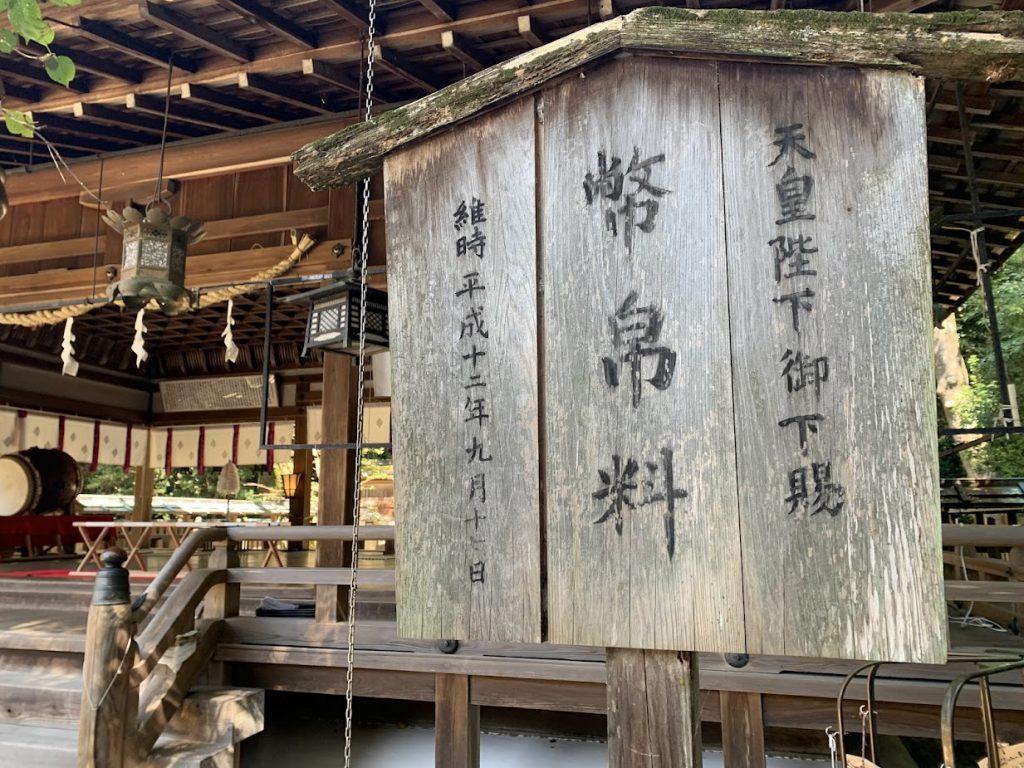
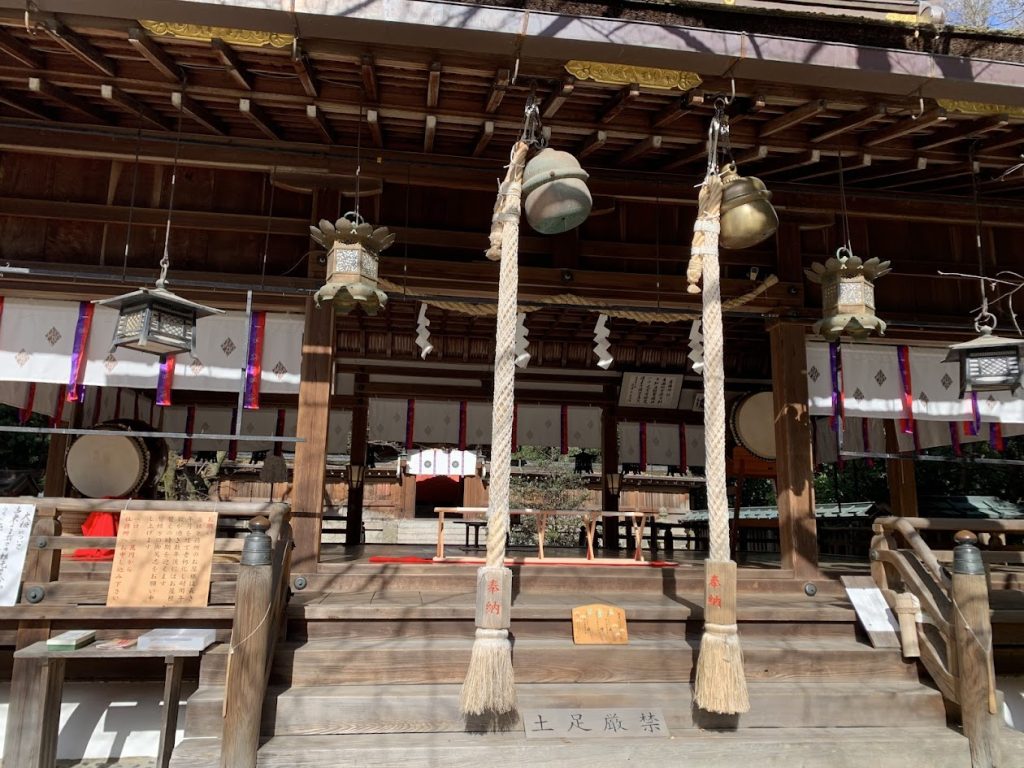
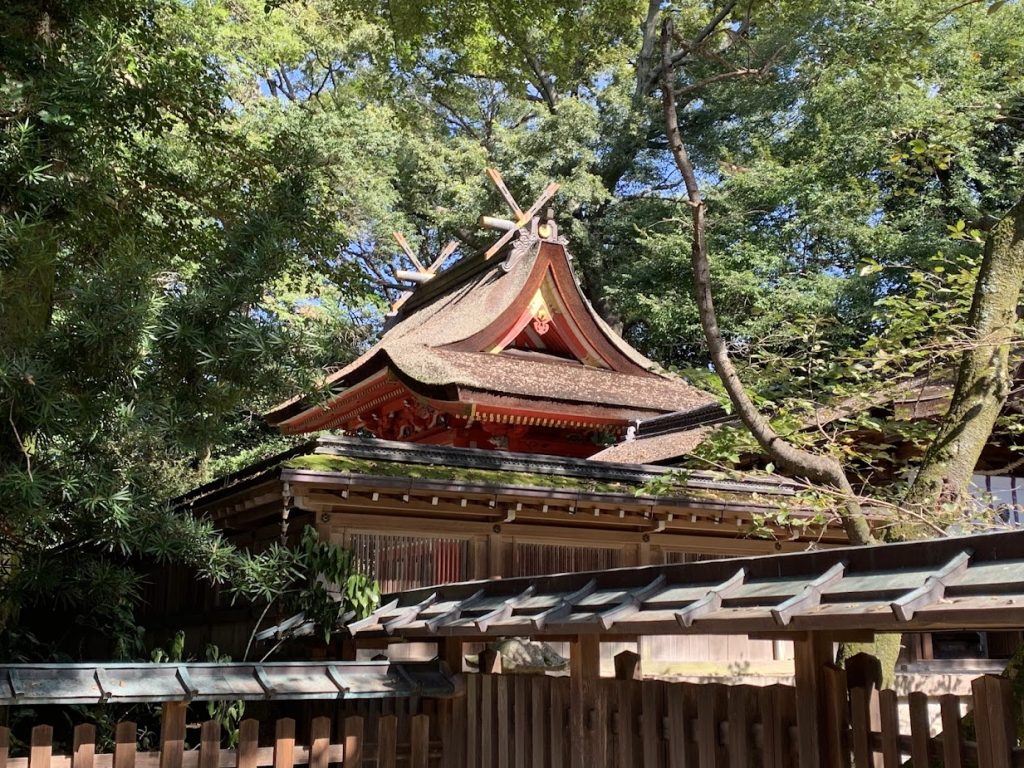
This is the main hall.
Hirose Taisha Shrine is dedicated to the deity of water.
Nearby, Tatsuta Taisha Shrine is dedicated to the deity of wind.
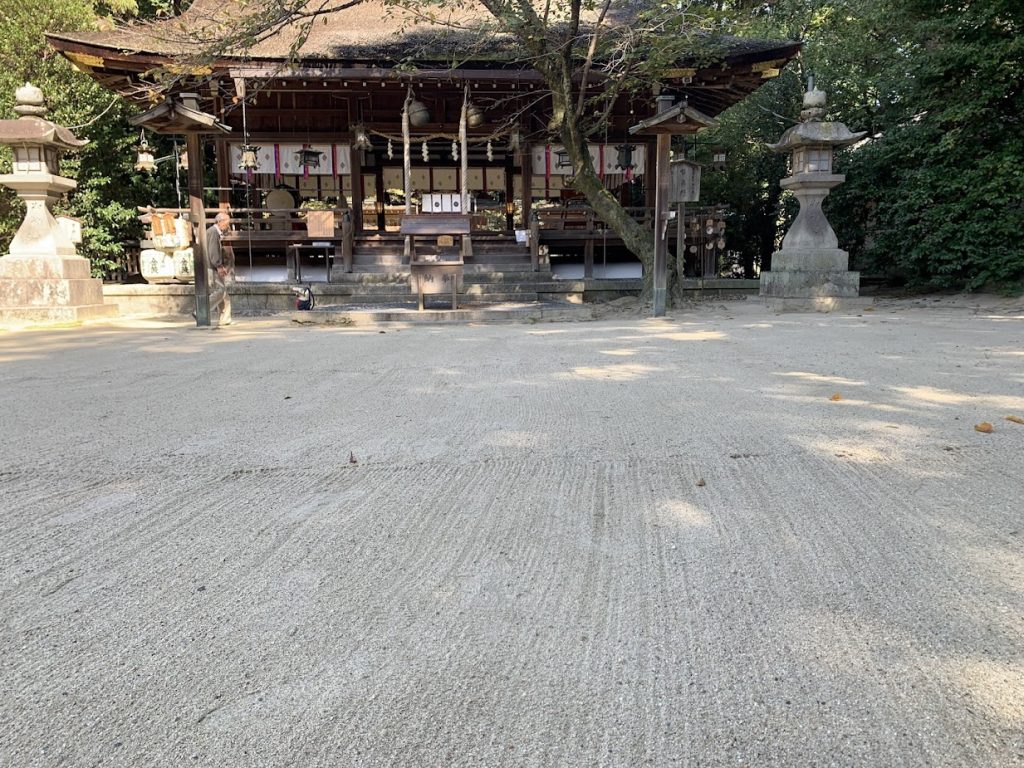
The sand has been neatly swept and cleaned.
During the Sand Throwing Festival, this sand is used to symbolize rain.
Sand Throwing Festival
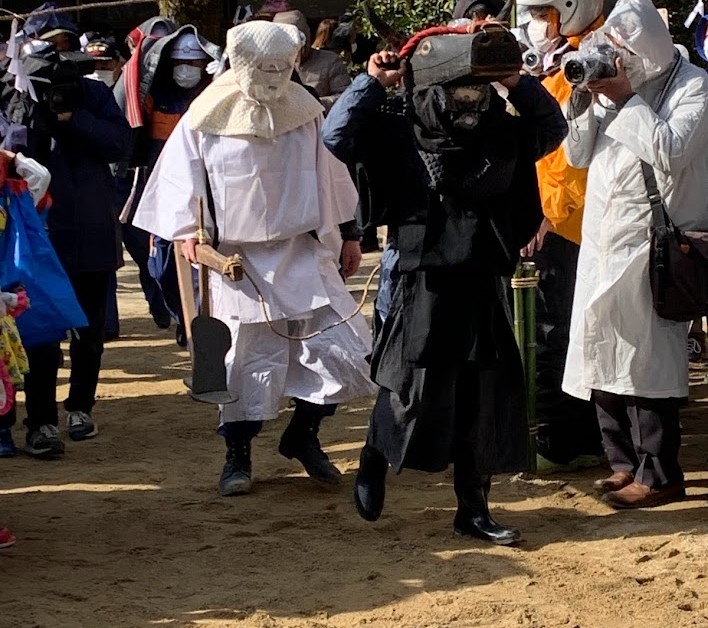
It takes place on February 11th.
A cow and a person holding a plow has appeared. After this, there will be gestures of tilling the fields.
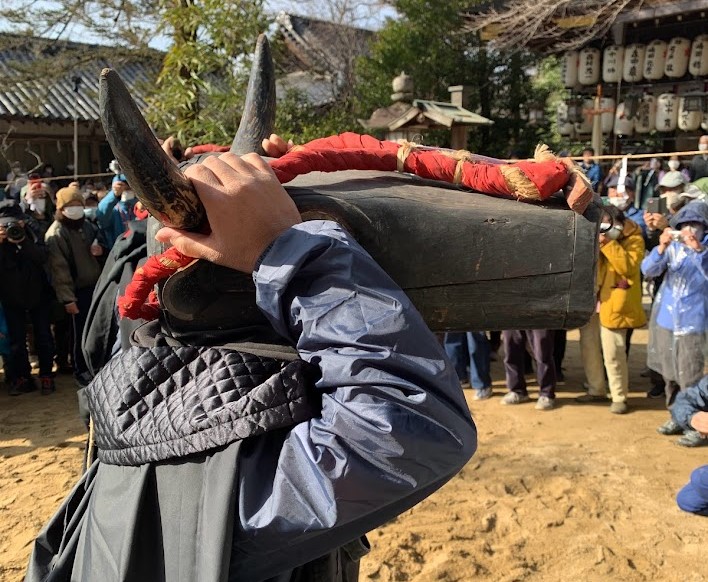
This is a cow.
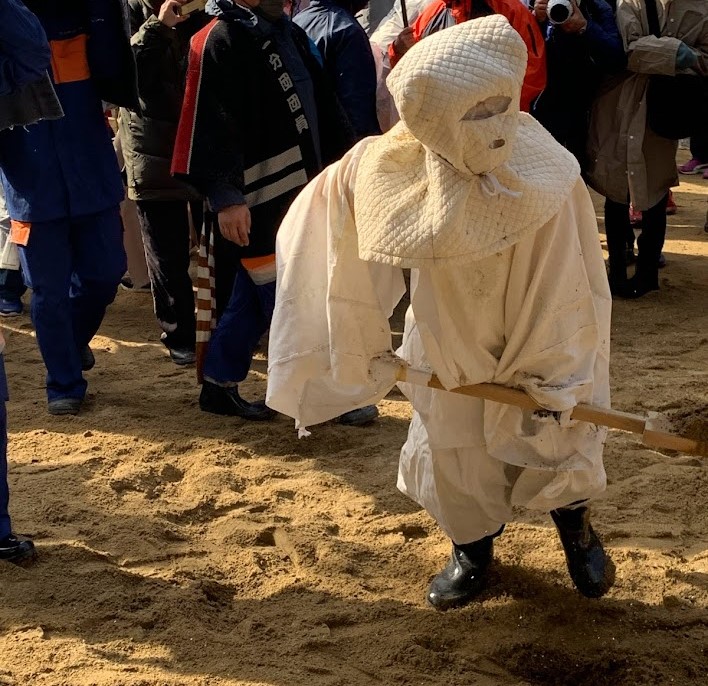
Now it’s time for the sand throwing.
The audience prepares to be showered with sand, protecting their bodies and eyes with raincoats and goggles.
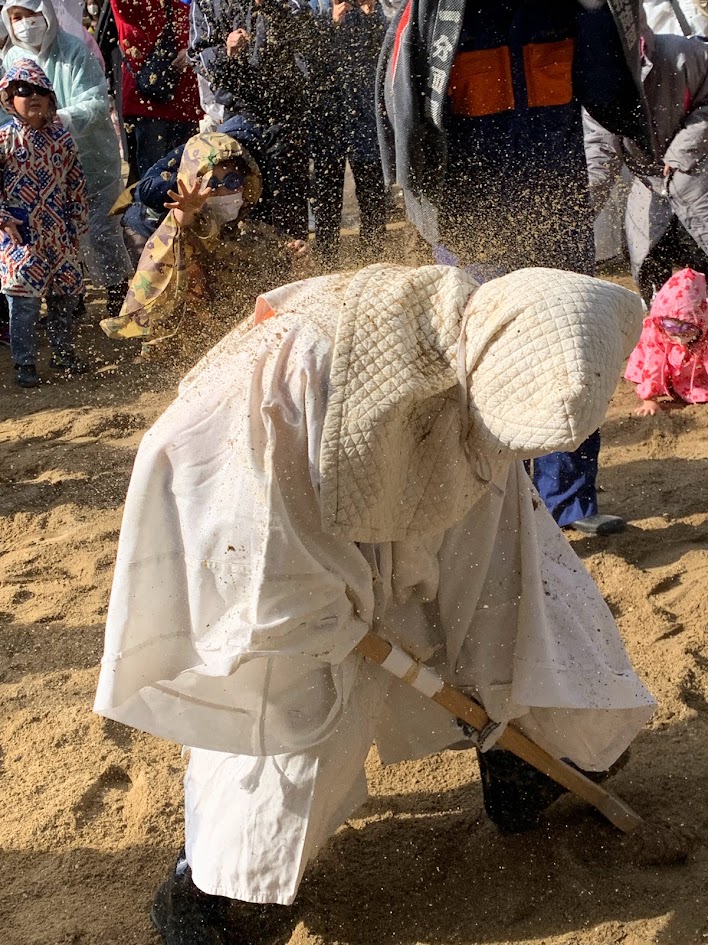
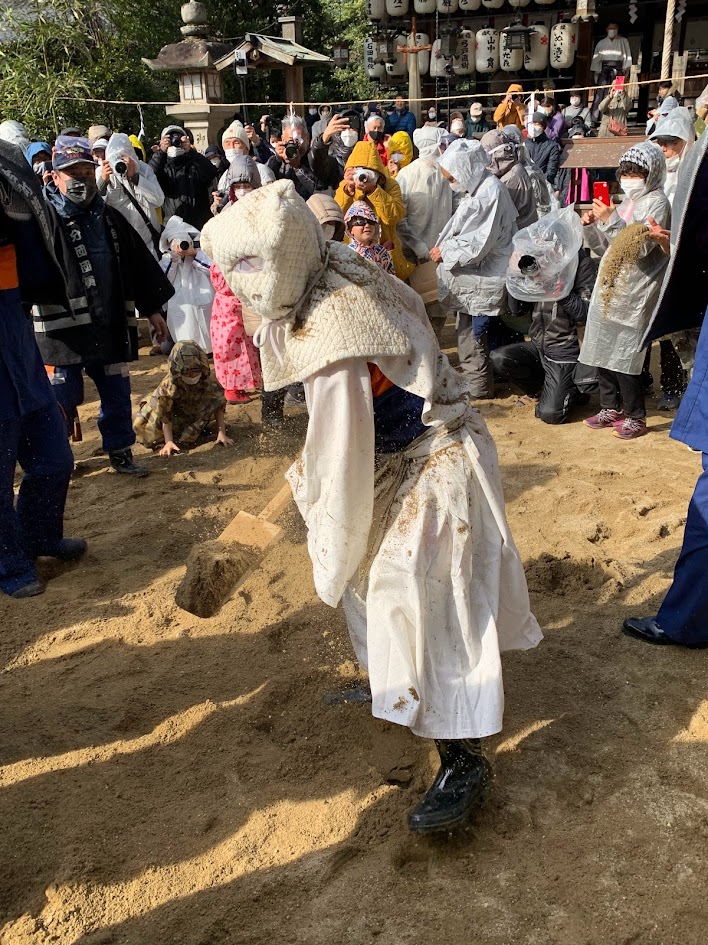
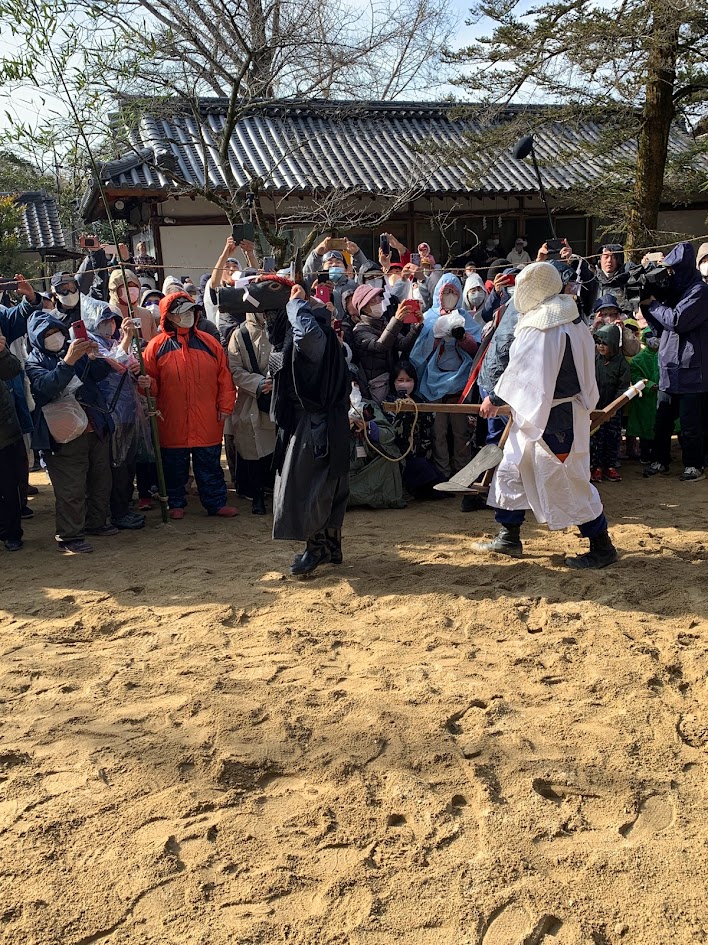

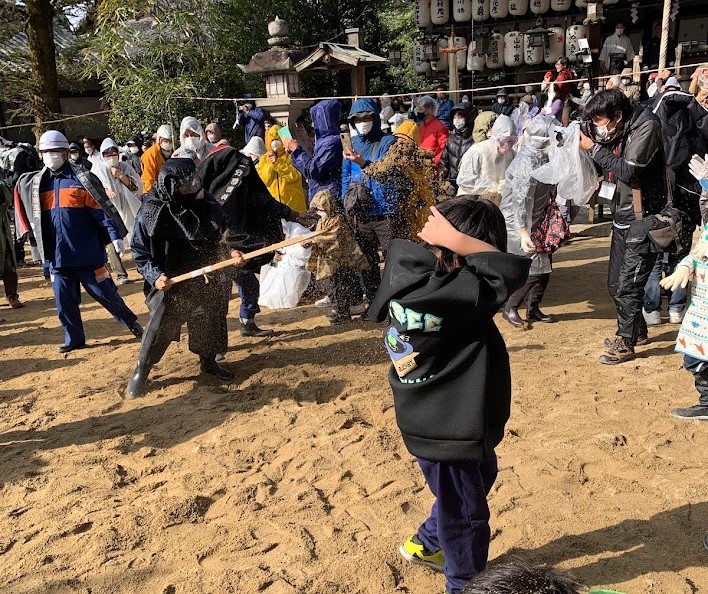
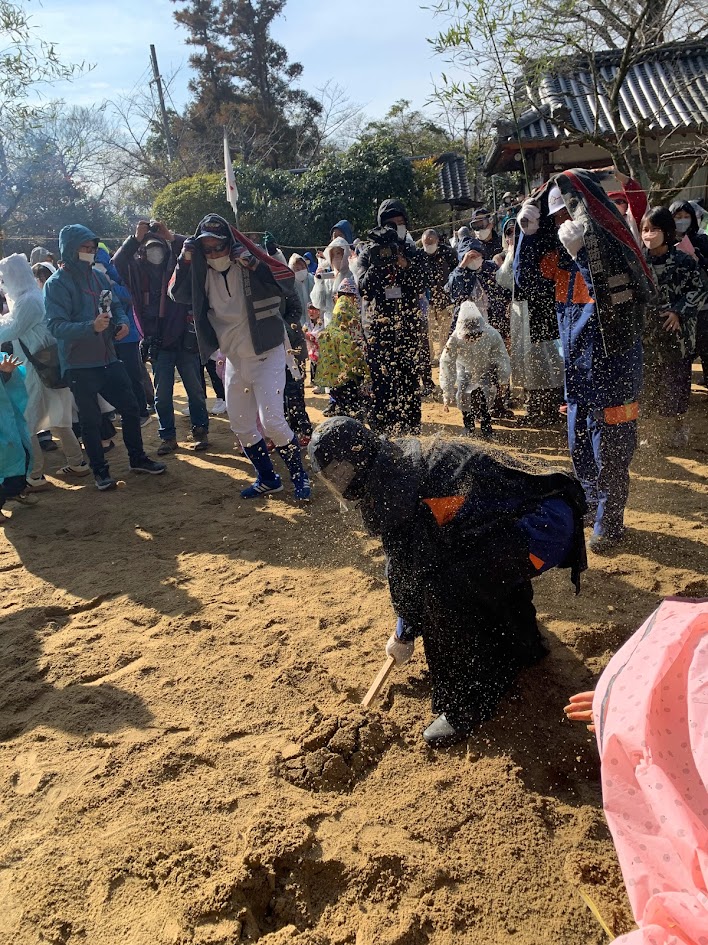
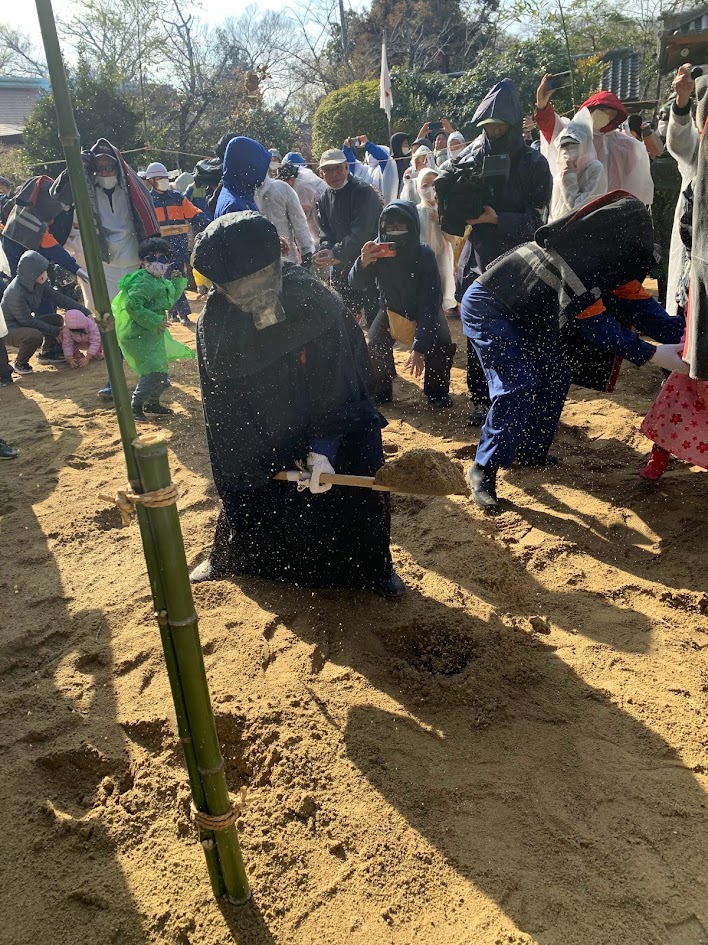

The sand falls like real rain.
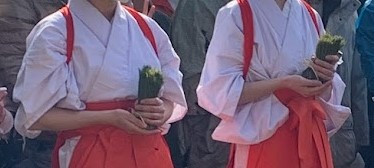
Once the sand throwing is over, the rice planting ritual begins.
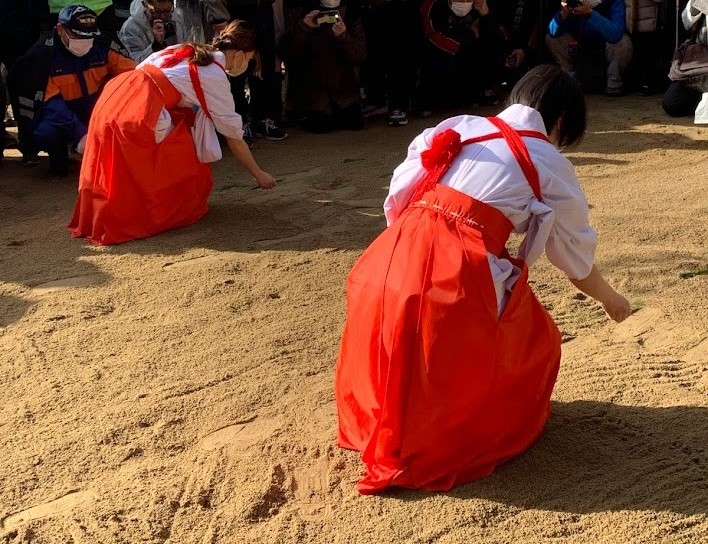
As they perform the gestures of rice planting, they pray for this year’s bountiful harvest.
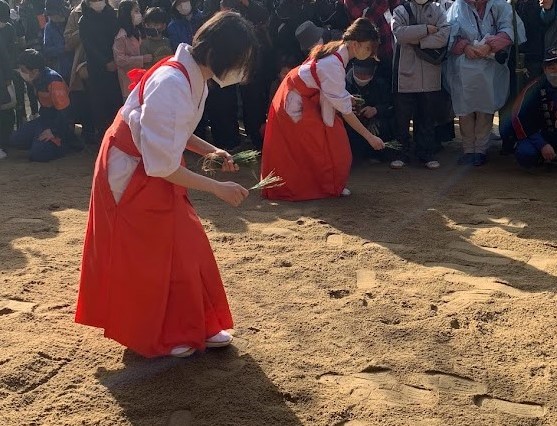
The festival has concluded safely.
コメント