


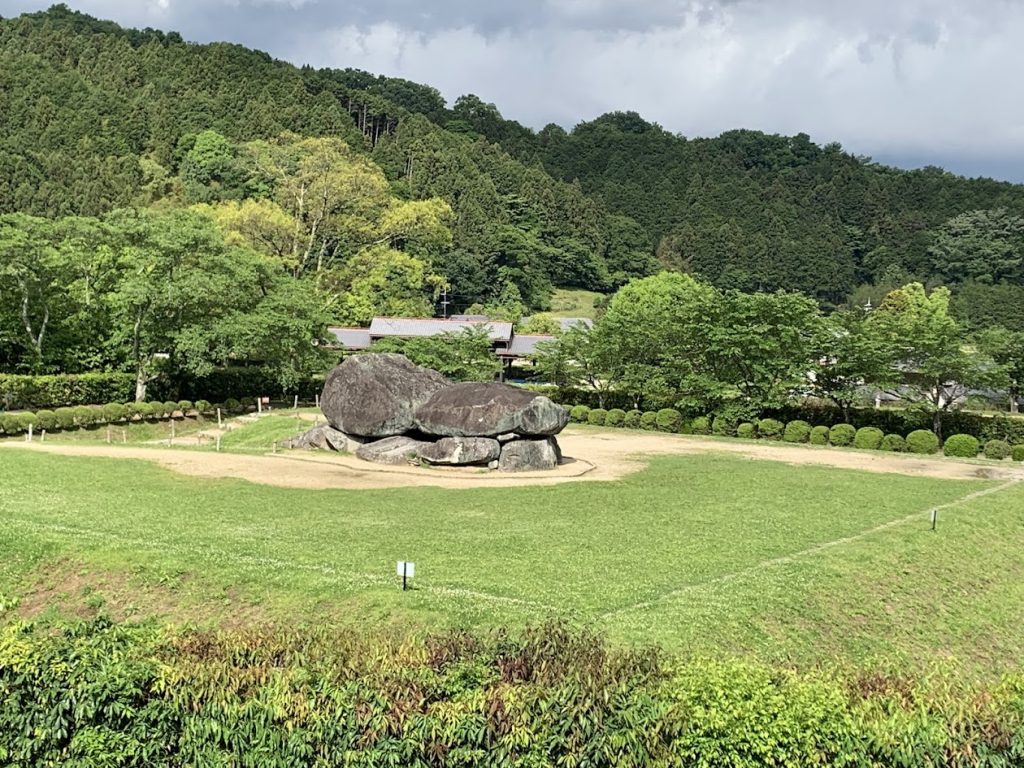
Ishibutai Kofun (tomb)
Asuka Village served as the capital of Japan for about 100 years, from the end of the 6th century to the 7th century.
The birthplace of Prince Shotoku was Tachibana-dera temple, and the site of the Taika Reform was Asuka Itabuki-no-Miya palace. The first fully-fledged Buddhist temple with a proper complex was Asuka-dera temple, and the origin of timekeeping began at Mizuochi Ruins. Many significant beginnings are associated with Asuka.
Ishibutai Kofun (tomb)
This is said to be the tomb of Soga no Umako (the grandfather of Soga no Iruka, who was killed during the Taika Reform). It is one of the largest square-shaped tombs (nearly square when viewed from above), with only the horizontal stone chamber remaining.
There is a legend that a fox disguised as a woman danced on top of it, which is why it is called “Ishibutai” (Stone Stage).
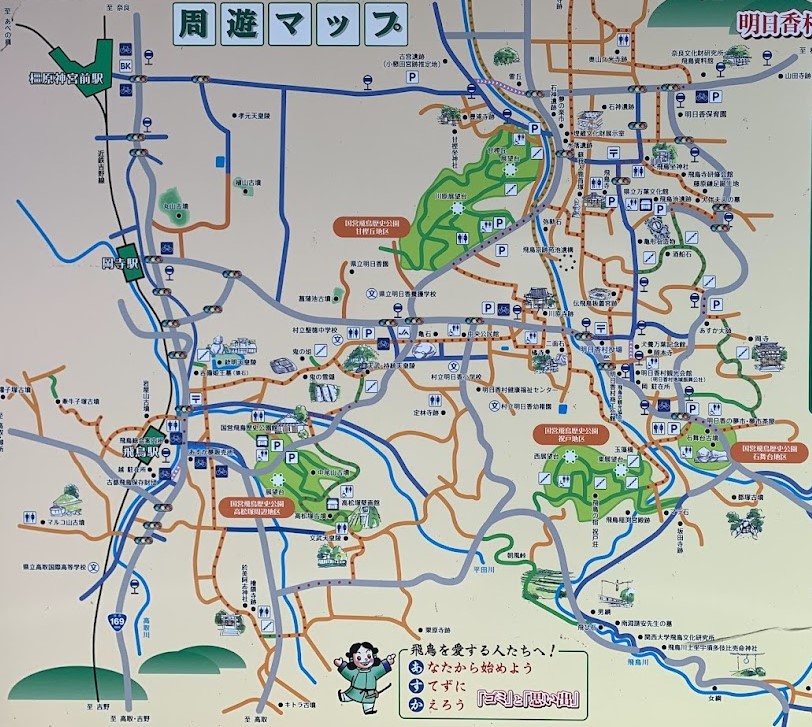
橿原神宮前駅の案内板
Asuka-dera temple
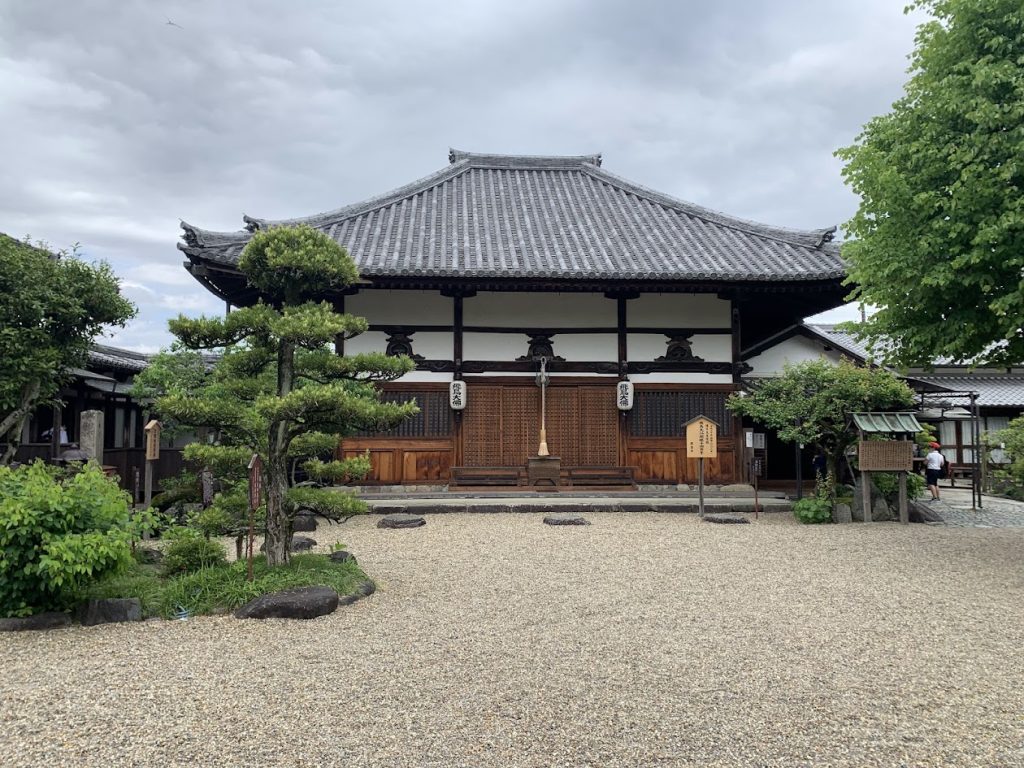
Asuka-dera temple
Asuka-dera, founded by Soga no Umako in 588, is Japan’s first fully-fledged Buddhist temple.
The principal statue, the Asuka Daibutsu, is the oldest Buddhist statue in Japan, created by the sculptor Tori Busshi under Empress Suiko in 605.
The elongated face of the statue is quite different from the face of the Great Buddha of Todaiji Temple.
The shape of the face changed over time, reflecting different eras.
When you visit, be sure to observe these differences for yourself.
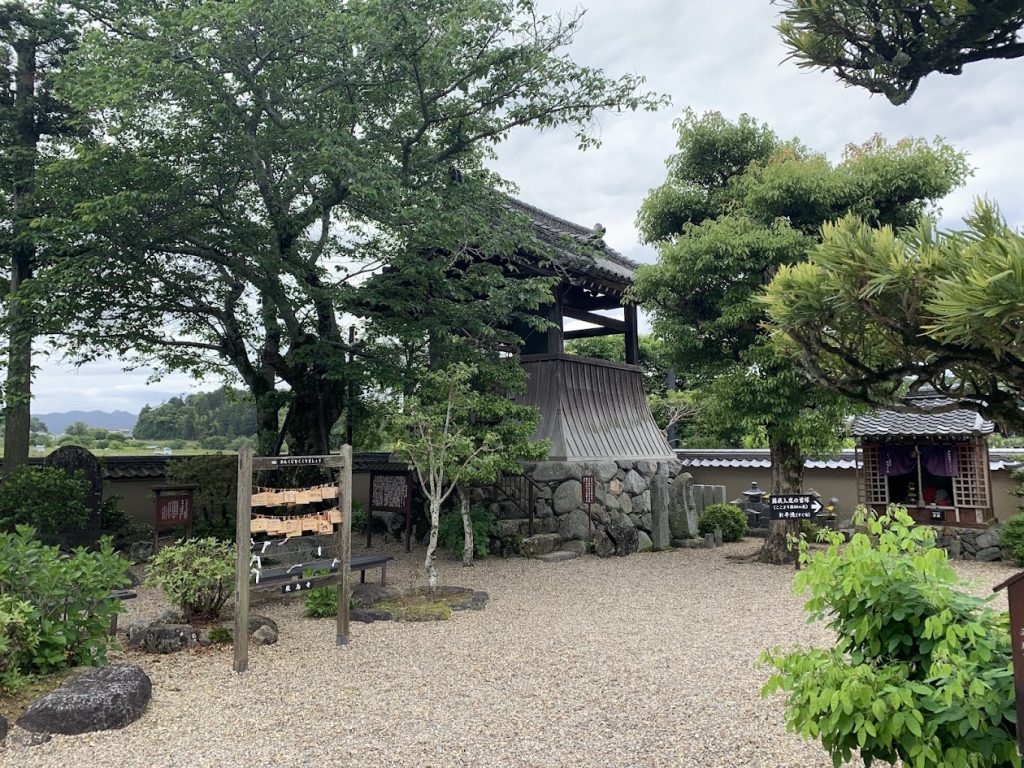
The bell tower of Asuka-dera temple and the scenery of Asuka.
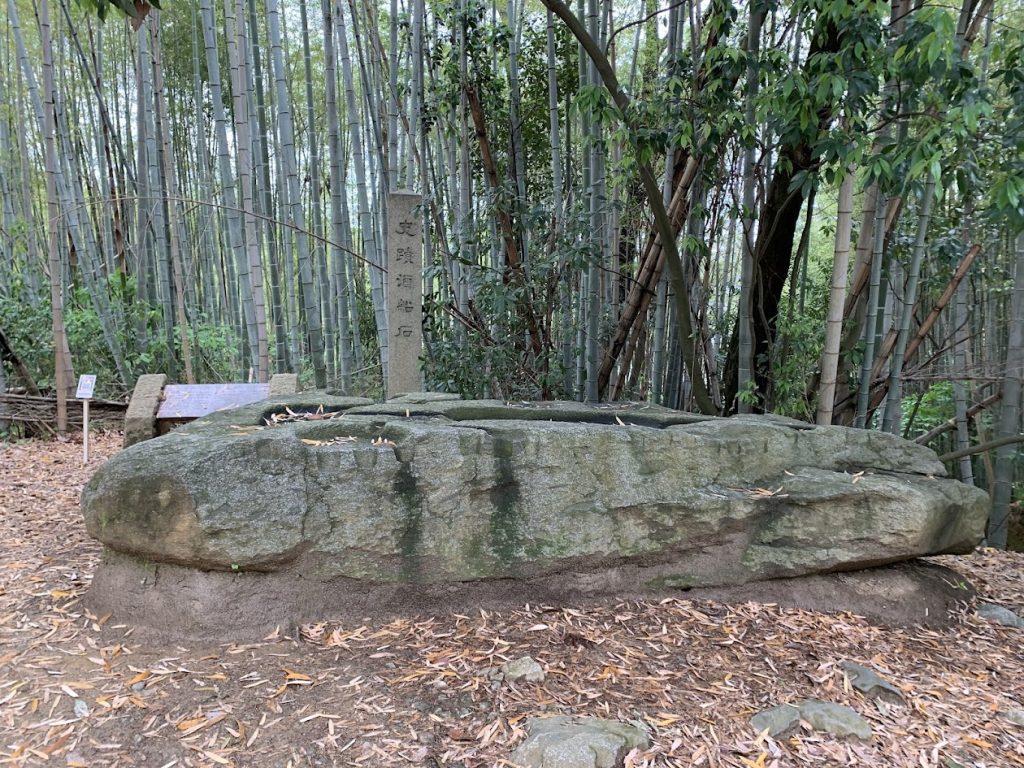
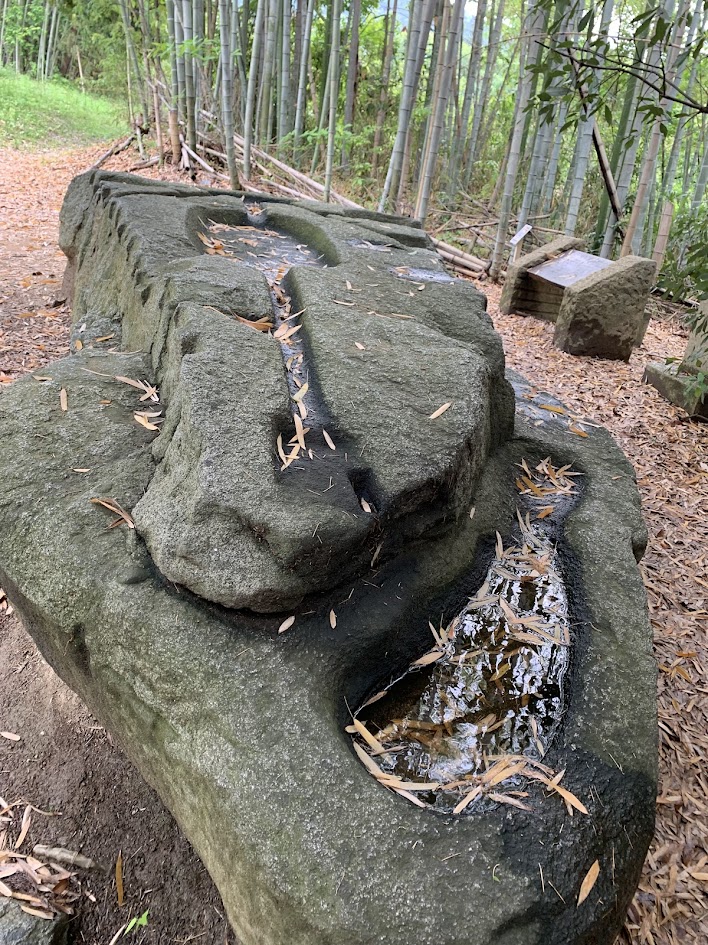
Sake-fune-ishi
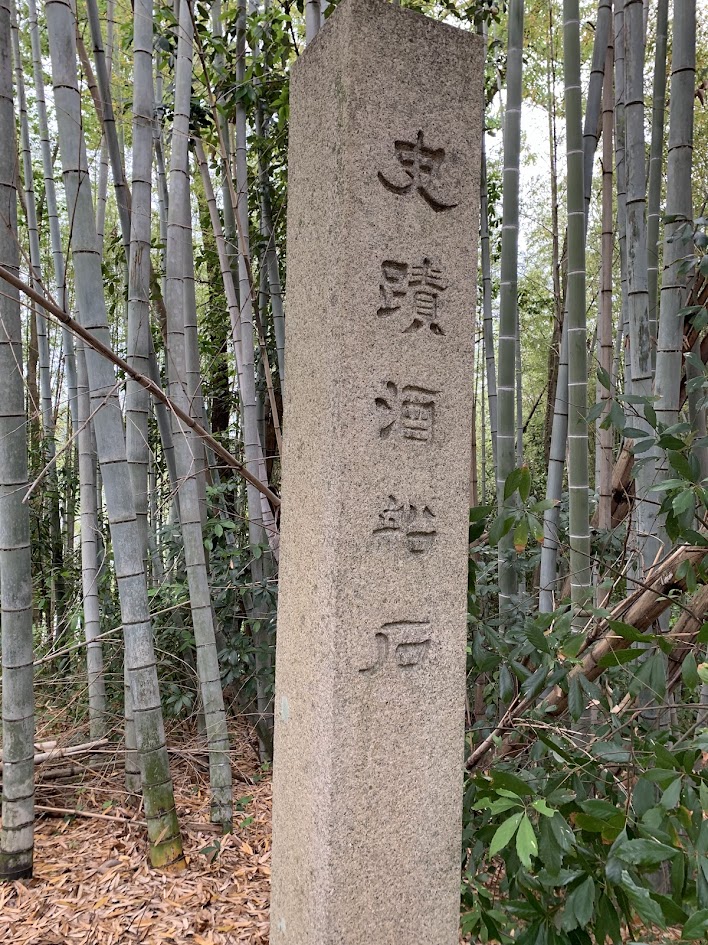
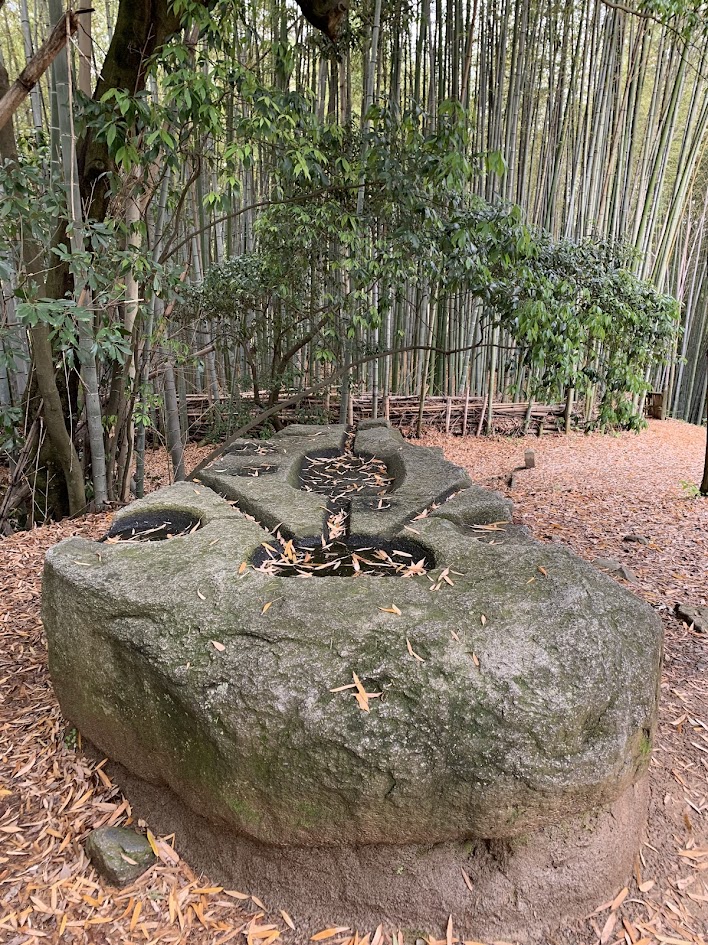
Sake-fune-ishi
The sake-fune-ishi is a granite stone measuring 5.5 meters in length, 2.3 meters in width, and approximately 1 meter in thickness.
It is thought to have been used as a sake press, or for making oil and medicine.
However, since water pipes were discovered 40 meters to the east, there is also a theory that it was part of a garden facility.
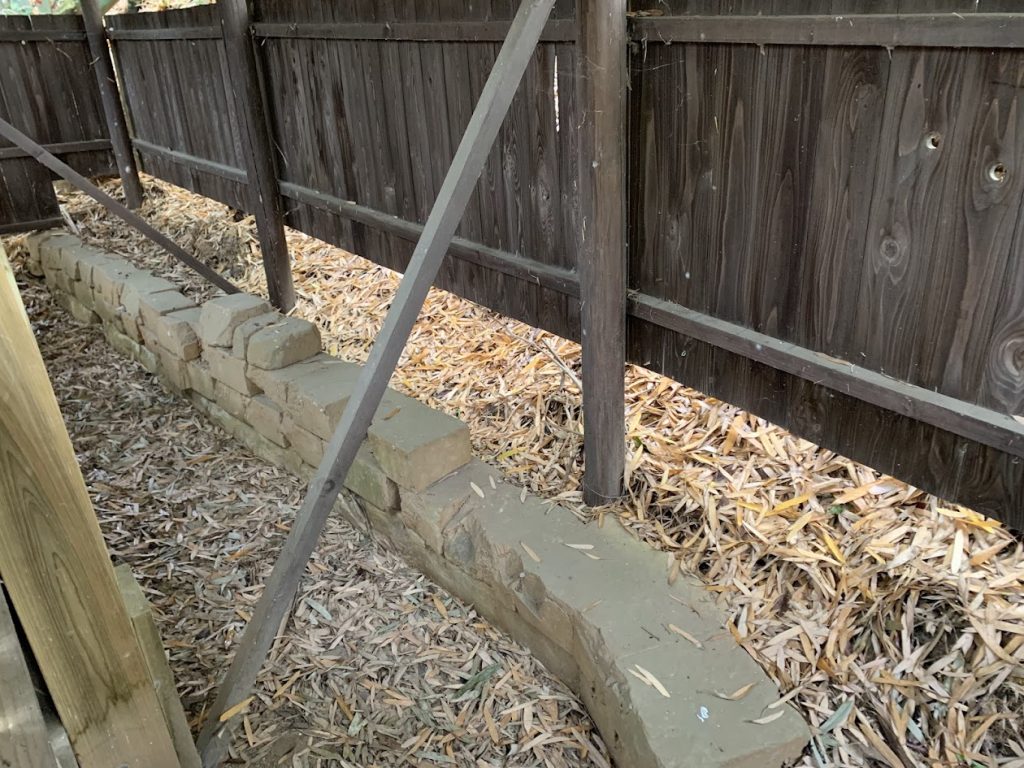
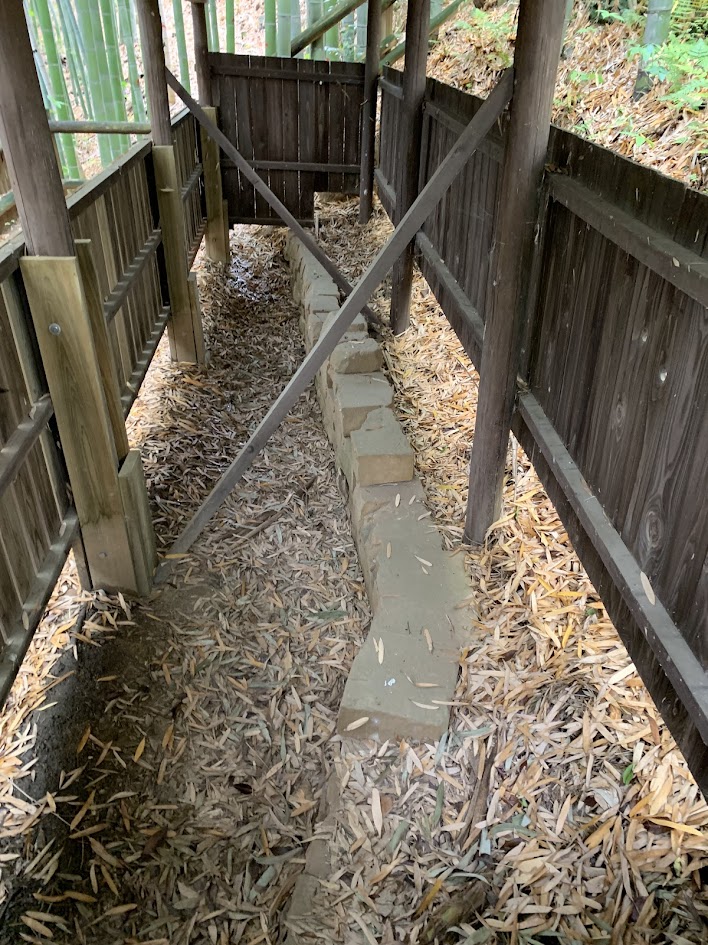
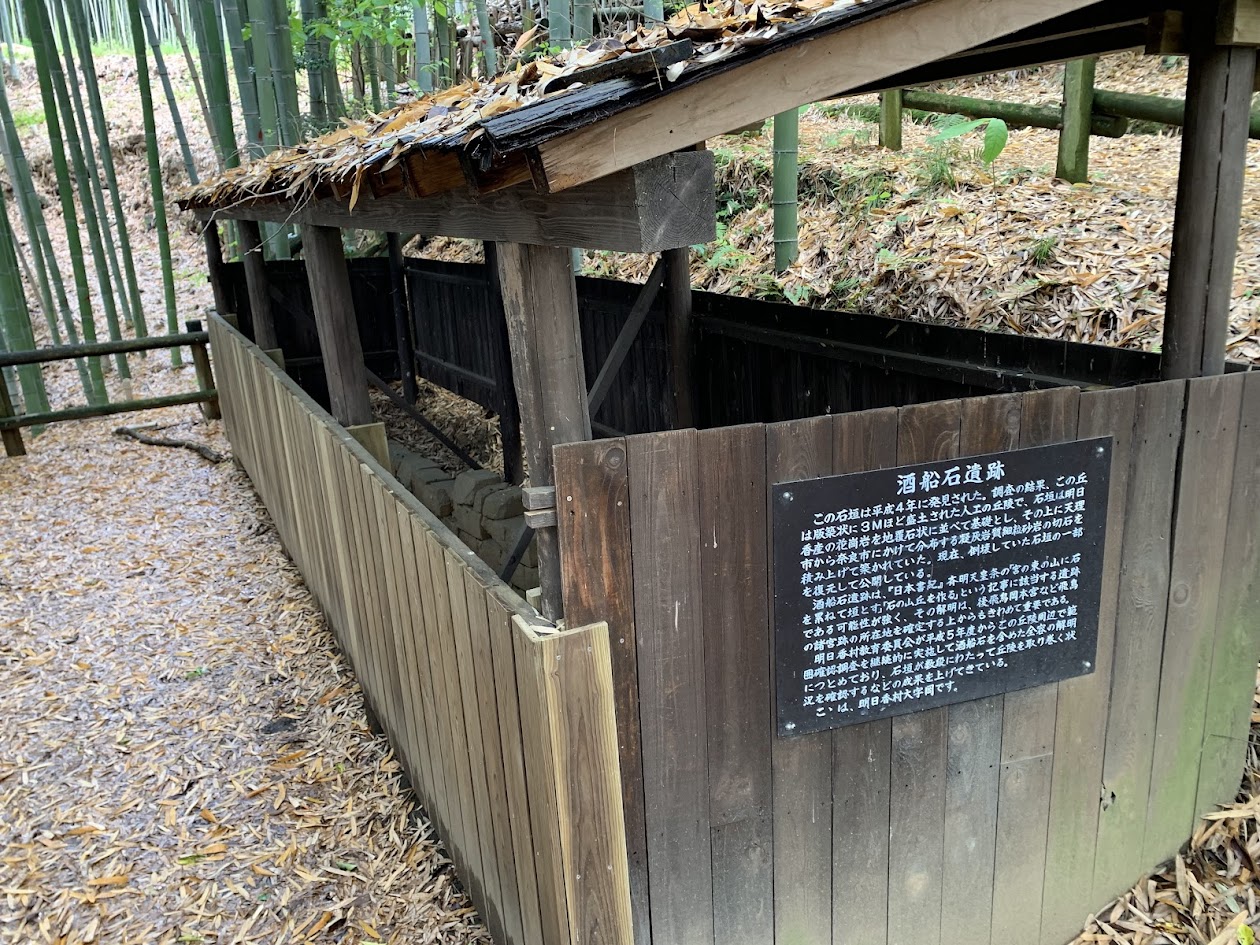
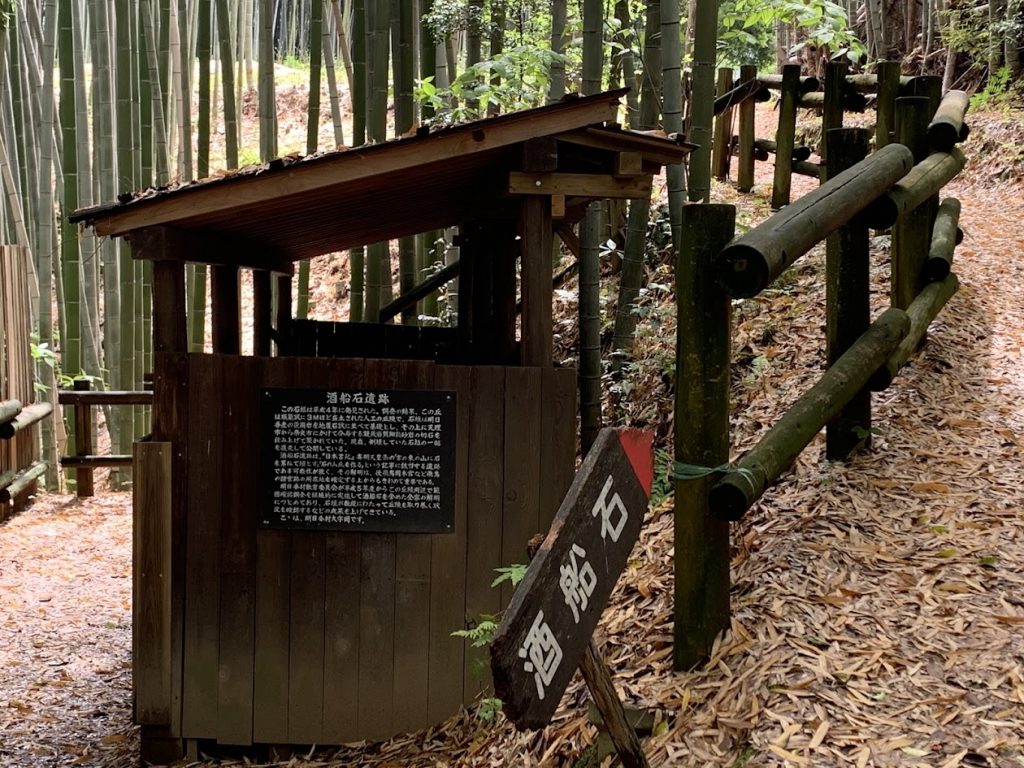
Sake-fune-ishi Ruins
This stone wall was discovered in 1992.
It is located slightly lower than the nearby Sake-fune-ishi.
The investigation revealed that it is an artificial mound about 3 meters high, with a foundation made of granite from Asuka and stones cut from sandstone found between Tenri City and Nara City. The straight-line distance from this site to Tenri City is approximately 10 kilometers.
The structure is likely related to the historical account in the Nihon Shoki, which describes Emperess Saimei (mother of Emperors Tenji and Tenmu) as having “built a stone wall on the eastern mountain of the palace” and “created a stone mound.”
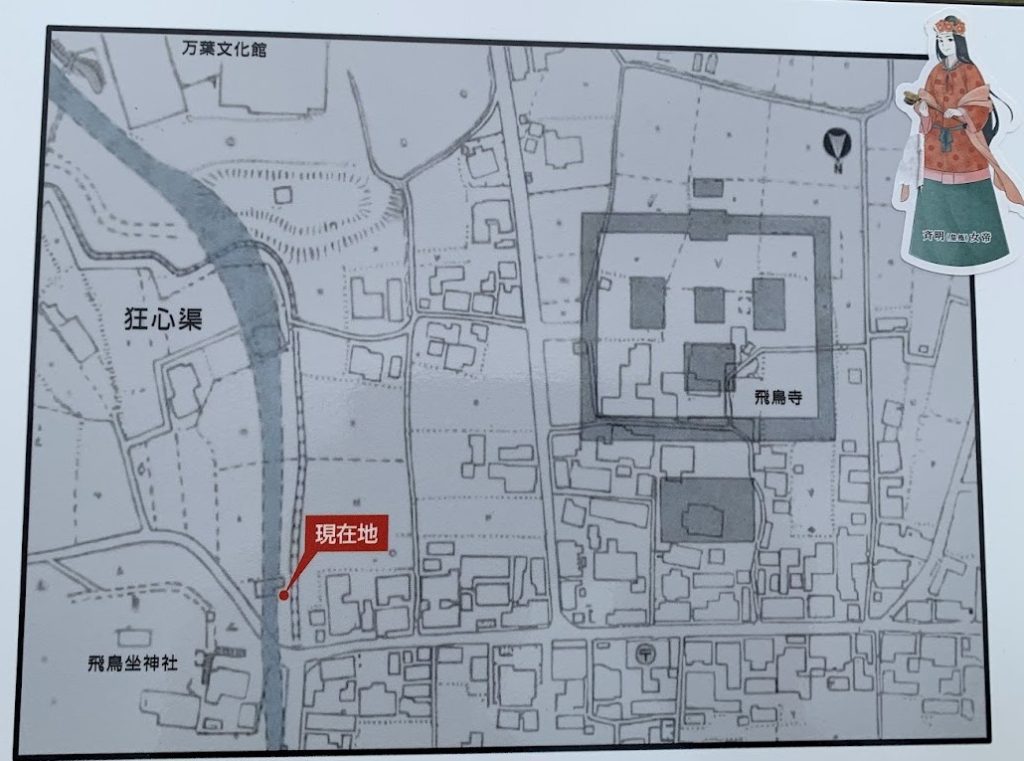
This sign is located next to the torii gate of Asuka Ni Imasu Shrine.
The directions are reversed (with south at the top).
Asuka-dera is located to the right.
Taburegokoro-no-Mizo is a canal created by Empress Saimei as part of the development of the Asuka capital. The canal is approximately 10 meters wide and over 1 kilometer long. It was used to transport sandstone from Toyoda-yama, located north of Isonokami Shrine in Tenri City.
The massive construction project, which required more than 30,000 people, was criticized by the public, who referred to it as “the canal of crazed hearts”
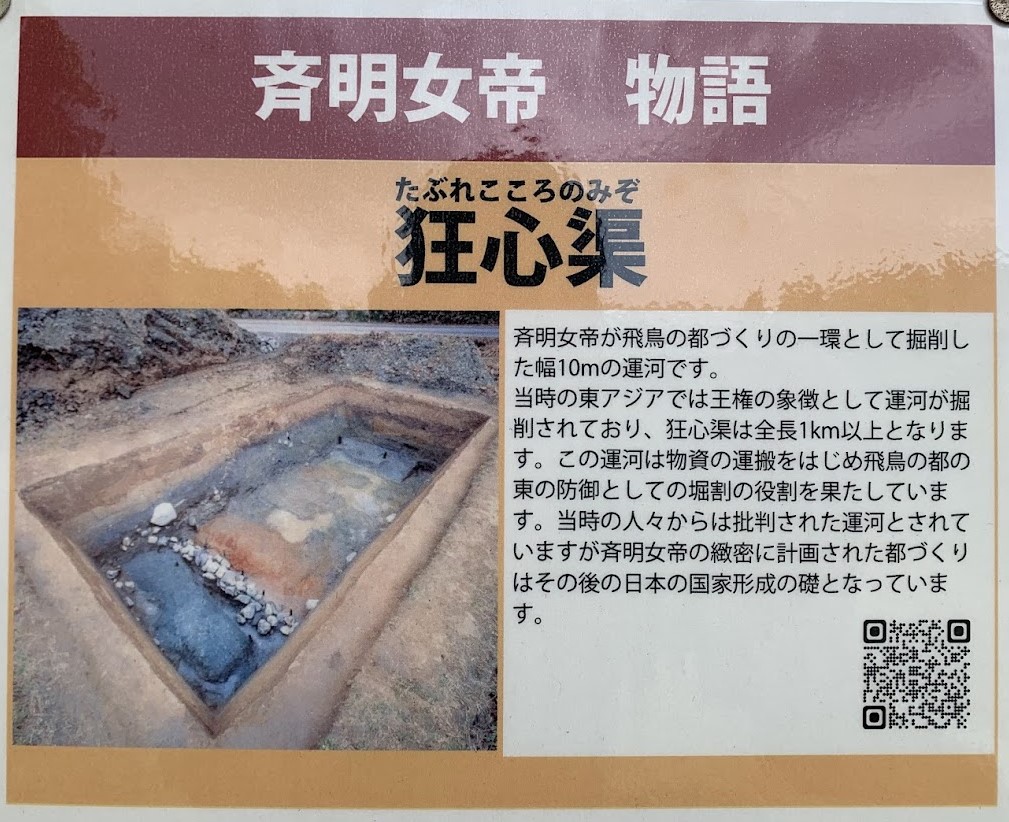
This is the explanation found next to Asuka Ni Imasu Shrine.
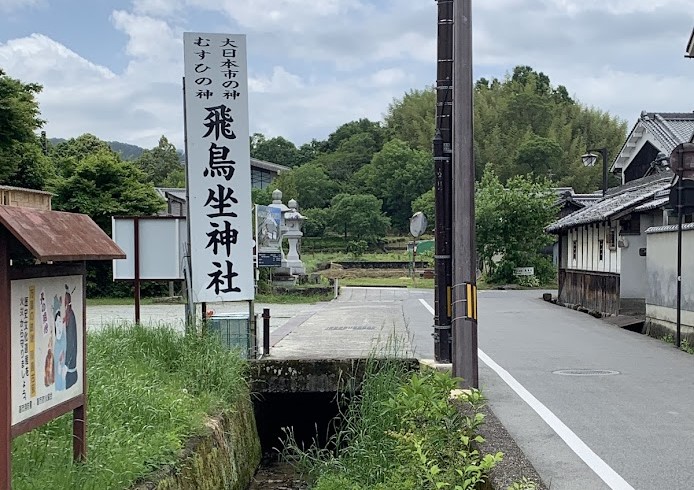
In front of Asuka Ni Imasu Shrine
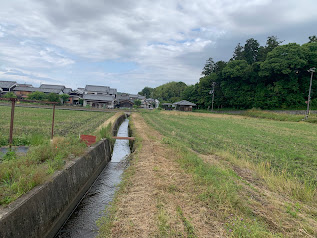
The canal seems to have passed through the area around this river and road.
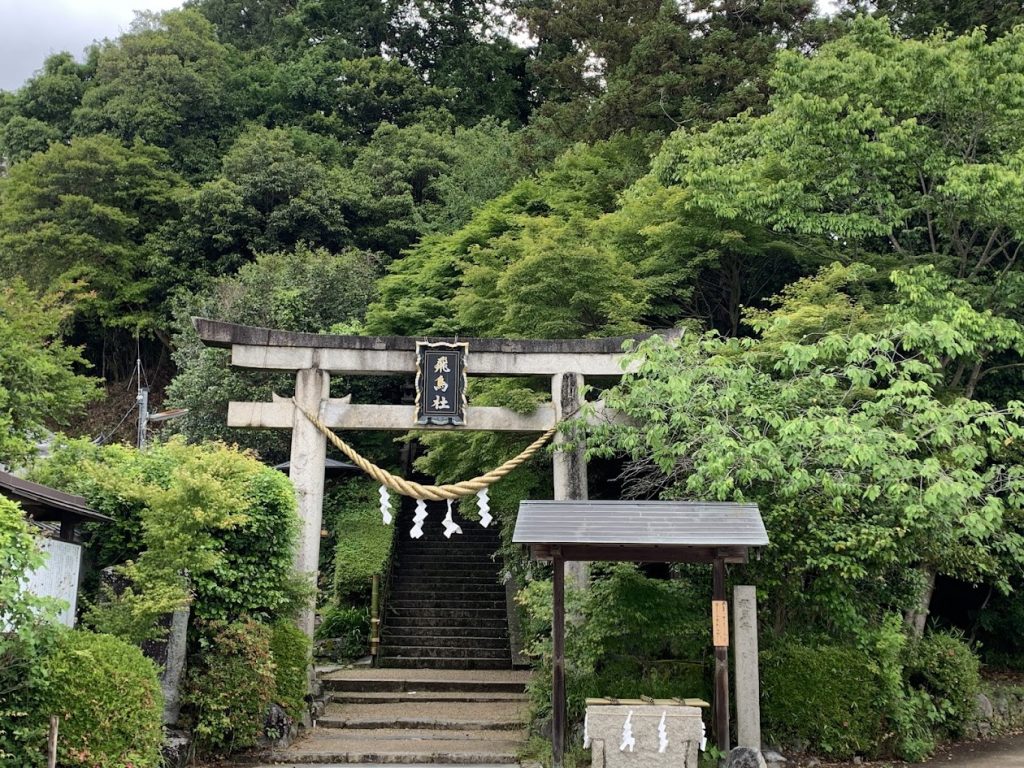
Asuka Ni Imasu Shrine
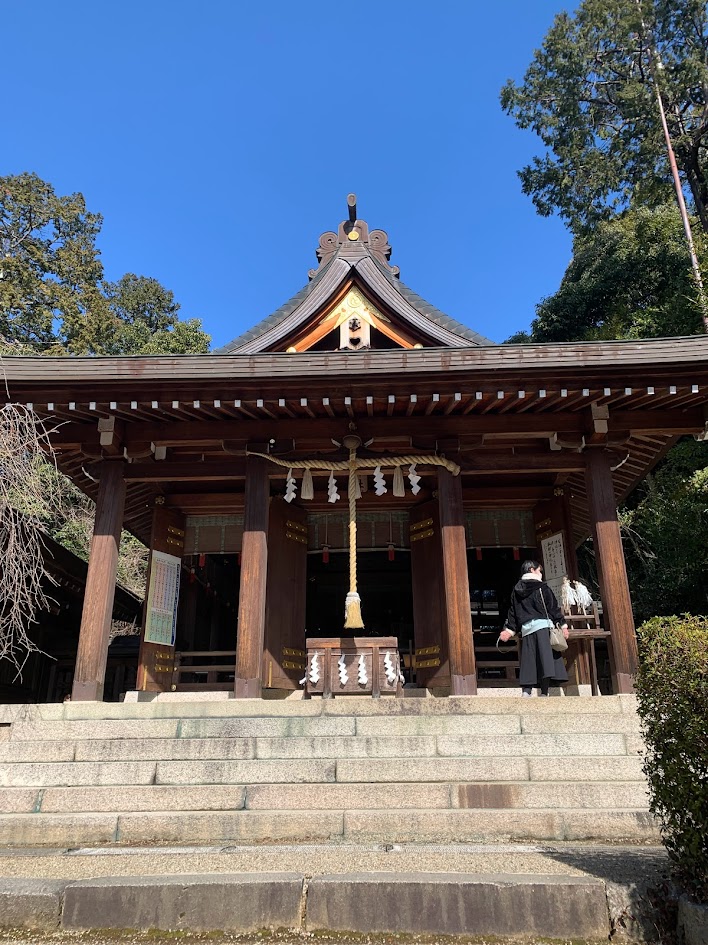

The Unique Festival: Onda Festival
Held on the first Sunday of February, the Onda Festival is recognized as one of the three major unique festivals in western Japan.
It is celebrated to pray for abundant harvests, prosperous descendants, and successful matchmaking, and it attracts many visitors.
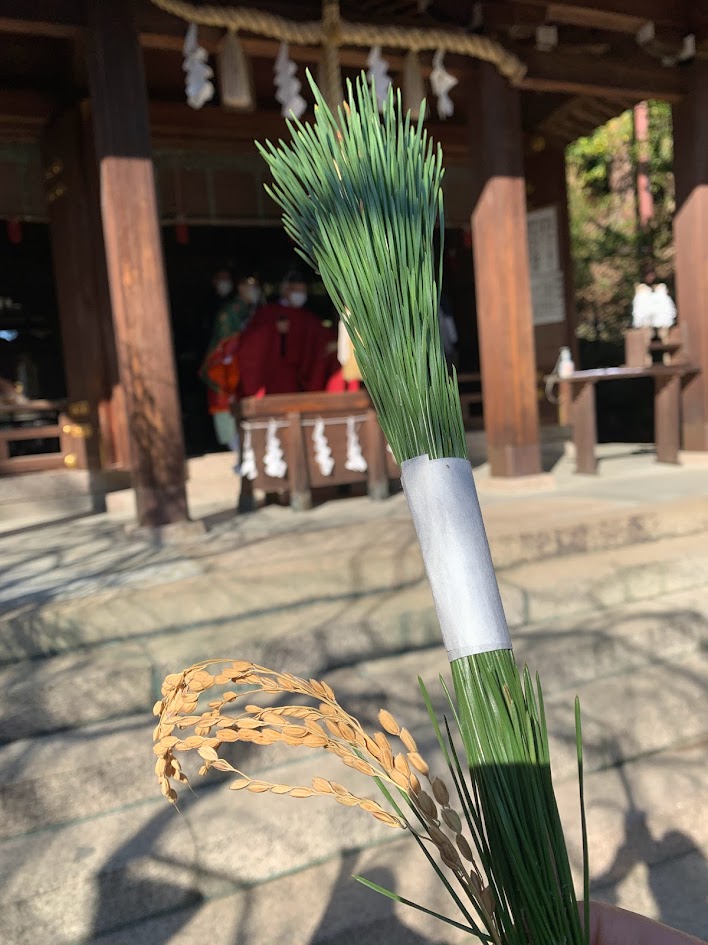
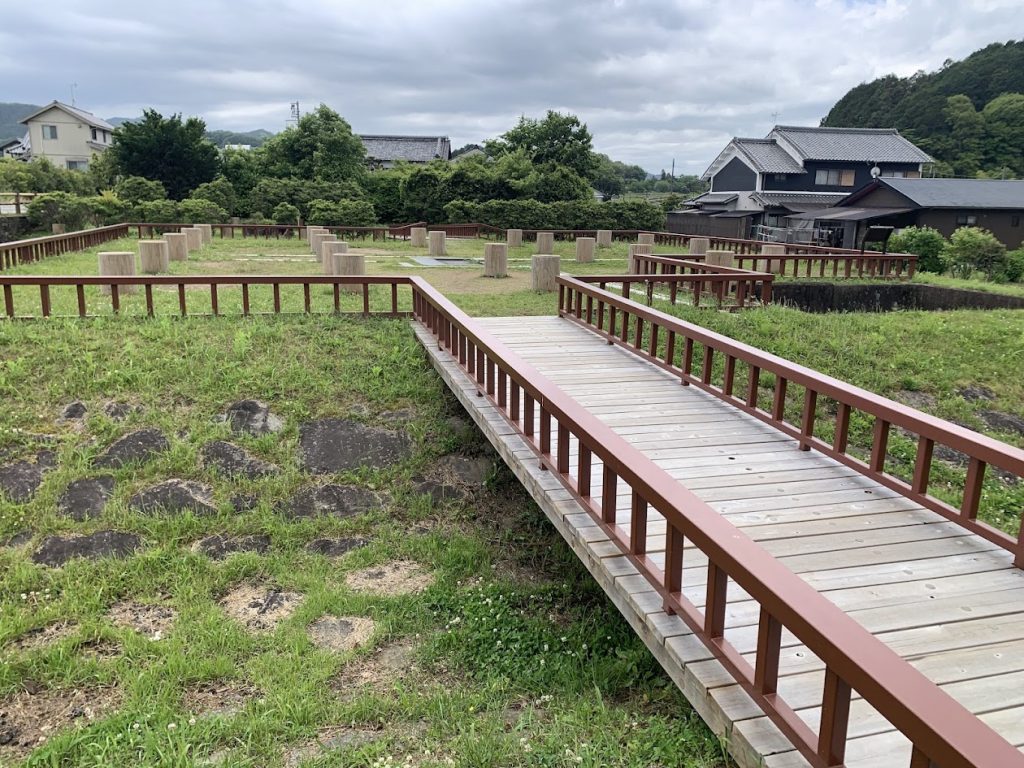
Mizuochi Ruins
Mizuochi Ruins
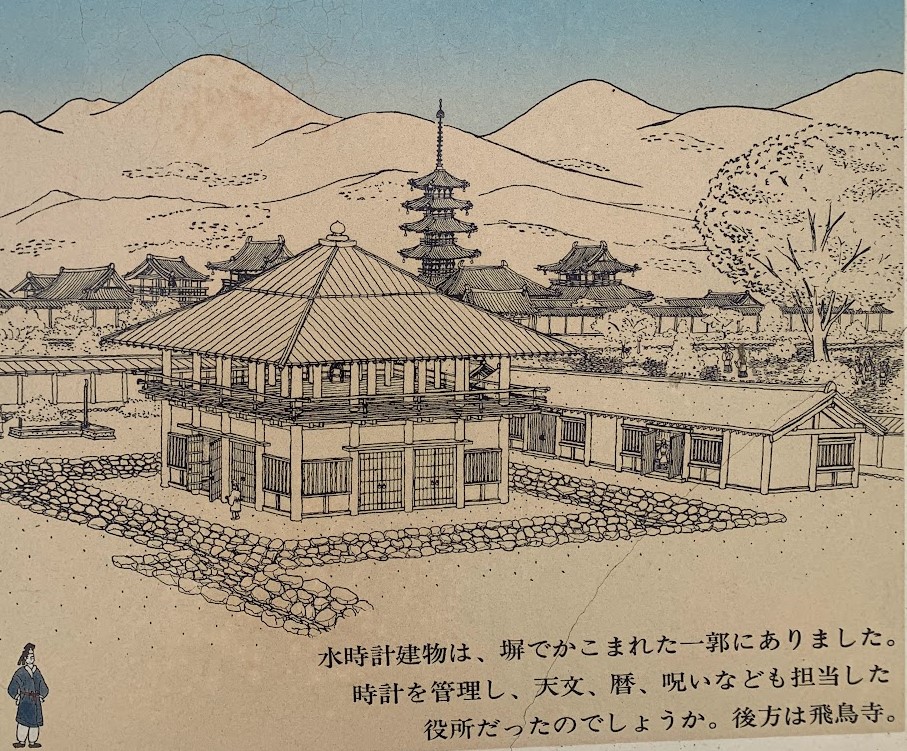
The Nihon Shoki records that in 660, during the reign of Empress Saimei, her Prince (later Emperor Tenzi) created the first water clock in Japan to inform people of the time.
Discovered in 1981, the site revealed both a water clock building and the water clock equipment. The prince aimed to organize political and social life with a precise time system, following the example of China.
This can be considered a major national project of the time.
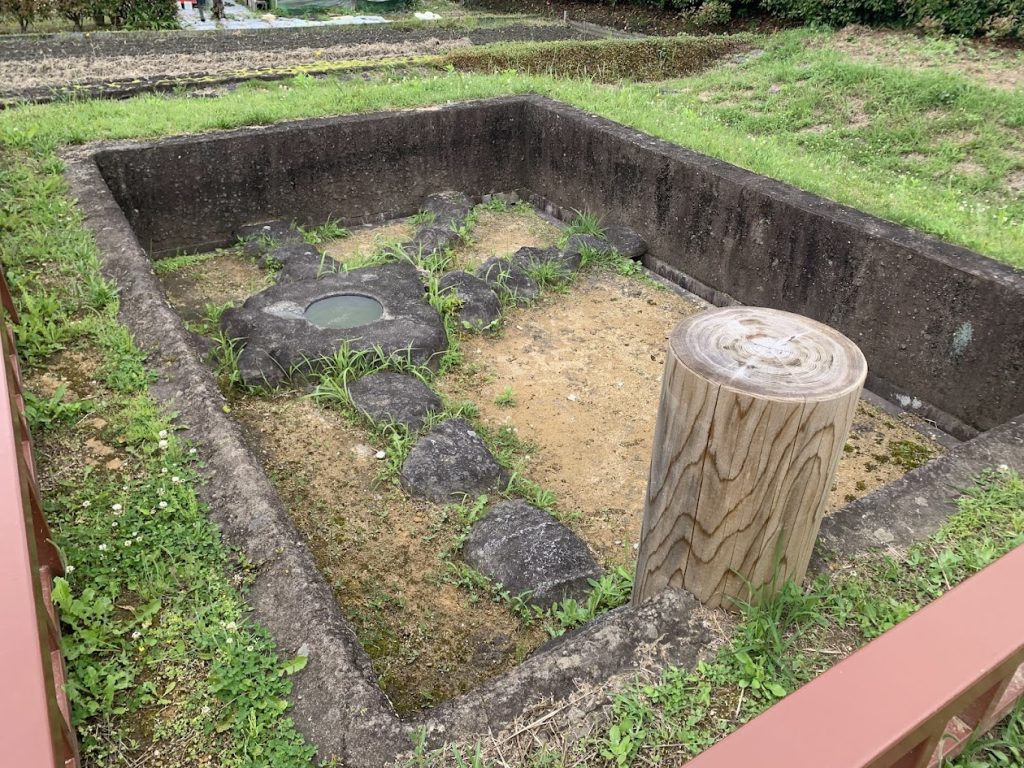
The large stone is a cornerstone used to support a column.
The smaller stones around it are used to secure the large stone and prevent it from moving.
It is clear from the foundation that it was constructed very sturdily.
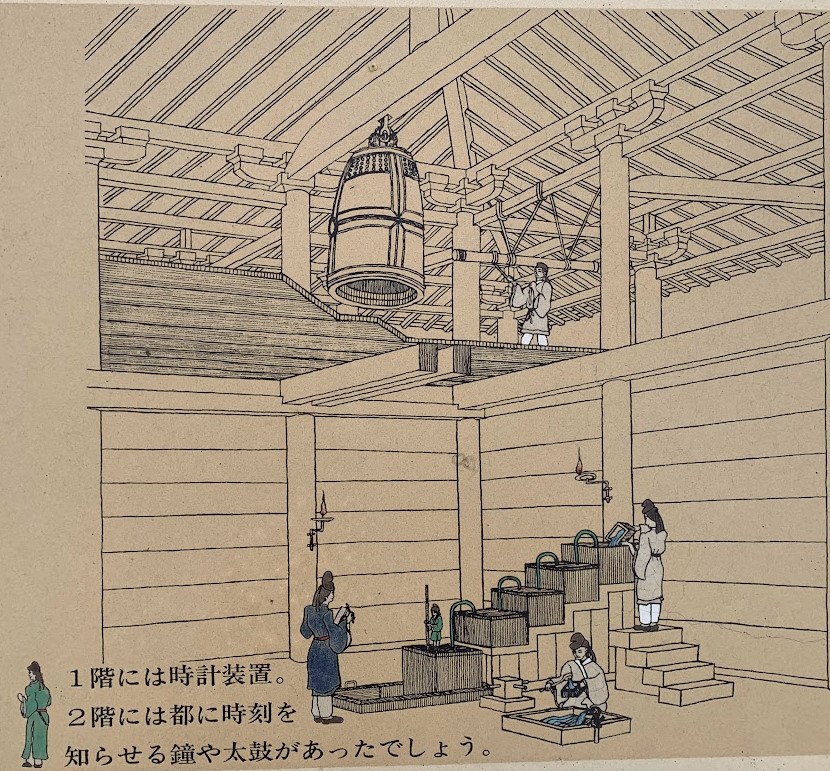
This is an explanatory diagram found at the Mizuochi Ruins.
Asuka Historical Museum
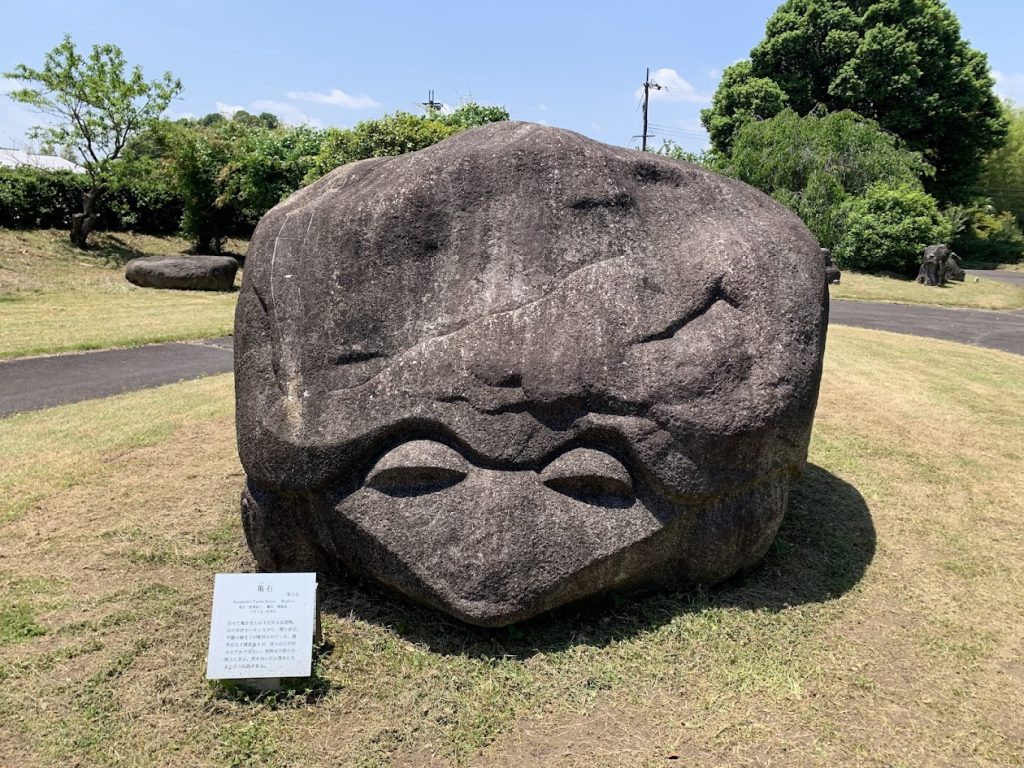
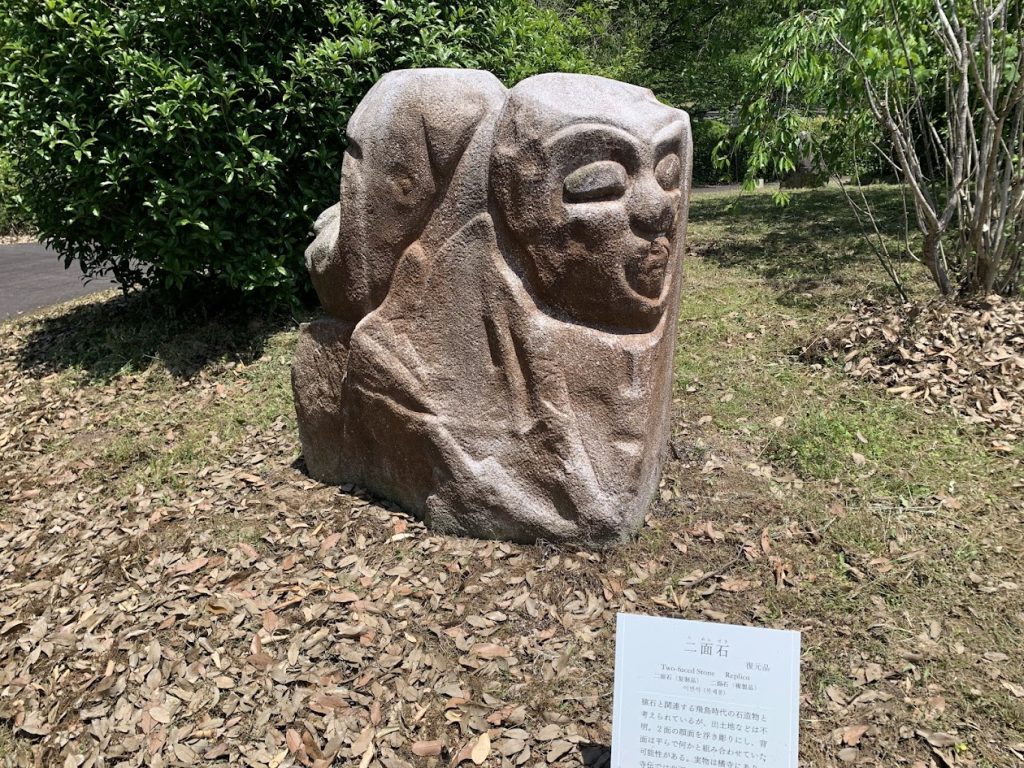
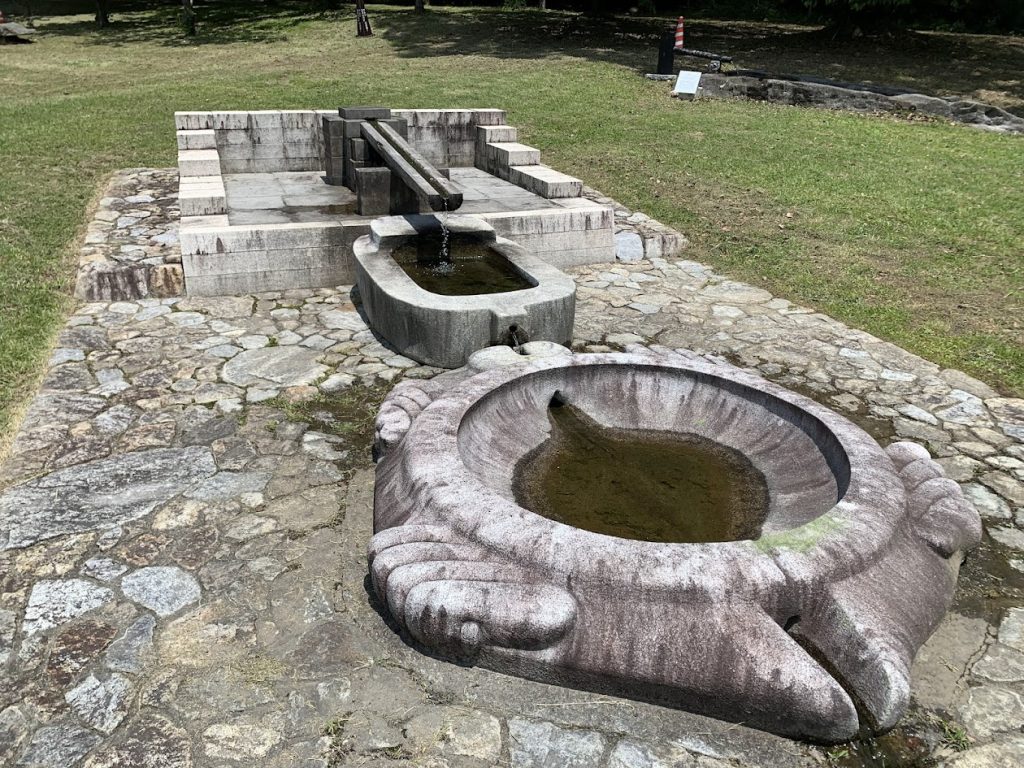
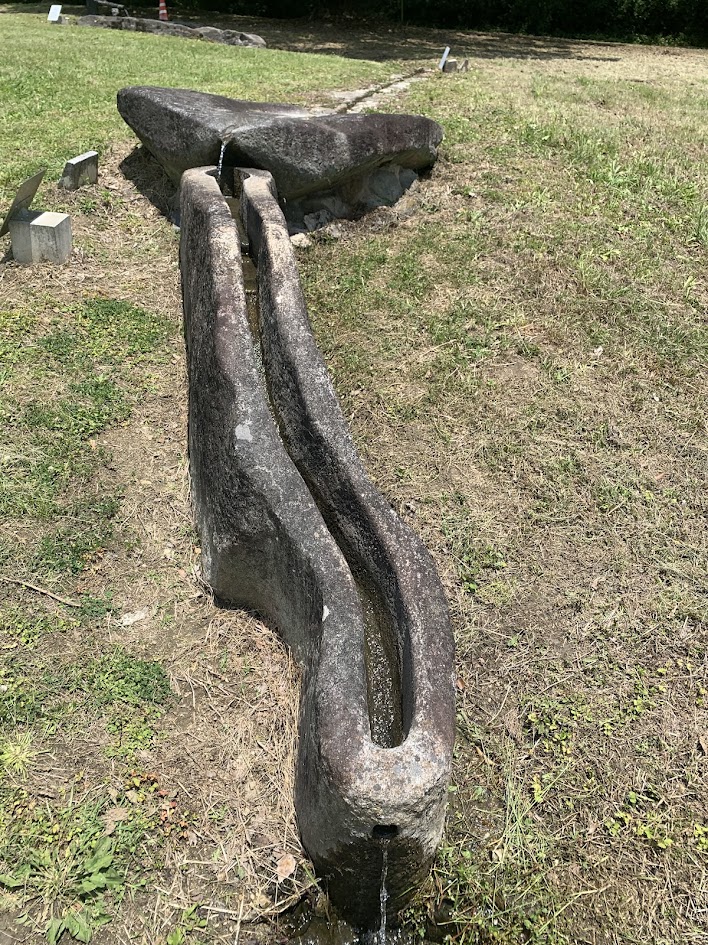
Replica of the Kameishi (Turtle Stone)
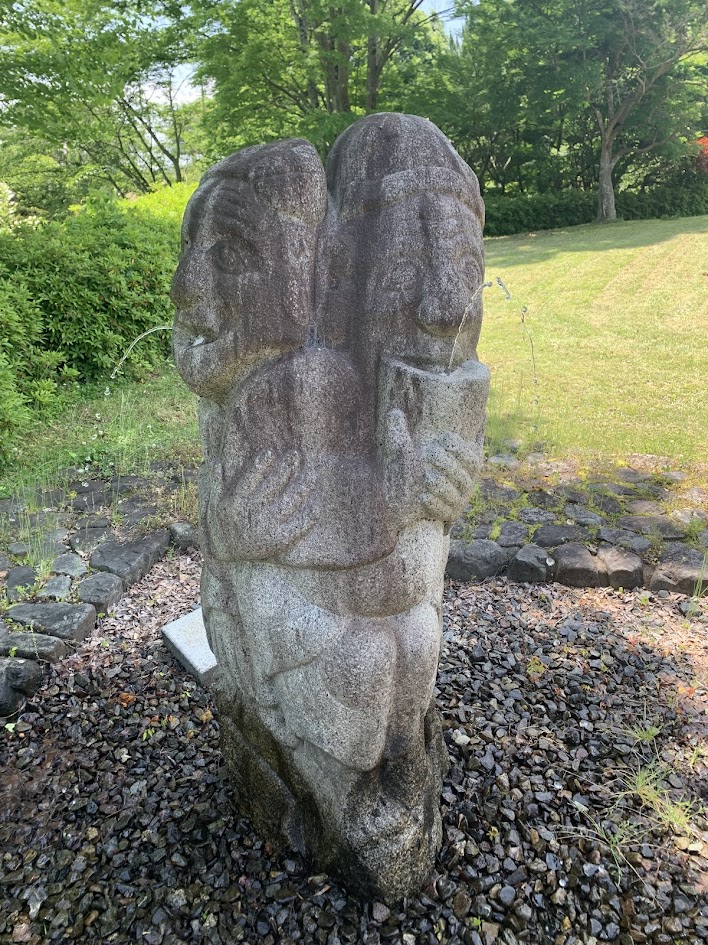
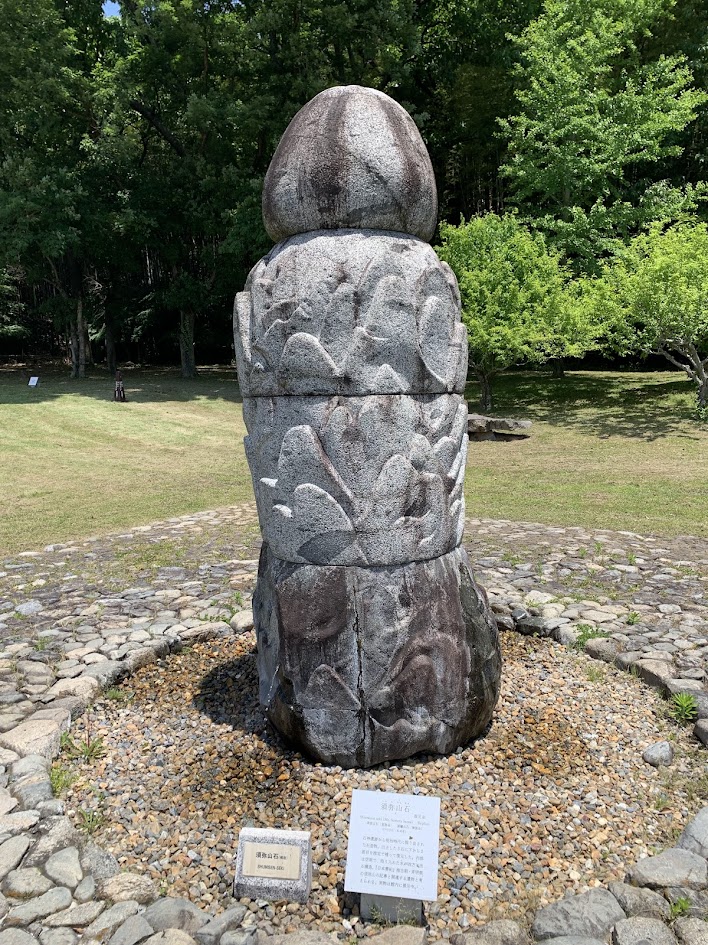
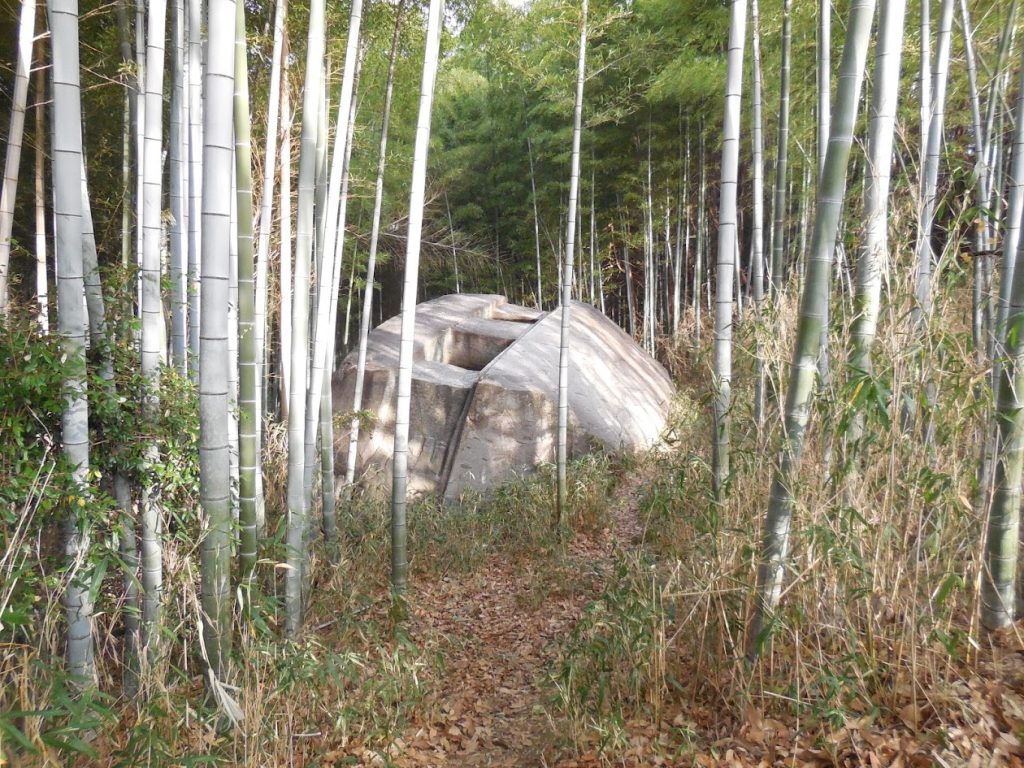
Asuka has many mysterious stone statues. Although visiting all of them can be challenging, the front yard of the Asuka Historical Museum has replicas of many of these statues.
Be sure to explore and solve the mysteries of these statues.
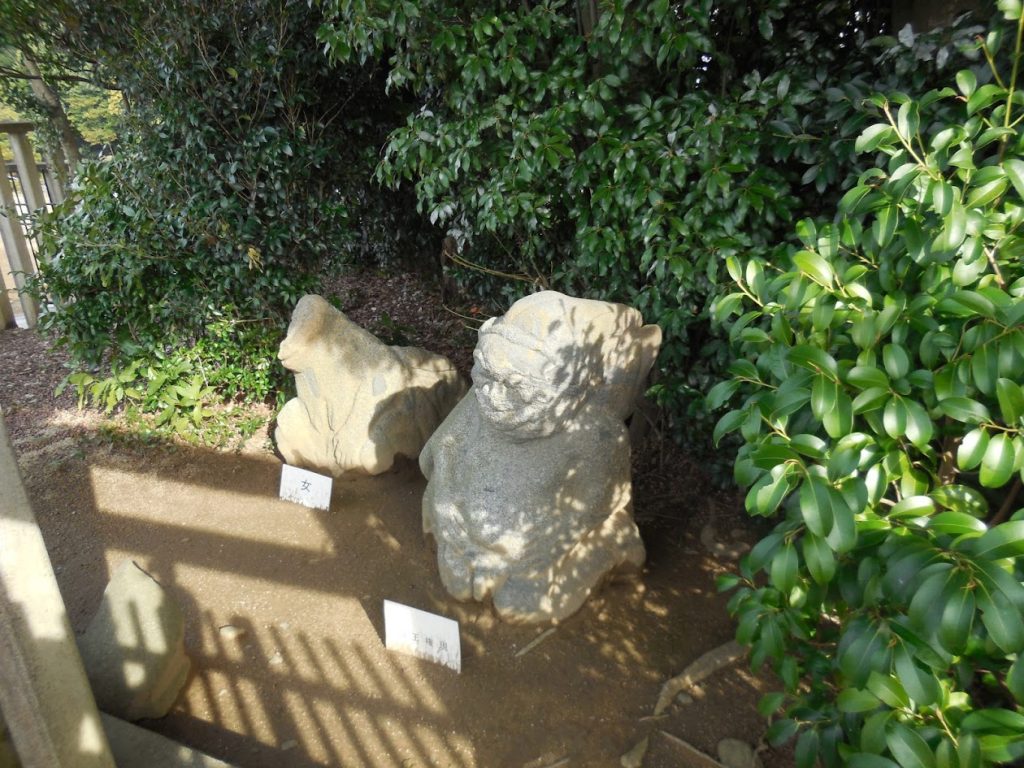
Monkey Stones (Photographs of the Actual Object) at the Kibi-hime Burial Mound
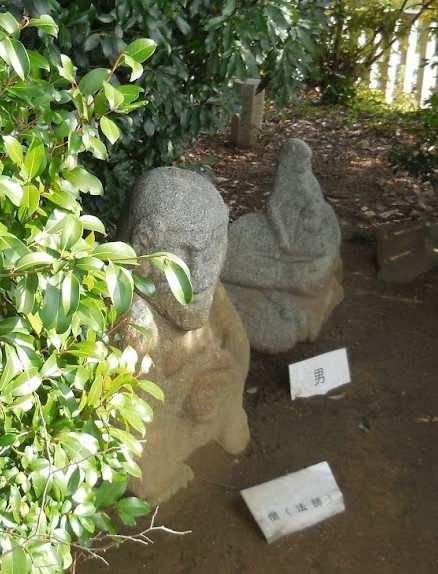
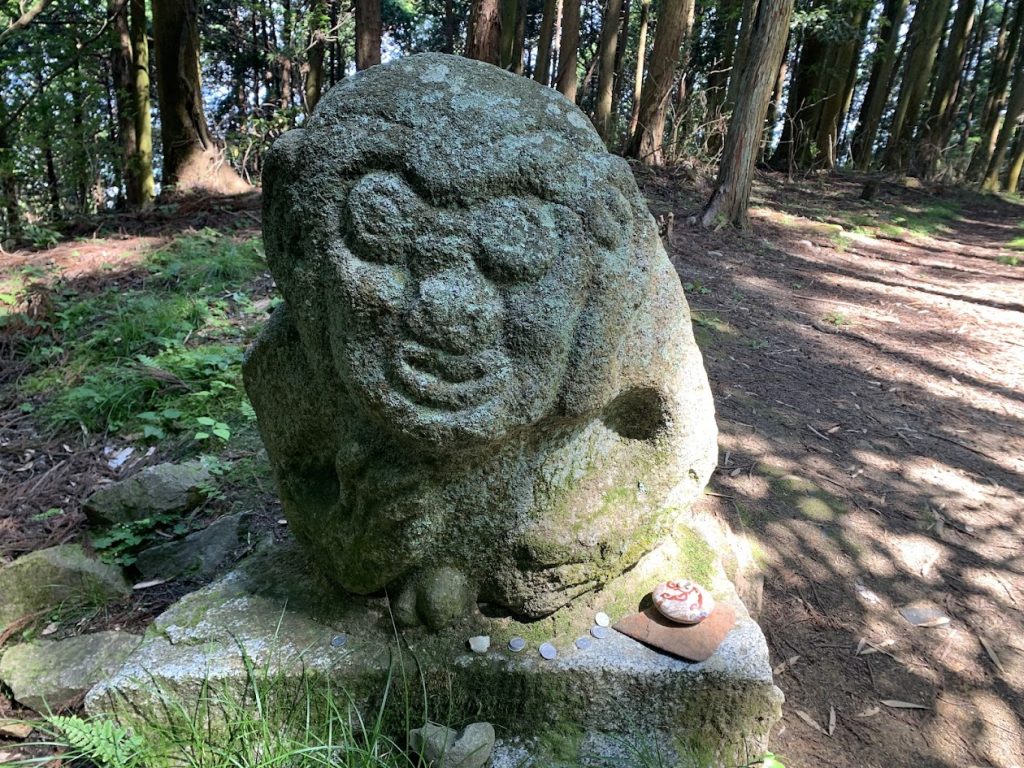
The Monkey Stone (photograph of the actual object) is located along the climb to Takatori Castle.
The next photos show replicas.
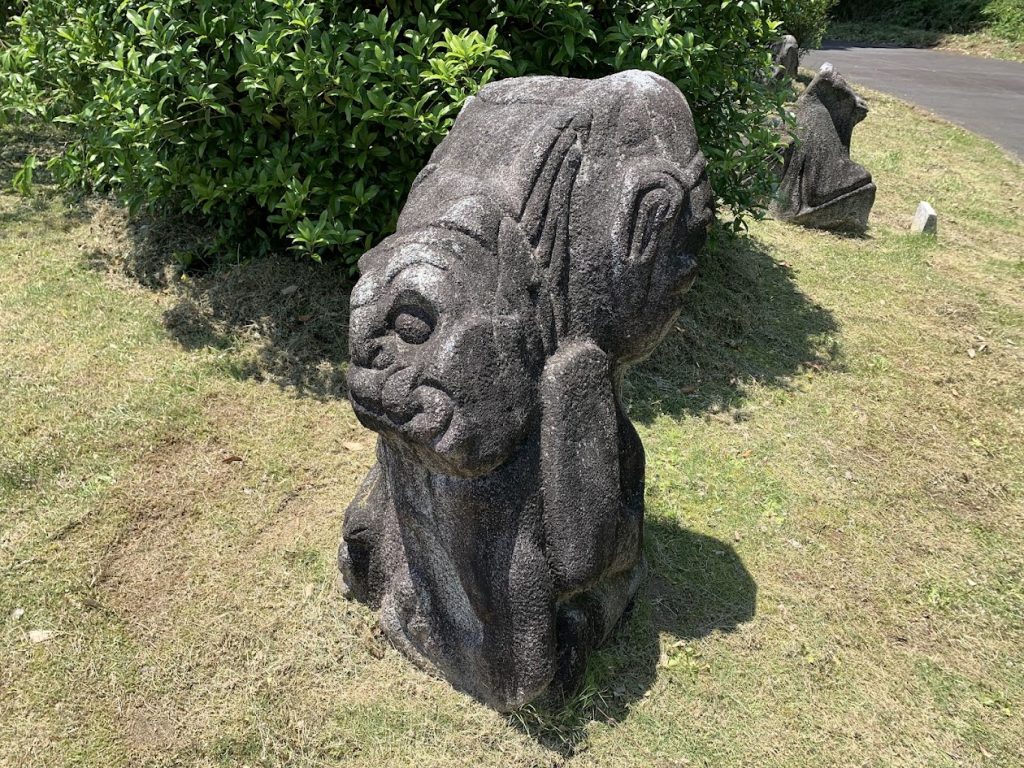
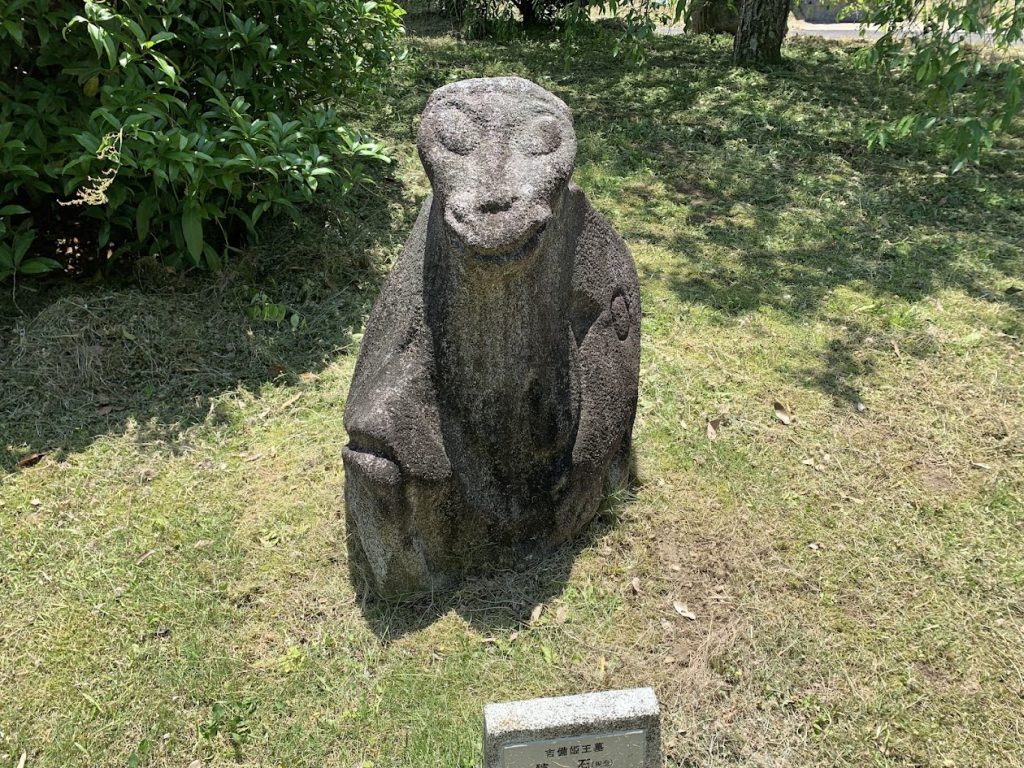
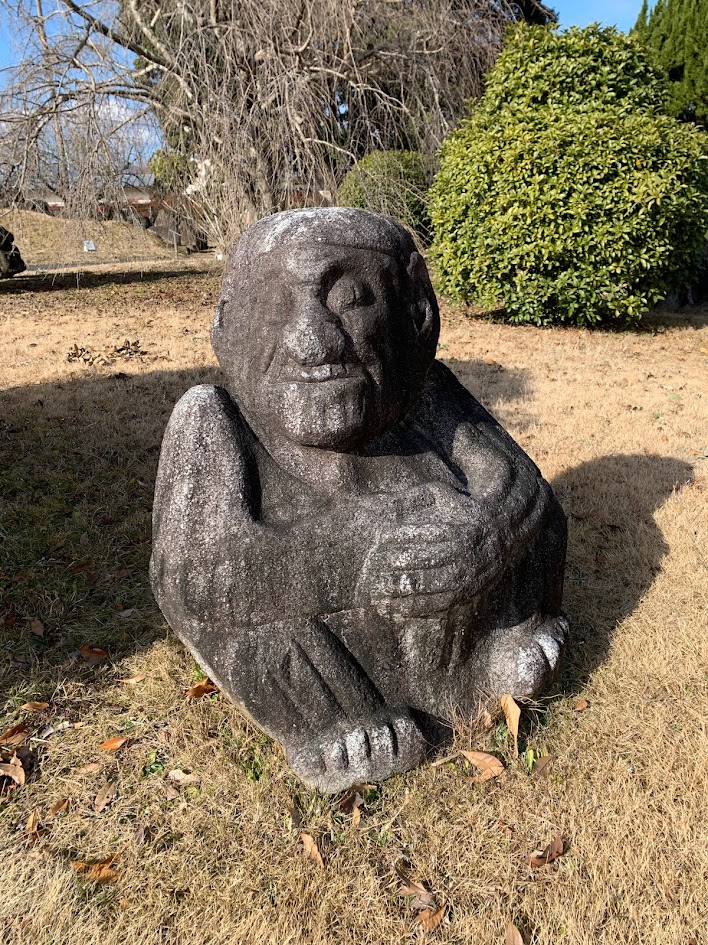
Kitora Kofun (Tomb)
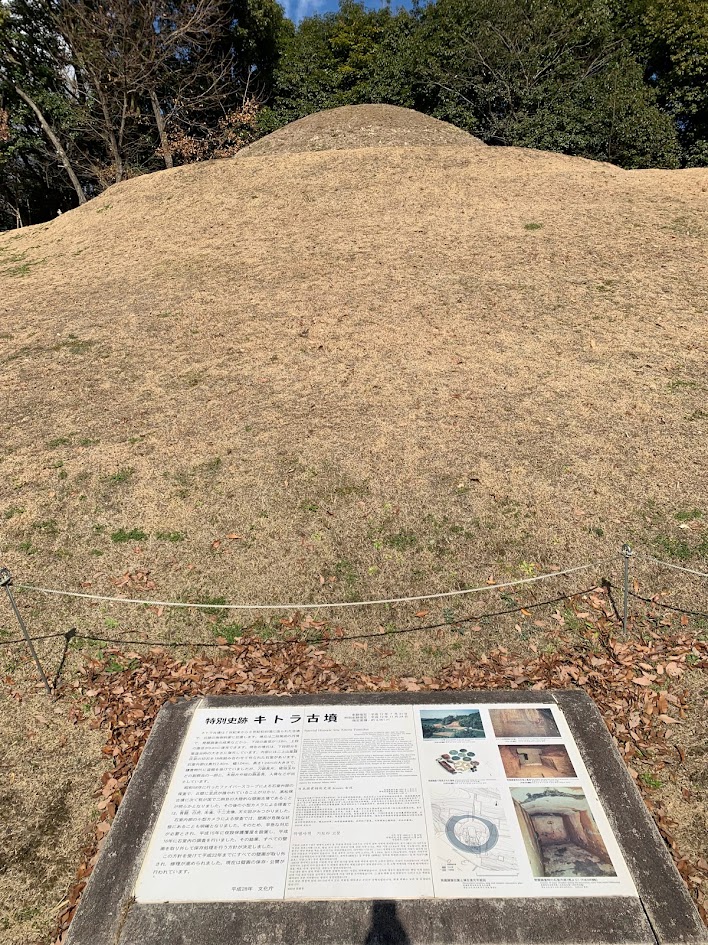
The Kitora Kofun (Tomb) was built around the late 7th to early 8th century (the capital moved to Nara in 710).
It is a circular tomb with a lower tier measuring approximately 14 meters in diameter and an upper tier about 9 meters in diameter.
Inside, there is a stone chamber constructed with 18 pieces of tuff stone from Mt. Nijo, a camelback-like mountain between Nara and Osaka.
During the Kamakura period, many items were stolen by thieves. However, some burial goods and several wall paintings remained.
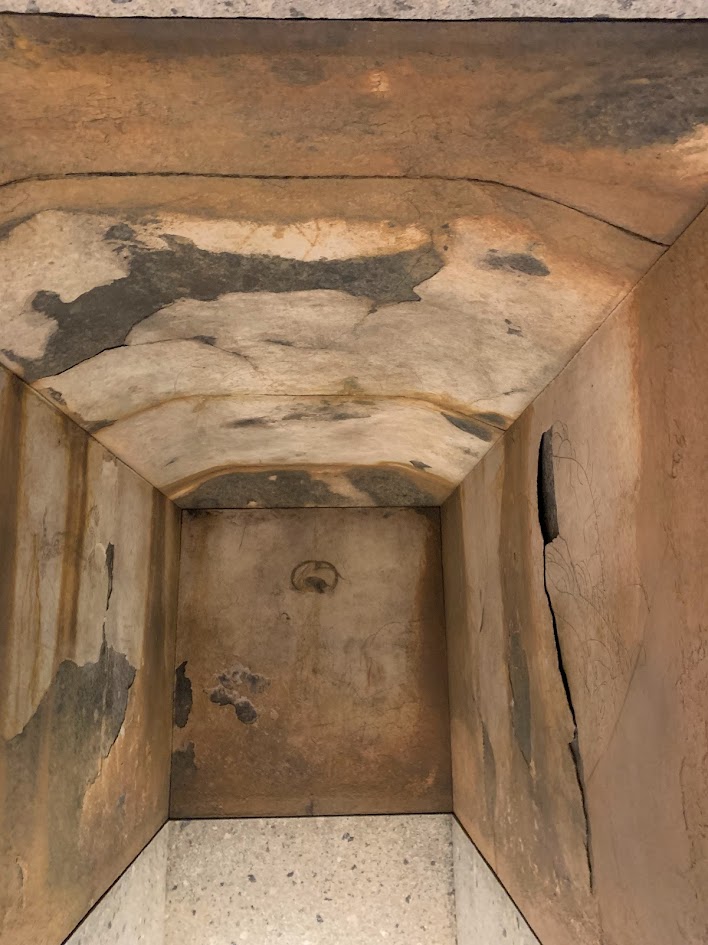
Reconstructed stone chamber inside Shishinkan, the Hall of the Four Guardian Deities, at Kitora Kofun (tomb).
The Four Divine Beasts that govern the four directions are:
North: Genbu, the Black Tortoise
East: Seiryu, the Blue Dragon
South: Suzaku, the Red Bird
West: Byakko, the White Tiger
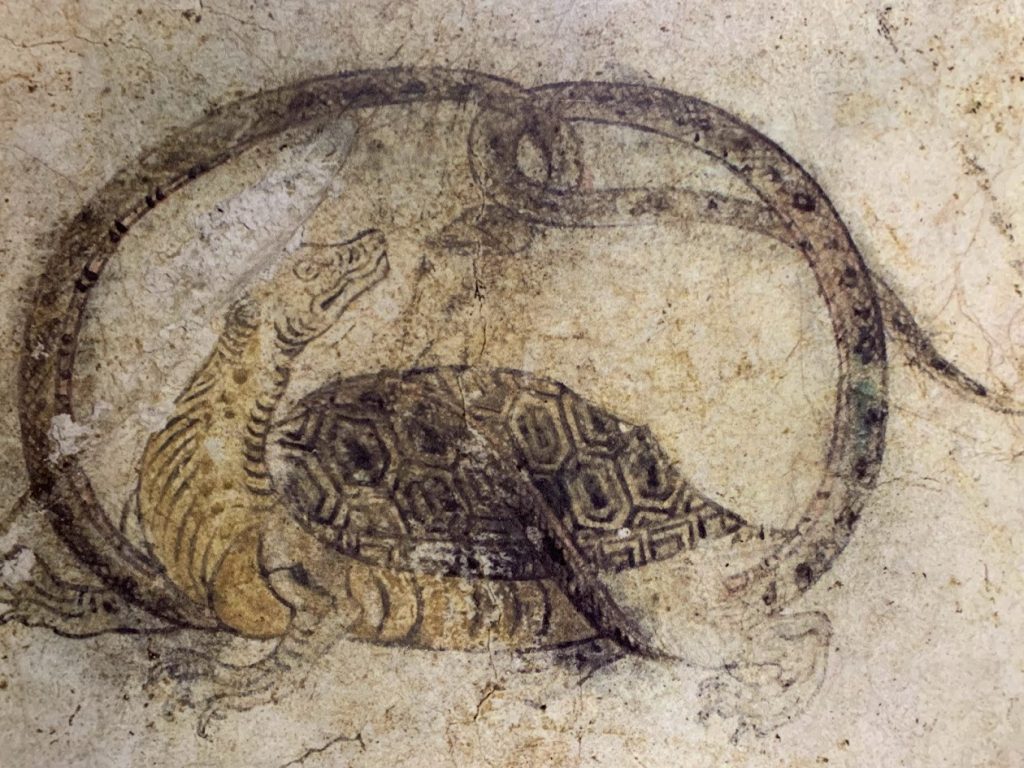
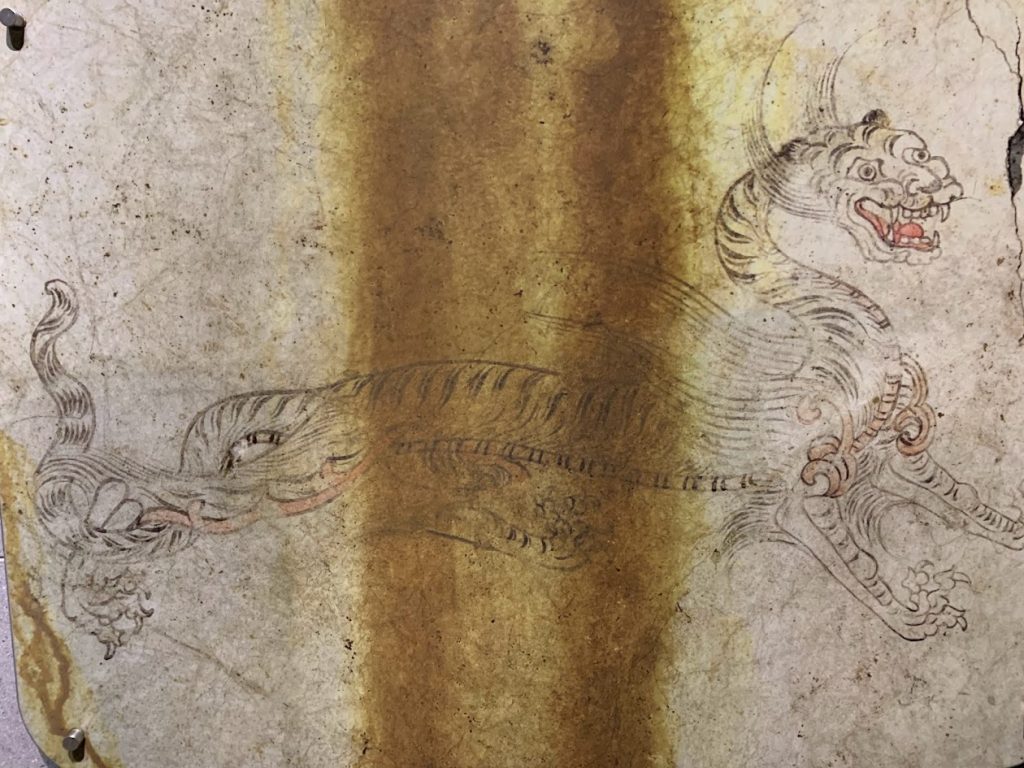
kengoshizuka kofun (tomb)
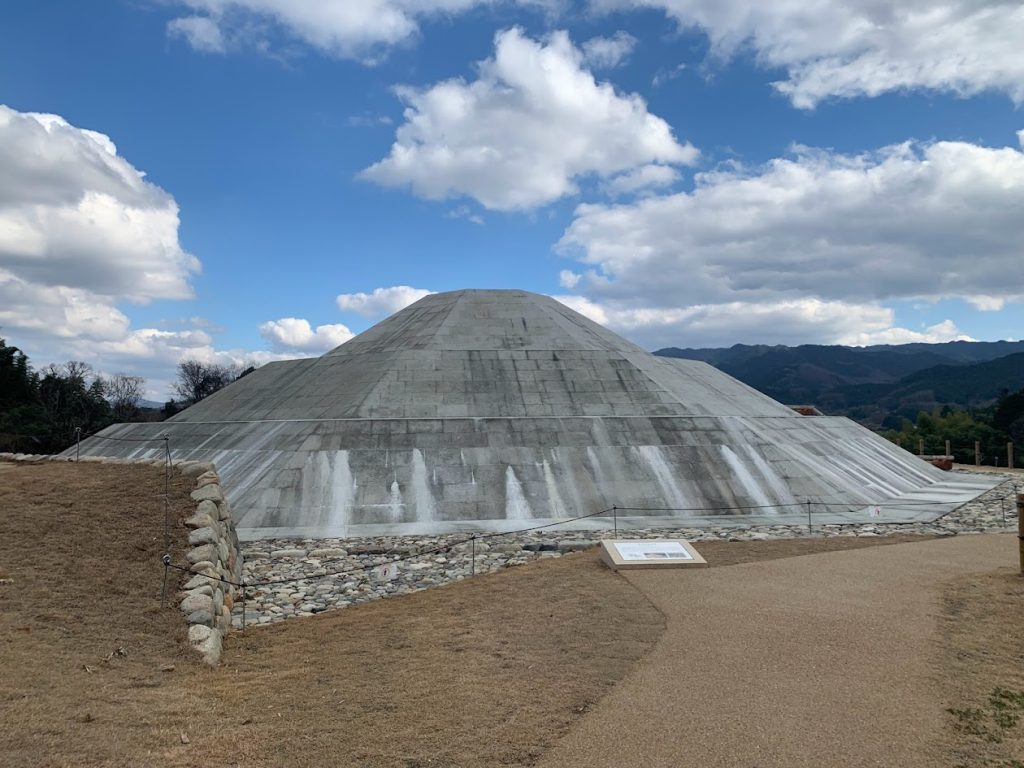
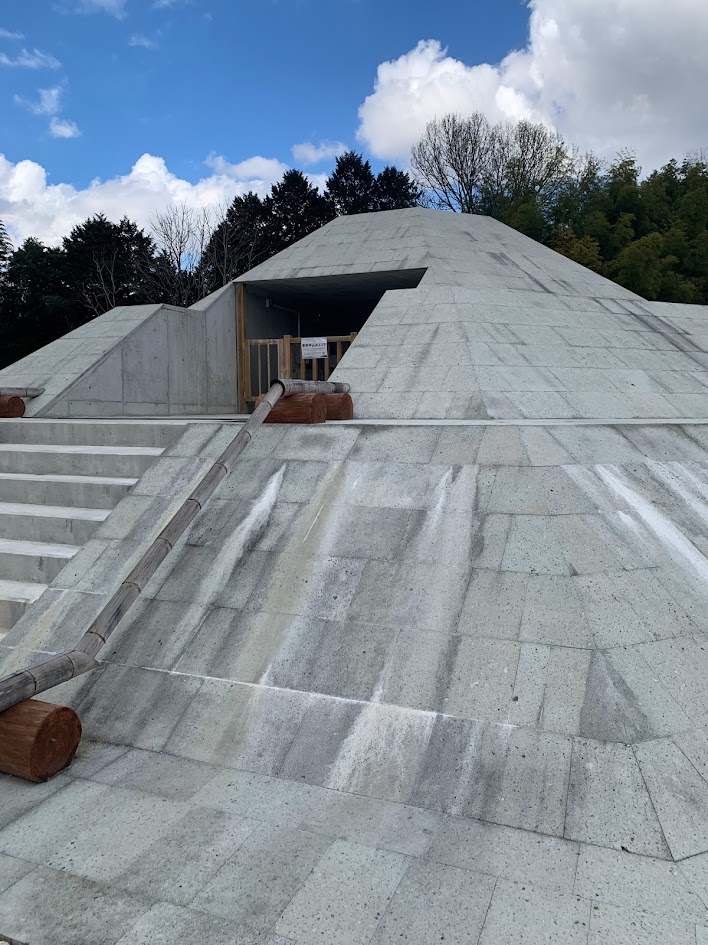
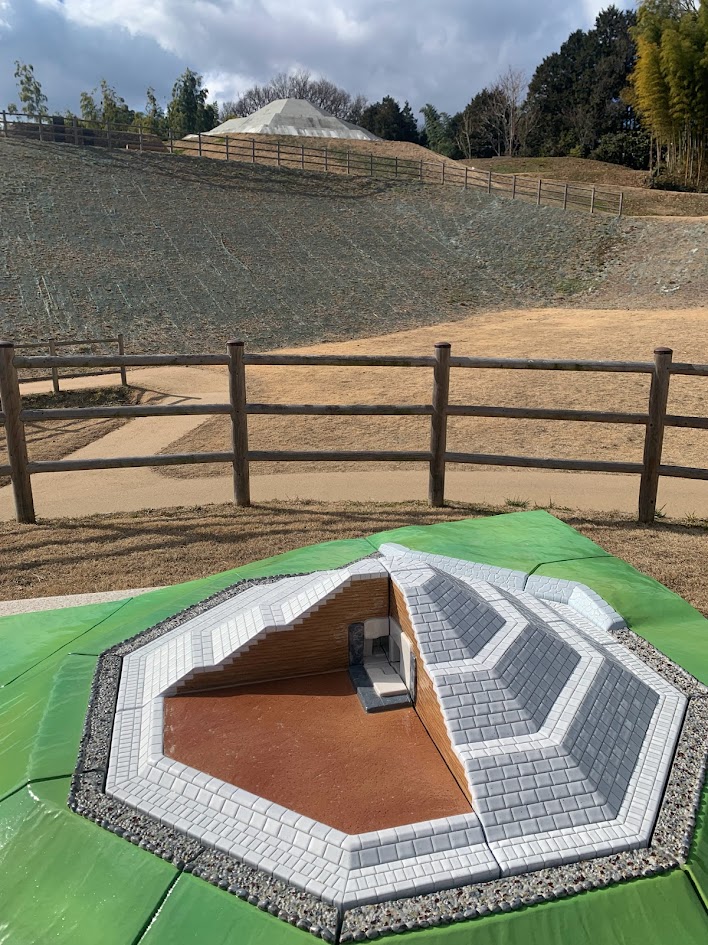
Kengoshizuka Kofun (Tomb) was built in the late 7th century and has an octagonal shape.
The largest kofun in Japan is the Daisen Kofun (Nintoku Tennō-ryō) in Sakai City, built in the mid-5th century, with a length of 486 meters.
By the late 7th century, just before the Nara period, large-scale kofun were no longer being built, and this kofun has a width of 22 meters.
The kofun culture lasted for about 500 years, and this tomb was constructed during its final stage.
It is believed that the person buried here is likely either Empress Saimei or Emperor Monmu.
The stone chamber inside uses tuff from Mt. Nijo.
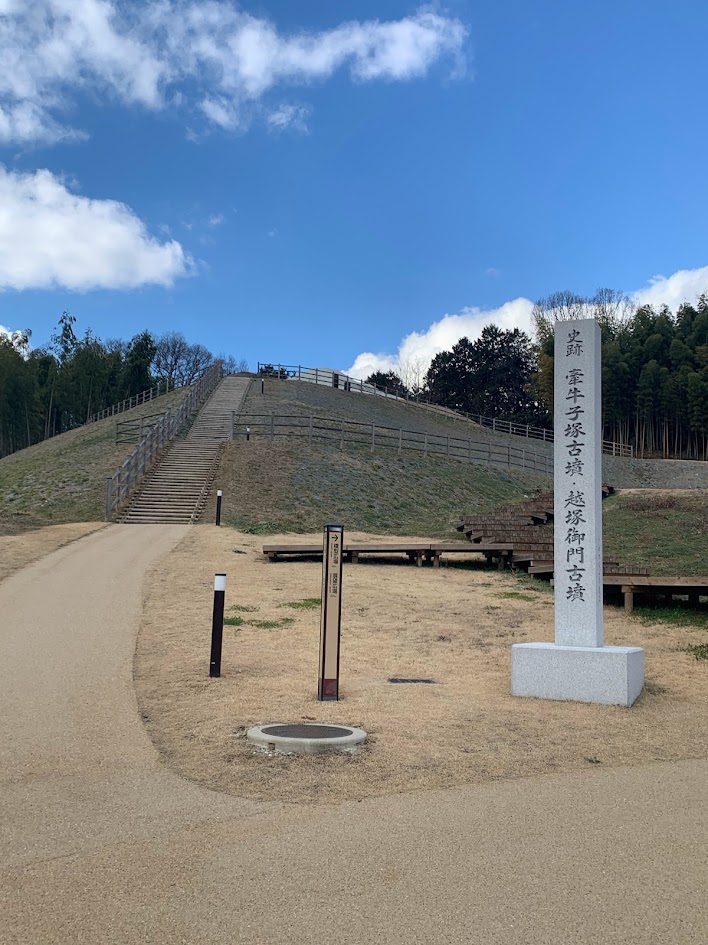
Inabuchi Area
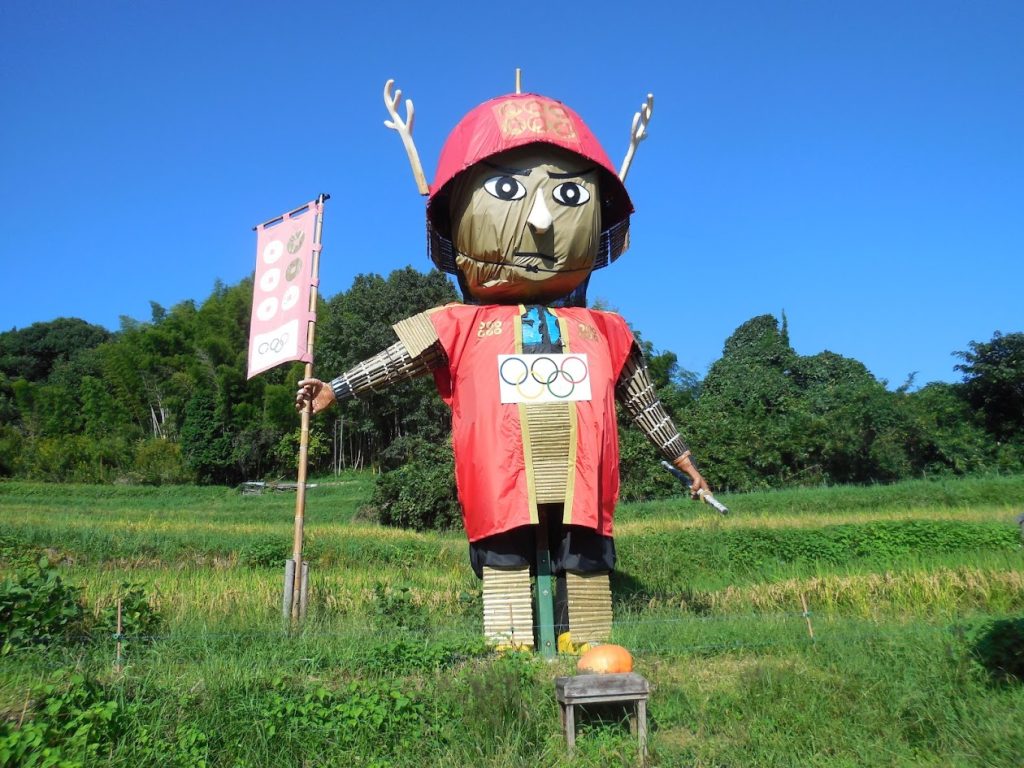
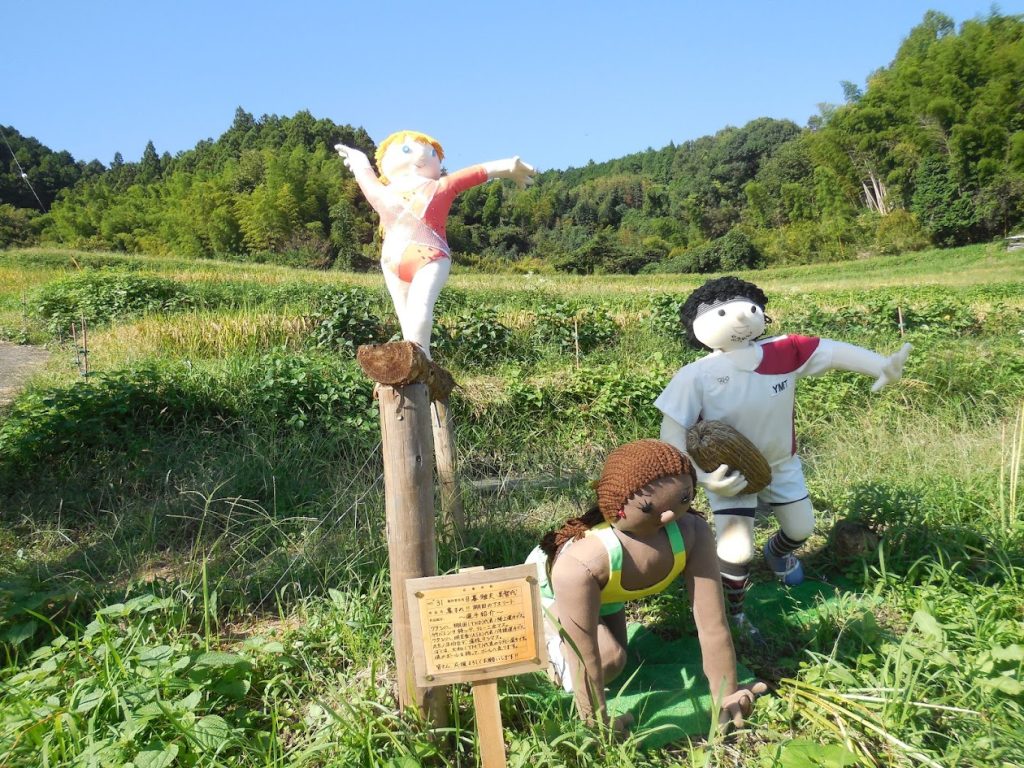
Inabuchi is a district located further south from the Ishibutai Kofun (Tomb).
It is famous for its terraced rice fields, and in the autumn, the “Scarecrow Contest” is held there.
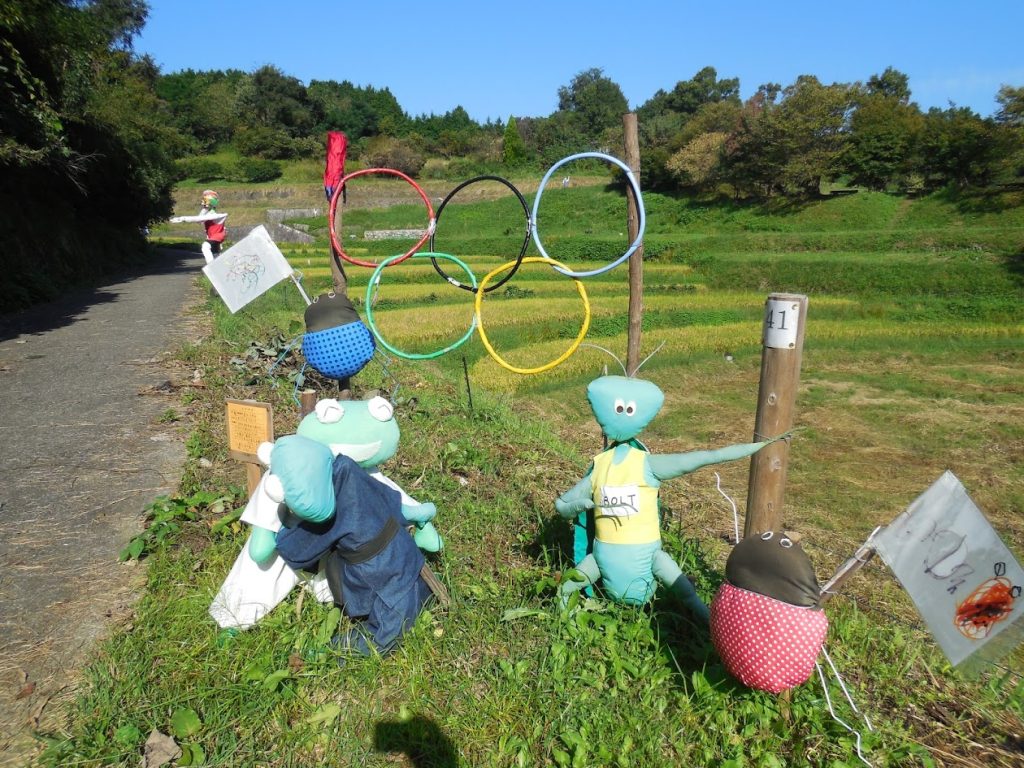
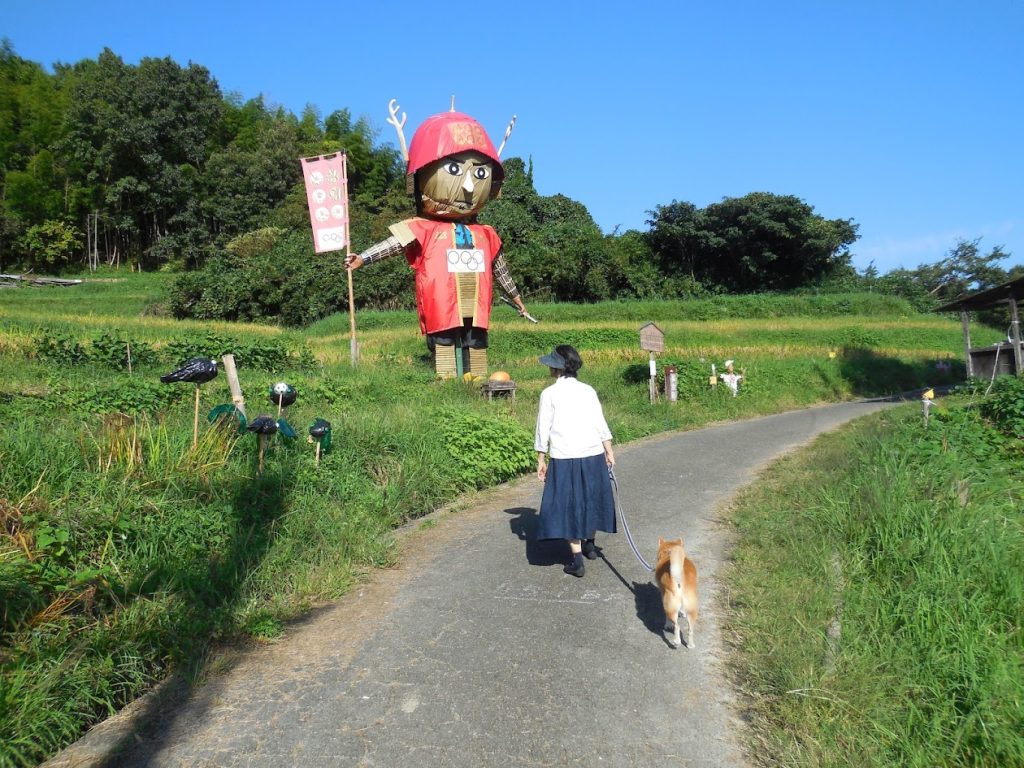
The scenery of Asuka Village
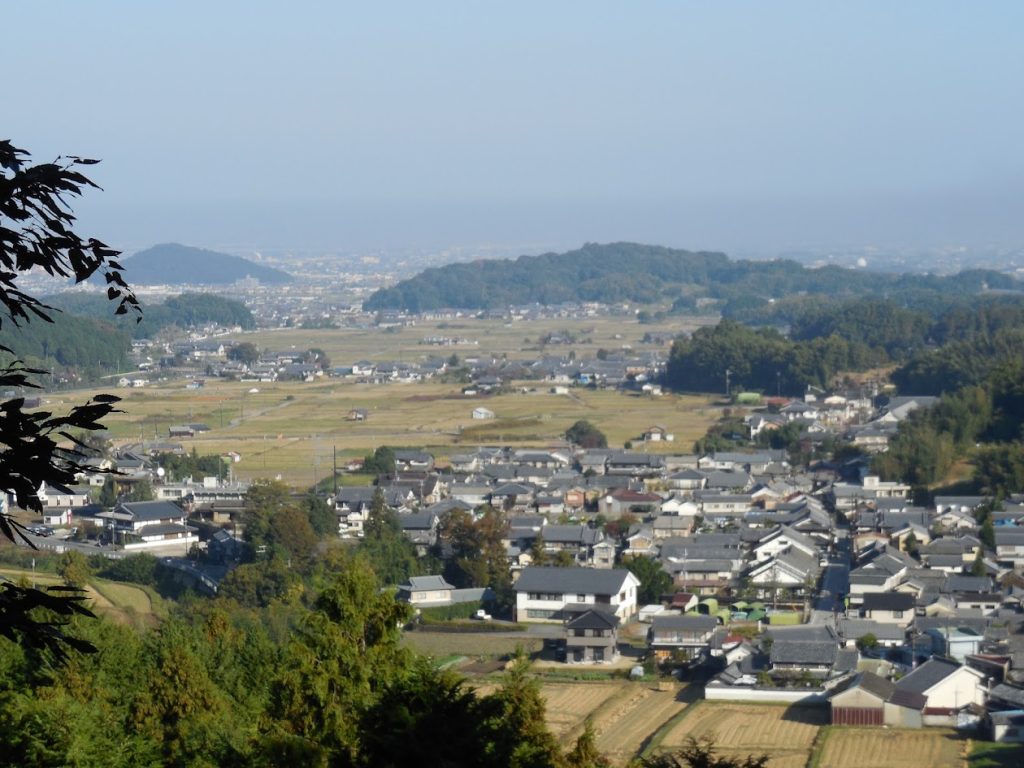
From the East Observation Deck in the Iwaido Area
The path ascends the hill from beside the Ishibutai Kofun (Tomb).
You can see the peaceful rows of houses in Asuka spread out before you.
The mountain at the center top is “Mt. Amagashi,” and the beautiful triangular-shaped mountain on the left is “Mt. Unebi.”
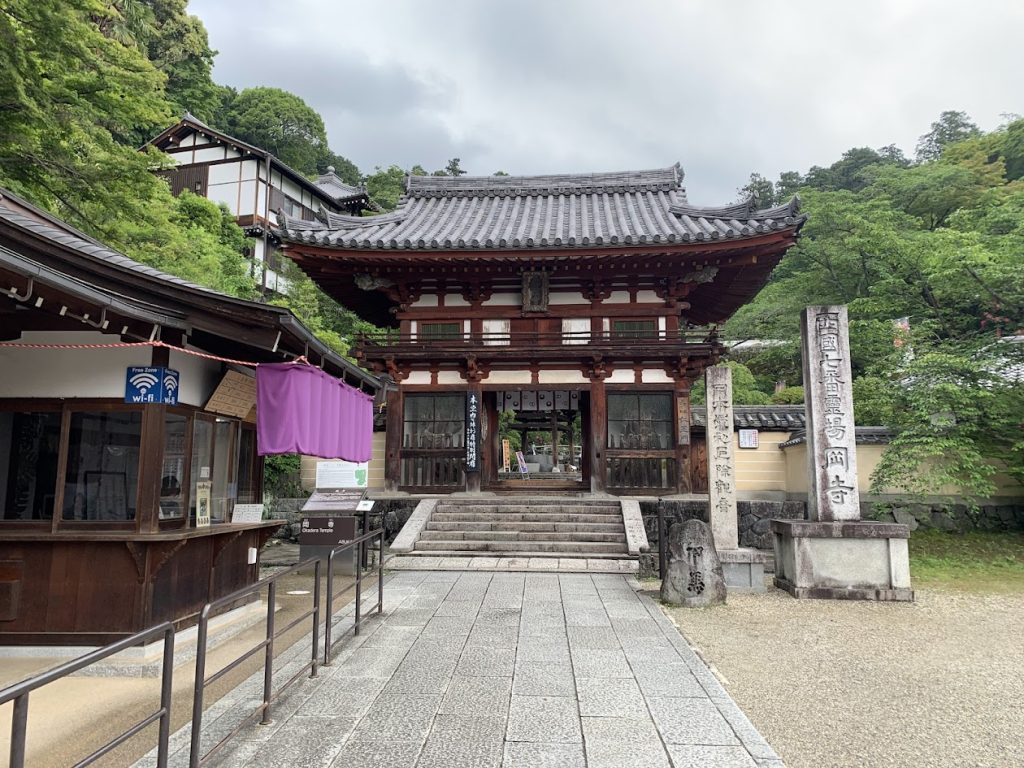
Okadera Temple
The principal object of worship is a statue of Kannon, created in the Nara period, which is revered as a guardian deity for women’s protection against misfortune.
Standing at 4.6 meters tall, it is the largest clay statue (sozo) in Japan.
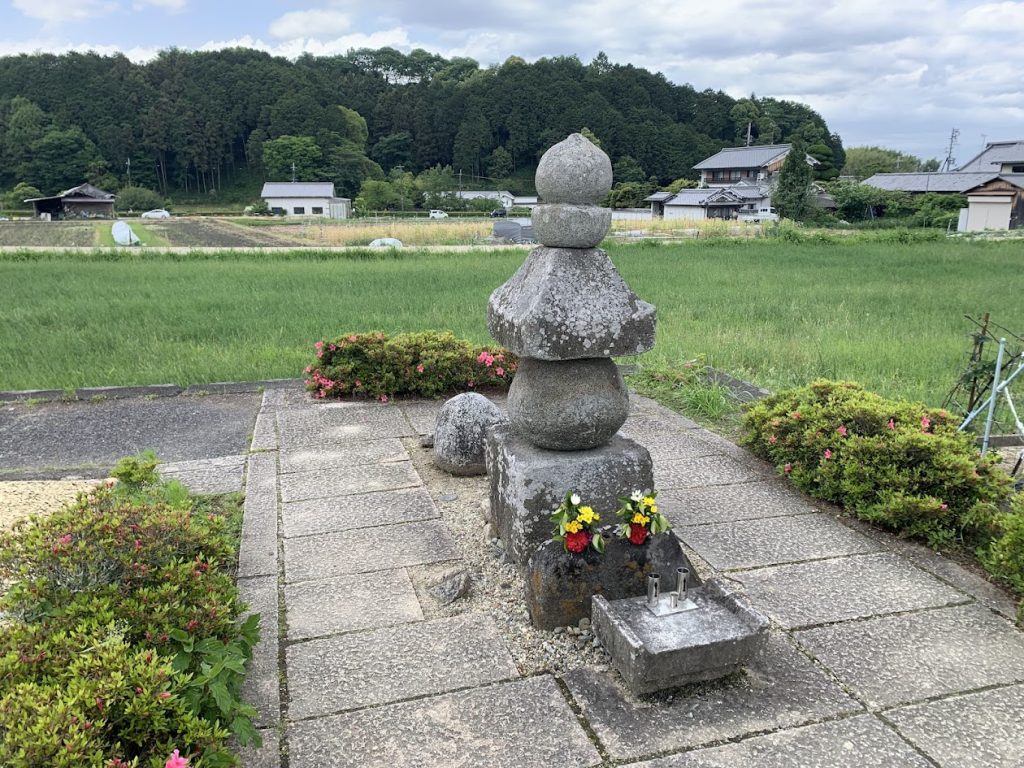
Soga no Iruka’s Head Mound
In 645, Prince Naka no Oe (later Emperor Tenji) and Nakatomi no Kamatari (ancestor of the Fujiwara clan) initiated the “Taika Reform.”
After the death of Prince Shotoku, the two men, feeling threatened by the powerful Soga clan, attacked Soga no Iruka during a ceremony held at the palace and killed him.
Legend has it that Iruka’s head flew 600 meters to this head mound.
The hill visible beyond the mound is Amagashi Hill, where the Soga clan’s residence was located.
After Iruka’s death, his father, Emishi, committed suicide by setting fire to the residence.
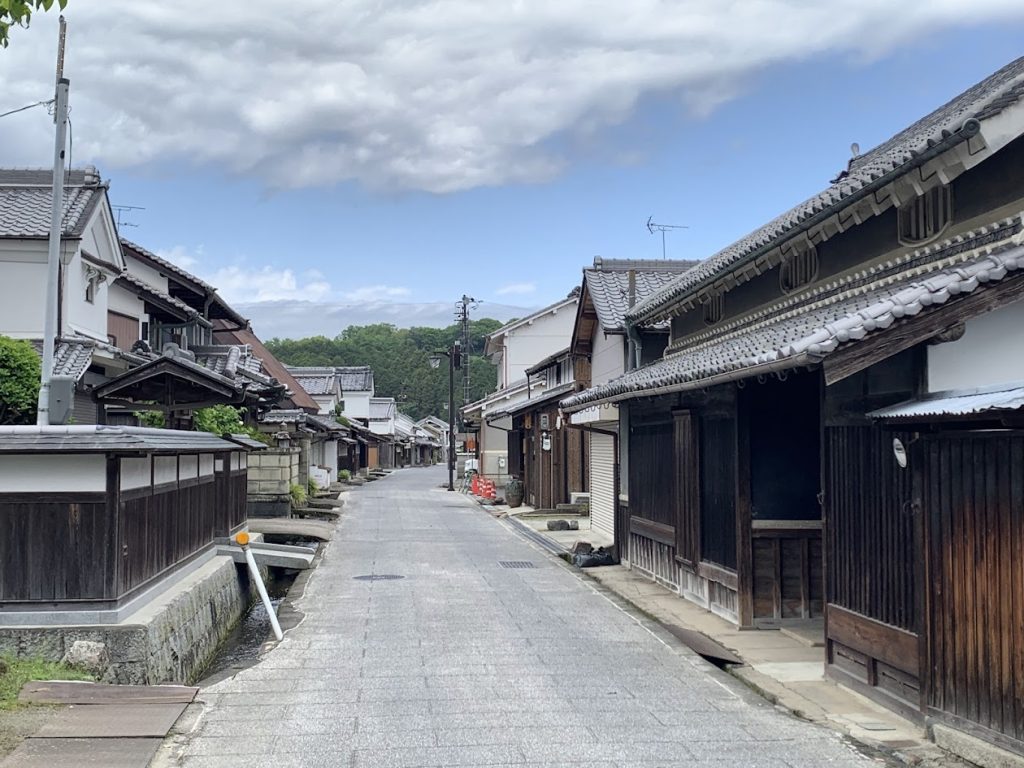
Scenes of the houses in Asuka Village
The area retains a nostalgic landscape often referred to as “Japan’s original scenery.”
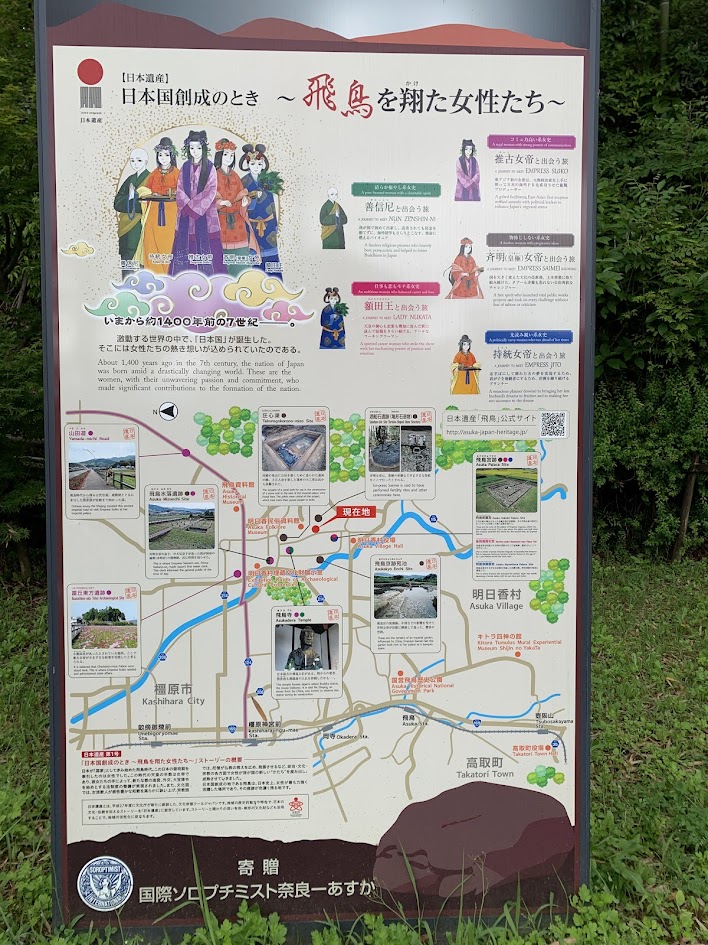
While walking through Asuka, I came across a delightful sign with the following message:
The Creation of Japan ~ Women Who Soared Over Asuka
About 1,400 years ago, in the 7th century, amidst a turbulent world, “Japan” was born. It was filled with the passionate thoughts of women.
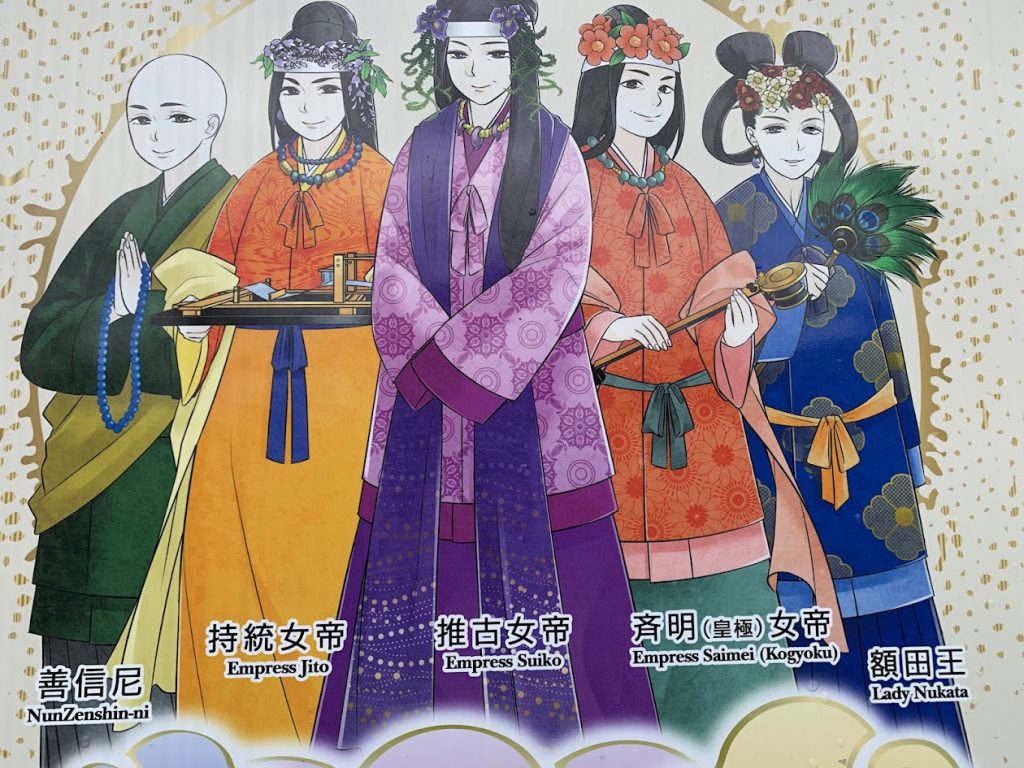
This is an enlarged portion of the information board.
Nun Zenshin-ni
Empress Jito
Empress Suiko
Empress Saimei
Lady Nukata
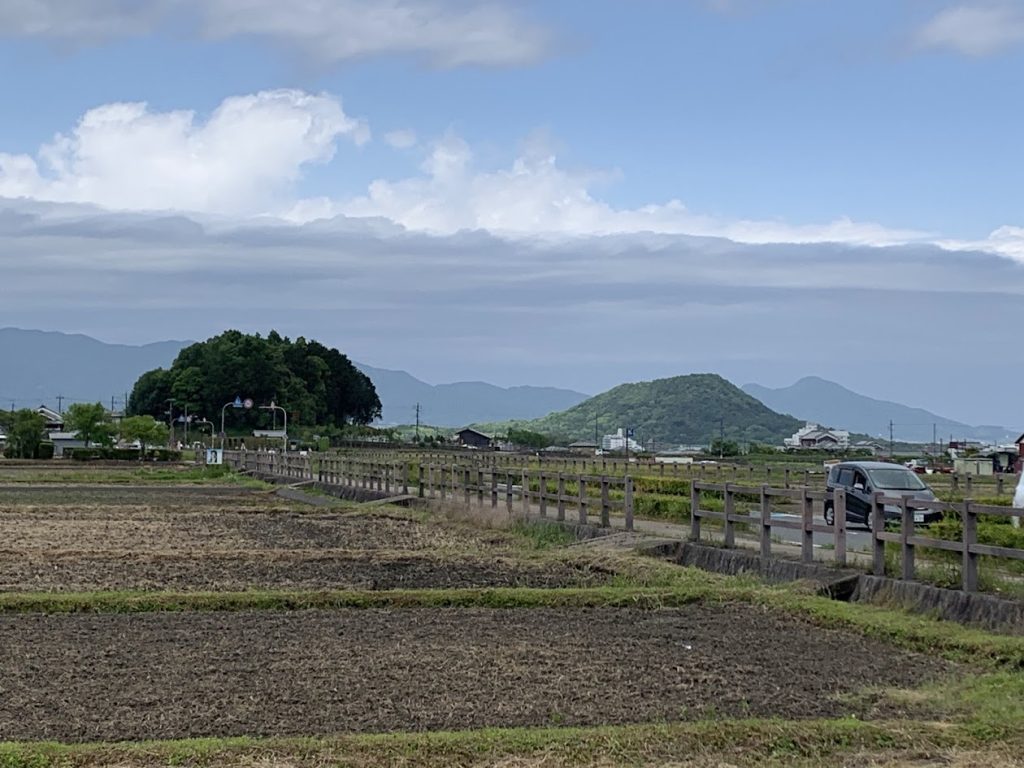
Ikadzuchi Hill and Mount Unebi
Ikadzuchi Hill is a small hill with an elevation of about 110 meters.
It is located just north of Amakashi Hill.
According to the Nihon Shoki, its name reflects its significance as a sacred mountain where the Thunder deity is believed to descend.
In the background to the right, you can see Mount Unebi. This is where Emperor Jimmu, the first emperor of Japan, was enthroned at the base of Mount Unebi.
Further to the right and in the distance is Mount Nijo.
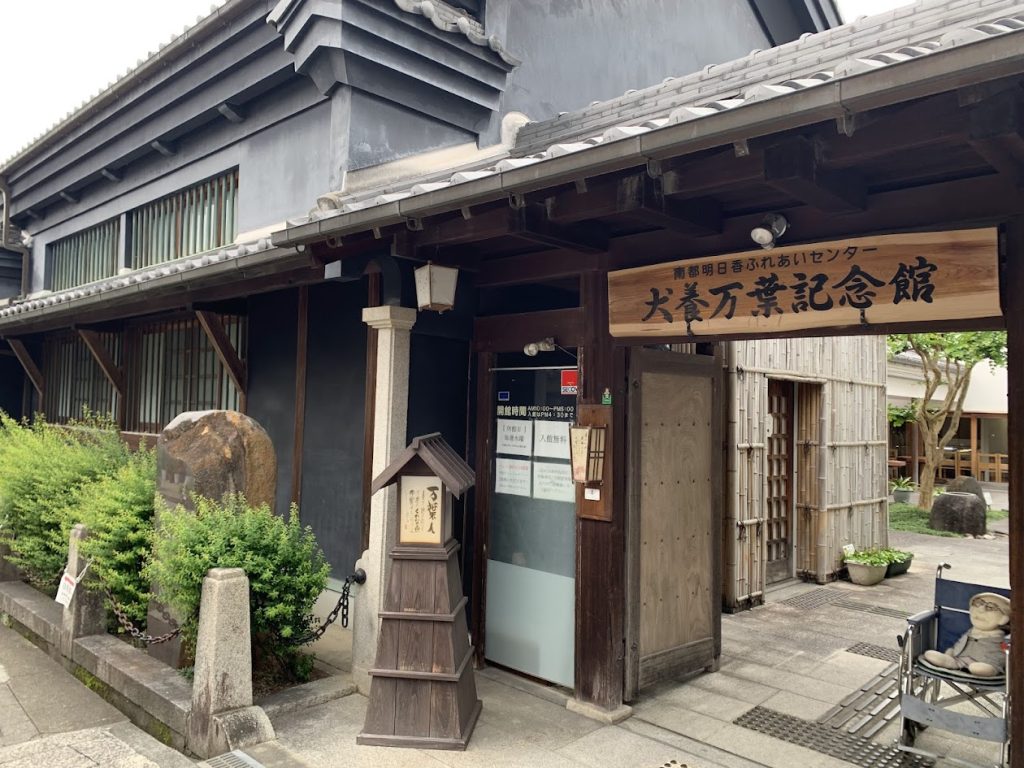
Inukai Manyou Memorial Museum
This museum honors Takashi Inukai, who deeply loved Asuka.
He made the “Manyoushu” (an ancient collection of poems) more accessible to Japanese with his unique style of reciting poetry.
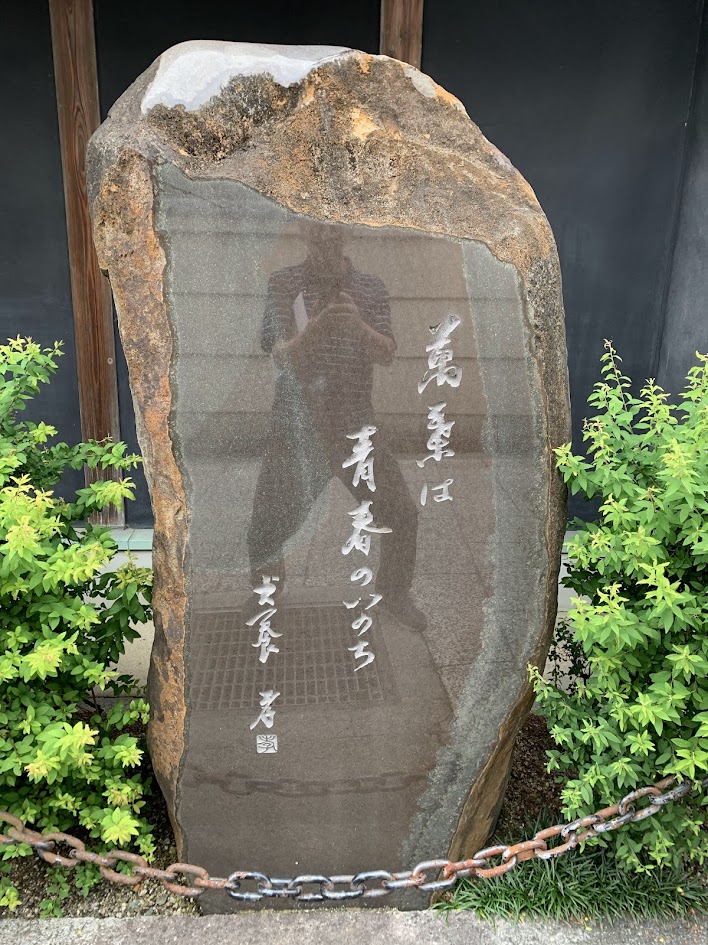
The stone monument at the entrance is engraved with the words, “Manyou is the life of youth.”
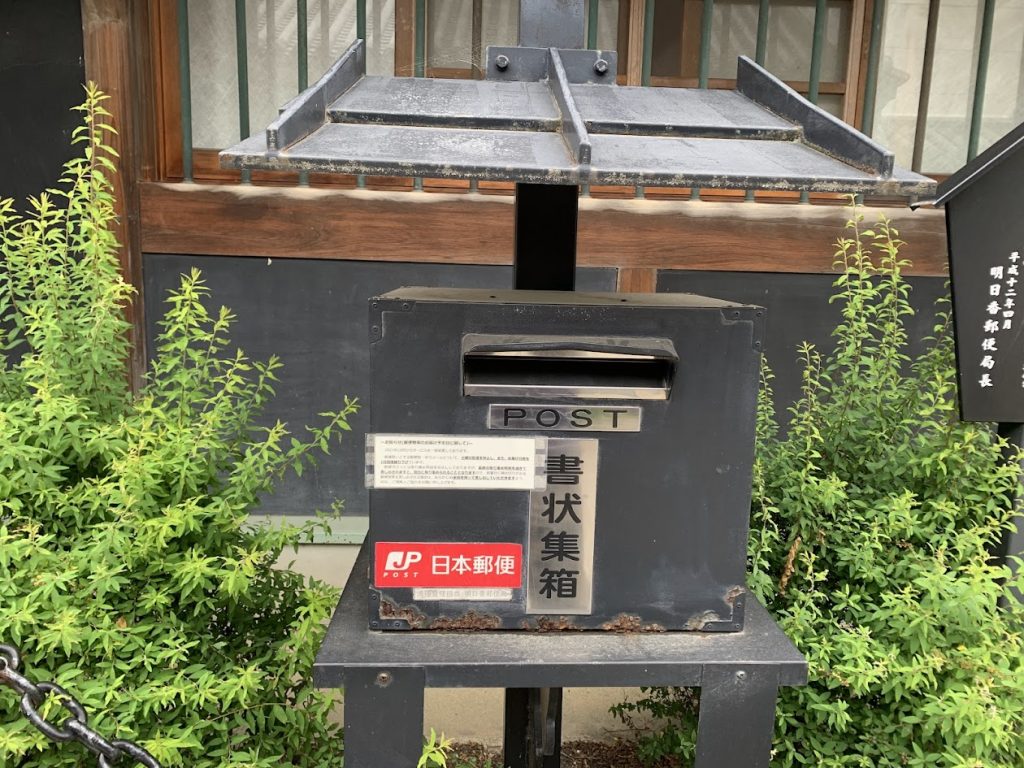
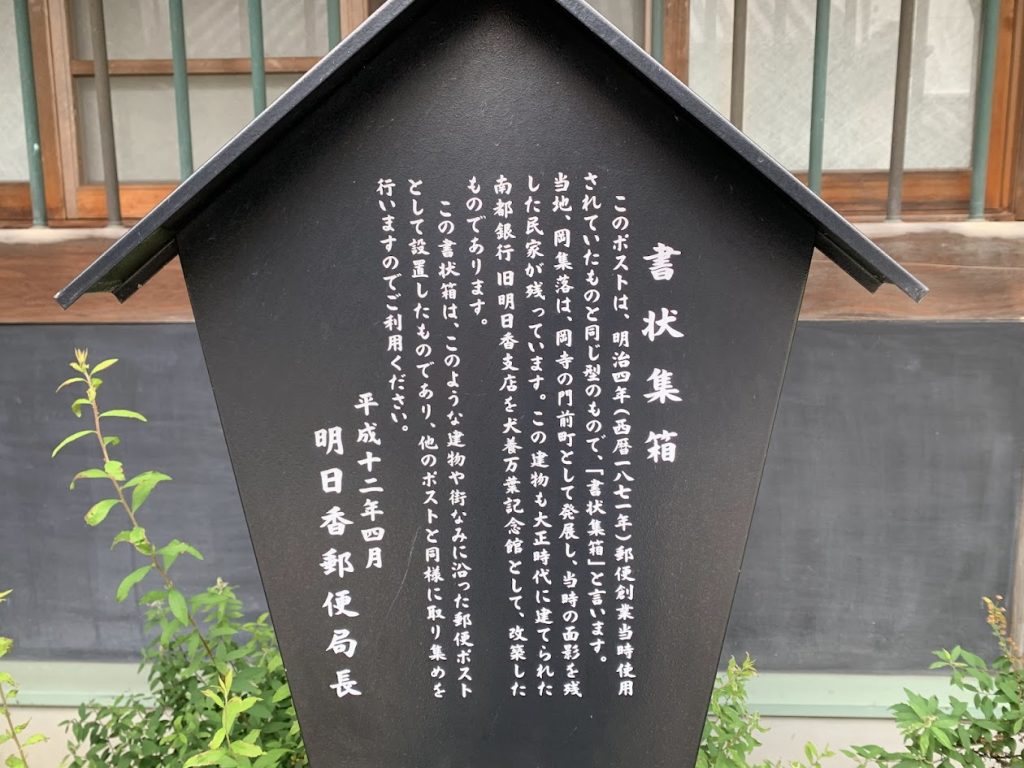
Letter Collection Box
This is a “letter collection box” of the same type used when the postal system was first established in 1871
コメント