
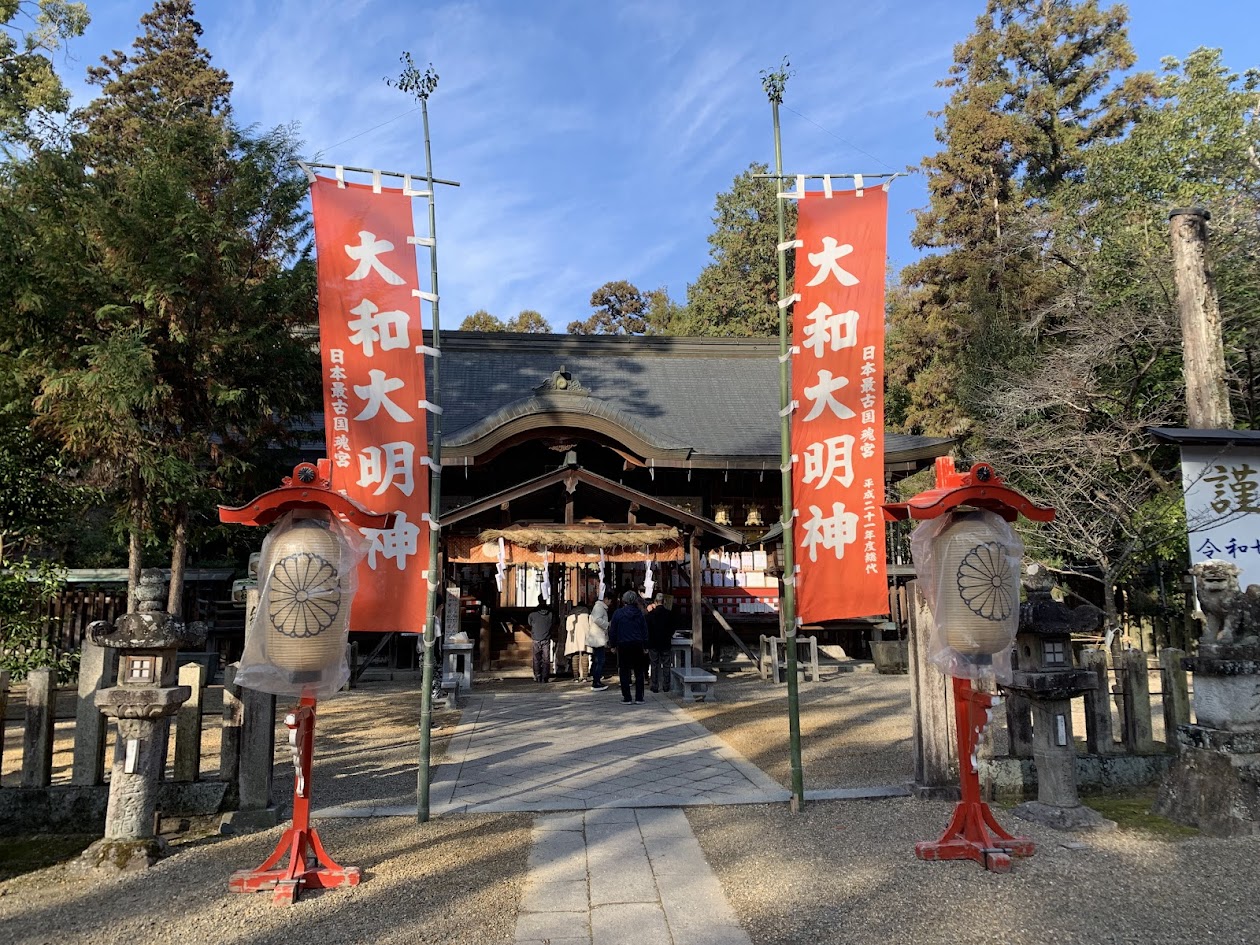


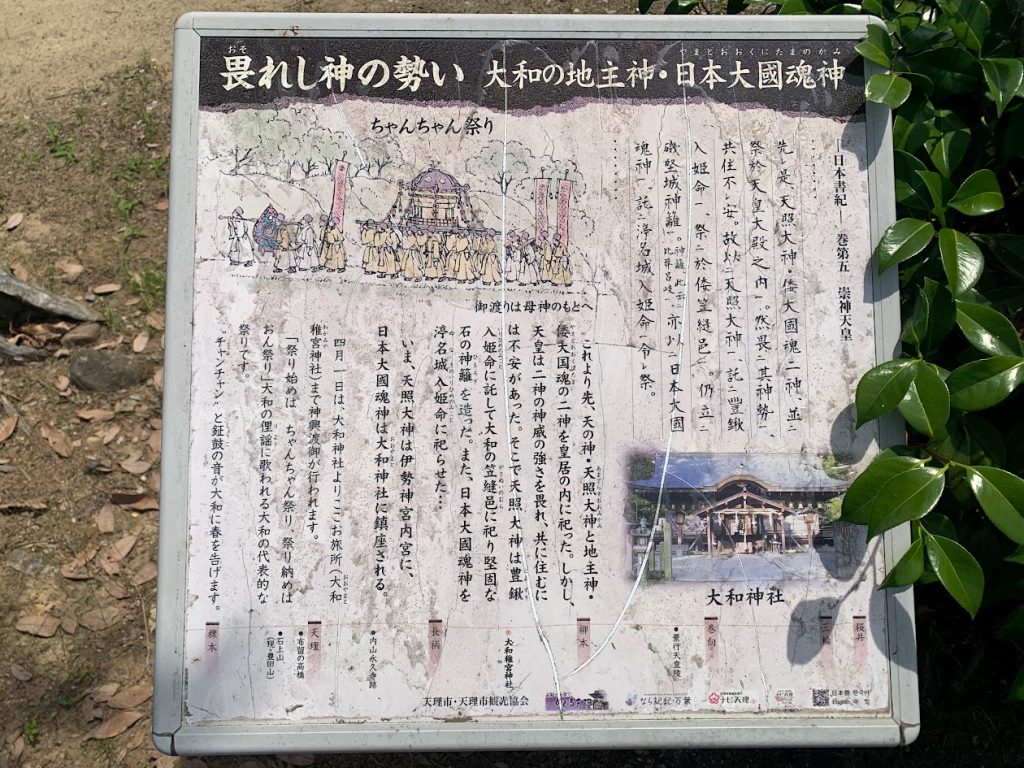
Ōyamato Shrine is one of Japan’s oldest shrines. According to the Nihon Shoki, Emperor Sujin moved the deity Yamato Okunitama no Okami from the imperial palace to this location.
In the Nara period, prayers for safe travels were offered here before the departure of envoys to Tang China, as recorded in the Manyoshu anthology.
Additionally, during wartime, Ōyamato Shrine was revered as the guardian deity of the Yamato, the world’s largest battleship at that time.
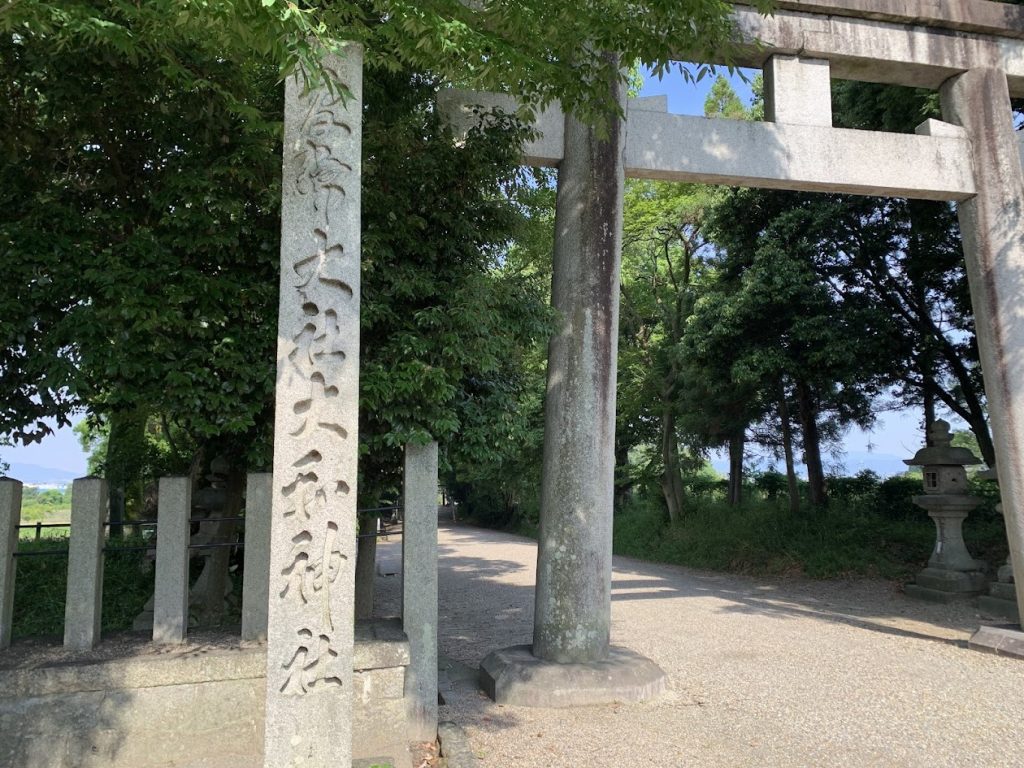
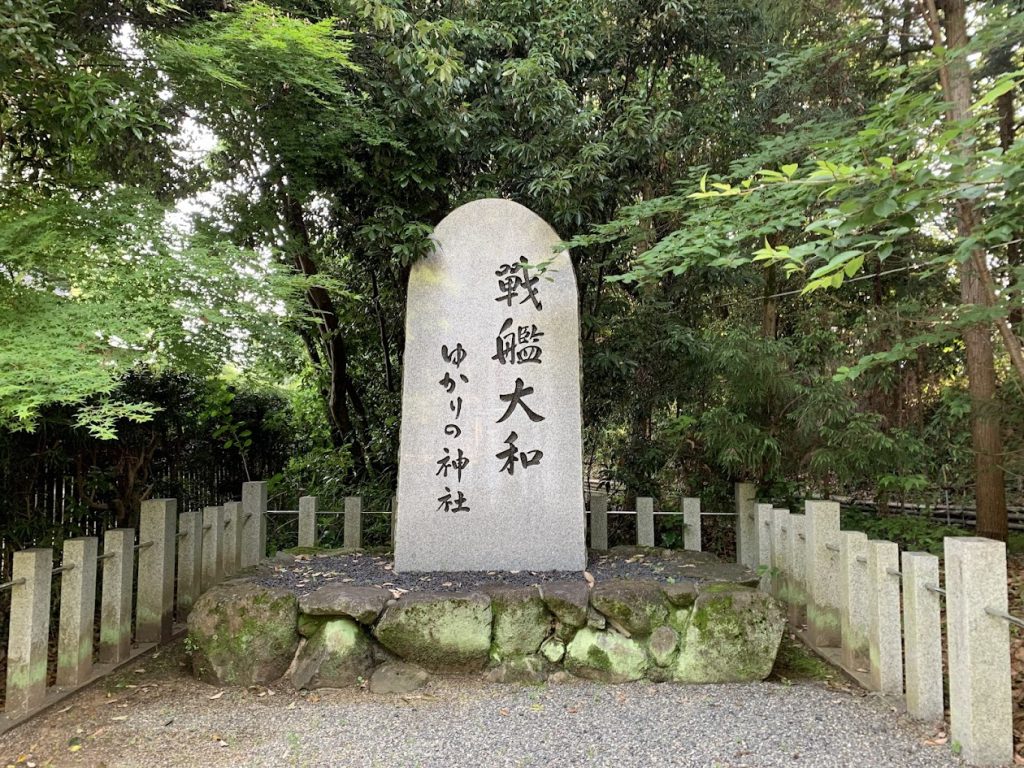
This is the stone monument of Kanpei Taisha Ōyamato Shrine.
The main deity, Yamato Okunitama no Okami, was originally enshrined together with Amaterasu Omikami within the imperial palace.
However, Emperor Sujin, the 10th emperor, feared the overwhelming power of these two deities.
As a result, Amaterasu Omikami was temporarily enshrined at Kasanuimura (now called Moto-ise, where Hibara Shrine stands) in Yamato.
Meanwhile, Yamato Okunitama no Okami was enshrined at this location.
After several relocations, Amaterasu Omikami was finally enshrined at Naiku of Ise Jingu.
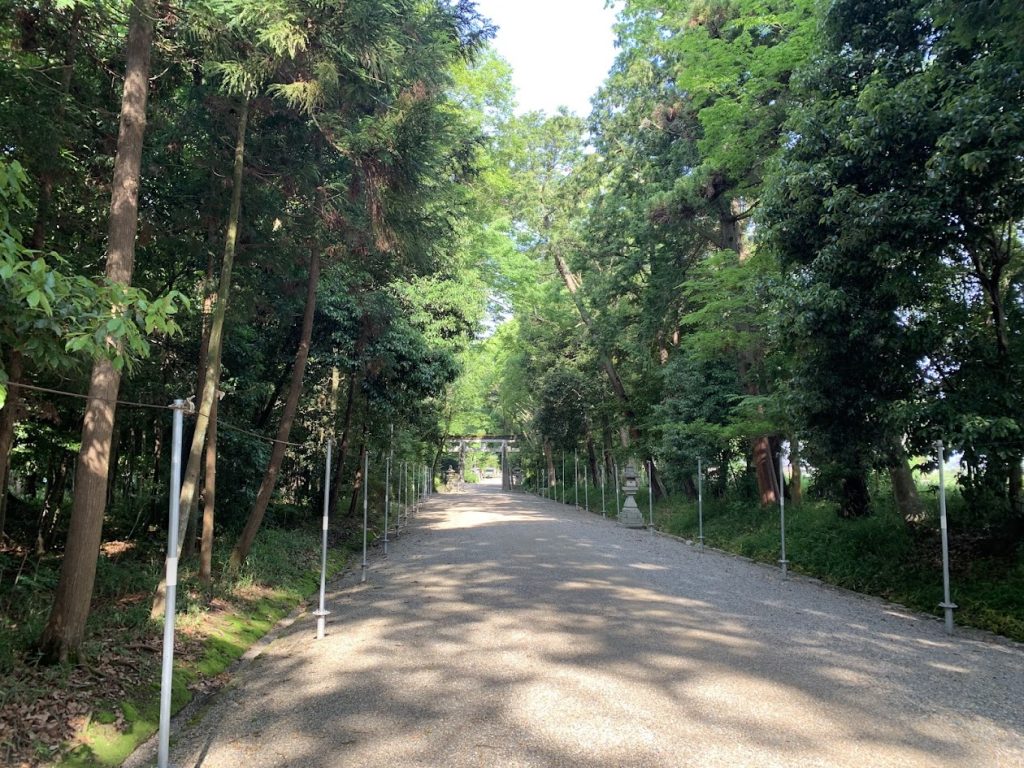
This is the approach path that continues just beyond the first torii gate.
The length of this path is almost the same as the battleship Yamato’s length—270 meters—and its width was said to be five times that, about 40 meters.
Walking along this path, visitors can truly grasp the immense size of the battleship Yamato.
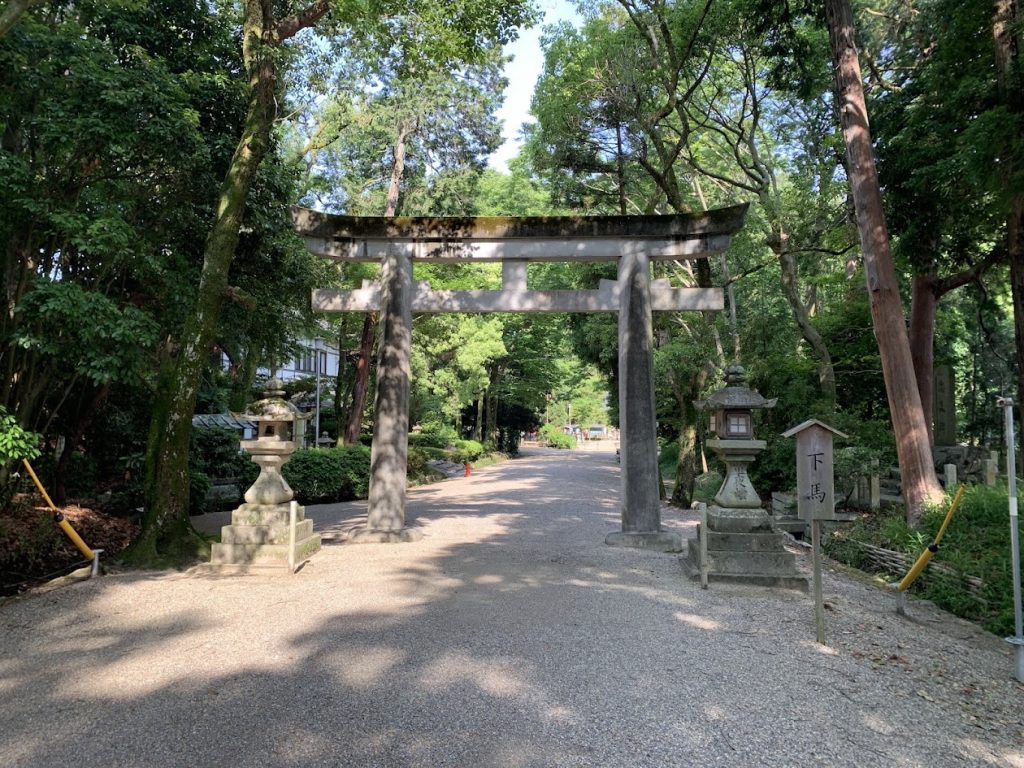
This is the second torii gate.
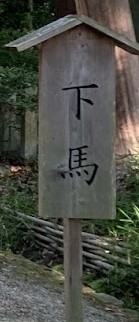
The sign indicating “dismount here” (Geba) is very prominent.
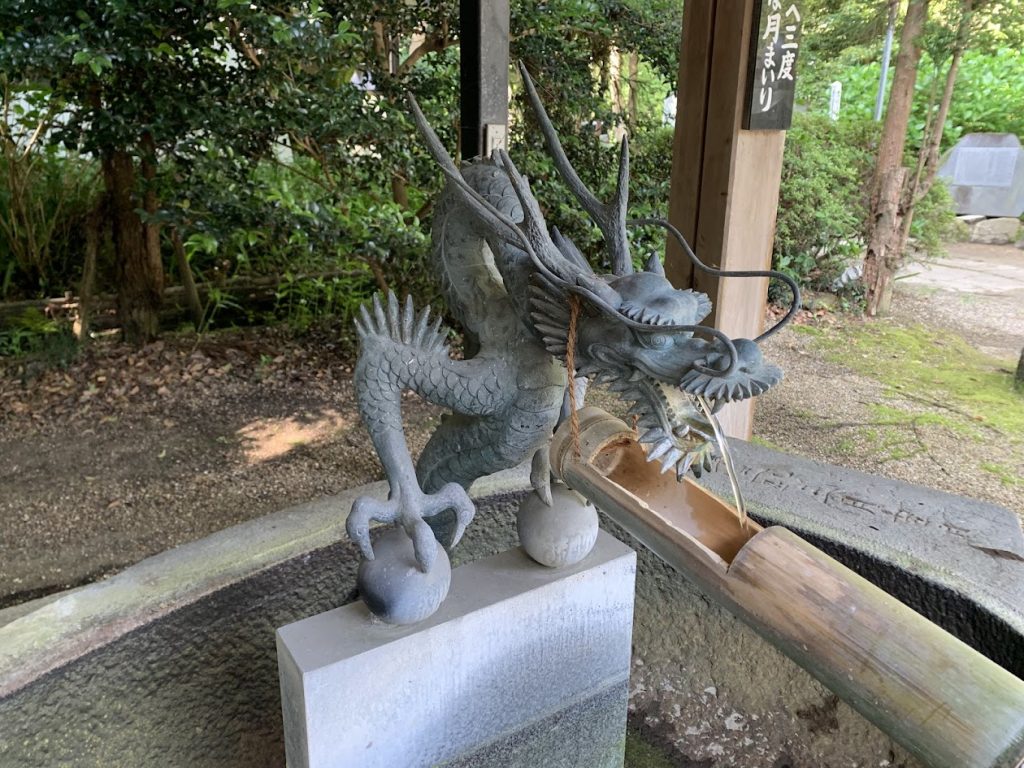
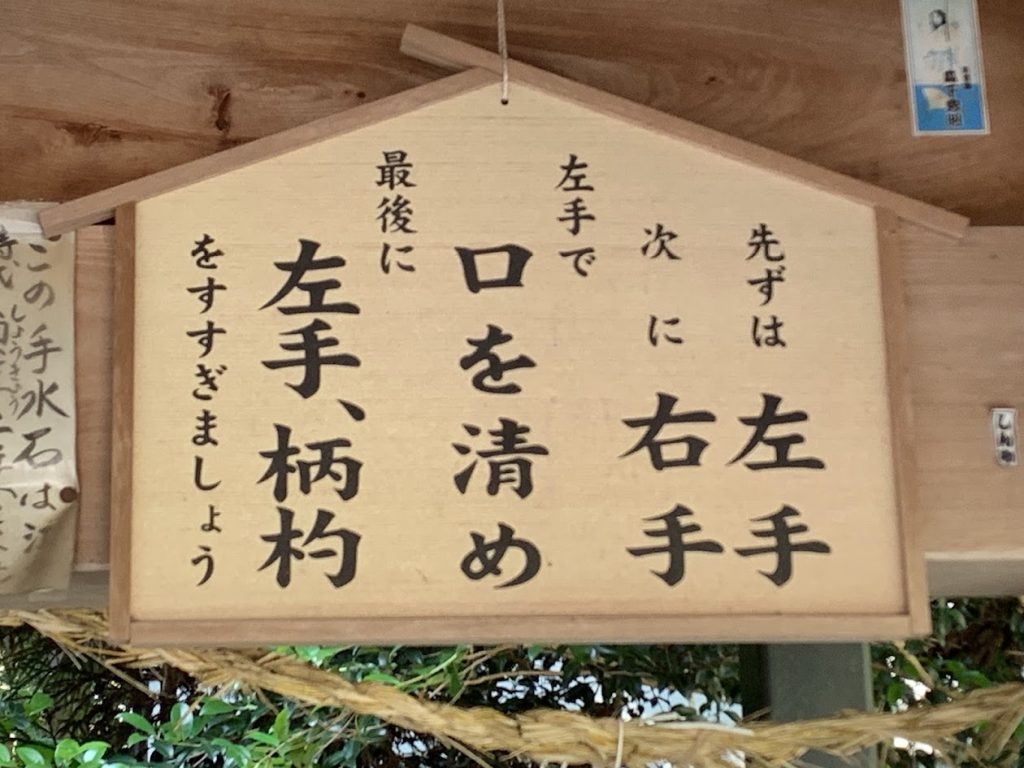

“Ise e nanatabi, Kumano e sando, Ōyamato-san e wa tsuki mairi.”
Seven times to Ise… Seven visits to Ise Jingu
Three times to Kumano… Three visits to Kumano Taisha
To Ōyamato Shrine, monthly visits…
“Tsuki mairi” means visiting every month. This phrase shows that Ōyamato Shrine has long been a place of regular worship for local people and believers.
The battleship Yamato enshrined a divine spirit (go-bunrei) from Ōyamato Shrine.
In addition, the captain’s quarters displayed a painting titled “Guardian Deity of Battleship Yamato,” created by the renowned artist Insho Domoto, depicting Ōyamato Shrine.
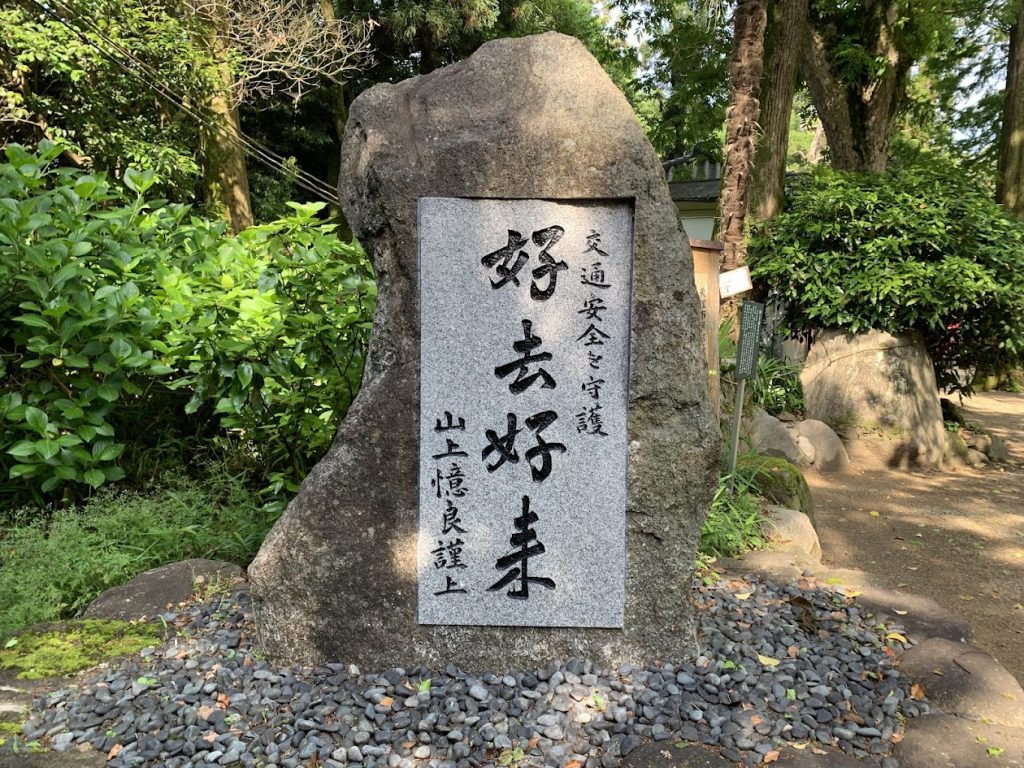
In the Nara period, envoys to Tang China prayed here for safe travels before their departure.
A poem by Yamanoue Okura about this is also included in the Manyoshu anthology.
好来 (kōrai) — a response wishing “Return safely”
好去 (kōkyo) — a farewell greeting meaning “Goodbye”
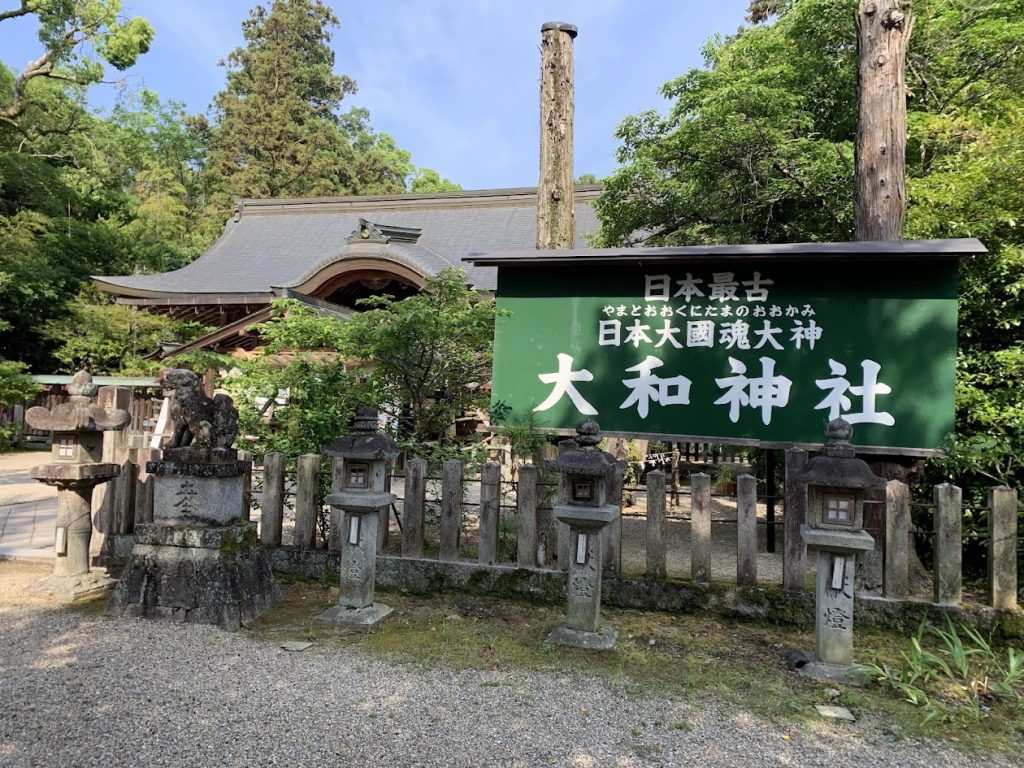
In front of the main hall.
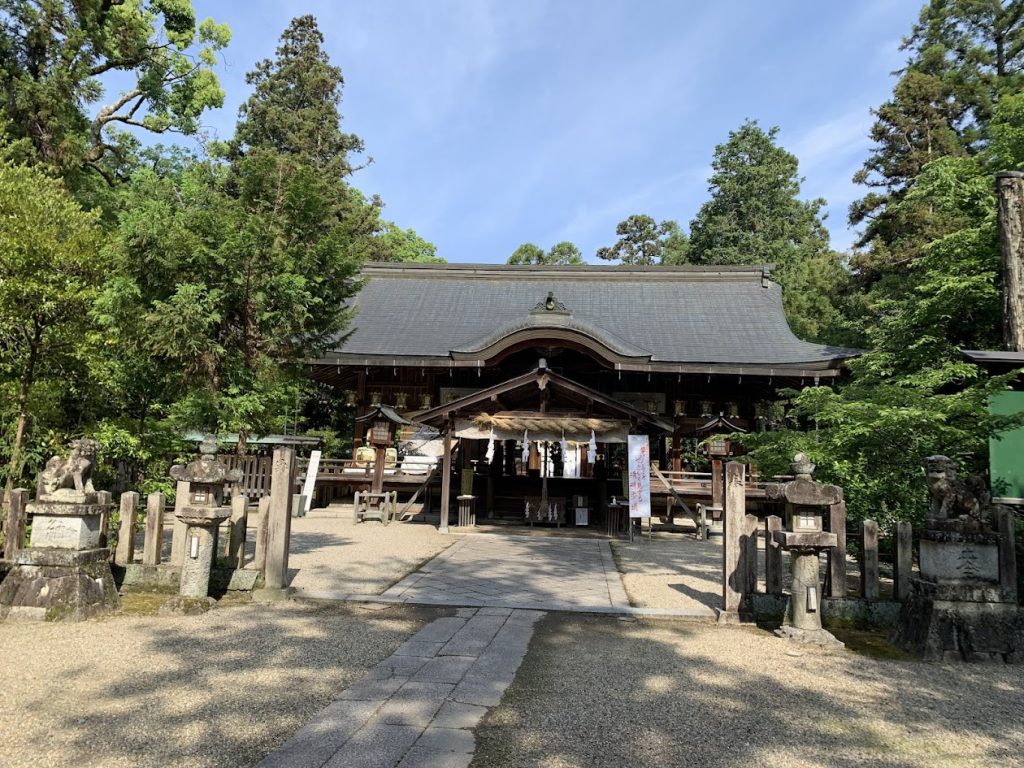
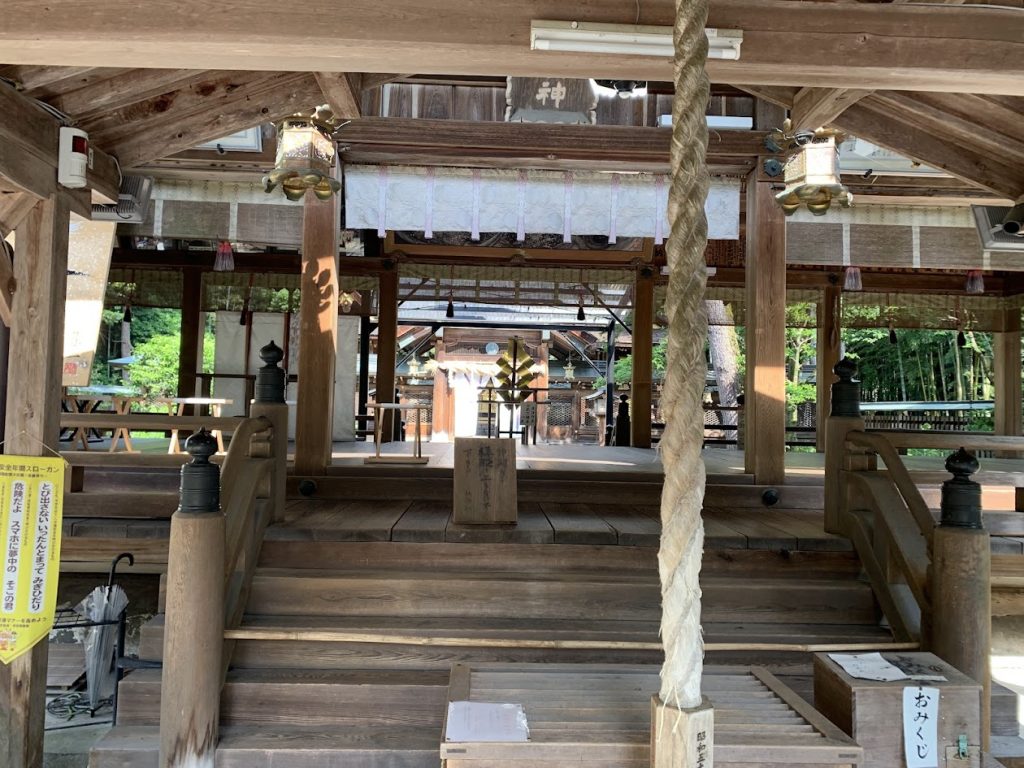
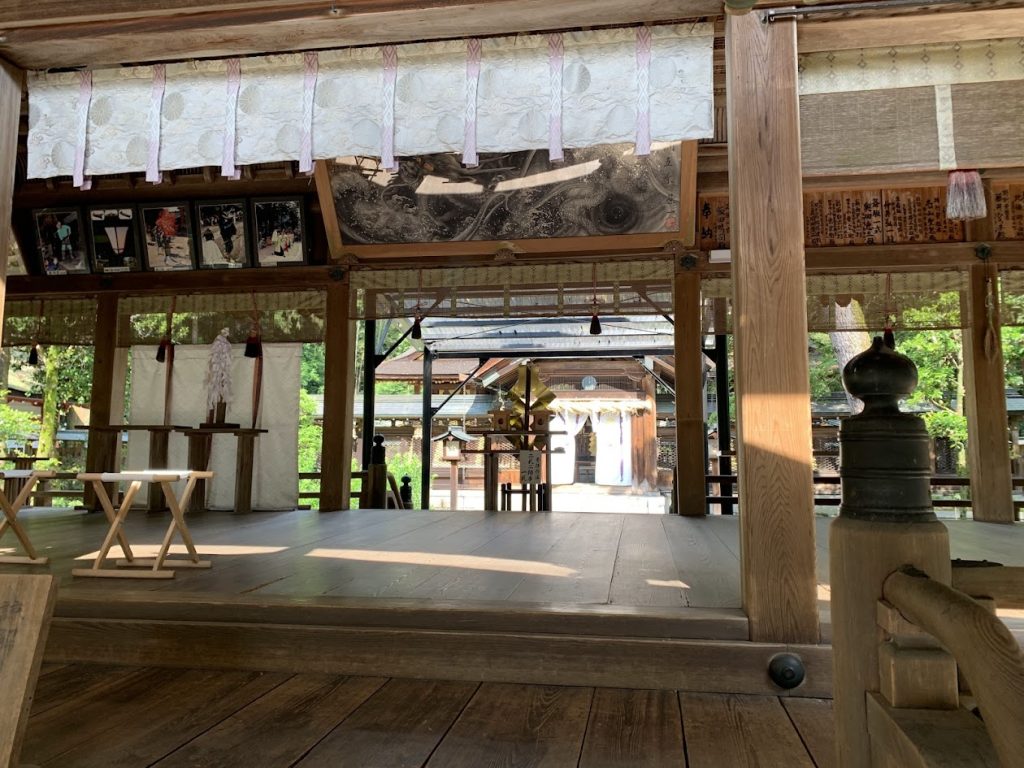
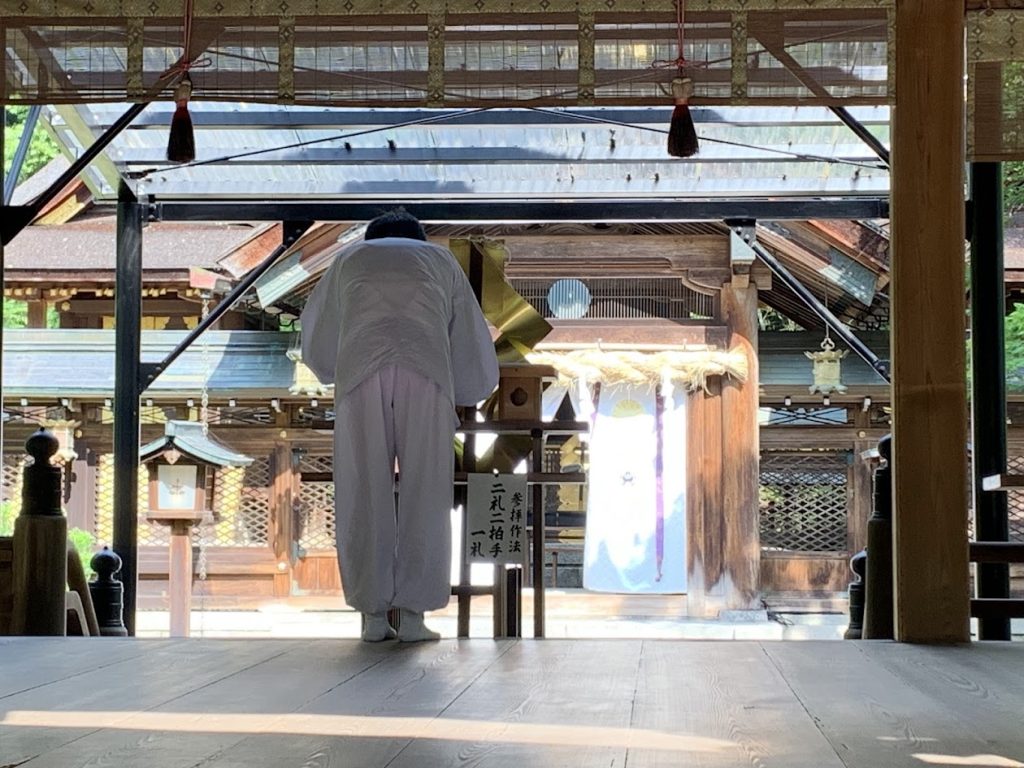
Morning offerings to the deity.
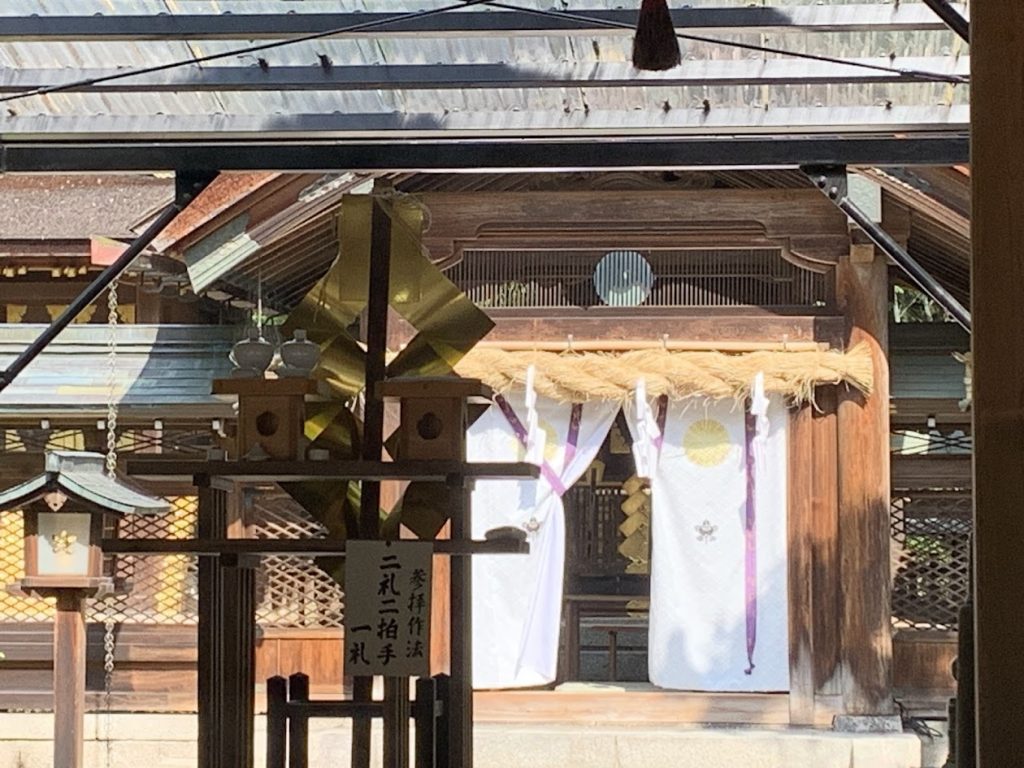
View of the main sanctuary from the worship hall.
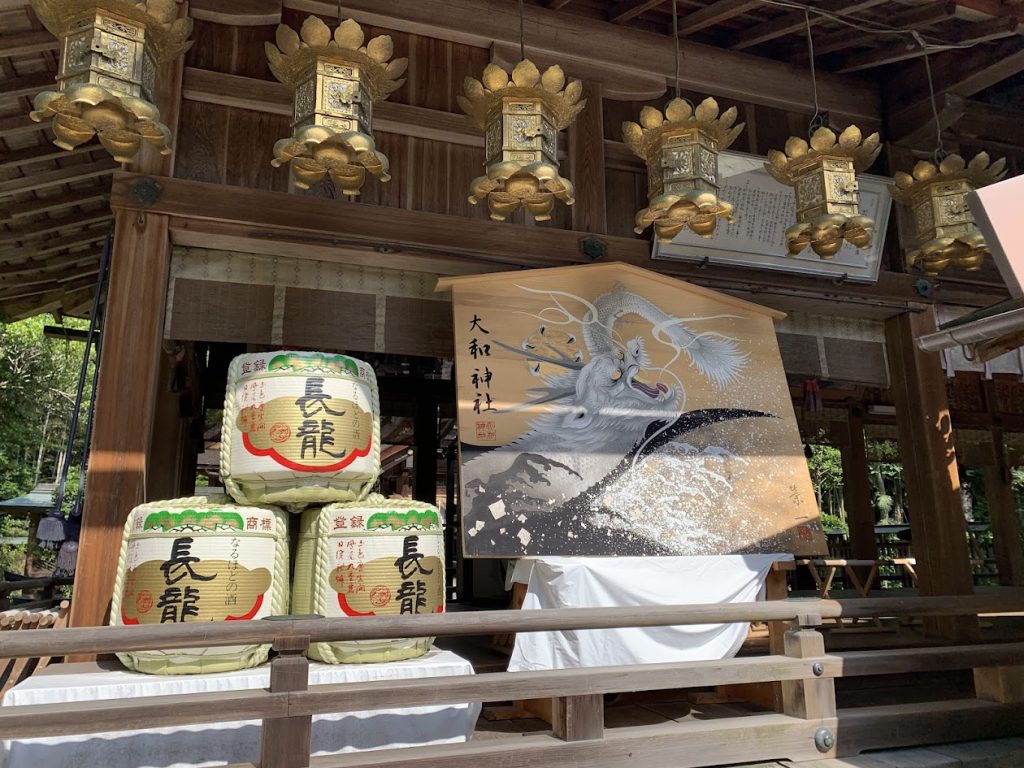
The year 2024 (Reiwa 6) is the Year of the Dragon.
Choryo is a sake brewed in Nara Prefecture.
コメント