

From the Path to the Temple and Its Surroundings
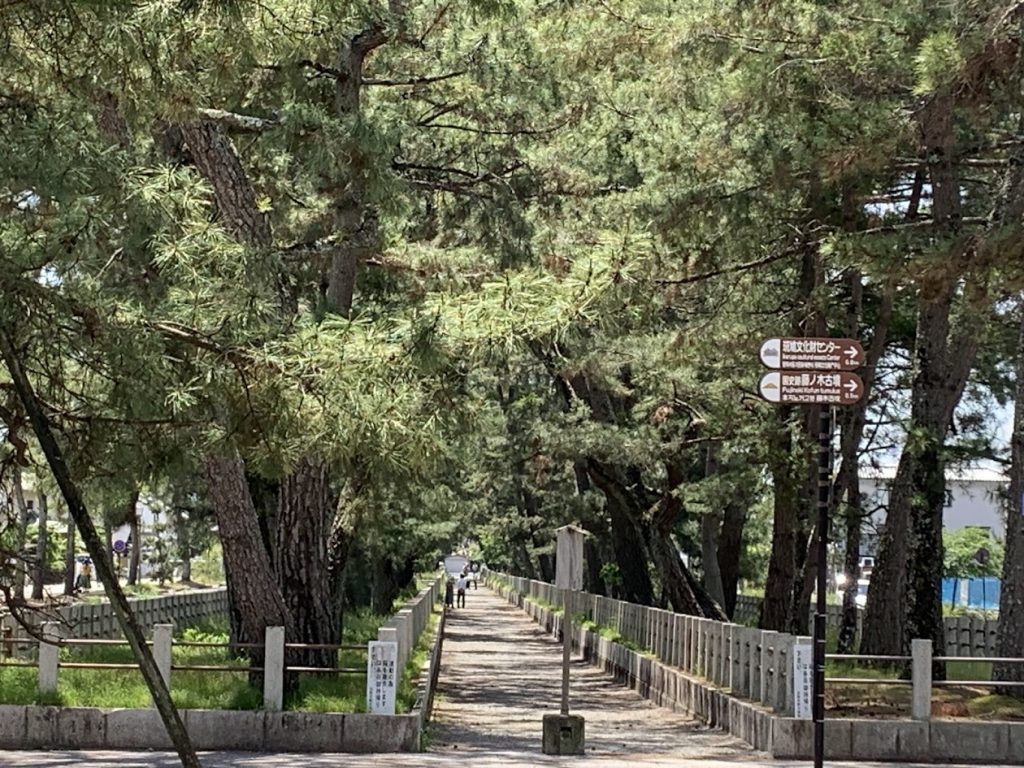
The Approach to Horyu-ji
Beyond this, there is the Western precinct of Horyu-ji Temple.
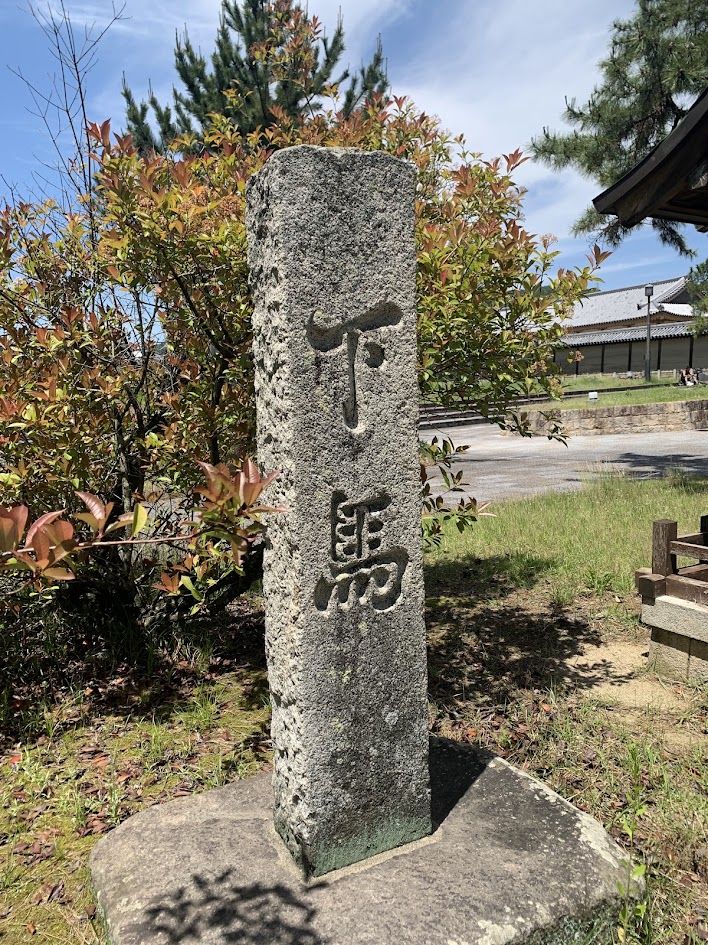
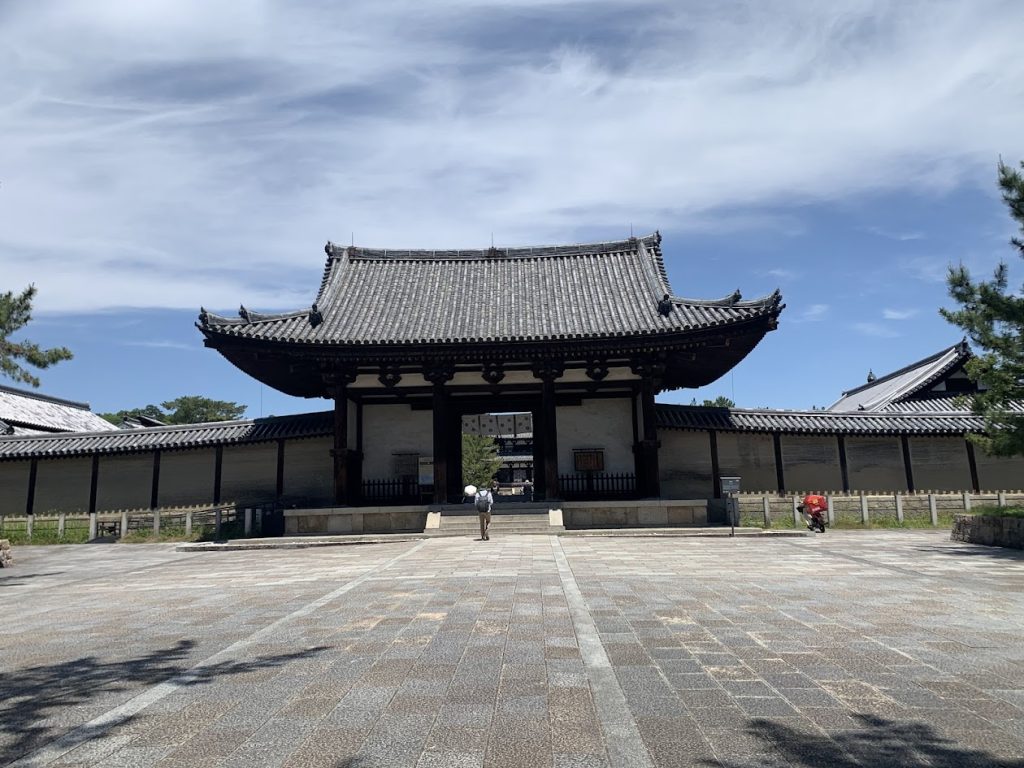
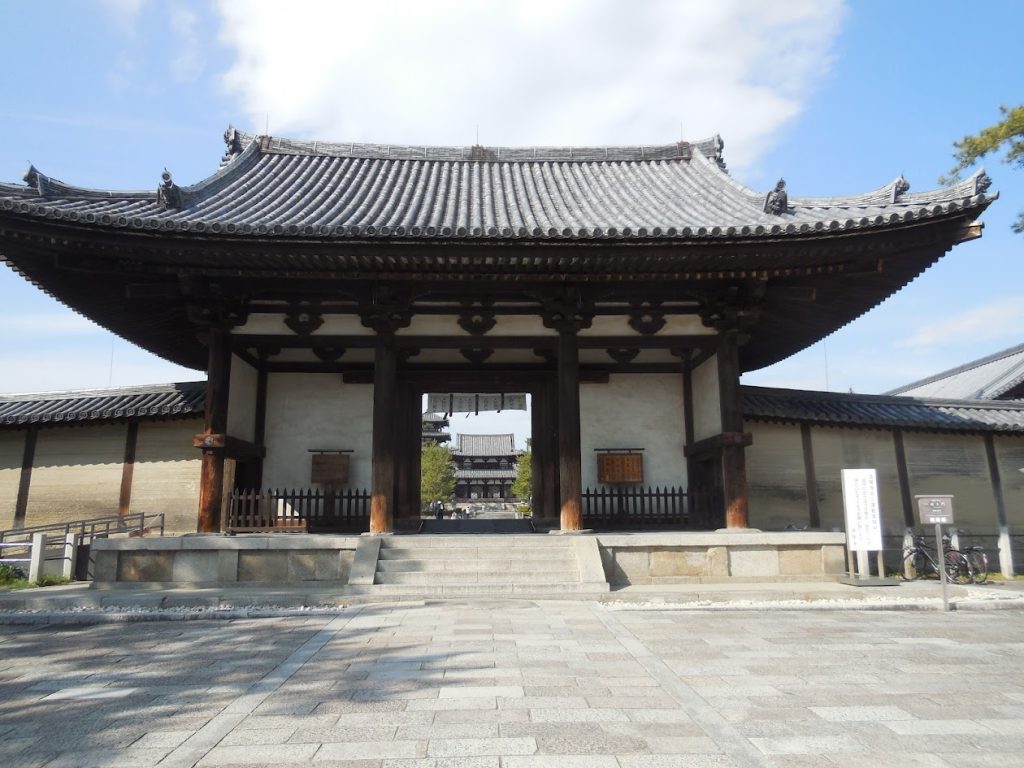
The Great Southern Gate
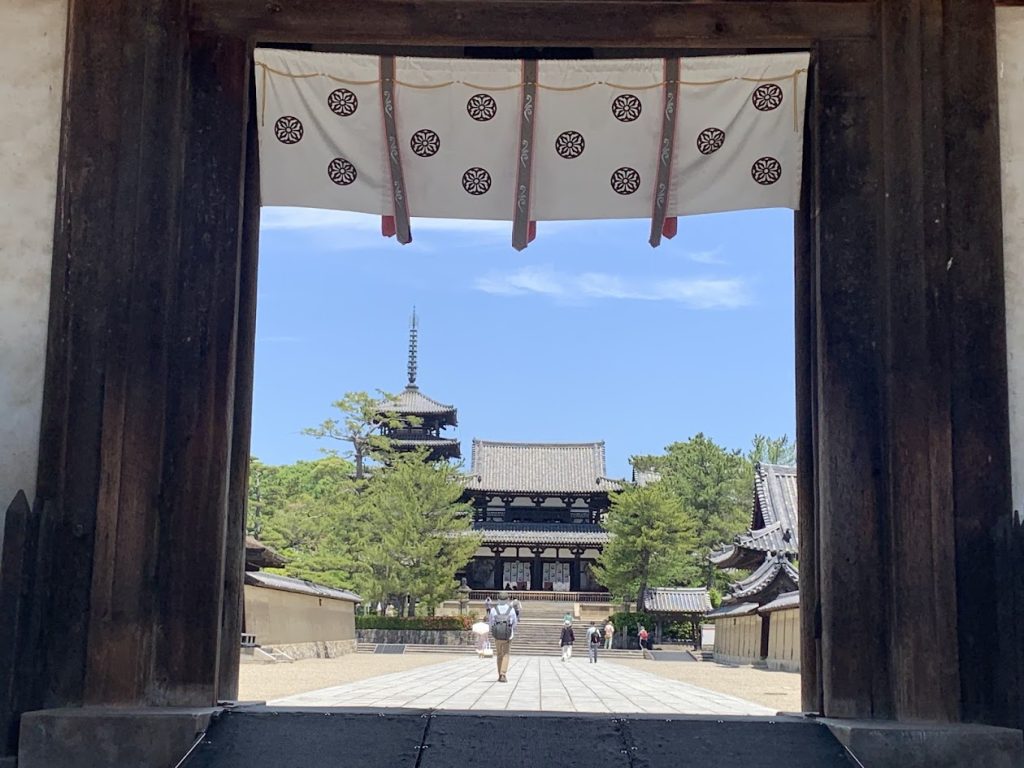
A View of the Western precinct from the Great Southern Gate.
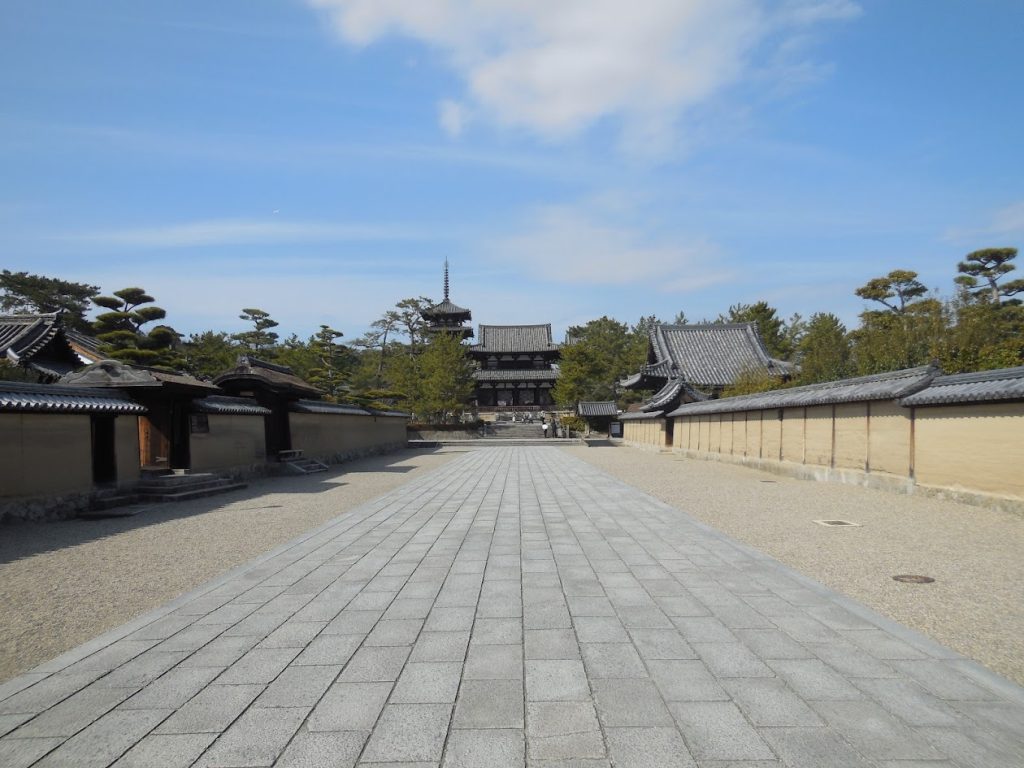
Head towards the Western precinct from the Great Southern Gate.
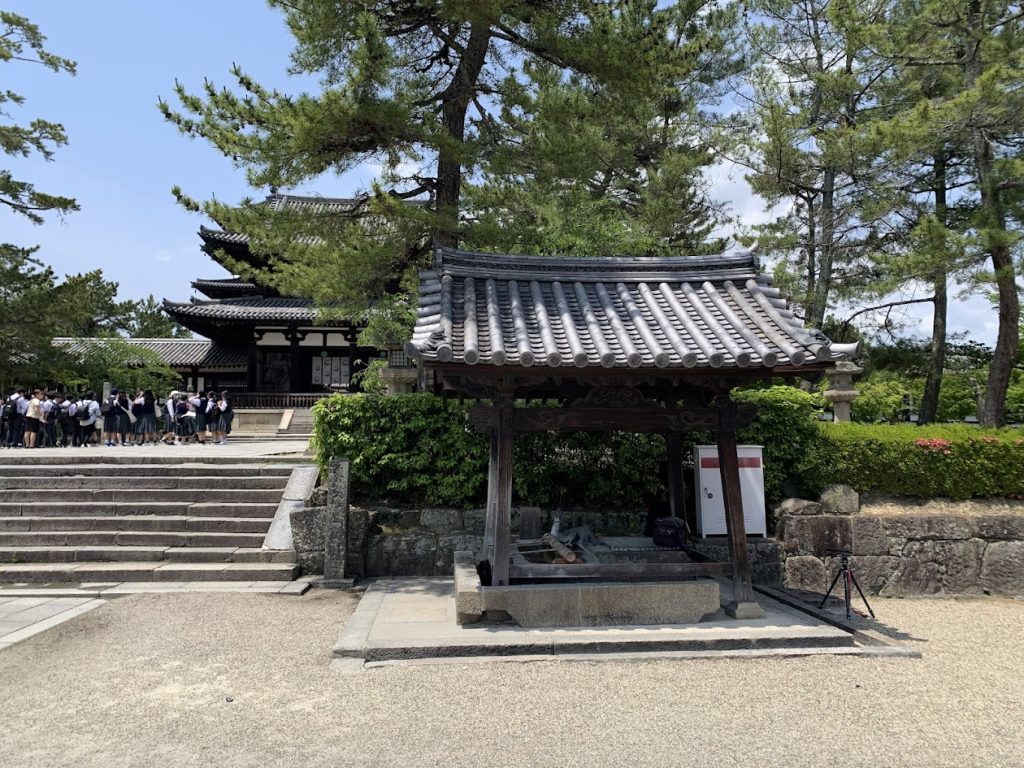
The Chozuya (purification fountain)
You can see many students on school trips.
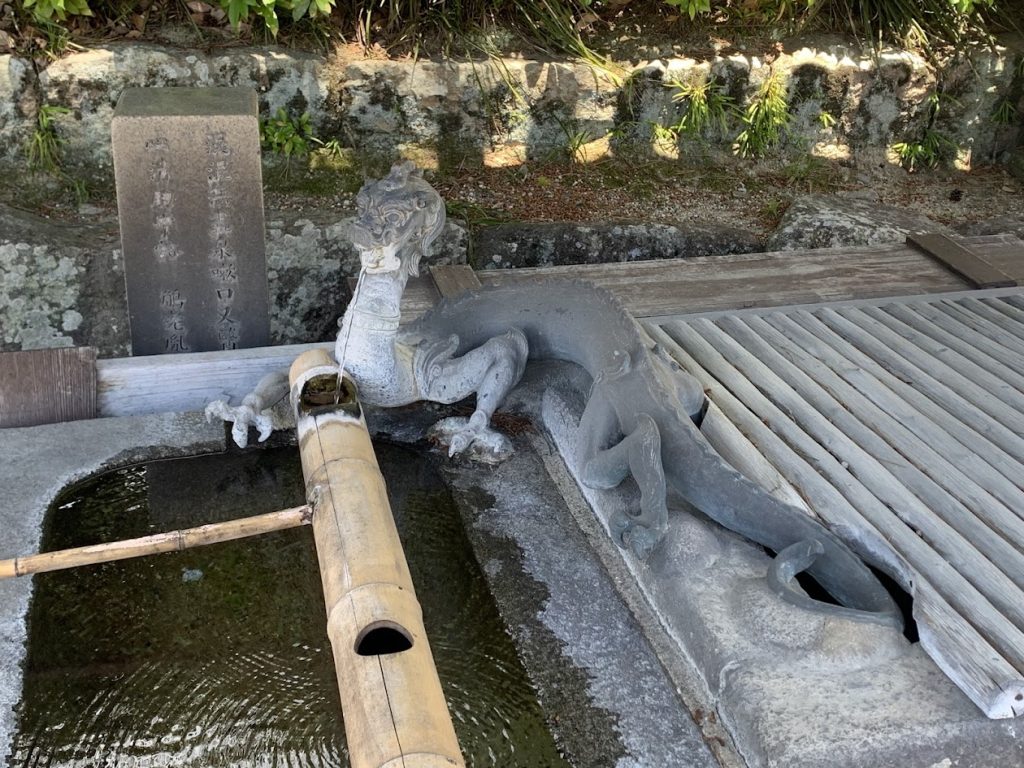
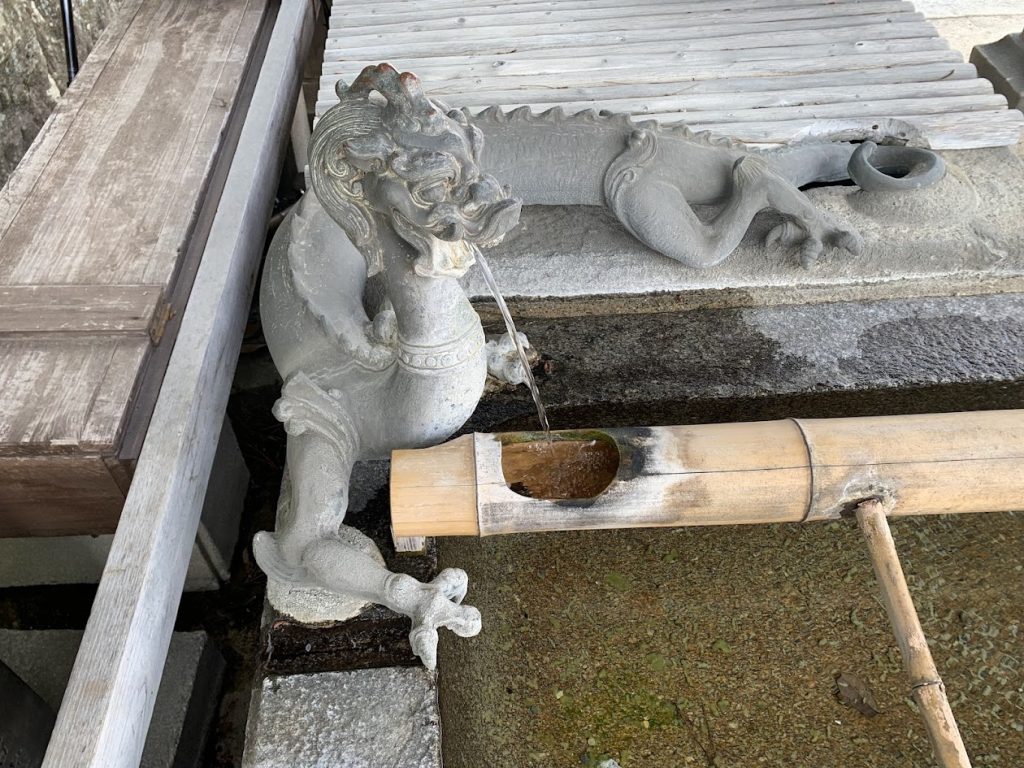
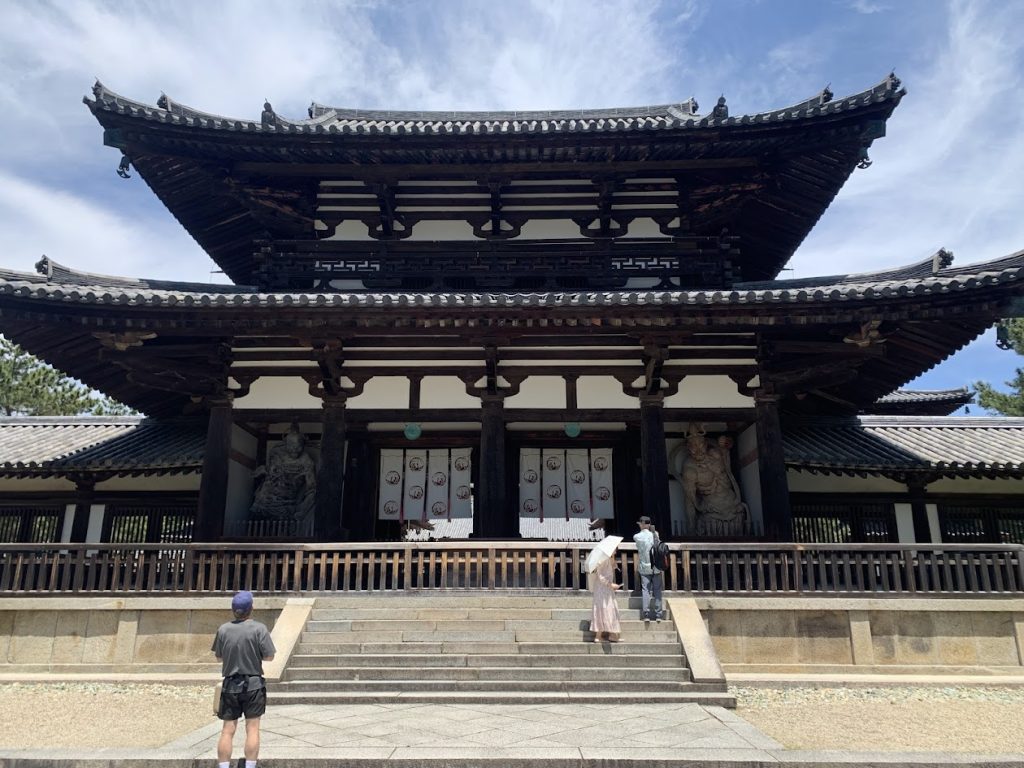
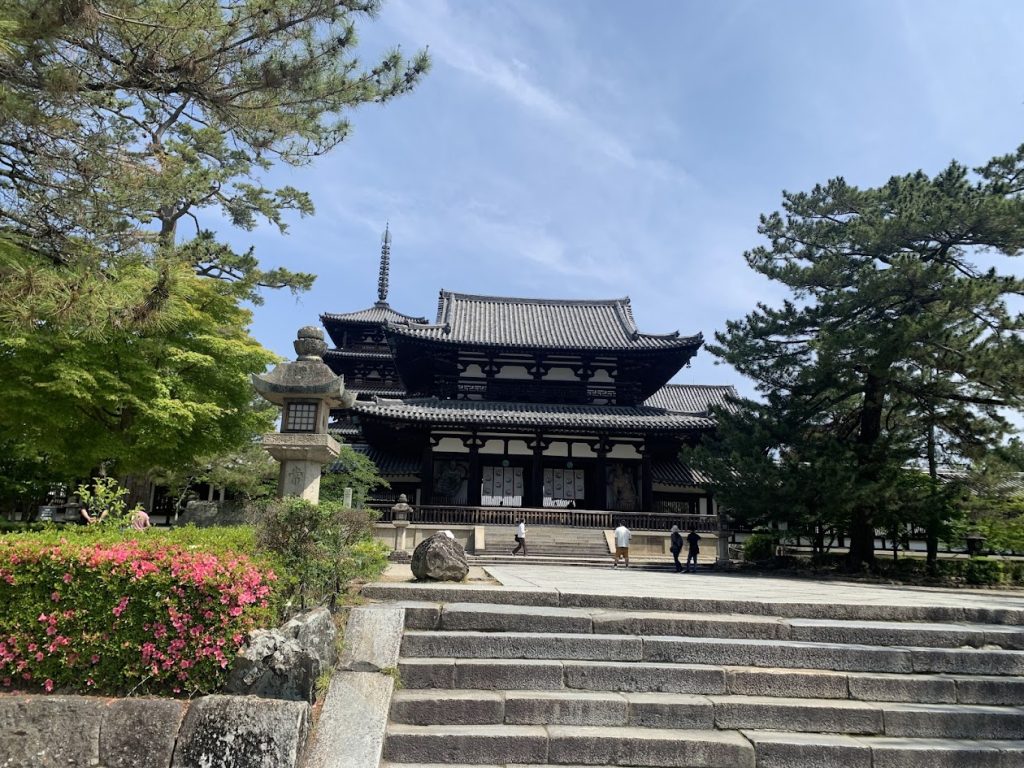
Middle Gate (Chumon)
Typically, the Middle Gate is larger than the Great Southern Gate.
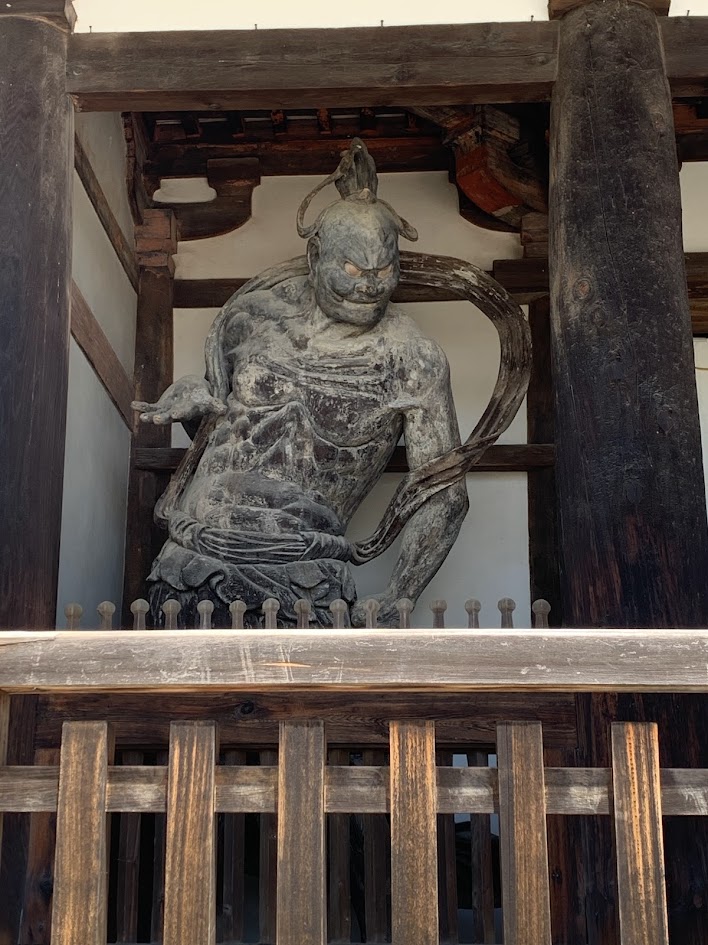

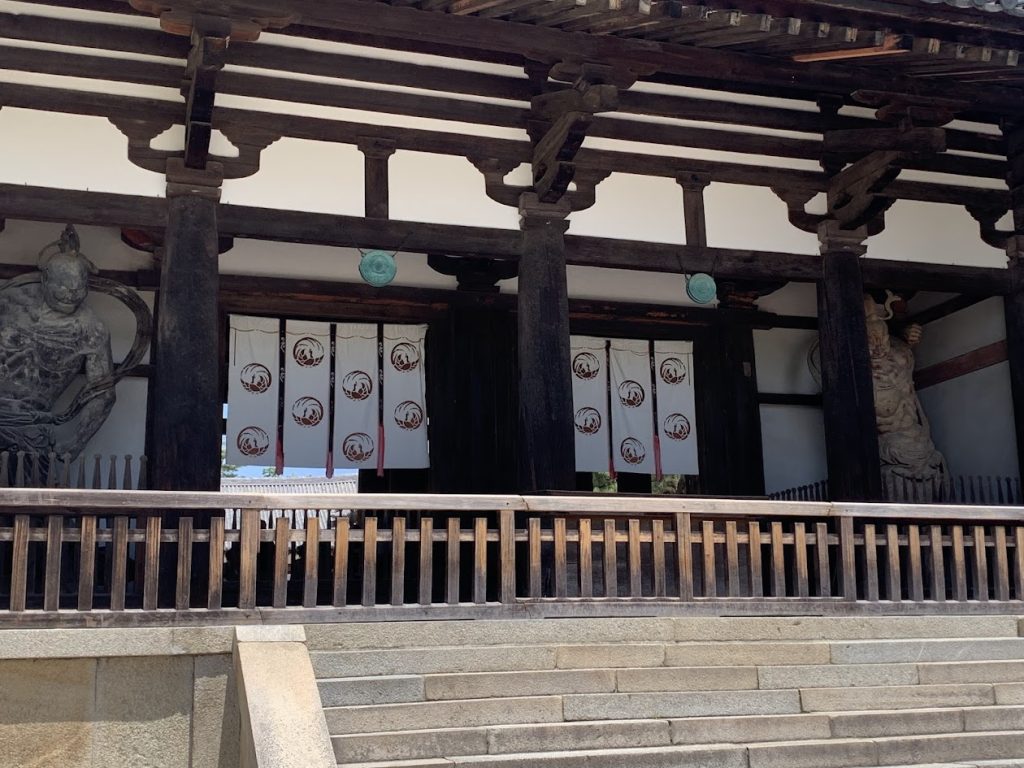
The statue of Agyo on the right and the statue of Ungyo on the left.
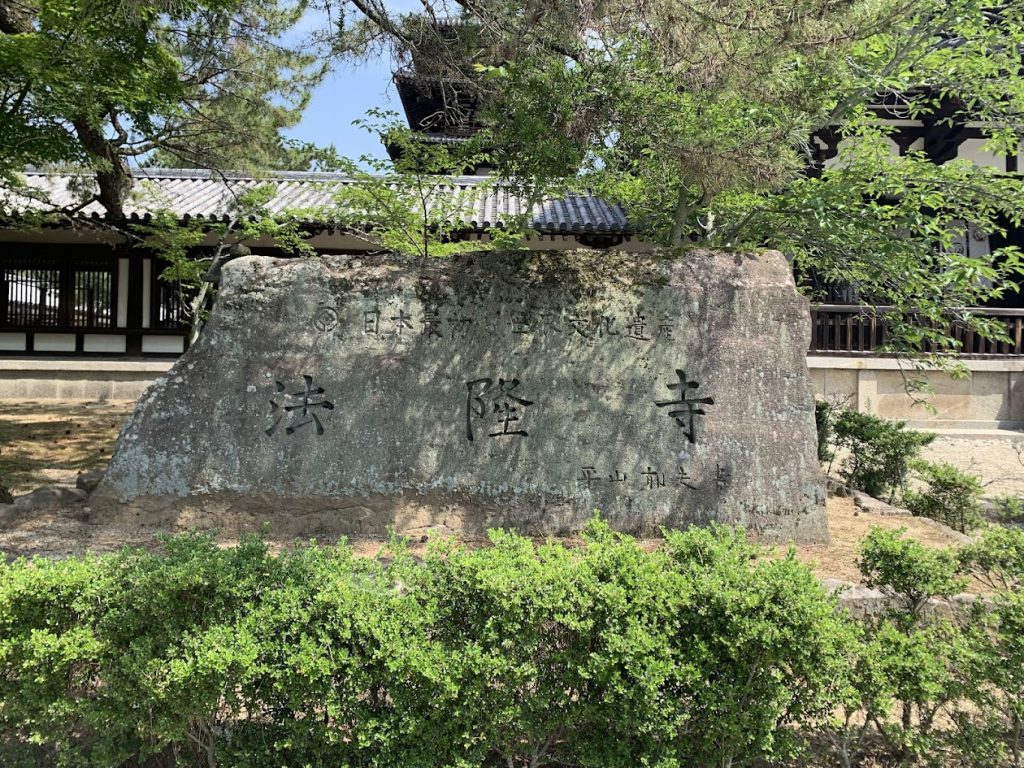
Horyu-ji was the first site in Japan to be registered as a UNESCO World Heritage Site.
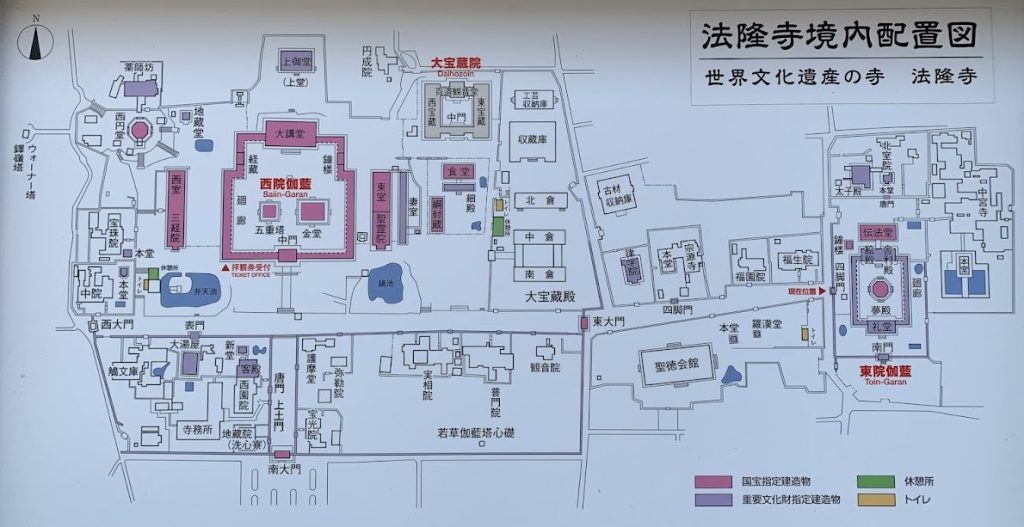
Western precinct
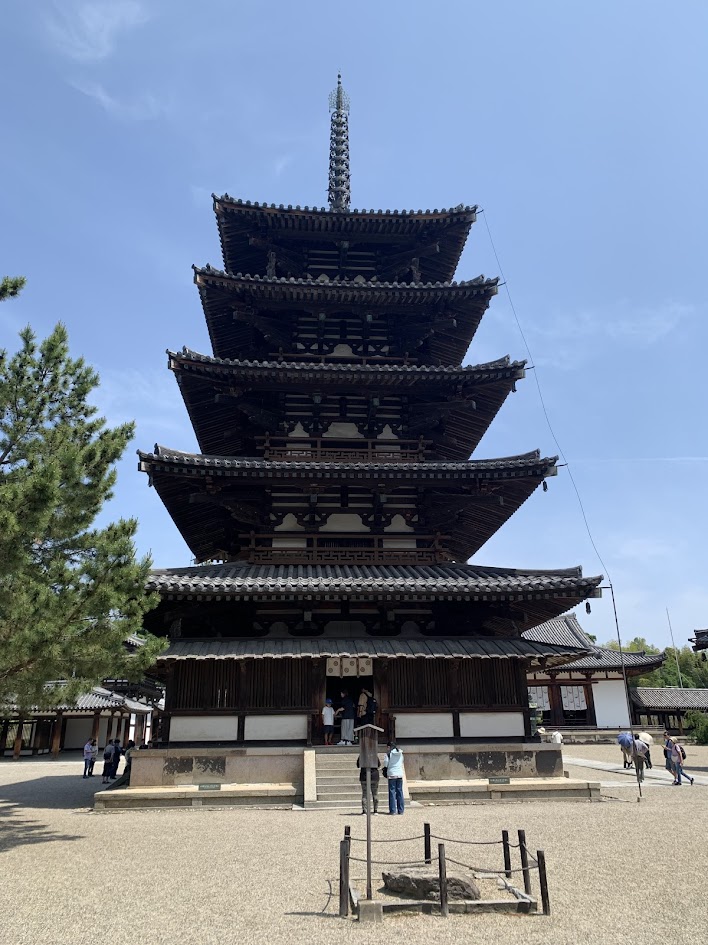
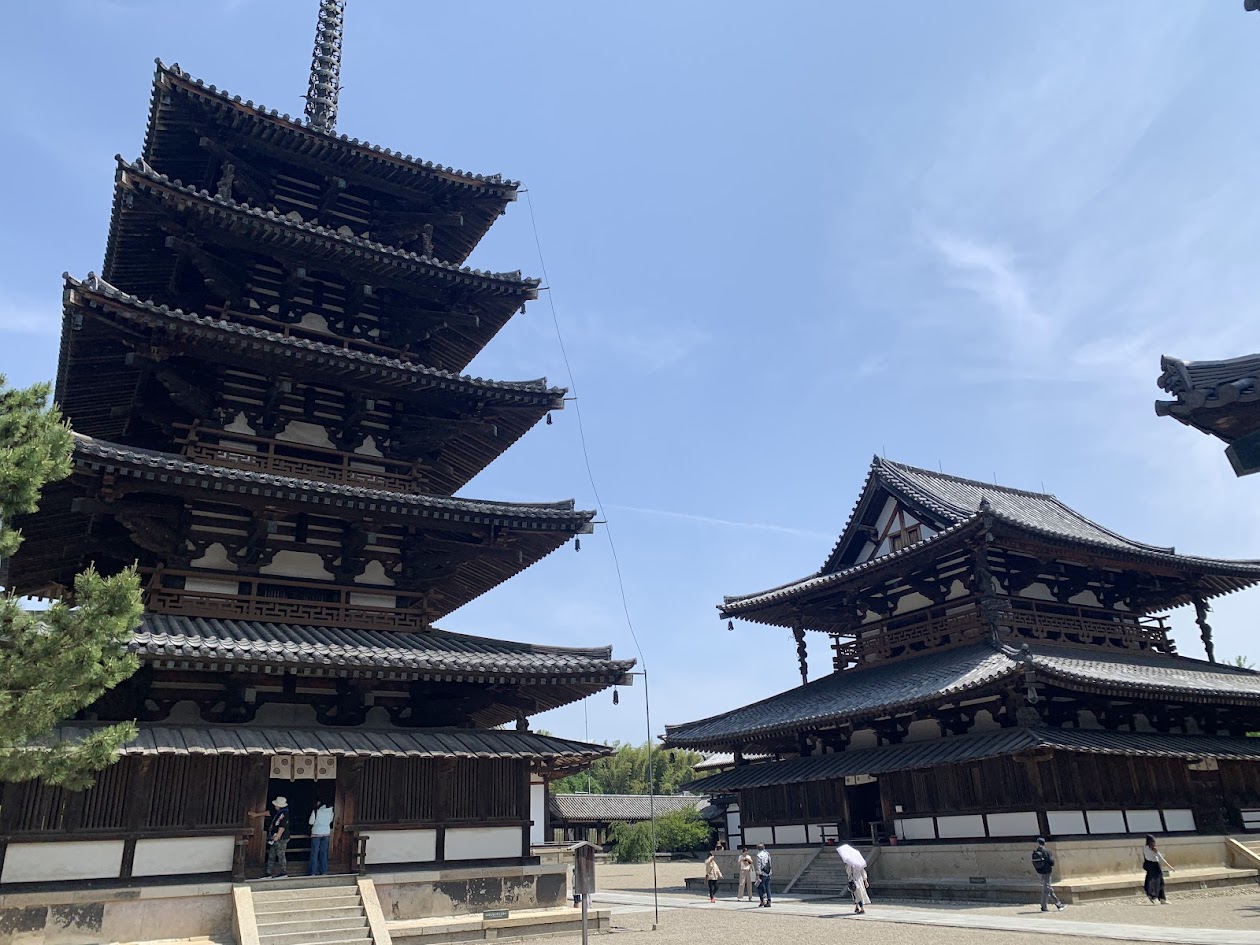
Five-Story Pagoda (National Treasure)
Prince Shotoku was born in 574 and became regent at the age of 20 in 594, so the wood used for the pagoda was likely cut around that time.
・The oldest existing five-story pagoda in the world
・Height: 34 meters
・Built during the Asuka period, it features a central column made from cypress wood that was cut in the late 6th century.

This is the center of Horyu-ji.
It is full of highlights, including the Five-Story Pagoda, the Main Hall, the Great Lecture Hall, the Bell Tower, and the corridors.
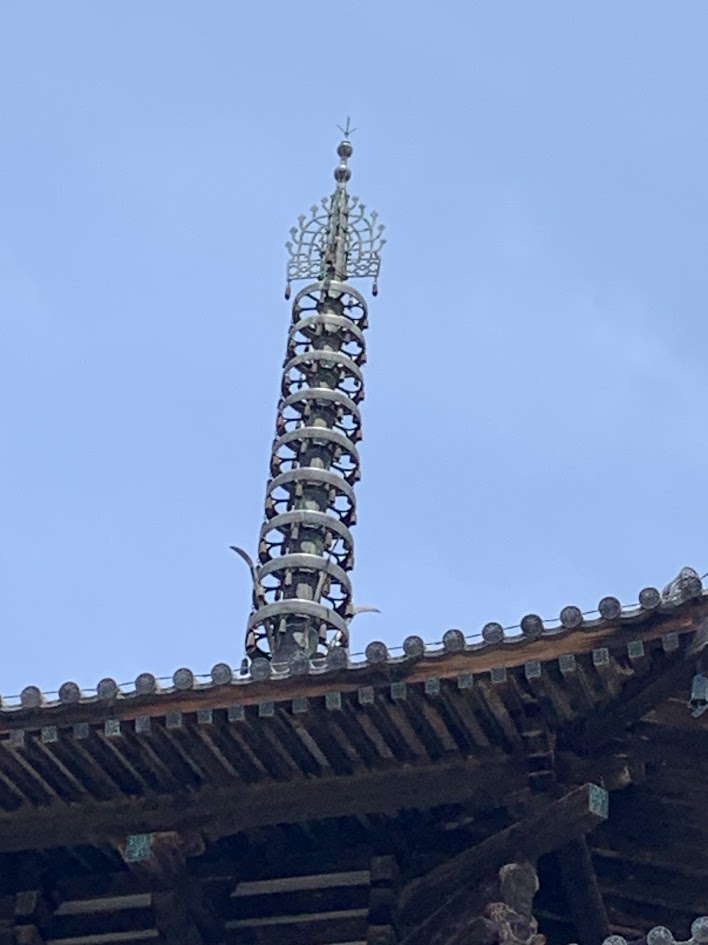
The part extending from the top of the Five-Story Pagoda is called the ‘sorin’ (finial).
This sorin has four sickles attached to it, which are believed to serve as a protective charm against lightning strikes.
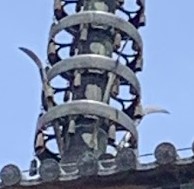

Nowadays, since the lightning rod’s conductor extends down to the ground, there is no risk of lightning damage.
I was informed by the staff that ‘if lightning starts, taking shelter inside the building will keep you safe.’
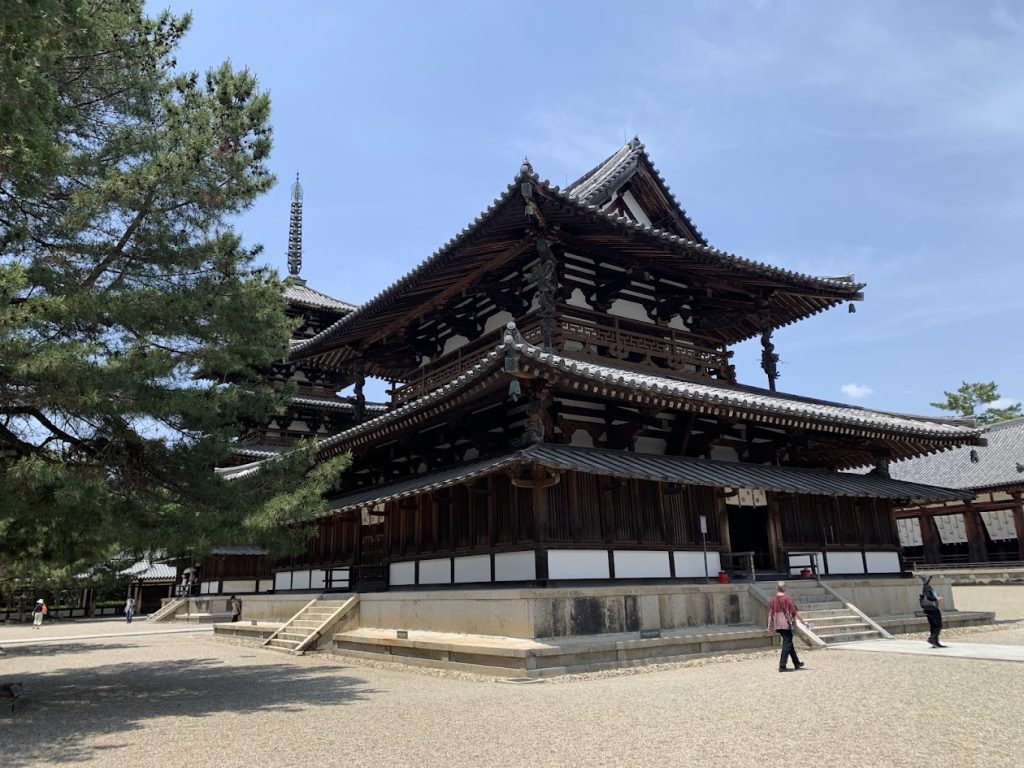
Main Hall (Kondo)

The heavy roof is supported and protected from the wind and rain by a very complex wooden framework.
It is impressive how such a robust structure can be created using only wood.
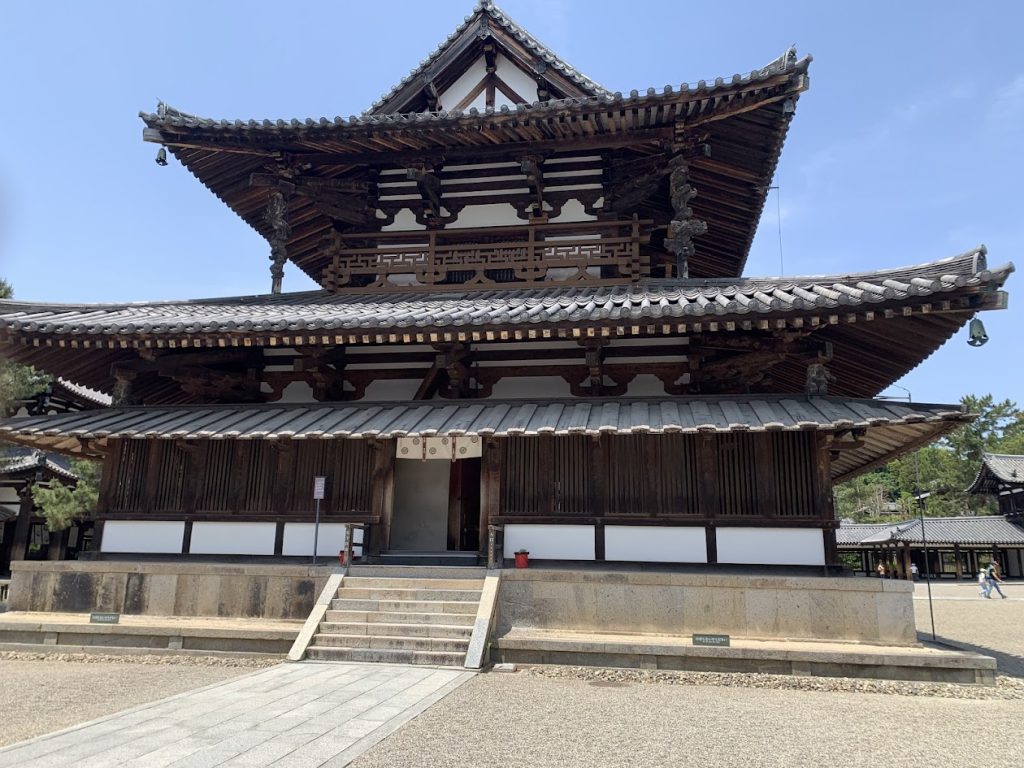
Main Hall (Kondo)
It is the oldest existing wooden structure in the world.
Inside the hall, the following Buddhist statues, representing treasures from the Asuka period, are enshrined:
- Shaka Sanzon (National Treasure)
- Yakushi Nyorai (National Treasure)
- Amida Sanzon (important Cultural Property)
- Kisshoten (National Treasure)
- Shitenno (National Treasures)

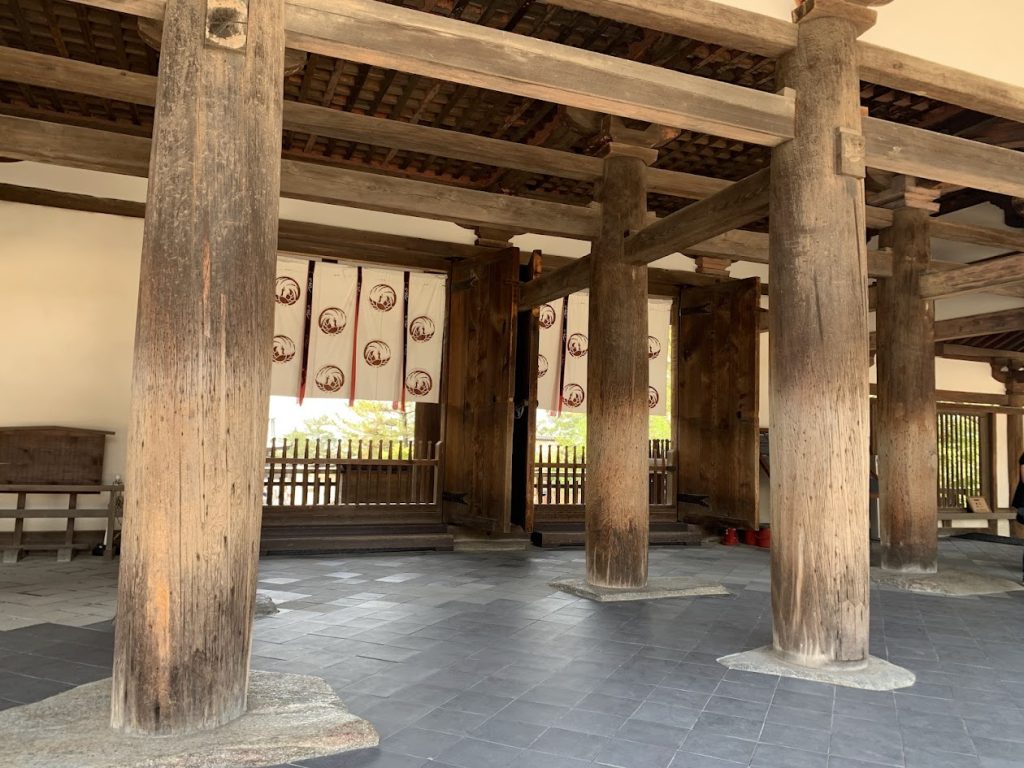
Entasis Columns of the Middle Gate (Chumon) – Inner
The columns have a characteristic swelling in the middle.
Entasis is a feature inherited from ancient Greek temple architecture.
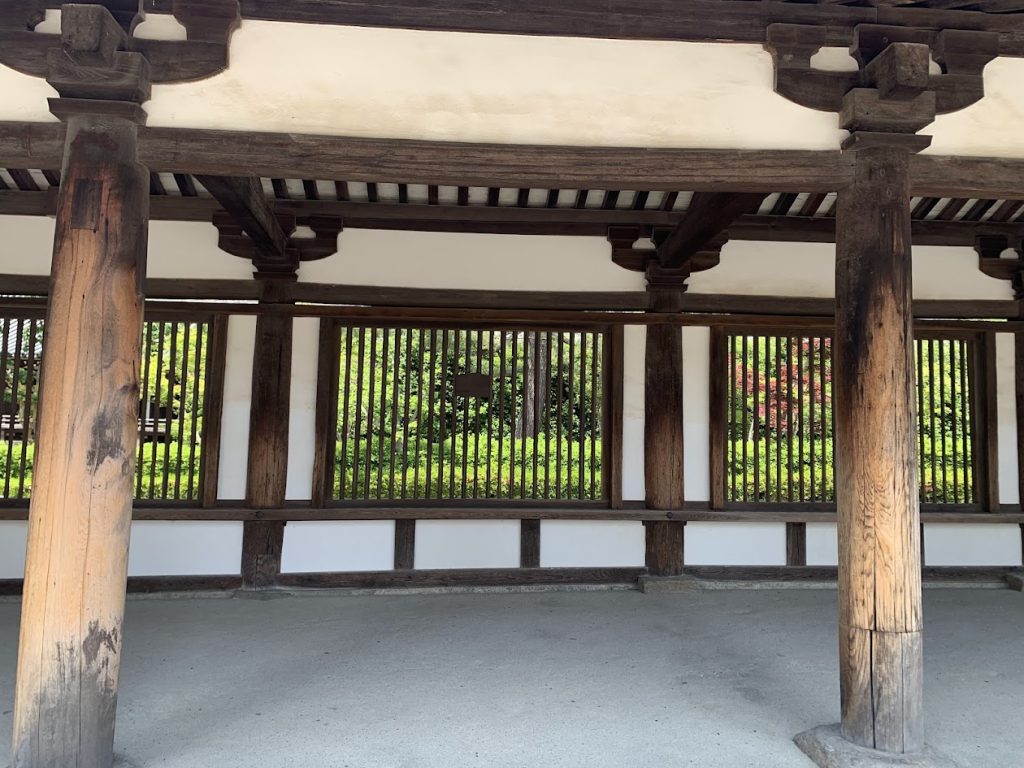
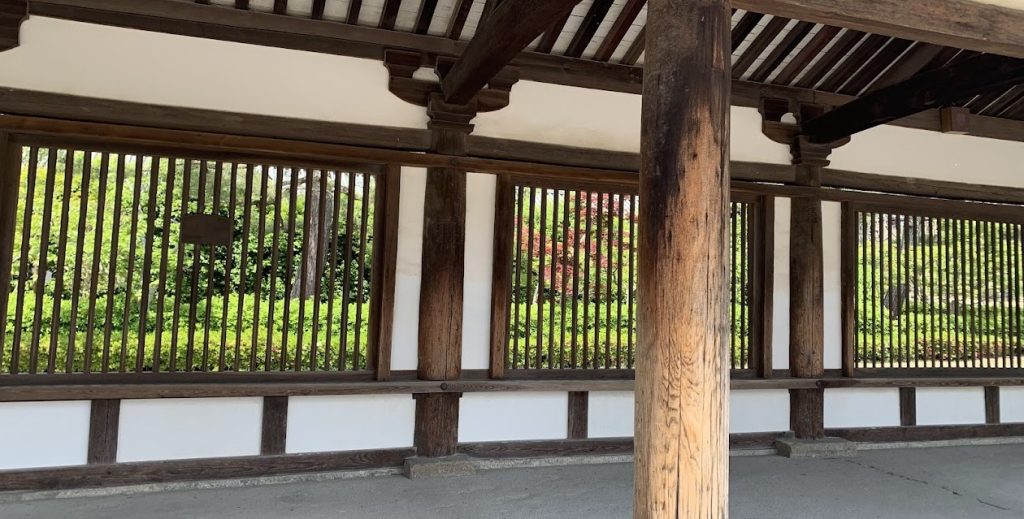
View from the corridor
The view outside through the renji-mado (latticed windows) is beautiful.
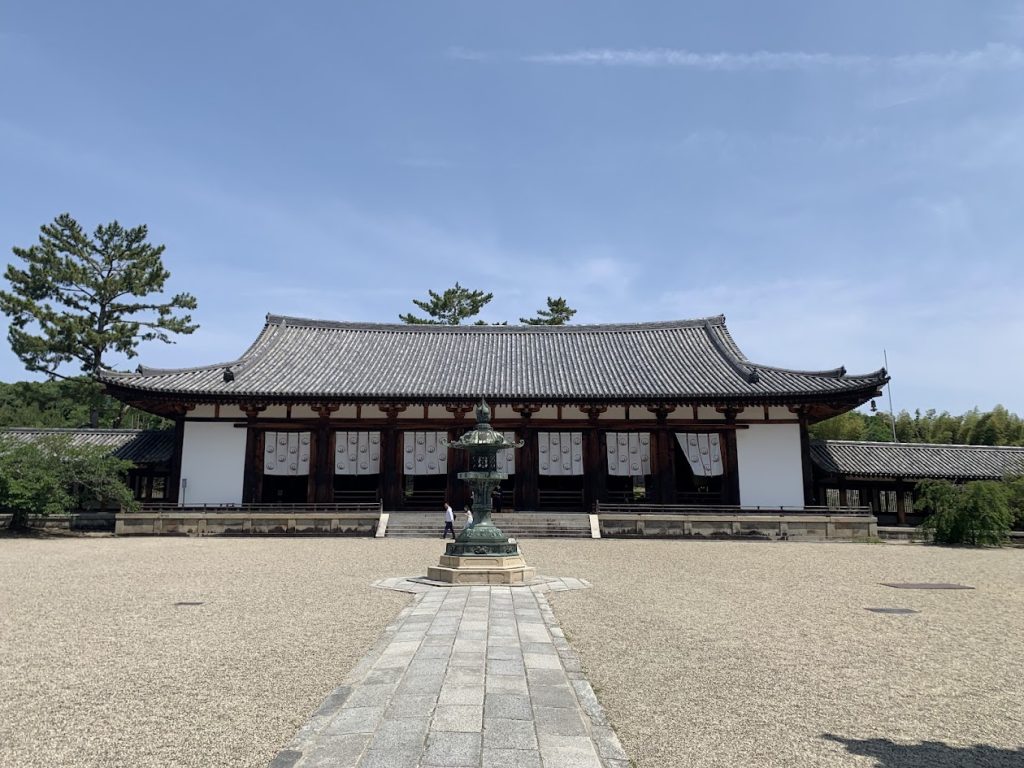
Great Lecture Hall (Daikodo)
This building is located at the northernmost part of the Western precinct.
It is a structure from the Heian period (about a thousand years ago) and is designated as a National Treasure.
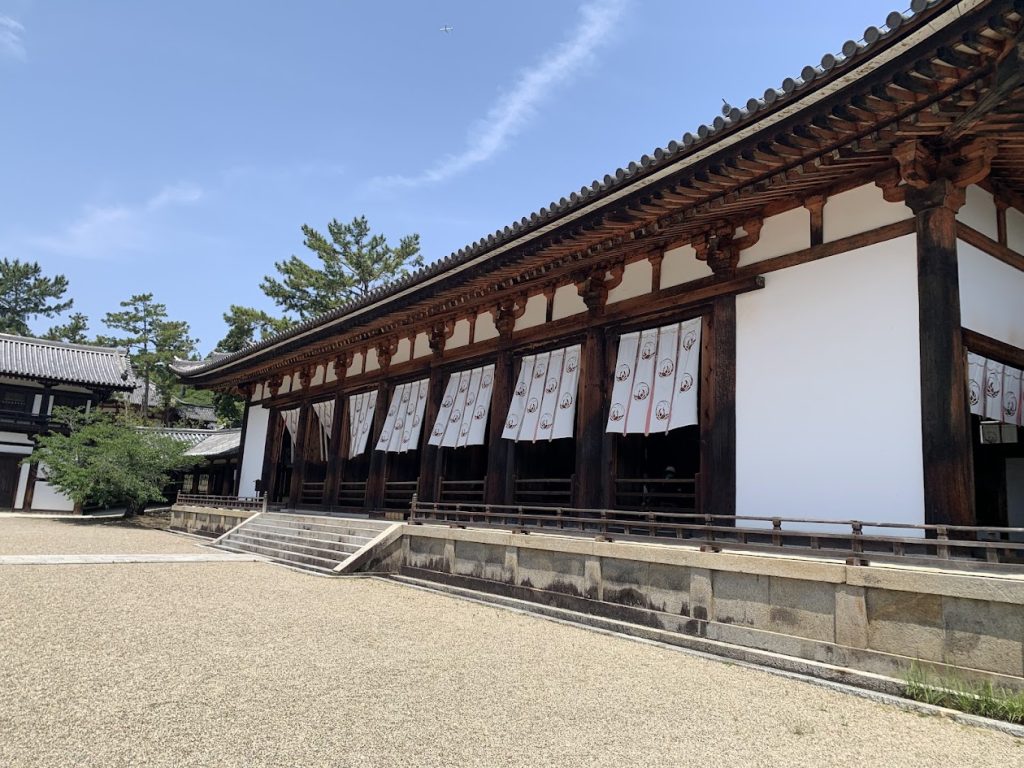
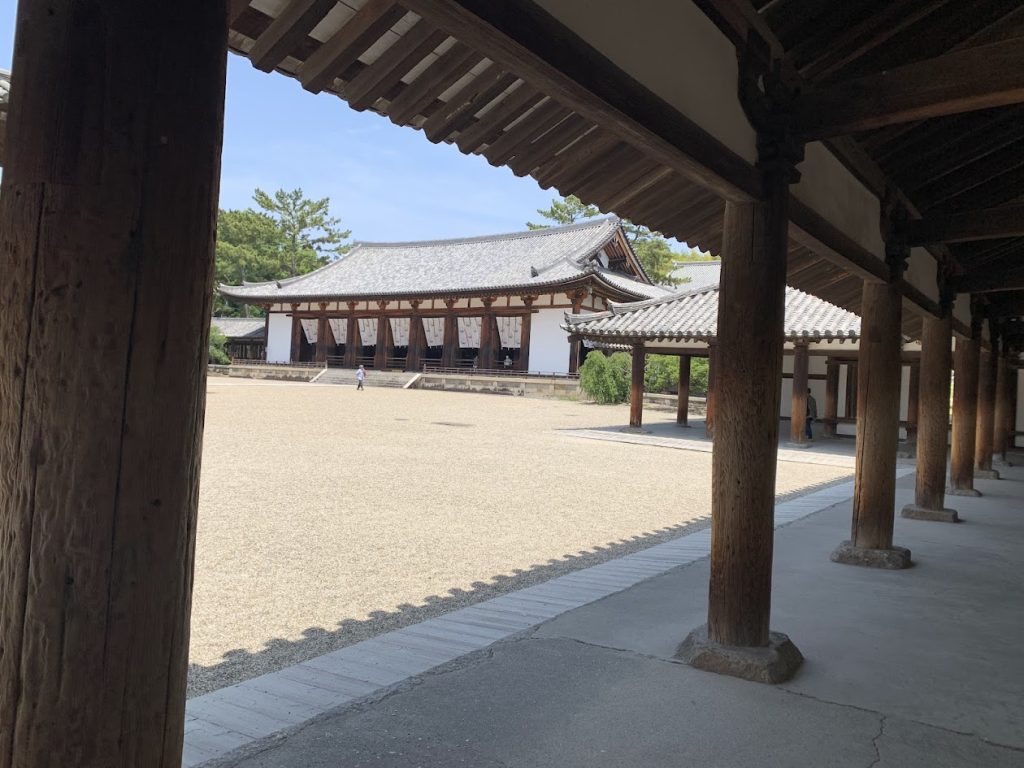
Looking at the Great Lecture Hall (Daikodo) from the corridor.
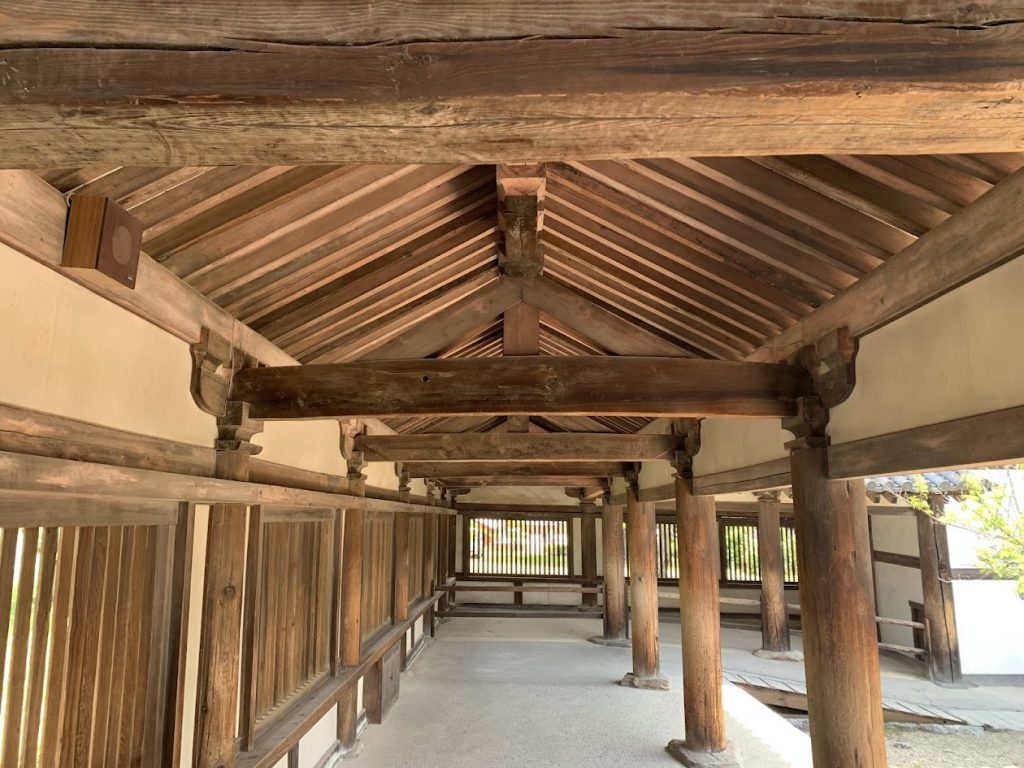
I’m impressed by how they managed to build such structures during a time when tools were not as user-friendly as they are today, and when there was little experience in constructing large buildings, which resulted in relatively basic carpentry skills.
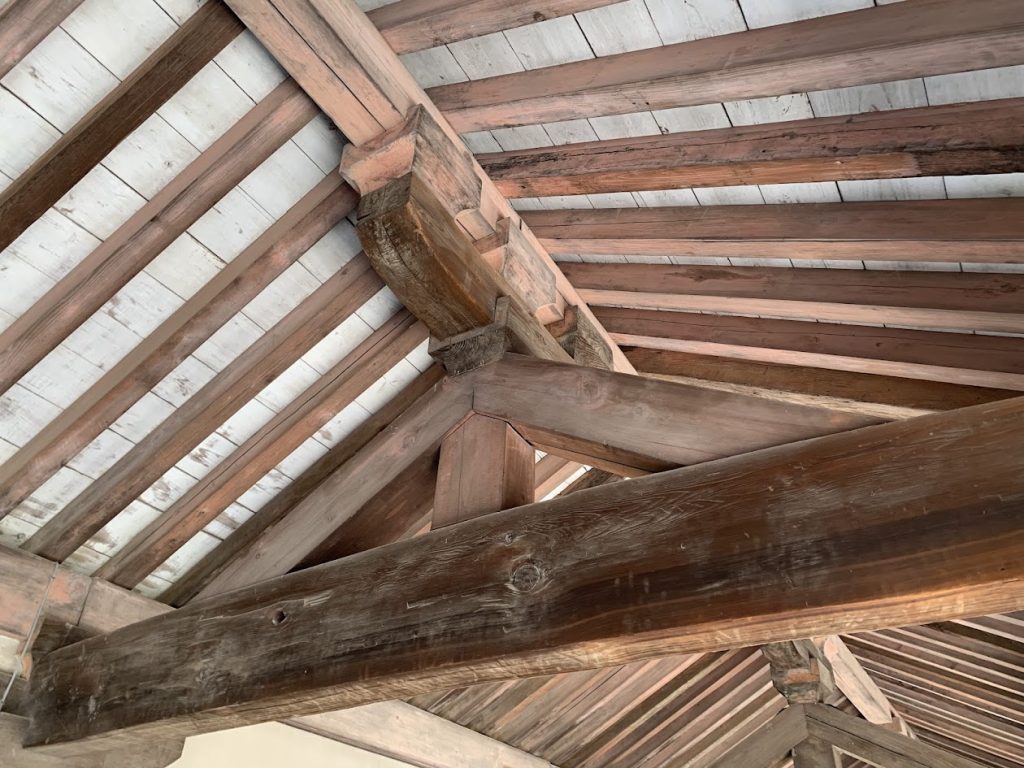
These timbers effectively distribute and absorb the forces.
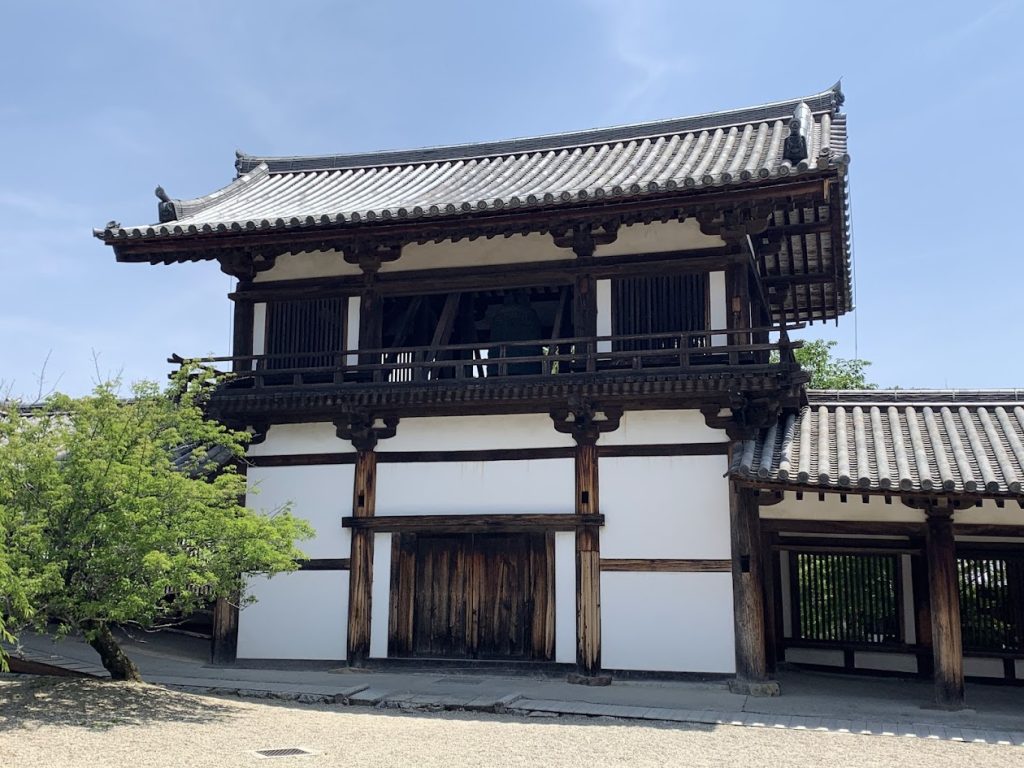
The bell tower
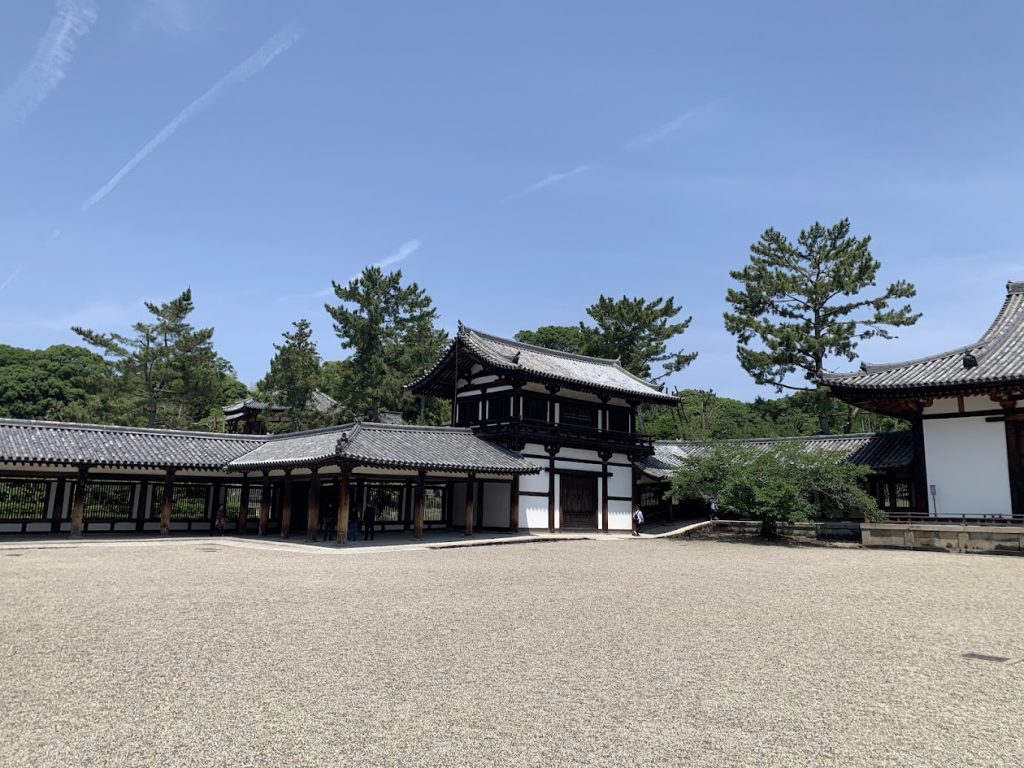
Surroundings of the Saiendo
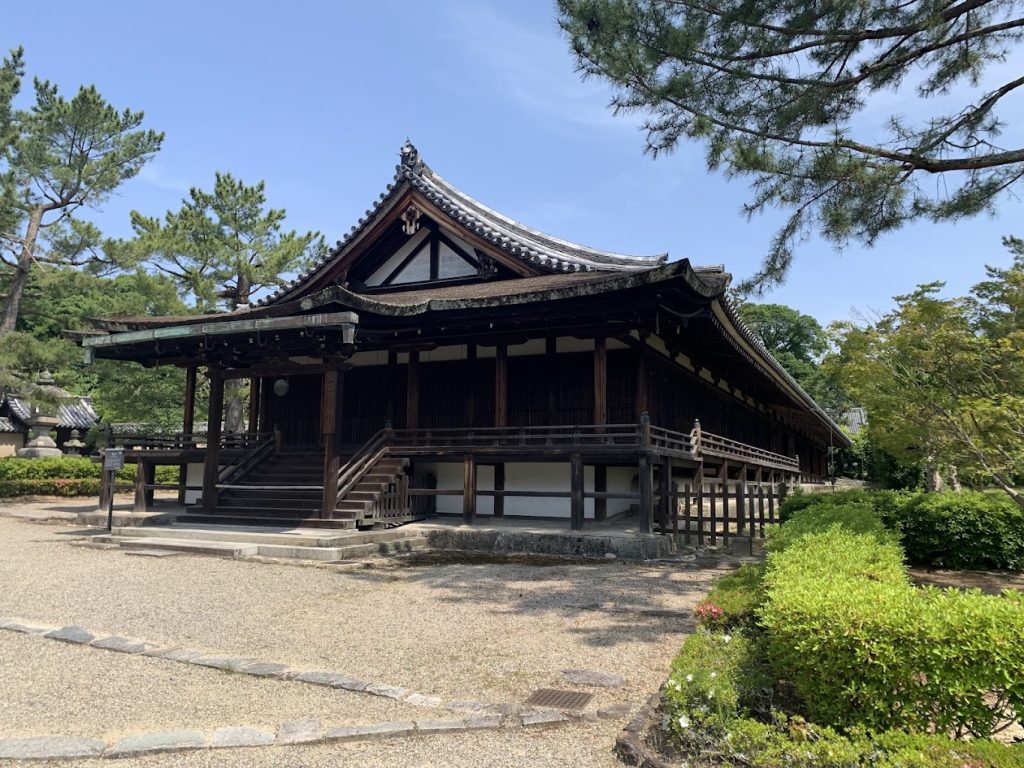
Sangyoin, Nishimuro (National Treasure)
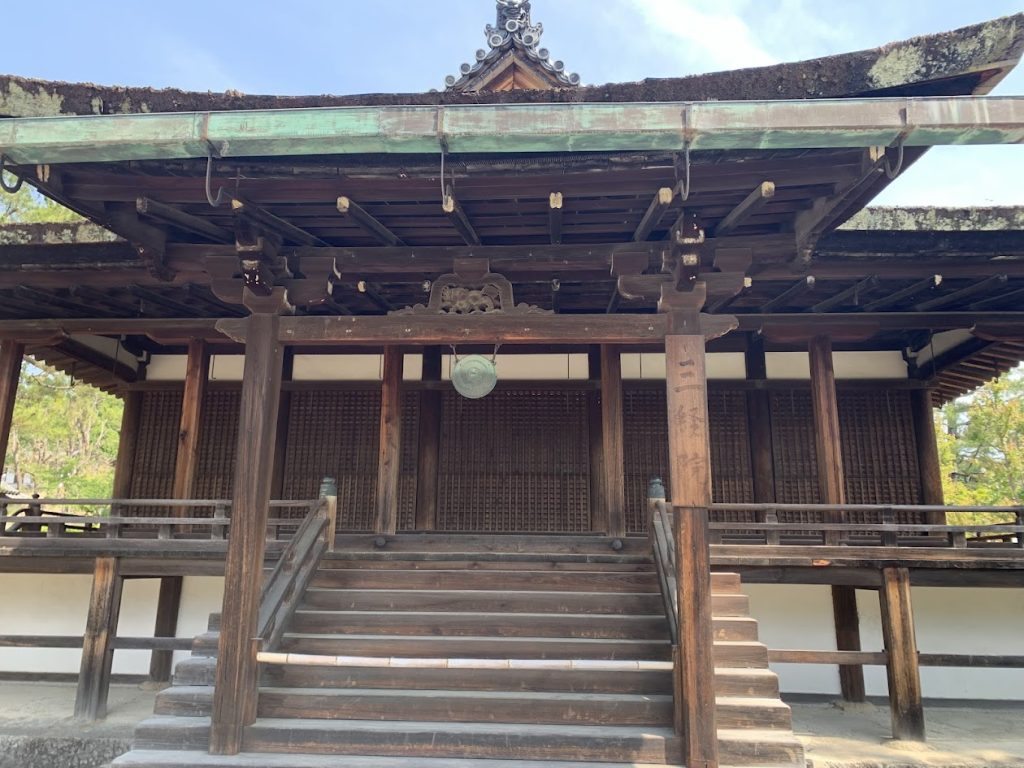
Sangyoin once had monks living there.
Currently, the monks of the temple conduct lectures on the ‘Sankyo,’ the three scriptures authored by Prince Shotoku.
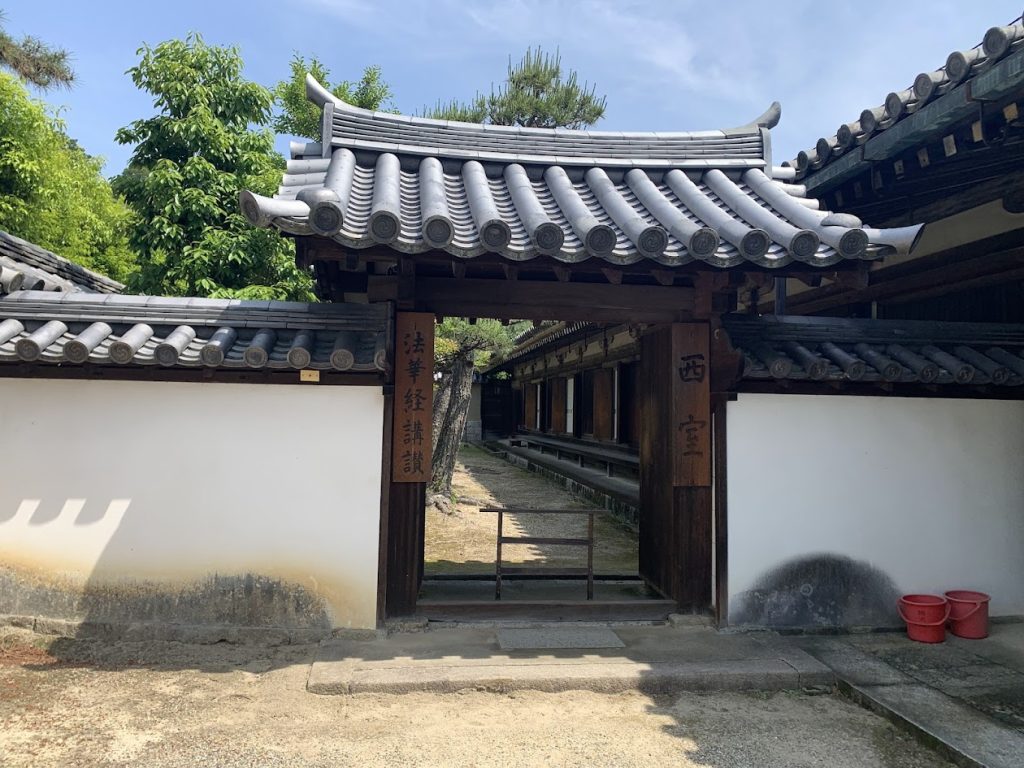
Nishimuro
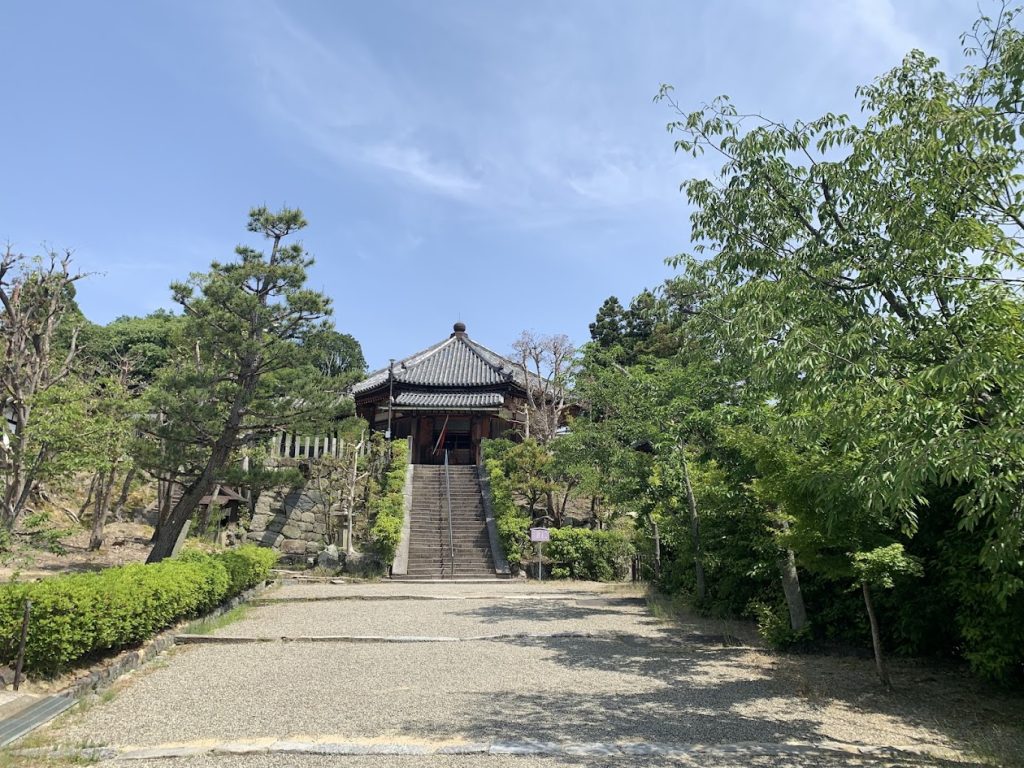
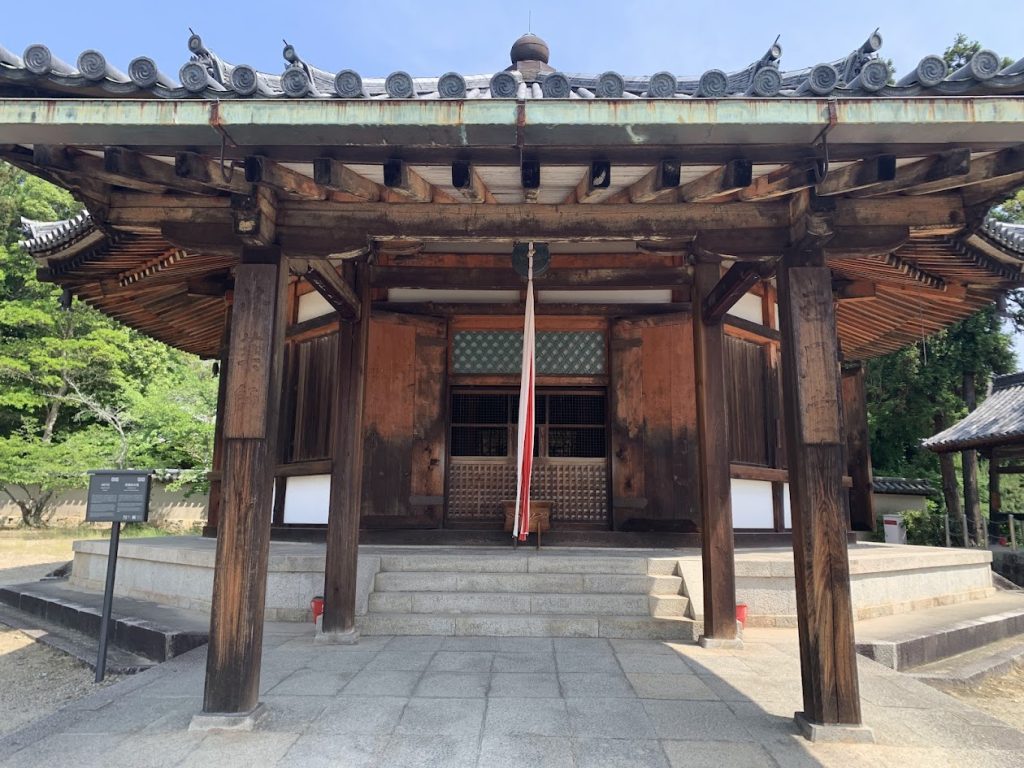
Saiendo (National Treasure)
This is an octagonal hall that houses a statue of Yakushi Nyorai.
Next to it is a bell tower.
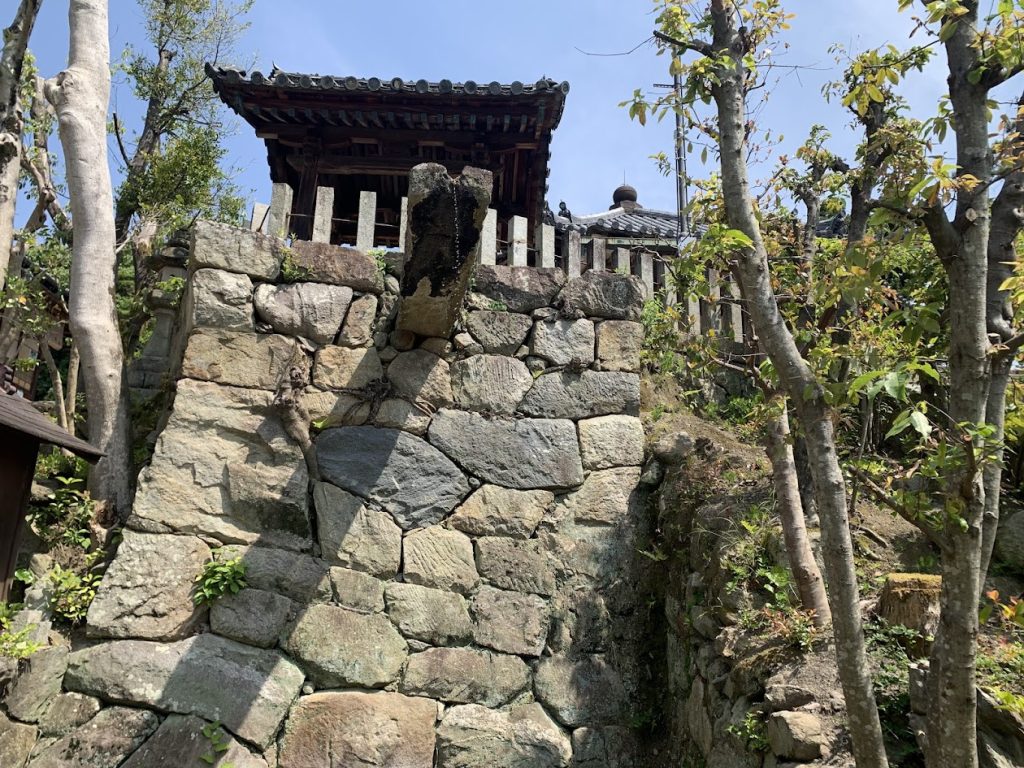
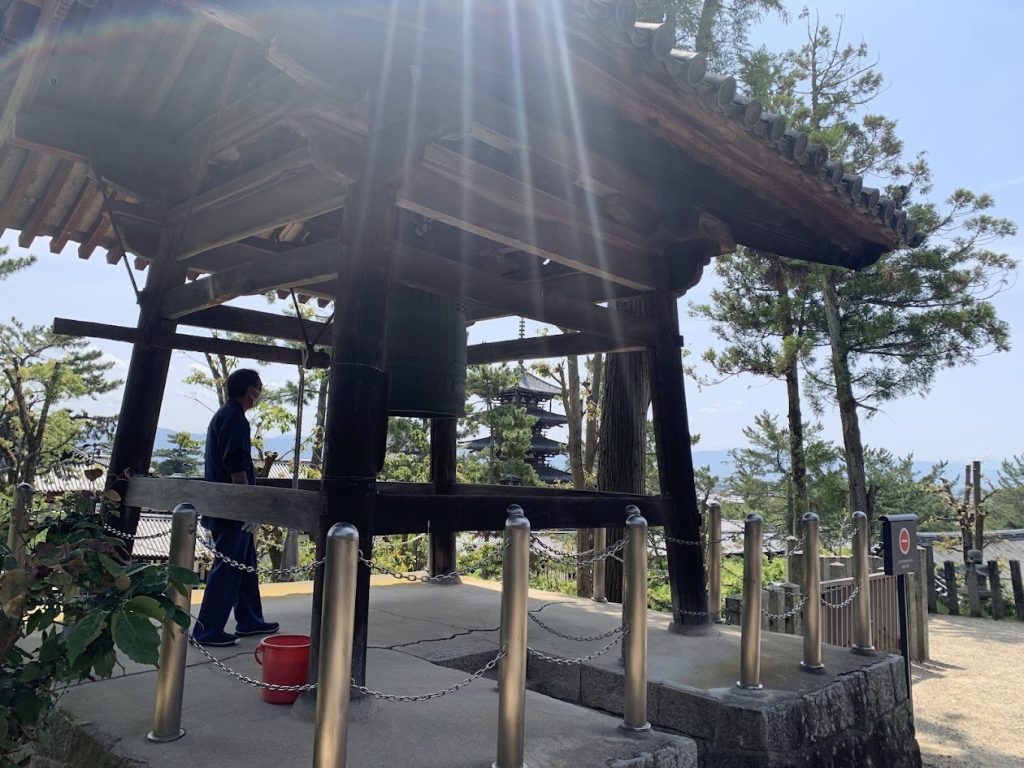
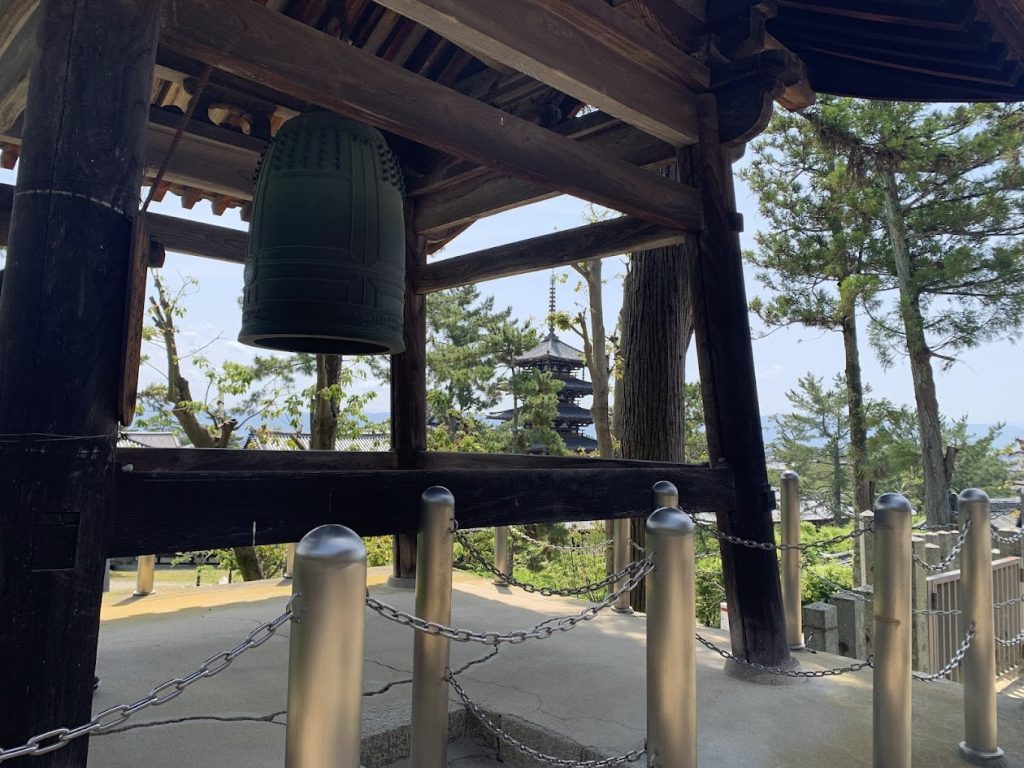
Bell Tower
Next to the large bell, you can see a five-story pagoda.
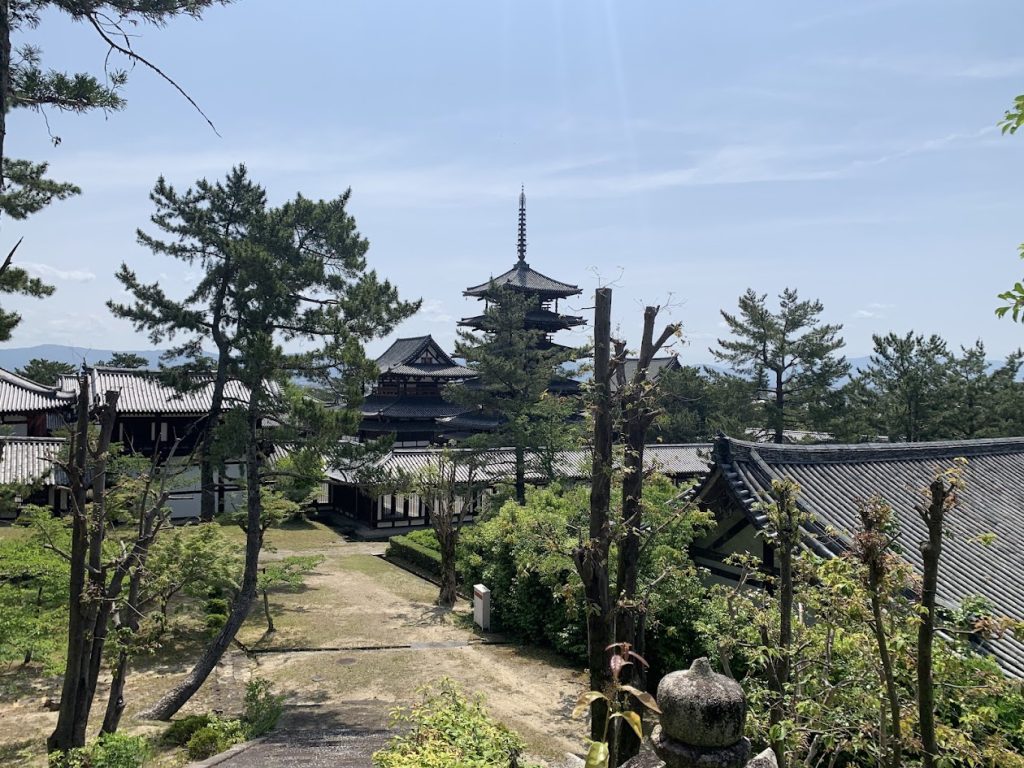
You are looking at the five-story pagoda and the Great Lecture Hall from a diagonal rear view.
Surroundings of Shoryoin
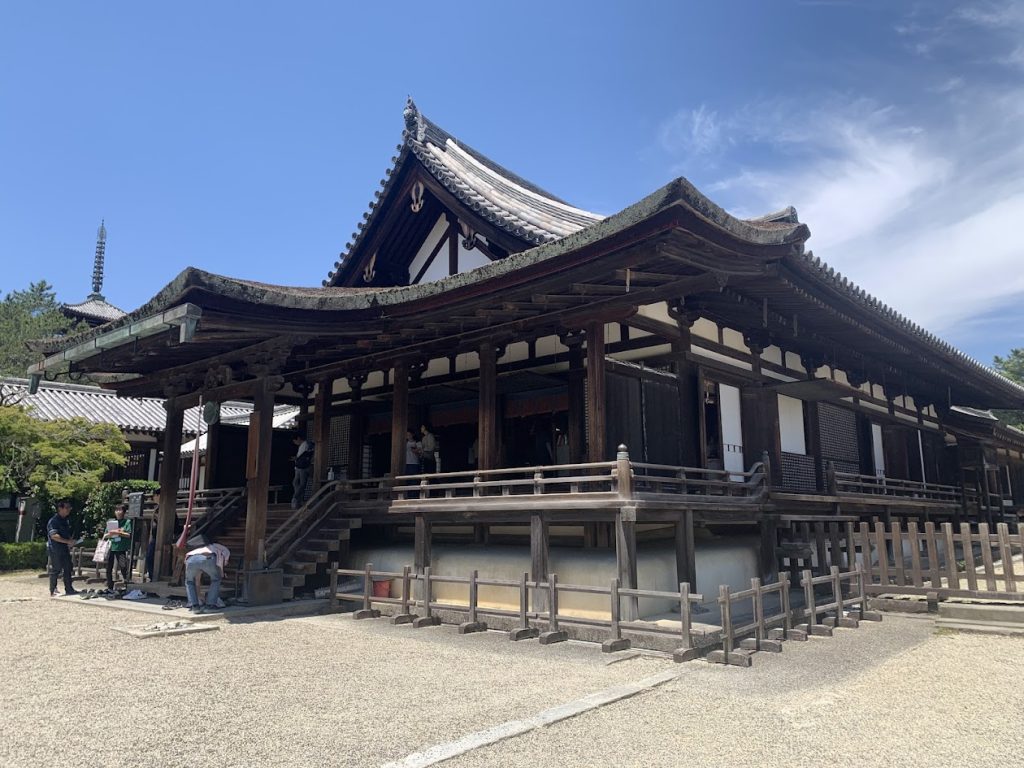
Shoryoin (National Treasure)
It was built to enshrine a statue of Prince Shotoku as devotion to him grew.
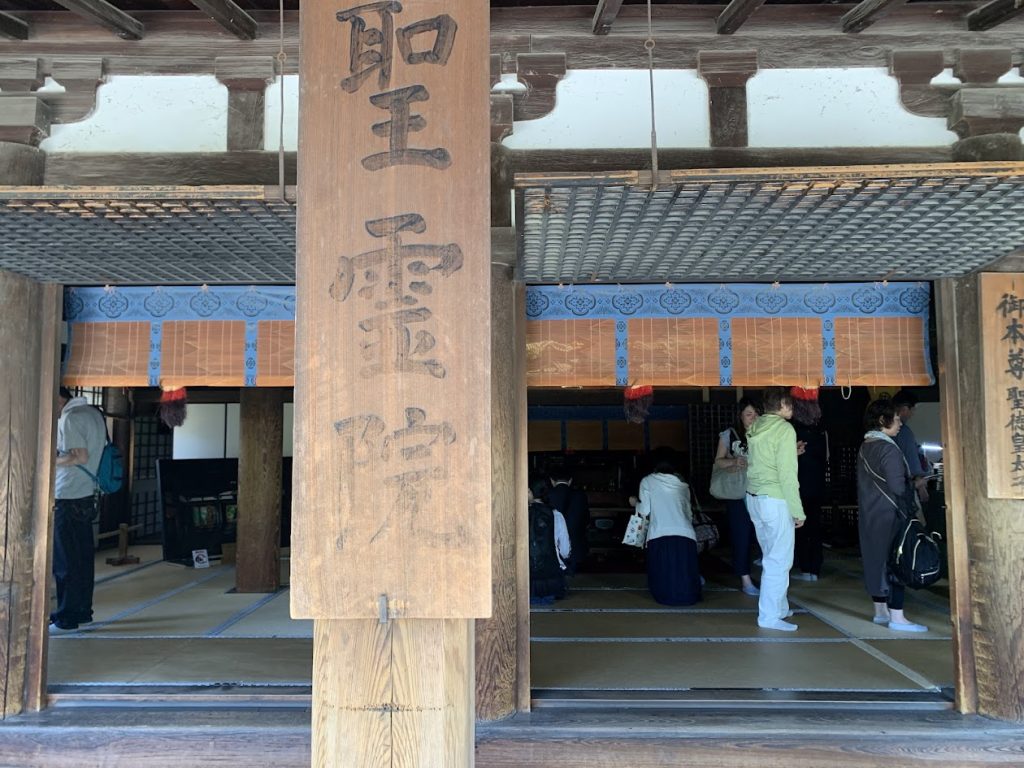
A statue of Prince Shotoku is enshrined at the back.
Although it is dim and not clearly visible, you can sit facing it.
A few people are lined up on the right side to receive a goshuin for their pilgrimage book.
A goshuin is a special stamp given at temples and shrines, often collected as a record of one’s visit. It typically includes calligraphy written in sumi ink, along with the temple or shrine’s stamp.
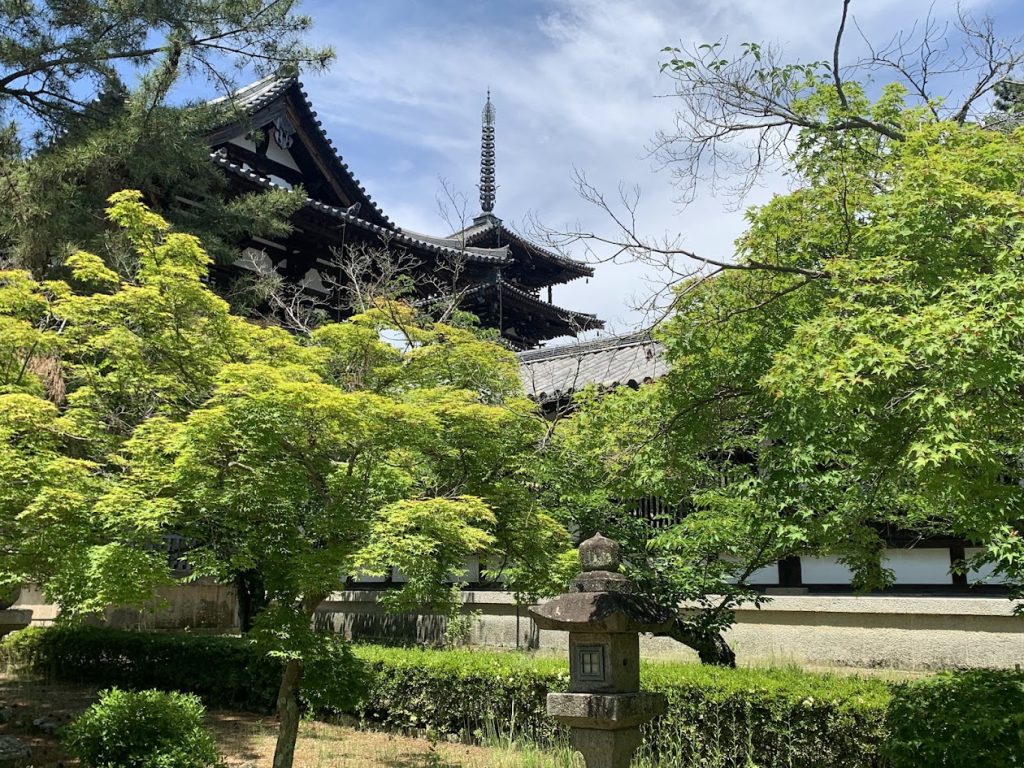
I looked back at the five-story pagoda once again from in front of Shoryoin.
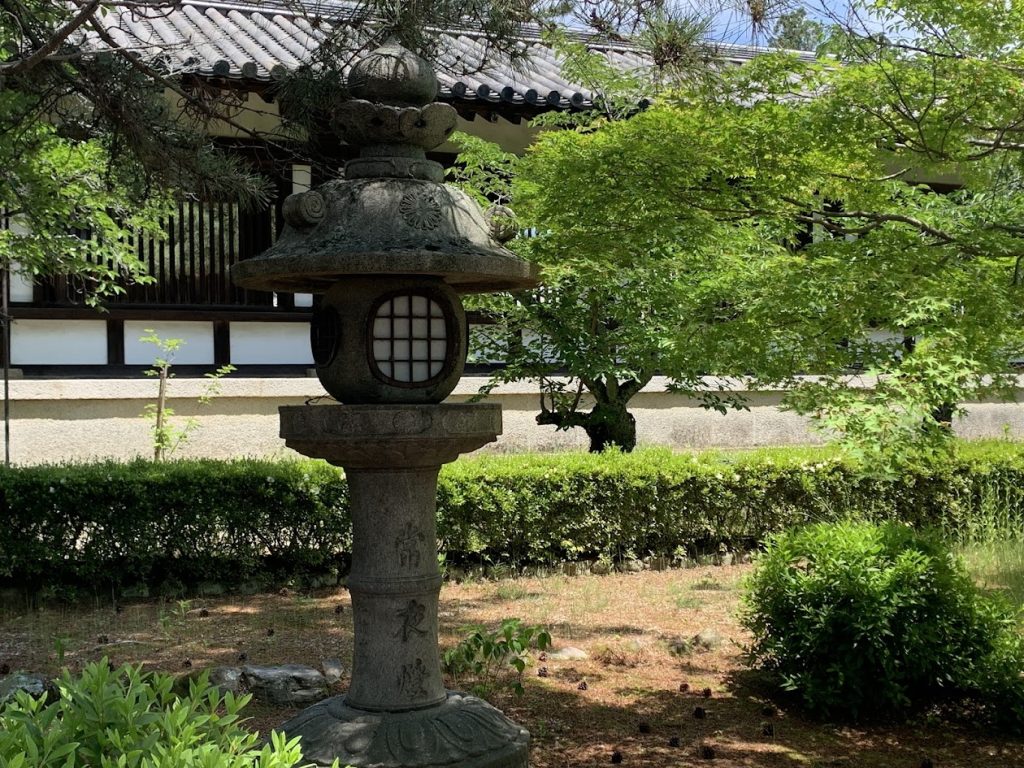
I found a beautiful and magnificent stone lantern. The craftsmanship of the stonework is also impressive. I recalled a story about a missionary who visited hundreds of years ago and was amazed by the fine workmanship of the stone lanterns.
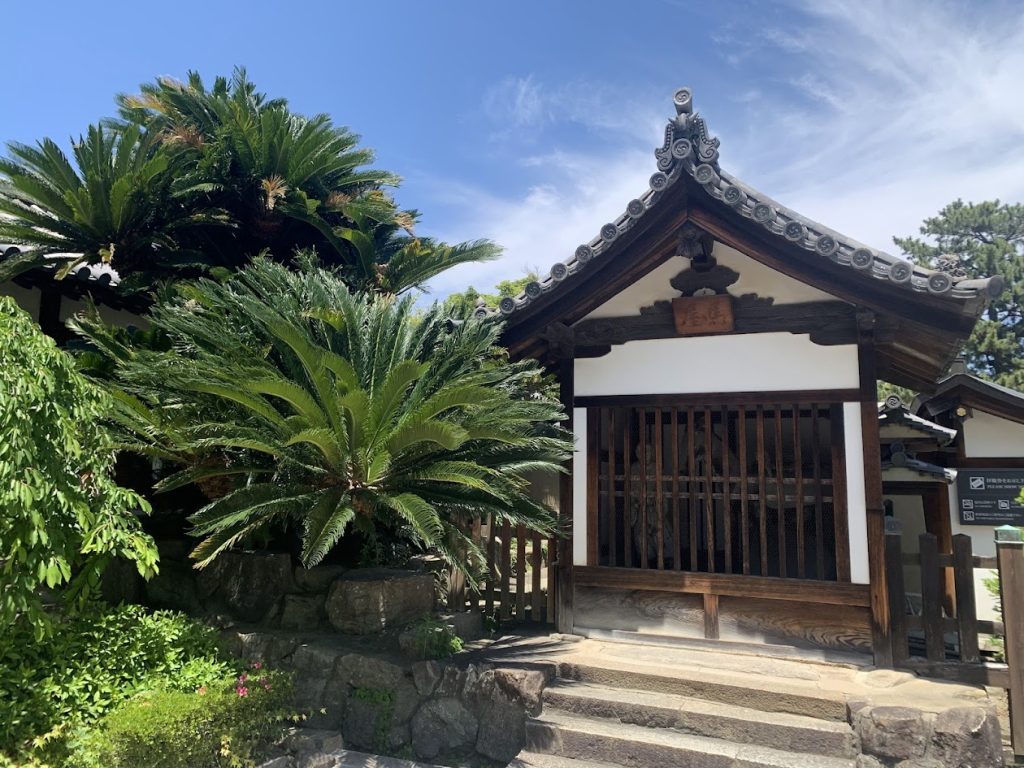
Next to Shoryoin.
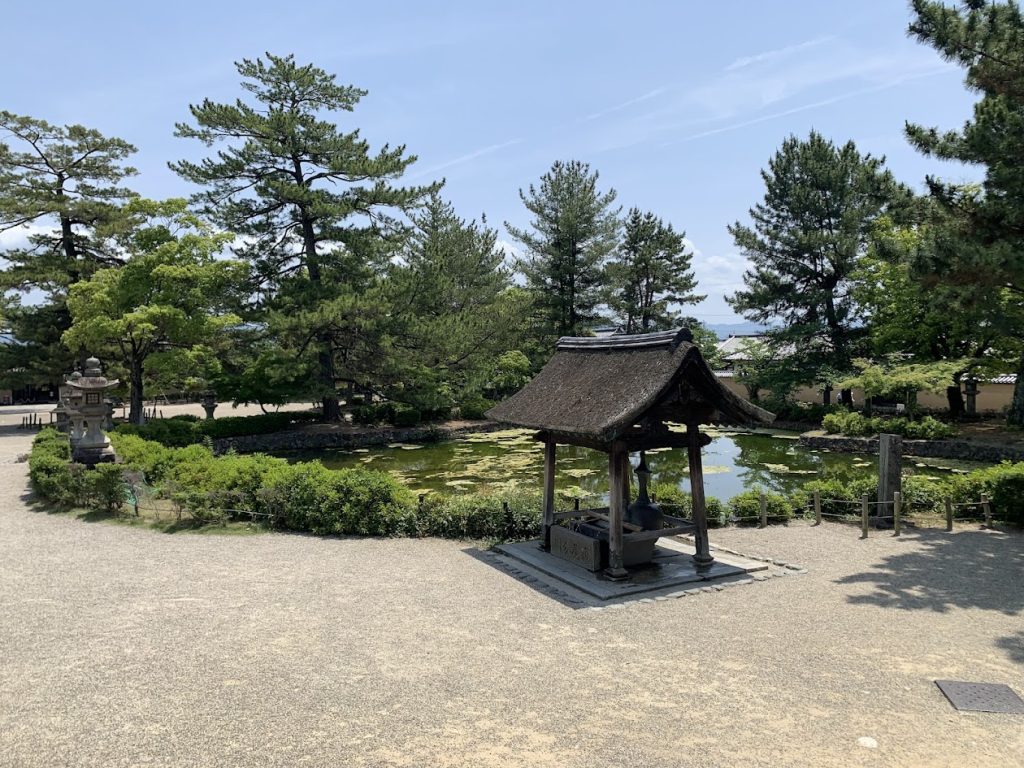
Yumedono
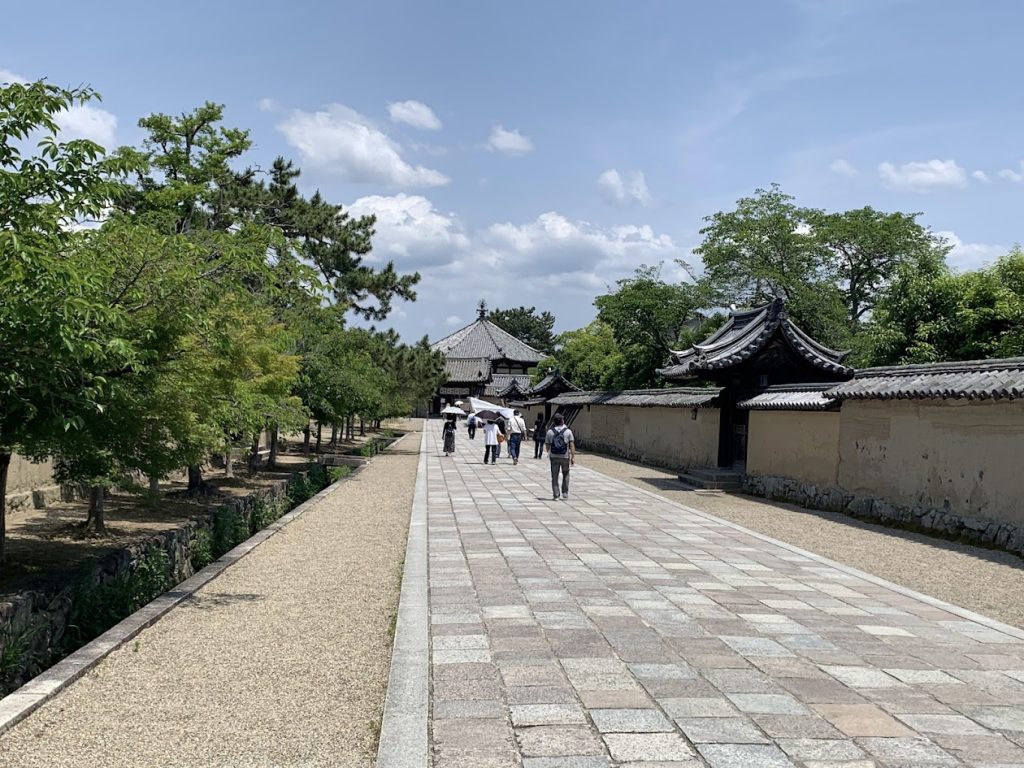
Path from the Western precinct to the Eastern precinct Garan.
A little further ahead, you can see Yumedono (the Eastern precinct Garan).
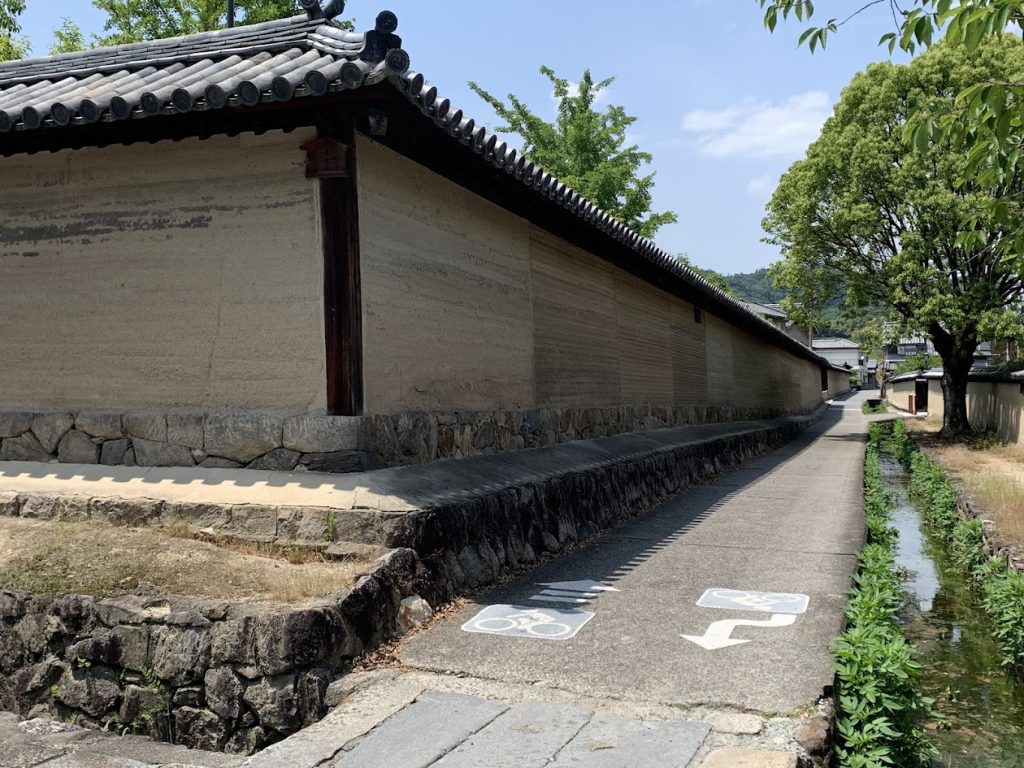
The side path also had its own charm.
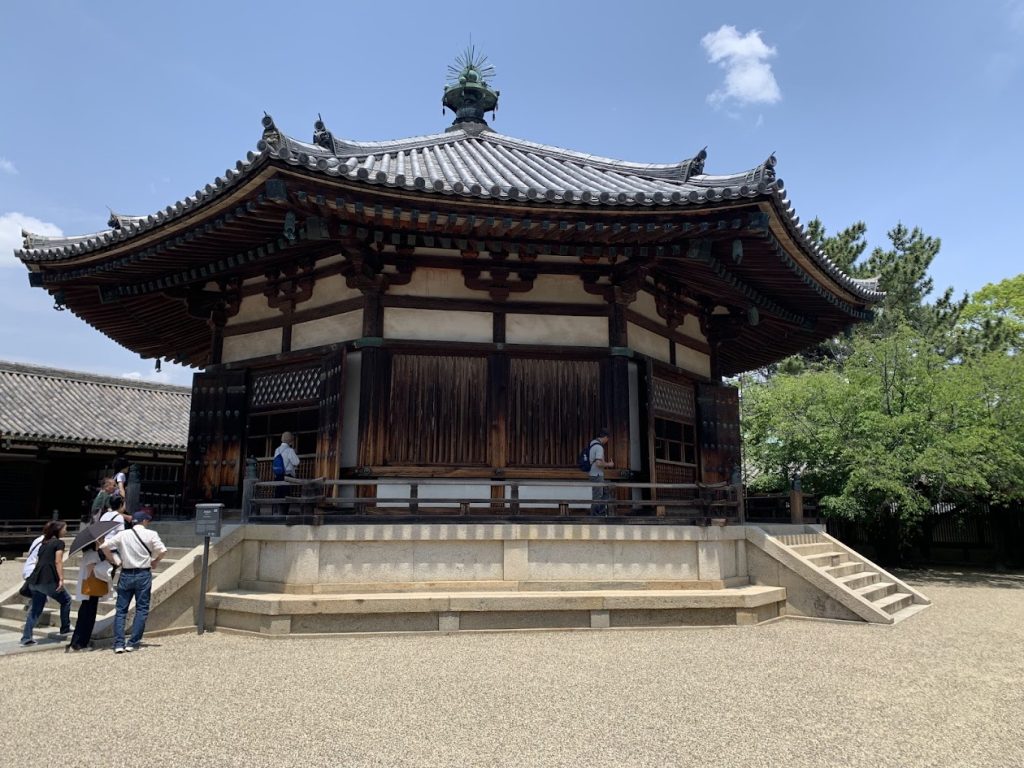
Yumedono (National Treasure)
An impressive octagonal hall and the center of the Eastern precinct.
It was established during the Nara period.
The name ‘Yumedono’ derives from the legend of a golden Buddha statue that appeared in a dream of Prince Shotoku.
This site is the remains of Prince Shotoku’s ‘Ikaruga Palace.'”
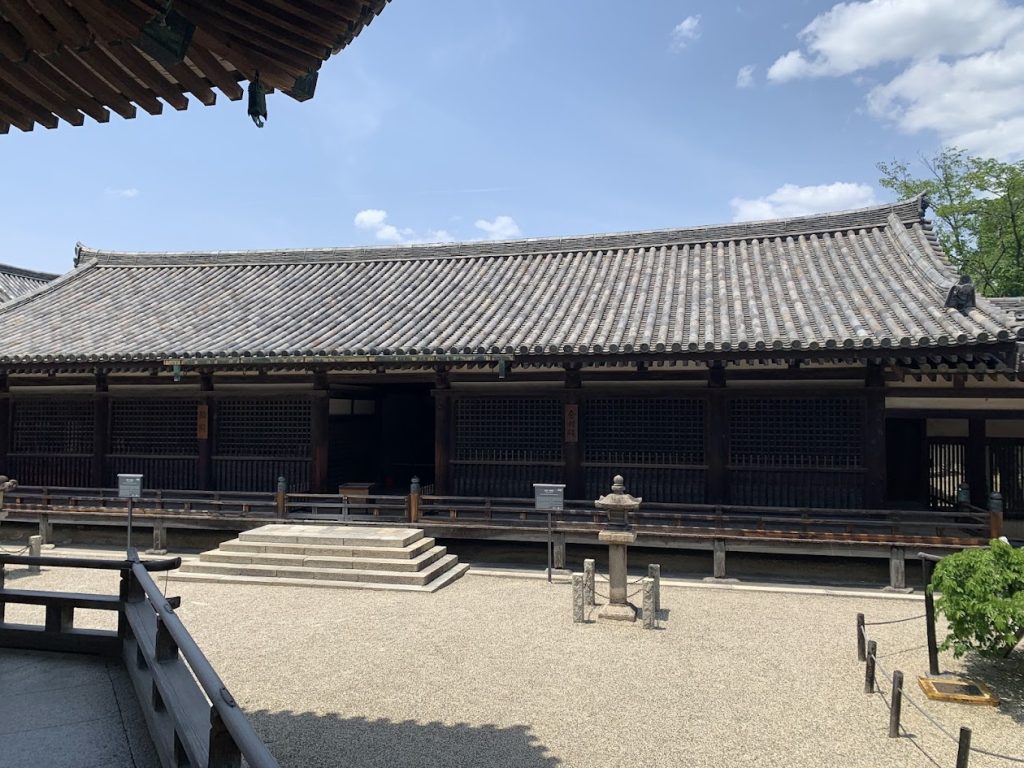
Eden and Shariden

Eden and Shariden
This building houses the relics (bones of the Buddha) that are said to have appeared from Prince Shotoku’s hands when he clasped them together facing east at the age of two in spring.
Additionally, on the west side, there is the Picture Hall, which contains sliding door paintings depicting the achievements of Prince Shotoku.
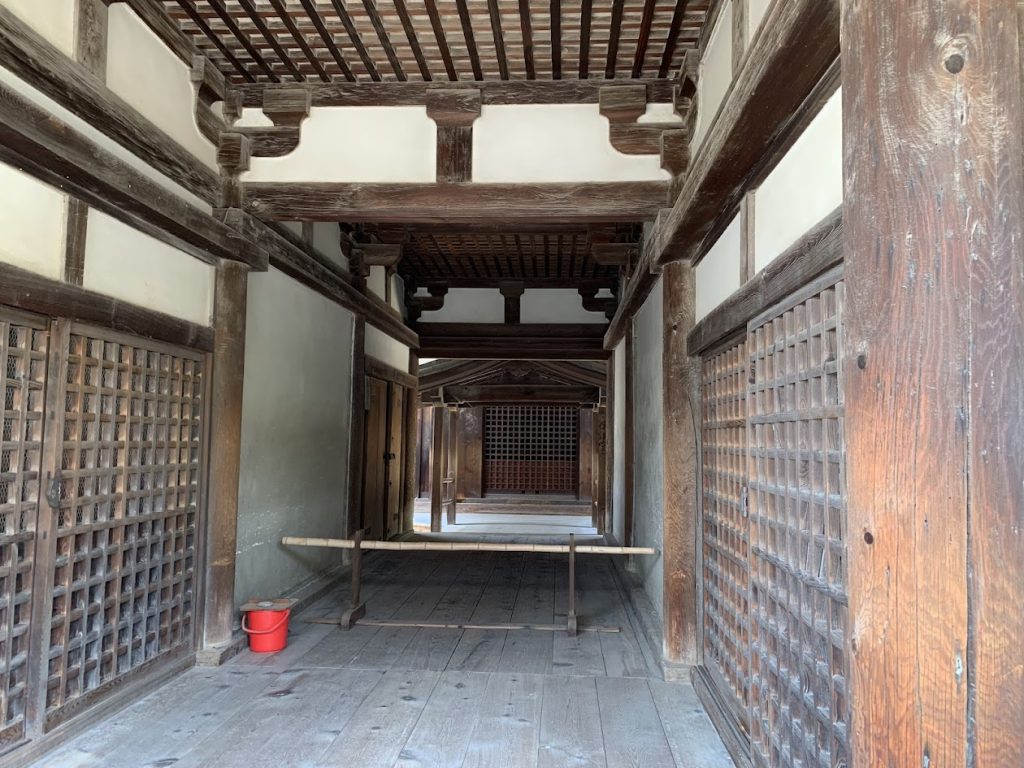
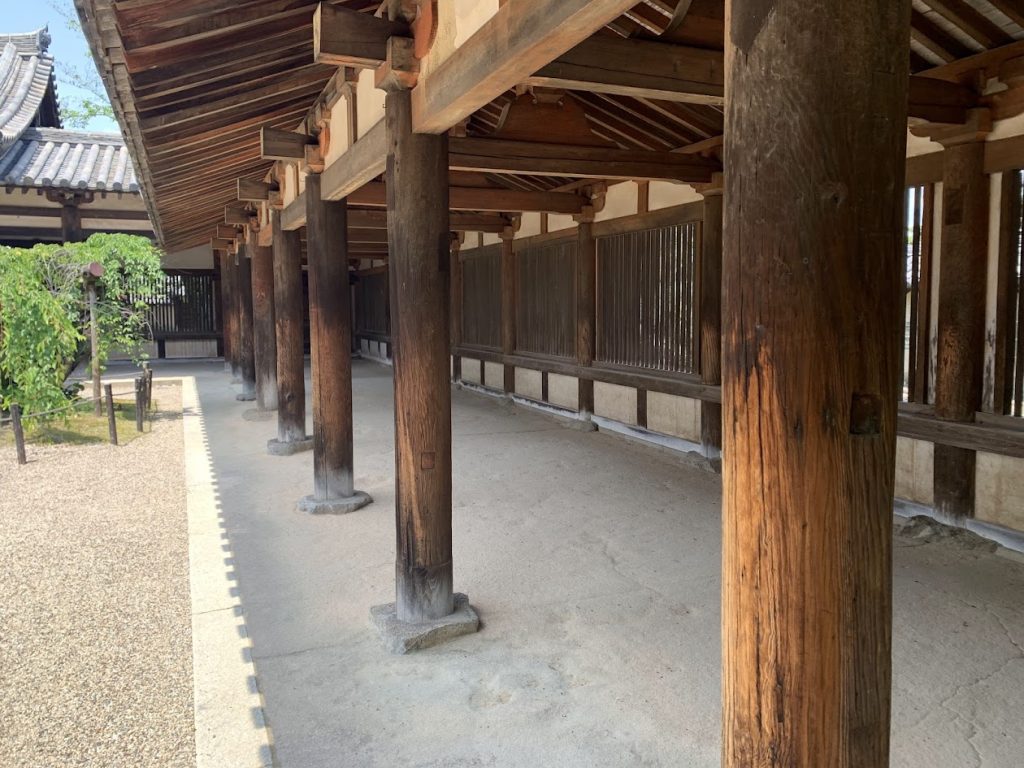
It is clear how the pillars are placed on top of the foundation stones.
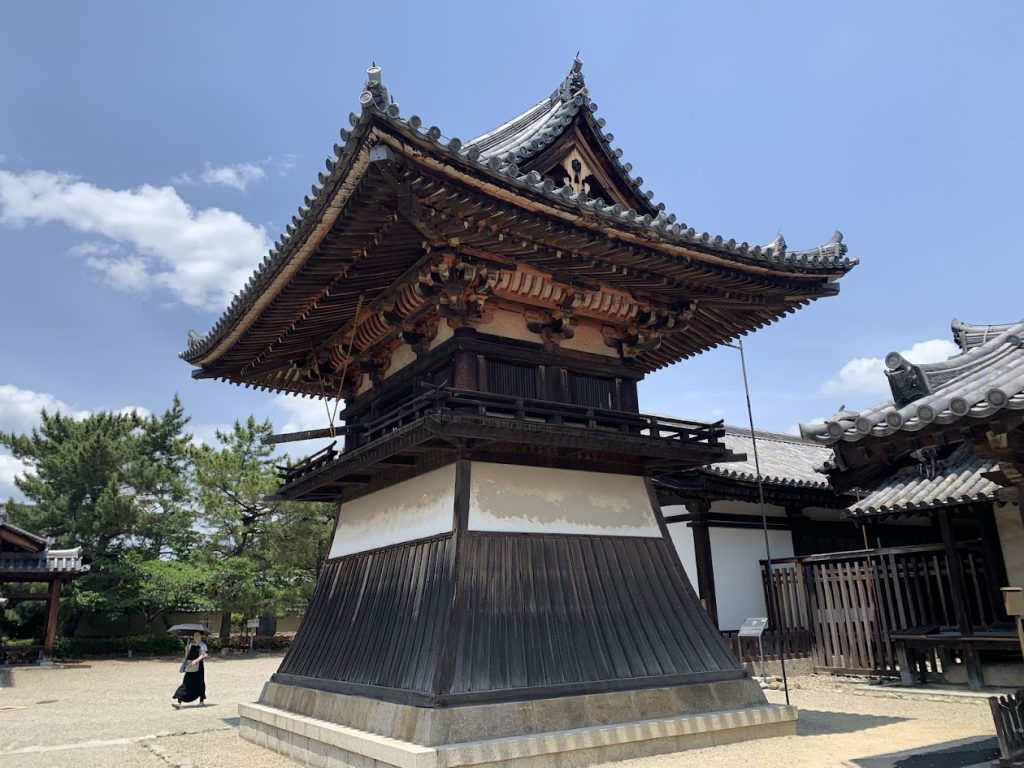
The bell tower
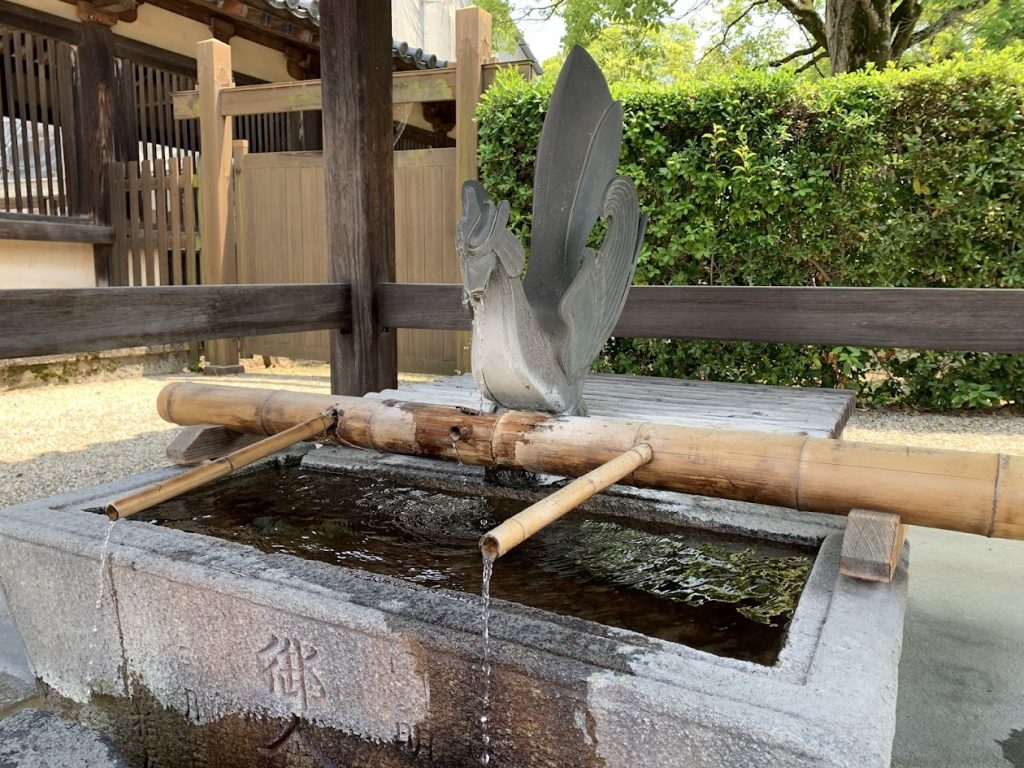
Chozu-bachi (water basin)
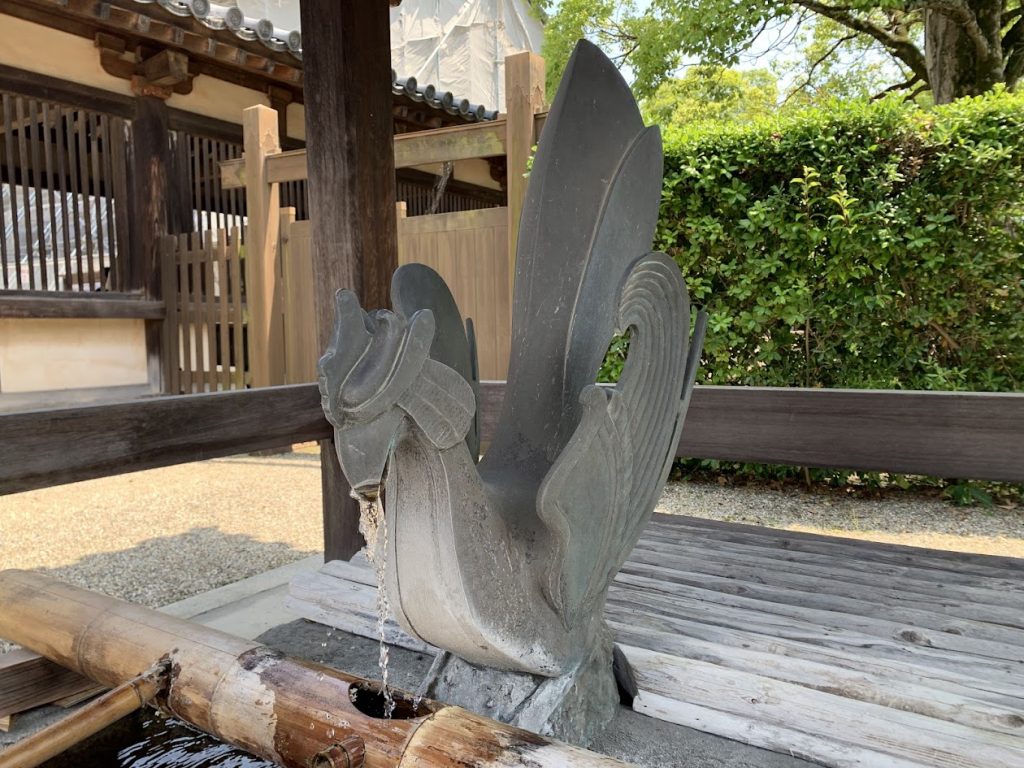
I think it’s a phoenix.
Chuguji Temple
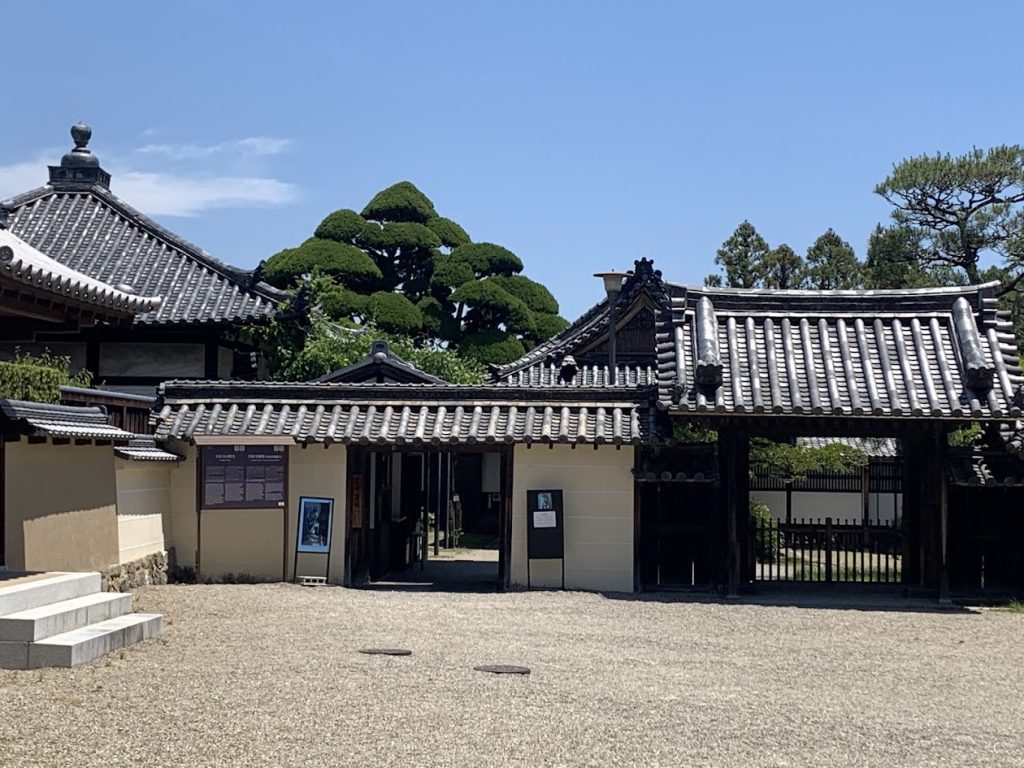
Chugu-ji Temple
Located in the left rear of Yumedono.
Chugu-ji Temple is also registered as a World Heritage site.
コメント