
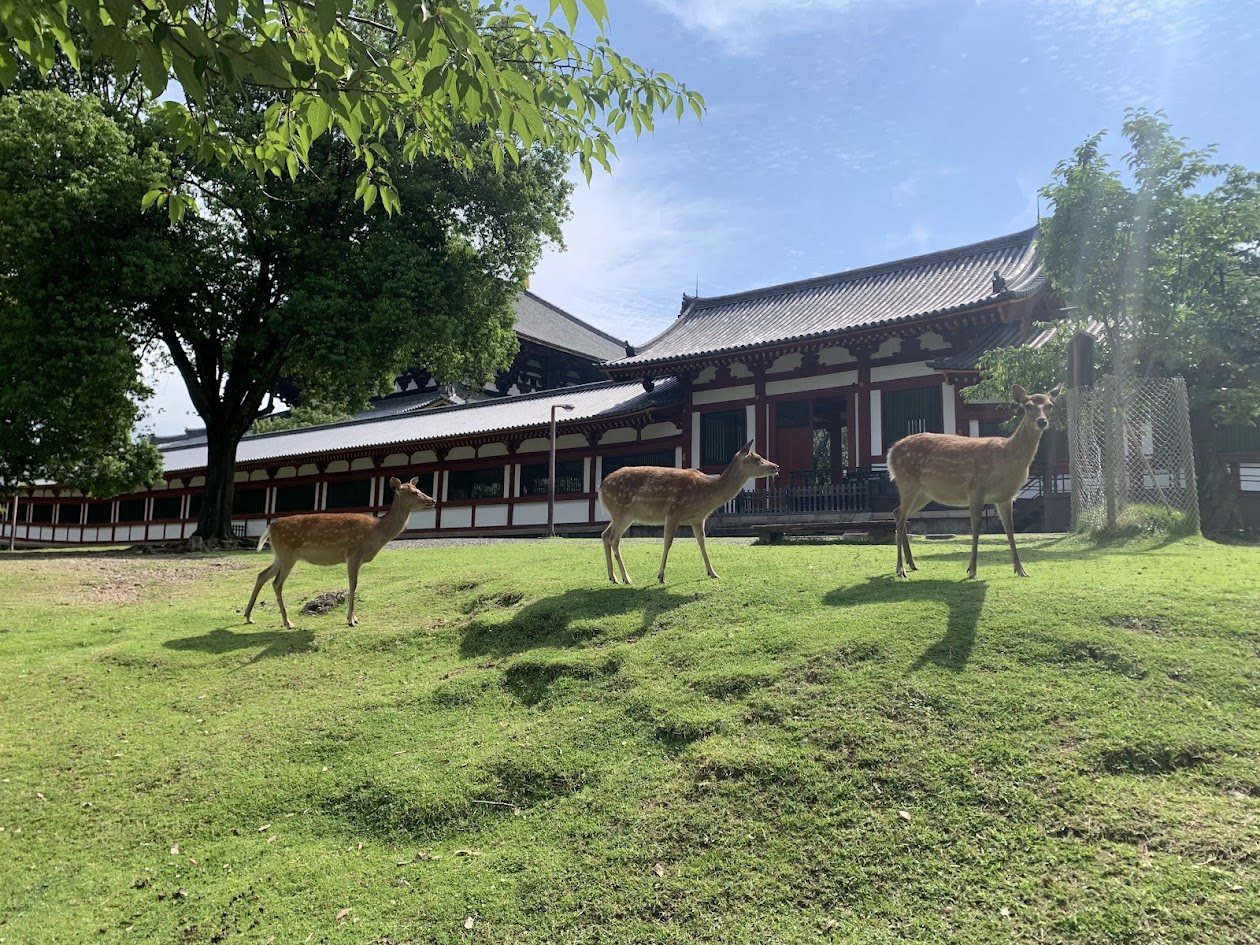
Nara Station to Todaiji|Walk Through Parks, Ponds and Shrines

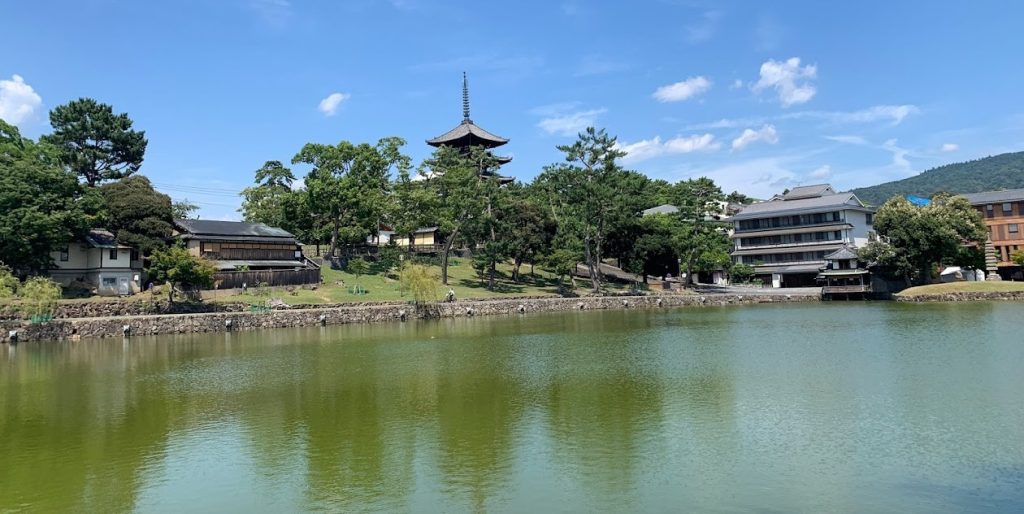
Sarusawa-ike Pond
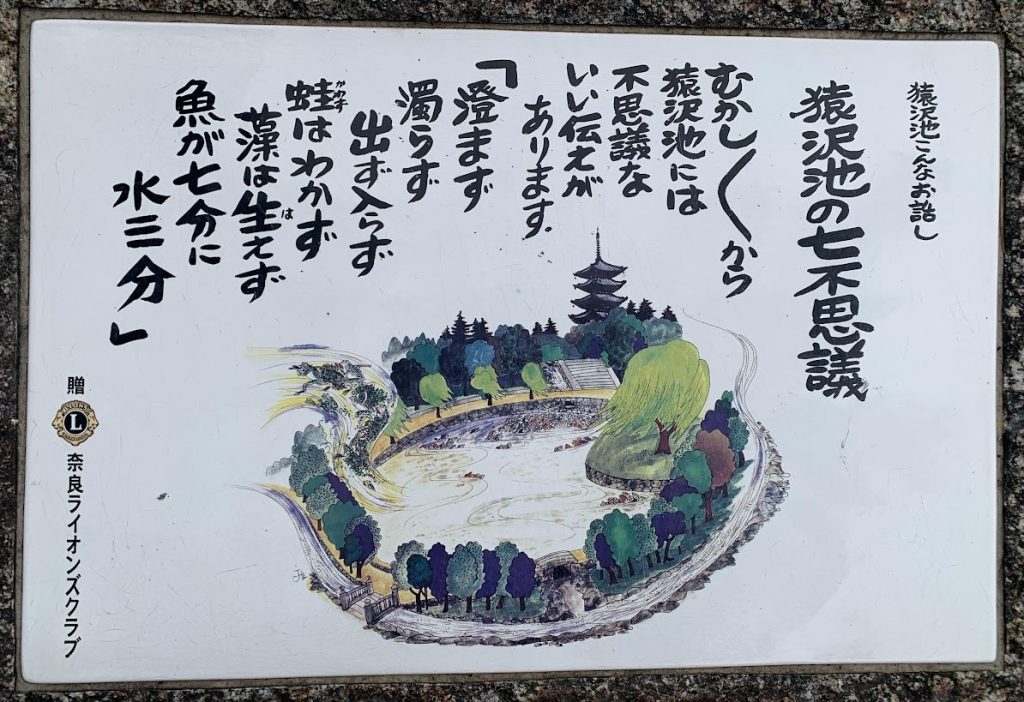
The Seven Wonders of Sarusawa-ike Pond
Sarusawa-ike Pond has long been surrounded by mysterious legends. According to these tales:
The water is neither too clear nor too murky. No frogs live here, no algae grows, and it is said to be 70% fish and 30% water!
These wonders have been passed down through generations, adding to the mystery of Sarusawa-ike Pond.
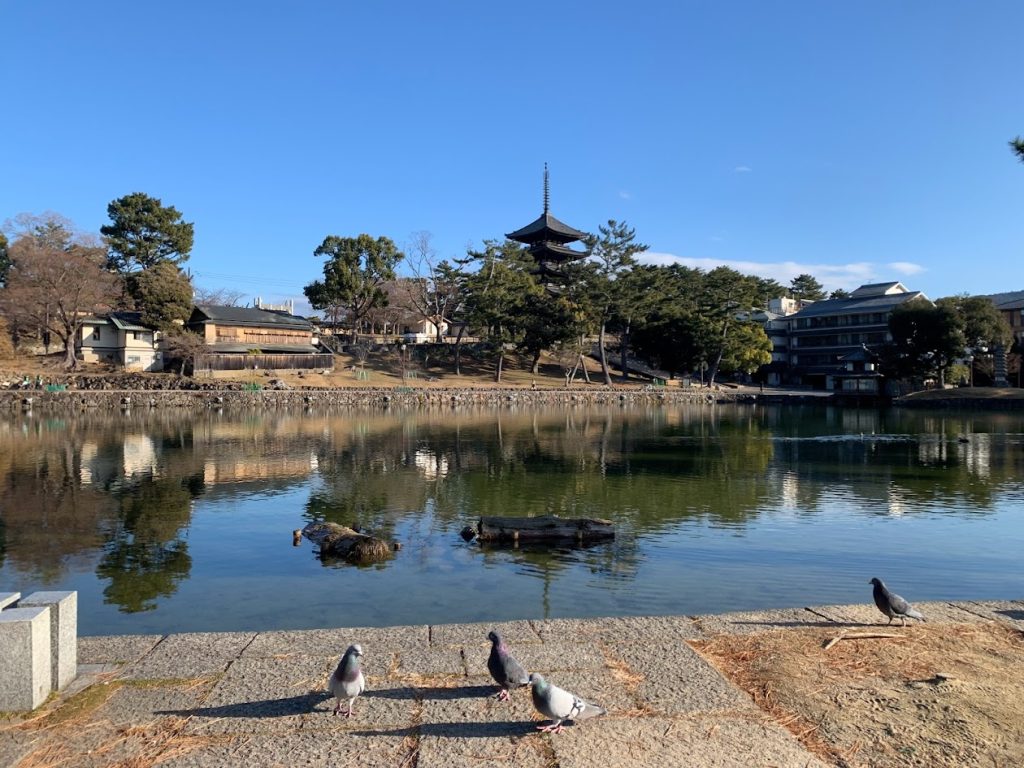
Sarusawa-ike Pond is located to the south of Kofuku-ji Temple. It offers the perfect spot to admire the temple’s five-story pagoda.
This photo was taken in winter.
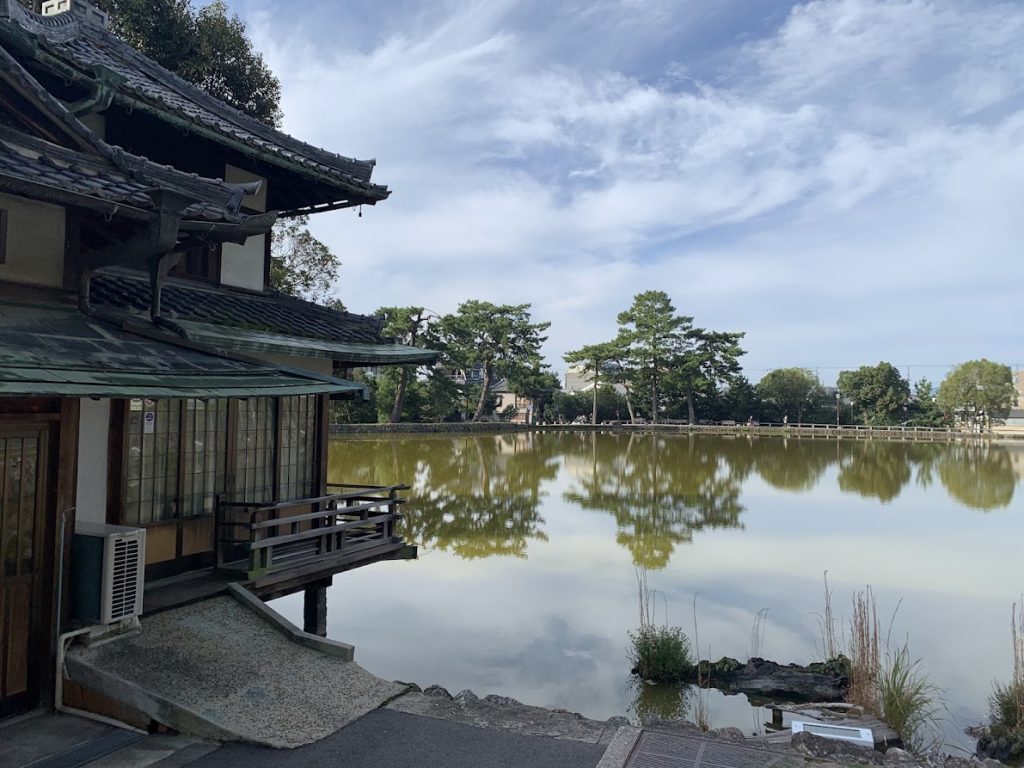
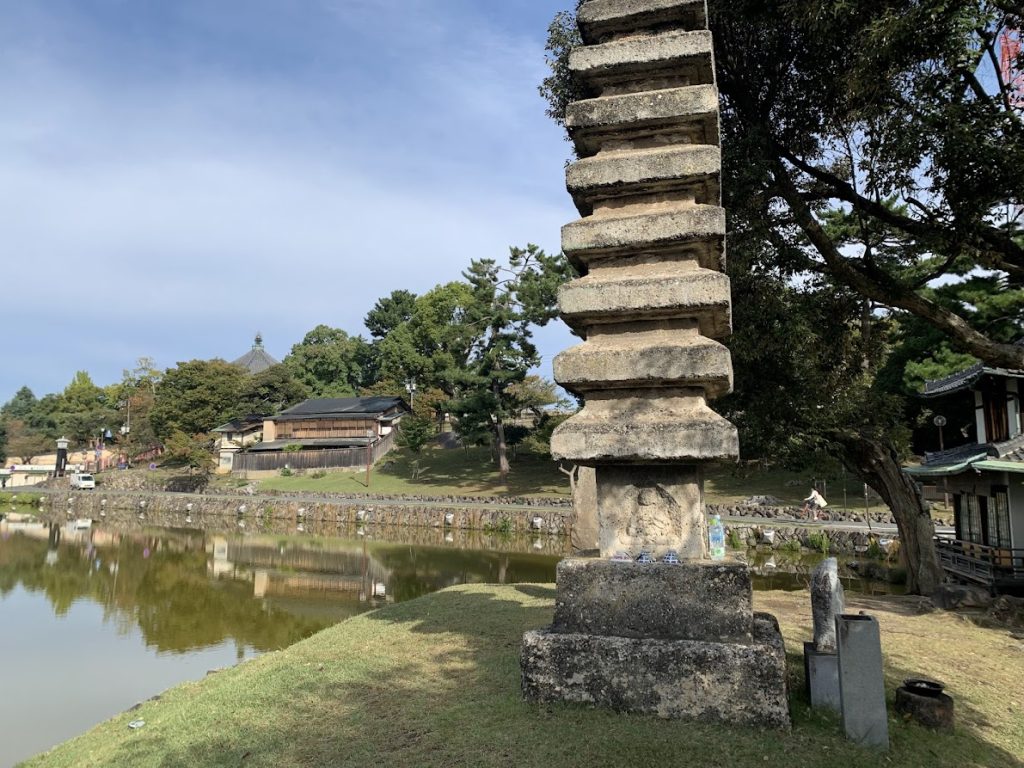
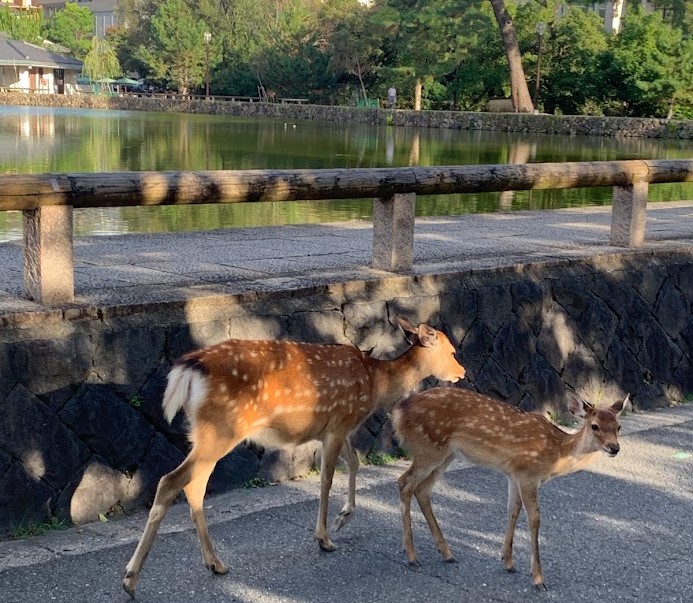
A mother deer and her fawn are walking beside Sarusawa-ike Pond.
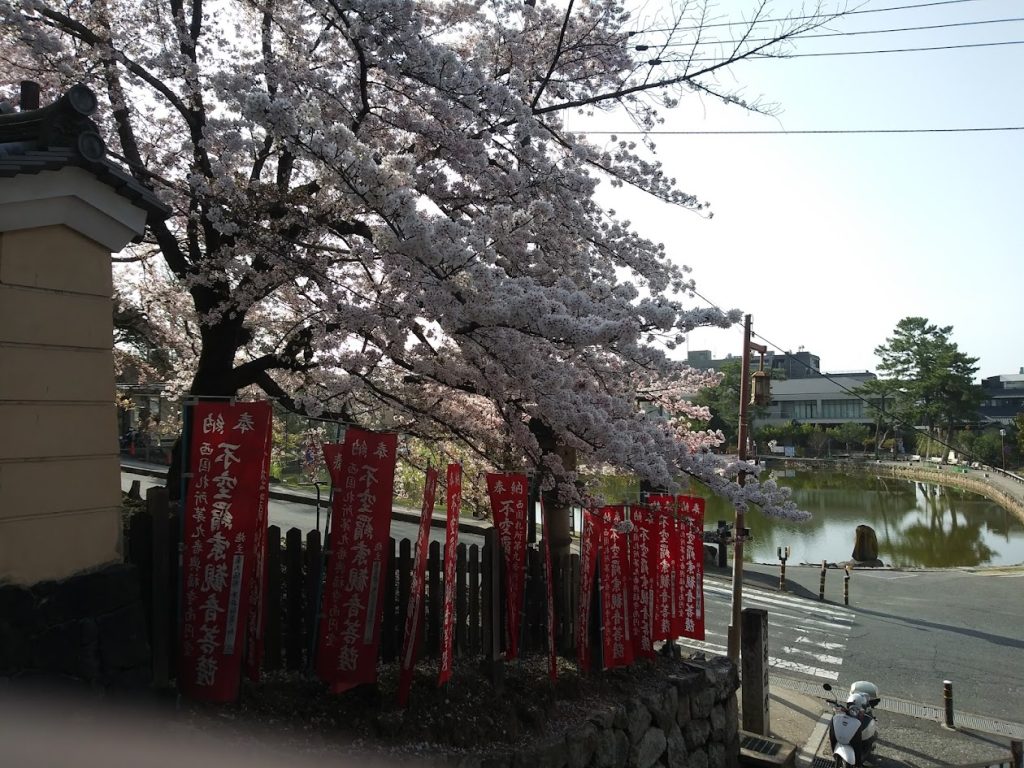
Looking at Sarusawa-ike Pond from the stairs leading to the South Octagonal Hall of Kofuku-ji Temple.
Ukimido Pavilion
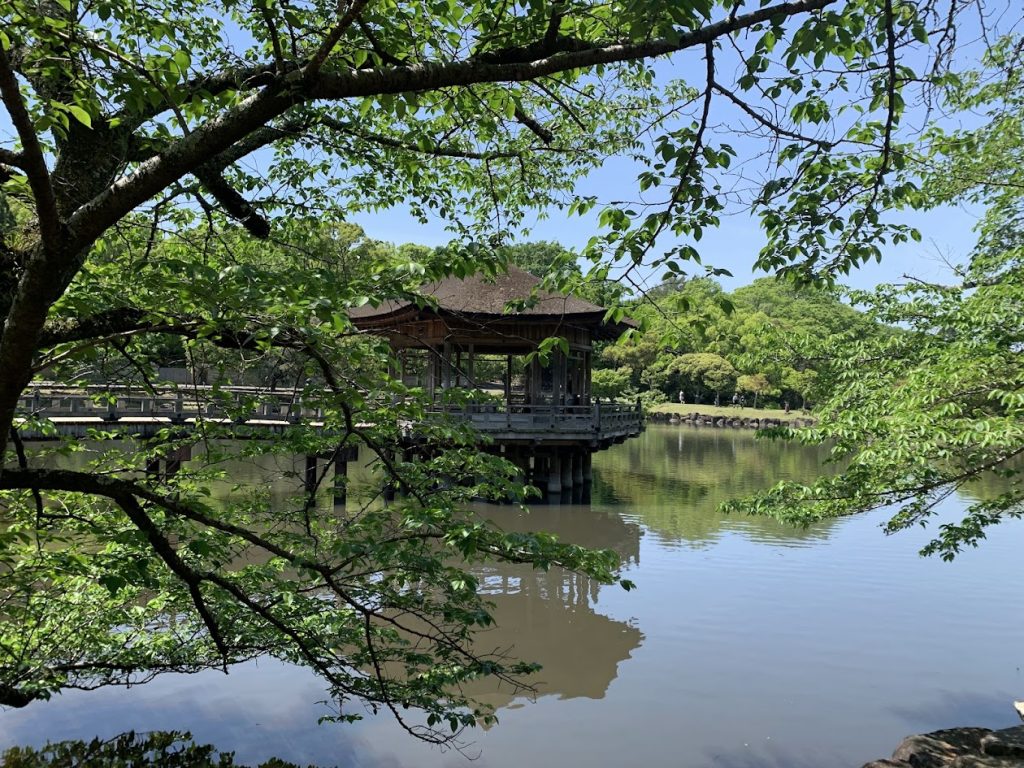
The Ukimido Pavilion is located on the southern side of the approach to Kasuga Taisha Shrine.
Boats float on the pond, allowing visitors to enjoy the beautiful scenery from the pond as well.
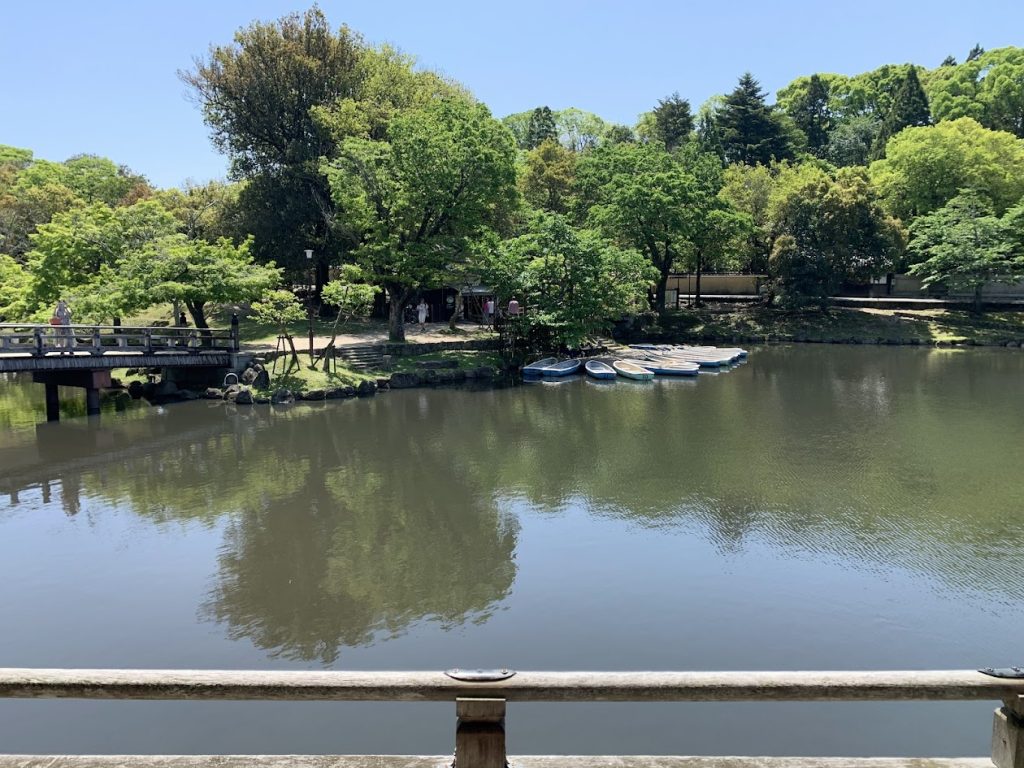
Boats float on the pond.
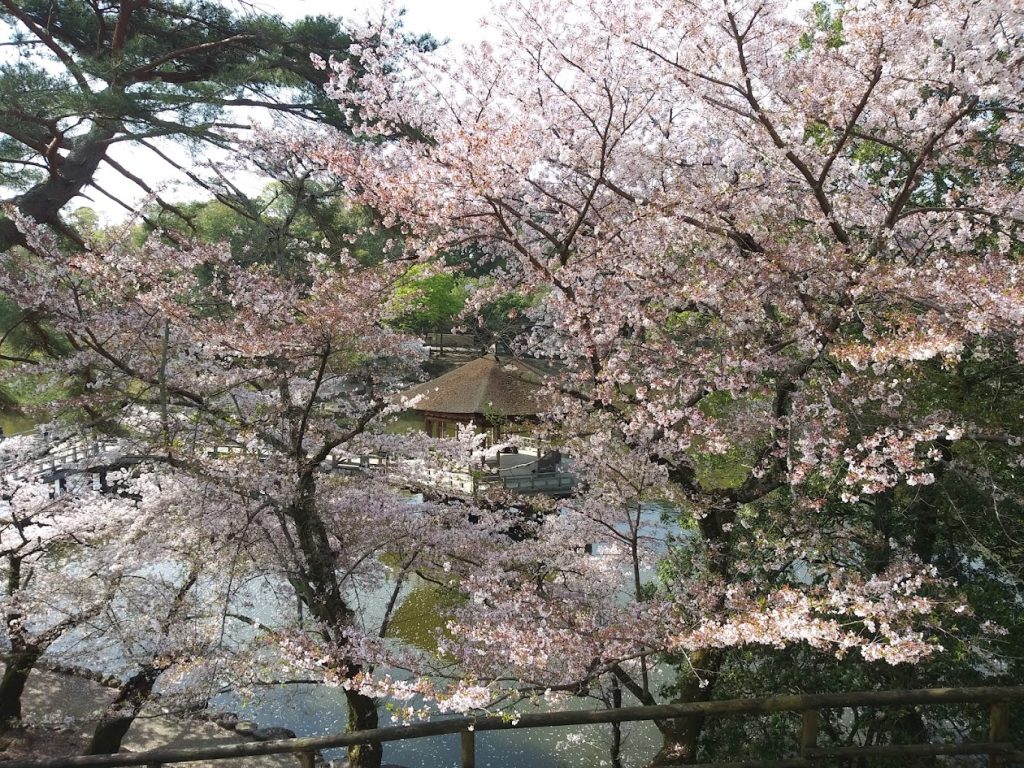
The cherry blossom season is also magnificent.
While Nara Park as a whole is famous for its cherry blossoms, the area around the Ukimido Pavilion is particularly stunning.
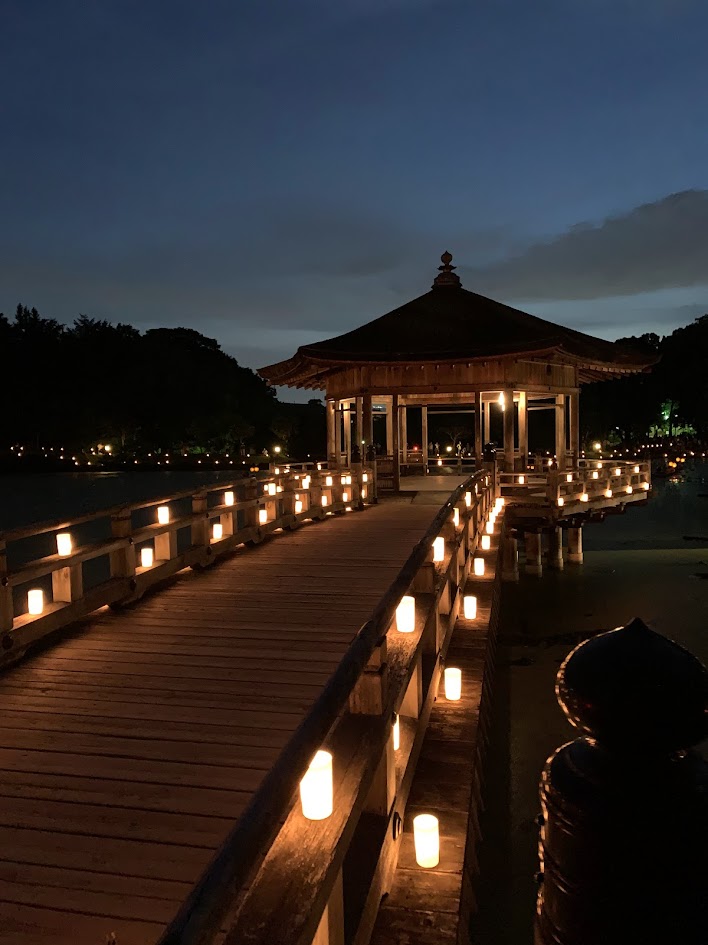
This is a scene from the Toka-e Festival in August. The Toka-e is held annually throughout Nara Park from early August until August 14th.
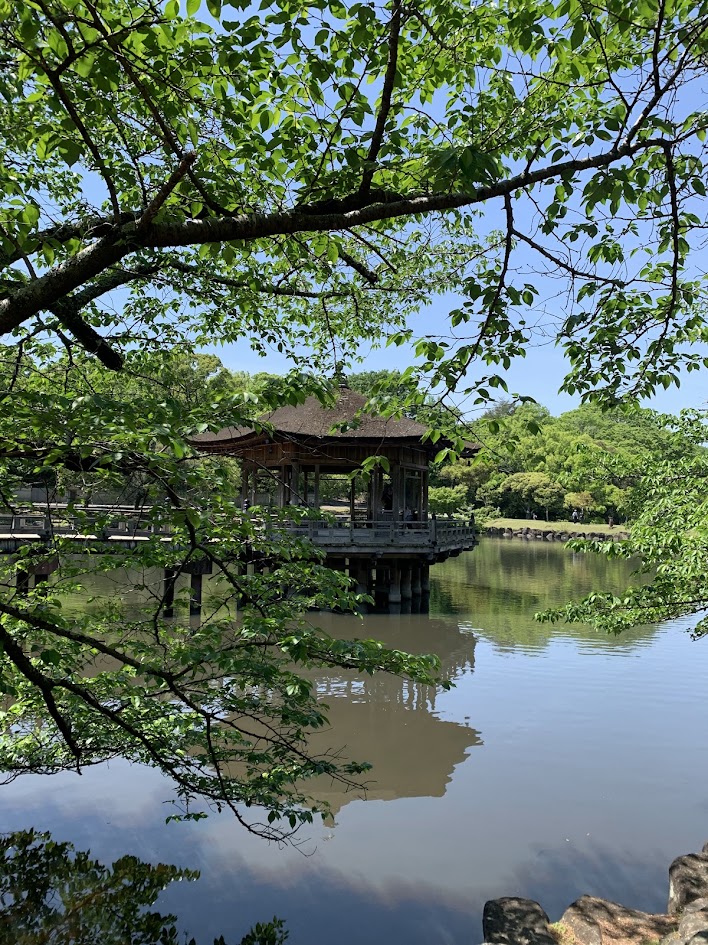
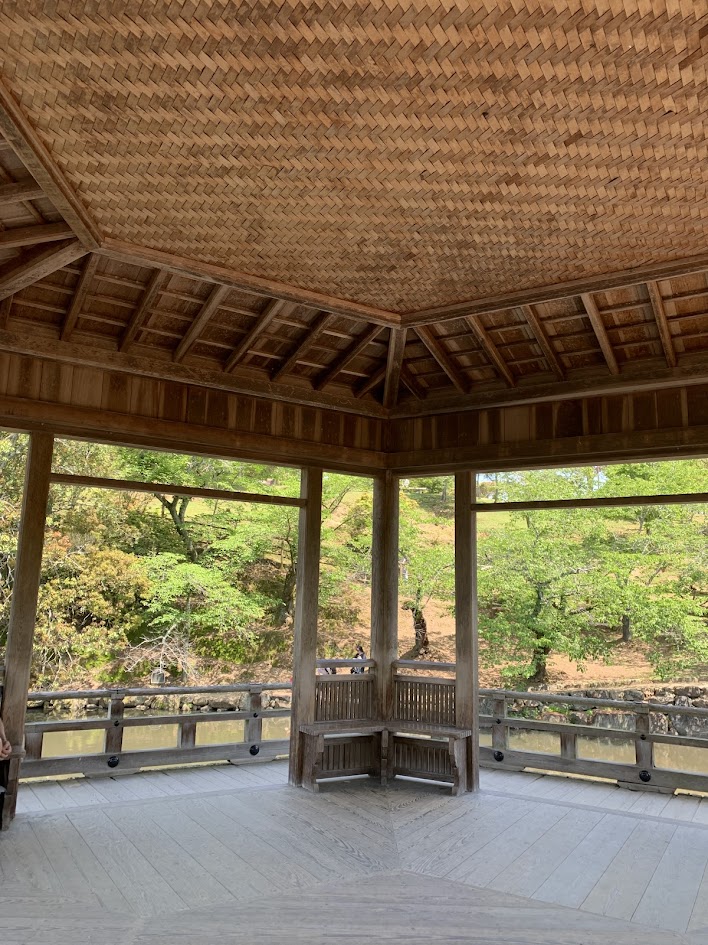
You can sit and rest inside the Ukimido Pavilion.
Tobihino
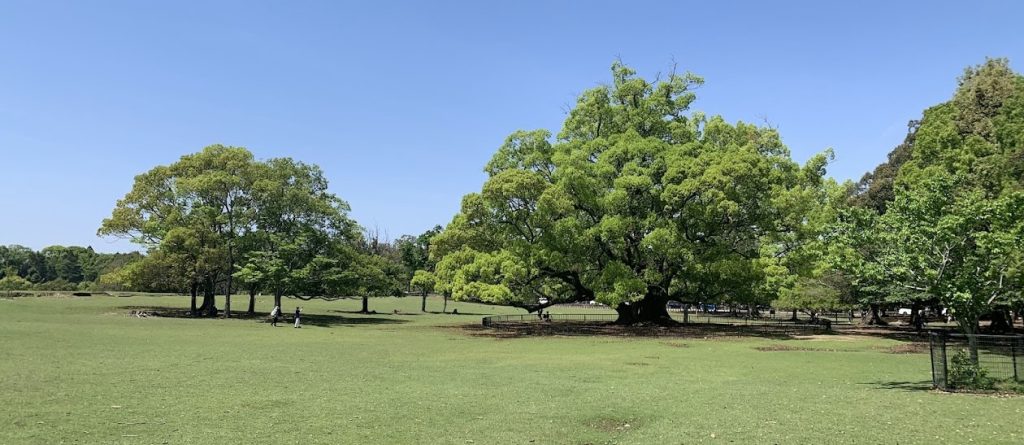
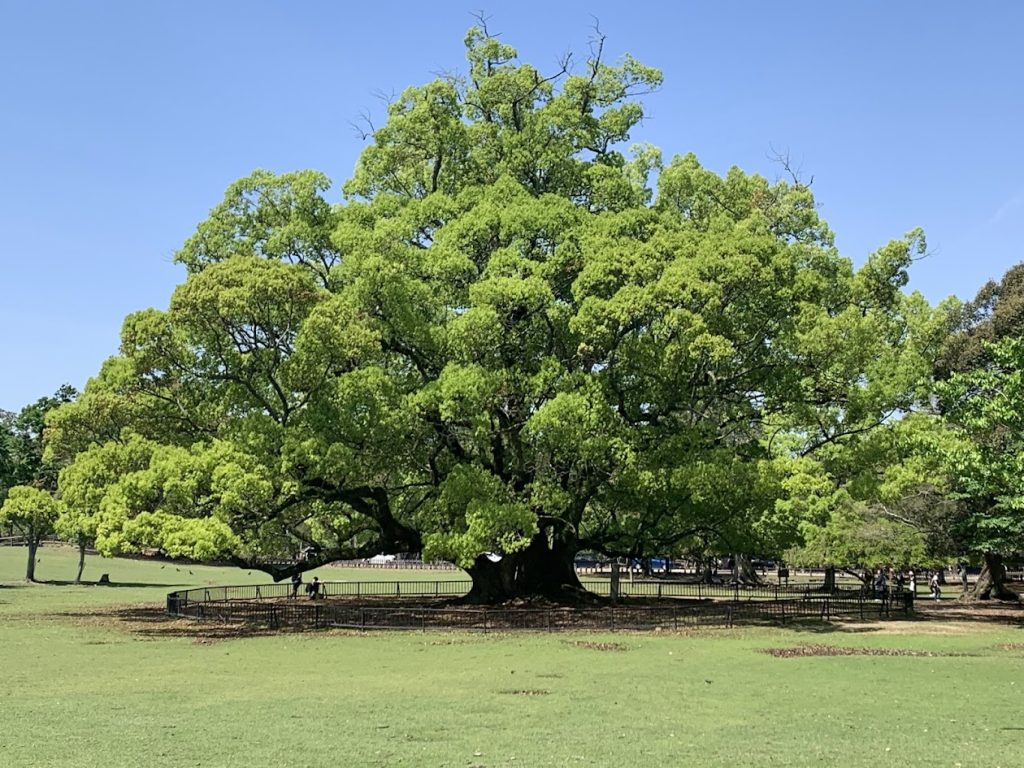
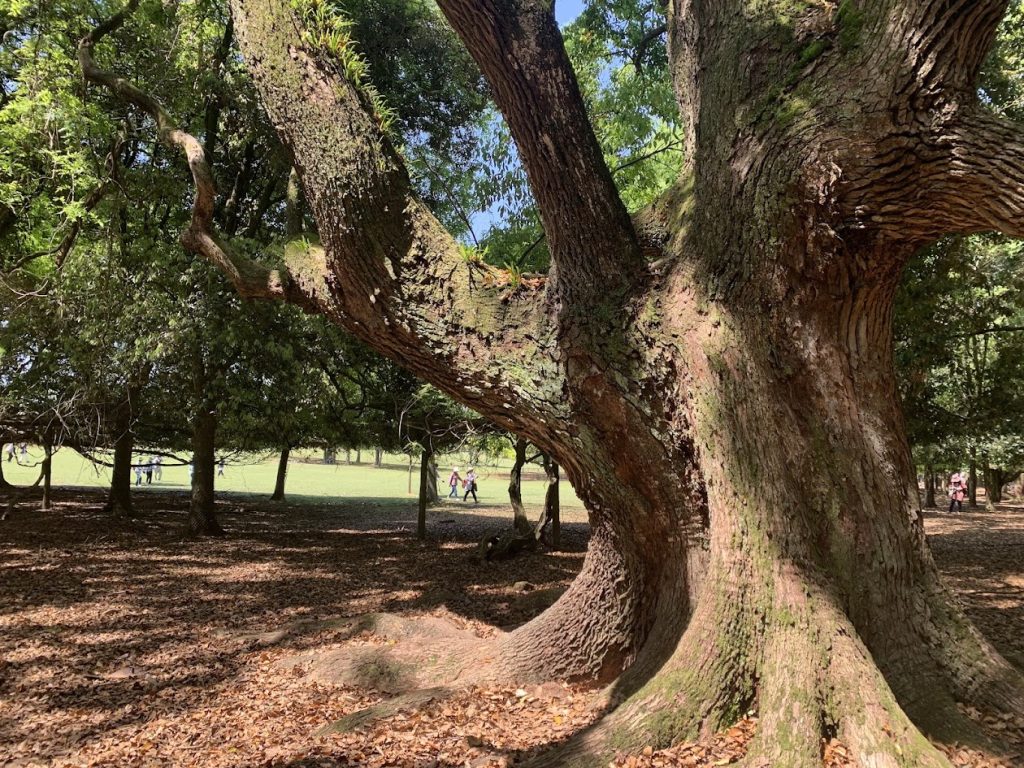
There are also several large trees in Tobihino.
This beautiful parkland lies on the southern side of the path to Kasuga Taisha Shrine and to the east of Ukimido Pavilion.
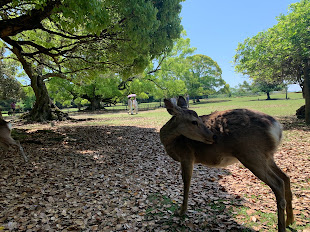
The deer help keep the grass neatly trimmed, and not just the grass—they also eat the leaves of trees up to two meters high.
If you feel that “Nara Park has such clear, open views,” you can thank the deer for that.
Himuro Shrine
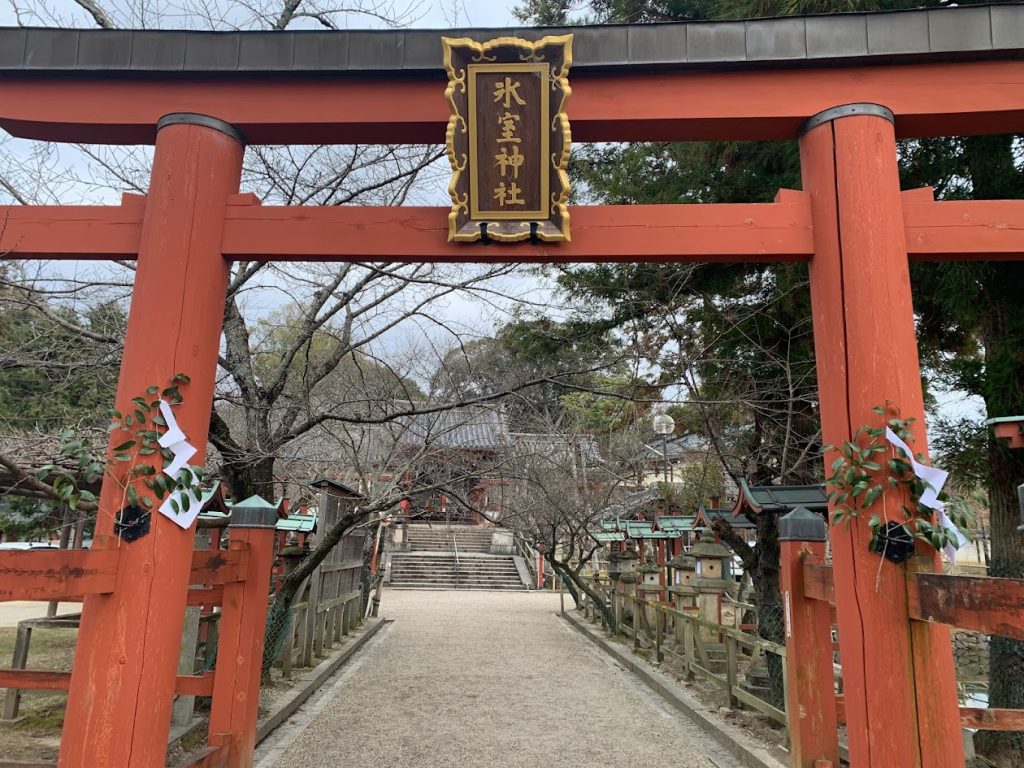
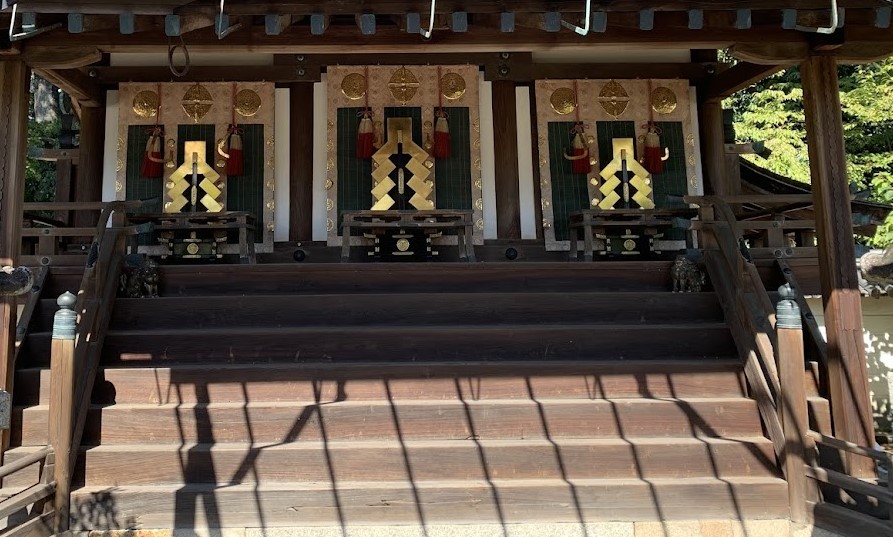
Himuro Shrine is located just before the approach to Todaiji Temple.
The term “himuro” refers to a storage room for ice, used to preserve winter ice until summer.
In the hot summer months, this ice was used to cool food for nobles.
Several remnants of these ice storage rooms can still be found in the mountainous eastern part of Tenri City, located south of Nara City.
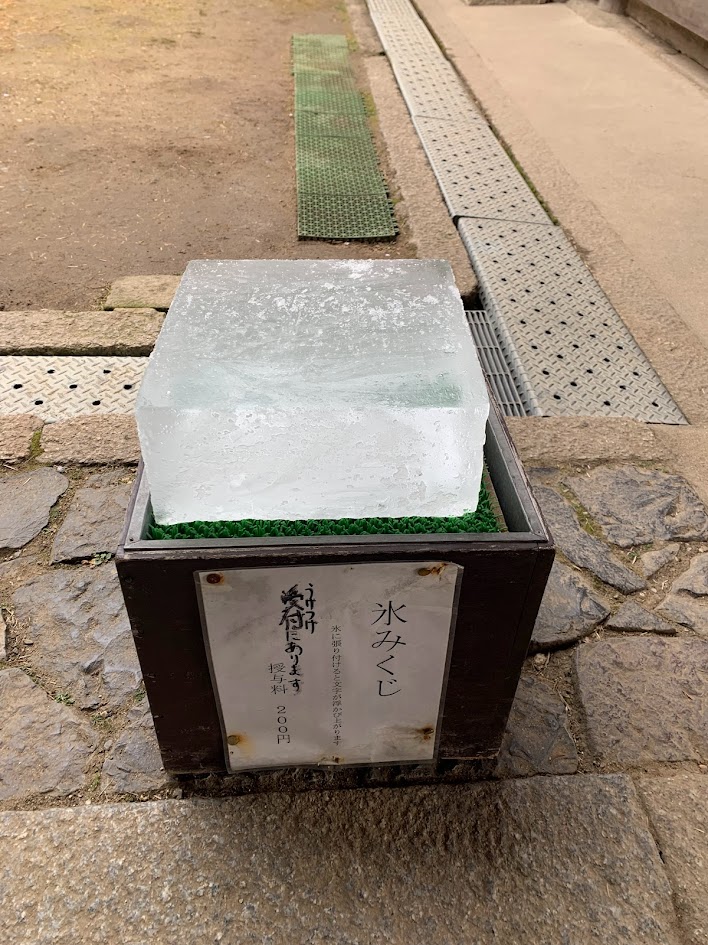
At Himuro Shrine, you can experience the unique ‘ice omikuji’.
After receiving an omikuji (fortune slip), you place it on a block of ice, and the characters gradually emerge.
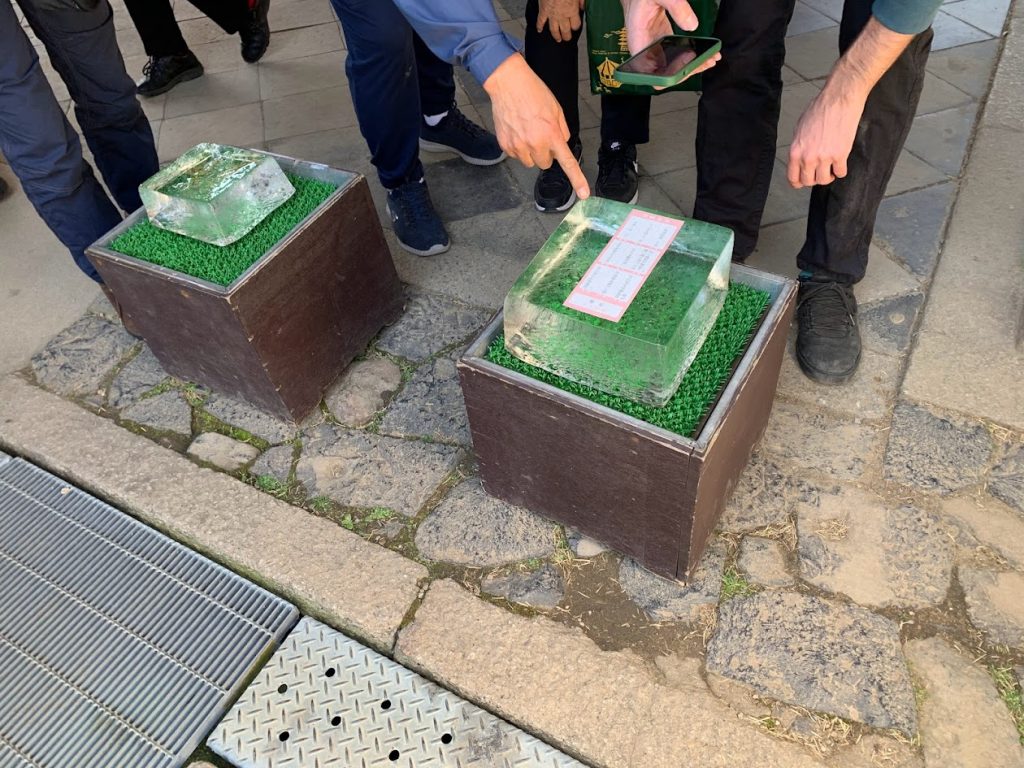
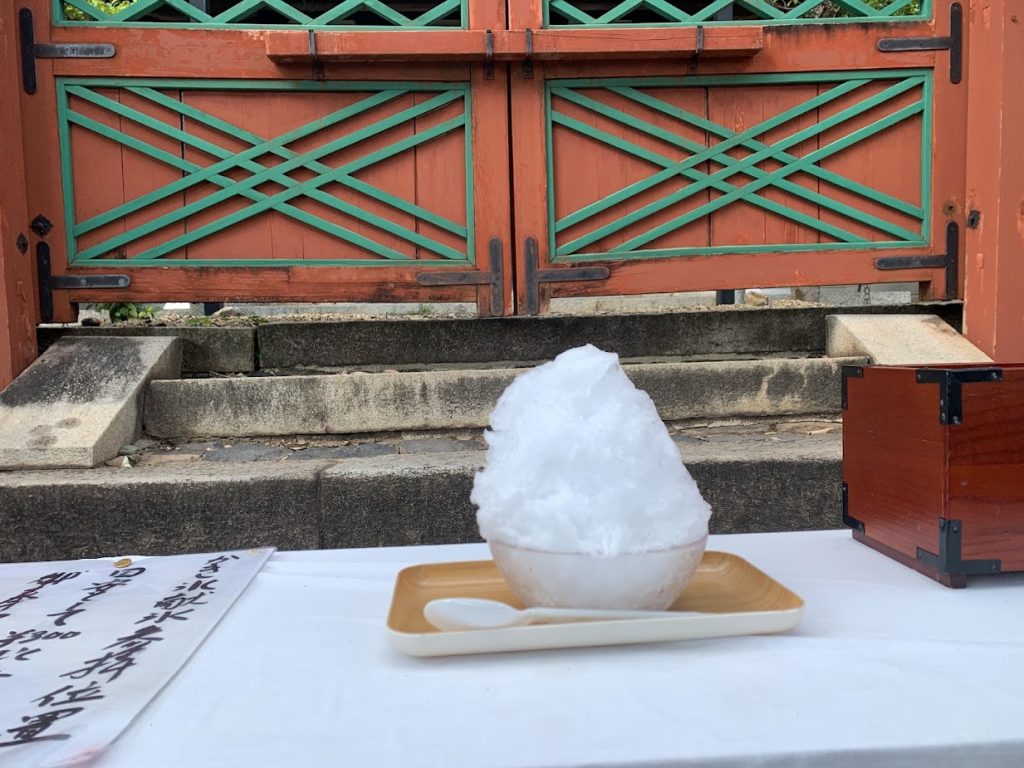
Offering Shaved Ice
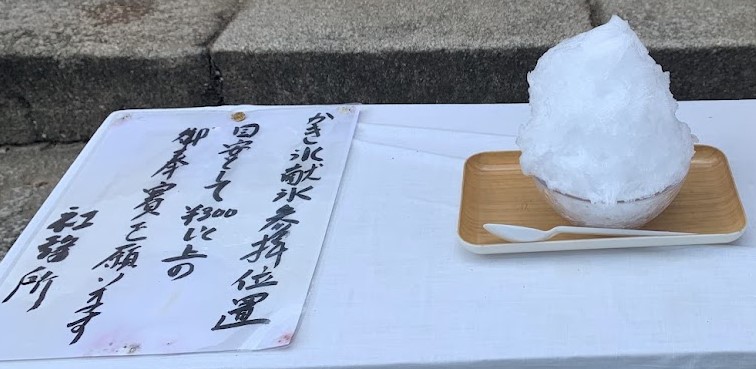
At the shrine office, you can request to offer shaved ice. They will prepare it for you, and you can humbly present it as an offering to the deity. A donation of 300 yen or more is required when making the offering.
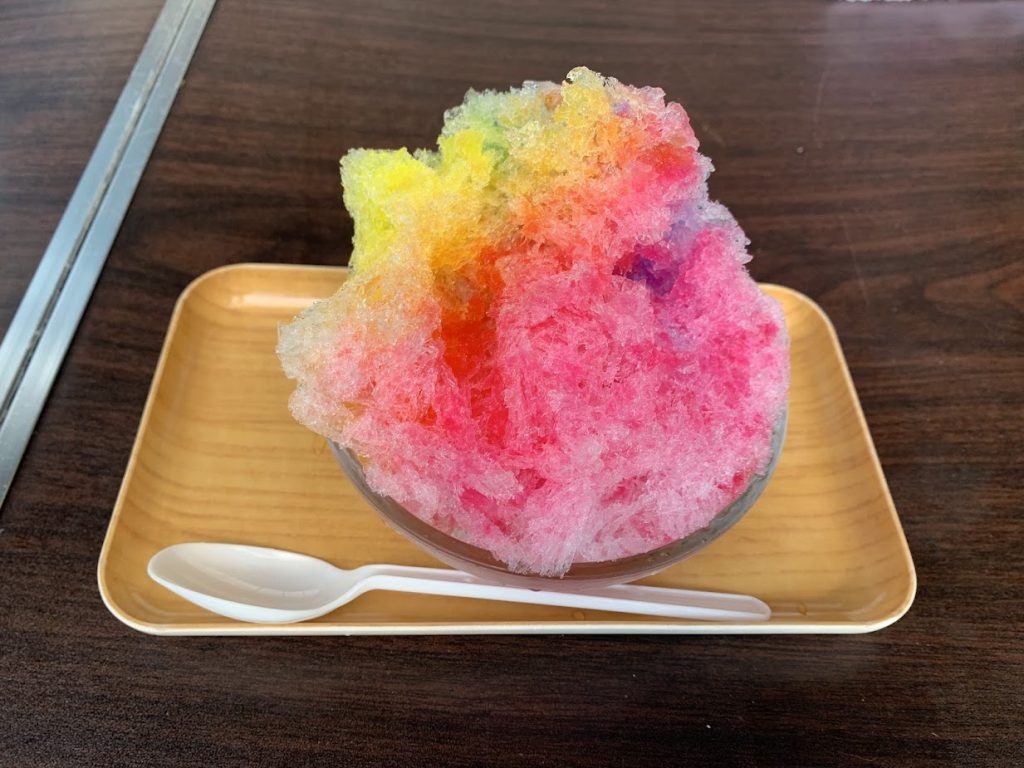
After the offering, you can sit on a bench next to the worship hall and enjoy the shaved ice. Feel free to add syrup as you like and make it colorful.
If you’re interested, try this special “Shaved Ice Offering Experience” unique to Himuro Shrine!
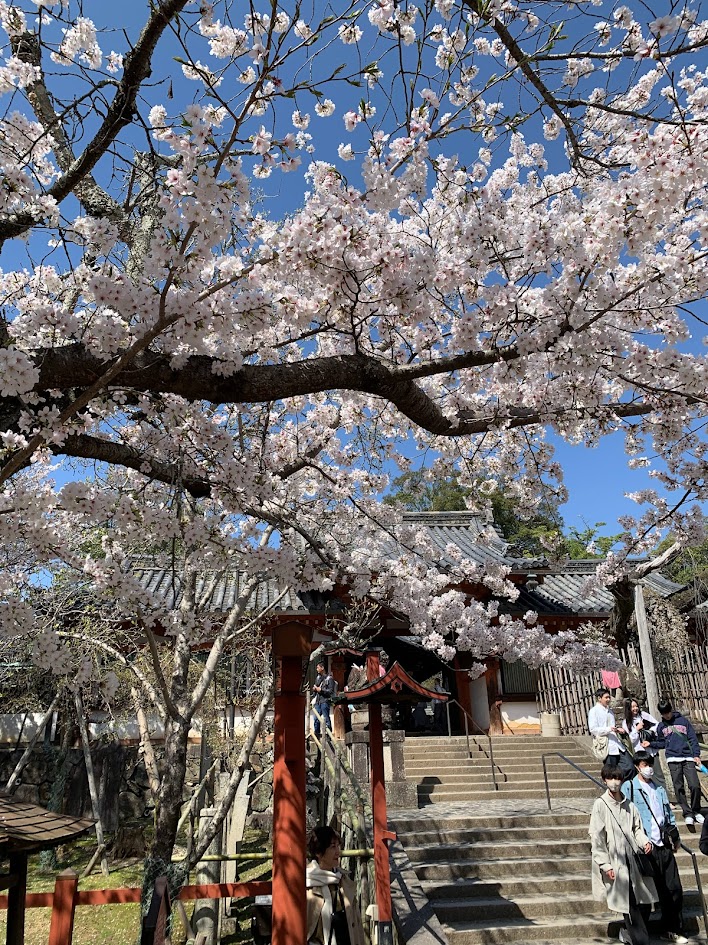
Himuro Shrine during the cherry blossom season.
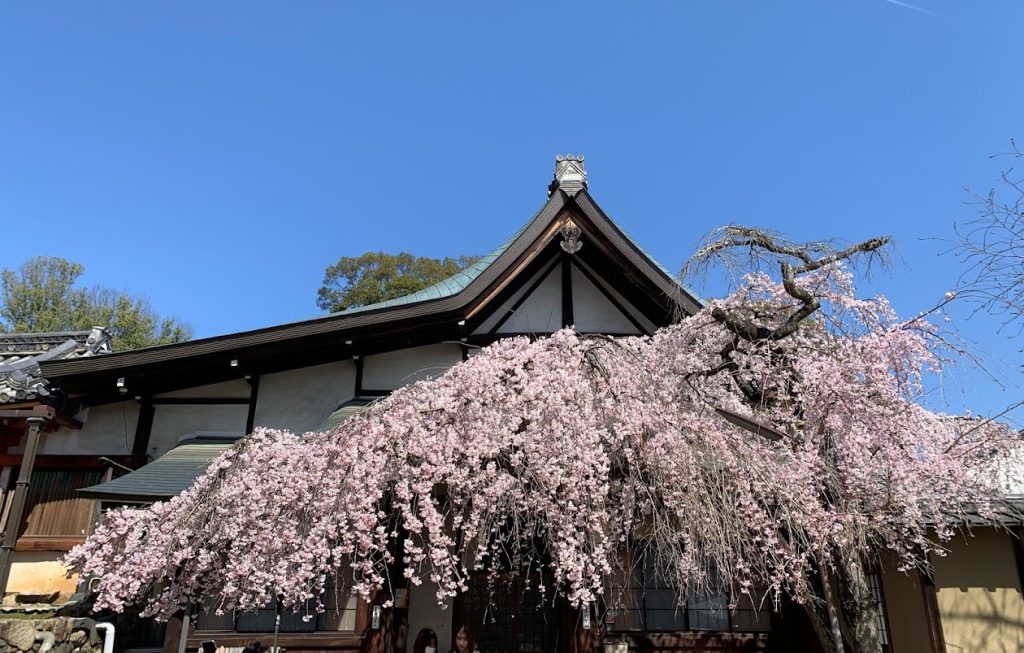
The weeping cherry blossoms at Himuro Shrine bloom ahead of the cherry blossoms reaching full bloom in Nara Park.
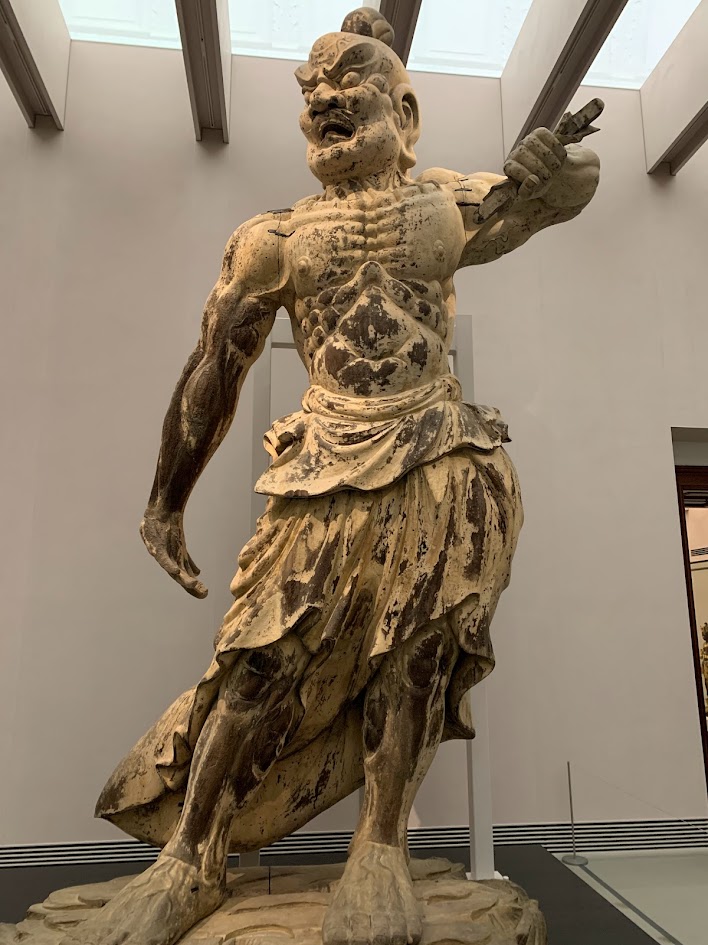
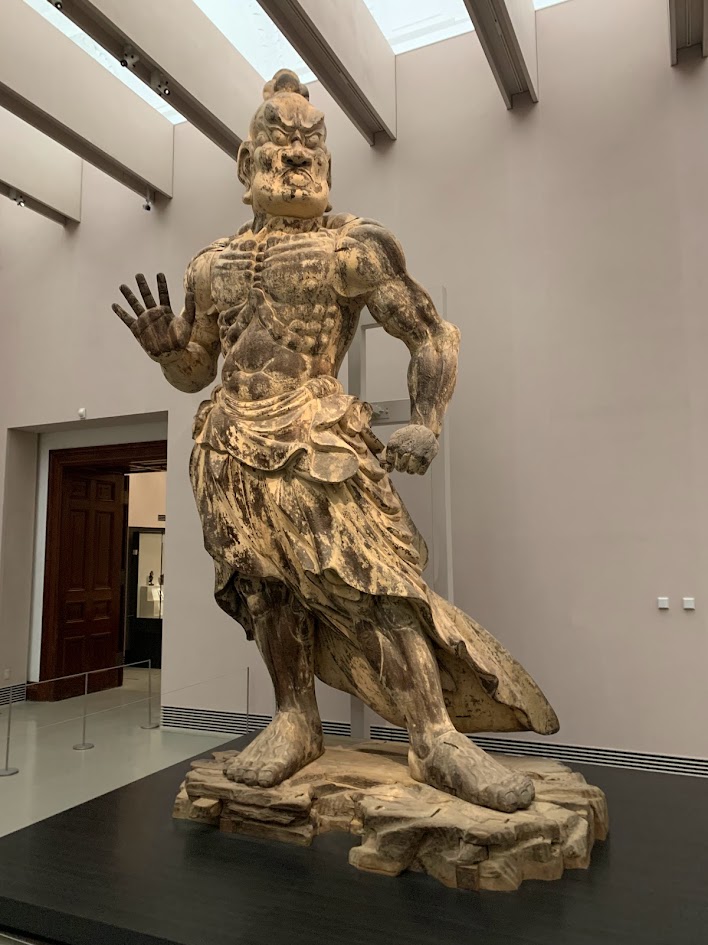
Nara National Museum
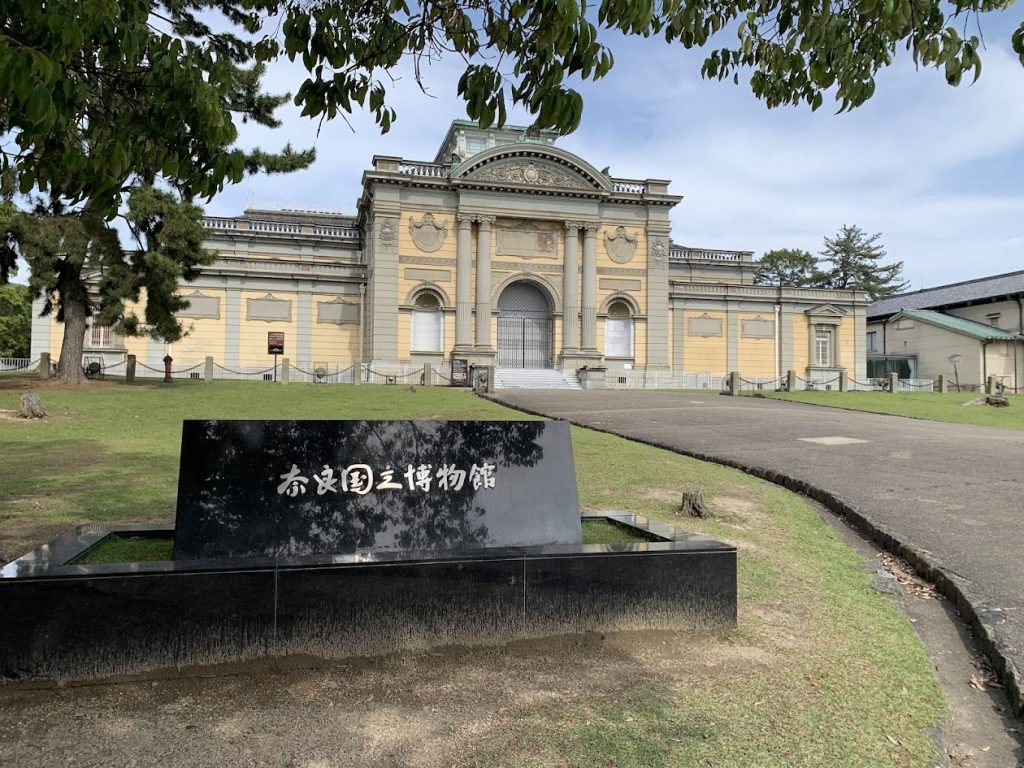
It is located near the entrance to the approach of Todai-ji Temple.
Every year in the fall, the Shosoin Exhibition is held, attracting long lines of visitors.
There are four national museums in Japan: Tokyo, Kyoto, Nara, and Kyushu.
Wakakusa-yama Mountain
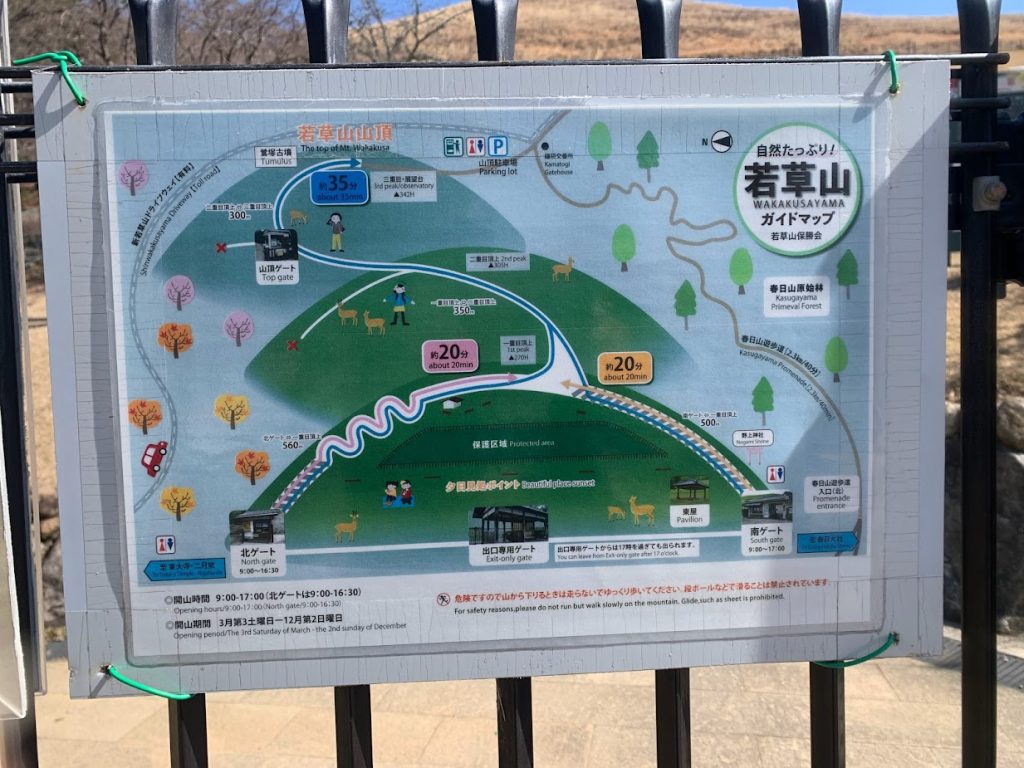
Every January, a hillside burning (yama-yaki) takes place, causing the mountain to turn a dark color for a while, but it turns into a beautiful green in spring.
The mountain has three levels: the first stage at an elevation of 270 meters, the second stage at 305 meters, and the third stage at 342 meters. It takes about 35 minutes to walk from the base gates to the summit of the third stage.
The entrance fee is 150 yen, and the mountain is closed during the winter months.
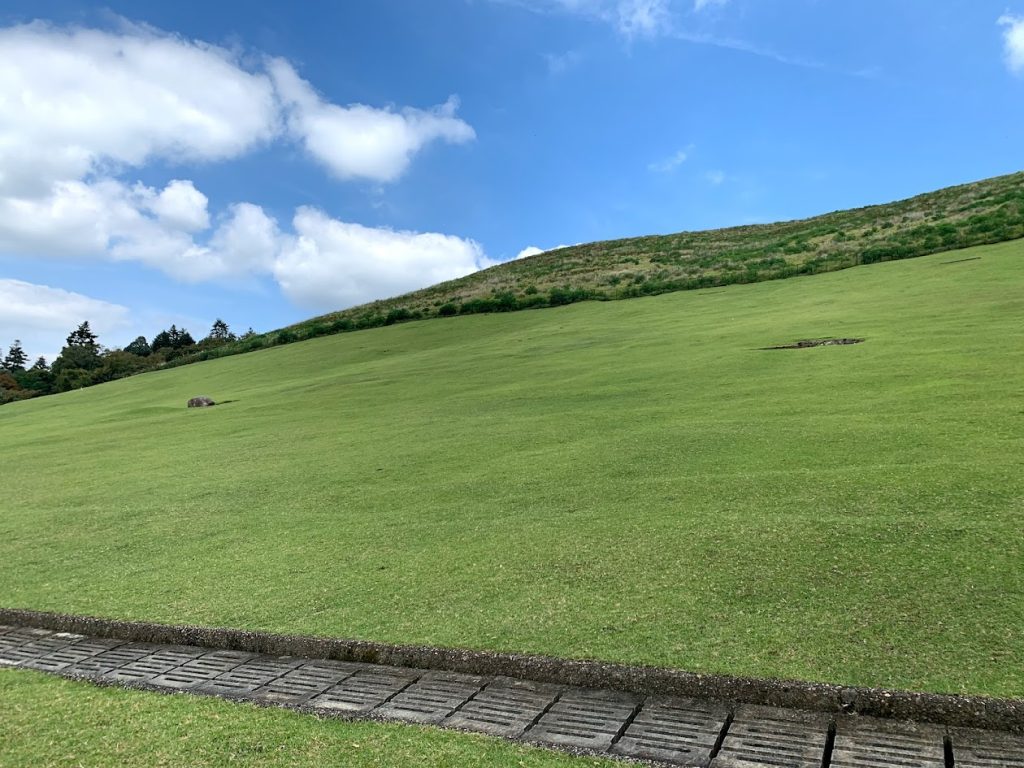
In spring, a beautiful expanse of green grass spreads across the mountain.
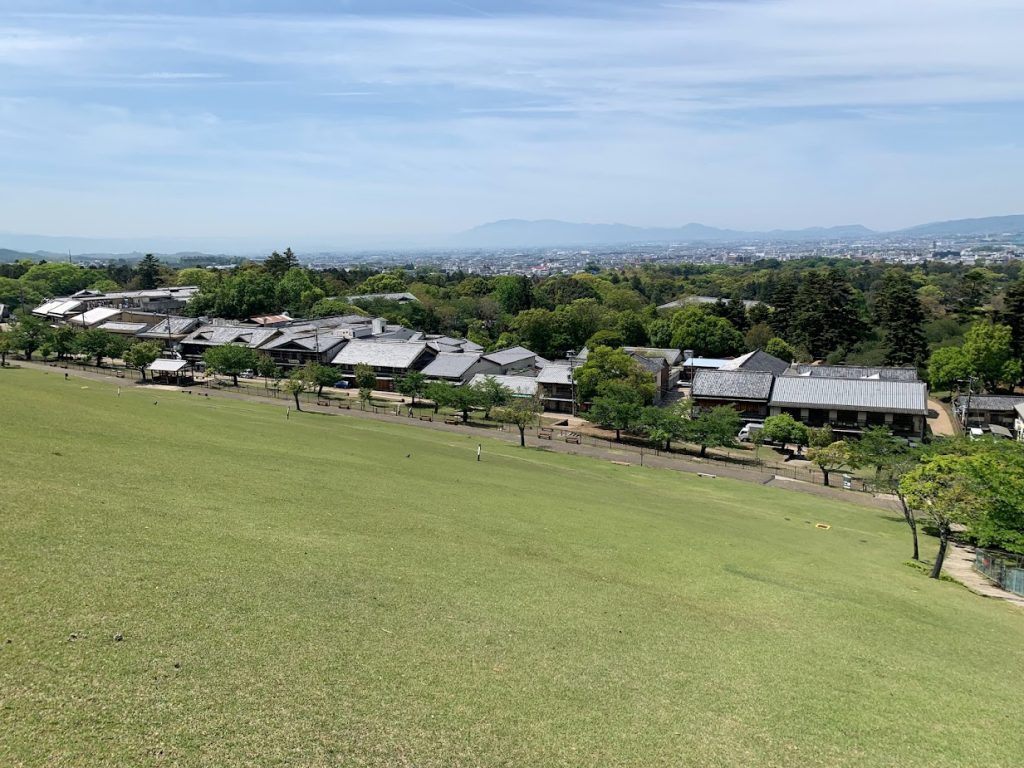
From the middle of the first stage, you can overlook Nara City.
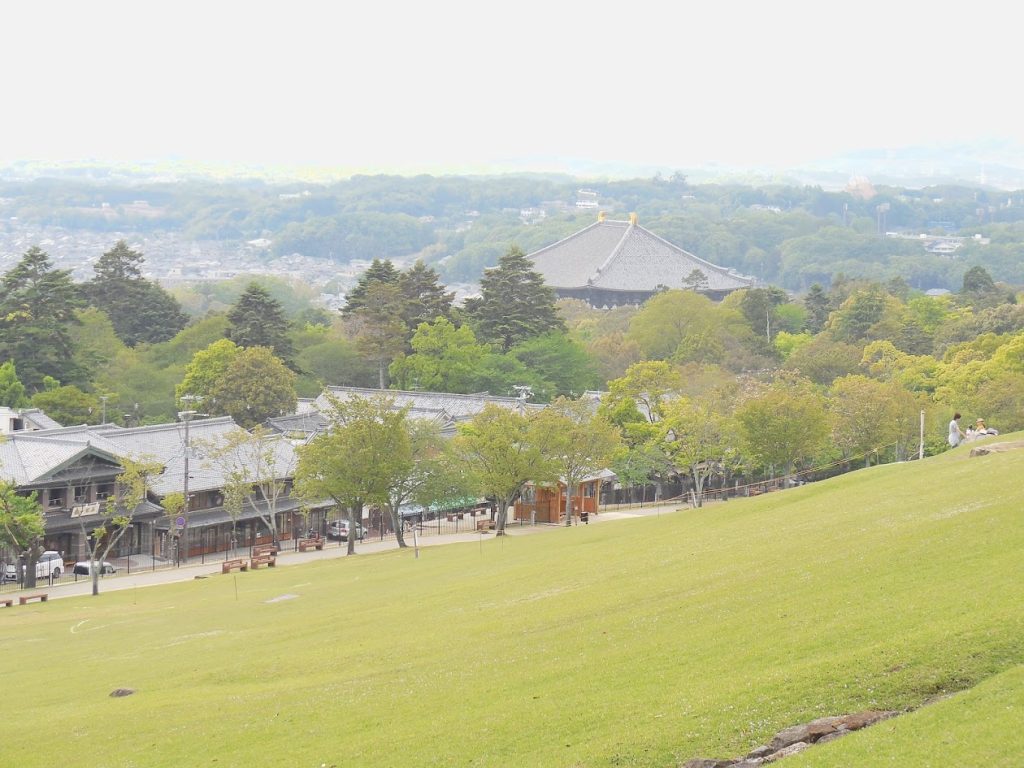
From the middle of the first stage, you can overlook the area towards the Todai-ji Daibutsuden Hall in the northwest direction.
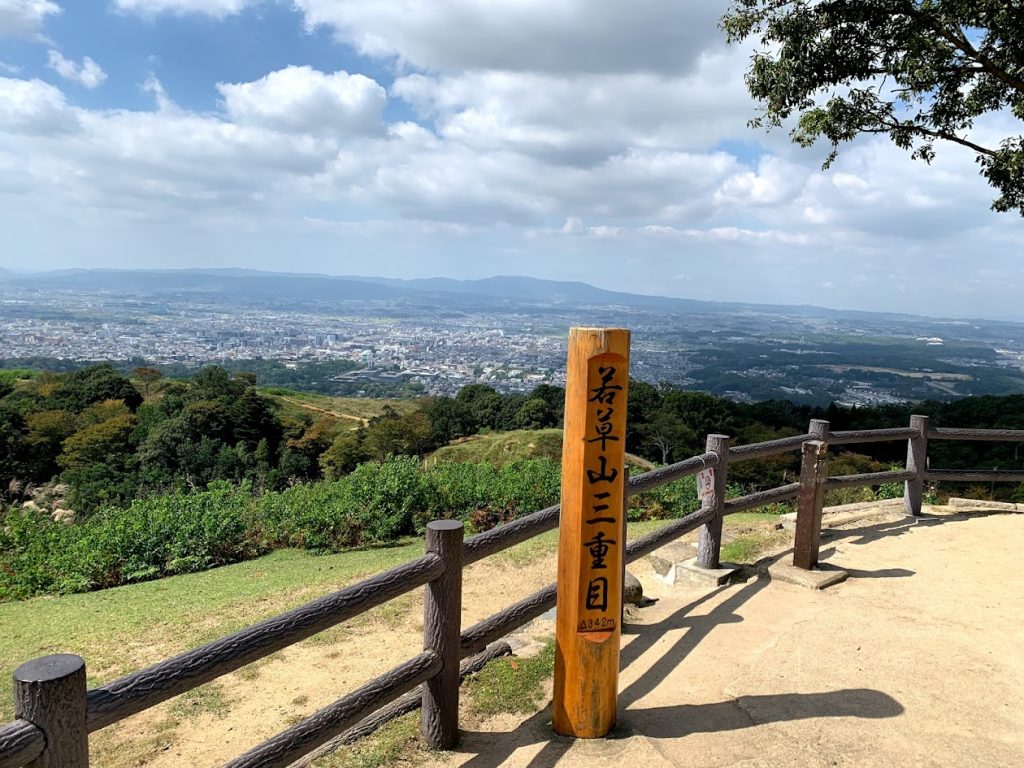
At the summit of the third stage, the night view is renowned and was selected as one of the “New Three Great Night Views of Japan” in 2003.
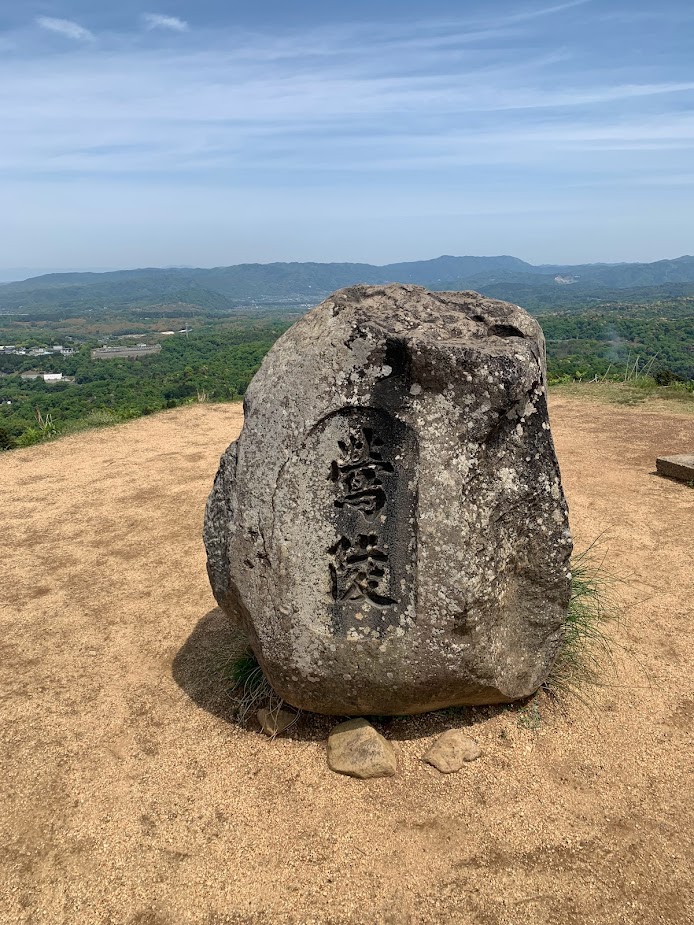
At the summit, there is the “Uguisuzuka,” a keyhole-shaped tomb mound.
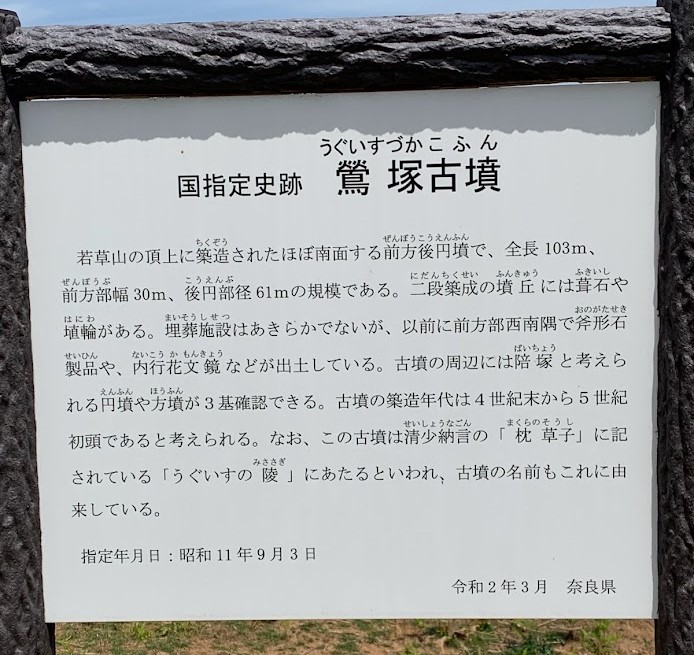
Uguisuzuka Kofun
Length: 103 meters
Keyhole-shaped tomb mound
Constructed: Late 4th century to early 5th century
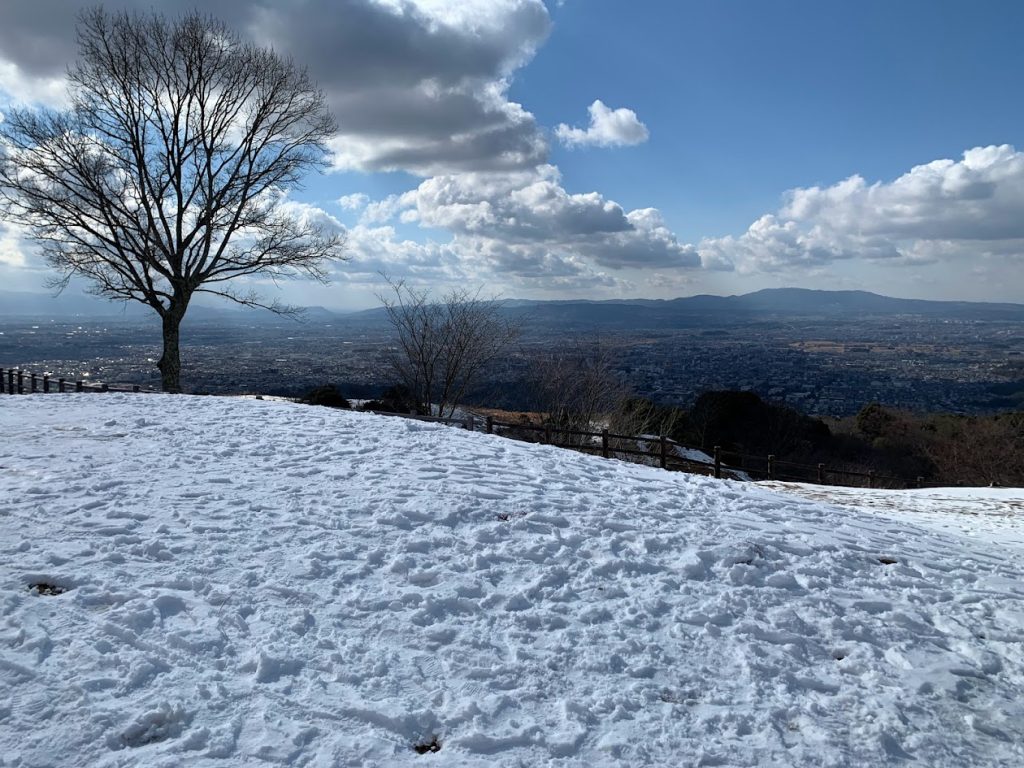
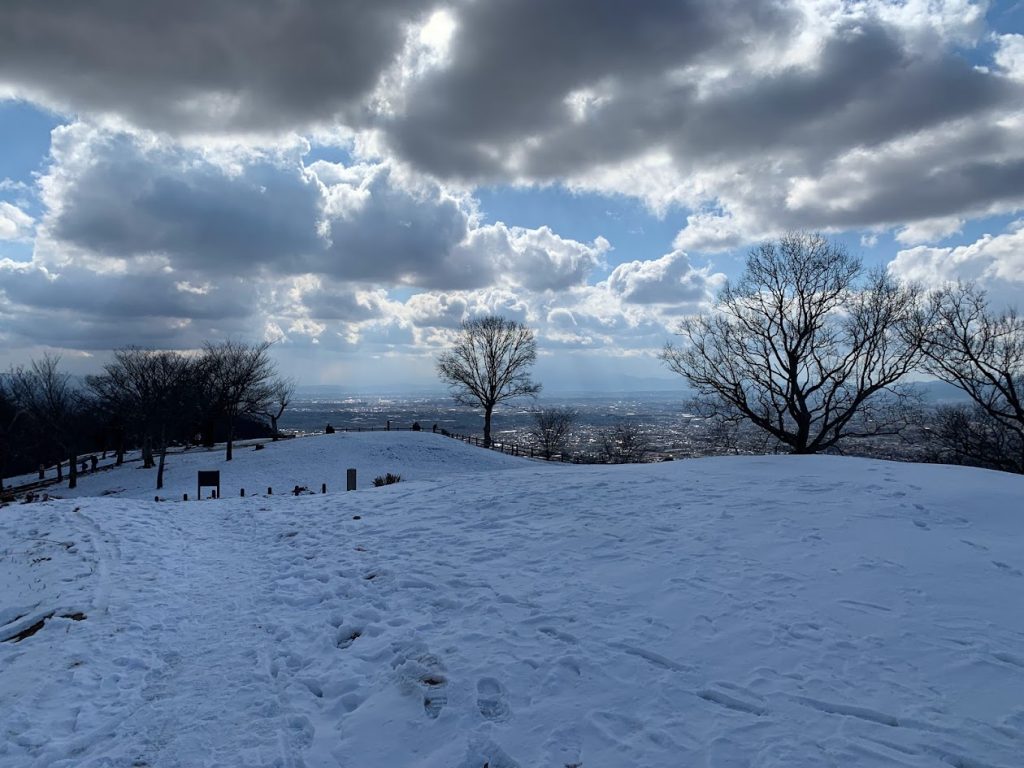
In winter, Wakakusa-yama Mountain is covered in snow.
The Nara Basin below is covered in snow only few times a year.
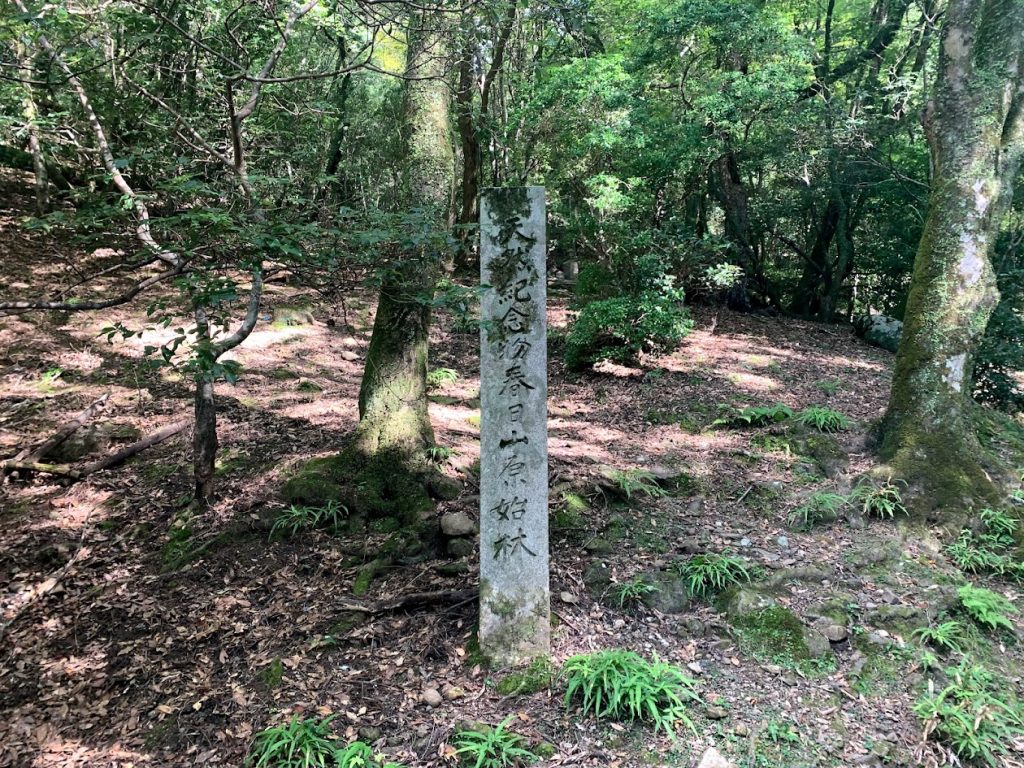
Kasuga-yama Primeval Forest
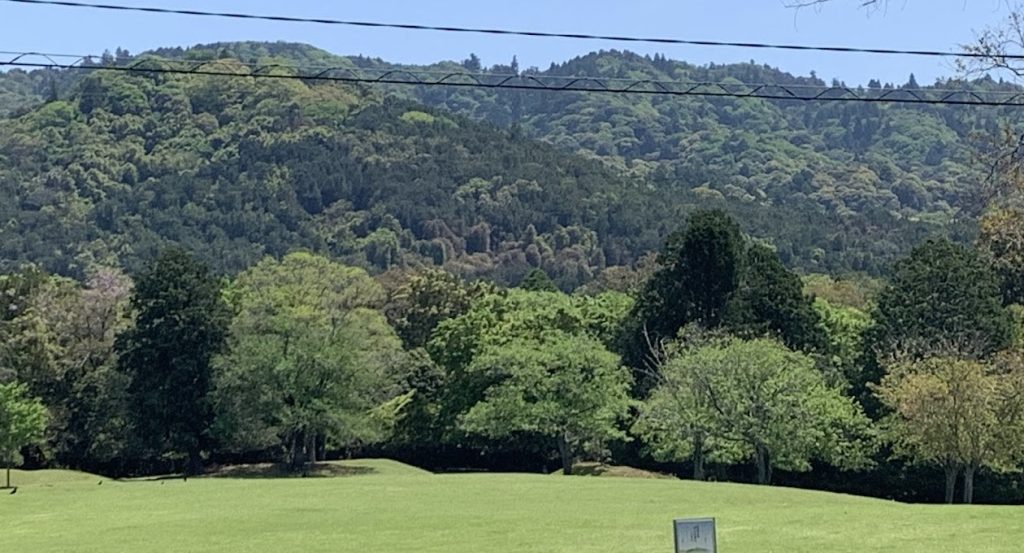
The Kasuga-yama Primeval Forest, viewed from Tobihino in Nara Park.
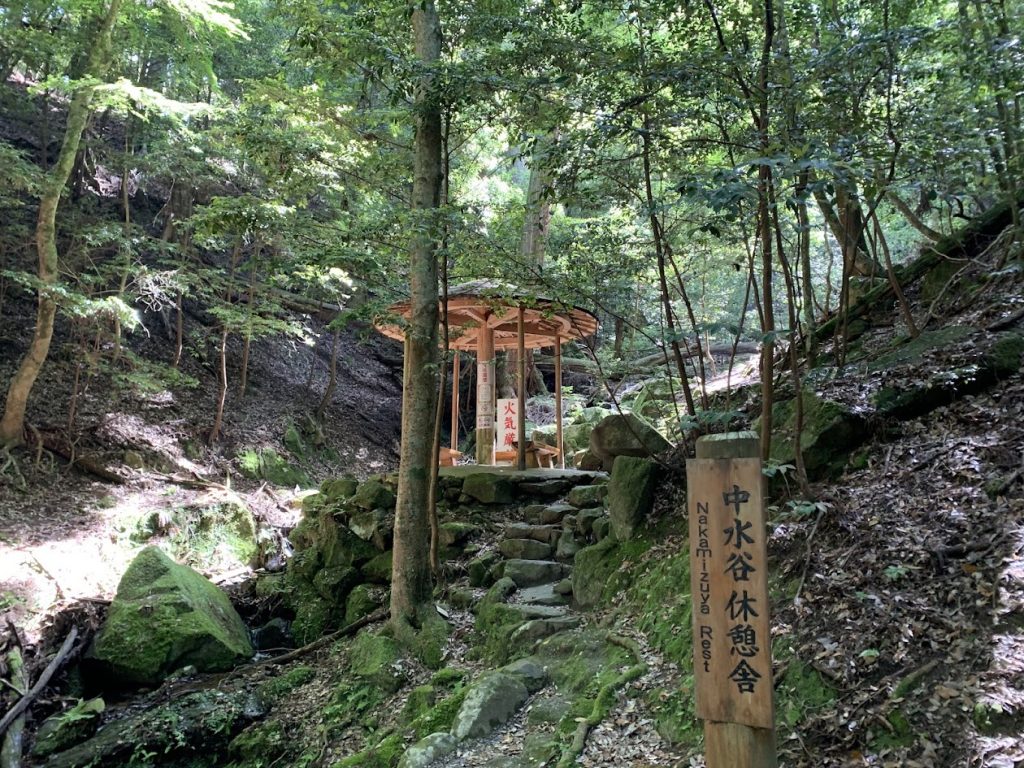
Naka-mizuya Rest Area
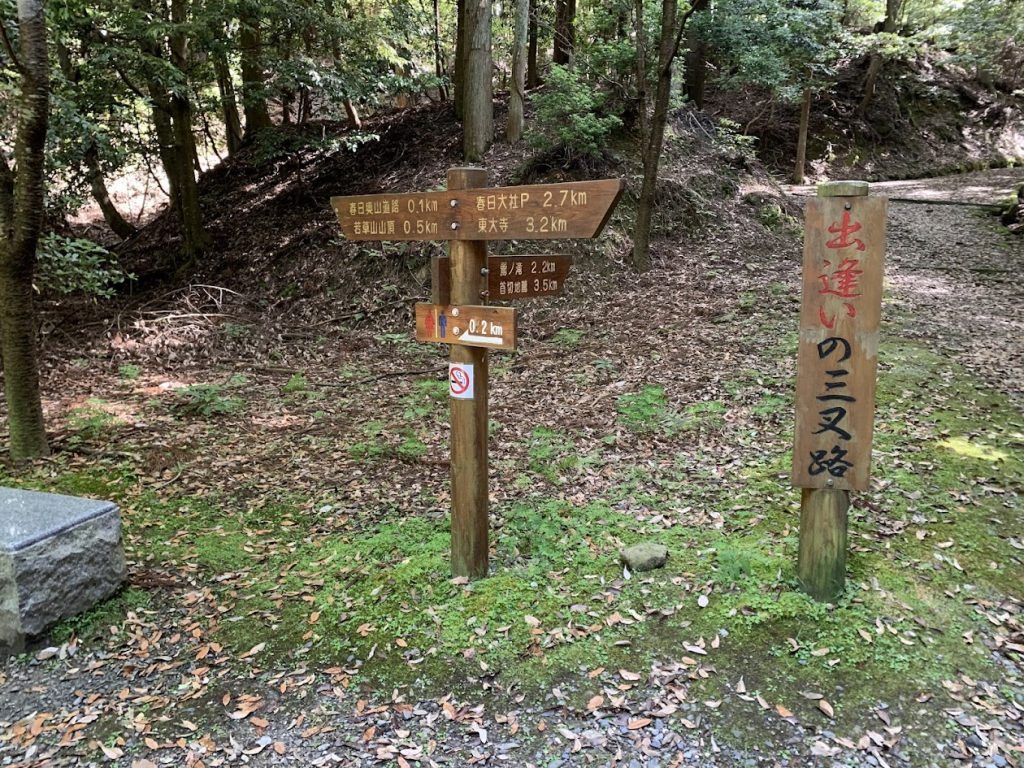
It is 500 meters to the summit.
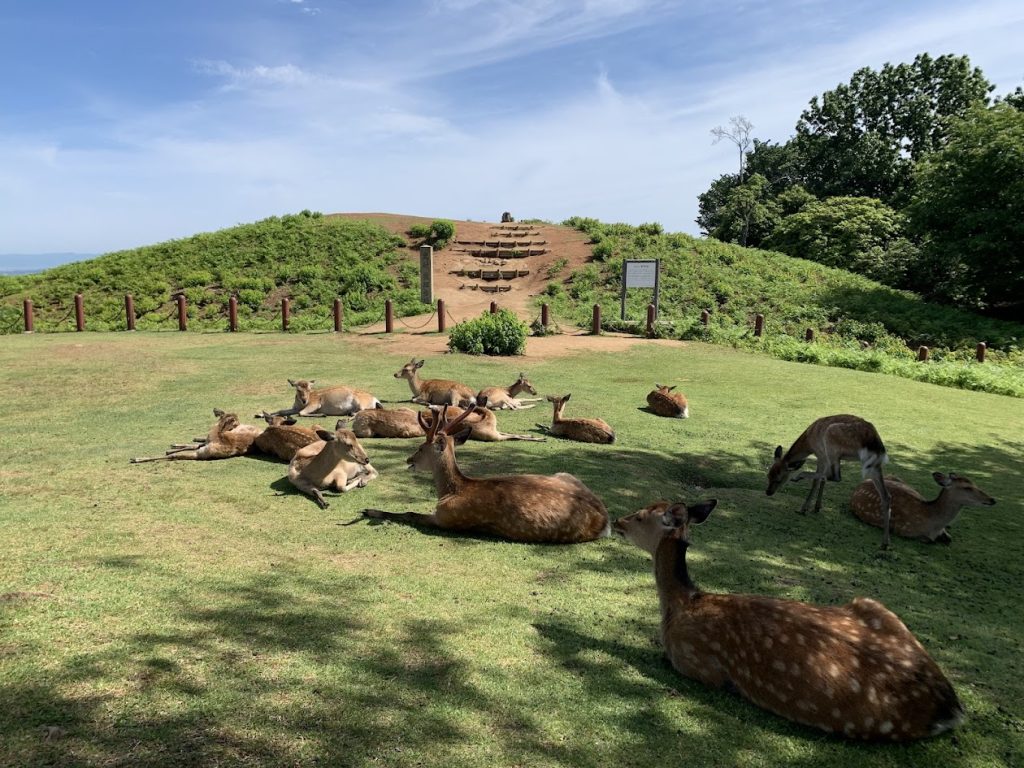
At the summit of Wakakusa-yama Mountain, I was greeted by many deer.
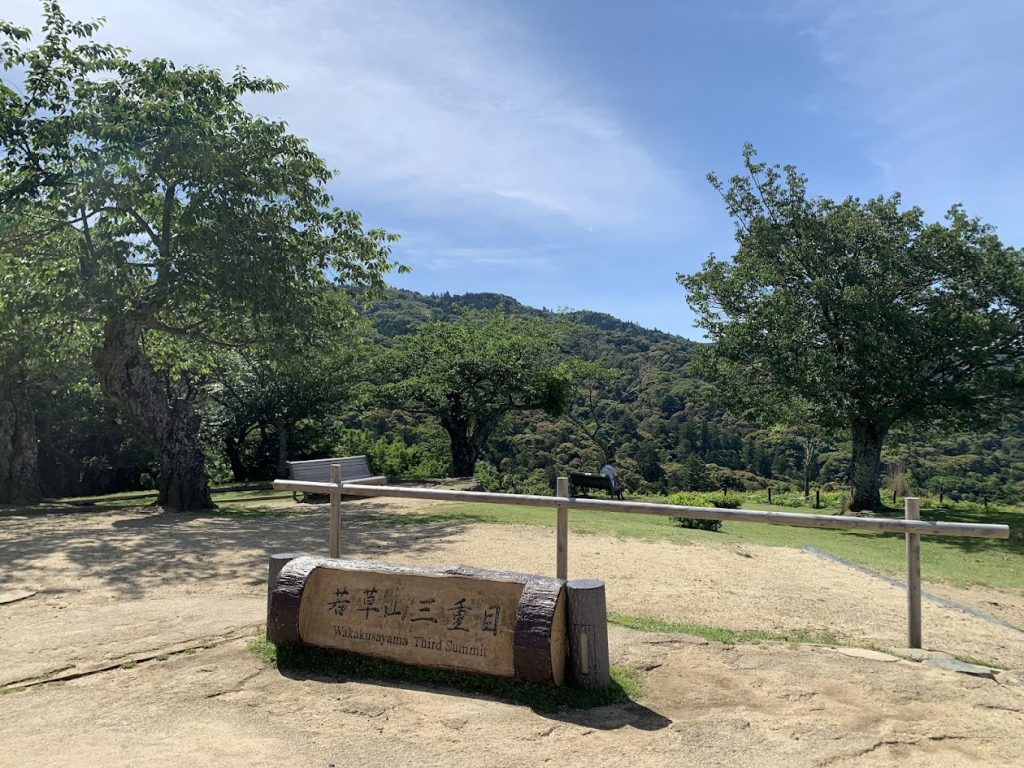
At the third stage of Wakakusa-yama Mountain, you can see the Kasuga-yama Primeval Forest in the distance.
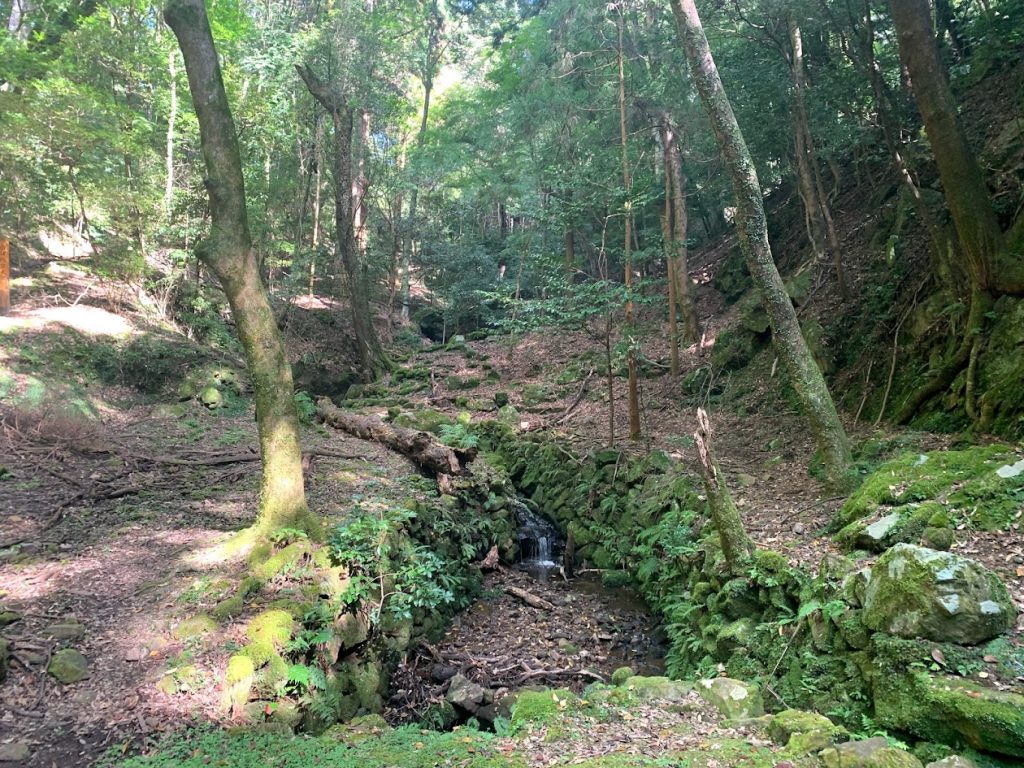
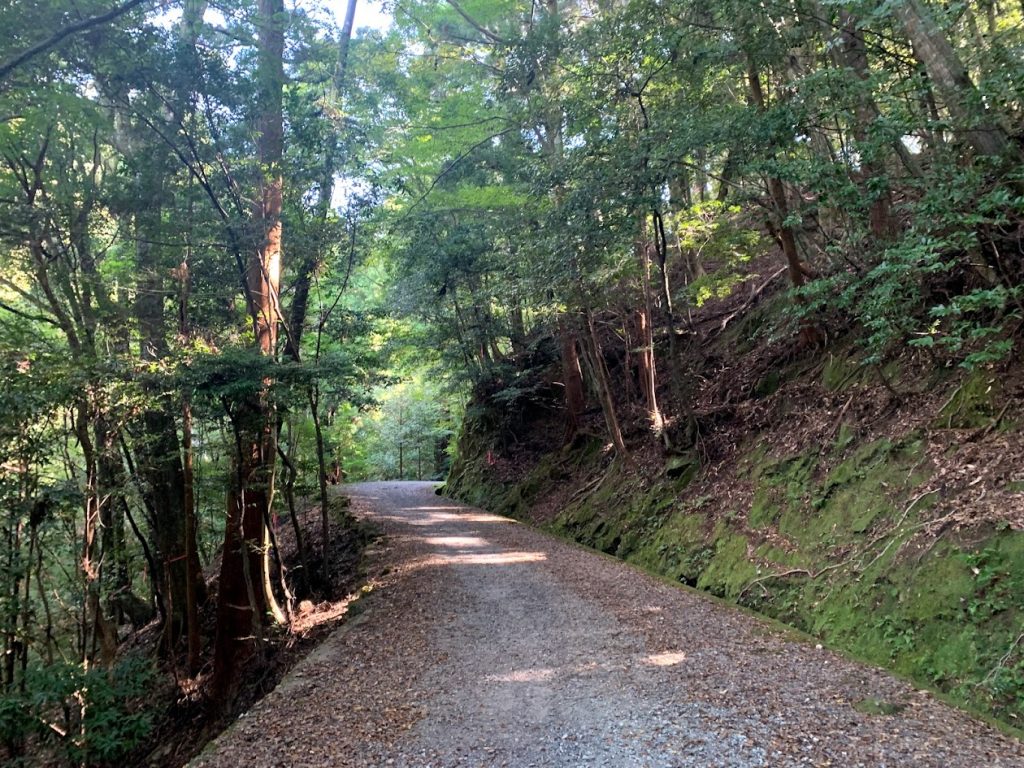
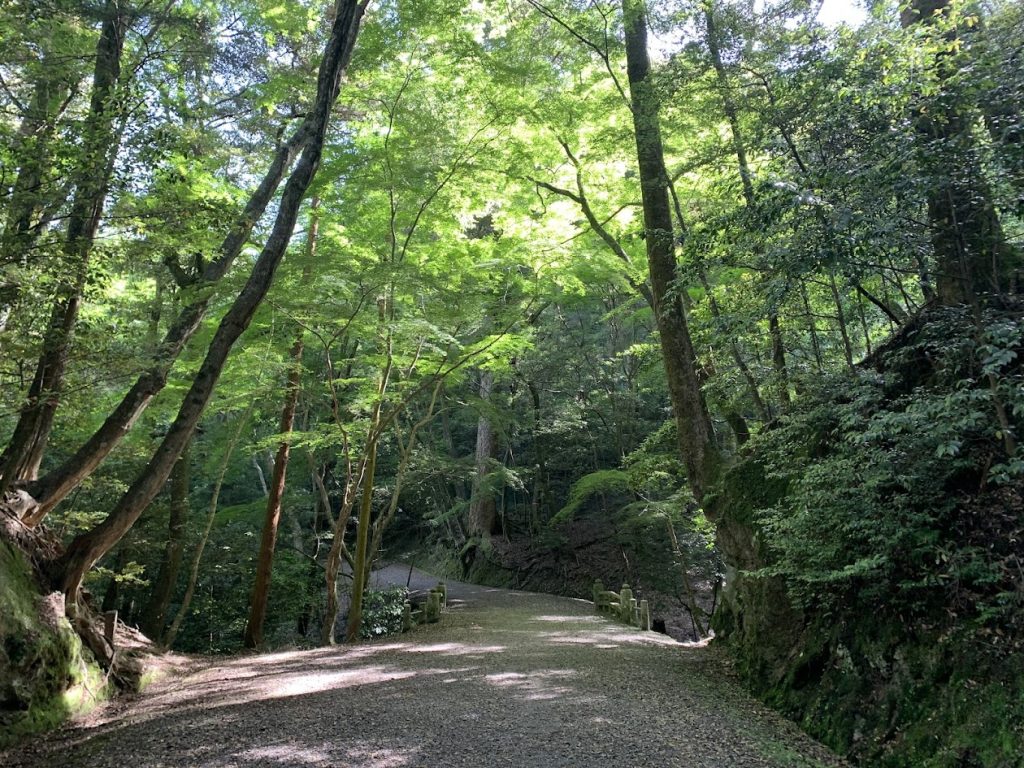
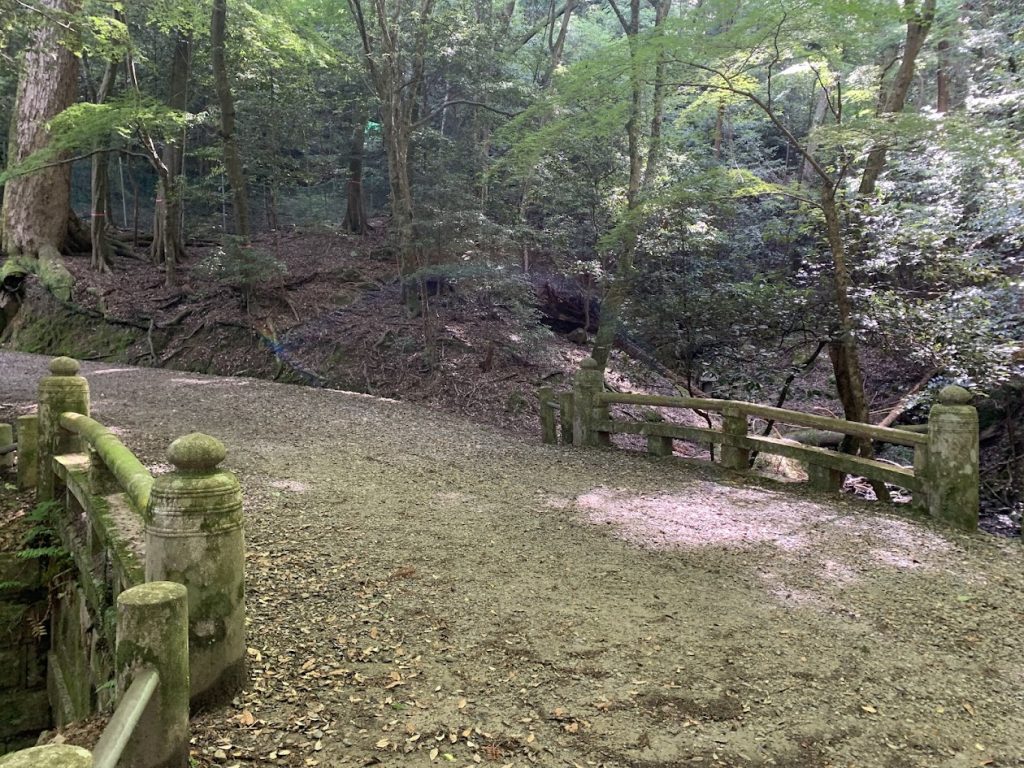
I walked up through this valley.
On the way back, I paid the entrance fee (150 yen) for Wakakusa-yama and walked the Wakakusa-yama Course.
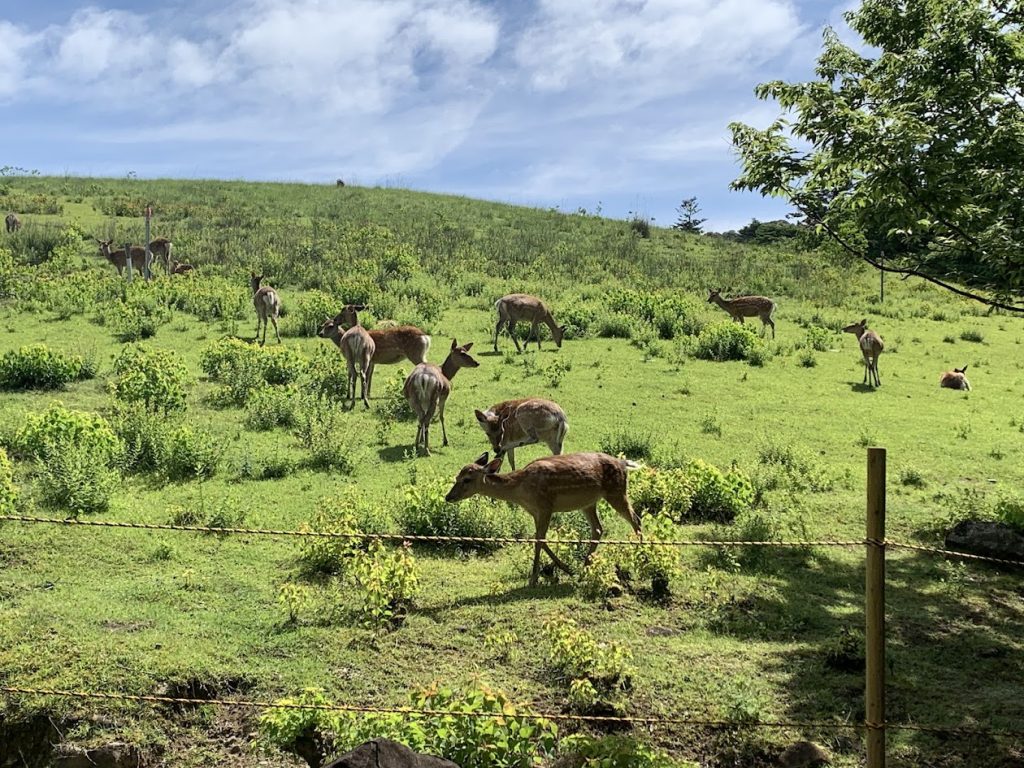
You can see deer everywhere.
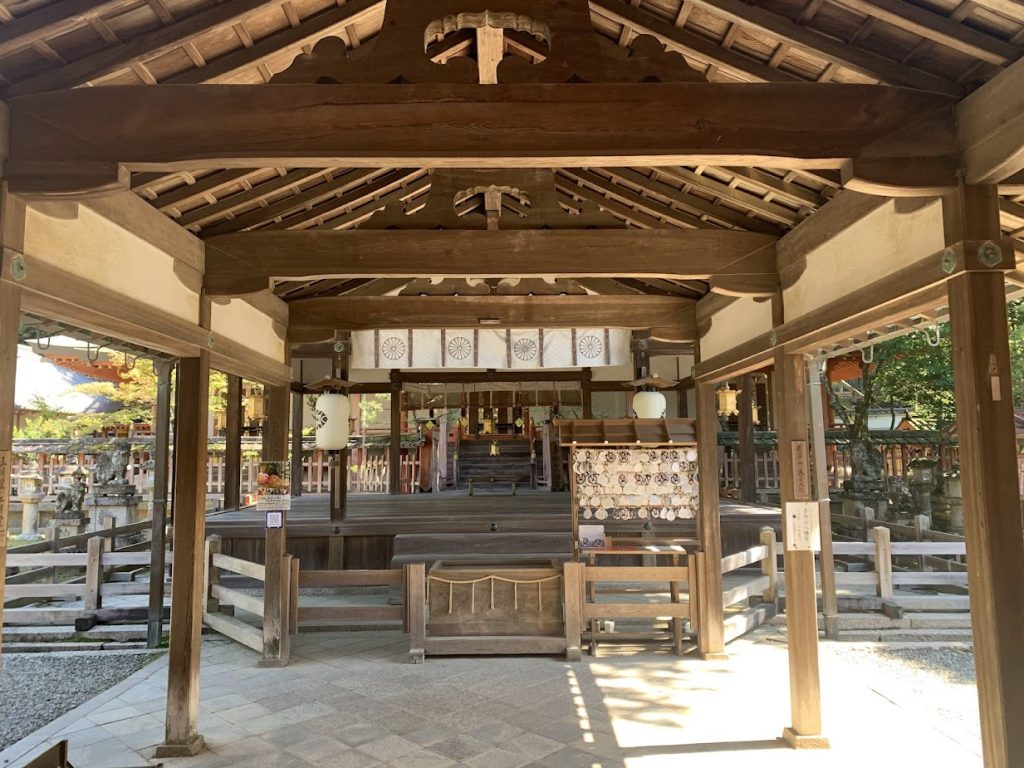
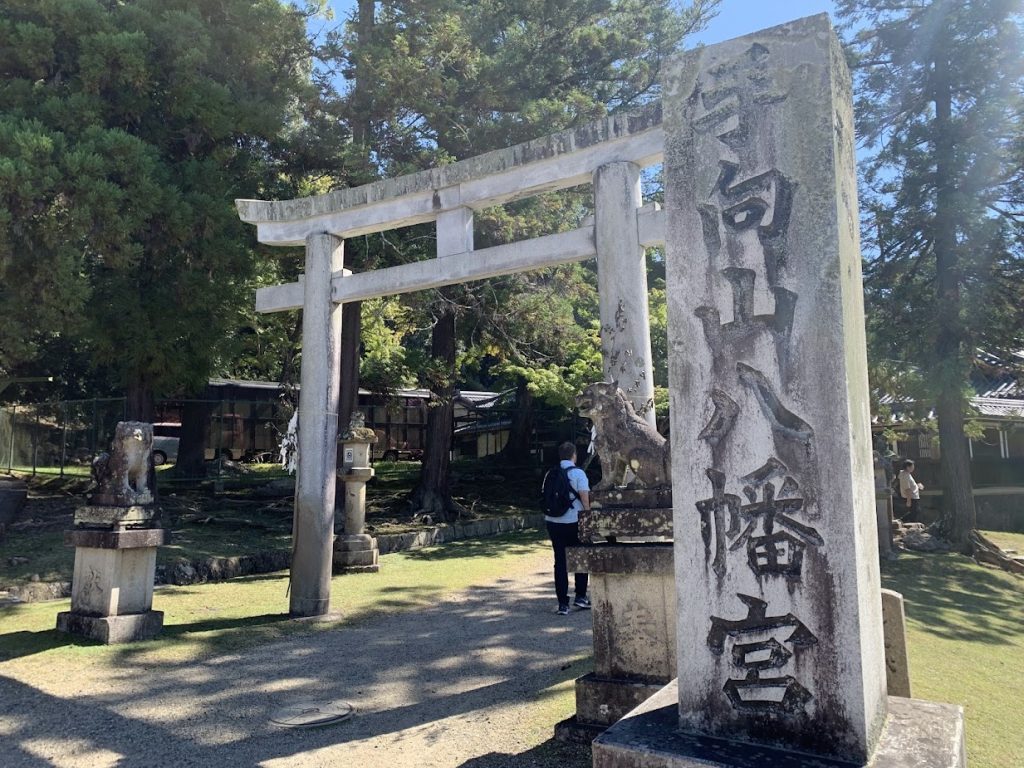
Tamukeyama Hachimangu Shrine
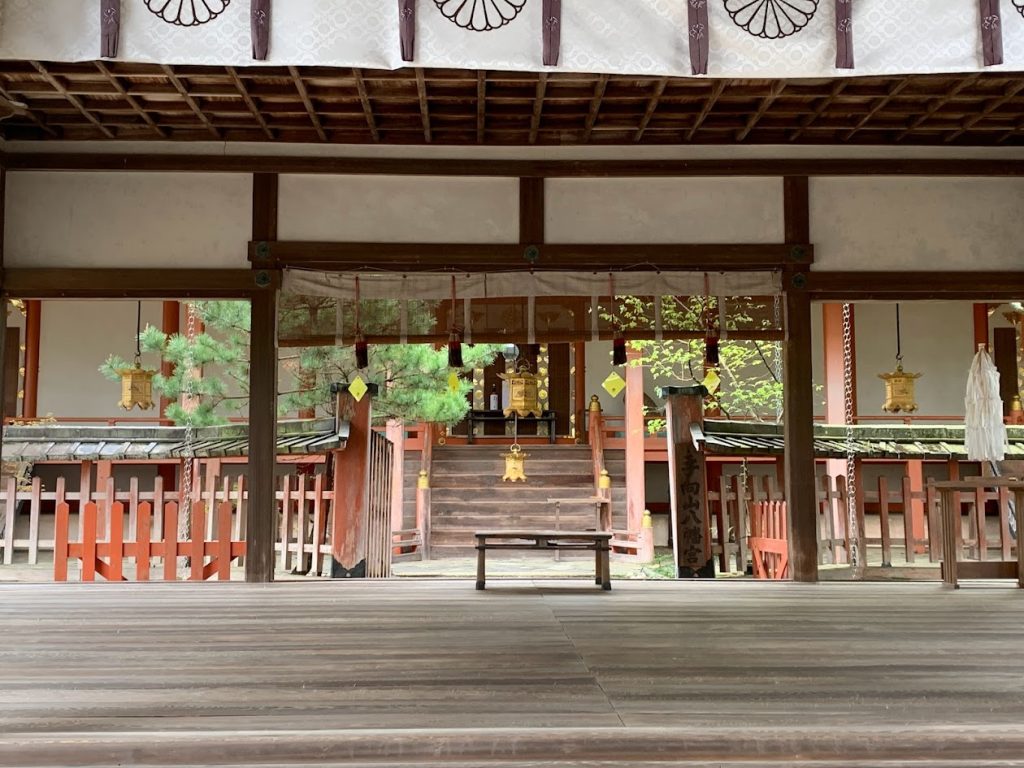
The history of Tamukeyama Hachimangu Shrine dates back to the Nara period when Emperor Shomu welcomed the Hachiman deity from Usa (Oita Prefecture) with the wish, “May the construction of Todai-ji Temple proceed smoothly,” as he was building the temple.
Since ancient times, the shrine has been famous for its beautiful autumn momiji (Japanese maple leaves).
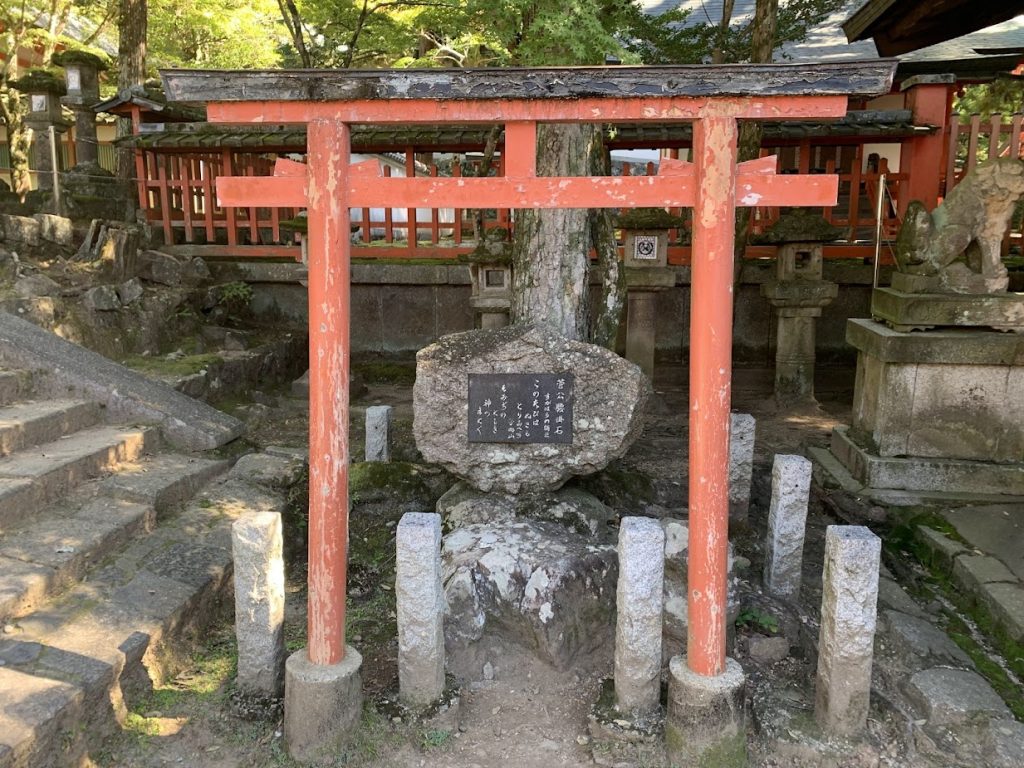
Sugawara no Michizane’s Sitting Stone
In the autumn of 898, Sugawara no Michizane accompanied Retired Emperor Uda and visited Tamukeyama Hachimangu Shrine.
It is said that during this visit, he sat on this stone and admired the beautifully colored momiji (Japanese maple leaves).
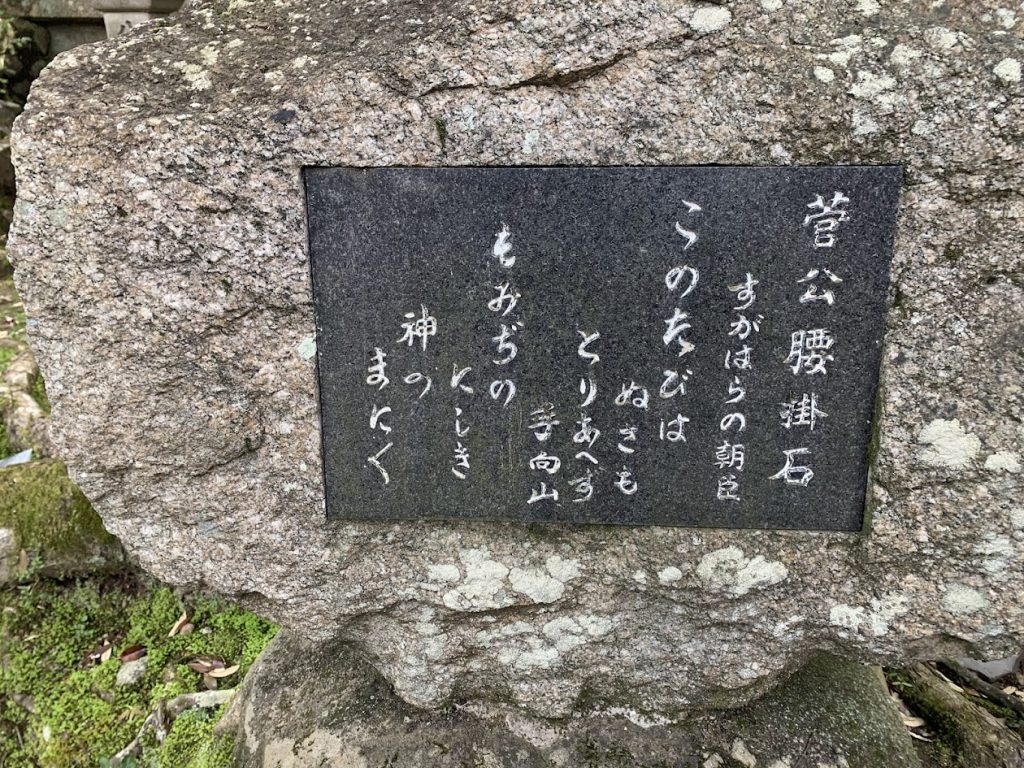
Sugawara no Michizane’s Poem
This journey was so sudden that I had no time to prepare the offerings (nusa) for the deity.
I wish to present these momiji (Japanese maple leaves) from Tamukeyama; please accept them according to the will of the deity.

コメント